

Custom Farming South Dakota: 7 Ways to Boost Yields
“Custom farming in South Dakota can increase crop yields by up to 20% through precision agriculture and sustainable practices.”
Summary: Custom farming in South Dakota stands as a model for efficiency and stewardship, blending expert management, the latest technology, and sustainable practices. This approach connects landowners and skilled operators in a trusted partnership to maximize land use, yields, and long-term resource health without requiring direct ownership or the burdens of full-time farming.
Table of Contents
- Introduction: The Rise of Custom Farming in South Dakota
- Custom Farming South Dakota: Regional Context and Key Advantages
- 7 Ways to Boost Yields with Custom Farming in South Dakota
- Comparative Strategy-Outcome Table: Custom Farming Practices & Results
- Sustainability, Soil Stewardship & Environmental Impact
- Essential Management & Professional Execution in Custom Farming
- Farmonaut: Empowering Precision, Efficiency & Sustainability
- Legal, Financial, and Risk Management Considerations
- FAQ: Frequently Asked Questions on Custom Farming South Dakota
Introduction: The Rise of Custom Farming in South Dakota
South Dakota’s agricultural landscape is rapidly evolving—driven by innovation, necessity, and a commitment to sustainability. Custom farming South Dakota has emerged as a trusted, scalable solution for landowners seeking expert management, greater efficiency, and reliable production outcomes without the burden of traditional ownership. Across this region, professional operators use modern equipment and the latest agricultural technology to plant, irrigate, fertilize, protect, and harvest crops on owned or leased fields. The result? Consistent yields, healthy soil, and effective stewardship of one of the region’s most vital resources—our land.
A partnership model, not a simple contract job, custom farming in South Dakota blends agronomic expertise, data-driven management, and sustainability principles. This approach enables both parties—landowners and skilled operators—to focus on their core strengths. Landowners gain professional field execution and predictable revenue; operators achieve scale, optimize input use, and implement practices that boost yields. Ultimately, the custom farming model increases agricultural output while maintaining or improving long-term soil and environmental health.
Custom Farming South Dakota: Regional Context and Key Advantages
South Dakota Agriculture Facts: Setting the Stage
- 🌾 Over 19 million acres in South Dakota are used for crops and livestock (source: USDA)
- 📈 Custom farming south dakota is expanding as significant numbers of landowners seek scalability without capital outlay
- 🔑 Key crops: corn, soybeans, wheat, sunflowers, alfalfa; livestock systems are often intertwined with crop rotations
- 🔥 Dakota farming is challenged by variable weather, labor shortages, and rising equipment costs—fueling the shift toward custom farming
Key Advantages of Custom Farming in the Dakota Region
- ✅ Enables Focus: Allows landowners to prioritize long-term investment, soil health, and resource management, while operators focus on technical, day-to-day farm production
- ✅ Access to Agronomic Expertise: Operators—often with advanced training and experience—deliver optimized planting, irrigation, fertilization, and harvest services
- ✅ Efficiency and Scale: High-efficiency fleets and automation minimize labor needs, capital costs, and maximize timing precision
- ✅ Professional Field Management: Expert monitoring ensures consistency, yield, and quality across all fields
- ✅ Risk Management: Integrated support for insurance, market-sensitive contracts, and crop variety selection buffers against volatility
“Efficient resource management in custom farming reduces soil erosion rates by nearly 30% compared to conventional methods.”
7 Ways to Boost Yields with Custom Farming in South Dakota
Custom farming South Dakota is more than field-level execution—it’s a model that leverages cutting-edge practices and technology to produce superior outcomes for both landowners and operators. Below, we highlight seven core strategies to maximize production, efficiency, soil health, and long-term sustainability, all tailored to the unique Dakota landscape.
-
Precision Planting & Variable Rate Application
Precision planting synchronizes seed placement, depth, and timing with site-specific field data—reducing seed waste and improving uniform stand establishment. Operators employ variable rate technology (VRT) to match seed, fertilizer, and plant population to field variability, further enhancing yields.
- 📊 Data Insight: Precision planting can increase yields by 10–15%, especially in variable soils common to South Dakota.
- ✔ Key Benefit: Reduced input waste and highly uniform crop establishment improve consistency and revenue predictability.

-
Cover Cropping for Resilient Soil Health
South Dakota’s climate calls for soil conservation. Cover cropping improves organic matter and soil structure, reducing erosion and capturing nutrients between major crops like corn and soybeans.
- 🌱 Key Insight: Cover crops can boost long-term yield potential by enhancing soil biology and water retention.
- 🌿 Environmental Benefit: Reduced water runoff, improved drought resilience, and greater carbon sequestration (Discover Farmonaut Carbon Footprinting Tools for sustainable reporting)

-
Optimized Irrigation Management
Inconsistent rainfall and periodic drought require precise irrigation. Custom operators deploy drip lines, center pivots, and soil moisture monitoring to tailor water application, enhancing crop growth and reducing water waste.
- 💧 Pro Tip: Sensors and satellite-based monitoring (such as those from Farmonaut’s platform) enable operators to monitor field moisture in near real time.
- ⚡ Efficiency: Water use reduced by 15–30% while supporting robust crop development and minimizing environmental impact.

-
Precision Fertilization and Nutrient Management
Regular soil sampling, nutrient mapping, and tailored fertilization plans reduce excess input use, protect water quality, and support strong root and plant health. Precision agriculture tools pinpoint where and when nutrients are needed most.
- 🧪 Data-Driven: Coordinated fertilization can cut input costs by up to 20% and reduce nutrient runoff.
- 🚜 Modern Practice: Integration with variable-rate application ensures nutrients match field-specific crop requirements.

-
Integrated Pest and Disease Control
Custom operators scout, map, and apply targeted crop protection via drone and ground-based assets. Advanced monitoring (including satellite imagery) identifies risk zones early for timely intervention—reducing overall pesticide use.
- 🐞 Key Benefit: Early pest and disease detection can prevent yield losses and safeguard soil health.
- 📉 Reduced Waste: Targeted application saves resources and minimizes environmental impact.

-
Timely Harvest and Uniform Stand Management
With professional fleets and advanced logistics, custom operators coordinate the optimal timing of harvest for each field or crop, maximizing grade, yield, and revenue. Uniform stand management ensures every plant can reach its potential.
- 🚚 Efficiency: Custom farming enables rapid, coordinated harvest—reducing weather-related losses by up to 15%.
- ⏱ Improved Performance: Timely removal of crops leads to consistent seasonal revenue streams for landowners.
-
Diversified Crop & Forage Rotations for Soil & Enterprise Resilience
Beyond row crops, custom farming South Dakota enables integrated forage, pasture, and even timber/forestry management. Diversified rotations and managed grazing improve soil resilience, control pests, and maximize overall farm income while supporting biodiversity.
- 🦌 Environmental Benefit: Rotational diversity enhances wildlife habitat, pollinator support, and water infiltration.
- 💹 Enterprise Benefit: Grain, forage, and other products generate multiple predictable revenue streams for landowners and operators.

Comparative Strategy-Outcome Table: Custom Farming Practices & Results
| Farming Practice | Description | Estimated Yield Increase (%) | Soil Health Improvement | Environmental Benefit |
|---|---|---|---|---|
| Precision Planting & Variable Rate Application | Synchronizes seeding & inputs with field variability using VRT & analytics | 10–15% | High — Improved stand, root health, soil structure | Reduces excess input & runoff, better water retention |
| Cover Cropping | Non-cash crops between seasons for organic matter, erosion control | 5-8% (compounded) | Very High — Builds organic matter, fosters microbial health | Major reduction in soil erosion and nutrient leaching |
| Optimized Irrigation | Data-driven water application to match crop demand | 8-12% | Moderate-High — Reduces compaction, balances moisture | Water savings, lower energy usage, less runoff |
| Precision Fertilization | Custom nutrient management by field & crop zone | 7-10% | Moderate — Better nutrient cycling, less “burn” | Reduced leaching, improved water quality |
| Integrated Pest & Disease Control | Early detection via scouting, satellite, drones; targeted treatment | 3–6% | Moderate — Less chemical load, supports beneficials | Decreased pesticide usage, better pollinator support |
| Timely Harvest & Uniform Stand | Professional machinery, optimal harvest windows, even stands | 8–15% | Consistent — Reduces residue, rapid field turnover | Less crop waste, reduced soil compaction |
| Diversified Crop & Forage Rotations | Integrates grains, forages, timber, and livestock for resilience | 6–10% (stabilized yields) | High — Builds resilient soils, richer microbiome | Boosts biodiversity, buffers climate extremes |
Sustainability, Soil Stewardship & Environmental Impact
Soil health and conservation are foundational to custom farming South Dakota. Unlike conventional methods that may exhaust soil organic matter, erode topsoil, or over-use inputs, custom operators in the Dakota region use a stewardship-first approach aligned with sustainable agricultural models.
- 📗 Best Practice: Regular soil sampling and digital mapping provide a site-specific snapshot of nutrient levels, moisture, and compaction risk (See Farmonaut’s Large Scale Farm Management Solutions for managing multiple fields with satellite oversight)
- ♻️ Enhanced Organic Matter: Cover cropping and minimized tillage maintain or raise soil organic content, supporting root health and soil biodiversity
- 🏞 Landscape-Scale Conservation: Buffer strips, reduced field runoff, and integrated forestry (with Farmonaut’s Crop & Forest Advisory) protect water and support wildlife corridors
- 📊 Continuous Improvement: Monitoring and adjusting management strategies in near real time leads to resilient yields and improved environmental compliance

5 Powerful Sustainability Highlights:
- ✔ Soil Conservation: Custom practices reduce erosion and maintain soil structure year after year
- ✔ Precision Resource Use: Inputs matched to need via digital analytics means lower waste
- ✔ Sustainable Water Management: Conservation-based irrigation and rain-fed cropping reduce aquifer depletion
- ✔ Biodiversity Support: Diverse rotations and eco-buffer zones foster pollinators & beneficial wildlife
- ✔ Reduced Environmental Footprint: Less tillage, lower chemical inputs, and data-driven decisions result in better stewardship at the field and farm scale
Essential Management & Professional Execution in Custom Farming
Core Elements of South Dakota Custom Farming
- 🔑 Trust & Partnership: Clear, negotiated contracts outline scope, field boundaries, equipment, maintenance, cost structures, and division of labor
- 🧑🌾 Professionalism: Skilled operators uphold timely execution and quality standards across planting, harvest, and post-crop residue management
- 📅 Timeliness: Synchronizing planting and harvest with local weather and market conditions optimizes output and minimizes risk
- 🔧 Advanced Maintenance: Ongoing machinery upkeep ensures reliable, efficient operation all season
Key Role of Modern Technology & Automation
- ⚙️ Automation & AI Tools: Streamlines planting, fertilization, and harvest—making coordinated, large-scale custom operations practical
- 🌍 Fleet and Resource Management: (Explore Farmonaut Fleet Management Solutions) help operators optimize equipment use, monitor logistics, and reduce downtime
- 💻 Satellite Imaging & Remote Sensing: Provides real-time feedback on crop growth, pest risk, and input effectiveness
- 📈 Common Mistake: Overlooking the value of digital management systems can lead to underperformance and missed revenue opportunities!
Scalable Solutions for Livestock, Forestry & Mixed Operations
Custom farming isn’t limited to row crops. In South Dakota, it encompasses:
- 🐄 Livestock Rotational Grazing: Custom grazing plans, managed fencing, and precision water delivery optimize pasture without degrading ground cover
- 🌳 Forestry and Timber Stand Improvement: Skilled oversight guides thinning, planting, and logging for long-term productivity (Farmonaut Advisory for Forestry)
- 🌾 Alfalfa & Forage Production: Integrated custom solutions boost forage yields, lower input costs, and ensure timely harvest for livestock nutrition
Farmonaut: Empowering Precision, Efficiency & Sustainability in Custom Farming South Dakota
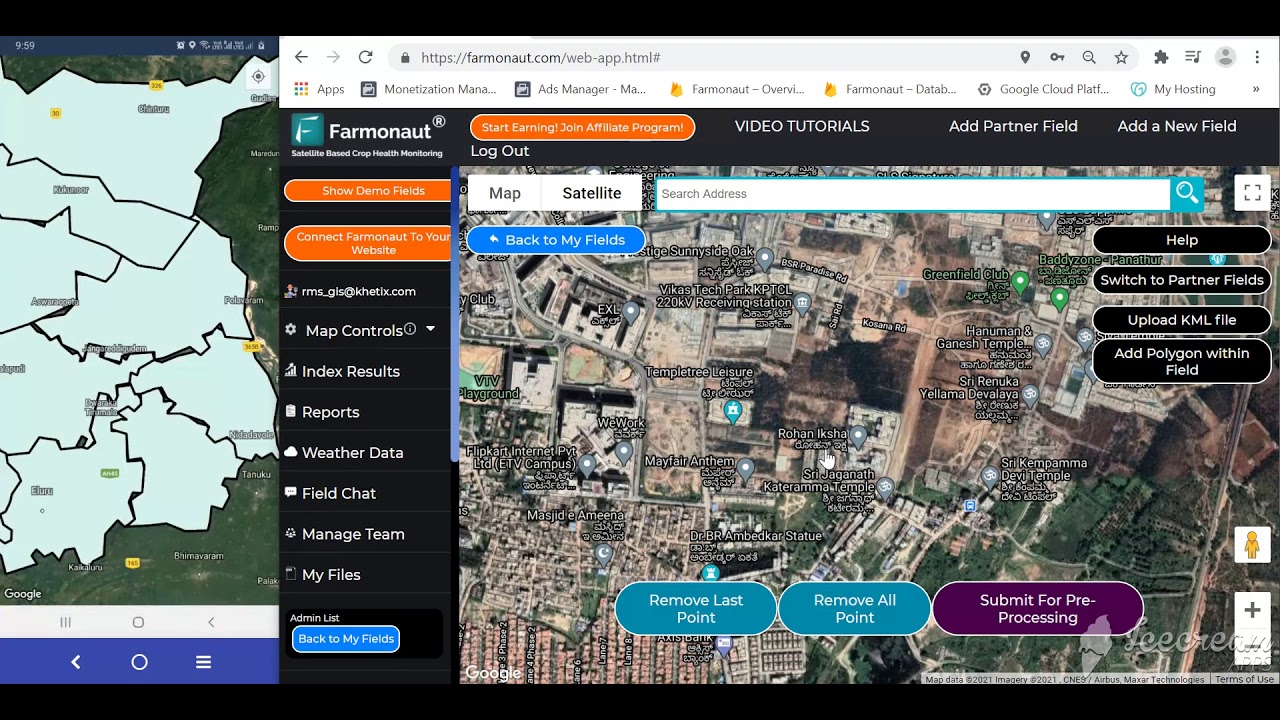
We at Farmonaut provide powerful, affordable satellite-driven solutions that enable custom farming operators and landowners to optimize yield, manage risk, and practice environmental stewardship—at scale.
- 🛰️ Real-Time Monitoring: Multispectral satellite imagery and field-level analytics track crop growth, soil health, and resource allocation by field, zone, or entire portfolio
- 🤖 Jeevn AI Advisory: Our AI system delivers actionable recommendations for irrigation, soil inputs, weather adaptation, and crop protection, enhancing operational efficiency and resilience
- 🔗 Blockchain Traceability: We provide robust traceability for supply chains (Farmonaut Traceability)—helping both parties verify and monetize sustainable agricultural performance or compliance (such as non-GMO, organic, or regenerative certifications)
- 💳 APIs & Integration: Our data can be integrated into third-party farm management or financial systems via our API and Developer Documentation
- 📱 User Access: We support Android, iOS, and web/browser platforms for seamless, mobile-friendly experience on the field and in the office



Visual List: Top Outcomes of Satellite-Driven Custom Farming
- 🚀 Yield Increases: Data-driven input and timing precision deliver quantifiable production gains
- 🌱 Soil Enhancement: Continuous monitoring supports long-term improvement in soil organic matter and structure
- 💰 Cost Savings: Fewer wasted inputs, faster operations, and less risk of market-timing mishaps
- 🔒 Market Confidence: Transparent digital traceability enables growers and landowners to access higher-value, specialty markets
- 🦾 Scalability: Modular, subscription-based tools mean custom operations can grow without heavy up-front investment
Callout: Farmonaut Subscription Plans
Optimize your custom farming operations in South Dakota with affordable, scalable monitoring and advisory—no expensive hardware required.
- 📌 Orrson Custom Farming and Ideal Custom Farming Ltd. are regional players in the professional custom farming landscape, recognized for expertise and adaptation to South Dakota’s challenges.
- 📋 Visual List: Common Elements of Custom Farming Contracts
- 📝 Duration & Scope: Clear timelines and field mapping
- 🛠 Equipment List: Detailing machinery and maintenance responsibilities
- 💼 Labor Allocation: Clearly defined roles and payment terms
- 🗓 Harvest Windows: Specified windows for planting, harvest, and reporting
- 🚨 Exit & Dispute Terms: Safeguards for both parties’ interests
Legal, Financial, and Risk Management Considerations
While custom farming South Dakota offers many benefits, careful planning and clarity are essential for both landowners and operators:
- 🖋 Legal Contracts: Every arrangement should be backed by a written agreement specifying field boundaries, equipment, maintenance, scheduled activities, harvest timing, and payment structure. Ongoing performance standards, reporting requirements, and dispute resolution procedures are essential for trust.
- 💸 Capital Discipline: For landowners, avoiding major equipment outlay means lower upfront risk; for operators, a larger fleet can be managed efficiently with proper depreciation, cash flow management, and scheduling.
- 🌦 Risk Management: Crop insurance (sometimes coordinated by the operator), diversified rotations, and timely execution help buffer weather, market, and price risks.
- 📉 Common Mistake: Failing to review performance or audit field activities can erode margins and harm soil—digital reporting helps sustain accountability and improvement.
Landowners considering custom farming in South Dakota should always prioritize transparency, regular field reviews, and open communication to foster long-term partnership and ensure both agronomic and financial goals are met.
Operators, meanwhile, should continually invest in training, stay current on evolving best practices, and use digital tools (like Farmonaut) to maintain efficiency, enhance reputation, and deliver measurable value for every acre managed.
Frequently Asked Questions (FAQ): Custom Farming South Dakota
What is custom farming in South Dakota?
Custom farming is a performance-based arrangement where skilled operators manage specific crop, forage, or livestock operations on fields owned or leased by others, using their expertise, equipment, and technology. Landowners benefit from optimized yields and resource execution without the burden of full-time management or capital investments.
How does custom farming improve soil health and sustainability?
Through advanced techniques—like cover cropping, variable-rate input use, conservation tillage, and integrated rotations—custom farming actively builds organic matter, reduces compaction and erosion, and fosters resilient, living soils that sustain long-term production.
What is the difference between lease, sharecropping, and custom farming?
Lease and sharecrop agreements often split input cost, risk, and cropping decisions. Custom farming is more akin to a service contract: the landowner pays a fee to a professional operator, who delivers field-level execution and measurable performance while the landowner retains full crop revenue and marketing control.
How does technology empower custom farming in South Dakota?
Satellite monitoring, AI-driven advisory, mobile field records, and blockchain traceability make it possible to meet compliance, raise yields, and document stewardship—cost-effectively and at scale. Farmonaut provides turnkey solutions for monitoring, resource optimization, and market compliance.
What kinds of crops and enterprises are suited to custom farming?
Any row crop (corn, soybeans, wheat, sunflowers), forages (alfalfa, grass), livestock-managed pastures, and even timber or forestry parcels can be managed under custom farming contracts. The approach is especially valuable where professional scale, advanced technology, and risk management are crucial to success.
In Conclusion: Why Choose Custom Farming South Dakota?
- ✔ Boost Yields and Revenue: Leverage expert management, precision tools, and sustainable techniques for consistent production increases
- ✔ Preserve and Build Soil Health: Stewardship-first practices extend the life and value of every Dakota acre
- ✔ Capitalize on Technology: Satellite analytics, AI, and digital traceability position growers and landowners for premium markets and climate-smart agriculture
- ✔ Reduce Risk and Capital Burden: Professional operators supply equipment, labor, and know-how, freeing owners to focus on strategy, investment, and compliance
- ✔ Unlock Scalable, Diversified Income: From grains and forages to livestock and timber, diversified custom farming creates resilient, multi-stream enterprises
Join the Next Generation of Resilient Dakota Farming
Custom farming South Dakota represents the leading edge of sustainable, scalable agricultural production and stewardship. Whether you’re a landowner, operator, or investor, this model provides the flexibility, expertise, and technology to thrive in a rapidly changing landscape.
With Farmonaut’s satellite-driven tools, you can monitor every field, optimize every input, and report every achievement—helping Dakota agriculture sustain both profit and planet for generations to come.

 IRE Soil
 Blickwinkel
 Agricultural Credit Policy Council
 BayWa
BayWa MCSOD
MCSOD Marei Nursery
 eKGIS
eKGIS Mostas Tech
 Native Seeds
 Andex
Andex FCF India
 Unifrutti Gulf
 Deluxe Conseil
 TVS Electronics
 WICO
WICO Chimera Innovation
