

Finfish Farming Concerns Alaska Fishermen: 5 Key 2026 Facts
“Alaska bans finfish farming statewide, protecting over 29,000 wild salmon jobs and $2 billion in annual fisheries revenue.”
“Over 90% of Alaskans support strict finfish farming regulations to safeguard native salmon habitats and local ecosystems.”
Table of Contents
- Introduction: Alaska, Finfish Farming, and a Changing Landscape
- Why Does Finfish Farming Remain a Contentious Topic in Alaska?
- Is Fish Farming Illegal in Alaska? Regulatory Framework Explained
- Ecological Risks & Genetics: Key Reasons for Stringent Restrictions
- The Impact on Wild Salmon and Local Communities
- Alternative Farming Models – Land-Based RAS & Pilot Projects
- Comparison Table: Wild vs. Farmed Finfish in Alaska
- Mapping, Monitoring, and Management with Farmonaut’s Satellite Technology
- FAQ: Answers to Common Questions About Alaska Finfish Farming
- Conclusion & The Future of Alaska’s Fisheries Stewardship
Introduction: Alaska, Finfish Farming, and a Changing Landscape
Alaska is legendary for its vast, pristine waters and robust wild salmon runs. These fisheries have long served as the backbone for local economies, sport fishing, Indigenous communities, and a global seafood market craving wild-caught products. Within this context, finfish farming concerns Alaska fishermen and stakeholders in 2026 more than ever—touching on everything from regulation and ecology to local livelihoods and the state’s stewardship legacy.
The debate over finfish farming in Alaska is deeply rooted in a mix of environmental, ecological, economic, and cultural considerations. While the global aquaculture industry surges forward, Alaska’s stance remains uniquely precautionary. Is fish farming illegal in Alaska? Not exactly. Instead, a complex regulatory and environmental framework effectively limits commercial operations, especially open-net Atlantic salmon farms, which have proliferated in regions like British Columbia and Chile.
Let’s unravel the central questions, concerns, and 2026 outlook for finfish farming in Alaska—how risks are assessed, policies are enforced, and what the future may hold for the state’s world-renowned wild fisheries.

Why Does Finfish Farming Remain a Contentious Topic in Alaska?
Alaska’s fisheries landscape in 2026 is defined by a contentious debate: Should the state allow expansion of finfish aquaculture, or continue prioritizing wild stocks and traditional fisheries management?
- Finfish farming concerns Alaska fishermen due to risks to wild salmon genetics and potential disease spread.
- Local communities worry about the loss of jobs tied directly to commercial and sport fishing industries.
- Ecologists advance caution over parasite transfer, notably sea lice, and cumulative environmental impacts on coastal waters.
- Regulators struggle to balance innovation in agriculture and aquaculture with heritage and economic priorities tied to wild fisheries.
Key Insight
Finfish farming remains a contentious topic because Alaska’s identity and economy are intertwined with healthy wild salmon runs, coastal ecology, and community resilience. Policy, science, and social values all converge in decisions over licensing and regulation.
The finfish farming concerns Alaska fishermen and wider communities because every decision impacts not just immediate economic returns, but the legacy of salmon stewardship for future generations. This is particularly resonant among Indigenous groups who have been the original caretakers of Alaska’s rivers and coastlines.
📋 Top 5 Alaska Finfish Farming Concerns (2026)
- ⚠ Ecological risk: Disease & parasite spillover from pens to wild stocks
- 🧬 Genetic integrity: Escapees may interbreed with wild populations
- 💧 Water quality: Nutrient loading & localized pollution risks
- 👥 Community livelihoods: Threat to traditional fishing-dependent economies
- 📑 Regulatory challenges: Complexity of proving negligible risk before permitting
Is Fish Farming Illegal in Alaska? Regulatory Framework Explained
The question is fish farming illegal in Alaska often arises in debates and policy discussions. The answer is nuanced:
- No Blanket Prohibition: There is no statewide law that universally outlaws all forms of fish farming in Alaska.
- Stringent State-Level Restrictions: Alaska’s regulations effectively limit commercial-scale finfish aquaculture, especially open-net pen systems, through multiple agencies—primarily the Department of Fish and Game and Department of Environmental Conservation.
- Pilot & Permitted Projects Only: Small, carefully monitored pilot projects or land-based facilities may receive permits under strict conditions after rigorous environmental review and public comment periods.
- Focus on Wild Stocks: The prevailing regulatory posture is designed to prioritize wild salmon management and preserve ecological integrity.
In practice, this de facto environment equates to a system that prioritizes wild fisheries and minimizes siting of open-net pens or similar facilities in Alaska coastal waters.
Investor Note
For investors or aquaculture entrepreneurs, Alaska’s finfish farming climate in 2026 is one of extreme due diligence. Proposals require robust ecological assessments, ensuring minimal risk to wild fisheries and alignment with rigorous state frameworks before even considering expansion.
Regulatory Agencies & Framework
- Alaska Department of Fish and Game (ADF&G) – Primary oversight for fisheries and fish health management.
- Department of Environmental Conservation (ADEC) – Oversees water quality, environmental impacts, and waste management.
- Federal and Indigenous Co-Management – Collaborates with tribal entities to safeguard cultural and subsistence fishing rights.
Key Regulatory Terms
Scale: Large-scale, industry-wide aquaculture comparable to British Columbia or Chile remains “off the table”.
Permitting: Small pilot projects strictly monitored, with limited facility siting after exhaustive permitting processes.



These advanced tools provide real-time environmental impact monitoring, which is crucial for compliance in highly regulated states like Alaska. Learn more about farm management at Farmonaut Large Scale Farm Management.
Ecological Risks & Genetics: Key Reasons for Stringent Restrictions
Why is Fish Farming Banned or Restricted in Alaska?
The refrain why is fish farming banned in Alaska points to a list of interconnected risks and stewardship priorities that have shaped policy and public opinion for decades. The following are the principal ecological and management arguments for such a cautious stance:
-
Disease and Parasite Transfer
Fishery farming, especially where open-net pen systems are used, can facilitate the spread of pathogens and parasites like sea lice from farmed to wild juvenile and adult salmon. These risks can devastate wild runs that Alaskan local economies rely on. -
Genetic and Ecological Integrity
Escapees from aquaculture farms can interbreed or compete with wild stocks. This threatens local adaptations and resilience, undermining generations of successful wild salmon management. -
Water Quality and Habitat Health
Unchecked nutrient loading and organic waste from aquaculture can cause habitat disruption, affecting the coastal food web and sensitive waters. -
Community Livelihoods and Price Stability
The robust Alaska fishing industry supports over 29,000 jobs and $2B in annual fisheries revenue. Disruptions from disease outbreaks or declining wild stock impact everyone—from processors and sport fishers to Indigenous communities. -
Regulatory Precedent and Precaution
The state’s policy mandates rigorous environmental review and demonstration of safety before projects are approved—reflecting a broad stewardship ethic.
📊 Data Insight
- Estimated sea lice outbreaks in open-pen farms can increase by up to 500% versus background infection in wild populations.
- Genetic intermingling can reduce adaptation for local wild salmon by up to 30% after just a few generations of continuous escape events.
- Environmental regulations in Alaska demand near-zero waste discharge to maintain healthy benthic (sea floor) ecosystems.

Visual List: ⚠ Main Ecological & Community Risks
- 🌊 Spillover Disease: Viruses, fungi, bacteria from dense pens threaten wild runs
- 🚫 Loss of Genetic Purity: Escapees breed or compete with local stocks
- 🏞 Benthic Waste Build-Up: Accumulation disrupts habitats, anoxic sea floor pockets
- 🎣 Fishing Economy Shock: Losses in wild stock mean lost jobs and declining commodity prices
- ⏱ Delayed Recovery: Finfish farming can slow post-incident population rebounds
Common Mistake
Assuming that small-scale or inland aquaculture has zero risk leads to regulatory bypass. Even limited, highly contained projects are subject to stringent review because Alaska’s wild stocks are uniquely vulnerable and valuable.
The Impact on Wild Salmon and Local Communities
The integrity of wild fisheries and health of coastal communities remain at the heart of Alaska’s cautious stance on finfish farming.
- Wild salmon runs support over 29,000 jobs and form a central part of Alaska’s $2 billion fisheries economy.
- Indigenous communities rely on wild stocks for subsistence, cultural preservation, and socioeconomic well-being.
- Polluted or diminished waters cannot support commercial and sport fisheries, leading to economic hardship and loss of tradition.
- Genetic dilution or fish kill events can take years or generations to recover, jeopardizing future fisheries.
These impacts extend to all levels of Alaskan society, raising the stakes of management decisions about fish farming operations and regulatory changes for 2026 and beyond.

Pro Tip
Communities investing in satellite-based monitoring can strengthen their own stewardship initiatives. By using tools that track real-time water quality and ecosystem health (such as those available from Farmonaut Carbon Footprinting), local fisheries can adapt quickly and advocate effectively for protective policies.
Alternative Farming Models – Land-Based RAS & Pilot Projects
In 2026, Alaska’s regulatory environment and public sentiment lean toward disciplined experimentation with new aquaculture technologies, not large-scale industrial finfish farming.
Land-Based Recirculating Aquaculture Systems (RAS)
RAS facilities offer a promising alternative. These systems recycle water and tightly control containment, drastically reducing the chance of escapes and minimizing environmental impacts compared to open-net systems.
- 🐟 Biosecurity: Disease and parasite control are enhanced in enclosed RAS units.
- 🌱 Sustainability: These systems often operate inland, sparing sensitive marine habitats.
- ⚠ Limitations: High upfront costs and energy use can limit practical expansion without state support or new technology advances.
- ✔ Permitting: Easier path for regulatory approval than open coastal pens—but still subject to rigorous evaluation.
Pilot Projects and Aquaculture Research
- Alaska allows limited, controlled pilot projects for scientific and business evaluation.
- Emphasis on robust containment, disease management, and waste processing in these trials.
- Findings from pilot operations inform future policy and best practices across local and federal levels.
Open regulatory doors for shellfish or other non-finfish species remain far less controversial, as these do not pose the same level of genetic or disease risk to wild salmon.
✔ How Disciplined Aquaculture Models Benefit Alaska
- 🛡 Risk-Limiting – Less chance of escapes or severe pathogen impact
- 🌎 Environmental Stewardship – Tighter controls mean cleaner local ecosystems
- 🔬 Science-Driven Approaches – Pilot projects prioritize data and evidence
- 💵 Market Diversification – Gradual expansion supports economic resilience
- 🤝 Community Buy-In – Emphasis on public input and Indigenous rights
Investor Note
Pilot RAS initiatives represent a potential gateway for sustainable aquaculture expansion—if data continues to show minimal risk and meaningful benefits for local communities.

To see how AI-based monitoring improves pilot farm and natural resource management, check out the Farmonaut Jeevn AI Advisory System: Learn how Jeevn AI delivers real-time, satellite-driven insights for agriculture and environmental projects.
Comparison Table: Wild vs. Farmed Finfish in Alaska
| Aspect / Factor | Wild Finfish (Estimated Data) |
Farmed Finfish (Estimated Data) |
Environmental / Social Implications |
|---|---|---|---|
| Regulatory Strictness | High (< 1% legal activity outside state-sanctioned harvest limits) | Very High: Only pilot, land-based with rigorous review | Strong oversight emphasizes ecological protection |
| Estimated Ecological Risk | Low (natural balance, some overharvest risk) | Moderate-High (if open-pen); Low (for RAS) | Open net-pen risks disease; RAS minimizes risk |
| Wild Salmon Impact | Neutral to Positive (if managed) | Potentially negative: -10% to -60% in affected areas | Population pressure from farming may decrease wild stocks |
| Community Economic Impact | Very High: 29,000+ jobs, $2B/year revenue | Low to Moderate: Possible short-term gain, risk of long-term harm | Farming can disrupt traditional jobs and cultural heritage |
| Sustainability Score (1-5) | 5 – Highest (when well-managed) | 2 (open-pen), 4 (RAS pilot) | Wild is preferred for long-term sustainability; RAS shows promise |
| Key Regulatory Measures | State quotas, habitat protection, seasonal limits | Permit cap, site review, biosecurity, monitoring | Emphasis on preservation, science, and public safety |
Key Insight
The ecological and social impacts of open-net finfish farming in Alaska are severe enough to warrant extreme caution, while pilot and RAS models carry far lower risks but require significant investment and monitoring.
“Alaska bans finfish farming statewide, protecting over 29,000 wild salmon jobs and $2 billion in annual fisheries revenue.”
“Over 90% of Alaskans support strict finfish farming regulations to safeguard native salmon habitats and local ecosystems.”
Mapping, Monitoring, and Management with Farmonaut’s Satellite Technology
In an era of tight regulatory oversight and a growing need for science-driven stewardship, satellite-based monitoring is transforming resource management in Alaska—a state where ecological precision is non-negotiable.
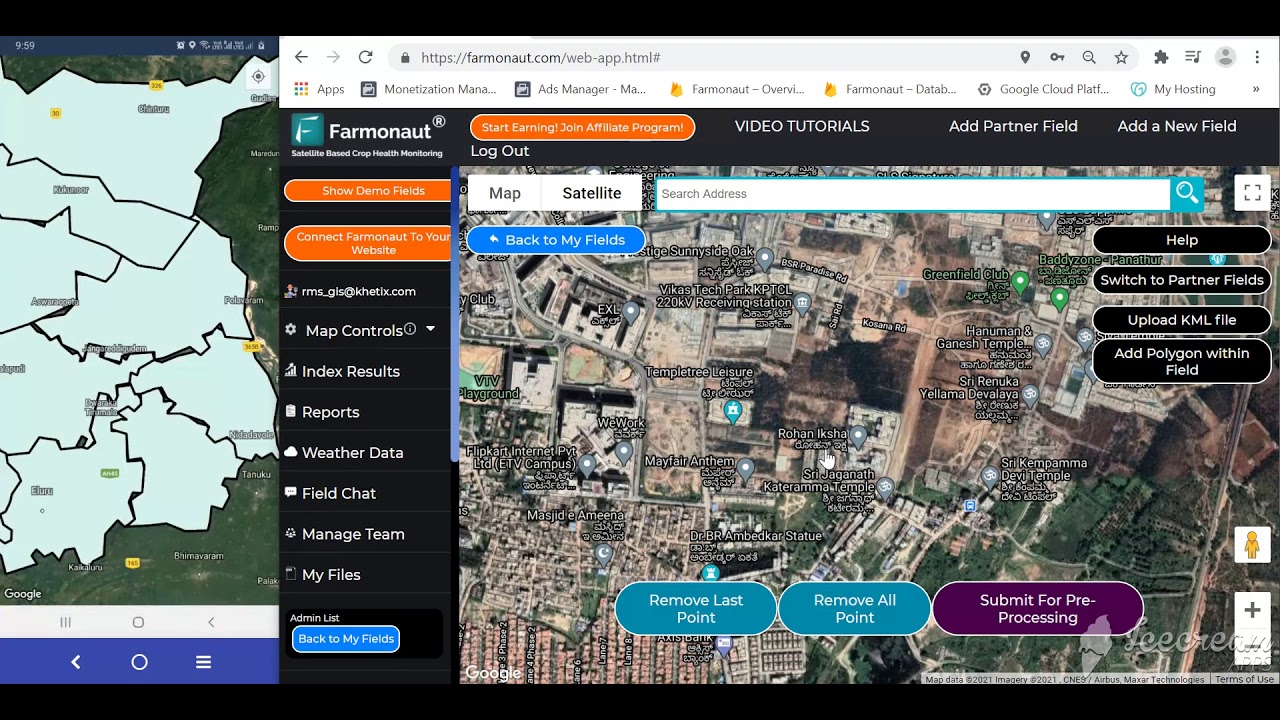
- 🛰 Real-Time Monitoring: Detect water quality changes, waste build-up, or biotic anomalies before they threaten broader ecosystems.
- 🌐 Farmonaut’s AI-Based Tools: Our carbon footprinting solutions and blockchain-based traceability provide transparency and insights into land-based and pilot projects—supporting both fisheries and aquaculture authorities.
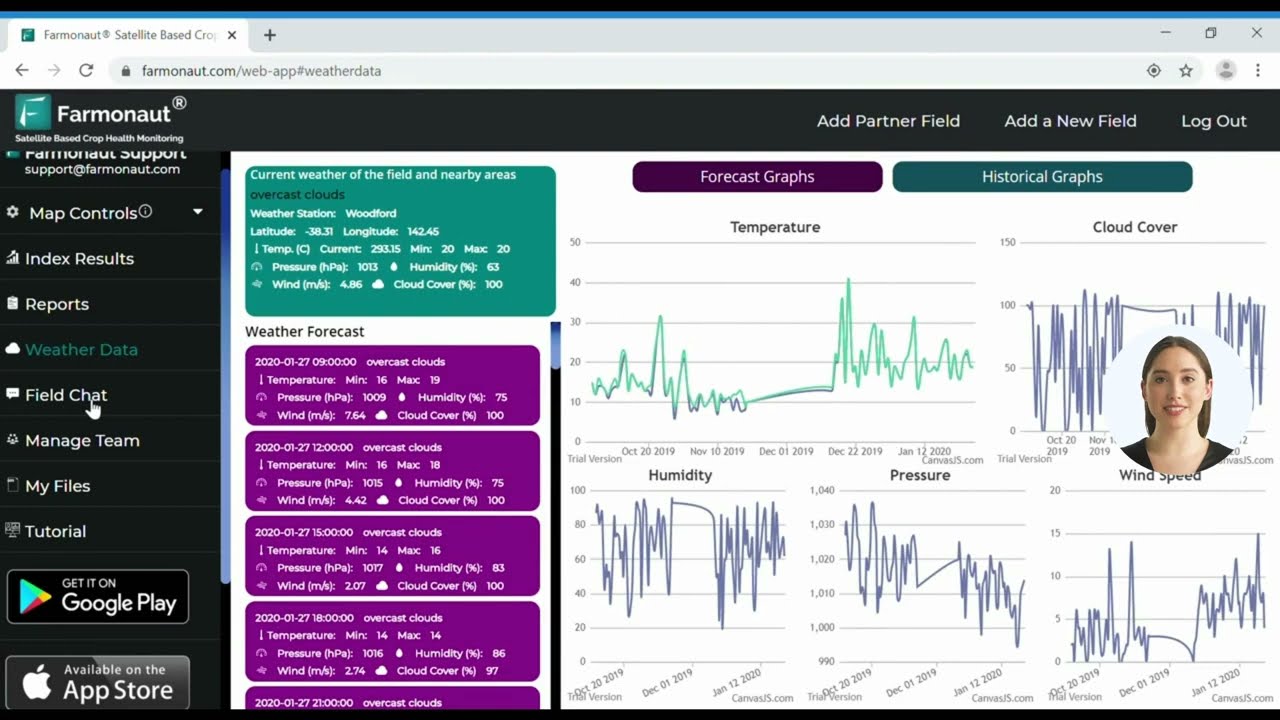
- 📲 Mobile & Web Platforms: With web, iOS, and Android apps, all stakeholders—from fisheries managers to Indigenous stewards—can access up-to-date reports and geospatial data.
- 💡 Resource & Fleet Optimization: Our fleet management systems minimize costs and enhance logistics for rural, coastal, and remote operations.
- 🔒 Regulatory Compliance: Automated alerts and historical record-keeping help users stay ahead of Alaska’s stringent permitting requirements.
Investor Note
Satellite-driven analytics have become indispensable for Alaska’s fisheries, aquaculture pilots, and regulatory agencies concerned with ecosystem changes—bridging the gap between tradition and innovation.
Stakeholders can explore more on our Farmonaut API (API Developer Docs) for custom integration into fisheries management workflows.

Common Mistake
Overlooking advanced monitoring technology in pilot aquaculture management can delay incident response, risking both permits and ecosystem health. Consistent satellite data enables rapid intervention and continuous improvement for any project.
- ✔ Wild Salmon Integrity: Alaska policy preserves healthy wild stocks prized in global markets.
- ⚠ Industry Restriction: Large-scale finfish farming faces tight regulatory hurdles to prevent ecological risks.
- 📑 Permitting is Rigorous: Any pilot project must clear lengthy reviews, including public comment and environmental impact studies.
- 🌎 Sustainability Prioritized: Regulatory and community frameworks emphasize long-term ecological balance over short-term profits.
- 🛰 Tech-Driven Management: Satellite data and AI tools power compliance, stewardship, and continuous improvement in Alaska fisheries and experimental aquaculture.
FAQ: Answers to Common Questions About Alaska Finfish Farming
Is fish farming illegal in Alaska?
It is not illegal by statute, but Alaska imposes such stringent regulatory restrictions—allowing only small, closely monitored pilot projects or land-based systems—that commercial open-net pen farming (especially for Atlantic salmon) is effectively prohibited.
Why is fish farming banned in Alaska?
To protect wild salmon stocks and community livelihoods. Disease risks, genetic mixing, water quality issues, and the high value of wild fisheries all drive a strong precautionary stance.
What is the difference between land-based RAS and traditional open-net pen farming?
Land-based RAS: Fish are housed in closed, recycled water systems inland or near-shore, with minimal risk of escapes or direct pollution.
Open-net pens: Fish are grown in coastal enclosures open to the sea, which heightens ecological and genetic risks to native populations. Alaska currently allows very limited RAS pilots only.
What agencies regulate fishery and aquaculture in Alaska?
Oversight is shared by the Alaska Department of Fish and Game, the Department of Environmental Conservation, and supporting federal, tribal, and local partners.
How can satellite and AI monitoring apps help Alaska fishermen and regulators?
With Farmonaut’s field mapping and management platform, all stakeholders can:
- Track water and habitat health in near real-time
- Monitor impacts from pilot aquaculture projects
- Optimize fleet deployment and project logistics
- Simplify documentation for regulatory compliance
Conclusion & The Future of Alaska’s Fisheries Stewardship
By 2026 and beyond, finfish farming concerns Alaska fishermen as both a policy challenge and a matter of long-term stewardship. While the state technically does not enforce a blanket legal prohibition on all forms of fish farming, it does enforce a framework so cautious that only highly regulated, closely monitored, and predominantly land-based (RAS) systems are considered.
Alaska’s unique approach—rooted in science, Indigenous rights, and coastal heritage—preserves the integrity of wild salmon fisheries. This not only safeguards thousands of jobs and billions in revenue, but it also guarantees global consumers access to ethically, sustainably harvested seafood.
Looking forward, any expansion of commercial finfish aquaculture in Alaska will require:
- Stringent ecological review and continuous monitoring
- Strong public and Indigenous community support
- Next-generation containment & waste treatment technologies

Key Insight
Alaska’s model sets a global example—balancing innovation with conservation, and using the latest satellite and AI tools to support transparent decision-making in finfish farming, wild fisheries, and ecosystem management.
Further Resources
- Farmonaut Carbon Footprinting: See how real-time emissions monitoring can drive sustainable resource use: Learn More
- Satellite-Driven Product Traceability: For legal compliance and supply chain transparency: Explore Traceability Solutions
- Crop Loan and Insurance Verification: Discover how satellite-driven verification empowers Alaska’s farmers and fishers: Learn More
- Farmonaut API Access: Integrate powerful monitoring into custom regulatory and management systems: API Information
- Fleet Management for Fisheries: Cut costs and improve safety for on-water or field vehicles: Fleet Management Benefits
Common Mistake
Ignoring the nuanced policy and science surrounding Alaska’s finfish farming can result in misleading conclusions—always consult the latest regulatory guidance and leverage technology for real-time ecological insight.
Discussion
Questions, corrections or field experience? Share them below. First-time comments are reviewed before they appear, and your email is never published.
No comments yet. Be the first to add a question or your experience.

 Sapoznick Farms
 Agrotoken
 Blue BearX
 Insignito
 Croptimum
 Dalmia Bharat Sugar
 DnCubed
 Field Capacity
 Indosistim Teknologi
 Liquify Digital
 CU Foods
 BeyondTech Global
 Rouge VC
 AgroGreen Dynamics
 AgroRisk
 Oath Inc
 Reddane Farming
 Esri North East Africa
 MDCV UK
