

Sustainable Agriculture Grants: US Programs & Maine Guide
Reviewed September 2026 against Maine Department of Agriculture, Conservation and Forestry (DACF) program pages and USDA National Institute of Food and Agriculture (NIFA) funding data.
Try it: Run your own numbers →
Sustainable agriculture grants in the United States run through two layers: national USDA programs open to farmers in every state, and state-level programs like Maine DACF’s Farms for the Future and Soil Health Implementation Grants. Maine’s Phase 2 cash grants top out at $25,000, its Soil Health Implementation Grants cap at $65,000 per farm, and the federal USDA Sustainable Agriculture Research and Education (SARE) program carries an estimated $42 million in annual funding for FY2026. The rest of this guide breaks down exactly which program fits which project, what each one actually pays, and how to build an application that survives review.
Table of Contents
- Quick Answer: Where the Money Actually Is
- USDA National Sustainable Agriculture Grant Programs
- Maine Department of Agriculture Grants for Sustainable Farming
- Maine Agricultural Technology Grant Program
- Comparison Table: Grant Amounts, Purpose, and Eligibility
- How Widely Are Sustainable Practices Actually Adopted?
- Documenting Grant Impact With Satellite Data
- Conservation and Forestry Add-On Programs
- Grant Application Process and Best Practices
- Grant ROI Calculator: Loan vs. Cash Grant
- Staying Informed: Deadlines Move Every Cycle
- FAQ: Sustainable Farming Grants
- Conclusion
- Try it: Run your own numbers
Quick Answer: Where the Money Actually Is
If you farm in Maine and need working capital for a conservation practice, the DACF’s Soil Health Implementation Grant pays up to $65,000 per farm for equipment, drainage, irrigation, cover cropping, or rotational grazing infrastructure. The related Healthy Soils Program distributed $1,000,000 across 19 farms statewide in the most recent award cycle reported on that page. If you need to build or overhaul a whole business — not just one practice — the Farms for the Future program runs in two phases: a $6,000 Phase 1 grant to fund professional business-plan development, followed by a Phase 2 award of up to $25,000 in cash plus access to a low-interest loan of up to $250,000 at 2% through the Agricultural Marketing Loan Fund. Phase 2 cash grants carry a real trade-off worth knowing before you apply: they require committing at least 5 acres of farmland to conservation for 7 years.
Outside Maine, the largest sustainable-agriculture funding line is the federal USDA SARE program, with an estimated $42 million in annual funding for FY2026 and regional award ranges from $0 to $10,000,000 depending on project type and region. If your project centers on turning raw output into a packaged, branded, or processed product, the USDA Value-Added Producer Grants (VAPG) program has $25,000,000 available for FY2026, split between planning grants up to $50,000 and working capital grants up to $200,000, funding roughly 185 awards nationally.
USDA National Sustainable Agriculture Grant Programs
USDA’s total agricultural funding allocation across all programs sits at $26,650,000,000 for FY2026, per federal appropriations tracked by USDA. That figure spans crop insurance, commodity support, and conservation — most of it is not a “sustainable farming grant” a producer applies for directly. The programs that are direct, competitive, sustainability-focused grants are narrower, and each has a different purpose:
- SARE (Sustainable Agriculture Research and Education): Administered through USDA’s National Institute of Food and Agriculture, SARE funds farmer-driven research and education projects on sustainable practices. Estimated at $42,000,000 annually for FY2026, distributed through four regional programs (North Central, Northeast, South, West), each with its own request-for-applications cycle and award ceiling.
- Value-Added Producer Grants (VAPG): $25,000,000 available for FY2026, supporting an estimated 185 awards nationally. Planning grants cap at $50,000; working capital grants cap at $200,000. This is the program to target if your sustainability project is really a market-access project — turning grain into flour, milk into cheese, or fruit into preserves.
- Specialty Crop Block Grant Program: Funds flow to state departments of agriculture, which then run their own sub-grant competitions. Maine DACF alone has received $7,500,000 through this program since 2002 for market research, promotion, and technology projects tied to specialty crops.
- Inflation Reduction Act conservation funding: The 2022 Inflation Reduction Act directed $19,500,000,000 to USDA conservation programs — soil health, sustainable practices, and climate-smart agriculture — across FY2022 through FY2031. This money mostly flows through existing NRCS programs (EQIP, CSP) rather than a standalone “IRA grant,” so producers apply through their state NRCS office, not a separate IRA portal.
For current SARE regional funding tiers and open request-for-applications, the National Sustainable Agriculture Coalition maintains a live roundup at sustainableagriculture.net. Because RFAs open and close on a rolling basis by region, that page — not a cached figure in this article — is the source to check before you build a timeline around a specific deadline.
Maine Department of Agriculture Grants for Sustainable Farming
Maine DACF runs the state’s grant infrastructure, and its programs stack: a farm can move through Farms for the Future for business planning, then apply separately to Soil Health Implementation Grants for a specific practice, without one disqualifying the other. Here’s what each program actually funds.
Farms for the Future Program
This is Maine’s flagship business-viability grant, run in two phases. Phase 1 provides $6,000 toward professional development of a formal business plan — covering consultant fees, market research, and financial projections. Phase 2 is available to farms that complete Phase 1 and demonstrate a viable plan: a $25,000 cash grant, plus eligibility for a low-interest loan of up to $250,000 at 2% interest through the state’s Agricultural Marketing Loan Fund. The catch that trips up applicants: Phase 2 cash funding requires committing a minimum of 5 acres of farmland to conservation for a 7-year term. That’s a real, binding land-use commitment, not a formality — factor it into your decision before applying, especially if you’re weighing future development or resale of that acreage.
Soil Health Implementation Grant
Funds direct, on-farm adoption of soil health practices: equipment purchases, drainage and irrigation improvements, cover cropping, reduced tillage systems, and rotational grazing infrastructure. The per-farm cap is $65,000. This is the program most aligned with a single, concrete capital project — a no-till drill, a high tunnel, a fencing system for rotational grazing — rather than a multi-year business overhaul.
Healthy Soils Program
A complementary state initiative that awarded $1,000,000 across 19 farms statewide in its most recent reported cycle — an average of roughly $52,600 per farm, though individual awards vary by project scope. It funds similar soil-health work to the Implementation Grant but runs as a distinct application track.
Specialty Crop Block Grant Program (Maine allocation)
Maine DACF has distributed $7,500,000 through this USDA-funded program since 2002, targeting market research, promotional campaigns, and technology adoption specifically for specialty crop growers (fruits, vegetables, tree nuts, nursery crops). Applications route through DACF, not directly to USDA.
Agricultural Infrastructure Investment Program
A one-time federal recovery allocation of $20,000,000 flowed to Maine farms and food processors in 2022 for infrastructure improvements — equipment, facility upgrades, utility work, and technology adoption. This was pandemic-recovery funding tied to a specific appropriation, so it is not a recurring annual grant cycle; check the DACF grants page directly to confirm whether a successor program is currently open before assuming this funding line repeats.
Every dollar figure and eligibility rule above shifts year to year as legislatures and USDA reauthorize budgets. Maine DACF updates its program pages at maine.gov/dacf/ard/grants as caps and deadlines change — bookmark that page rather than this article’s numbers if you’re applying more than a few months from now.

Maine Agricultural Technology Grant Program
Producers searching specifically for a “Maine agricultural technology grant program” are usually looking for funding to adopt precision-ag tools, monitoring software, or farm-management technology rather than physical infrastructure. Maine DACF does not currently publish a standalone, permanently-named “Agricultural Technology Grant” separate from the programs above — technology purchases (sensors, software, monitoring equipment) are eligible expenses within the Soil Health Implementation Grant’s $65,000 cap and within Farms for the Future Phase 2 funding, rather than a dedicated pool with its own name. Because program names and structures get reorganized between budget cycles, confirm the current program lineup directly at Maine DACF’s grants index before assuming which bucket your technology purchase falls under — a phone call to the DACF grants office will save you from applying to the wrong track.
Comparison Table: Grant Amounts, Purpose, and Eligibility
| Program | Funding Amount | Administered By | Purpose | Key Condition |
|---|---|---|---|---|
| Farms for the Future — Phase 1 | $6,000 | Maine DACF | Business plan development | Prerequisite for Phase 2 |
| Farms for the Future — Phase 2 (cash) | $25,000 | Maine DACF | Business implementation | 5-acre farmland conservation for 7 years |
| Farms for the Future — Phase 2 (loan) | Up to $250,000 at 2% | Maine DACF / Agricultural Marketing Loan Fund | Business capital | Low-interest, not a grant |
| Soil Health Implementation Grant | Up to $65,000 | Maine DACF | Equipment, drainage, irrigation, cover cropping, tillage, grazing | Per-farm cap |
| Healthy Soils Program | $1,000,000 total / 19 farms | Maine DACF | Soil health practices, statewide | Competitive, limited slots |
| Specialty Crop Block Grant (Maine) | $7,500,000 cumulative since 2002 | Maine DACF (USDA-funded) | Market research, promotion, tech for specialty crops | Specialty crop producers only |
| USDA SARE | ~$42,000,000/year (FY2026 est.), $0–$10,000,000 by region | USDA NIFA, 4 regional programs | Farmer-driven sustainable ag research and education | Open to all US states |
| USDA VAPG | $25,000,000 total; $50,000 (planning) / $200,000 (working capital) | USDA | Value-added processing and marketing | ~185 awards nationally |
The single most consequential line in this table isn’t a dollar figure — it’s the Farms for the Future Phase 2 conservation commitment. A $25,000 grant tied to a 7-year land restriction changes the math on farms planning to sell, subdivide, or repurpose acreage. Read the full commitment terms at the DACF program page before applying, not after approval.
How Widely Are Sustainable Practices Actually Adopted?
National context matters when deciding whether a grant-funded practice puts you ahead of or behind your peers. USDA’s 2022 Census of Agriculture found that cover crops — one of the most commonly grant-funded practices — were planted on just 4.7% of total US cropland. That’s a national figure covering all crop types and regions; it is not broken out by state in the public Census release, so a Maine-specific adoption rate is not currently published. The Census of Agriculture runs on a five-year cycle, with the next full data release expected in 2027; for an annual snapshot between Census years, USDA NASS’s Quick Stats database at nass.usda.gov lets you filter by state, commodity, and year.
This low national baseline is part of why grant programs exist in the first place: cover cropping, reduced tillage, and rotational grazing remain minority practices even where funding is available, which means grant dollars are chasing a genuine adoption gap rather than topping up something already widespread.

Documenting Grant Impact With Satellite Data
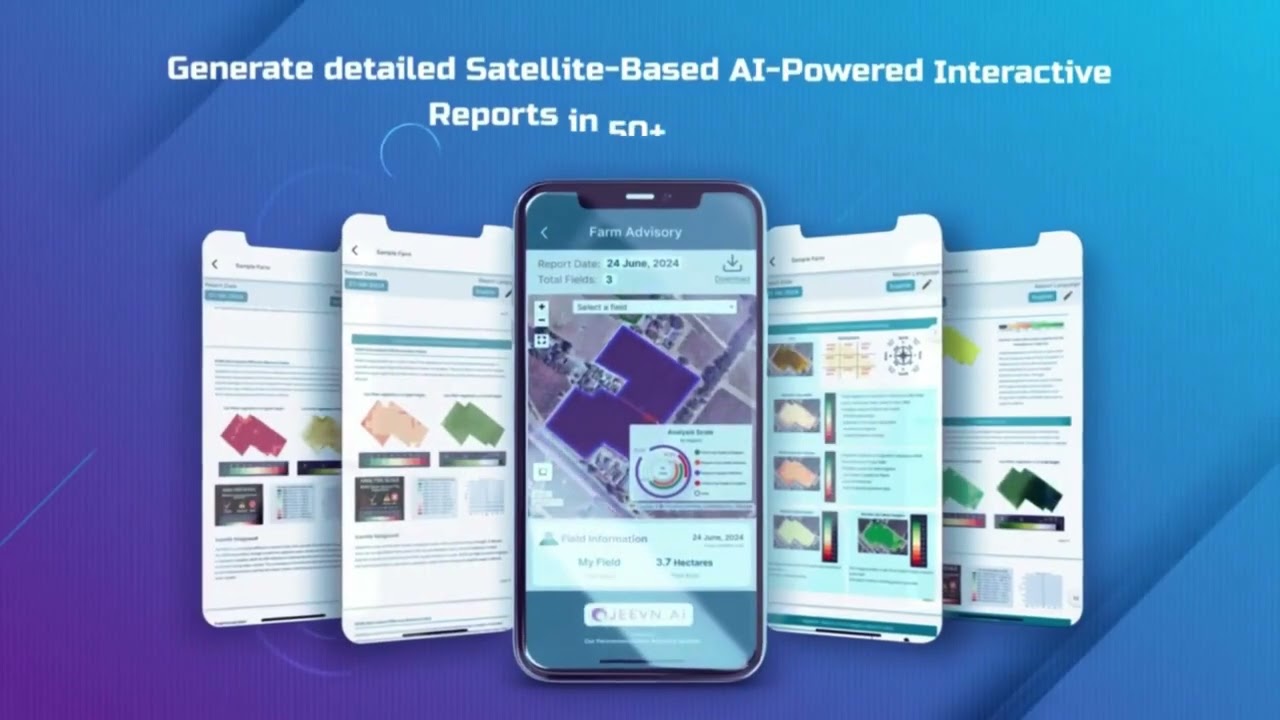
Nearly every program above — Soil Health Implementation, Healthy Soils, SARE, VAPG — requires reporting on outcomes, not just spending. Reviewers want evidence that cover cropping increased canopy cover, that rotational grazing improved pasture recovery, or that irrigation upgrades reduced water stress. Farmonaut’s satellite monitoring tools give producers a way to generate that evidence without hiring a survey crew:
- ✔ Monitor crop health, soil moisture, and field-level changes over time via satellite imagery and AI, available on Android, iOS, and web (launch the app).
- ✔ Trace agricultural products from field to buyer with blockchain-backed records — useful for value-added grant reporting (read more about Traceability).
- ✔ Pull weather and advisory data through the JEEVN AI system to document climate-related risk mitigation.
- ✔ Integrate satellite data into internal or state reporting systems via the Farmonaut API (developer docs).
- ✔ Generate carbon footprint documentation for grants that require sustainability metrics as a condition of award (Carbon Footprinting tools).
Concretely: a farm using its Soil Health Implementation Grant funds for cover cropping can pull before-and-after satellite imagery showing canopy establishment across the funded acreage, timestamped to the growing season — evidence that holds up better in a final report than a self-reported summary.




For operations managing multiple funded projects at once, the Agro Admin App centralizes task tracking and satellite reporting across fields — useful when a farm is running Soil Health Implementation work on one block and a Healthy Soils project on another, and needs separate documentation trails for each. For farms handling post-harvest logistics under a value-added grant, the Fleet Management suite supports cost tracking for distribution — a line item some VAPG working capital budgets specifically call out.

Conservation and Forestry Add-On Programs
In Maine, sustainable farming funding frequently overlaps with forestry and conservation programs, particularly for farms with woodlot acreage, riparian buffers, or wildlife habitat adjacent to cropland. The DACF’s approach treats farm and forest health as linked rather than separate line items:
- ✔ Woodlot and Forest Stewardship Plans: Technical assistance for sustainable timber planning, reforestation, and habitat restoration on farms with adjoining woodland.
- ✔ Best Management Practices (BMPs): Erosion control, nutrient runoff reduction, and riparian zone protection during harvest and cultivation — often a prerequisite for Soil Health Implementation Grant approval on farms near water bodies.
- ✔ Buffer and habitat maintenance: Funding to maintain or expand forested buffers across working agricultural land, supporting both water quality and wildlife corridors.
Maine’s forest sector — both timber and non-timber products — is a significant part of the state’s rural economy, and grant reviewers frequently favor applications that show coordinated farm-and-forest planning over single-issue proposals.
Submitting a Soil Health Implementation or Farms for the Future application for a property with woodland or riparian frontage, without an accompanying forestry or buffer plan, is one of the most common reasons Maine applications get sent back for revision. If your acreage includes any wooded or streamside land, address it in the application, not after a reviewer asks.
Grant Application Process and Best Practices
The mechanics differ between Maine DACF and federal USDA programs, but the underlying discipline is the same: apply early in the window, document need with real data, and build a reporting habit before you’re required to.
Steps to a Strong Application:
- Confirm the current program list and caps directly at maine.gov/dacf/ard/grants or, for national programs, the relevant USDA NIFA or SARE regional page — dollar amounts and deadlines shift between budget cycles.
- Match your project to the right program: a single equipment purchase fits Soil Health Implementation; a full business overhaul fits Farms for the Future; a processing or branding project fits VAPG.
- Read the fine print on conditions, not just the award amount — the Farms for the Future 7-year conservation commitment is the clearest example of a term that changes whether the money is worth taking.
- Build a project plan with measurable outcomes: acres treated, gallons of runoff reduced, tons of cover crop biomass — vague goals score worse than specific, checkable ones.
- Use satellite or on-farm monitoring data to document baseline conditions before you apply, so your final report has a true before-and-after comparison rather than a post-hoc estimate.
- Establish a reporting routine from day one — most grants require mid-term or final reports, and retroactively reconstructing data is far harder than logging it as you go.
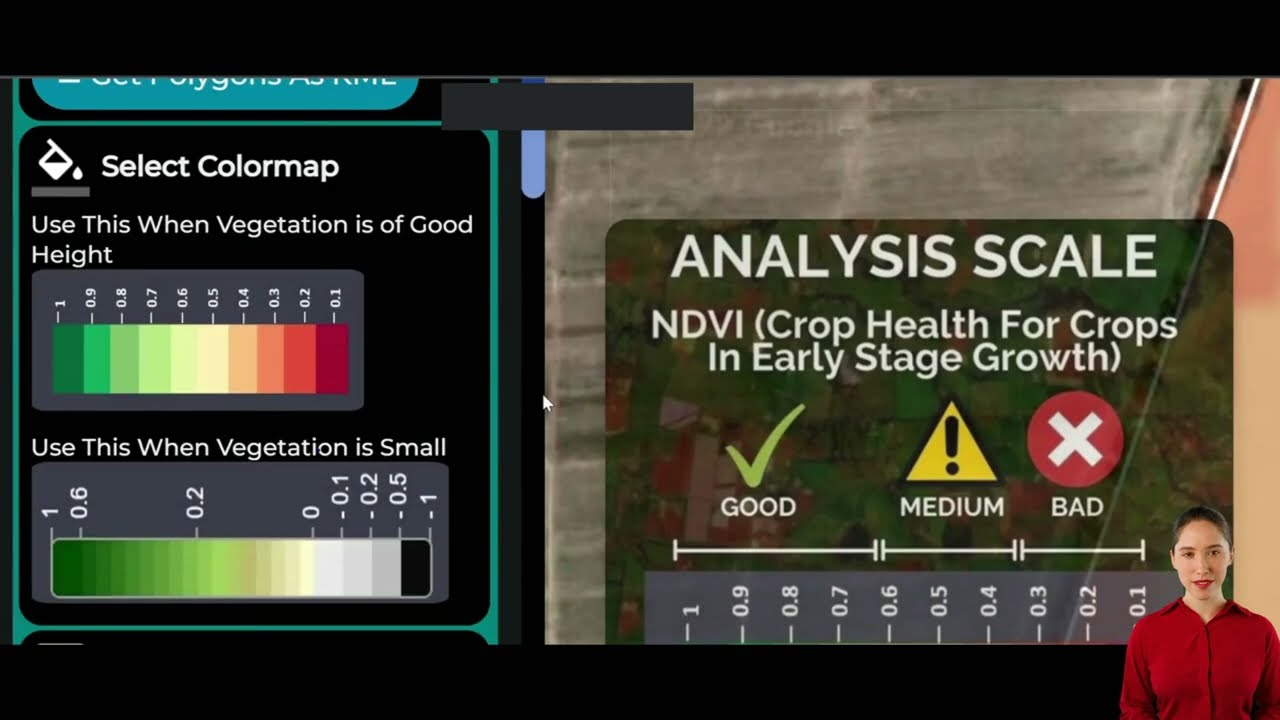
Include dated before-and-after satellite or drone imagery in both your application and your final report. Reviewers evaluating soil health and water-quality grants increasingly weight visual, timestamped evidence over narrative summaries alone.
Grant ROI Calculator: Loan vs. Cash Grant
Use this calculator to compare the real cost of Farms for the Future’s Phase 2 low-interest loan against covering the same project cost out of pocket, based on the program’s published $250,000 cap and 2% rate.
Run your own numbers
Assumes standard amortizing monthly payments at the stated rates. Excludes loan origination fees, the value of the $25,000 Phase 2 cash grant, and the opportunity cost of the 7-year, 5-acre conservation commitment required for Phase 2 cash funding — confirm current loan terms and fees directly with Maine DACF before budgeting against this estimate.
Staying Informed: Deadlines Move Every Cycle
Every program in this article changes its application windows annually, and several change award caps between fiscal years as state and federal budgets are finalized. Maine DACF posts current deadlines on its grants pages and through its newsroom bulletins; USDA SARE’s four regional programs each run independent RFA calendars tracked at the National Sustainable Agriculture Coalition’s roundup. Build a habit of checking both in the quarter before your planting or infrastructure season, not the week before a deadline — Farms for the Future Phase 1 approval, for instance, must precede a Phase 2 application, which means the realistic planning horizon for a full award is often a full year, not a single grant cycle.

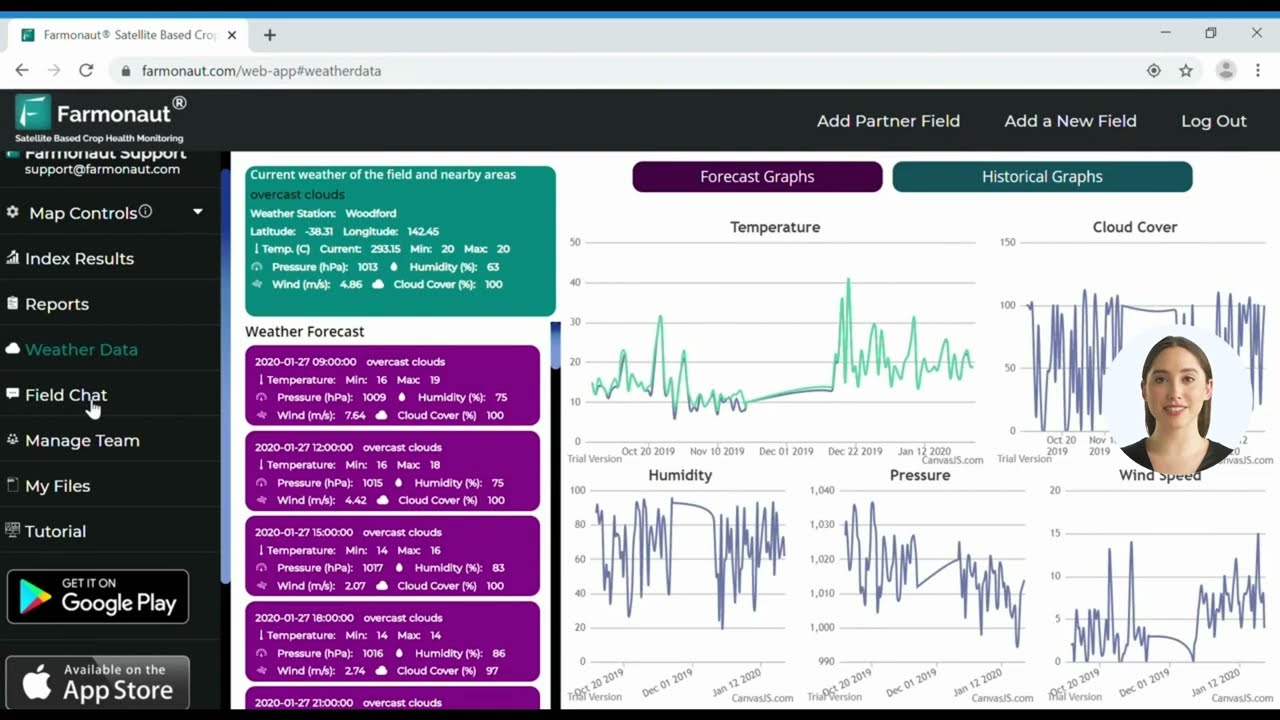
Cloud-based satellite monitoring can turn Maine DACF’s grant reporting requirement from a manual field-walk into a documented, timestamped record — useful across both Soil Health Implementation and Farms for the Future reporting cycles, which typically require evidence of practices actually implemented, not just funds spent.
FAQ: Sustainable Farming Grants
What is the biggest sustainable farming grant available to a Maine farm?
Among state programs, the Soil Health Implementation Grant’s $65,000 per-farm cap is the largest single award for a specific practice. Combined, Farms for the Future can deliver more total capital — up to $6,000 (Phase 1) plus $25,000 cash and access to a $250,000 low-interest loan (Phase 2) — but the loan portion must be repaid and the cash grant carries a 7-year land-use commitment.
Do sustainable agriculture grants exist outside Maine?
Yes. USDA’s SARE program (an estimated $42,000,000 annually for FY2026) and Value-Added Producer Grants ($25,000,000 for FY2026) are open to producers in any US state, administered federally rather than through a state agriculture department.
What’s the difference between a sustainable agriculture grant and a sustainable farming grant?
In practice, the terms are used interchangeably by USDA, state agencies, and applicants. “Sustainable agriculture” more often appears in federal program names (like SARE), while “sustainable farming” is more common in state-level and public-facing material — but the underlying eligible practices (soil health, water conservation, diversification) overlap almost completely.
What percentage of US farmland actually uses grant-funded practices like cover cropping?
USDA’s 2022 Census of Agriculture found cover crops on 4.7% of total US cropland — a national figure, not broken out by state. The next full Census release is expected in 2027; USDA NASS’s Quick Stats database offers year-by-year state filtering in the interim.
Is there a dedicated Maine agricultural technology grant?
Not as a separately named, standalone program as of this review. Technology purchases are eligible expenses within the Soil Health Implementation Grant and Farms for the Future funding. Confirm current program structure directly with Maine DACF, since program names are reorganized between budget cycles.
Can I apply for both a Maine state grant and a federal USDA grant for the same project?
Programs generally prohibit funding the identical expense twice (“double-dipping”), but a single farm operation can hold awards from both a Maine DACF program and a USDA program simultaneously if they fund distinct project components — confirm specific stacking rules with each program’s grant officer before budgeting on that assumption.
Conclusion
The programs that matter most for a US sustainable farming project break down cleanly by scale: Maine’s Soil Health Implementation Grant ($65,000 cap) and Healthy Soils Program ($1,000,000 across 19 farms) for a single practice; Farms for the Future ($6,000 plus $25,000 plus a $250,000 loan option) for a full business transition, with its binding 7-year conservation term; and federal SARE (~$42,000,000/year) or VAPG ($25,000,000, up to $200,000 per award) for research-driven or value-added projects that reach beyond one state.
- ✔ Match your project’s scope to the right program tier before you start writing — a $5,000 equipment purchase doesn’t need a Farms for the Future business plan.
- ✔ Read every condition attached to cash awards, not just the headline number — land-use commitments and repayment terms change the real value of an award.
- ✔ Confirm current caps and deadlines directly at Maine DACF’s grants page or the relevant USDA program page before applying — funding levels shift with each budget cycle.
- ✔ Document baseline conditions with dated data — satellite imagery, soil tests, water readings — before work begins, so your final report has real before-and-after evidence.
- ✔ Treat grant reporting as a year-round habit, not a pre-deadline scramble.
Discussion
Questions, corrections or field experience? Share them below. First-time comments are reviewed before they appear, and your email is never published.
No comments yet. Be the first to add a question or your experience.

 Acro Insurance
 Geno
Geno Hayleys Agriculture
 Linx Agritech
 Adinet
 Save Your Soils
 Grandstream Algérie
 XOS Realty
 Geospatial Lab Africa
 Agro La Gándara
 HIPSAC
 ZOL Zimbabwe
 Juligerm
 AdBio
AdBio MISE Maroc
 NWNS
NWNS Red August Group
 Farm Inc
 Licence holder · Niger · Gold










