

Supply Chain Disruptions in US Agriculture: 2025 Tariffs
Table of Contents
- Summary: Navigating U.S. Agricultural Supply Chains Amid 2025 Tariffs
- Overview: U.S. Agriculture and Global Supply Chain Disruptions
- Mexico Agriculture Tariffs and Their Impacts on Supply Chain for Agriculture
- China Tariffs: Broader Disruptions and Trade Implications in 2025
- Causes and Consequences: 2025 Tariff-Driven Supply Chain Disruptions
- Strategic Adaptation: Overcoming Agricultural Supply Chain Challenges
- Impact Comparison Table: 2025 Mexico and China Tariffs vs. 2024
- Farmonaut’s Innovative Solutions for Navigating Modern Agricultural Disruptions
- Frequently Asked Questions (FAQ)
Summary: Navigating U.S. Agricultural Supply Chains Amid 2025 Tariffs
The U.S. agricultural sector—a vital component of our nation’s economy—remains resilient in providing food security, employment, and export revenue despite recent disruptions. As supply chain disruptions in US agriculture from Mexico/China tariffs unfold in 2025, stakeholders face unprecedented complexities in ensuring efficiency, cost control, and market sustainability.
These agriculture disruption effects are particularly evident in increased production costs, operational delays, evolving trade relationships, and needed strategic adaptations—especially regarding Mexico agriculture tariffs and supply chain for agriculture goods from China.
This blog dives deep into the significant impacts, root causes, current industry trends, and strategic solutions unfolding in agriculture supply chains. Throughout, we explore how technology (like Farmonaut) and policy innovations help farmers and agribusinesses overcome the challenges posed by tariffs, labor shortages, growing input costs, and the need to maintain efficiency and market access both domestically and globally.



Overview: U.S. Agriculture and Global Supply Chain Disruptions
In 2025, the chain of supply and demand across the U.S. agricultural landscape is more interconnected—and exposed—than ever before. Supply chain for agriculture combines farming, logistics, processing, and retail distribution, intertwining local and global economies.
Major disruptions, particularly involving tariffs on imports and exports with Mexico and China, threaten many elements:
- Production Efficiency: Tariffs can hinder timely access to critical inputs like fertilizers, pesticides, and machinery.
- Logistics & Transportation: Border delays and regulatory inspections add pressure, especially for perishable produce and fresh goods.
- Cost Structures: Increased costs for imported goods, labor, and compliance often lead to higher consumer prices and operational challenges, especially for small and mid-sized farms.
- Market Access: Tariffs and trade restrictions affect the pathway for exports and make access to international markets—China and Mexico included—more uncertain.
This evolving context underscores the importance of navigating challenges with strong, data-driven strategies, resilient infrastructure, and a focus on technological innovation.

Mexico Agriculture Tariffs and Their Impacts on Supply Chain for Agriculture
Mexico: A Vital North American Trading Partner
Mexico remains a key trading partner in North America’s agricultural sector, boasting deeply integrated supply chains—especially involving fresh produce, grains, and livestock. Over the years, cross-border trade fueled growth, job creation, and reliable access to vital goods for both nations.
Tariff Disputes and Reciprocal Measures
However, shifts in U.S. trade policies—including disputes over labor and environmental standards—sparked a cycle of reciprocal tariffs. In 2025, this tension heightened as Mexico implemented new tariffs on certain U.S. agricultural products. Notable impacts include:
- Increased Cost for Exporting Key Crops: Corn, soybeans, and meat shipments into Mexican markets now face higher tariffs, raising exporting costs and diminishing U.S. competitiveness.
- Tariffs on Imported Inputs: U.S. farms reliant on fertilizers, seed, and machinery components from Mexico have seen production costs rise—a key effect of supply chain disruptions in US agriculture from Mexico/China tariffs.
- Reciprocal Tariffs: For every U.S. tariff, Mexico’s reciprocal policies create extra uncertainty, making logistics and planning more complex across borders.
Supply Chain Disruption: Real-World Impacts in 2025
The timely flow of goods is especially critical for fresh produce. Tariffs create and amplify several challenges:
- Delays at Border Crossings: Extended transportation and storage times can reduce the freshness of fruits and vegetables, leading to spoilage, economic losses, and added costs for U.S. farmers, Mexican distributors, and ultimately, consumers.
- Labor and Equipment Shortages: Sourcing alternative suppliers or crossing through more rigorous border inspections often complicates logistics, increases labor constraints, and further strains supply.
- Operational Constraints in Key Regions: Entire supply chains in border regions face ripple effects—equipment backlogs, storage constraints, and timing issues all compound the agriculture disruption.
- Higher Prices for Consumers: Input and transaction cost increases are usually passed through to end product prices, causing an increase in domestic and global food prices.

Delayed Access to Fertilizers, Machinery, and Inputs
Mexican tariffs often target critical inputs—such as specialized fertilizers, bio-stimulants, and machinery parts—that U.S. agriculture and forestry operations rely on. Such delays have a cascading influence:
- Reduced application of fertilizer at optimal crop stages, affecting production efficiency.
- Breakdowns in machinery flow, causing field operations to be deferred, thus impacting yields.
- Increased need to seek alternative suppliers, often at a higher cost or lower quality.
This challenge enhances the relevance of efficient resource management and the adoption of new technologies in supply chains—an area where precision agriculture is crucial in 2025.

Policy Responses and Search for Alternatives
In response, supply chain for agriculture participants:
- Re-evaluate sourcing strategies to either localize production or diversify foreign supplies.
- Accelerate investments into alternative input providers, both domestic and international.
- Embrace data-driven management tools to optimize operations despite heightened tariffs and delays.
Read more about how end-to-end fleet management tools, like those within the Farmonaut platform, help optimize logistics, cut operational costs, and ensure seamless farm machinery and labor scheduling even as supply chain constraints bite harder in 2025.
China Tariffs: Broader Disruptions and Trade Implications in 2025
China: One of the Largest Global Consumers of U.S. Agricultural Exports
China remains not only a key trading partner, but also one of the largest consumers of U.S. soybeans, pork, and tree nuts. Tariffs initially introduced during earlier trade disputes continue to shape the agricultural dynamic in 2025, with direct and indirect effects across the supply chain for agriculture.
Lingering Tariffs and Non-Tariff Barriers
While some trade tensions have eased, the continued presence of residual tariffs and more subtle non-tariff barriers—stricter phytosanitary inspections, additional licensing requirements—creates uncertainty, bottlenecks, and market access limitations for U.S. exports.
- Market Access Remains Constrained: U.S. farmers still face restrictions and higher costs when exporting to China in 2025.
- Incidence of Diversion Strategies: Many farmers are now forced to adjust their planting decisions, divert products to alternative markets (often where margins are lower), or even scale back on high-tariff crops like soybeans.
- Input Cost Explosion: Tariffs extend upstream—key inputs like fertilizers, pesticides, and certain chemicals previously imported from China now cost significantly more, reducing production efficiency and threatening crop yields.

Broader Economic and Supply Chain Effects
The liner flow from China’s tariffs and non-tariff restrictions leads to:
- Disconnected trade lanes, especially for high-value and perishable agricultural products.
- Pressure on U.S. agribusinesses to find alternative suppliers for critical imports and explore new markets for exports.
- Volatility in commodity prices as markets adjust to new supply and demand dynamics resulting from ongoing disruptions.

Check out more about managing carbon footprinting as new transportation patterns and supplier diversification reshape global agricultural logistics in response to these 2025 disruptions.
Causes and Consequences: 2025 Tariff-Driven Supply Chain Disruptions
Supply chain disruptions in US agriculture from Mexico/China tariffs are not happening in a vacuum—they are amplifying many existing vulnerabilities in the system.
Key Causes Involving Tariffs and Policies
- Tariffs Stemming from Policy Disputes: Unilateral and reciprocal tariff impositions, often in retaliation for labor/environmental compliance disagreements.
- Broader Policy and Regulatory Uncertainties: Evolving phytosanitary, sustainability, and traceability demands.
- Ripple Effects from Delays and Logistics Constraints: Bottlenecks at ports and borders—especially for perishable fresh produce and input shipments.
Major Consequences for U.S. Agriculture
- Rising Input Costs: Up to a 15% increase in farm production costs for some key commodities in 2025, according to sector analysts.
- Operational Uncertainty: Difficulty in sourcing, unpredictable border delays, and increased inventory needs strain working capital for agribusinesses.
- Reduced Supply Chain for Agricultural Efficiency: Lack of timely access to fertilizers, machinery, and labor inputs lowers crop yields and overall productivity.
- Market Volatility: A greater potential for price swings in both domestic and export markets due to unpredictable trade flows and distorted competitive advantages.
- Disproportionate Impact on Small/Mid-Scale Farms: These operations have less ability to adjust or access alternative suppliers, and often face compounding financial risks.

Strategic Adaptation: Overcoming Agricultural Supply Chain Challenges
Despite these significant challenges, the sector’s resilience is evident through proactive adaptation and technological innovation. Let’s explore the leading strategies to minimize disruption in agriculture supply chains in 2025 and beyond:
1. Diversifying Suppliers and Trade Partnerships
- U.S. producers increasingly seek alternative export markets to hedge against dependent relationships with Mexico and China.
- Efforts are underway to source machinery, fertilizers, and essential inputs domestically or from partners in South America, Europe, and Asia.
2. Investing in Domestic Manufacturing and Input Production
- Government stimulus and private capital continue to flow into rebuilding the domestic production of critical agricultural inputs, reducing exposure to foreign policy and tariff volatility.
Learn how large scale farm management platforms can maximize efficiency by ensuring resources and labor are coordinated using robust satellite-based monitoring and AI-driven recommendations—cutting down on operational costs and improving resilience.
3. Digital Technologies, Data & AI to Optimize Operations
- Technology-led traceability ensures better product origin verification and compliance with trade regulations—read about blockchain-based traceability on Farmonaut.
- Advanced resource, fleet, and input management through platforms like Farmonaut help teams optimize vehicle use, reduce waste, and monitor field operations in real time—essential for overcoming modern supply chain constraints.
4. Policy Advocacy and Trade Negotiation
- Industry groups and policymakers are calling for focused bilateral and multilateral discussions to de-escalate tariff disputes and establish stable, transparent frameworks for trade.
- Upgrades to border infrastructure and automation technologies streamline cross-border inspections and compliance, minimizing physical and regulatory bottlenecks.
5. Emphasis on Sustainability and Compliance
- With carbon emissions and climate factors increasingly central to trade, companies are measuring, reporting, and reducing their carbon footprint. Explore Farmonaut’s carbon footprinting to see how real-time emissions monitoring supports these goals.

Impact Comparison Table: 2025 Mexico and China Tariffs vs. 2024
| Supply Chain Aspect | Estimated Pre-Tariff Value (2024) | Estimated Post-Tariff Value (2025) | Impact Summary |
|---|---|---|---|
| Input Costs (Fertilizers, Machinery, Chemicals) | $100B (annual aggregate) | $115B (+15%) | Significant rise due to increased costs from China and Mexico tariffs. Directly raises production expenses. |
| Production Volume (%) | 100% (baseline) | 92–96% | Reduced crop yields expected due to higher input costs, delayed input deliveries, and operational disruptions. |
| Trade Volume to Mexico (U.S. Exports) | $23B | $18B | U.S. exports to Mexico decline as tariffs make U.S. products less competitive; diversion to other markets where possible. |
| Trade Volume to China (U.S. Exports) | $31B | $24B | Ongoing market access constraints, tariff escalation, and non-tariff barriers dampen export flows to China. |
| Consumer Prices (Food Index) | 100 (2024 baseline) | 107–110 (+7%–10%) | Higher production and transportation costs are passed to consumers, raising food prices for end users. |
| Operational/Logistics Delays | 1–2 days avg. delay | 3–5 days avg. delay | Border congestion, regulatory checks, and freight disruptions extend supply chain cycle times for perishable goods. |
| Availability of Fresh Produce | Stable | Unstable (spot shortages, higher spoilage) | Border delays and input issues disrupt the timely flow of perishable produce, leading to more frequent shortages. |
| Farming & Forestry Employment | 2.4M jobs | 2.2M–2.3M jobs | Automated solutions may soften impact, but operational retrenchment and input constraints may marginally reduce employment. |
Looking for powerful agricultural data access? Our API enables integration of real-time satellite, weather, and crop insights directly into your agribusiness workflow. Try the Farmonaut Satellite-Weather API or visit the API Documentation for seamless integration.
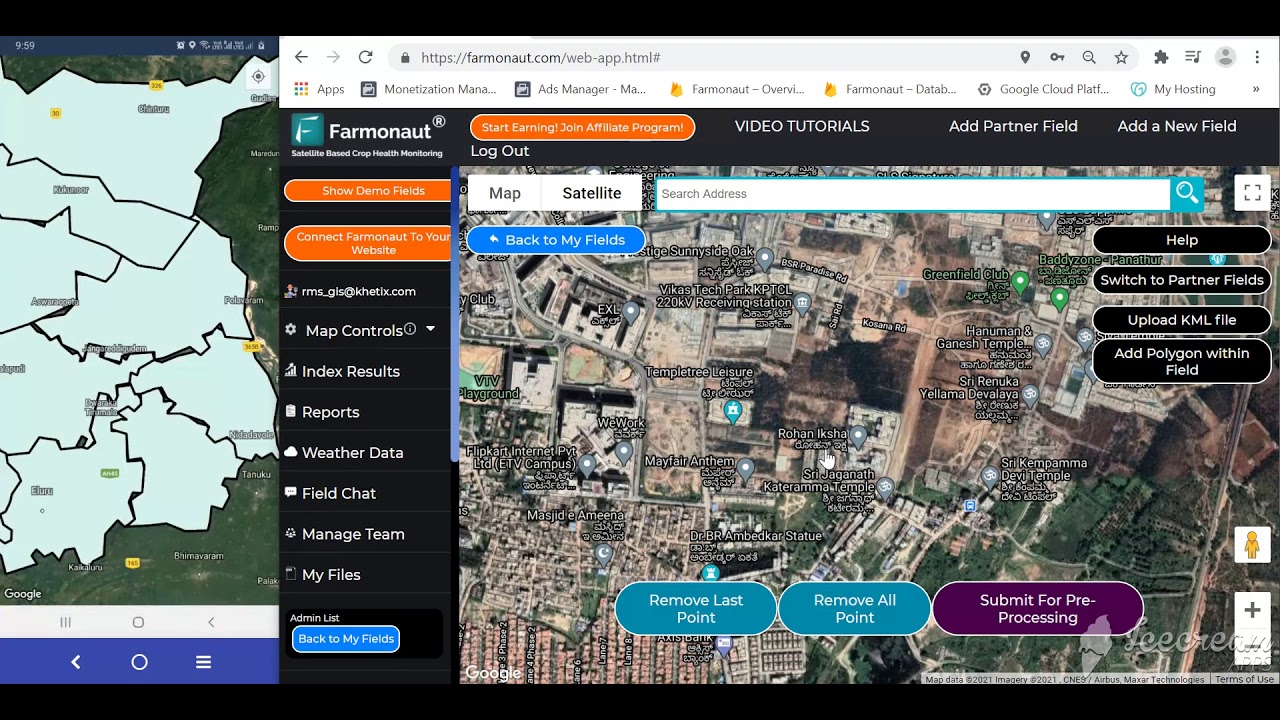
Farmonaut’s Innovative Solutions for Navigating Modern Agricultural Disruptions
As agriculture supply chains continue to experience volatility from tariff policies, labor constraints, input shortages, and logistics delays in 2025, it becomes imperative to embrace affordable precision farming and digital transformation. This is where Farmonaut delivers powerful impact.
Enabling Resilient Decision-Making with Advanced Technologies
- Satellite-Based Crop Health Monitoring: Get real-time updates on NDVI, soil moisture, and crop vitality to make fast, precise input decisions—reducing reaction time amid supply shocks.
- AI-Powered Farm Advisory: Our Jeevn AI system provides on-the-spot crop advisory guidance, optimizing fertilization, irrigation, and pest response, essential for countering operational unpredictability caused by supply chain disruptions.
- Fleet and Resource Management: Track, schedule, and optimize the use of vital farm machinery—even as supply chain for agriculture faces delays or operational bottlenecks.
- Blockchain Traceability for Agriculture: Increase transparency and market access in foreign and domestic trade with our secure, easily auditable blockchain-based traceability tools—crucial as new market regulations and standards emerge.
- Carbon Footprinting: Monitor sustainability metrics to ensure environmental compliance and unlock new market opportunities with climate-aware brands and institutional buyers.
We at Farmonaut are committed to empowering global farmers, agribusinesses, and policy stakeholders by making precision agriculture affordable, scalable, and actionable at every step in the agriculture supply chain.
-
Farmonaut’s platform can be accessed on:
- The web/browser app
- The Android and iOS apps
- Via API integration and API docs
- Serving: Individual farmers, large agribusinesses, NGOs, government ministries, and financial institutions across the United States and globally.
To explore solutions for farm fleet management, forest plantation monitoring, or blockchain-enabled traceability—visit our dedicated product pages:
- Fleet Management: Improve operational efficiency, reduce running costs, and alleviate supply chain constraints for all sizes of agricultural operations.
- Carbon Footprinting: Track emissions and support compliance for food brands, forestry managers, and sustainable farms.
- Blockchain Traceability: Enhance export market access and comply with evolving certification standards by offering secure, transparent supply chain data.
- Large Scale Farm Management: Satellite and AI-driven monitoring for extensive cropping systems and plantation operations.
- Crop Loan and Insurance: Streamline funding and minimize fraud risk with satellite-based farm verification for banks and insurers.
Frequently Asked Questions (FAQ)
-
What are the main causes of supply chain disruptions in US agriculture from Mexico and China tariffs in 2025?
Ongoing trade and policy disputes, reciprocal tariff impositions, increased regulatory scrutiny at borders, and non-tariff barriers such as new compliance standards. These factors combine to disrupt the smooth flow of goods, increase costs, and impede operational efficiency.
-
Which agricultural products are most affected by 2025 tariffs?
Key products include corn, soybeans, pork, tree nuts, fresh produce (like tomatoes and berries), and value-added goods. Inputs such as fertilizers, chemicals, and machinery are also impacted due to cost increases and supply delays.
-
How do supply chain disruptions from tariffs influence food prices in 2025?
Tariff-driven input and transportation cost increases are typically passed down the supply chain, resulting in a 7–10% hike in consumer prices for key food basket items in the U.S.
-
What strategies can agribusinesses and farmers take to overcome agriculture disruption?
These include diversifying both supply sources and export markets, investing in domestic input production, adopting precision agriculture platforms (see Farmonaut), and leveraging digital resource and fleet management solutions to improve resilience and cost control.
-
What role does technology play in mitigating supply chain risk?
Advanced technologies (like those offered by Farmonaut) support timely monitoring, traceability, efficient input use, smarter fleet logistics, and transparent reporting—enabling stakeholders to adapt faster to ongoing disruptions.
-
How do tariffs impact small and mid-size U.S. farms in particular?
Smaller farms face proportionately greater challenges—they often lack the capital and bargaining power to absorb or circumvent rising input costs, and are more exposed to volatility in export demand and supply chain reliability.
-
How can farmers monitor and reduce their operational carbon footprint?
By using carbon tracking tools (like Farmonaut Carbon Footprinting), agricultural stakeholders can gain insights into emissions patterns—helping them implement more sustainable practices and achieve compliance in carbon-sensitive markets.
-
Where can I access Farmonaut’s precision agriculture solutions for tackling supply chain disruptions?
You can access the Farmonaut platform via our Web App, download the Android App or iOS App, or use our API & Developer Docs to integrate data and insights directly into your systems.
Conclusion:
The landscape of U.S. agricultural supply chains in 2025 is defined by complexity—amid tariffs, trade disputes, labor shortages, production cost spikes, and ongoing policy evolution, stakeholders face remarkable challenges. Yet, through strategic adaptation, technological innovation, and the adoption of precision agriculture (as exemplified by our offerings at Farmonaut), the sector is poised to remain resilient and resourceful. As new tariff policies, market access rules, and sustainability standards continue to evolve, timely action and innovative management are the keys to sustainable growth and competitiveness for all involved in the agricultural value chain.
To explore advanced digital farm management or integrate supply chain transparency and efficiency into your operations, visit Farmonaut’s app today!

 AgriSevak
 CU Foods
 BeyondTech Global
 Rouge VC
 Yutz Automation
 AgroGreen Dynamics
 AgroRisk
 Oath Inc
 Reddane Farming
 Esri North East Africa
 Cresol
 Atur Kuliner
 MDCV UK
 Zerella Group
 Etech Consulting Madagascar
 Vestlandsforsking
 Delicio
 WB Dev
 Sama Premium
 Prochecker
 Tres Valles
 LACOS Geoinformation
 Magrifly
 LatConnect 60
