

Reviewed September 2026 against USDA NASS Crop Production, USDA ERS Wheat Outlook, and the Kansas State University Wheat Production Handbook.
Try it: Run your own numbers →
Introduction: The Wheat Growth Stages That Decide Your Yield
Wheat moves through seven identifiable growth stages between sowing and harvest: germination, tillering, stem extension (jointing), booting and heading, flowering (anthesis), grain filling, and physiological maturity. Of those seven, one narrow window carries more yield risk than the rest combined — the period from spikelet differentiation through the milk stage, corresponding to Feekes growth stages 8.0 through 11.1, when the crop’s water demand peaks and a shortfall directly cuts kernel number and kernel weight. That is the critical stage of irrigation in wheat, and it is the answer most searches for “critical stage of wheat” or “wheat irrigation stage” are actually looking for.
This guide covers both halves of what growers need: the full seven-stage growth timeline (duration, what the plant is doing, what can go wrong) and the specific irrigation-critical window inside it. We also cover realistic growing conditions and total growing time for US wheat, using USDA NASS and USDA ERS figures for 2025 and the June 2026 season forecast, plus current guidance from Kansas State University and Montana State University extension programs. For deeper technical detail on monitoring each stage remotely, see Farmonaut’s guide to crop monitoring and management for wheat.
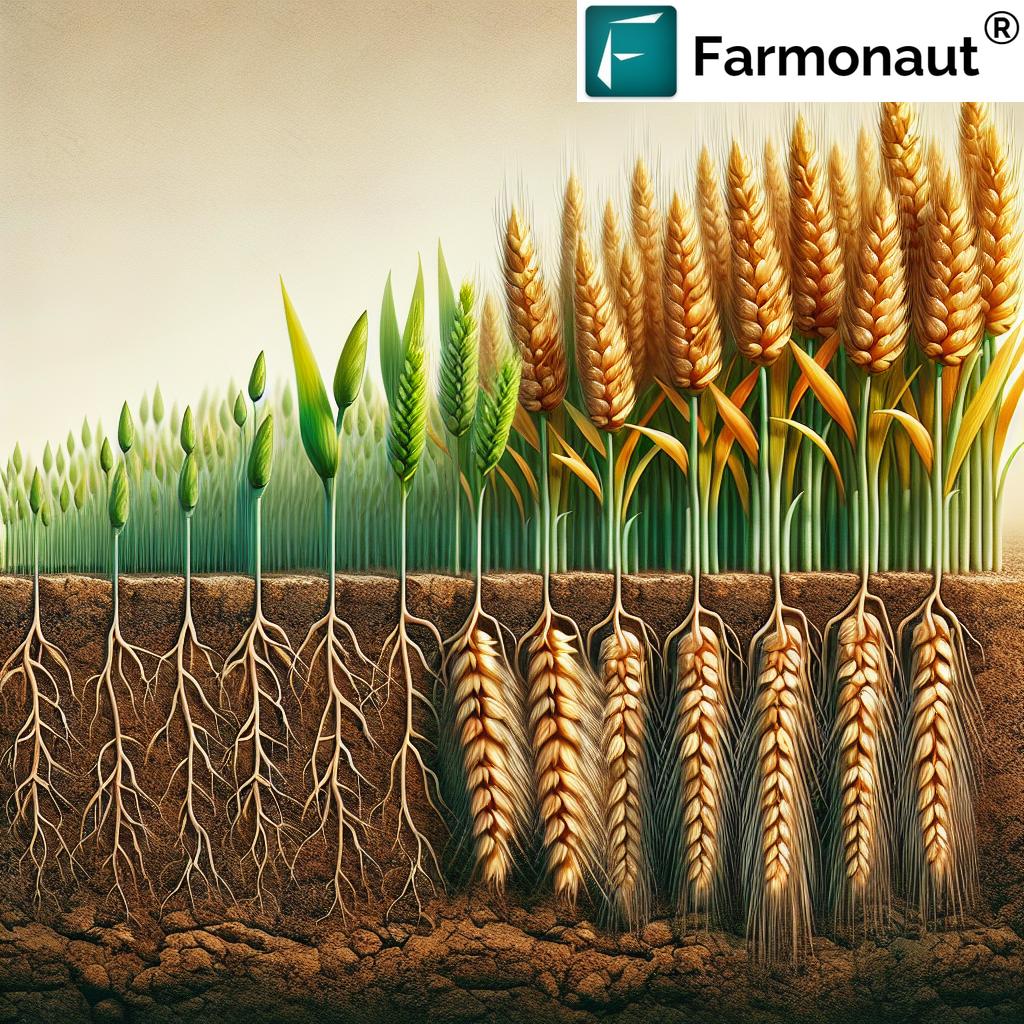
Wheat Growth Stages Overview Table
The table below sets out all seven stages with their approximate duration, what to watch for, and the intervention that matters most. Durations are ranges reported in USDA and land-grant extension guidance — actual timing shifts with variety, sowing date, and regional temperature, so treat these as planning windows, not fixed calendar dates.
| Stage Name | Estimated Duration (Days) | Main Characteristics | Critical Actions / Interventions | Impact on Yield / Quality |
|---|---|---|---|---|
| Germination & Seedling Establishment | 7–15 | Seed sprouting; first true leaf; root development | Sow in optimal conditions; monitor soil moisture; control pests | Foundation for healthy crops; poor establishment reduces plant population and grain yield |
| Tillering | 10–20 | Formation of tillers (shoots) from plant base | Maintain soil fertility; regulate irrigation; early weed/pest management | Determines shoot population; influences potential yield |
| Stem Extension (Jointing) | 7–14 | Plant height increases; nodes elongate above soil surface | Apply nitrogen; monitor for diseases; irrigation if dry | Affects nutrient allocation and head formation; improper care reduces grain number |
| Booting & Heading | 5–10 | Head forms within sheath, then emerges | Protect from heat/moisture stress; disease control | Final grain number set; stress reduces grain formation |
| Flowering (Anthesis) | 4–5 | Pollination and fertilization; start of the critical irrigation window (Feekes 8.0–11.1) | Minimize stress; avoid chemical sprays; irrigation is critical here through milk stage | Determines fertility and pollination success; impact on grain set |
| Grain Filling & Ripening | 20–30 | Kernels fill and mature—watery, milky, mealy, hard, and harvest-ripe stages | Irrigate through milk stage (Feekes 11.1); protect from pests | Determines kernel weight and quality; drought/heat can reduce size/weight |
| Physiological Maturity & Harvest | 7–14 | Plant senesces; kernels harden | Monitor moisture; harvest at 13-15% kernel moisture | Ensures grain quality and prevents harvest losses |



Looking to automate your farm management or integrate satellite crop insights into your own system? Explore the Farmonaut API for real-time field health, weather, and resource monitoring. For developer integration, see our API Developer Documentation.
Wheat Growing Conditions and Total Growing Time
Wheat germinates and grows across a wide temperature band, but the productive range is narrower than most guides admit. Growth begins once soil temperature reaches roughly 4°C (40°F) — below that, germination stalls — and the optimal range for vegetative and reproductive growth is 21-24°C (70-75°F), per USDA and NASA-affiliated agricultural education materials and Montana State University’s wheat production guide. Above the high 20s°C, heat stress accelerates development and shortens the grain-filling window, which is one reason a hot spring can cut yield even when rainfall is adequate.
Water needs follow a similar pattern. US wheat-growing regions typically receive 375-875 mm of precipitation across the growing season, according to FAO/USDA agroclimatic data — a wide range because it spans everything from semi-arid Great Plains winter wheat country to higher-rainfall areas of the eastern Corn Belt. Where rainfall sits at the low end of that range, supplemental irrigation timed to the critical stages below becomes the difference between an average crop and a strong one.
Total time from sowing to harvest for winter wheat in the US typically spans 7 to 9 months, since the crop is planted in fall, overwinters in a dormant or slow-growth state, and resumes active growth (green-up) in spring before heading, flowering, and ripening through early-to-mid summer. Spring wheat, sown after the last hard frost, completes its cycle in roughly 100-130 days without a dormancy period. Neither figure is published by USDA as a single fixed number — total growing time is a function of sowing date, variety maturity class, and spring temperature accumulation, so the most reliable way to estimate it for a specific field is to track Feekes or Zadoks growth stage against accumulated growing-degree days rather than counting calendar days from a table.
Each growth stage is defined in the Feekes and Zadoks wheat scales, a handy stage-by-stage reference.
Growing Wheat Indoors
There is no USDA or land-grant extension program dedicated to growing wheat as a field crop indoors — commercial wheat production in the US is entirely open-field, rain-fed or irrigated. What is commonly called “growing wheat indoors” in home and hobby contexts is wheatgrass cultivation (sprouting wheat berries in trays for juicing or fodder), which is a different process from grain production and is not covered by USDA wheat statistics. If your interest is a home wheatgrass tray, standard germination physiology still applies: wheat berries need moisture and roughly 4°C+ to sprout, but tray-grown wheatgrass is harvested at 7-10 days as a young shoot, long before tillering, jointing, or any of the grain-producing stages described in this article would occur.
1. Germination and Seedling Establishment: The Wheat Germination Process
The foundation for optimal wheat yield begins with robust germination and successful seedling establishment. The wheat germination process starts as soon as the seeds are sown into prepared soil and exposed to adequate moisture and suitable temperatures — germination and early growth require a minimum of about 4°C (40°F), with steady progress once soil temperature is in the 12-25°C range.
- Seed Germination: The seeds absorb water, activating enzymes that break down stored starches into energy required for initial growth. Within 3 to 7 days, seedlings emerge above the soil surface, utilizing stored nutrients in the endosperm for growth.
- Root and Shoot Emergence: First, the primary root (radicle) emerges, anchoring the seedling and beginning water and nutrient uptake. Soon after, the coleoptile (protective shoot) pushes through the soil, followed by development of the first true leaf.
- Significance: Uniform, healthy seedling establishment lays the groundwork for the plant’s future development. Gaps or weak seedlings reduce the crop’s ability to intercept light, compete with weeds, and eventually lower yield potential.
Key Interventions During Germination
- Soil Preparation: Ensure a well-leveled, weed-free, and friable soil bed with good water retention and drainage.
- Seed Quality: Use high-germination, certified seed to ensure uniform crop establishment.
- Sowing Depth: Wheat seed should be sown at an optimal depth (3–5 cm / roughly 1.2–2 inches); shallow or overly deep placement hampers emergence.
- Irrigation: Maintain adequate moisture during the germination phase, avoiding both waterlogging and drought stress.
- Fertilizer Application: Starter fertilizer, especially phosphorus, supports root and initial shoot growth.
Impact on Yield & Quality
Any setback during germination — pests, poor moisture, cold stress, or seedling disease — can reduce final grain number and yield. This is also where abandonment risk starts: USDA NASS reported that 32.1% of planted US winter wheat acreage was abandoned rather than harvested in the 2026 season, a figure driven largely by fall/winter establishment failure and drought. Monitoring stand establishment closely in the first weeks after sowing is the cheapest way to catch a failing field before replant decisions become costly.

2. Wheat Tillering Stages: Maximizing Shoot Potential
Once seedlings are established, wheat enters the tillering phase, typically 10–20 days after emergence, though winter wheat tillering effectively spans a longer calendar window because it includes both fall tillering before dormancy and additional tillering at spring green-up. This stage involves the production of additional shoots, called tillers, from the base of the main stem.
- What is Tillering? Each wheat plant forms multiple tillers — secondary stems that can each produce a grain head of their own, increasing yield potential even where stand density is below optimal.
- Timing & Environmental Influence: Tillering is promoted by cool temperatures, good sunlight, and moist soil. Drought, nutrient shortage, or weed competition restrict tiller development, resulting in fewer grain-bearing heads.
- Significance: The number of tillers formed directly affects potential grain yield, especially where planting density is variable or seedlings have been lost to pests or disease.
Critical Interventions During the Tillering Stages
- Fertilization: Apply nitrogen and phosphorus based on soil test results and crop needs. Nitrogen timing here has a lasting effect on grain yield carried through to jointing.
- Weed Management: Early competition for light, water, and nutrients reduces tiller number; implement timely weed control.
- Irrigation: Avoid water stress during tillering; even mild drought can sharply decrease tiller count.
- Disease and Pest Monitoring: Scout for pests and diseases affecting foliage and the stem base, as these hamper tiller formation and health.
Impact on Yield & Quality
Severe competition, water shortage, or nutrient deficiency during this phase reduces the number of effective tillers, lowering grain yield. Not every tiller sets grain — the goal is maximizing the number of tillers that go on to contribute a harvestable grain head, by supporting plant health through this stage.
3. Stem Extension (Jointing): Setting the Foundation for Grain Yield
As wheat matures, it enters stem elongation, commonly called the jointing stage. Here, the stem’s internodes lengthen and visible nodes appear above the soil surface. The growing point (apical meristem) moves upward, initiating formation and development of the wheat head (inflorescence) deep within the stem.
- What is Jointing? “Jointing” refers to the point where the first node becomes visible above ground as plant height increases — a signal that vegetative growth is shifting to reproductive development, with the plant now allocating resources toward grain production.
- Timing: Occurs roughly 25–35 days after spring green-up begins, though exact timing depends on variety, sowing date, and regional temperature.
- Sensitivity to Stress: This period is highly vulnerable to nitrogen deficiency, drought, disease, or physical damage, since the developing head inside the stem is particularly sensitive.
Key Interventions for the Jointing Stage
- Nitrogen Application: The most important nitrogen top-dressing is typically done at jointing. Correct timing measurably boosts grain yield.
- Water Management: Keep soil moisture non-limiting; both drought and waterlogging during jointing reduce head and kernel number formation.
- Disease & Pest Control: Prioritize protection against foliar and stem-borne disease. Pests attacking stems disrupt nutrient flow to the developing head.
- Plant Growth Regulators: Where lodging risk is high from intensive fertilization, growth regulators can help control height.
Impact on Yield & Quality
Missed or poorly timed fertilization or irrigation during jointing limits stem and head growth, reducing both grain number and final kernel weight. Consistent monitoring at this stage is essential for getting full value from inputs applied earlier in the season.
4. Booting and Heading: Setting Final Grain Number
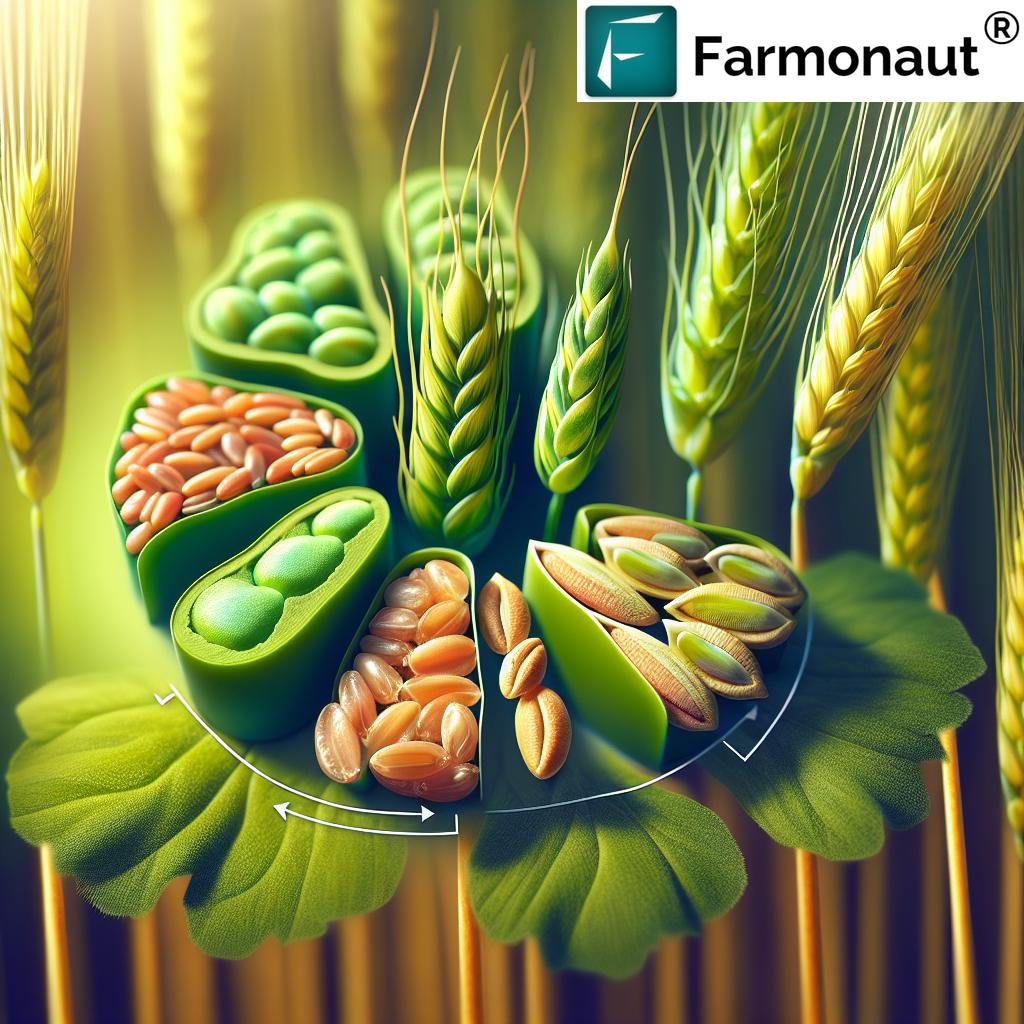
During booting, the wheat head swells and is enclosed within the sheath of the flag leaf, giving the upper stem a distinctive swollen appearance. This stage transitions quickly into heading, when the head emerges fully from the sheath into open air.
- Booting: Visible as a “boot,” or bulge, in the flag leaf sheath. The spikelet is fully formed but still enclosed.
- Heading: The head emerges for pollination. Extension guidance generally calls a field “headed” once 75-100% of heads are visible, before flowering (anthesis) proceeds.
- Environmental Risk: This is the entry point into the critical irrigation window — drought or heat here can disrupt spikelet formation and reduce final grain set before flowering even begins.
Timely Interventions for Booting and Heading
- Stress Prevention: Keep soil moisture adequate to minimize water and heat stress, which directly affects spikelet fertility and final grain number.
- Pest & Disease Control: Watch closely for head blight, leaf rusts, and insect pests. Fast intervention matters at this stage.
- Fungicide Timing: Where disease risk is high, apply fungicide ahead of heading and avoid spraying during actual flowering.
Impact on Yield & Quality
Poor management or stress during booting and heading substantially reduces spikelet fertility and grain set, limiting both overall yield and kernel uniformity.
5. Flowering (Anthesis) and the Critical Stage of Irrigation in Wheat
Flowering, or anthesis, is brief but decisive — it sets the number of fertile kernels and marks the start of the single highest-stakes irrigation window in the entire wheat crop.
- Pollination: Lasts around 4–5 days. Wheat is largely self-pollinating; anthers appear, open, and fertilize the ovule within each floret.
- Kernel Set: Failed pollination — from heat, cold, or rain during flowering — causes florets to abort without forming grain, directly cutting yield.
- High-Risk Phase: Heat spikes, drought, frost, or hail here can be devastating to the crop’s yield potential.
The Critical Irrigation Stage of Wheat, Precisely Defined
Extension agronomy answers the question “what is the critical stage of irrigation in wheat” with a specific window, not a vague one: per the Kansas State University Wheat Production Handbook, wheat’s peak water sensitivity runs from spikelet differentiation through the milk stage of grain fill — Feekes growth stages 8.0 through 11.1. That spans the final flag-leaf emergence and booting period, through flowering, and into the early watery-to-milky grain-fill stages. A moisture shortfall anywhere in this window has a larger yield cost per unit of water deficit than a shortfall at almost any other stage, because it simultaneously limits how many florets set grain and how much each kernel can fill. Irrigated growers scheduling a single most-important pass should place it inside this Feekes 8.0-11.1 window rather than earlier at jointing or later at hard-dough.
Timely Interventions and Management During Anthesis
- Avoid Stress: Ensure adequate moisture — even a short drought here disrupts pollination and early kernel development.
- Avoid Chemical Sprays: Insecticide, fungicide, or herbicide should never be applied during flowering; they can damage florets and reduce fertility.
- Disease Scouting: Watch for fusarium head blight and other fungal disease that can infect at flowering, affecting quality and kernel development.
Impact on Yield & Quality
Stress or an adverse weather event during anthesis can cause partial or total sterility, poor kernel set, and a sharp drop in both grain yield and end-use quality.
6. Grain Filling in Wheat: Kernel Weight, Quality, and Yield
After pollination completes, the crop enters grain filling — the stage that determines final kernel weight, nutritional quality, and thus overall wheat yield. The plant diverts photosynthates (sugars, nutrients, water) to each developing grain, progressing through several defined Feekes sub-stages:
- Watery Ripe (Feekes 10.5.4): Kernels are filled primarily with clear fluid.
- Milky Ripe (Feekes 11.1): Fluid inside kernels turns milky as starch synthesis begins — this is the tail end of the critical irrigation window.
- Mealy Ripe (Feekes 11.2): Kernels reach a soft, doughy consistency, signaling active filling of grain with carbohydrates, proteins, and micronutrients.
- Hard Ripe (Feekes 11.3): Kernels become firm enough to break with a thumbnail, but are not yet dry.
- Harvest Ripe (Feekes 11.4): Kernels are fully hardened and cannot be split with a thumbnail — nearly ready for harvest.
Interventions for Optimal Grain Quality During Ripening
- Irrigation: Regular water supply through the milky-to-mealy stages is vital, since this is still inside or just past the Feekes 8.0-11.1 critical window — moisture stress here reduces kernel size and weight directly.
- Nutrient Management: Ensure adequate potassium and micronutrients for efficient translocation to the kernel.
- Disease & Pest Protection: Late-season disease (rusts, aphids), if unchecked, drains photosynthates meant for grain filling.
- Monitor Maturity: Track kernel development and moisture content to time harvest correctly.
Impact on Yield & Quality
Grain weight and flour/bread quality are locked in at this stage. Water or heat stress during the key filling stages reduces yield and can produce shriveled kernels with low protein content — a measurable outcome, not a marginal one: USDA’s June 2026 Crop Production report put the national average wheat yield forecast at 46.8 bushels per acre, down from the 53.3 bushels per acre actually harvested in 2025, a season-over-season swing that reflects exactly this kind of stress accumulating across the critical stages.
7. Wheat Maturity and Harvest: Ensuring Quality and Minimizing Losses
The final wheat growth stage — physiological maturity — signals readiness for harvest.
- Plant Senescence: Leaves, stems, and roots stop photosynthesizing and yellow and dry as nutrients are remobilized into the kernels.
- Kernel Maturity: Kernels reach final size and dry matter. Physiological maturity occurs around 30-35% grain moisture, but harvest is best performed at 13-15% moisture to limit drying costs and postharvest losses.
- Visual Markers: Heads and upper leaves turn fully golden-yellow or brown; kernels are hard, dry, and resist marking with a thumbnail.
Best Harvest Practices for Wheat
- Monitor Moisture: Timely harvest matters — too early (kernels too moist) causes grain spoilage risk in storage; too late increases shattering, weather damage, and field loss.
- Machine Calibration: Ensure combines are set correctly to avoid grain damage and threshing losses.
- Postharvest Management: Dry grain quickly to storage moisture below 12% to preserve quality and limit pest and fungal risk.
Impact on Yield & Quality
Harvesting at the correct stage protects both grain yield and quality. Delays lead to sprouting, shattering, or fungal contamination, which hits market price and storage life. At the national level, the scale of what’s at stake is significant: USDA NASS put 2025 US all-wheat production at 1.98 billion bushels, with winter wheat accounting for 1.40 billion bushels of that total, harvested off 37.2 million acres. USDA’s ERS Wheat Outlook for the 2026/27 marketing year projects a season-average farm price of $5.00 per bushel — a number that moves with the crop condition reports released through the growing season, so growers pricing new-crop bushels should track USDA NASS’s monthly Agricultural Prices release rather than anchoring to a single forecast.
Wheat Irrigation Timing Calculator
Use your own sowing date and days-to-heading estimate for your variety to see the calendar window for the Feekes 8.0-11.1 critical irrigation stage, so you can plan a pass before the window rather than during a shortfall.
Run your own numbers
Assumptions: the critical window is modeled as starting 10 days before your estimated heading date (approximate start of Feekes 8.0) and ending 25 days after heading (approximate Feekes 11.1 milk stage). This is a planning estimate only — it does not account for soil water-holding capacity, temperature extremes, or variety-specific development rate, and does not replace field-level monitoring or a local extension recommendation.
Leverage Technology for Optimal Wheat Yield
At Farmonaut, we make precision agriculture accessible for wheat farmers. Our advanced satellite monitoring tools help track every wheat growth stage to support timely interventions that improve grain yield and quality:
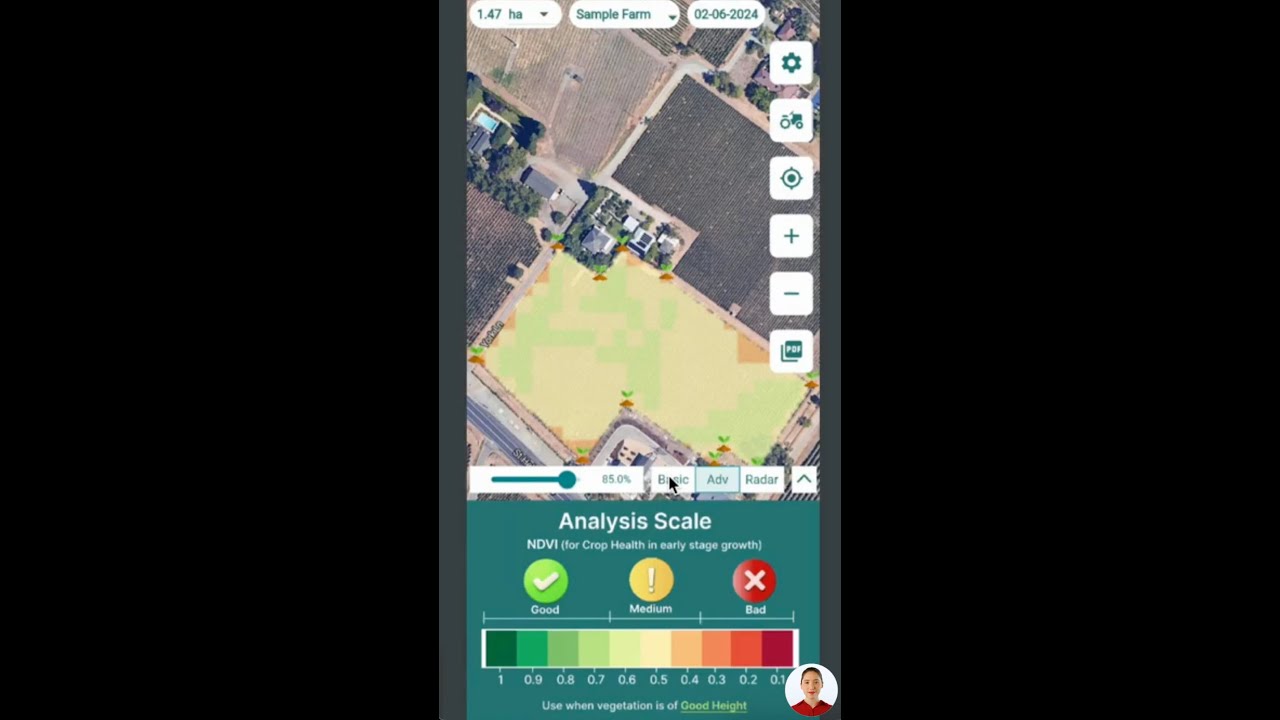
- Real-Time Crop Health: Satellite imagery analyzes NDVI, soil moisture, and vegetation health
- Jeevn AI Advisory: AI-driven, personalized recommendations for each wheat growth stage
- Blockchain Traceability: Secure tracking of input, harvest timing, and quality across the wheat supply chain
- Resource and Fleet Management: Optimize fuel use, reduce downtime, and ensure safety for large farming operations
- Carbon Footprint Tracking: Monitor and reduce emissions for compliance and sustainability
Our platform is available via Android, iOS, web apps, and direct API integrations, helping farmers, agribusinesses, and agencies time interventions correctly and protect crop productivity and profitability.
To see the platform for yourself, get started with Farmonaut using our app or request a demo for your operation.
Farmonaut Subscription Plans
Our flexible subscription model provides cost-effective solutions for field-scale satellite monitoring, AI advisory, traceability, and more, tailored to the needs of individual farmers, large agribusinesses, and researchers.
FAQ: Wheat Growth Stages & Irrigation Timing
Q1: What is the critical stage of irrigation in wheat?
Per the Kansas State University Wheat Production Handbook, the critical irrigation window spans Feekes growth stages 8.0 (flag leaf emergence) through 11.1 (milk stage of grain fill) — covering the final pre-heading period, flowering, and early grain fill. A moisture shortfall here has a larger yield cost per millimeter of deficit than at almost any other stage, because it limits both how many florets set grain and how well each kernel fills. See Kansas State University’s Wheat Production Handbook for the full Feekes scale.
Q2: What are the wheat tillering stages, and when do they occur?
Tillering typically runs 10-20 days after seedling emergence, with winter wheat also producing additional tillers at spring green-up after overwintering. It is the stage where the plant builds the shoot population that will carry grain heads, so nitrogen timing and weed control here have an outsized effect on final yield.
Q3: What are typical wheat growing conditions?
Growth begins near 4°C (40°F) soil temperature, with an optimal range of 21-24°C (70-75°F) through the season, per USDA and Montana State University extension guidance. Precipitation across US wheat regions typically ranges 375-875 mm for the growing season, per FAO/USDA data, with the low end of that range requiring supplemental irrigation to avoid yield loss.
Q4: How long does it take to grow wheat?
Winter wheat typically spans 7-9 months from fall sowing to summer harvest, including a winter dormancy period. Spring wheat, sown after the last frost, completes its cycle in roughly 100-130 days. Because timing depends on variety and spring temperature accumulation, track growth stage (Feekes or Zadoks) rather than a fixed day count for a specific field.
Q5: Can you grow wheat indoors?
Commercial grain wheat is not grown indoors in the US — there is no USDA program for it. Indoor “wheat” growing usually refers to wheatgrass trays for juicing or fodder, harvested at the young shoot stage around 7-10 days, well before any of the seven grain-production stages in this article begin.
Q6: How do I determine the optimal time to harvest wheat?
Harvest when kernels reach 13-15% moisture and the field is uniformly golden or brown. Harvesting too early risks poor storage quality; too late increases shattering and field loss.
Q7: What is the Feekes growth stage scale?
The Feekes scale is the standardized system for describing wheat growth stages — from germination (Feekes 1) through tillering, jointing, heading, anthesis, grain filling, and maturity (Feekes 11), with sub-stages such as 11.1 (milk) through 11.4 (harvest-ripe). It is the reference system extension agronomists use to define the critical irrigation window and to communicate field status precisely.
Conclusion: Timing the Seven Stages for Yield and Profit
Wheat’s path from seed to harvested grain runs through seven distinct stages, but only one narrow window — Feekes 8.0 through 11.1, spanning late booting through the milk stage — carries the single highest irrigation stakes in the crop. Get water right there and the rest of the season’s inputs pay off; miss it, and even a well-established, well-fertilized stand loses grain number and kernel weight it cannot recover. The 2025-to-2026 swing in USDA’s national yield forecast, from 53.3 down to 46.8 bushels per acre, is a reminder of how much of that outcome traces back to stress during these specific stages rather than to the season as a whole.
Track each stage against real field conditions, prioritize the critical irrigation window above all others, and use the calculator above as a starting estimate for your own sowing date and variety — then verify against ground conditions and local extension guidance before committing water and inputs.

 SFX
SFX BACF Africa
 Nivia
Nivia Doodlakine
 Exurbia Geospatial
 FieldZero
 Indico Company
 Kubota
 FFBS
FFBS Jontra
 Tucor
Tucor Hayleys Agriculture
