

Wheat · Growth stage guide
Wheat Growth Cycle: 7 Key Stages for Optimal Yield
Wheat is staged with Feekes (1 to 11.4) and Zadoks (00 to 99) codes. Ear number is set from tillering to flag leaf, grains per ear from flag leaf to flowering, and grain weight after flowering (AHDB). Use the freeze chart and the seed rate calculator below.
Key takeaways
- Ear number is set from tillering to flag leaf (Zadoks 39), grains per ear from flag leaf to flowering (Zadoks 61), and grain weight after flowering (AHDB, UK).
- Pollination finishes about 4 to 5 days after flowering starts (Purdue). About two hours at 30 to 32°F (-1 to 0°C) at heading or flowering can cause floret sterility (Kentucky, 2004; Texas A&M, 2014).
- Wheat germinates in soil as cool as about 39°F (4°C), with about 68°F (20°C) preferred (Alberta Agriculture). In Arkansas, soil pH below 5.6 may cut wheat growth and yield by 20 to 50% (University of Arkansas, 2014).
- Kernels hold about 40% moisture at physiological maturity (Kentucky, 2016; the Michigan Wheat Program says 35 to 40%) and are harvest ripe at about 13% (Kentucky, 2016). Oklahoma State advises that stored wheat above 12.5% moisture may be at risk (1999).
- In two Kansas trials in one season, yield stopped rising near 800,000 seeds per acre (K-State, 2025). The calculator turns your target stand into seeds and pounds per acre.
In this article
- Introduction: Understanding Wheat Growth Stages & Optimal Conditions for Yield
- Wheat Growth Stages Overview Table
- Wheat growth stages with Feekes and Zadoks codes
- 1. Germination and Seedling Establishment: The Foundation of Wheat Yield
- What wheat looks like when it first starts growing
- 2. Wheat Tillering Stage: Building Foundation for High Yield
- 3. Stem Elongation: Establishing Wheat Canopy and Head Formation
- 4. Booting: The Critical Pre-Flowering Wheat Growth Stage
- 5. Wheat Heading and Flowering Period (Anthesis): Grain Setting Phase
- 6. Wheat Grain Filling and Ripening: Maximizing Kernel Weight & Quality
- 7. Wheat Maturation and Harvest: Securing Maximum Yield
- Farmonaut’s Advanced Precision Farming Platform
- Key Environmental Factors Affecting Wheat Yield
- Wheat Crop Management: Best Practices for Each Key Growth Stage
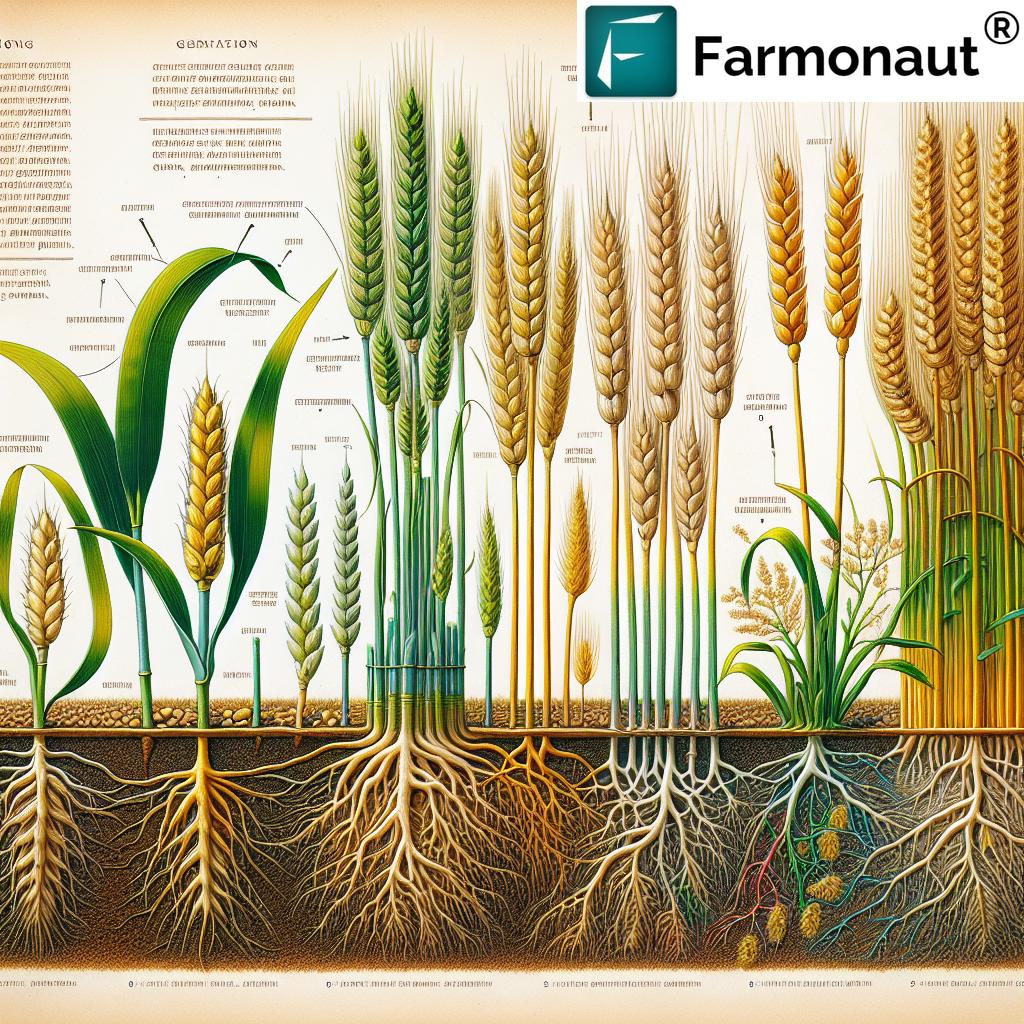
Introduction: Understanding Wheat Growth Stages & Optimal Conditions for Yield
Wheat (Triticum aestivum) stands as one of the most widely cultivated staple crops worldwide, forming the backbone of global food security and a primary source for food, livestock feed, and versatile industrial products. With billions depending daily on wheat-derived foods, optimizing wheat growth and yield remains a critical pursuit for farmers and agricultural professionals.
Understanding the wheat growth stages isn’t just academic — it’s the cornerstone of effective wheat crop management, enabling interventions that bolster yield, quality, and sustainability.
This comprehensive, step-by-step guide explores the 7 key growth stages in the wheat cycle, detailing optimal soil and moisture requirements, essential crop management practices, and environmental factors affecting wheat yield. We’ll provide integrated management insights, modern technology options for monitoring wheat (such as Farmonaut’s satellite-based solutions), and actionable advice for maximizing wheat yields from germination to harvest.
Chart
World wheat yield per hectare has more than tripled since 1960/61
Metric tons per hectare, selected marketing years
Wheat Growth Stages Overview Table
Wheat growth stages with Feekes and Zadoks codes
Agronomists and spray labels name wheat stages by number. The Feekes scale runs from 1 (emergence) to 11.4 (ripe) and is the one most used in the US. The Zadoks scale runs from 00 to 99 and is common in Europe and in scientific papers. In the US, most spray labels use Feekes. Codes below follow the University of Kentucky and Purdue Extension staging guides.
| What you see | Feekes | Zadoks |
|---|---|---|
| First leaf through the coleoptile (emergence) | 1 | 10 |
| Main shoot and first tiller | 2 | 21 |
| Tillers formed | 3 | 26 |
| First node detectable (jointing) | 6 | 31 |
| Flag leaf visible | 8 | 37 |
| Boot swollen | 10 | 45 |
| Head completely emerged | 10.5 | 58 |
| Beginning of flowering | 10.5.1 | 60 |
| Kernel watery ripe | 10.5.4 | 71 |
| Soft dough | 11.2 | 85 |
| Physiological maturity: kernel hard, about 40% moisture | 11.3 | 91 |
| Harvest ripe: kernel cannot be split by thumbnail, about 13% moisture | 11.4 | 92 |
Stages do not last the same time. In Indiana, Purdue Extension found about one week from Feekes 6 to 7, and 5 to 10 days from Feekes 7 to the flag leaf at Feekes 8. Wheat then took 9 to 16 days to go from Feekes 9 to the start of flowering (Purdue Extension, 2011). AHDB marks the start of flowering at Zadoks 61, where Kentucky’s table lists 60. Weather and planting date change these times. Kentucky calls a field a given stage once 50% or more of its plants reach it (University of Kentucky, 2016).
1. Germination and Seedling Establishment: The Foundation of Wheat Yield
Wheat seed germination marks the commencement of the growth cycle, critically influencing succeeding stages and final yield. Following precise sowing in well-prepared fields, adequate soil moisture and warm enough soil are prerequisites for quick, even emergence. Wheat can germinate in soil as cool as about 39°F (4°C), and about 68°F (20°C) is preferred.
Condensed into a quick reference, the stages of growing wheat run from sowing to harvest.
- Seed Absorption & Swelling: Wheat seeds take up water from the soil, swell, and the germination process begins. This absorption activates enzymes necessary for growth.
- Radicle Emergence: The embryonic root (radicle) emerges first to anchor the plant and commence nutrient uptake.
- Coleoptile Growth: The coleoptile (a sheath protecting the shoot) pushes through the surface, then ceases growth as the first true wheat leaf appears.
For best results, ensure even seed coverage, a depth that suits the variety (no deeper than 5 cm, or 2 inches, for short-coleoptile varieties in silt loam), and proper irrigation. Rapid and uniform seedling establishment sets the stage for strong tillering, healthy leaves, and resilient wheat plants.
Tip: Monitor soil temperature prior to sowing. Modern tools like Farmonaut’s crop monitoring platform show crop health maps and vegetation indices once a crop is growing. At sowing, check soil temperature with a soil thermometer in the field.
Soil requirements for wheat cultivation:
Wheat thrives in loamy to clay-loam soils that are well-drained and rich in nutrients. In Arkansas, wheat growth and yield may be reduced by 20 to 50% when soil pH is below 5.6, and that guide treats a pH above about 5.8 as near optimal. Check your local recommendations. For optimal wheat growth, address any subsoil acidity and compaction, and ensure adequate water availability at sowing.
NDSU also says germination starts with soil temperatures in the upper 30s °F (NDSU, 2021). Seed size changes how many pounds you need for the same stand. In a 2020 Nebraska trial, seed size ranged from 14,000 to 21,400 seeds per pound (Nebraska Extension, 2020). Alberta Agriculture sets the rate from the target stand, the thousand-kernel weight and seedling survival, and says seedling loss in cereals is usually 5 to 20% (Alberta Agriculture, 2018).
More seed does not always pay. In two Kansas trials in 2023-24 (season rain 11 to 15 inches), yield rose up to 800,000 seeds per acre and then levelled off (K-State, 2025). This was one season, one sowing date and two sites. Belleville had a soil pH of 4.8 in the top 6 inches and wheat streak mosaic virus, while Leoti had a pH of 7.1. K-State also cites earlier work in which yield at average-yielding sites kept rising up to about 25 to 31 plants per square foot (1.1 to 1.35 million plants per acre). The best rate depends on rainfall, sowing date and variety, so check local advice.
Chart
Yield stopped rising near 800,000 seeds per acre in two Kansas trials
Winter wheat grain yield, bushels per acre, by seeding rate in thousand seeds per acre; sown September 2023, harvested 2024
Try the numbers for your own farm below.
Calculator
How much wheat seed do I need for my target stand?
Enter your own target stand, seed size and germination. The calculator gives seeds and pounds per acre.
- Seeds to drill per square foot: 29.4 seeds
- Seeds per acre: 1,281,176 seeds
- Seed rate in metric units: 110.8 kg/ha
- Seeds per pound of this seed lot: 12,960 seeds
- Seed for the whole field: 9,886 lb
The starting numbers are examples only, not benchmarks. Method: Alberta Agriculture, Using 1,000 Kernel Weight for Calculating Seeding Rates (Agdex 81, revised 2018). Seedling survival is germination minus expected seedling loss. Fixed constants: 43,560 sq ft per acre, 453.6 g per lb and 1 lb per acre = 1.121 kg per ha. The default target of 25 plants per square foot (about 1.28 million seeds per acre once germination and seedling loss are counted) is an example of a high-end target stand, not a recommendation. The Kansas page above shows yield levelling off near 800,000 seeds per acre in its 2023-24 trials, and seeds sown differ from plants established: at Leoti, 800,000 seeds gave about 702,000 plants per acre (K-State, 2025). Get germination and thousand-kernel weight from the seed tag or a lab test.
What wheat looks like when it first starts growing
After sowing, the seed takes up water. Kentucky’s staging guide puts it at 35 to 40% moisture when imbibition is complete (University of Kentucky). The root (radicle) breaks out first. Then the coleoptile appears: a pale, closed sheath that pushes the shoot up through the soil.
At emergence (Feekes 1, Zadoks 10) the first green leaf breaks through the tip of the coleoptile. To the eye, a new wheat field looks like rows of thin, single grass blades. Each plant is one upright leaf a few centimetres tall. More leaves unfold one at a time from the same shoot. Kentucky’s guide describes these as the 1-, 2- and 3-leaf stages (Zadoks 11 to 13).
Side shoots (tillers) then start from the base, and the plant turns from a single blade into a small clump. At recommended seeding rates many plants carry only 2 or 3 tillers (University of Kentucky).
2. Wheat Tillering Stage: Building Foundation for High Yield
Tillering is a pivotal wheat growth stage, commencing at Feekes 2, when the main shoot has one side shoot. During this period, the plant develops multiple tillers (side shoots) from the basal nodes—each potentially forming a wheat head that carries grains.
- Tiller Formation: The number of productive tillers sets the ear count per unit area, one of the three main yield components.
- Resource Competition: Proper nutrient and water availability at this stage minimizes competition and fosters uniform development.
- Management Practices: Maintain weed-free conditions and supplement with nitrogen if necessary to boost tiller survival and vigor.
Optimal Conditions: Mild, cool temperatures and consistent moisture availability foster strong tiller development.
Timely interventions during the wheat tillering stage set up the ear count. Purdue says tillers that form after Feekes 5 do not add to yield.
Precision Monitoring: Our Large Scale Farm Management tools offer satellite-driven analytics to track crop canopy, detect tiller density variances, and deliver management alerts—enabling precise fertilization and irrigation strategies.
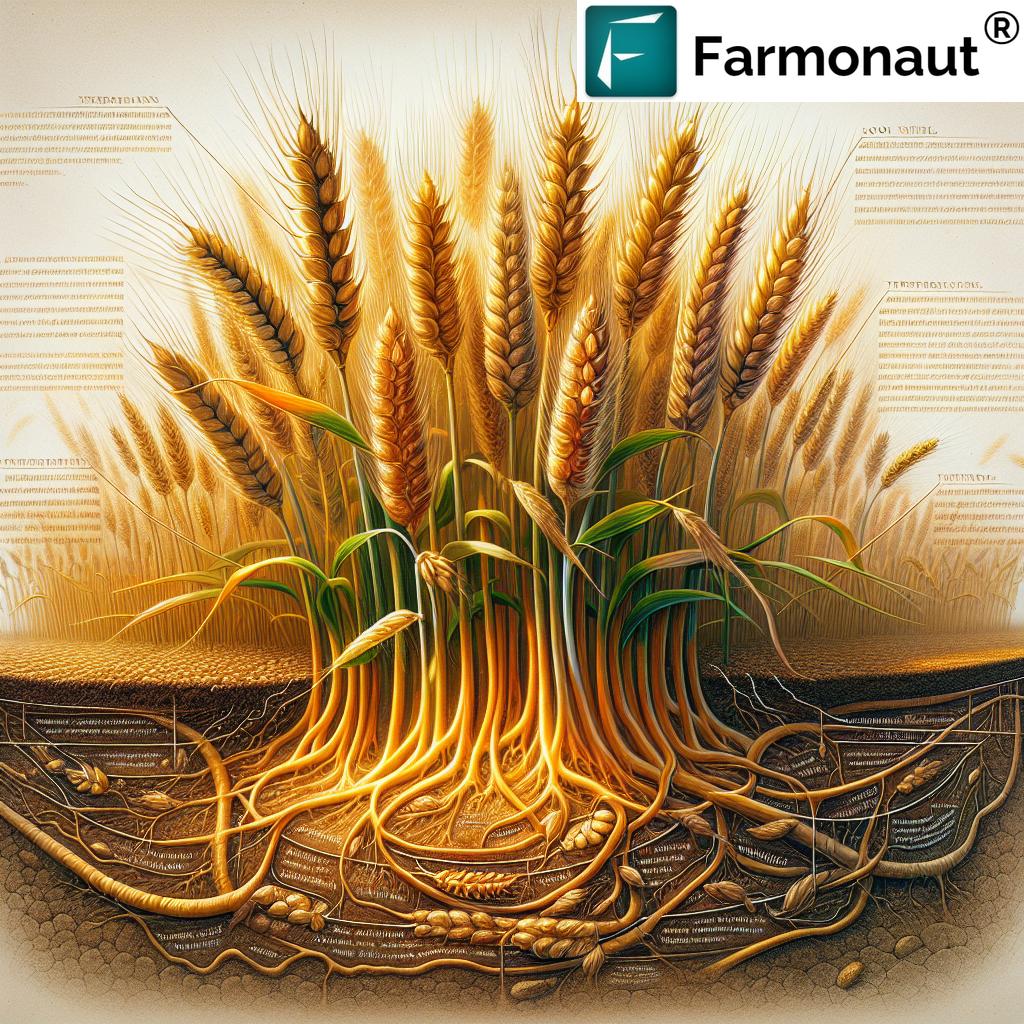
Early nitrogen is mainly for thin stands. Purdue Extension suggests 20 to 30 lb per acre in fall for fall tillers, or 30 to 50 lb per acre at dormancy break, with the rest of the spring topdress at Feekes 5 (Purdue Extension, 2011). AHDB says a sparse crop tends to carry more grains per ear and heavier grains than a thick one (AHDB). Follow the product label and local rules for any fertilizer or herbicide.
3. Stem Elongation: Establishing Wheat Canopy and Head Formation
After tillering, plants enter the stem elongation stage (jointing). The primary shoot and tillers grow taller as the internodes (sections between plant nodes) lengthen, forming a strong canopy for energy capture.
- Node Appearance: The first node is visible just above the soil, signaling stem elongation starts. Each successive node supports new leaves and the developing head.
- Photosynthetic Efficiency: A dense canopy maximizes light interception and energy conversion, supporting grain and biomass development.
- Moisture & Nutrient Demand: This period sees a surge in nutrient and moisture requirements—deficiencies can stunt growth or reduce floret set.
Key Practice: Irrigate if soil moisture is short. Purdue lists Feekes 6 as the cutoff for nitrogen applications, to avoid leaf injury, so plan spring nitrogen before this stage and follow the product label and local rules. Use Farmonaut Carbon Footprinting tools to monitor input efficiency, minimize losses, and support sustainable wheat cultivation.
At Feekes 6 the developing head can already be seen when the stem is split. Purdue also lists Feekes 6 as the cutoff for some growth-regulator herbicides, such as 2,4-D and dicamba (Purdue Extension, 2011). Check the product label and local rules before any spray.
Infographic
When wheat sets its yield, in 4 steps
- 1Tillering to flag leaf (up to GS39)Ears per area are set in this window (AHDB, UK).
- 2Flag leaf to flowering (GS39 to GS61)Grains per ear are set in this window.
- 3After floweringIndividual grain weight is set during grain fill.
- 4Harvest ripe (Feekes 11.4)Kernels cannot be split by a thumbnail, at about 13% moisture (Kentucky).
4. Booting: The Critical Pre-Flowering Wheat Growth Stage
The booting stage signals the wheat head’s rapid development and the period when the head decides how many grains it will carry. By jointing the head already holds all its potential spikelets and florets (Purdue), and AHDB places the setting of grains per ear between flag leaf emergence and flowering. The tiny wheat head (inflorescence) remains enclosed within the sheath of the flag leaf.
- Head Development: The wheat head swells inside the flag-leaf sheath. It already holds all its potential spikelets, and how many florets set grain depends on conditions from flag leaf to flowering (AHDB).
- Flag Leaf: This is the highest leaf on the stem and critically important. The flag leaf is one source of carbon for the grain, but the ear and stem also feed it. Carbon isotope work on high-yielding bread wheat lines put the flag leaf blade at only 3 to 18% of grain-fill carbon, with the ear contributing more (Sanchez-Bragado et al., 2014). A much higher share, 75 to 80%, appears in the staging guide from the University of Kentucky.
- Pest and Disease Monitoring: Protecting the developing head against pests (especially armyworm) and diseases is vital.
Moisture Management: Water deficits at this stage, just as the grain ¬number is being set, can cut yield.
Remote Monitoring: Use satellite crop monitoring and fleet management by Farmonaut for detecting stress signatures unseen from the ground, ensuring timely irrigations and in-field checks.
5. Wheat Heading and Flowering Period (Anthesis): Grain Setting Phase
The heading and flowering (anthesis) stages are the wheat crop’s reproductive climax; they determine the final number of grains developed on each head.
- Heading: The wheat head begins to emerge from the flag leaf sheath. The process is described by Feekes sub-stages 10.1 to 10.5 — from the first spikelet visible to the head completely emerged (University of Kentucky).
- Flowering (Anthesis): Flowering begins soon after the head is out. This generally lasts 4–5 days, with pollination and fertilization determining grain set.
- Temperature Sensitivity: Wheat flowering period is sensitive to frost, heat and drought. Any stress during anthesis can reduce grain numbers and quality.
Best Practices: Ensure optimal irrigation is available, closely monitor for pests and diseases, and note that beginning flowering (Feekes 10.5.1) is the optimum time for a fungicide against Fusarium head blight (Purdue Extension). Technologies like Farmonaut Traceability help wheat growers to securely track and document inputs and harvest quality for supply chain transparency.
Remember: Conditions at heading and anthesis are arguably the most decisive for maximizing yield and grain quality.
Cold is a real risk at this stage. Kentucky Extension lists about two hours at 30°F (-1°C) at heading or flowering as enough to cause floret sterility, against 12°F at tillering. Texas A&M lists 32°F (0°C) for flowering (University of Kentucky, 2004; Texas A&M AgriLife, 2014). Heat matters too. In the US Great Plains, each 10 hours of hot, dry, windy weather between heading and maturity was linked to about 4% lower winter wheat yield (Zhao et al., Nature Communications, 2022).
The University of Arizona says most pollination happens before anthers are visible, and flowering is typically complete within 5 days (University of Arizona, 2026). Kentucky adds that if you cannot spray for head diseases at beginning flowering, up to 10 days after is better than spraying earlier (University of Kentucky, 2016). Follow the product label and local rules.
Chart
Wheat becomes less cold-hardy after tillering
Approximate injurious temperature held for two hours, °F, by growth stage
6. Wheat Grain Filling and Ripening: Maximizing Kernel Weight & Quality
Following pollination, wheat enters wheat grain filling — the culminating growth stage where kernels accumulate starch and proteins, gaining weight and nutritional value. Efficient wheat grain filling is key to high yield and top grain quality.
- Kernel Development: Wheat kernels enlarge, moisture falls to about 40% at physiological maturity (Kentucky says about 40%, and the Michigan Wheat Program says 35 to 40%) (Feekes 11.3) and to about 13% at harvest maturity (Feekes 11.4), and protein/carbohydrate deposition occurs.
- Ripening: As ripening advances, the plant senesces. Leaves yellow and die back while kernels harden (approaching physiological maturity).
- Water and Temperature Criticality: Drought or heat stress during this period shortens kernel fill and lowers yield. Optimal moisture and moderate temperatures produce plumper, heavier grain.
Management: Sustain soil moisture, continue disease and pest surveillance, and time fertilizer applications carefully so nutrients are available but not excessive. Using satellite-based verification for crop insurance and loans (available through Farmonaut) can give lenders and insurers a record of field conditions.
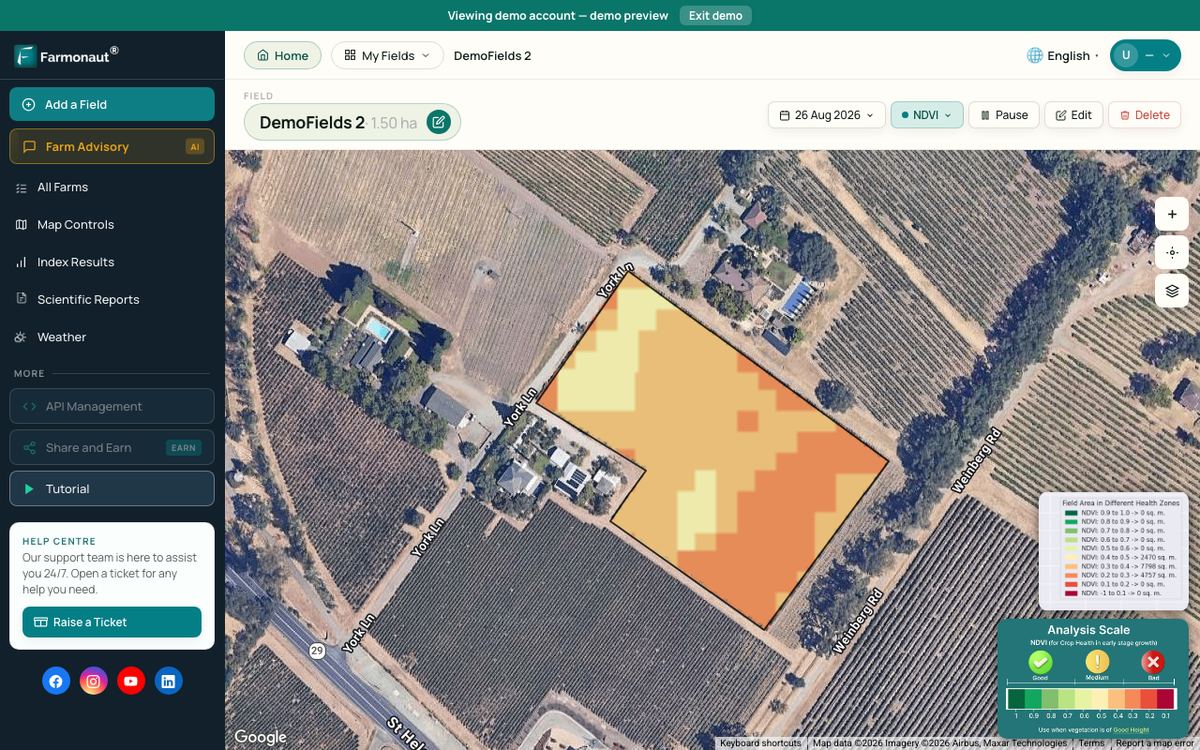
Did you know? Satellite NDVI maps can help you track how a wheat crop is developing. They are available in Farmonaut’s satellite monitoring suite .
7. Wheat Maturation and Harvest: Securing Maximum Yield
Maturity is the final stage of the wheat growth cycle, marking the end of grain filling (physiological maturity). Kernels then dry down in the field and are harvest ripe at about 13% moisture.
- Physical Signs: At physiological maturity (Feekes 11.3) the kernels, head and stem are turning yellow, with some green tissue left. By harvest ripeness (Feekes 11.4) all plant material is golden.
- Kernels: At physiological maturity, kernels are hard and hard to split with a thumbnail. At harvest ripeness (Feekes 11.4) a thumbnail cannot split them.
- Optimal Harvest Timing: Prompt harvest prevents grain shattering and loss due to storms, pests, or late-season diseases. Delayed harvest results in declining quality and yield.
Modern Monitoring: Satellite maps and field-level alerts from Farmonaut can help you follow crop development when you plan harvest across large wheat areas.
Quality Control: Secure traceable, high-quality wheat by recording maturity and harvest data via blockchain-enabled Farmonaut tools, providing transparency for buyers and processors.
Access Farmonaut’s Satellite & Weather Data API
| API Developer Docs
Kernels hold about 35 to 40% moisture at physiological maturity and usually need 10 to 14 days to dry to harvest moisture, depending on weather (Michigan Wheat Program). For storage, Oklahoma State advises that wheat above 12.5% moisture may be at risk of mold, odor, sprout damage and insects (Oklahoma State, 1999). NDSU gives about 70 days of allowable storage for 16% moisture wheat at 70°F, and about 230 days at 50°F (NDSU, 2009). If you harvest wetter grain, dry it before you store it.
Farmonaut’s Advanced Precision Farming Platform
Farmonaut offers advanced satellite-based farm management solutions accessible via web, Android, iOS, and API integration. Our mission is to make precision agriculture affordable and practical for farmers, agribusinesses, and policy makers.
- Satellite-Based Crop Health Monitoring: Using multispectral imagery, monitor crop health, detect stress, analyze vegetation indices (NDVI), and spot field areas that need a closer look for timely interventions at every wheat growth stage.
- AI advisory: Get satellite-based field insights and advisories to support wheat management decisions.
- Blockchain Traceability: Securely record, track, and prove every input and output in the wheat supply chain, from seed selection to harvest, increasing consumer confidence. Learn more about Farmonaut Traceability Solutions.
- Fleet & Resource Management: Track and plan the use of agricultural machinery with Fleet Management tools.
- Carbon Footprinting: Monitor, benchmark, and minimize the environmental impact of wheat cultivation with carbon accounting and reporting features.
- Crop Loans & Insurance: Support access to agricultural finance with remote verification and risk assessment based on satellite data.
Key Environmental Factors Affecting Wheat Yield
Every phase of the wheat growth cycle is influenced by specific environmental factors. Effective management depends on understanding and anticipating these variables:
-
Temperature: Wheat is a cool-season crop, yet different growth stages respond to temperature in different ways:
- Germination: minimum about 39°F (4°C), preferred about 68°F (20°C)
- Tillering: can start in fall and finish in spring, depending on sowing date and weather
- Heading and flowering: about two hours at 30 to 32°F (-1 to 0°C) can cause floret sterility, and heat before maturity also cuts yield
- Grain Filling: mild temperatures; heat stress during this phase shortens grain fill and lowers kernel weight
Frost events during flowering and grain fill can lead to serious yield reduction.
- Water Availability: Consistent soil moisture is required for seedling establishment, tillering, booting and especially wheat grain filling. Acute drought spells can cause “shriveled heads” or poor kernel development, making irrigation management crucial.
- Soil Fertility: Nutrient-rich and well-structured soils (Arkansas guidance treats pH above about 5.8 as near optimal) enable strong growth. Address phosphorus and nitrogen deficiencies prior to and during stem elongation and tillering.
- Light: Wheat needs abundant sunlight for efficient photosynthesis, especially at the flag leaf and stem elongation phases.
- Other Factors: Pests, diseases, soil compaction, and weed competition can seriously limit yield if not addressed with targeted wheat crop management.
Heat during grain fill also costs yield. Nebraska Extension notes that an average temperature above 85°F during the filling period reduces spring wheat yield (Nebraska Extension, 2020).
Wheat Crop Management: Best Practices for Each Key Growth Stage
-
Pre-Sowing:
- Test and amend soil as required (soil requirements for wheat cultivation).
- Use certified, disease-free seed for even emergence.
- Plan variety and sowing date to fit local seasons for optimal conditions for wheat growth.
-
Germination/Seedling:
- Maintain moist, aerated soil for wheat seed germination process.
- Monitor for and control soil-borne pests and diseases.
-
Tillering:
- Apply split nitrogen fertilization and manage weeds for maximum wheat tillering stage success.
-
Stem Elongation & Booting:
- Timely irrigation supports head and stem development, vital for high yield.
- Scout for signs of fungal and insect attacks, intervene swiftly with recommended methods.
-
Heading and Flowering:
- Time any Fusarium head blight (scab) fungicide for beginning flowering, Feekes 10.5.1 (Purdue Extension).
- Keep soil moisture stabilized to ensure kernel set and reduce sterility risk.
- Monitor weather closely—heat waves and frost are most damaging now.
-
Grain Filling & Ripening:
- Sustain irrigation to avoid heat/drought stress until physiological maturity.
- Continue disease and lodging surveillance.
-
Maturity/Harvest:
- Plan harvest when kernels are ripe, at about 13% moisture, and dry any wetter grain before storage.
- Protect harvested grain from rain, pests, and mechanical losses for top quality.
Winter wheat vs spring wheat life cycle
The two types run through the same stages. The difference is whether the plant needs a cold spell before it can head.
- Winter wheat is sown in autumn, tillers before winter, then goes dormant. It needs vernalization, a period of cold, before it will flower. Nebraska Extension puts the trigger at about six weeks at 38 to 46°F (Nebraska CropWatch). NDSU notes reported ranges of 30 to 75 days, and says winter wheat will not produce seed if it is not vernalized (NDSU). Head size is set after vernalization. Purdue says tillers formed after Feekes 5 do not add to yield (Purdue Extension).
- Spring wheat does not need cold exposure. Hard red spring wheat, grown mainly in the northern US, is generally planted from March through late May and harvested in August or September (Nebraska CropWatch).
Nebraska Extension says winter wheat generally yields about a third more grain than spring wheat when moisture is adequate. Its example is Nebraska variety trials from 1988 to 1992, where winter wheat out-yielded spring wheat by 25% in the drier west and 50% in the wetter east. National averages by class mix regions and moisture levels, so the chart below does not show that gap on its own.
Chart
US wheat yields by class swing from year to year
Lowest and highest annual yield, bushels per acre, marketing years 2016/17 to 2025/26
We cover a connected topic in Drift Irrigation System & Cost: 7 Powerful Upgrades for Optimal Efficiency.
FAQ: Wheat Growth Cycle & Management
What are the seven main wheat growth stages?
The seven key stages are: Germination and Seedling Establishment, Tillering, Stem Elongation, Booting, Heading and Flowering (Anthesis), Grain Filling and Ripening, and Maturity and Harvest.
How do soil and moisture management influence wheat yield?
Soil requirements for wheat cultivation include good drainage, optimal pH, and sufficient nutrients. Uniform moisture availability at germination, tillering, booting, and especially grain filling, maximizes yield and grain quality.
What environmental factors most affect wheat quality and productivity?
Temperature and water availability during wheat heading, flowering, and grain filling are most critical. Sudden drought, heat waves, or frost during these phases can cut yield.
How can technology help manage wheat growth stages?
Advanced tools, like Farmonaut’s crop monitoring platform, offer satellite crop monitoring, advisories and traceability tools, thus supporting better decisions across all growth stages.
When is the ideal time to harvest wheat?
Harvest when kernels cannot be split by a thumbnail (Feekes 11.4), plants have turned golden, and kernel moisture is about 13%. This prevents losses from shattering and maintains grain quality.
Conclusion: Mastering the Wheat Growth Cycle for Optimal Yield Success
To achieve optimal wheat growth and consistently high yields, it’s vital to understand and precisely manage the distinct stages of the wheat crop cycle—from seed germination through to maturity and harvest. Each phase brings unique soil, moisture, and temperature requirements, and is vulnerable to different environmental factors.
Effective wheat crop management requires:
- Continuous monitoring of plant development (with advanced technology where possible).
- Proactive response to environmental challenges like drought, pests, and disease outbreaks.
- Adopting precision tools—such as Farmonaut’s satellite-based crop and soil analytics—for smarter, timely decisions.
- Recording, tracing, and verifying inputs and harvest data for transparency and market access.
- Optimizing every stage according to its critical impact on final yield and grain quality.
Whether you’re an individual farmer, agribusiness manager, or working in agricultural policy, mastering the wheat growth stages helps you time each input to the stage when it matters most. Embrace advanced agri-technology, educate your practice with stage-specific interventions.
Farmonaut crop monitoring
Track your wheat from space
Draw your wheat fields once to see satellite crop health maps and follow how each field develops through the season.



Keep reading
Sources
- University of Kentucky, Identifying Wheat Growth Stages, AGR-224 (2016): publications.mgcafe.uky.edu
- Purdue Extension, Managing Wheat by Growth Stage, ID-422 (2011): extension.purdue.edu
- Nebraska Extension CropWatch, Should I Consider Spring Wheat in My Cropping System? (2020): cropwatch.unl.edu
- NDSU, Winter Wheat Vernalization (2021): ndsu.edu
- Alberta Agriculture, Soil Temperature for Germination (Agdex 590-1): www1.agriculture.alberta.ca
- Alberta Agriculture, Using 1,000 Kernel Weight for Calculating Seeding Rates (Agdex 81, revised 2018): www1.agriculture.alberta.ca
- Nebraska Extension CropWatch, Determining the Seeding Rate for Winter Wheat (revised 2020): cropwatch.unl.edu
- Nebraska Extension CropWatch, Successful Winter Wheat Seeding: cropwatch.unl.edu
- Kansas State University, Wheat Grain Yield Response to Seeding Rate in 2023-2024 (2025): journals.newprairiepress.org
- USDA Economic Research Service, Wheat Data (updated September 2026): ers.usda.gov
- University of Kentucky, Wheat Freeze Injury (Herbek and Lee, 2004): graincrops.mgcafe.uky.edu
- Texas A&M AgriLife Extension, Wheat Freeze Injury in Texas, ESC-026 (2014): varietytesting.tamu.edu
- AHDB, The main components of yield in wheat: ahdb.org.uk
- University of Arizona Cooperative Extension, Wheat Development Stages, az2200 (2026): extension.arizona.edu
- Zhao et al., US winter wheat yield loss attributed to compound hot-dry-windy events, Nature Communications (2022): nature.com
- University of Arkansas, Arkansas Wheat Production Handbook, Chapter 5 (updated 2014): uaex.uada.edu
- Michigan Wheat Program, Harvesting High Quality Wheat: miwheat.org
- Oklahoma State University, CR-1741 stored wheat management (1999): pods.okstate.edu
- NDSU, Cool Stored Wheat and Barley, Check Moisture Content (2009): ag.ndsu.edu
- Sanchez-Bragado et al., Relative contribution of shoot and ear photosynthesis to grain filling in wheat, Journal of Experimental Botany (2014): pmc.ncbi.nlm.nih.gov
Discussion
Questions, corrections or field experience? Share them below. First-time comments are reviewed before they appear, and your email is never published.
No comments yet. Be the first to add a question or your experience.

 Messina Beej
 Dirks Bros Farms
 Red August Group
 Farm Inc
 WeMe Global
 Agrotoken
 Blue BearX
 Insignito
 Croptimum
 DnCubed
 Field Capacity
 Indosistim Teknologi
 Liquify Digital
 CU Foods
 BeyondTech Global
 Rouge VC
 AgroGreen Dynamics
 AgroRisk
