

“Over 70% of veal farms globally adopted sustainable feed practices by 2025, reducing environmental impact significantly.”
“In 2025, improved animal welfare standards led to a 40% rise in certified humane veal cow operations worldwide.”



Table of Contents
- Introduction: Veal Cow Farming in 2026
- The Role of Veal Cow in the Livestock Industry
- Evolution of Veal Farming Practices
- Animal Welfare and Ethical Concerns in Veal Production
- Sustainability Trends in Veal Cow Production
- Technological Advancements Supporting Sustainable Veal Farming
- Veal Market Trends & Changing Consumer Demand
- Comparative Table: Traditional vs. Sustainable Practices
- Key Challenges and Opportunities for the Veal Industry
- How Farmonaut Empowers Modern Veal Cow Farming
- FAQ: Veal Cow Farming 2026
- Conclusion: The Future of Veal Cow Production
Veal Cow Farming 2026: Sustainable Practices & Key Trends
Veal cow farming has witnessed profound changes as we step into 2026, reflecting the intersection of sustainability, technology, and evolving consumer demands. As an important segment within modern agriculture, the veal sector continues to adapt, addressing animal welfare concerns, environmental responsibilities, and market trends. Let’s explore how veal production leverages cutting-edge practices and eco-friendly innovations to create an economically viable operation while aligning with global sustainability goals.
The Role of Veal Cow within the Livestock Industry: From Dairy Byproduct to Value Creation
Veal, known for its tender texture and delicate flavor, is derived from young calves—primarily male offspring within established dairy systems. These male calves are less valuable for milk and have historically been considered a waste byproduct. Today, veal cow farming represents a critical means of reducing waste, improving farm profitability, and adding significant value.
- 🔄Integration with dairy: Utilizes resources efficiently by raising male calves not needed for herd rejuvenation.
- 🚜Supports rural income: Diversifies farmers’ income streams and sustains rural economies.
- 💡Keeps farms viable: Reduces economic and resource waste within agricultural systems.
- ♻️Environmental alignment: Encourages sustainable utilization of existing infrastructure and feed.
- 🌍Broader food security: Increases global availability of ethically produced meat.
Evolution of Veal Farming Practices: Tradition to Transformation
Historically, veal farming often involved restricting movement of young calves in narrow individual crates and limiting their diets to create pale meat with a delicate texture. This practice was criticized on animal welfare and health grounds, fueling consumer concerns and regulatory reforms.
Dominated by intensive systems and individual crate housing
Early animal welfare campaigns drive industry rethinking
Shift to group housing, enriched environments, and dietary improvements
Sustainable veal production is standard, focusing on welfare, environmental, and economic considerations
Animal Welfare and Ethical Concerns in Veal Production
Animal welfare is now an expectation—not a differentiator. The veal sector in 2026 is shaped by stringent standards governing welfare, especially for calves raised specifically for veal. Let’s explore key ethical considerations and global regulatory frameworks shaping welfare:
- 🚼Group housing: Calves are now often raised in groups rather than individual crates, supporting social behavior and reducing stress.
- 🥛Diets reformed: Modern veal production emphasizes holistic diets with iron and fiber, moving away from mere aesthetic meat qualities.
- 🌱Enriched environments: Calves are provided with enrichment tools and greater space, facilitating normal behaviors.
- 🧑⚕️Veterinary oversight: Mandatory proper veterinary care and ventilation standards as per regulatory mandates.
- 🐄Pasture access: Leading veal cow operations now provide pasture-raised options, aligning with ethical consumer demand.
Several countries now mandate humane handling with penalties for non-compliance. Certifications such as “Certified Humane” or “Animal Welfare Approved” have become powerful market signals, listing traceability and welfare information on-product.

Sustainability Trends in Veal Cow Production: Reducing Waste & Environmental Impact
The sustainability of veal farming is under scrutiny. By 2026, producers are using resources more efficiently, improving feed efficiency, and supporting environmental management through integrated systems with other livestock enterprises—especially dairy.
- ♻️ Integration with dairy: Shared housing, feed, and veterinary services reduce duplication and lower the environmental footprint.
- 🪱 Waste management: Manure from veal cow operations is used as biofertilizer, closing nutrient loops and reducing chemical fertilizer dependence.
- 🌾 Feed innovation: Upcycled feeds—including byproducts—are increasing efficiency and reducing emissions.
- 🌡️ Emission reduction: Advanced livestock systems and precision feeding strategies lower greenhouse gases per kg of meat produced.
- 💧 Water conservation: Efficient water use technologies support sustainable veal cow farming.

Technological Advancements Supporting Sustainable Veal Farming
Embracing technology is not optional but essential in modern veal farming. Advances in satellite-driven data, smart sensors, and AI-backed analytics now underpin sustainability and profitability combined.
- 🛰️ Satellite monitoring: Allows real-time tracking of herd movement and land use, promoting resource efficiency.
- 📈 Precision livestock management: AI and sensor-based health monitoring systems help optimize feeding and early disease detection.
- 🌱 Crop feed integration: Data-driven matching of feed production with calf dietary needs reduces waste.
- 🔗 Blockchain traceability: Provides end-to-end verification of animal welfare, feed, and handling, empowering consumer trust.
- ⚡ Emission tracking: Satellite-based emissions monitoring aligns operations with evolving global environmental targets.

Veal Market Trends & Changing Consumer Demand in 2026
Global market demand for veal remains robust, though preferences continue to evolve rapidly. Consumers favor traceable, ethically produced, and nutritionally sound products.
- 🌍 Globalized supply chains: Efficient logistics and digital records improve export opportunities.
- 🧑🍳 Fine dining influence: Veal remains a staple in culinary circles thanks to tenderness and unique flavor.
- 📈 Market growth: Sustainable, welfare-certified veal sees higher price realization and demand growth each year.
- 🛒 Retail innovation: Direct-to-consumer models and online traceability platforms gain traction.
- 🔍 Transparency expectations: Detailed origin, health, and environmental data is sought by retail and food service partners.

Comparative Practices Impact Table: Traditional vs. Sustainable Veal Cow Farming 2026
| Practice / Feature | Traditional Farming (Estimated Values) |
Sustainable Farming 2026 (Estimated Values) |
Environmental / Welfare Impact |
|---|---|---|---|
| Feed Efficiency (kg feed / kg gain) |
5.0 – 6.0 | 3.8 – 4.5 | Less feed used per kg meat; lower environmental impact |
| Water Usage (liters / animal / year) |
11,000 – 13,000 | 7,500 – 9,000 | Significant reduction in fresh water consumption |
| Greenhouse Gas Emissions (kg CO2e / animal / year) |
380 – 480 | 250 – 315 | ~33% decrease in per-animal emissions |
| Animal Welfare Index (out of 10) | 3.5 – 5.0 | 8.0 – 9.2 | Major welfare improvements; certification possible |
| Market Demand Growth (% est.) | ~0% | +9% – 13% | Sustainable & welfare brands grow noticeably faster |

Key Challenges and Opportunities for the Veal Industry
Veal cow production in 2026 faces both challenges and opportunities. Successful operations are those that innovate, invest, and educate—adapting rapidly to emerging animal welfare, sustainability, and biosecurity standards while staying alert to risk factors.
- ⚠️Challenges:
- 🦠Disease management—biosecurity and antimicrobial resistance need vigilant management.
- 💰Feed price volatility—impacts profitability within agricultural systems.
- 🥬Competition from plant-based/cultured proteins—consumer market shares are being challenged.
- 🌏Export regulation complexity—different markets = different animal welfare standards.
- 💼Capital for innovation—transitioning to sustainability mandates new investments.
- 💡Opportunities:
- 🌐Tech-driven herd management—data and AI innovations for efficient operations.
- 🔬Genetic selection—calves raised for resilience and efficiency.
- 🌱Welfare and sustainability certification—unlocks premium market access.
- 📊Digital traceability—builds consumer trust in all markets.
- 📉Emission reduction credit—carbon footprinting can generate additional revenue streams for forward-thinking producers.
How Farmonaut Empowers Modern Veal Cow Farming
As a pioneer in satellite technology for agriculture, we at Farmonaut provide actionable tools for veal cow, dairy, and livestock operations aiming to achieve sustainability, efficiency, and profitability in 2026 and beyond.
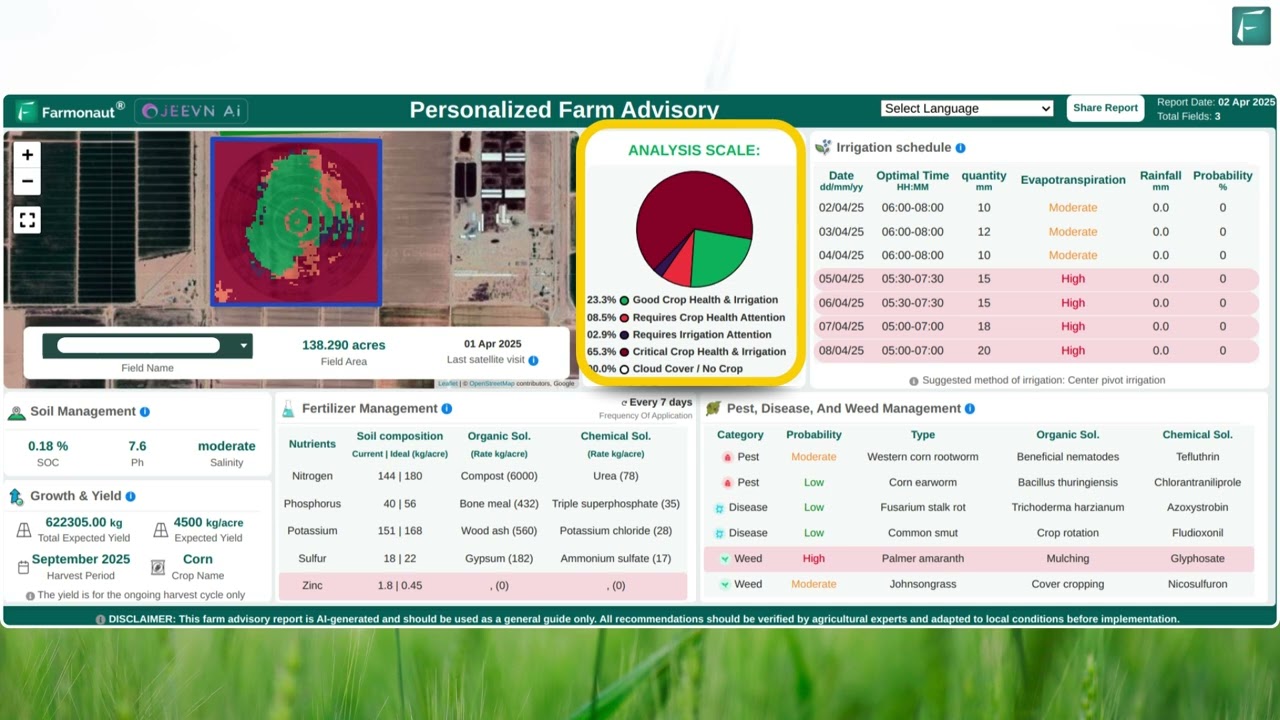
- 🛰️Real-time Monitoring: Our satellite platform delivers real-time insights into pasture health, herd movement, and resource utilization, optimizing daily veal operations.
- 🤖AI-Based Advisories: Using Jeevn AI and machine learning, we enable smarter feed management and early detection of animal health issues.
- 🔗Blockchain Traceability: Our platform supports end-to-end traceability for veal meat, ensuring transparency to markets and consumers. Learn more about Farmonaut Traceability & its benefits.
- 🧾Resource and Fleet Management: We provide fleet management tools for optimizing farm logistics, enhancing resource allocation for veal and dairy operations.
- 🪴Environmental Tracking: Our carbon footprinting systems help producers monitor emissions and meet global sustainability standards for animal agriculture.
To empower efficient large-scale production, our large scale farm management app lets managers optimize operations, monitor animal health, and comply with welfare regulations—all via satellite-driven dashboards.
We also offer APIs for integrating satellite and weather insights into your own digital farm management platforms. Access Farmonaut API |
Developer API Docs

FAQ: Veal Cow Farming 2026
Conclusion: The Future of Veal Cow Production Is Sustainable and Transparent
Veal cow farming in 2026 is at the intersection of tradition and innovation. Sustainable practices, improved animal welfare, and transparency are not just trends but imperatives determining long-term success. Integration with dairy production systems not only optimizes resources but delivers real environmental and economic value.
- 🌱Sustainability: Sustainable veal production ensures efficient resource use, reduced waste, and a lower environmental impact.
- 🐮Animal Welfare: Modern practices elevate welfare, gaining consumer confidence and supporting premium market growth.
- 🔍Transparency: Traceable, data-driven systems connect ethical producers with quality-focused global markets.
- ⚡Technology: Satellite, AI, and digital advisory platforms are now essential to thriving operations.
- 🧑🌾Profitability: Diversification and system integration enhance farm profitability and resilience in changing markets.
As global agriculture continues to evolve, the veal sector must embrace sustainability and welfare as its twin pillars. Technologies like satellite monitoring, AI-driven advisory, and blockchain-enabled traceability are transforming veal cow farming—ensuring it remains a viable, ethical, and economically integral segment within the broader livestock industry.
For producers, aggregators, and food brands, the opportunity is clear: invest in sustainability, animal welfare, and digital innovation. Veal production that aligns with these trends will not only meet regulatory and market demands but also build lasting value for all stakeholders in 2026 and beyond.

 Aadyah Aerospace
 Kubota
 FFBS
FFBS Jontra
 Kalustyan
 Tucor
Tucor Geno
Geno Hayleys Agriculture
 Linx Agritech
 Adinet
 Save Your Soils
 Grandstream Algérie
 XOS Realty
 Geospatial Lab Africa
 Agro La Gándara
 HIPSAC
 ZOL Zimbabwe
