

Thai Farming & AI: Top 7 Thailand Farming Techniques Transforming Agriculture in 2025
Harnessing AI to Transform Thai Farming: Techniques, Markets, and Sustainability in 2025
“By 2025, AI-powered techniques are projected to increase Thai rice yields by up to 20%.”
“Over 60% of Thai farmers are expected to adopt AI-driven precision farming methods by 2025.”
Contents
- Introduction: Heritage Meets AI-Driven Agriculture in Thailand
- Trivia: AI’s Game-Changing Promise
- The Top 7 Thailand Farming Techniques Enhanced by AI
- Comparative Impact Table: Thai Farming Techniques & AI Integration
- Thai Farmers Market: Data, Pricing, and Smart Market Integration
- AI in Agroforestry & Environmentally Sound Practice
- How Farmonaut Empowers Thai Agriculture
- Challenges & Opportunities: 2026 and Beyond
- Key Insights, Pro Tips & More
- FAQ: AI & Thai Agriculture
- Conclusion: Shaping Resilient Thai Agriculture for the Future
Introduction: Heritage Meets AI-Driven Agriculture in Thailand
Thailand’s rich agricultural heritage forms the backbone of its rural economy, culture, and food security. For centuries, Thai farming has thrived on ingenious local techniques blending rice paddies, fruit orchards, and diverse crops in harmony with the landscape. In today’s era, we see a historic shift—AI-driven smart farming and advanced digital systems are now boosting yields, reducing costs, and creating new market opportunities. This fusion of Thailand’s time-honored farming techniques and modern technology is transforming the sector’s resilience to climate variability and global market pressures.
- ✔ Boosting yields with AI, sensors, and data analytics.
- 📊 Optimizing resource use with precision irrigation, nutrient management, and automated pest detection.
- ⚠ Reducing costs by preventing waste and streamlining farm operations.
- 🌱 Promoting sustainability through climate-adaptive practices and environmental monitoring.
- 🌏 Expanding markets by enabling product traceability and smarter supply chains.
The core of this revolution lies in the adoption of AI and the integration of smart systems across various crops: rice, rubber, palm oil, mango, durian, lychee, vegetables, orchards, and more. Let’s delve deeply into the top 7 Thai farming techniques for 2025 and beyond, each supercharged by data-driven AI innovation.

Trivia: AI’s Game-Changing Promise
- “By 2025, AI-powered techniques are projected to increase Thai rice yields by up to 20%.”
- “Over 60% of Thai farmers are expected to adopt AI-driven precision farming methods by 2025.”
The Top 7 Thailand Farming Techniques Enhanced by AI
-
AI-Powered Smart Irrigation & Climate-Adaptive Farming
- Soil moisture sensors, advanced weather models, and machine learning optimize irrigation schedules for maximum water efficiency.
- Alternate wetting and drying in rice paddies, guided by AI, reduces methane emissions and saves water.
- Greenhouse systems leverage temperature, humidity, and AI to stabilize and extend growing seasons.
-
Precision Agriculture for Diverse Crops
- Real-time monitoring with drones, multispectral imaging, and ground sensors identifies crop health, nutrient deficiencies, and pest pressures for rice, fruits, vegetables, and plantations.
- AI vision detects fruit load, quality, and harvest timing for Thai mango, durian, lychee, and other high-value crops.
- Targeted interventions in rubber and palm oil plantations to maximize tapping efficiency and oil yields.
-
Smart Farm Management & Digital Marketplace Integration
- Digital tools connect farmers to finance, suppliers, and buyers, providing pricing analytics, supply chain traceability, and harvest timing optimization.
- Blockchain-like systems record pesticide use, provenance, and compliance with export standards.
- Risk-based microloans enabled by satellite-driven and AI-assessed farm data.
-
AI-Enabled Sustainable Practices & Climate Resilience
- Automated soil & crop health assessments (e.g. via NDVI) for sustainable intensification with cover cropping, mulching, and organic amendments.
- Precision nutrient management to reduce fertilizer runoff and protect waterways and biodiversity.
- Agroforestry designs blending timber, fruit, carbon credits, and ecosystem benefits, modeled and optimized by AI tools.
-
AI Training, Policy Support & Farmer Digital Literacy
- Extension services and training programs incorporate AI tool operation, sensor interpretation, and troubleshooting.
- Cooperatives enable shared access to AI-guided irrigation, harvesters, and digital market apps.
- Farmer organizations push for transparent pricing and accessible equipment financing.
-
AI-Powered Pest & Disease Detection
- Drones and smart sensors proactively detect disease/pest outbreaks in fruit orchards, plantations, and rice paddies.
- Machine learning models identify early-stage symptoms, enabling prompt, targeted biological or organic control.
- Yield loss prevention, especially for export-ready Thai fruit and vegetable supply chains.
-
Environmental Impact and Supply Chain Traceability
- Blockchain and satellite data support carbon footprint monitoring & sustainable palm/oil/rubber verification.
- Traceability systems assure compliance with export standards in Japan, EU, and global markets.
- Enabling premium pricing and new market access.
🌾 5 Pillars of AI-Driven Thai Agriculture for 2026+
- 🔬 Precision: Drones, sensors, and big data to fine-tune practices for every hectare.
- 💧 Resource Optimization: Smart irrigation and nutrient management lower waste.
- 🌱 Sustainability: Data-driven cover cropping, organic integration, and emissions control.
- 💹 Market Insight: Digital platforms transparently connect farmers with pricing and demand data.
- 👨🌾 Farmer Empowerment: AI literacy, cooperative access, and inclusion in policy evolution.

Comparative Impact Table: Thai Farming Techniques & AI Integration
| Technique | Description | AI Application Example | Estimated Yield Increase (%) | Sustainability Improvement (score/10) | Market Opportunity Growth (%) |
|---|---|---|---|---|---|
| Precision Rice Farming | AI-optimized irrigation, alternating wetting/drying, smart fertilization | Machine learning analyzes rainfall, soil moisture, and crop models for optimal schedules | 18 – 22% | 9 | 30% |
| Smart Drip Irrigation | Sensors automate precise irrigation for fruit and vegetable crops | AI integrates soil, weather, and evapotranspiration data for water savings | 15% | 7 | 19% |
| AI-Driven Pest & Disease Detection | Monitoring systems for orchards, plantations, and rice detecting early outbreaks | Machine vision models, drone imagery, and on-farm sensors | 11% | 8 | 14% |
| Agroforestry Design & Management | AI models mix timber, orchard crops, carbon credits, and biodiversity | Planning tools simulate optimal canopy, species balance, and carbon capture | 10% | 10 | 16% |
| Marketplace & Traceability Apps | Digital tools for pricing, finance, logistics, and supply chain transparency | AI analyzes demand, blockchain logs pesticide use and provenance | 8% | 7 | 32% |
| Precision Nutrient Management | AI-sensed soil/crop nutrition, targeting fertilizers & organics | Satellite data and on-field sensors assess deficiencies, direct inputs | 12% | 8 | 5% |
| Digital Extension & Training Platforms | Shared mobile/web tools train and support AI literacy for Thai farmers | Online decision-support, translation, and sensor feedback apps | 9% | 6 | 9% |
AI integration in Thai rice and fruit farming can increase yields by up to 20% while enabling new export markets through traceability and compliance features.
Thai Farmers Market: Data, Pricing, and Smart Market Integration
Thai agriculture’s future hinges on transparent, tech-enabled markets. In 2025 and beyond, digital apps and AI-powered analytics inform pricing, supply, and demand in the Thai farmers market. These innovations give farmers unprecedented bargaining power, enabling smarter, more strategic harvests.
Digital Tools Driving Market Access
- 💻 Mobile & Web Platforms allow farmers to track market prices, connect with buyers, and access suppliers.
- 📦 Smart Traceability records every step from field to shelf, building trust in the supply chain—see how Farmonaut’s AI-backed traceability tools enhance compliance for fruit and rice exporters.
- 💡 Market Demand & Pricing Forecast powered by machine learning enables timing of harvests for peak value, reducing perishability losses.
- 📲 Finance and Risk Apps assess farm risk profiles for microloans—Farmonaut’s crop loan and insurance solutions leverage satellite and AI data to help access affordable rural financing with lower risks for lenders.
Such systems facilitate local trade and connect Thai produce with global markets—from Japan and China to the EU and Southeast Asia. As traceability becomes mandatory for high-value fruit, rice, and organic exports, AI-enabled compliance is key to sustaining Thailand’s agricultural growth.
🚀 Market Opportunities Unlocked by AI
- 🔗 Traceable exports to premium buyers
- 📈 Price premiums for quality and compliance
- 🕒 Optimized harvest timing and post-harvest logistics
- 🌍 Entry to global organic and specialty food markets
- 💵 Access to sustainable finance based on real performance data
Utilize digital marketplace apps and blockchain traceability to secure premium pricing and guarantee compliance with export market standards for Thai fruit and rice.
AI in Agroforestry & Environmentally Sound Practice
Thai agriculture is increasingly embracing agroforestry—the strategic integration of trees, fruits, vegetables, and even timber for carbon credit generation. Modern AI-powered tools model the ideal mix of species, optimize canopy vigor, and simulate carbon capture for maximum benefit.
- 🌳 Smart Species Planning: AI selects trees and crops that co-exist, maximizing both biodiversity and farm income.
- 📉 Carbon Emissions Tracking via satellite—Farmonaut’s carbon footprinting solutions enable sustainable palm and rubber supply chains that meet international sustainability benchmarks.
- 🌱 Agroecological Models deploy machine learning to optimize under-canopy vegetables, fruits, and even shading networks in orchards.
- 🏭 Mining-Adjacent Supply Chains: Regular monitoring of land and environmental health using satellite and AI analytics ensures environmentally sound operations and allows for rapid restoration projects—crucial where farms and mining industries intersect in Northeast Thailand and Southern provinces.
Agroforestry, supported by AI, isn’t just about resilience. It opens new market opportunities for carbon credits, sustainable timber, and premium eco-certified produce, aligning with Thailand’s forward-thinking agricultural and environmental policies for 2026 and beyond.

Agroforestry and environmentally intelligent supply chains present huge growth opportunities within Thai agriculture and export sectors, particularly when integrated with AI-powered benchmarking, traceability, and carbon market certification.
How Farmonaut Empowers Thai Agriculture
As a provider of affordable, advanced satellite and AI solutions, Farmonaut’s platform delivers actionable insights for farm and resource management across Thailand’s rich agricultural sector. Our key offerings include:
- 🛰️ Satellite Monitoring (NDVI, soil, vegetation): Real-time crop health, soil moisture, and farm trends. Our large-scale farm management solutions deliver landscape-level insights for big and small producers.
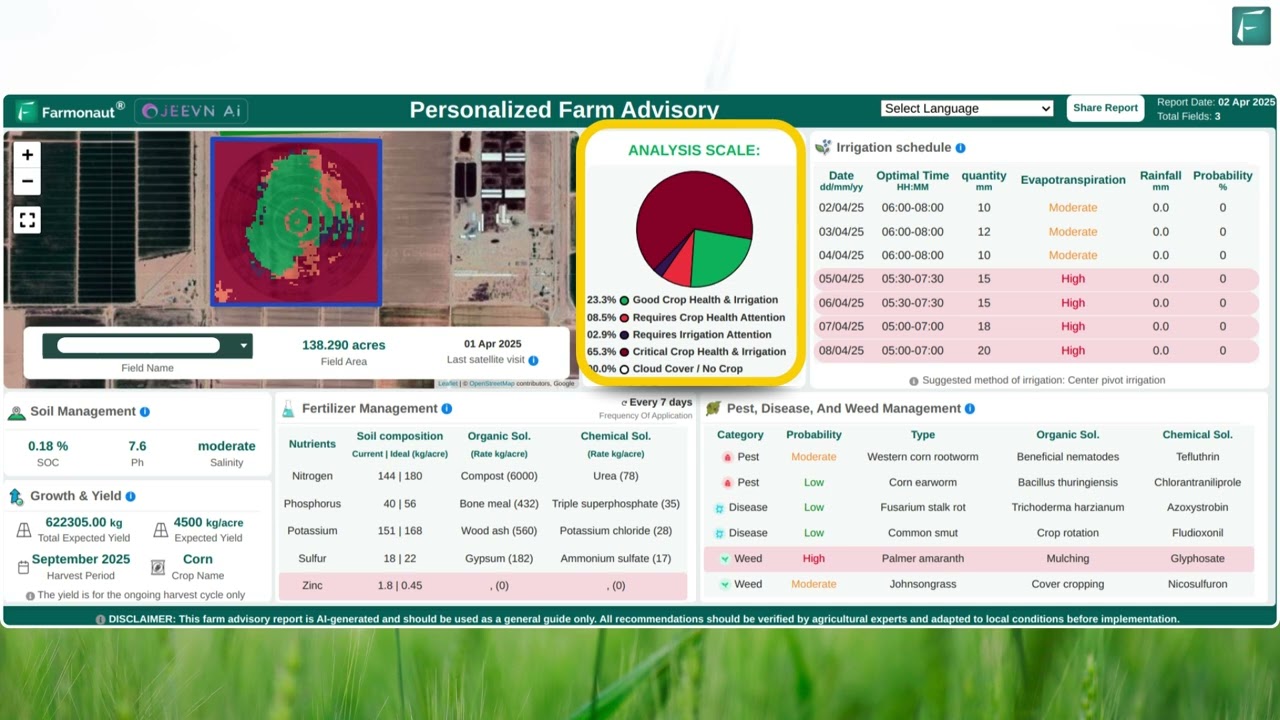
- 🤖 Jeevn AI Advisory System: AI-driven recommendations on irrigation, fertilization, pest management, and weather risk. Insights are tailored for each Thai farm’s needs.
- 🔒 Blockchain Traceability (excluding crypto): End-to-end supply chain transparency, essential for premium fruit, rice, and commodity exports.
- 🔗 Fleet & Equipment Management: Efficient scheduling and usage of farm machinery and transport. Fleet management made simple with data-driven tools!
- 🌳 Environmental Impact Monitoring: Track carbon emissions and sustainability of both agriculture and mining—key for compliance with international standards. Explore Farmonaut’s carbon footprinting solutions.
- 📱 Accessibility: Use Farmonaut via Android, iOS, browser web app—or integrate via API and developer documentation.



Farmonaut Subscription Plans for Thai Farmers
Challenges & Opportunities: 2026 and Beyond
As we harness these thailand farming techniques with farming and AI, several challenges must be met—and opportunities seized—in the evolving Thai agricultural sector:
- 🧑💻 Digital Literacy Gaps: Many smallholders still require training to maximize digital and AI-based tools.
- 💸 Upfront Costs: While ongoing costs drop with efficient practices, initial investment in sensors, drones, and digital platforms may be a barrier for some farmers.
- 🛡️ Data Privacy: Secure management of farm and supply chain data is vital for building trust among all stakeholders.
- 🌐 Localized AI Models: Adapting machine learning systems to unique Thai soil, crop, and climate conditions ensures optimal results. Open data initiatives and close collaboration with local research institutes are critical.
- 🌏 Market Fragmentation: Integrating local markets, global buyers, and diverse rural producers remains an ongoing challenge—but digital tools are bridging these divides with increasing speed and reliability.
Failing to customize AI and digital tools for local Thai microclimates, soil types, and cropping systems may lead to suboptimal results or farmer disillusionment.

Key Insights, Pro Tips, and More: 5 Callouts for Thai Farming Success
🌟 5 Ways AI & Smart Technologies Empower Thai Agriculture
- 🌱 Boost yields by giving plants the right resources, at the right time, in the right amount.
- 💦 Conserve water & energy with real-time sensor feedback and AI-powered scheduling.
- ✈️ Monitor crops remotely and deploy targeted interventions fast—minimizing crop loss.
- 📲 Access fair financing and market apps, reducing risks and dependency on middlemen.
- 🏅 Achieve sustainability certification for access to global markets, powered by traceability and carbon tracking.

FAQ: Thai Farming, AI, and the Future
- What is the main benefit of AI-powered farming for Thai farmers?
- The core benefit is increased efficiency—AI-powered tools optimize irrigation, fertilizer, and pest management, leading to higher yields, lower costs, and reduced environmental impact. Farmers gain real-time decision support, better access to markets, and sustainable income growth.
- How does AI help with sustainable practices in Thailand?
- Machine learning models analyze satellite and sensor data to recommend soil health improvements, optimized nutrient application, and water-saving irrigation, all of which enhance sustainability. AI also supports compliance with international environmental and traceability standards.
- Can smallholder Thai farmers afford these new AI-based techniques?
- While upfront costs for digital tools exist, subscription platforms and cooperative models spread investment and make access cost-effective. Farmonaut, for example, offers affordable satellite and AI-powered solutions accessible via web and mobile apps.
- How does blockchain-based traceability work in Thai agriculture?
- Blockchain-like systems support end-to-end supply chain visibility, logging data on production practices, pesticide use, and logistics. This transparency is critical for meeting export demands in markets like the EU, Japan, and high-value organic segments.
- What crops in Thailand benefit most from AI-driven precision farming?
- Rice, rubber, palm oil, fruit orchards (durian, mango, lychee), and intensively managed vegetables see the biggest gains in yield, efficiency, and export readiness from AI and digital management systems.
- How can developers or companies build on Farmonaut’s platform?
- Integrate advanced agricultural data and features using Farmonaut’s API and refer to developer documentation for technical onboarding.
Conclusion: Shaping Resilient Thai Agriculture for the Future
Thai farming stands at a transformative juncture: ancient wisdom now meets the cutting edge of technology & innovation. AI-powered decision tools, precision farming, digital marketplaces, and transparent supply chains are fast becoming the norm across Thailand’s rice, fruit, rubber, and palm oil landscapes. The story of Thai agriculture in 2026—and beyond—is one of empowered farmers, improved yields, climate-smart sustainability, and ever-expanding markets.
This is not only about transforming yields or reducing costs. It is about sustaining rural livelihoods, preserving heritage, and positioning Thailand as a leader in global agro-innovation—all while ensuring a fair, robust, and climate-resilient sector for generations to come.
Discussion
Questions, corrections or field experience? Share them below. First-time comments are reviewed before they appear, and your email is never published.
No comments yet. Be the first to add a question or your experience.

 Delicio
 Payagri
 WB Dev
 Sama Premium
 Prochecker
 Tres Valles
 LACOS Geoinformation
 Pulsar Supernova
 Magrifly
 LatConnect 60
 WebsEdge
 Blickwinkel
 Agricultural Credit Policy Council
 MCSOD
MCSOD Marei Nursery
 eKGIS
eKGIS Mostas Tech
 Andex
Andex FCF India
 Unifrutti Gulf
 Deluxe Conseil
