

Sunshine Mine, Idaho · Owner and status guide
Sunshine Silver Mine in Idaho: Owner, Status, Restart Plan
The Sunshine Mine is owned by Sunshine Silver Mining & Refining (NYSE: SSMR). It is not producing, and the company targets a restart in late 2028 after a feasibility study due in the second quarter of 2027 (company filings, 2026).
Key takeaways
- Sunshine Silver Mining & Refining Company (NYSE: SSMR) owns the mine through Silver Opportunity Partners, which bought it out of Sterling Mining’s bankruptcy in 2010; Electrum holds about 59.5% of the votes after the June 2026 IPO (SEC prospectus).
- The mine has been on care and maintenance for about 20 years; the company plans first silver in late 2028, with a feasibility study due in Q2 2027 (company results release, 12 August 2026).
- Resource: 103.9 million ounces Indicated at 1,022 g/t and 159.8 million ounces Inferred at 776 g/t, effective 24 February 2026; no mineral reserve is declared (SEC prospectus).
- The initial assessment puts Base Case initial capital at US$286.9 million and after-tax NPV at US$1.434 billion at US$46.36 an ounce silver and a 5% discount rate; it is preliminary and partly rests on Inferred resource.
- Water treatment at the mine must meet tighter Idaho discharge limits, with a permit update expected in the second half of 2027, and the company lists dry-stack tailings and paste backfill in its plan (SEC prospectus).
In this article
- Sunshine Silver Mine at a glance
- Who owns the Sunshine Mine today
- Is the Sunshine Mine open? Status and restart timeline
- How much silver is at the Sunshine Mine
- What a restart is estimated to cost
- Sunshine Silver Mine history: fire, settlement and sale
- Silver Valley neighbours and how Sunshine compares
- Sustainable mining at Sunshine: what the filings say
- Antimony and critical minerals
- How satellite data helps screen a silver district
- What to check before relying on a restart story
- Frequently asked questions
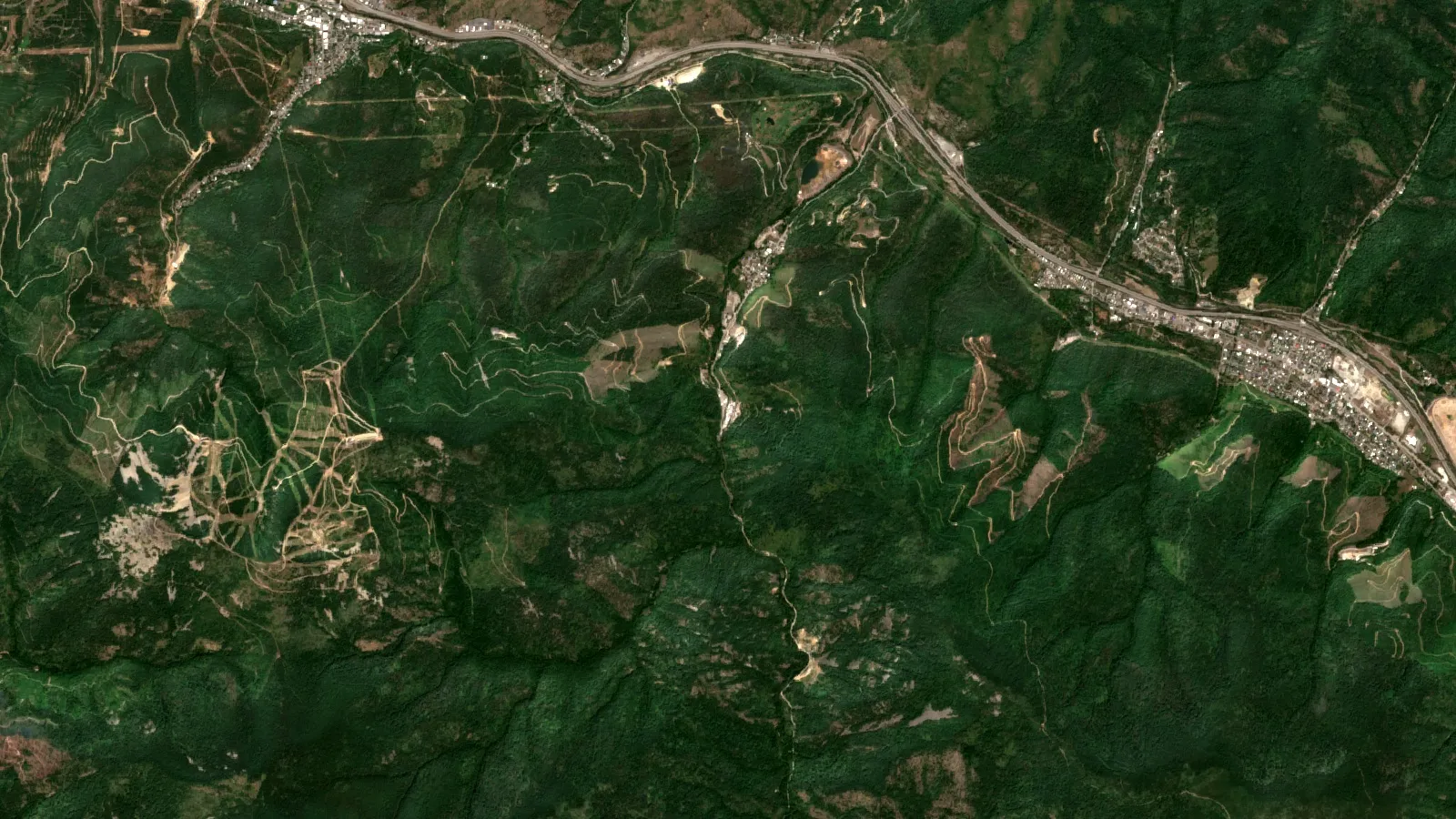
The Sunshine Mine in Idaho’s Silver Valley is owned by Sunshine Silver Mining & Refining Company, which trades on the New York Stock Exchange as SSMR. It has not produced silver for about 20 years, and the company is working toward a restart that it says would bring the mine back into production in late 2028 (company results release, 12 August 2026). A feasibility study, the engineering and cost study that a board uses to decide whether to build, is due in the second quarter of 2027. This page sets out who owns the mine, what state it is in, how much silver the filings count, what a restart is estimated to cost and how the company describes its water, tailings and community plans.
Terms used below. Silver grade is shown in grams per tonne (g/t) and, for US readers, in troy ounces per short ton (oz/ton); 1,000 g/t is about 29.2 oz/ton. A mineral resource is rock that has been measured by drilling but has not been shown to be economic. An Indicated resource is known with reasonable confidence, and an Inferred resource is geologically speculative. A mineral reserve is the part of a resource that a full study shows can be mined at a profit. Tailings are the ground-up waste left after silver is separated from the rock. This page gives facts from filings and official sources. It is not investment advice.
Sunshine Silver Mine at a glance
| Item | What the filings and official sources show |
|---|---|
| Location | Big Creek, Shoshone County, Idaho, between Kellogg and Wallace; about 5.5 miles from Kellogg and 2.1 miles from Interstate 90 (SEC prospectus, June 2026) |
| Owner | Sunshine Silver Mining & Refining Company, NYSE: SSMR, backed by The Electrum Group (about 59.5% of the voting power at the IPO, assuming the underwriters’ option was exercised in full) |
| Status | Past producer on care and maintenance for about 20 years; restart planned for late 2028 |
| Indicated resource | 3.2 million tonnes (3.5 million short tons) at 1,022 g/t silver, 103.9 million ounces (technical report dated 25 March 2026) |
| Inferred resource | 6.4 million tonnes (7.1 million short tons) at 776 g/t silver, about 159.8 million ounces |
| Past production | More than 360 million ounces of silver over its operating history (company) |
| Planned output | About 6.7 million ounces a year in the first five years and 5.8 million a year over a 24-year life at about 1,000 tonnes a day (company, August 2026) |
| Mineral reserves | None declared; the study is an initial assessment that includes Inferred resources |
Who owns the Sunshine Mine today
Sunshine Silver Mining & Refining Company, based at Big Creek Road in Kellogg, owns the mine through a subsidiary, Silver Opportunity Partners LLC. That subsidiary bought most of the operating facilities and equipment in May 2010 out of the bankruptcy of Sterling Mining Company, and took title to the mine in July 2010 by exercising a purchase option (SEC prospectus). In October 2013 the company also bought the Sunshine Silver/Copper Refinery from Formation Metals.
The company listed on the NYSE on 4 June 2026 and closed its initial public offering on 5 June 2026, including the full over-allotment option (company news page). The Electrum Group, a private natural-resources investment firm, was expected to hold about 60.7% of the voting power after the offering, or about 59.5% if the underwriters took up their option in full, which makes the company a controlled company under NYSE rules. Chief executive Heather White said the quarter to 30 June 2026 ended with about US$289 million in cash and no debt.
Two name mix-ups cause confusion. Earlier operators of the mine, such as the prior operator the prospectus calls Sunshine Precious Metals, Inc., are different businesses from today’s owner. And a company once called Sunshine Silver Mining & Refining Corporation became Gatos Silver, Inc.; today’s owner was spun out of it before Gatos Silver’s October 2020 listing and took the Sunshine name (SEC prospectus). Gatos Silver was bought by First Majestic Silver in January 2025 and its mine is in Mexico, so it has no link to this mine.
Is the Sunshine Mine open? Status and restart timeline
No. The mine is not producing silver. The prospectus says the facilities have been kept on a care-and-maintenance basis for 20 years, with ground water control, monitoring and sampling still required. Antimony came out of the Sunshine complex from 1953 to 2001. The restart plan the company gave in August 2026 has these steps (company results release):
Infographic
The restart plan in 5 steps
- 1Infill drillingAbout 50,000 metres underground, 60% complete in July 2026.
- 2Feasibility studyDue in the second quarter of 2027, then a final investment decision.
- 3Refinery and antimony studiesFeasibility work targeted for early 2027.
- 4New millDesigned for up to 2,000 tonnes a day; the base case is about 1,000.
- 5First silverCompany target: late 2028.
- Finish a 50,000-metre underground infill drilling programme, which was about 60% complete in July 2026 with three rigs working. Infill drilling adds holes between existing ones to move Inferred resource into a higher-confidence class.
- Complete the mine feasibility study in the second quarter of 2027, then take a final investment decision on the restart.
- Complete feasibility studies on the silver-copper refinery and a new antimony plant in early 2027.
- Build a new mill sized for up to 2,000 tonnes a day, with the base case at about 1,000 tonnes a day. The old mill was being taken down, with decommissioning due by the end of 2026.
- Return to production in late 2028.
Work already done includes a new operating hoist at the Jewell Shaft, commissioned in May 2026, which can lift 3,500 tonnes a day from the 4,000 Level (about 1,200 metres below the collar), and about 1,200 metres of underground development in the first half of 2026. A restart date is a plan, not a result. It depends on the feasibility study, the financing decision, permit updates and the silver price.
The company also widened its land position. On 21 September 2026 it reported a 60% increase to about 38,000 acres and a multi-year, 45,000-metre district exploration programme (company website).
How much silver is at the Sunshine Mine
The resource estimate has an effective date of 24 February 2026 and was prepared under the US Securities and Exchange Commission’s Regulation S-K subpart 1300 by SLR International and SRK Consulting (SEC prospectus). It counts 103.9 million ounces Indicated at an average 1,022 g/t (29.8 oz/ton) and 159.8 million ounces Inferred at an average 776 g/t. Total metallurgical recovery was assigned at 93% for the resource estimate, based on test work and the mine’s production history; the initial assessment Base Case uses 95.8%. The ore sits in narrow veins, about five feet wide, that dip at 60 to 70 degrees. The study assumes 61% conventional cut-and-fill mining and 39% mechanised long-hole mining, with cut-off grades of 9 and 8 oz/ton silver. Cut-off grade is the lowest grade that pays for mining, so material below it is left in the ground.
Chart
Silver produced and silver counted at the Sunshine Mine
Million troy ounces; past production is a company-reported figure (more than 360)
For scale, US mines produced about 1,100 tonnes of silver in 2025, or roughly 35 million ounces, from 4 silver mines and 31 base- and precious-metal operations that recover it as a by-product (USGS Mineral Commodity Summaries, 2026). The planned Sunshine output of 5.8 to 6.7 million ounces a year would equal roughly a sixth to a fifth of that total, if it is reached. Neighbouring Lucky Friday, run by Hecla, produced 5.3 million ounces in 2025 at 1,170 tons a day through its mill (Hecla, 26 January 2026).
What a restart is estimated to cost
The initial assessment gives two cases. The Base Case mines Indicated and Inferred resource and has a 24-year life. The Indicated Only Case mines only Indicated resource and has a 10-year life. The company says its planning follows the Base Case. All of the numbers below come from the technical report summary as described in the prospectus, use a silver price of US$46.36 an ounce and a 5% discount rate, and exclude any copper, lead or antimony credit. The authors state that the economic analysis is preliminary and rests partly on Inferred resources.
Chart
Capital in the two study cases
US$ million, initial assessment; sustaining capital includes closure
| Measure (US$) | Base Case | Indicated Only Case |
|---|---|---|
| Initial capital | $286.9 million over 3 years | $239.6 million |
| Sustaining capital including closure | $560.2 million | $265.3 million |
| Average payable silver a year | 5.8 million oz over 24 years | 3.5 million oz over 10 years |
| All-in sustaining cost per ounce | $18.81 | $24.06 |
| After-tax net present value at 5% | $1,434 million | $270 million |
| After-tax internal rate of return | 38.3% | 21.1% |
| Simple payback from first production | 1.9 years | 3.4 years |
All-in sustaining cost (AISC) is the cost to produce an ounce including mine upkeep and closure. Net present value (NPV) is future cash flow discounted back to today. Of the Base Case initial capital, US$167.0 million is for the mine, US$57.0 million for the plant and surface works and US$62.9 million for contingency. In the Base Case, raising the price assumption to US$60.27 an ounce lifts after-tax NPV to about US$2.2 billion, and US$80 an ounce lifts it to about US$3.2 billion. For comparison, Kitco showed a silver bid of about US$57 an ounce on 15 October 2026 (day’s range US$55.36 to US$57.65) (Kitco). Treat the study as a first look: the Q2 2027 feasibility study will replace it.
Part of any silver sold is also owed under a 2001 settlement with the US government and the Coeur d’Alene Tribe. It sets a net smelter return royalty between 0% (at a silver price below US$6 an ounce) and 7% (at US$10 or higher). A net smelter return royalty is a share of mine revenue after smelting and transport costs. The company says it is not paying any production royalty now.
Sunshine Silver Mine history: fire, settlement and sale
The mine grew through the twentieth century into one of the largest US silver producers. Company figures put its output at more than 360 million ounces, and antimony, copper and lead were also recovered.
On 2 May 1972 a fire underground killed 91 miners, the worst mining disaster in Idaho’s history (Spokesman-Review, 2022). A memorial stands beside Interstate 90 near the mine. The prospectus dates the end of antimony production to 2001, the year the then-operator signed a settlement with the US government and the Coeur d’Alene Tribe (12 April 2001). Sterling Mining Company later held the mine facilities until its bankruptcy, which led to the 2010 sale described above.
Silver Valley neighbours and how Sunshine compares
Silver Valley, the Coeur d’Alene Mining District of northern Idaho, still has working mines. Hecla’s Lucky Friday reached a record 5.3 million ounces in 2025 (Hecla). The Galena Complex, run by Americas Gold and Silver, produced about 328,000 ounces in the second quarter of 2026 while it completed a shaft upgrade (Americas Gold and Silver, Q2 2026 results). A restart at Sunshine would add another large primary silver mine to the district. For other Idaho districts, see the guide to gold deposits in Idaho, and for general methods the guide to mining prospecting for gold.
Chart
Annual silver output for scale
Million troy ounces a year; Sunshine figures are plans, Lucky Friday is 2025 actual
The calculator below turns the study’s own inputs into a yearly silver estimate. Use it to test how throughput, grade and price move the numbers.
Calculator
How many ounces of silver could a mill recover each year?
Enter your own throughput, grade, recovery and price.
- Silver in the ore fed (oz): 6,751,652 oz
- Gross revenue at your price: $357,905,059
- Revenue after the royalty: $332,851,705
Example values only, not the company’s plan. The 93% recovery is the figure assigned for the resource estimate (SEC prospectus, June 2026); the initial assessment Base Case uses 95.8%; the 7% royalty is the top rate under the 2001 settlement. Price is an input: example, use today’s price. Results are gross revenue only; mining, processing, smelting and tax costs are not included. 1 troy ounce is 31.1035 grams.
Sustainable mining at Sunshine: what the filings say
These are seven areas where a restart can be checked against company and regulator documents.
1. Land footprint and ore body
The restart reuses existing shafts, tunnels, a hoist room and a tailings facility. The company estimates replacing this infrastructure would cost about US$600 million and could take years to permit (SEC prospectus). Reusing a past-producing site keeps a new mine off undisturbed ground, but the old workings and waste still need managing.
2. Water
During the 1990s a previous operator let the lower levels flood, which left water with elevated iron and manganese. The updated Idaho discharge standards will add limits on bioavailable copper and temperature, and the company must upgrade water treatment at Outfall 001 to meet stricter limits including total dissolved solids, cadmium, lead, zinc, copper, mercury, silver and arsenic. The permit update is expected in the second half of 2027 (SEC prospectus). The company also cites zero-liquid-discharge water technology, which aims to avoid releasing process water.
3. Tailings and air
The plan sends tailings to a paste backfill plant, where they are mixed with cement and pumped back underground, or filters them for dry stacking, and it contemplates converting the surface tailings facility to dry stack. Dry stacking means piling filtered, damp tailings rather than holding them as a slurry behind a dam. The prospectus says the converted facility could hold all tailings for either mine case (SEC prospectus). The company’s sustainability page lists worker safety and air ventilation as priorities but gives no dust figures.
4. Reclamation and legacy liability
The company and its predecessors were identified as potentially responsible parties at the Bunker Hill Superfund Site, a cleanup area of more than 1,500 square miles that the US Environmental Protection Agency listed in 1983. Children’s blood lead levels there have fallen from an average above 40 micrograms per decilitre in the 1970s to below 3.5 (Idaho Basin Commission). The prospectus warns that liability for old contamination can be large and need not depend on fault.
5. Community and safety
The company reports zero lost-time incidents in five years and runs a mine rescue team, and says it supports local programmes in Shoshone County (company sustainability page). These are company statements, not audited data.
6. Habitat
With the Coeur d’Alene Tribe, the company has worked on Big Creek restoration that it says opened more than 10 miles of spawning habitat for westslope cutthroat trout (company sustainability page).
7. Monitoring with satellites
Satellites cannot see veins 1,000 metres underground, but they can show the surface: clearing, tailings and waste-rock footprints, vegetation and water colour over time. That is useful for baselines and for checking the surface effect of any restart.
▶ A claymation explainer of the seven environmental impacts of mining, with satellite maps. · 2:31
Antimony and critical minerals
Sunshine’s complex produced over 48.4 million pounds of finished antimony between 1953 and 2001. The company is now studying a new antimony plant with a nameplate capacity of up to 34.5 million pounds a year, which it says could supply up to 60% of US demand in 2030 on figures from an Argus Media report, including third-party concentrate (results release). That is a target from a study still under way, and it is not part of the silver economics above.
How satellite data helps screen a silver district
Silver Valley’s veins are narrow and deep, so a satellite cannot find the next Sunshine vein directly. What it can do is map clay and iron-oxide alteration at surface, outline claim blocks and land cover, and track change in disturbed ground, which narrows where to send a geologist. Consultants who need a quick surface screen of a licence can use satellite-based mineral detection or send a boundary through the mining query form, or contact the team. Results are exploration targets that sit ahead of any resource estimate.
▶ Explains what remote sensing for mining means and why agreement between instruments matters. · 2:01
What to check before relying on a restart story
- Resource class. Is the headline ounce count Indicated or Inferred? Here about 39% of the combined ounces are Indicated.
- Study stage. An initial assessment is earlier than a feasibility study, and neither is a reserve.
- Price basis. Compare the study’s US$46.36 with today’s price and read the sensitivity table.
- Capital and permits. Check initial capital, the water permit date and the final investment decision.
- Date. Resource effective date, filing date and company-news date all differ; use the newest filing.
Chart
Base Case after-tax value at three silver prices
US$ billion, 5% discount rate, Base Case of the initial assessment
For a closer look at a related question, see our guide: Bunker Hill Mining Stock: Ticker, Debt and Restart.
If this topic matters to you, read Stibnite Gold Project Idaho: Permits, Reserves, Status next.
Frequently asked questions
Who owns the Sunshine Mine in Idaho?
Sunshine Silver Mining & Refining Company (NYSE: SSMR) owns it through Silver Opportunity Partners LLC. The Electrum Group holds about 59.5% of the voting power after the June 2026 IPO, according to the prospectus.
Is the Sunshine Mine still open?
It is not producing. The company has kept it on care and maintenance for about 20 years and plans a restart in late 2028.
When will the Sunshine Mine reopen?
The company’s target is late 2028, after a feasibility study due in the second quarter of 2027 and a final investment decision. Dates can move.
How much silver has the Sunshine Mine produced?
The company says more than 360 million ounces over its operating history.
How much silver is left at the Sunshine Mine?
The 2026 estimate is 103.9 million ounces Indicated and 159.8 million ounces Inferred. No mineral reserve has been declared.
How much will it cost to restart the Sunshine Mine?
The initial assessment puts initial capital at US$286.9 million in the Base Case and US$239.6 million in the Indicated Only Case, before a feasibility study.
Where is the Sunshine Mine located?
At Big Creek, Shoshone County, north Idaho, in Silver Valley between Kellogg and Wallace, about 5.5 miles from Kellogg.
What happened in the 1972 Sunshine Mine disaster?
A fire underground on 2 May 1972 killed 91 miners, the worst mining disaster in Idaho’s history. A memorial stands beside Interstate 90 at Exit 54.
Is Sunshine Silver Mining the same as Gatos Silver?
No. The two were once under one corporate parent, and Sunshine was spun out before Gatos Silver’s 2020 IPO. Gatos Silver was bought by First Majestic Silver in January 2025 and its mine is in Mexico.
Will the Sunshine Mine produce antimony?
Antimony is by-product in the ore and the company is studying a plant, with studies due in early 2027. It is not yet approved for construction.
Can you visit the Sunshine Mine?
The company offers a virtual tour on its website. The Sunshine Miners Memorial beside Interstate 90 at Exit 54 is open for visitors who want to remember the 91 miners (Spokesman-Review, 2022).
This page is for information only. It is not investment advice or legal advice. Company plans, dates and studies can change; read the latest SEC filings.
Farmonaut mining
Map your mining site from space
Consultants can send a licence boundary as KML, KMZ or a polygon and receive satellite-derived exploration targets, ahead of any resource estimate.

Mining Pro sample view, synthetic data
Keep reading
Sources
- SEC, Sunshine Silver Mining & Refining Company, Form 424B4 prospectus (June 2026): sec.gov
- SEC, Sunshine Silver Mining & Refining, Q2 2026 results release (12 August 2026): sec.gov
- Sunshine Silver Mining & Refining, Sunshine Mine page: sunshinesilvermining.com
- Sunshine Silver Mining & Refining, company home page and news: sunshinesilvermining.com
- Sunshine Silver Mining & Refining, news page: sunshinesilvermining.com
- Sunshine Silver Mining & Refining, sustainability page: sunshinesilvermining.com
- USGS, Mineral Commodity Summaries 2026: Silver: pubs.usgs.gov
- Hecla Mining, full-year 2025 production and 2026 guidance (26 January 2026): nasdaq.com
- Americas Gold and Silver, Q2 2026 results: finviz.com
- Kitco, live silver price (15 October 2026): kitco.com
- Idaho Basin Commission, Bunker Hill Superfund history and cleanup: cdabasin.idaho.gov
- Spokesman-Review, 91 Sunshine miners died (1 May 2022): spokesman.com
- Reuters via Idaho Business Review, Sunshine Silver IPO terms (27 May 2026): idahobusinessreview.com
Discussion
Questions, corrections or field experience? Share them below. First-time comments are reviewed before they appear, and your email is never published.
No comments yet. Be the first to add a question or your experience.

 SG Gold Mining LLC
 VRV Global Pte Ltd
 Omsri International FZE
 G.I.T.T.
 Jaunita Erss Ltd
 Almosi SARL
 SRK Consulting
 Berks Gold Limited
 Mwerezi Minerals Company Limited
 Mining SARL
 SenGold Invest SAS
 Sean Mining Limited
 NTS Group (Pty) Ltd
 Mine4Africa
 Lithspo Minerals Limited
 Tintina Mining Group
 Licence holder · Nigeria · Gold + lithium










