

European Union Deforestation Regulation: 7 Compliance Tools
“The EU Deforestation Regulation affects over 19% of global agricultural exports from Africa annually.”
“Seven compliance tools are required for traceability under the EU’s new deforestation regulation.”
- Introduction
- How The European Union Deforestation Regulation Shapes Global Supply Chains
- The African Context: Regulation, Opportunity, and Risk
- Core Requirements for Compliance
- 7 Compliance Tools for EU Deforestation Regulation
- Comparison Table of EU Deforestation Compliance Tools
- Digital Technologies: The Backbone of Compliance
- Our Approach at Farmonaut: Making Compliance Affordable & Scalable
- Key Insights, Pro Tips & More
- EU Deforestation Regulation Implementation Status
- FAQ: European Union Deforestation Regulation
- Extra Resources & Links
Introduction
The European Union deforestation regulation (officially known as the EU Deforestation Regulation or EUDR) represents a groundbreaking policy framework aimed at curbing the global drivers of deforestation. At its core, this regulation requires that commodities and products placed for sale on the EU market—such as soy, beef, palm oil, coffee, cocoa, and timber—are not sourced from lands cleared or degraded after a specific environmental cutoff point.
The impact of the European deforestation regulation goes far beyond forestry. It spans supply chains across continents—affecting agriculture, mining, minerals, infrastructure, and even the trade in gemstones and related value chains. This framework translates into stringent due diligence requirements for every player involved: from Africa-based producers, exporters, and cooperatives, to global traders, operators, and EU-based companies.
The EUDR sits at the intersection of landscape governance, sustainable agriculture, and global trade. By setting a high bar for transparency and traceability, it is reshaping decisions about sourcing, risk assessment, and market access.
- ✔ Focus: Stopping deforestation linked to EU-bound products
- 📊 Scope: Applies to farms, forestry, mining and mineral value chains
- ⚠ Risk: Non-compliance threatens market access for African exporters
- 🌍 Geography: Especially relevant for tropical regions in Africa
- 🎯 Requirement: Transparency and due diligence throughout supply chains
How The European Union Deforestation Regulation Shapes Global Supply Chains
The EU Deforestation Regulation (EUDR) represents a paradigm shift for global supply chains that touch forested landscapes. It is not just about protecting forests in Europe—it’s about ensuring the EU’s role as a responsible global market that does not contribute to deforestation anywhere the products originate.
This regulation obliges operators and traders to perform due diligence: they must verify that relevant commodities are not linked to deforested or degraded lands after a defined threshold (typically December 31, 2020). The goal? Curb the global drivers of forest loss through credible documentation, land use mapping, and screening every shipment bound for EU markets.
- Key Commodities: soy, beef, palm oil, coffee, cocoa, timber
- Additional Value Chains: mining, minerals, gemstones, infrastructure materials
- Market Implication: Only deforestation-free products are eligible for EU markets
This impacts not only agriculture and forestry sectors but also mining and infrastructure players that alter forested areas, requiring clear chain-of-custody, rigorous risk screening, and enhanced traceability.

Why Due Diligence Requirements Are Game-Changers for Supply Chains
- ✔ Supply chain mapping must be granular—from farm or mining site to market
- ✔ Land use must be documented to confirm “deforestation-free” status
- ✔ Supplier traceability becomes both a compliance and a commercial imperative
Key Insight Box
The EUDR is not just a trade challenge—it is a powerful incentive for African producers and exporters to invest in transparency, data-driven governance, and sustainable practices that can open up new premium markets in the EU.
The African Context: Regulation, Opportunity, and Risk
The european union deforestation regulation in Africa is especially consequential. Africa remains home to vast tropical forests, rich biodiversity, and rapidly expanding agriculture, forestry, and mining sectors. The continent supplies a significant share of global coffee, cocoa, palm oil, timber, and minerals—all commodities now tightly regulated under EUDR for access to European markets.
The implication is clear: supply chain transparency and traceability become critical competitive factors for African exporters. Smallholder farmers, large agribusinesses, cooperatives, forestry enterprises, and mining operators all face new requirements to provide credible documentation, land use records, and map land-use changes on affected forested landscapes.
Satellite-based digital solutions, such as those provided by Farmonaut, are ideal for mapping land use, monitoring deforestation risk zones, and generating the verifiable documentation the regulation requires.
- ✔ Challenge for smallholders: Limited technical capacity regarding land registration and mapping
- ✔ Challenge for exporters: Collecting, aggregating, and verifying data from diverse suppliers
- ✔ Opportunity for cooperative models: Pooling resources for compliance and market access
- 🚜 Agriculture: Farms must prove crops are not sourced from illegally cleared land
- 🌲 Forestry: Timber and products must be tracked from forest to EU market
- ⛏ Mining: Extraction activities in forested areas require robust chain-of-custody
- 📦 All sectors: Transparent traceability is now a market prerequisite
Common Mistake Box
Relying on paper-based records and unverified oral histories is no longer sufficient for EU compliance. Digital records, verifiable coordinates, and up-to-date geospatial data are necessary!

Core Requirements for Compliance under the European Deforestation Regulation
Complying with the european deforestation regulation means more than simply making a declaration. Due diligence is a step-by-step process that involves :
- Risk Assessment: Identifying origins with high deforestation risk across farms, forests, mills, or mines
- Supply Chain Mapping: Documenting links from producers to traders to shipment, with geo-located evidence
- Supplier Information Gathering: Verifying origin, land-use status, and compliance with local legislation
- Risk Mitigation: Sourcing only from low-risk zones, certified schemes, or verified suppliers
- Corrective Actions: Where risks are identified (e.g., a supplier is in a newly cleared area), companies must act—ceasing supply or implementing rectification plans
- Record-keeping & Documentation: All information—maps, contracts, certifications, chain-of-custody—must be kept and made accessible to regulatory audits
This approach prevents greenwashing by ensuring data integrity, providing verifiable documentation, and maintaining a transparent audit trail.
Want to automate supply chain due diligence and monitoring? Explore Farmonaut’s blockchain-based traceability platform—a digital solution ensuring EU-ready transparency across agriculture and mining supply chains, with secure, tamper-proof records.

Investor Note Box
Investments in land tenure clarification, satellite-based monitoring, and digital traceability are increasingly essential for accessing premium markets and securing future supply contracts.



7 Compliance Tools for EU Deforestation Regulation
Seven compliance tools now form the operational backbone for traders, exporters, producers, and verifiers seeking to meet the european union deforestation regulation in Africa and globally. These tools blend digital and on-ground solutions—leveraging satellite data, AI, GIS, field surveys, certification schemes, and blockchain traceability.
- Satellite Monitoring Platforms
Use multi-spectral imagery to detect deforestation risk zones, monitor land cover change, and rapidly flag new clearings. E.g., Farmonaut’s real-time NDVI & land-use insights help map agricultural, forestry, and mining lands. - Geographic Information Systems (GIS)
Powerful digital tools mapping property boundaries, forested areas, and management zones. Essential for delineating compliance areas and tracking spatial change over time. - Blockchain-Based Traceability Platforms
Secure chain-of-custody solutions that create verifiable, tamper-proof records linking producers, traders, and end-buyers in the EU. Learn about Farmonaut’s blockchain traceability for agriculture & mining. - Supplier & Producer Digital Questionnaires
Gather detailed digital records on land use, sourcing practices, and compliance declarations directly from farms, cooperatives, forests, or mining sites. - Field Verification & Third-Party Auditing
On-the-ground surveys and audits validating digital data, supported by mobile apps and digital photogrammetry. - Remote Sensing & AI-Based Alert Systems
AI-driven satellite analytics (ex: Jeenv, by Farmonaut) trigger timely alerts for land cover, vegetation loss, and infrastructure encroachment—empowering proactive monitoring and response. - Certification and Compliance Management Platforms
End-to-end digital platforms collating certifications (FSC, RSPO, Rainforest Alliance etc.), compliance plans, and regulatory documentation for audit-readiness.
“Seven compliance tools are required for traceability under the EU’s new deforestation regulation.”
- ✔ Real-time monitoring keeps companies ahead of potential compliance breaches
- 🔗 Blockchain traceability delivers audit-proof supply chain records
- 🏞 GIS mapping validates boundaries of forested regions and farm plots
- 📋 Digital questionnaires streamline supplier onboarding and verification
- 🌐 Certification systems facilitate international market access
Comparison Table of EU Deforestation Compliance Tools
Digital Technologies: The Backbone of Compliance
In practice, most companies deploy a mix of remote, digital, and on-ground tools to meet compliance requirements:
- ✔ Satellite imagery platforms for large-scale monitoring and automatic detection of land-use change
- ✔ Blockchain-enabled product traceability solutions for end-to-end transparency in agriculture, forestry, and mining chains (Farmonaut Product Traceability)
- ✔ Geographic Information Systems (GIS) for mapping boundaries and delineating areas under regulatory scrutiny
- ✔ Environmental impact monitoring dashboards for carbon, emissions, and supply chain sustainability reporting (Farmonaut Carbon Footprinting)

- 🛰 AI-based alert systems for immediate notification of suspicious deforestation activities
- 🤝 Digital supplier onboarding tools to standardize data gathering from smallholders and new partners
In Africa, the intersection of digital traceability, real-time satellite monitoring, and accessible platforms (such as the Farmonaut Large Scale Farm Management System) is especially powerful for aggregators and cooperatives managing multiple farms or forests.
Over 60% of compliance-related discrepancies in agricultural exports to the EU stem from missing or incomplete geospatial records—demonstrating the urgent need for digitization.
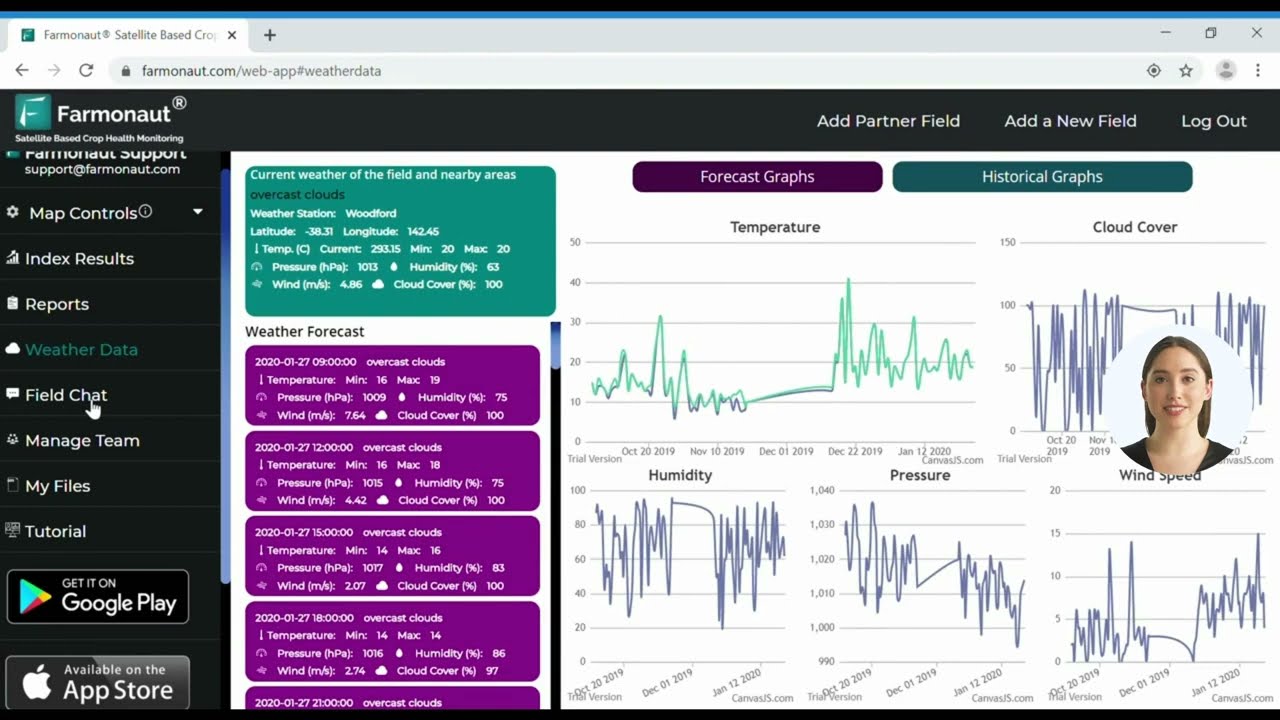
Our Approach at Farmonaut: Making Compliance Affordable & Scalable
At Farmonaut, we understand that compliance with the EU deforestation regulation should not be a barrier, but an opportunity. Our technology platform is purpose-built for:
- ✔ Satellite-based land use monitoring to instantly assess deforestation risk, NDVI, and ecosystem health
- 🧠 AI-driven advisory (Jeevn) for actionable compliance, restoration, and productivity insights
- 🔗 Blockchain-traceable supply chains providing tamper-proof records for any commodity—ensuring transparent, trustworthy data from farm to export
- 📱 Mobile & web access for all users: smallholders, companies, and government agencies
- 🌐 APIs for integration into existing ERP, logistics, or inventory software (Farmonaut API)
Our fleet management and resource management modules allow agriculture, mining, and infrastructure entities to efficiently coordinate operations and optimize resource use—further supporting compliance by enhancing data integrity and minimizing environmental footprints (Farmonaut Fleet Management).
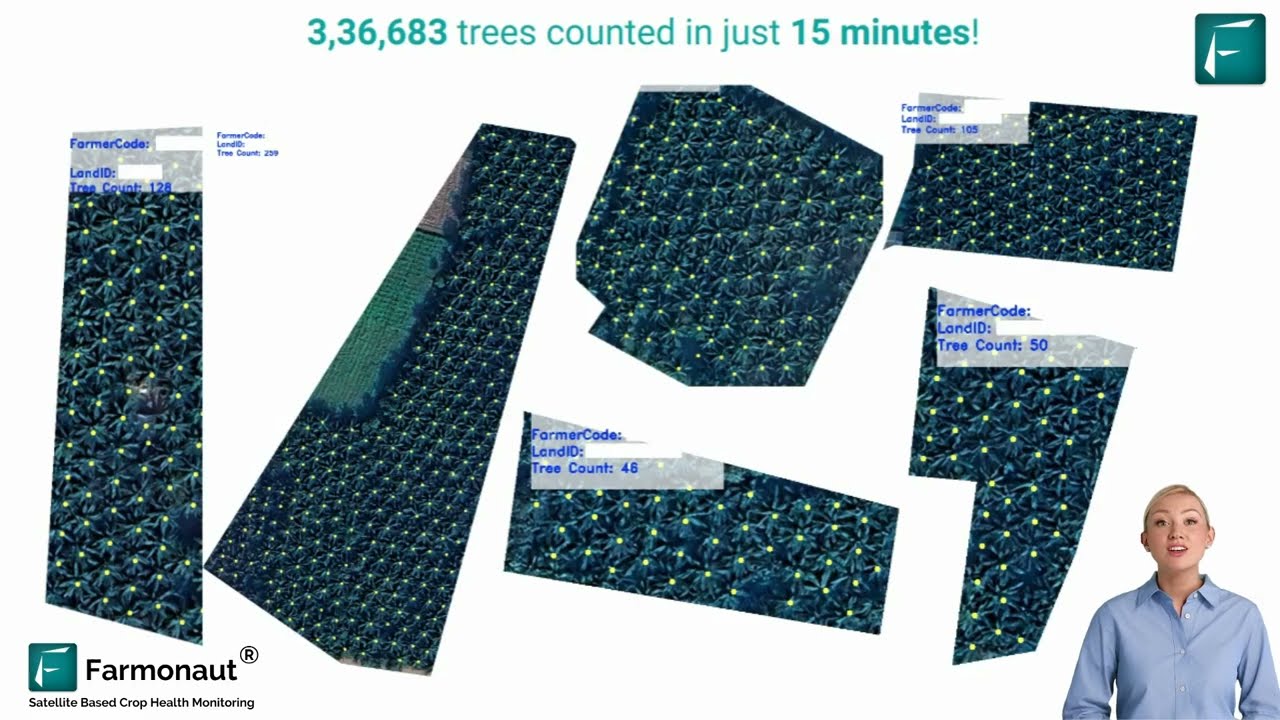
Additionally, our organization supports financial institutions (See Farmonaut Crop Loan & Insurance Solutions) in satellite-based loan verification, reducing fraud risk and increasing access to working capital for producers who demonstrate clean, well-managed lands.
With Farmonaut, digital compliance is cost-effective, reliable, and scalable—empowering all participants, from farm to port, to thrive amidst evolving regulation.
Key Insights, Pro Tips & More
Constantly update digital land records and ensure that supplier lists remain current. The most common compliance challenge is outdated or missing smallholder data!
Train local staff and partner organizations in the use of satellite and mobile apps for field data collection. Adoption rates soar when technology is seen as user-friendly and adds commercial value.
Demand for deforestation-free commodities is projected to outpace “uncertified” supply during the next 5 years, especially for coffee, cocoa, beef, and palm oil from Africa.
Digital solutions designed for multi-commodity, multi-region deployment deliver the highest return on investment. Choose platforms that can support both agricultural and mining supply chains for flexibility as regulations evolve.
EU Deforestation Regulation Implementation Status: Europe & Africa
As of 2024, the EU deforestation regulation implementation status is in an active rollout phase. National governments across Africa and Europe have begun issuing guidance documents, piloting verification schemes, and drafting national plans to harmonize local and EU requirements.
- ✔ Published guidelines for due diligence on major agri-commodities (coffee, cocoa, palm, timber)
- ✔ Pilot projects in traceability and supplier data management with African cooperatives
- ✔ Capacity building programs for smallholders and government officials
- ✔ EU outreach to African producer groups—explaining risk assessment, land tenure, and digital data expectations
For many African countries, progress is characterized by a steep learning curve: equipping smallholders, cooperatives, and exporters with the tools and knowledge for data-driven compliance. EU regulation has rapidly made digital monitoring, credible documentation, and traceability must-have capabilities.

Ongoing Challenges and Rapid Progress
- ⚠ Sectors still adapting to field-based digital documentation requirements
- ⚠ Fragmented land tenure records impede transparency in some regions
- ✔ New regulatory incentives accelerating adoption of satellite data platforms
- ✔ Increased investment in capacity-building for African traders, exporters, and producers
Visual List: What’s Next for Compliance in Africa?
- 🔜 Expansion of digital supplier registration systems for smallholders
- 🔜 Broader geographic monitoring using AI-driven satellite solutions
- 🔜 Harmonization of certification schemes across multiple countries
- 🔜 Faster, more affordable integrations for compliance platforms
The next two years are crucial for stakeholders in Africa to deploy digital compliance tools, build robust data trails, and ensure sustainable market access to the EU.
FAQ: European Union Deforestation Regulation
1. What is the European Union Deforestation Regulation (EUDR)?
The EUDR is a regulatory framework implemented by the European Union to ensure that products (including soy, coffee, beef, palm oil, cocoa, timber, minerals, and certain related commodities) imported into or produced within the EU are not sourced from lands deforested or degraded after December 31, 2020. It sets out due diligence, risk assessment, and traceability requirements for operators and traders.
2. Who must comply with the regulation?
All entities in the supply chain—including producers, exporters, traders, processors, brand owners, and importers—must comply when dealing with covered commodities. This includes players based in Africa who supply the European market.
3. What tools are available to help companies meet EUDR requirements?
The seven primary tools are: satellite monitoring, GIS mapping, blockchain traceability, digital questionnaires, field audits, remote sensing & AI alerts, and compliance management platforms. Farmonaut offers integrated solutions for satellite monitoring, blockchain traceability, and resource management tailored to both large and small-scale users.
4. How does the regulation impact African producers and exporters?
EU market access now hinges on proving products are not linked to recent deforestation or land degradation. African exporters must enhance traceability, keep digital documentation, and often upgrade land tenure records.
5. How can Farmonaut’s technology help meet EUDR compliance?
Our solutions automate remote monitoring, deliver AI-based compliance insights, and secure supply chain traceability with blockchain. This accelerates, simplifies, and improves the cost-effectiveness of EUDR compliance in Africa and other at-risk regions.
6. What about mining and mineral sectors?
The regulation applies to mining and mineral extraction if activities take place in or near forested landscapes affecting the supply chains of covered commodities. Strong documentation, mapping, and supply chain verification are required.
Extra Resources & Links
- 🔗 Farmonaut Product Traceability – Blockchain-enabled supply chain tracking for agricultural and mineral commodities
- 🔗 Farmonaut Carbon Footprinting – Monitor environmental impact and emissions for EUDR and other reporting needs
- 🔗 Crop Loan & Insurance – Satellite verification for agricultural finance and insurance
- 🔗 Fleet Management – Optimize fleet and equipment for efficient, sustainable operations
- 🔗 Large Scale Farm Management – Central control center for cooperatives, enterprises, and aggregators
- 🔗 Farmonaut API – Integrate satellite, geospatial, and traceability data directly into your own systems
- 🔗 Farmonaut API Developer Docs – Technical guide for connecting to satellite and weather data streams
- 🔗 Farmonaut Web & Mobile App – Easy field and crop monitoring for all devices
In summary, the european union deforestation regulation is transforming not only agriculture and forestry but the very governance of natural resources across Africa and beyond. By deploying the 7 compliance tools outlined above—and using digital, scalable, and affordable solutions, such as those we offer at Farmonaut—producers, exporters, and supply chain leaders can secure continued market access, deliver on sustainability promises, and drive meaningful change in their landscapes and industries.

 Godrej Agrovet
 Hayleys Agriculture
 Linx Agritech
 Adinet
 Save Your Soils
 GalaxEye Space
 Grandstream Algérie
 XOS Realty
 Geospatial Lab Africa
 Agro La Gándara
 HIPSAC
 ZOL Zimbabwe
 Juligerm
 AdBio
AdBio MISE Maroc
 NWNS
NWNS Red August Group
 Farm Inc
 WeMe Global
 Agrotoken
 Blue BearX
 Insignito
 DnCubed
 Indosistim Teknologi
 Liquify Digital
 CU Foods
 BeyondTech Global
 Rouge VC
 AgroRisk
 Oath Inc
 Esri North East Africa
 MDCV UK
 Etech Consulting Madagascar
 Vestlandsforsking
 WB Dev
 Sama Premium
 Tres Valles
 Blickwinkel
 Agricultural Credit Policy Council
 eKGIS
eKGIS Mostas Tech
 Andex
Andex Deluxe Conseil
 WICO
WICO Chimera Innovation
 SkyHarvest
 Teledarbas
 Exurbia Geospatial
 FieldZero
