

North Dakota Agricultural Products: 7 Key Trends 2024
“North Dakota ranks 1st in the U.S. for spring wheat production, contributing over 50% of the national total in 2024.”
Table of Contents
- Introduction: The Landscape of North Dakota Agricultural Products
- Trend Overview Comparison Table
- Trend 1: The Dominance & Diversification of Grain Production
- Trend 2: Livestock Production—Sustainable, Integrated & Resilient
- Trend 3: Sustainable Practices & Crop Resilience
- Trend 4: Agricultural Program Leadership & Policy Support
- Trend 5: Value-Added Production & Supply Chain Enhancement
- Trend 6: Forestry, Land Stewardship & Environmental Synergy
- Trend 7: Infrastructure, Resource Planning & Community Resilience
- Smart Agricultural Technology: The Farmonaut Perspective
- Frequently Asked Questions
- Conclusion
Introduction: The Landscape of North Dakota Agricultural Products
North Dakota stands as a robust testament to agricultural efficiency, innovation, and resilience, consistently shaping both the state’s economy and its regional identity. With its fertile soil, favorable climate, and a well-organized network of research, extension, and policy support led by the North Dakota Department of Agriculture, this agricultural landscape continues to thrive.
A keen focus on leading North Dakota agricultural products—from diverse grain crops to integrated livestock operations—positions the state as a cornerstone of American agriculture. This blog explores key trends impacting crop production, market access, sustainable practices, and the practical implications for farmers, land stewards, and rural communities in 2024. Our journey highlights the links between policy, production, innovation, and community—providing a comprehensive guide to the evolving context of North Dakota agriculture products.
Trend Overview Comparison Table: North Dakota Agricultural Products 2024

Trend 1: The Dominance & Diversification of Grain Production
Hard Red Spring Wheat: Regional Strength, Global Reach
One of the most recognized North Dakota agricultural products is hard red spring wheat, a crop that is not only the backbone of the state’s production but also an icon of resilience and quality worldwide. In 2024, North Dakota ranked as the nation’s premier producer, accounting for over half of the United States’ total output. The state’s unique soil types, **favorable climate**, and targeted research directly contribute to this consistency, enabling producers to meet both domestic and international demand reliably.
Beyond Wheat: Barley, Durum, Soybeans, and More
While spring wheat commands attention, other essential grain crops also play a major role in the North Dakota agriculture products spectrum:
- ✔ Durum Wheat: Anchoring the pasta industry and thriving due to focused crop rotation and disease resistance programs.
- ✔ Barley: Sought after for brewing and malting, with growing interest in export markets.
- ✔ Soybeans: Experiencing steady expansion with robust research and promotion efforts.
- ✔ Corn: Utilized for feed, ethanol, and value-added products—fueled by extension support and market-driven initiatives.
The diversity of grain production underscores North Dakota’s favorable seasons and ongoing innovation—as demonstrated by resilient yield stability and the implementation of cutting-edge management practices.
Yield, Quality, and Market Impact
- 📊 Data insight: North Dakota’s wheat and barley exports remain vital to U.S. international trade balances.
- ✔ Key benefit: Access to certified seed ensures marketable grain quality and disease resistance.
- 📈 Growth: Soybean production’s year-on-year increase is driven by strategic investments both in-state and at the federal level.
- ⚠ Limitation:Weather variability can impact harvest schedules and yields, requiring nimble response from farmers.
- 🌎 Export Share: Barley and durum are among the state’s flagship crops for global markets.
Trend 2: Livestock Production—Sustainable, Integrated & Resilient
Livestock production is a balanced complement to North Dakota’s crop-centric agriculture, contributing over $2 billion annually to the economy. The focus on cattle, hogs, and specialty livestock leverages not only the state’s expansive pastures and croplands but also ongoing innovation in forage crop research and pasture management.
Livestock System Synergies
- 🐮 Cattle Operations: Integration of alfalfa and rotational grazing boosts productivity and soil fertility.
- 🐖 Hogs & Specialty Livestock: Efficient feeding and tailored programs support niche and export markets.
- 🌱 Forage Crops: Alfalfa’s resilience against drought and climatic variability enhances profitability for livestock farmers.
- 🐄 Dairy Sectors: Supported by practical extension programs focused on animal health and nutrition.

Livestock Sector Highlights
- Diverse Operations: North Dakota’s blend of crop and livestock operations delivers risk reduction and nutrient recycling through integrated management.
- Sound Stewardship: Extension programs and best practice guides from the North Dakota Department of Agriculture promote animal health and sustainable grazing systems.
- Specialty Contributions: The inclusion of specialty livestock—such as bison, sheep, and niche poultry—adds both diversity and market opportunity.
- Ongoing Resilience: Adaptability to market price volatility and climatic variability remains central, with forage and feed systems strategically underpinning the industry’s stability.
Trend 3: Sustainable Practices & Crop Resilience in North Dakota Agriculture Products
Sustainability continues to be a central theme in North Dakota agriculture products—with more than 90% of farms participating in state-supported sustainable practices by 2024. These measures focus on soil health, water conservation, reduced chemical usage, and crop diversity, ensuring a future-ready resilience for both crops and communities. These programs not only safeguard environmental integrity but directly impact market competitiveness and international trade credentials.
Key sustainable practices adopted in North Dakota include:
- ✔ Cover cropping to maintain soil organic matter and reduce erosion.
- ✔ Reduced tillage improves carbon sequestration and water retention.
- ✔ Precision agriculture—enabling disease scouting, variable rate fertilizer application, and yield optimization.
- ✔ Integrated pest management (IPM) to minimize chemical inputs while securing yield and quality.
- ✔ Rotation systems that break pest cycles and foster soil fertility.
- ✔ Irrigation and water management initiatives, utilizing meter-based and satellite-managed technologies.

Visual List: Core Sustainable Farming Techniques
- 🔄 Crop Rotation—Enhancing soil structure and pest resistance.
- 🌱 No-Till/Reduced-Till Farming—Boosting organic matter, reducing labor and carbon footprint.
- 💧 Water Saving Irrigation—Smart water allocation in response to changing precipitation patterns.
- 🛰️ Remote Sensing & Data Monitoring—Identifying issues before they affect yield.



Smart Tools for Sustainability
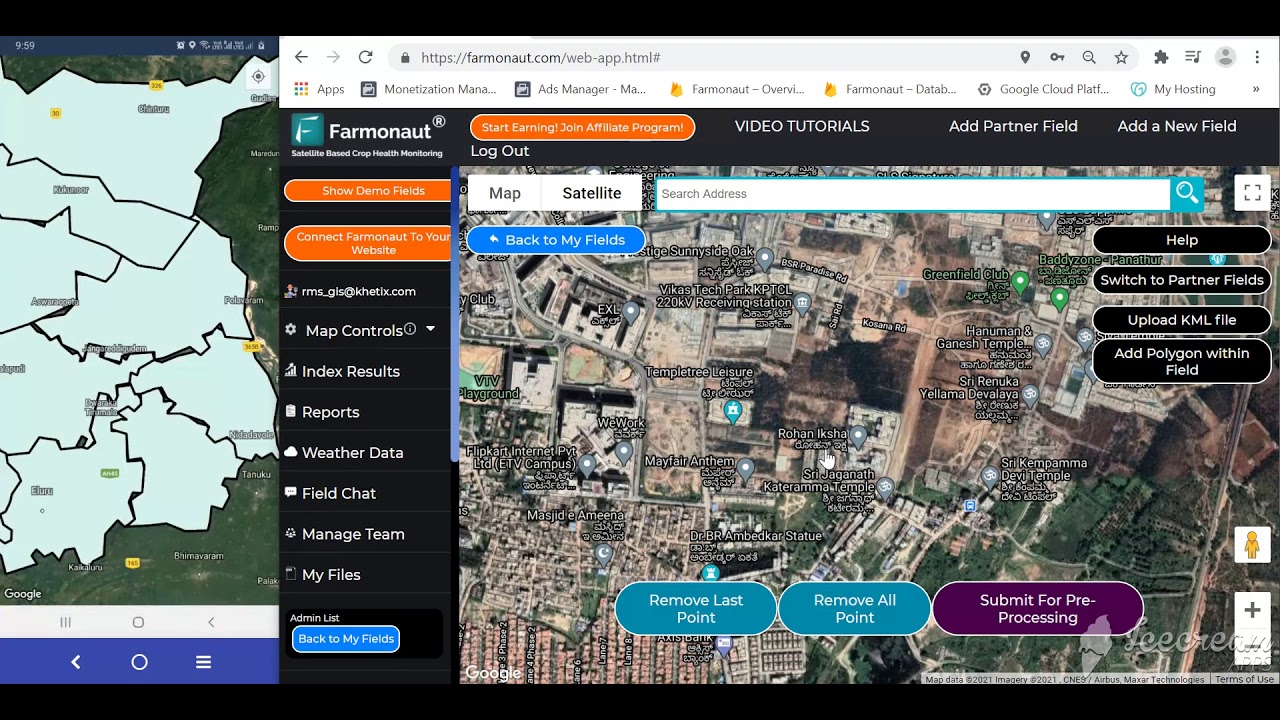
We at Farmonaut enable satellite monitoring and AI-driven advisory to empower North Dakota farmers and land managers with real-time, actionable insights for crop health, soil conditions, and resource management. These tools reduce waste, optimize inputs, and help producers align with the very best sustainable practices and compliance standards.

Trend 4: Agricultural Program Leadership & Policy Support—North Dakota Department of Agriculture
The North Dakota Department of Agriculture (NDDA) is the chief architect behind a strong governance framework that links research, extension, and regulation. The department’s proactive role in seed certification, pest monitoring, program funding, and compliance oversight ensures North Dakota agricultural products remain safe, competitive, and accessible to domestic and international markets.
- Seed Certification Program: Ensures traceable, high-quality seed stock with proven disease and pest resistance traits.
- Pest Management & IPM Guidance: Ongoing updates on biological controls and integrated approaches.
- Market Access & Export Readiness: State-level support for meeting export protocols and obtaining certifications.
- Technology and Extension Outreach: Partnerships with land-grant universities and robust communication channels for farmers.

Trend 5: Value-Added Production & Supply Chain Enhancement
In 2024, a notable upward trend is the growth of value-added production in North Dakota agriculture. Producers are increasingly participating in processing, traceability, and branding initiatives that enable more value to be captured locally—including through cooperatives, direct marketing, and specialty product development.
Strategic Initiatives Driving Value:
- 📦 Local Milling & Processing: Wheat and barley processed within the state for premium food markets.
- 🟦 Specialty Oilseeds and Organics: Sunflowers, canola, and organic grains meeting niche and export demand.
- 📋 Blockchain Traceability: Utilizing traceability platforms, such as Farmonaut’s Traceability System, to improve supply chain transparency and brand trust.
- 🌱 Carbon Footprinting: Farmers and agribusinesses are utilizing carbon footprint tools for sustainability certifications required by premium buyers, especially in Europe and Asia.
- 🔗 Integrated Agri-financing: Satellite-based verification for crop loans and insurance (Crop Loan & Insurance Platform), reducing fraud risks and boosting access to capital for rural producers.

Trend 6: Forestry, Land Stewardship & Environmental Synergy
North Dakota’s agricultural future is closely interlinked with forestry and land stewardship practices. Windbreaks, shelterbelts, and rural woodlands are being actively managed to safeguard soil quality, reduce wind erosion, improve water retention, and create microclimates beneficial for crops. The state supports landowners with planning and technical assistance on these fronts.
- 🌲 Forestry Programs aid farmers in diversifying income and safeguarding productive land margins.
- 🌾 Shelterbelt Initiatives are prioritized under state conservation programs—yielding measurable results in reduced wind and water erosion.
- 💧 Water Quality Monitoring extends to riparian restoration and sustainable water use initiatives.
Trend 7: Infrastructure, Resource Planning & Community Resilience
While mining and minerals are less central to North Dakota’s agricultural narrative, infrastructure—such as roads, grain elevators, and water management systems—remains an essential piece of rural productivity and market access. Strategic planning is a hallmark of how the North Dakota Department of Agriculture coordinates land use, erosion control, and rural development.
Key infrastructure and planning highlights:
- 🔧 Road & Bridge Maintenance is tightly coupled with efficient crop and livestock transport.
- 🌄 Soil Stabilization Projects are accelerating under environmental resilience programs.
- 🌀 Erosion Control: Collaborations between agriculture and public works to ensure long-term productivity on sensitive lands.
- 🏞️ Community Planning: Stakeholders from rural communities are involved in participatory, long-range planning sessions for balanced growth and risk reduction.
“In 2024, over 90% of North Dakota farms adopted state-supported sustainable practices to boost crop resilience and market access.”
Visual List: 5 Quick Takeaways
- ✔ Grain, livestock, and value-added crops drive both domestic and export markets.
- 📊 Year-on-year growth reflects resilience, research, and extension in action.
- 🌿 Sustainability is integral to policy, programming, and certification.
- 🚜 Infrastructure upgrades support efficient field-to-market logistics.
- 🔗 Smart technology and data-driven planning help reduce risk and sustain rural communities.
Smart Agricultural Technology: The Farmonaut Perspective
We at Farmonaut are proud to propel agriculture into a new era of precision and sustainability. Our platform leverages satellite imagery, AI-driven analysis, blockchain-based traceability, and real-time environmental monitoring to help farmers optimize yields, reduce costs, and operate more sustainably throughout North Dakota and beyond.
- 🛰️ Satellite-Based Monitoring empowers field-level productivity tracking and early warning for pest or disease outbreaks.
- 🤖 AI Advisory Engagement with personalized, data-driven recommendations for planting, irrigation, and input management.
- 🔗 Blockchain Traceability enables product authenticity, food safety, and supply chain trust. Learn more about traceability here.
- 🍃 Carbon Footprint Monitoring supports climate-smart farming. Explore carbon footprint solutions.
- 🚗 Fleet and Resource Management tools maximizing logistics and reducing operational overhead at scale. Check out our fleet management system.
With real-time, scalable insights accessible via Android, iOS, browser apps, and API, our solutions make advanced agricultural technology affordable for individual farmers, agribusinesses, governments, and lending institutions.
Explore our full suite of technologies and services today, or get started on large-scale farm management with ease.
Farmonaut Subscription Options
Discover flexible SaaS subscription packages for individuals, businesses, and government institutions—expand monitoring capabilities, integrate with your value chain, or access developer resources quickly and securely.
Frequently Asked Questions
What are the top North Dakota agricultural products in 2024?
- Hard red spring wheat, durum wheat, barley, soybeans, corn, cattle, sugar beets, and sunflowers remain leading products, reflecting the state’s diversity across grain and livestock sectors.
How does the North Dakota Department of Agriculture help farmers and communities?
- The department delivers policy guidance, certification, extension support, market access, and regulatory oversight—all key components in minimizing risk, ensuring compliance, and maximizing yield and profitability.
What sustainable farming practices are most widely adopted?
- Cover cropping, reduced/no-till farming, integrated pest management, crop rotation, precision ag tools, and water-saving irrigation systems are standard across North Dakota’s landscape.
How does smart technology support North Dakota’s agricultural economy?
- Technologies like satellite monitoring, AI-driven advisory, and blockchain traceability (as offered by Farmonaut) enable real-time oversight, data-driven risk management, and enhanced traceability—making agriculture more efficient and sustainable.
Are there platforms for carbon footprinting and traceability for North Dakota agriculture?
- Yes; Farmonaut’s carbon footprint and traceability solutions support compliance, transparency, and sustainability while securing better market access for North Dakota producers.
Conclusion: The Future of North Dakota Agriculture Products
The North Dakota agricultural landscape in 2024 stands as a robust testament to the region’s enduring identity and its ever-evolving embrace of efficiency, innovation, and sustainability. Guided by visionary leadership within the North Dakota Department of Agriculture, and buoyed by a tightly knit network of farmers, researchers, and rural communities, the state is uniquely positioned to remain at the forefront of American agriculture.
Key trends—centered on grain dominance, integrated livestock, resilient sustainable practices, advanced value-added initiatives, resource-smart infrastructure, and ecosystem stewardship—all work in concert to shape production and open new market frontiers. The result: North Dakota’s agricultural products not only support the economy but continue to define the region’s proud rural heritage.
Looking to the future, technology-driven solutions such as satellite monitoring, blockchain-enabled traceability, and AI-powered advisories will be critical in meeting growing demands for compliance, transparency, and environmental responsibility. We at Farmonaut are dedicated to making these advanced tools accessible, affordable, and actionable for all—helping guide North Dakota’s agricultural sector toward sustained growth and success.
Ready to transform your agricultural operations with satellite-powered insights and precision management? Start your journey with Farmonaut’s web and mobile applications today.

 Godrej Agrovet
 Hayleys Agriculture
 Linx Agritech
 Adinet
 Save Your Soils
 GalaxEye Space
 Grandstream Algérie
 XOS Realty
 Geospatial Lab Africa
 Agro La Gándara
 HIPSAC
 ZOL Zimbabwe
 Juligerm
 AdBio
AdBio MISE Maroc
 NWNS
NWNS Red August Group
 Farm Inc
 WeMe Global
 Agrotoken
 Blue BearX
 Insignito
 DnCubed
 Indosistim Teknologi
 Liquify Digital
 CU Foods
 BeyondTech Global
 Rouge VC
 AgroRisk
 Oath Inc
 Esri North East Africa
 MDCV UK
 Etech Consulting Madagascar
 Vestlandsforsking
 WB Dev
 Sama Premium
 Tres Valles
 Blickwinkel
 Agricultural Credit Policy Council
 eKGIS
eKGIS Mostas Tech
 Andex
Andex Deluxe Conseil
 WICO
WICO Chimera Innovation
 SkyHarvest
 Teledarbas
 Exurbia Geospatial
 FieldZero
