

Reviewed September 2026 against Zimbabwe’s Ministry of Lands, Agriculture, Fisheries, Water and Rural Development and USDA Economic Research Service data.
Try it: Enter your numbers above. →
Zimbabwe has 9 accredited agricultural colleges as of the Ministry of Lands, Agriculture, Fisheries, Water and Rural Development’s 2020 register, spread across the country’s provinces and covering everything from crop diplomas to veterinary science. If you’re searching for the top agricultural colleges in Zimbabwe, the short agriculture courses on offer, or an online route into farm management from Harare, London or Copenhagen, this page lists the actual institutions and programmes rather than a general essay about “agriculture’s importance.” We name each college, its province, and what it teaches — plus where online options fit for US, UK and Danish learners who won’t be relocating to attend in person.

Table of Contents
- Full List: Zimbabwe’s Accredited Agricultural Colleges
- ZIACO: The Online Route Through Zimbabwe’s System
- Short Agriculture Courses in Zimbabwe
- Online Farming and Horticulture Courses for UK, US and Danish Learners
- Comparison Table: Zimbabwe vs. Online Alternatives
- Where Satellite Farm Management Fits Into Any of These Programmes
- Course-Fit Calculator
- How to Verify Accreditation Before You Enrol
- FAQ
- Try it: Enter your numbers above.
Full List: Zimbabwe’s Accredited Agricultural Colleges
The Ministry of Lands, Agriculture, Fisheries, Water and Rural Development’s institutional register (agric.gov.zw) lists 9 accredited agricultural training institutions. This is the answer to “top 10 agricultural colleges in Zimbabwe” and “best agricultural colleges in Zimbabwe” — there are 9, not 10, on the current public register, and any list claiming a round 10 is padding the count:
- Esigodini Agricultural College — Matabeleland South. Certificate in Sustainable Agriculture: organic farming, agroforestry, climate-smart practices.
- Chibero Agricultural College — Mashonaland West. Advanced Diploma in Horticulture: fruit and vegetable production, floriculture, post-harvest handling.
- Gwebi Agricultural College — Mashonaland West. Diploma in Agriculture: crop production, animal husbandry, farm management.
- Mlezu Agricultural College — Midlands. Diploma in Agricultural Engineering: farm machinery, irrigation systems, soil and water conservation.
- Rio Tinto Agricultural College — Midlands.
- Mazowe Veterinary College — Mashonaland Central. Certificate in Veterinary Science: animal health, disease prevention, veterinary public health.
- Shamva Agricultural College — Mashonaland East.
- Kushinga-Phikelela — Mashonaland East. Certificate in Agribusiness: agricultural economics, farm accounting, agri-entrepreneurship.
- Zimbabwe Agricultural College (ZIACO) — national, online-delivered. Formerly Zimbabwe Online Agricultural College (ZOAC).
This register is maintained by the ministry and can change as institutions are added, merged or re-accredited — check agric.gov.zw/?page_id=6415 directly before enrolling anywhere, rather than trusting any third-party list, including this one, as the final word. If you’re searching “agriculture courses in zimbabwe” or “farming courses in zimbabwe” generically, this list of 9 plus the programme table further down covers what each one actually offers.
ZIACO: The Online Route Through Zimbabwe’s System
If you searched “zimbabwe online agricultural college,” ZIACO — the rebranded Zimbabwe Online Agricultural College — is the one national institution in the register delivered entirely online. The ministry has endorsed the rebrand as part of a push to close gaps in agricultural production and management skills among working farmers who can’t attend a residential college. ZIACO runs two certificate programmes:
Executive Certificate in Agricultural Business Management
- Communication and ICT Applications
- Farm Production Potential
- Strategic Farm Planning and Decision-Making
- Strategic Agricultural Marketing
- Labour Productivity
- Farm Performance Monitoring and Evaluation
General Certificate in Agricultural Business Management
- Farm Power
- Farm Planning and Management
- Farm Mechanisation and Structures
- Agricultural Marketing
- Irrigation Management
- Animal Production
- Beef Cattle and Dairy Production
- Apiculture and Aquaculture
- Poultry Production
- Small Stock Production

The leading online agricultural college in Zimbabwe offers 2 key programmes: Executive Certificate and General Certificate in Agricultural Business Management.
On graduate outcomes — starting salaries, employment rates, or completion percentages for either ZIACO certificate — there is no publicly available dataset. Neither ZIACO nor the ministry publishes this, so treat any figure you see quoted elsewhere as unverified. The reasonable substitute is to ask the admissions office directly for a completion-rate figure before enrolling, and to cross-check the credential’s standing with the ministry’s own accreditation page linked above.
Short Agriculture Courses in Zimbabwe
For “short agriculture courses in zimbabwe” and “agriculture short courses in zimbabwe”: the shortest credentialed option in the current landscape is ZIACO’s Executive Certificate in Agricultural Business Management, typically delivered over 6 months against the General Certificate’s 1-year track. Compare that with the multi-year diplomas at the residential colleges below — a Diploma in Agriculture at Gwebi or a Diploma in Agricultural Engineering at Mlezu runs 3 years, and the Advanced Diploma in Horticulture at Chibero and Certificate in Veterinary Science at Mazowe run 2 years each. If your goal is a fast, focused credential rather than a multi-year diploma, the ZIACO certificates are the shortest formal path inside Zimbabwe’s accredited system; the trade-off is a narrower scope than a 2-3 year diploma covering full crop or veterinary science.
Online Farming and Horticulture Courses for UK, US and Danish Learners
If your search was “online courses horticulture,” “online farming courses uk,” “agriculture courses online” or “farming courses online” from the US, UK or Denmark, Zimbabwe’s ZIACO programmes are open to international enrolment but designed around Zimbabwean farm systems, currency and regulation — useful for context, less useful as a direct substitute for a domestic qualification. What’s actually available and verifiable for those three markets:
- United States: Land-grant universities (Cornell, Penn State, Iowa State, and others) run online certificate and extension courses in horticulture, crop science and farm business management, usually through their Cooperative Extension or continuing-education arms. Check the specific university’s extension site for current course calendars and fees — no single national registry lists all of them.
- United Kingdom: Coursmos reports a 35% increase in UK online agriculture course enrolment between 2022 and 2025 (Coursmos Online Learning Statistics), alongside further education colleges (e.g. Harper Adams, Bishop Burton) offering distance-learning modules in agri-business and horticulture. Defra’s own guidance pages are the place to check current funding schemes for land-based training, since these change with each funding cycle.
- Denmark: Danish agricultural colleges (landbrugsskoler) and Aarhus University’s agricultural science programmes offer some distance modules, typically in Danish with select English-language options for international students; confirm current offerings directly with the institution, as availability shifts by term.
None of this is data Zimbabwe’s ministry publishes or that this brief can verify with a citation, so treat it as a starting point for your own search rather than a ranked list — the honest answer to “online courses horticulture” from a UK or US search is: check your national land-grant or further-education system directly, because no single global ranking of online agriculture courses currently exists as a citable, regularly updated source.
Comparison Table: Zimbabwe vs. Online Alternatives
| Programme | Institution | Key Focus Areas | Duration | Delivery |
|---|---|---|---|---|
| Executive Certificate in Agricultural Business Management | ZIACO (Zimbabwe) | Strategic planning, agricultural marketing, farm performance monitoring | 6 months | Online |
| General Certificate in Agricultural Business Management | ZIACO (Zimbabwe) | Farm mechanisation, irrigation management, animal production | 1 year | Online |
| Diploma in Agriculture | Gwebi Agricultural College (Zimbabwe) | Crop production, animal husbandry, farm management | 3 years | Residential |
| Certificate in Veterinary Science | Mazowe Veterinary College (Zimbabwe) | Animal health, disease prevention, veterinary public health | 2 years | Residential |
| Advanced Diploma in Horticulture | Chibero Agricultural College (Zimbabwe) | Fruit and vegetable production, floriculture, post-harvest handling | 2 years | Residential |
| Certificate in Agribusiness | Kushinga-Phikelela (Zimbabwe) | Agricultural economics, farm accounting, agri-entrepreneurship | 1 year | Residential |
| Diploma in Agricultural Engineering | Mlezu Agricultural College (Zimbabwe) | Farm machinery, irrigation systems, soil and water conservation | 3 years | Residential |
| Certificate in Sustainable Agriculture | Esigodini Agricultural College (Zimbabwe) | Organic farming, agroforestry, climate-smart agriculture | 1 year | Residential |
| Extension / continuing-ed courses (horticulture, crop science) | US land-grant universities (varies) | Horticulture, crop science, farm business | Varies by course; check institution | Online |
| Distance modules (agri-business, horticulture) | UK further-education colleges (varies) | Agri-business, horticulture, land-based skills | Varies by course; check institution | Online / blended |
Use this table as the answer to “top 10 agricultural colleges in zimbabwe” side-by-side comparisons — nine Zimbabwean programmes plus the two international categories most relevant to US, UK and Danish readers. Duration and delivery mode are the two variables that matter most when choosing between a fast online certificate and a multi-year residential diploma.
Where Satellite Farm Management Fits Into Any of These Programmes
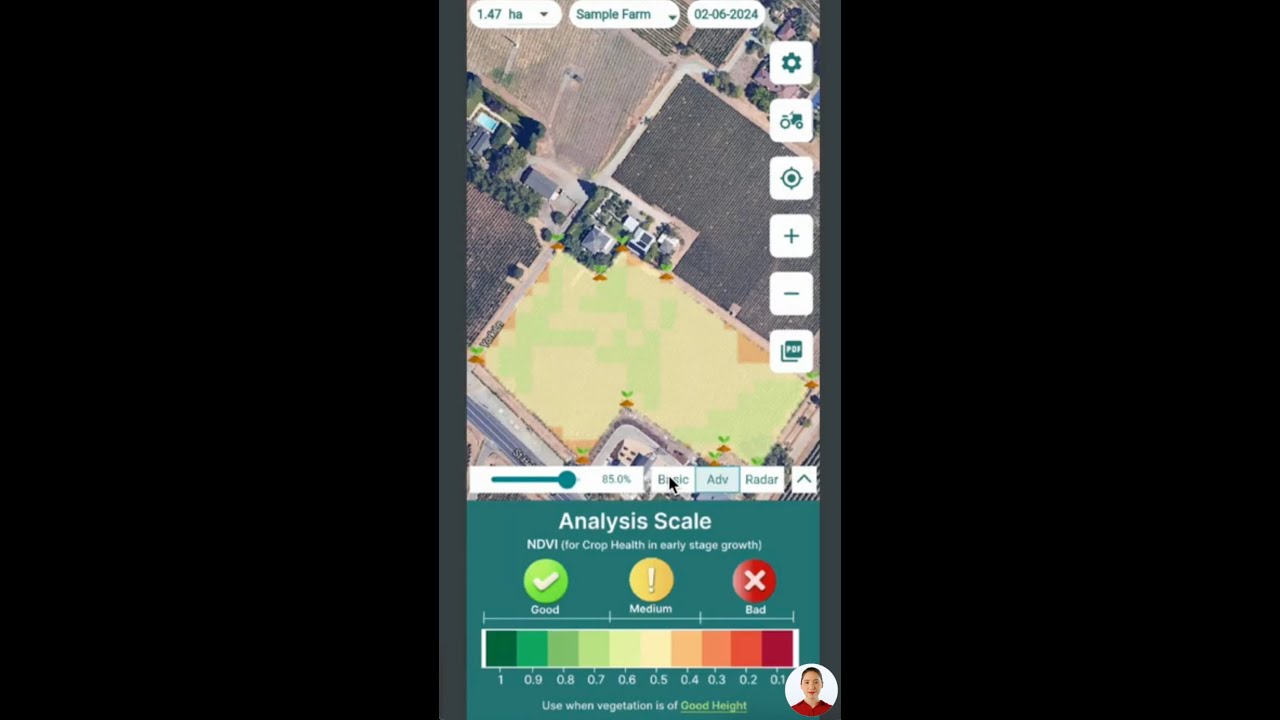
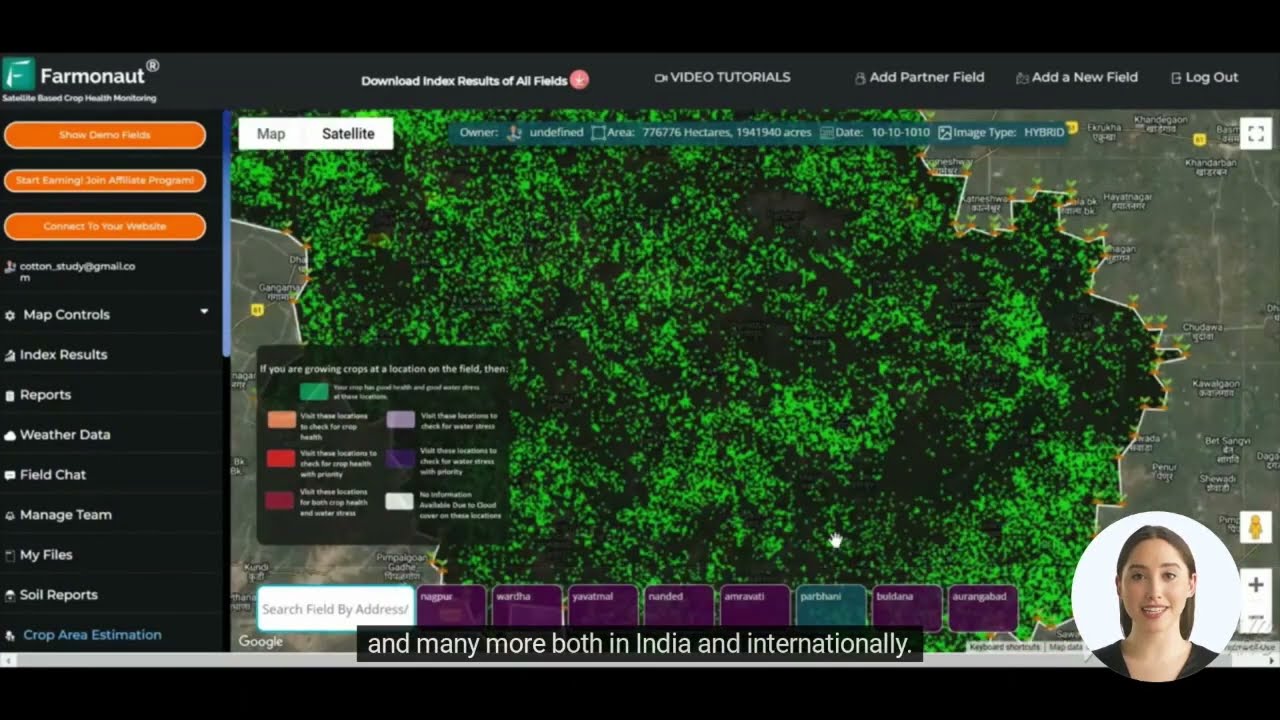
Whichever course you pick — a ZIACO certificate, a Gwebi diploma, or a US land-grant extension module — the coursework covers planning and decision-making frameworks, not the day-to-day monitoring tools that make those frameworks actionable on a real field. That’s a separate layer, and it’s where Farmonaut‘s satellite-based farm management platform sits: real-time crop health monitoring, AI-based advisory, and resource-management tools accessible via Android, iOS, web/browser app and API.
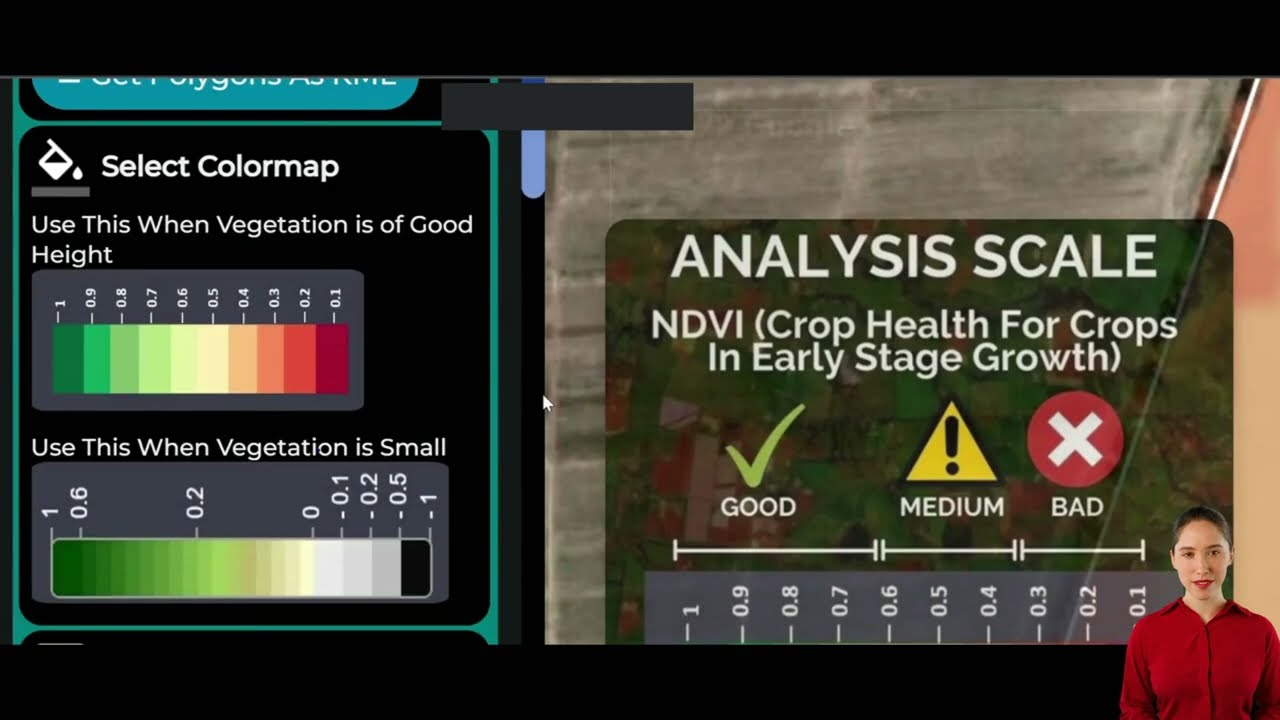
This matters concretely for graduates of ZIACO’s General Certificate irrigation module or a US extension course on precision water use: the coursework teaches the theory of soil moisture, evapotranspiration and scheduling, but you still need a live data feed to apply it. Satellite NDVI and soil-moisture layers give you the current-conditions input the classroom can’t; the classroom gives you the decision rules for what to do with it. Neither replaces the other.
Farm Labor Economics Behind the Business-Management Modules
ZIACO’s Executive Certificate module on Labour Productivity and its General Certificate coverage of farm management both sit on top of a labour-cost reality that varies sharply by country. In the United States, USDA’s Economic Research Service reports 1.18 million wage-and-salary agricultural workers in 2024, earning an average $18.12/hour against a $30.13/hour average nonfarm wage — farm wages sit at 60% of nonfarm wages, and the average US farm laborer is 39.6 years old (USDA Economic Research Service, Farm Labor). Real US farm wages have grown 1.9% annually over the past decade per the same source. These figures are the concrete backdrop that a Labour Productivity module is trying to help a farm manager act on — a US reader taking ZIACO’s course or a domestic equivalent should benchmark their own labour costs against this ERS series, which USDA updates via the Quarterly Census of Employment and Wages, expected next in Q1 2025 reporting cycles and thereafter on a regular quarterly schedule at the same ERS page.
Bridging Theory and Practice
The combination of a formal agricultural education — whether Zimbabwean or international — and a live monitoring platform lets a farmer or farm manager:
- Make planning decisions based on current field data rather than last season’s assumptions
- Apply strategic farm-planning modules with a real NDVI or soil-moisture reading in hand
- Allocate irrigation and labour resources against actual conditions
- Adapt faster to weather and pest pressure than a fixed curriculum can anticipate
Programmes that build a technology-literacy component into the curriculum — as ZIACO’s Communication and ICT Applications module does — produce graduates who can step directly into using a monitoring platform rather than treating it as a separate learning curve.
Growth in Online Agricultural Learning
The shift toward online delivery isn’t unique to Zimbabwe. Coursmos reports UK online agriculture course enrolment rose 35% between 2022 and 2025, and projects the global e-learning market at $400 billion by 2026 (Coursmos Online Learning Statistics). Coursmos publishes updated figures annually, typically in January or February, with the cited 2026 projection released in September 2025 — check the same page for the current-year update before citing this figure as current.
For US and Danish readers weighing whether an online credential justifies the time investment against a farmland-based return: USDA’s Economic Research Service puts typical annual returns from farmland investment — combining lease income, production income and land appreciation — at 8-12% under current conditions (USDA Economic Research Service). That’s the return a business-management certificate is ultimately trying to help you protect or improve, not a guarantee tied to any specific course.
Course-Fit Calculator
Use the inputs below to compare how many months of study you’re committing to per week of available time, and to weight that against the ERS farm-wage benchmark above if you’re budgeting the opportunity cost of study hours against paid farm labour.
Enter your numbers above.
Assumptions: study-hour totals are estimates (25 hours/credit-month equivalent) based on typical certificate/diploma course loads, not figures published by any single institution — confirm actual contact and self-study hours with your chosen college before enrolling. The calculator excludes tuition fees, travel, materials and exam costs, none of which have a single comparable published figure across Zimbabwe, the US, the UK and Denmark.
How to Verify Accreditation Before You Enrol
Because course listings and even institution names change — ZOAC becoming ZIACO is a recent example — treat any third-party list, including this one, as a starting point rather than a final answer. Before enrolling in any Zimbabwean agricultural college:
- Check the institution against the ministry’s current register at agric.gov.zw/?page_id=6415.
- Ask the admissions office directly for its current accreditation certificate number and validity date.
- For online programmes specifically, confirm the mode of assessment (proctored exams vs. coursework) and whether the certificate is recognised outside Zimbabwe if you plan to use it internationally.
- For US, UK or Danish learners considering a domestic online alternative instead, check your national land-grant university, further-education college, or agricultural college directly — no single global ranking of these currently exists as a citable, regularly maintained source.
This verification habit is the part of this article that won’t go stale: institution names, course durations and even accreditation status can shift, but checking the primary ministry register and asking for a current accreditation number stays valid regardless of what changes on either side.
Empowering Small-Scale Farmers and Women in Agriculture
Online delivery — whether via ZIACO or a US/UK extension course — lowers two specific barriers that have historically limited access to agricultural education: travel time and fixed class schedules. For small-scale farmers who can’t leave a farm for a residential term, and for women farmers balancing study with household and farm responsibilities, asynchronous online modules remove the scheduling conflict that a residential diploma imposes. This is a structural observation about delivery mode, not a claim with a specific enrolment or outcome figure attached — no public dataset breaks down ZIACO or comparable online programme enrolment by gender or farm size, so treat this as a plausible mechanism rather than a measured result.

Irrigation Management Across Climates
ZIACO’s General Certificate irrigation module and equivalent modules at Mlezu Agricultural College (Diploma in Agricultural Engineering, covering irrigation systems directly) teach water-conservation methods, soil-moisture-sensor use, and weather-informed scheduling. These skills transfer directly regardless of which country’s farm you apply them to — the technique for calculating crop water requirement from evapotranspiration data is the same in Zimbabwe’s Mashonaland provinces, the US Corn Belt, or the UK’s eastern arable counties. What differs is the reference evapotranspiration data source and the regulatory limits on abstraction, which a US reader should check against their state’s water authority and a UK reader against the Environment Agency’s abstraction licensing rules — neither of which this brief has current figures for, so check those bodies directly rather than relying on a Zimbabwe-specific figure.
Diversification: Apiculture, Aquaculture and Beyond
ZIACO’s General Certificate is unusual among the shorter online programmes for covering apiculture and aquaculture alongside conventional crop and livestock modules. Diversification reduces single-crop or single-enterprise risk, opens additional income streams, and is taught alongside beef cattle, dairy, poultry and small-stock production in the same certificate — a broader spread than most 1-year programmes attempt. If your interest leans toward horticulture specifically rather than general diversification, Chibero’s 2-year Advanced Diploma in Horticulture is the more specialised Zimbabwean option, covering fruit and vegetable production, floriculture and post-harvest handling in depth.
Digital Farm Management as a Practical Complement
Coursework on strategic planning, marketing and resource management sets the decision framework; a digital farm management platform supplies the ongoing data feed that framework runs on — crop health imagery, resource-use tracking, and advisory outputs that update as conditions change through a growing season, rather than at the fixed points a syllabus covers.
Practical Barriers Worth Naming
Online agricultural education, in Zimbabwe or anywhere else, runs into a consistent set of adoption barriers:
- Reliable internet connectivity in rural areas, needed both for coursework and for using digital farm management tools day-to-day
- Digital literacy gaps among farmers who did not grow up with these platforms
- Balancing established farming knowledge with newer agricultural science and technology
- Affordability of both tuition and any hardware or connectivity required
- Adapting course content to the specific soils, climate and regulatory context of the learner’s own farm
The OECD’s review of skills gaps in the agro-food sector identifies social skills, teamwork, problem-solving and quality control as recurring shortfalls across the sector generally (OECD, Labour and Skills Shortages in the Agro-Food Sector) — a useful cross-check for whether a given course’s syllabus (ZIACO’s or otherwise) actually addresses the skills employers report missing, rather than only technical content.
FAQ
- Q: How many agricultural colleges does Zimbabwe have?
A: 9 accredited institutions per the Ministry of Lands, Agriculture, Fisheries, Water and Rural Development’s 2020 register: Esigodini, Chibero, Gwebi, Mlezu, Rio Tinto Agricultural College, Mazowe Veterinary College, Shamva, Kushinga-Phikelela, and ZIACO. Check agric.gov.zw/?page_id=6415 for the current register, since institutions can be added or re-accredited. - Q: What is ZIACO and how does it differ from the residential colleges?
A: ZIACO (Zimbabwe Agricultural College, formerly ZOAC) delivers its Executive and General Certificates in Agricultural Business Management entirely online, versus the residential diplomas at colleges like Gwebi or Chibero. It’s endorsed by the Ministry of Lands, Agriculture, Fisheries, Water and Rural Development. - Q: What are the shortest agriculture courses available in Zimbabwe?
A: ZIACO’s Executive Certificate in Agricultural Business Management, at roughly 6 months, is the shortest credentialed option in the current accredited system, against 1-year certificates at Kushinga-Phikelela and Esigodini and 2-3 year diplomas elsewhere. - Q: Are there good online farming or horticulture courses for UK, US or Danish learners?
A: Yes, but no single global ranking source currently exists. US land-grant universities run online extension and continuing-education courses in horticulture and crop science; UK further-education colleges (e.g. Harper Adams, Bishop Burton) offer distance modules, with UK online agriculture enrolment up 35% from 2022 to 2025 per Coursmos; Danish landbrugsskoler and Aarhus University offer selected distance options. Check each institution directly for current offerings and fees. - Q: Are ZIACO’s programmes recognised by the Zimbabwean government?
A: Yes — ZIACO is endorsed by the Ministry of Lands, Agriculture, Fisheries, Water and Rural Development. Confirm current accreditation status directly with the ministry before enrolling, since registers are updated periodically. - Q: How does satellite farm management technology complement these courses?
A: Platforms like Farmonaut supply real-time crop health, soil-moisture and advisory data that coursework in irrigation management, strategic planning or labour productivity is designed to be applied to — the course teaches the decision framework, the platform supplies the current-conditions data. - Q: What do farm workers actually earn, and how does that affect the case for taking one of these courses?
A: In the US, USDA ERS reports an average farm wage of $18.12/hour in 2024 versus $30.13/hour nonfarm — a 60% ratio, with the average farm laborer aged 39.6. This is the opportunity-cost benchmark the calculator above uses; check ERS’s farm labor page for the current quarterly update before relying on the 2024 figure.
Earn With Farmonaut: Earn 20% recurring commission with Farmonaut’s affiliate program by sharing your promo code and helping farmers save 10%. Onboard 10 Elite farmers monthly to earn a minimum of $148,000 annually—start now and grow your income!
Learn more about the Farmonaut Affiliate Program



For developers interested in integrating Farmonaut’s technology into their own applications, check out our API and API Developer Docs.

 Drift-Sense
 NWNS
NWNS Hydenmet
 Dirks Bros Farms
 Red August Group
 Farm Inc
 WeMe Global
 Agrotoken
 Blue BearX
 Insignito
 Croptimum
 DnCubed
 Field Capacity
 Indosistim Teknologi
 Liquify Digital
 CU Foods
 BeyondTech Global
 Rouge VC
