

Reviewed August 2026 against USDA NASS Florida Citrus Statistics, USDA Economic Research Service, and University of Florida IFAS Extension.
Try it: Run your own numbers →
Citrus greening disease — also called Huanglongbing or HLB — is a bacterial infection spread by a tiny insect, the Asian citrus psyllid, that has cut Florida’s orange production by 92% between the 2003-04 and 2023-24 seasons, per USDA’s Economic Research Service. There is no cure once a tree is infected. This article covers how to identify citrus greening symptoms, what the disease has done to Florida’s citrus industry in verified figures, and the seven management approaches — from gene editing to satellite monitoring — that growers and researchers are actually using to slow it down.



Table of Contents
- What Is Citrus Greening Disease?
- Citrus Greening Symptoms: A Field Identification Guide
- Citrus Disease in Florida: The Numbers
- Canopy-Loss & Grove Value Calculator
- Citrus Disease Research: Where the Funding Is Going
- Citrus Greening Disease Treatment: 7 Management Strategies
- Comparing HLB Management Strategies
- How Farmonaut Supports Citrus Disease Management
- Video Guides: Satellite Data for Citrus Groves
- FAQ: Citrus Greening, HLB, and Florida Citrus
- Where Citrus Greening Goes From Here
- Farmonaut Subscription Plans
- Try it: Run your own numbers
What Is Citrus Greening Disease?
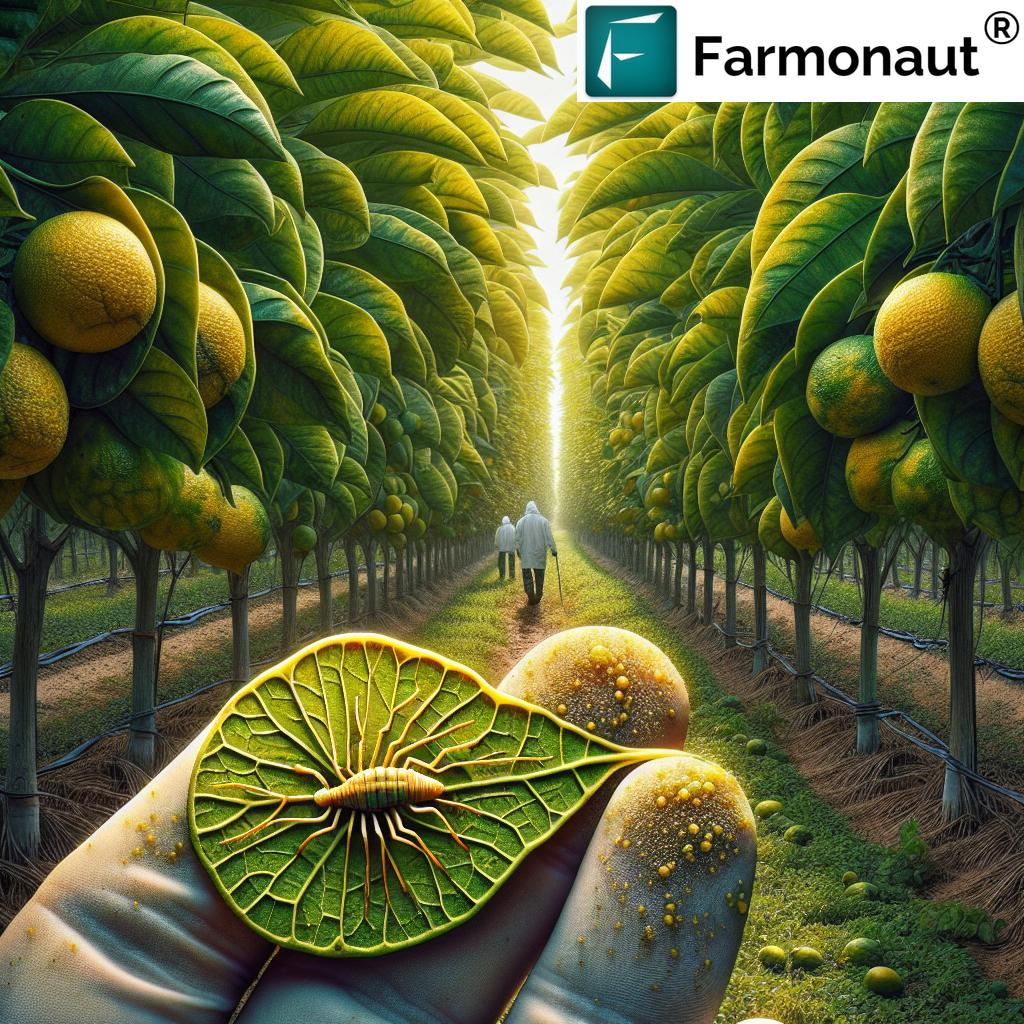
Citrus greening disease, known scientifically as Huanglongbing (HLB), is caused by the bacterium Candidatus Liberibacter asiaticus. It was first detected in Florida citrus in 2005, according to a pest alert from the Florida Department of Agriculture and Consumer Services (FDACS). The bacteria live in a tree’s phloem — the tissue that moves sugars from leaves to roots — and are spread almost entirely by one insect vector: the Asian citrus psyllid (Diaphorina citri). A related insect, the African citrus psyllid (Trioza erytreae), transmits a similar strain of the bacteria in other citrus-growing regions.
There is no known cure for an infected tree. Once a psyllid feeds on a diseased tree and then a healthy one, the bacteria colonize the new host’s vascular system, and symptoms can take months to years to appear — which is exactly why early detection matters more than almost any other single intervention.
How It Spreads
- Feeding transmission: Both adult and nymph psyllids acquire the bacteria by feeding on infected phloem and inject it into the next tree they feed on.
- Human-assisted spread: Moving infected nursery stock, budwood, or grove equipment between properties has historically accelerated regional outbreaks.
- Silent incubation: A tree can carry the bacteria and show no visible symptoms for an extended period, which is why visual inspection alone catches infections late.
Citrus Greening Symptoms: A Field Identification Guide
The single most useful diagnostic detail is this: HLB produces asymmetrical (blotchy, one-sided) leaf mottling, while nutrient deficiencies that look similar are almost always symmetrical across the leaf’s midrib. If you’re trying to tell citrus greening apart from a zinc or manganese deficiency in the grove, this is the fastest tell.
1. Leaf and Vein Symptoms (Earliest Visible Sign)
- Blotchy mottle / asymmetrical yellowing: Irregular yellow patches on leaves that don’t mirror across the leaf vein, unlike nutrient deficiency patterns.
- Vein corking and thickened, upright leaves as infection progresses.
- Sparse, thinned canopy giving the tree a “see-through” appearance from a distance.
2. Fruit Symptoms
- Small, lopsided fruit that fails to size up normally.
- Green at the blossom (bottom) end even when the stem end colors normally — a hallmark HLB sign in Florida groves.
- Bitter, off-flavor juice and thickened, pale peel that make the fruit commercially unmarketable.
- Lopsided seed development and premature fruit drop before harvest.
3. Whole-Tree Decline
- Stunted shoot growth and reduced flowering over successive seasons.
- Twig dieback starting at branch tips and moving inward.
- Progressive tree death, typically over several years once symptoms become visible — University of Florida IFAS Extension research (publication FE983) found that a survey of 76 Florida citrus operations covering 156,614 acres averaged 90% HLB-infected acreage and a 41% average yield loss attributable to the infection.
Because early infection is symptomless, growers relying only on visual scouting are, by definition, finding the disease after it has already spread. That gap is what satellite and multispectral monitoring is built to close — covered in the treatment section below.
Citrus Disease in Florida: The Numbers
Florida citrus disease statistics are tracked by USDA’s National Agricultural Statistics Service (NASS) and updated on a quarterly forecast cycle. As of the 2025-26 season, Florida had 208,183 acres of citrus in production, according to USDA NASS’s Florida Citrus Statistics — a 24% drop from the 2024-25 season alone. Acreage has fallen 75% since 2020, per USDA NASS data reported by FreshPlaza.
Production has followed the same trajectory. USDA NASS forecast 12.92 million boxes of Florida oranges for the 2025-26 season. USDA’s Economic Research Service puts the longer-run decline at 92% from the 2003-04 season through 2023-24 — a two-decade collapse that predates and now compounds the more recent acreage losses.
Why Acreage Is Falling Faster Than the Disease Alone Explains
Grove abandonment is now a bigger driver of lost acreage than active removal for disease control. Once yields fall far enough below the cost of spraying, fertilizing, and irrigating a block, growers stop investing in it rather than replant. USDA NASS tracks this separately in its Citrus Abandoned Acreage report (see the Refresh section below for where to pull the current figures), which is the number to check if you want to know how much Florida acreage is out of production versus simply smaller.
UF IFAS Extension’s FE983 publication also documented a labor-market effect: citrus greening was linked to roughly 6,611 jobs lost in Florida’s citrus sector between 2006 and approximately 2015, as harvest, packing, and processing volumes shrank alongside the crop itself.
Getting the Current-Season Numbers Yourself
USDA NASS publishes an updated Citrus Production Forecast every January, April, July, and October, plus a final annual Citrus Summary. Because acreage and box counts move quarter to quarter, don’t treat any single figure above as fixed — pull the latest release directly from USDA NASS’s Florida Citrus Forecast page before making a planting or investment decision based on it.
Canopy-Loss & Grove Value Calculator
Estimate how HLB-driven yield loss translates into lost boxes and revenue for your own grove, using the 41% average yield-loss figure from UF IFAS’s grower survey as a starting benchmark you can adjust.
Run your own numbers
Assumptions: applies one flat yield-loss rate to the infected share of the grove only; healthy acreage is assumed to yield at your entered baseline. Excludes management costs (spraying, nutrition, tree removal/replanting), price variation by variety or market, and the compounding effect of yield loss worsening in later infection years. Use it for a rough revenue-at-risk estimate, not a budget figure.
Citrus Disease Research: Where the Funding Is Going
Federal and university research into citrus greening has focused on four tracks: genetic resistance, antimicrobial treatment, vector control, and detection technology. Two grants illustrate the scale and direction of that funding.
- University of Florida received a $5 million NIFA grant to research genetic and breeding approaches to HLB resistance, announced in a UF news release. Read the UF announcement.
- USDA's National Institute of Food and Agriculture (NIFA) committed nearly $11 million across multiple grants aimed at combating and preventing citrus greening disease, per NIFA's own press release. Read NIFA's press release.
That research funds work across genetic resistance (CRISPR-edited and conventionally bred resistant citrus lines), antimicrobial treatments (regulated trunk injections of antibiotics such as oxytetracycline and streptomycin), vector management (biological control agents targeting the Asian citrus psyllid), and detection technology (satellite, drone, and AI-based scouting to flag infected trees before visual symptoms appear).
Citrus Greening Disease Treatment: 7 Management Strategies
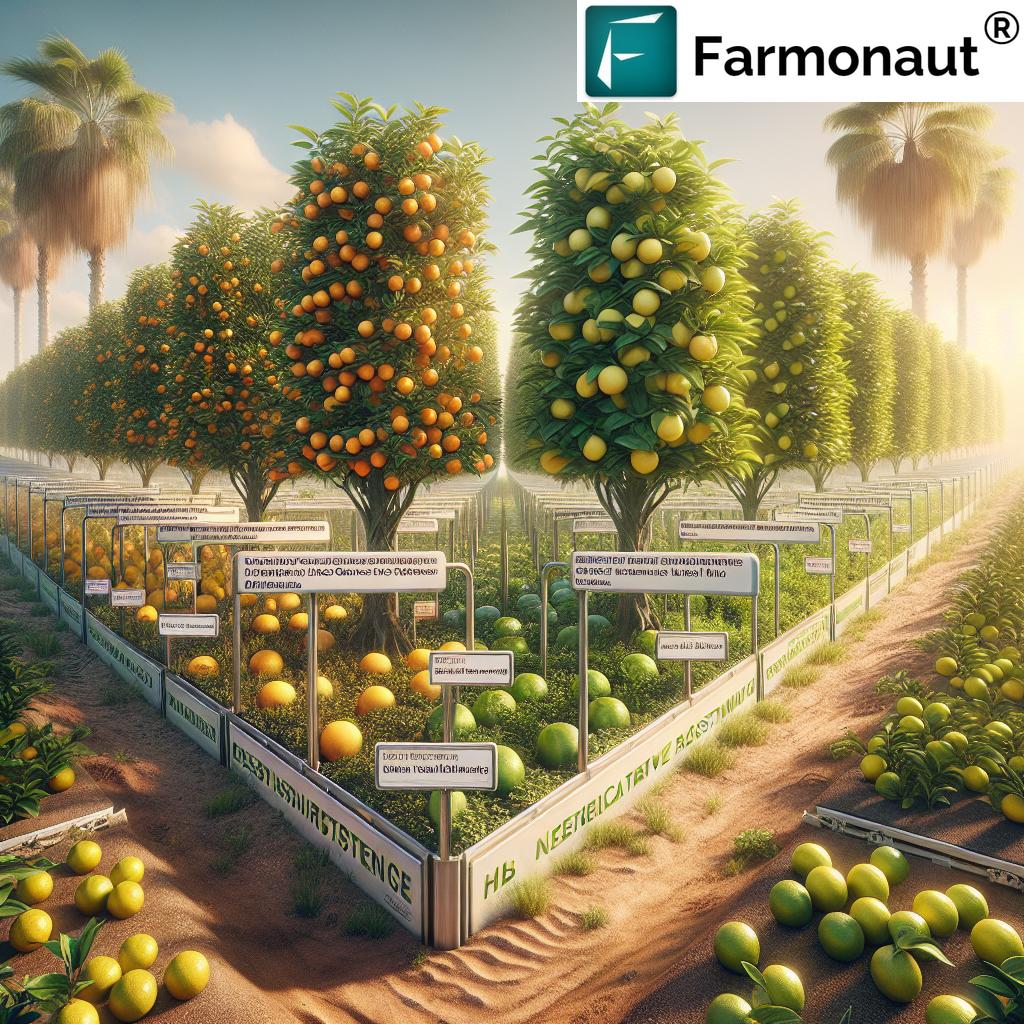
There is no single fix for HLB — every grove that has stabilized production has done so by layering several of the following approaches. None of them cures an infected tree; each either slows spread, extends a tree's productive life, or catches new infections earlier.
-
Gene editing for HLB-resistant citrus varieties
CRISPR and related gene-editing tools are being used to introduce heritable resistance to Liberibacter asiaticus, including antimicrobial protein pathways borrowed from other plant species. This is one of the research tracks funded by UF's NIFA grant referenced above — commercial resistant varieties remain in development rather than widespread planting.
-
Thermal (heat) therapy for infected trees
Controlled heat treatment can reduce bacterial load in an infected tree's phloem without killing the tree, and portable field units have been trialed in Florida groves. It is labor- and equipment-intensive relative to spraying, which limits it to smaller-scale or high-value block use.
-
Biological psyllid control
Rather than relying solely on insecticides, researchers release parasitoid wasps and study Wolbachia bacterial infections in psyllid populations to reduce the vector's capacity to transmit HLB. This approach targets the insect, not the bacteria directly, and works best alongside — not instead of — other controls.
-
Precision nutrition to extend infected-tree productivity
Adjusting micronutrient ratios — particularly zinc, manganese, and magnesium — and intensifying fertilization can temporarily improve vigor in infected trees and delay decline, though it does not eliminate the bacteria. Farmonaut's Large-Scale Farm Management App is built to schedule and monitor precision fertilization programs like this across large or multi-block operations.
-
Regulated antibiotic trunk injection
Trunk injection with antibiotics such as oxytetracycline or streptomycin delivers bacteria-suppressing compounds directly into a tree's vascular system, and carries regulatory approval for use in some states under defined conditions. It offers temporary relief, not elimination, and raises legitimate questions about environmental exposure and resistance that keep it under regulatory review. This is one of the tracks USDA NIFA's near-$11 million commitment funds research into.
Explore NIFA's investment into citrus greening antibiotic research
-
Early detection via satellite-based monitoring
Because HLB symptoms can take months to years to appear after infection, catching change in a tree's vegetation signature before visible symptoms show is the difference between removing one tree and losing a block. Farmonaut's satellite crop monitoring is built for exactly this kind of early-stage change detection. Growers or developers can integrate this directly via the Farmonaut API, with setup details in the API developer docs.
-
Blockchain-based disease traceability
Farmonaut's product traceability platform records disease status and handling data at each stage from grove to retail, which helps buyers and regulators verify that fruit didn't originate from an unmanaged or heavily infected source. For a deeper look at organic-leaning control methods that pair with these technology approaches, see our related guide on 7 organic control tips for citrus greening.
Comparing HLB Management Strategies
No single number captures "effectiveness" for a disease with no cure — each strategy below addresses a different part of the problem (vector, tree health, or detection speed), which is why growers combine several rather than picking one.
| Strategy | What It Targets | Primary Limitation | Typical Adoption Stage in Florida |
|---|---|---|---|
| Insecticide sprays | Asian citrus psyllid population | Resistance buildup; doesn't help already-infected trees | Widespread, standard practice |
| Biological control (parasitoid wasps, Wolbachia) | Psyllid reproduction and transmission capacity | Slower-acting than chemical sprays; needs sustained release programs | Pilot to moderate |
| Heat (thermal) therapy | Bacterial load inside infected phloem | Labor- and equipment-intensive at field scale | Limited field trials |
| Gene-edited / resistant varieties | Tree's underlying susceptibility to infection | Years from broad commercial availability | Research and early trial stage |
| Satellite / drone monitoring | Time-to-detection of new infections | Requires acting on the data (removal or treatment) to pay off | Growing; still a minority of acreage |
| Precision nutrition | Infected-tree vigor and productive lifespan | Delays decline, doesn't stop it | Moderate, especially on larger operations |
| Antibiotic trunk injection | Bacterial population within an individual tree | Regulatory limits; temporary effect | Approved in limited states, closely regulated |
How Farmonaut Supports Citrus Disease Management
Farmonaut's tools are built around the two things that move the needle most in HLB management: finding infection early and managing tree health at scale once it's found.
Core Capabilities for Citrus Growers
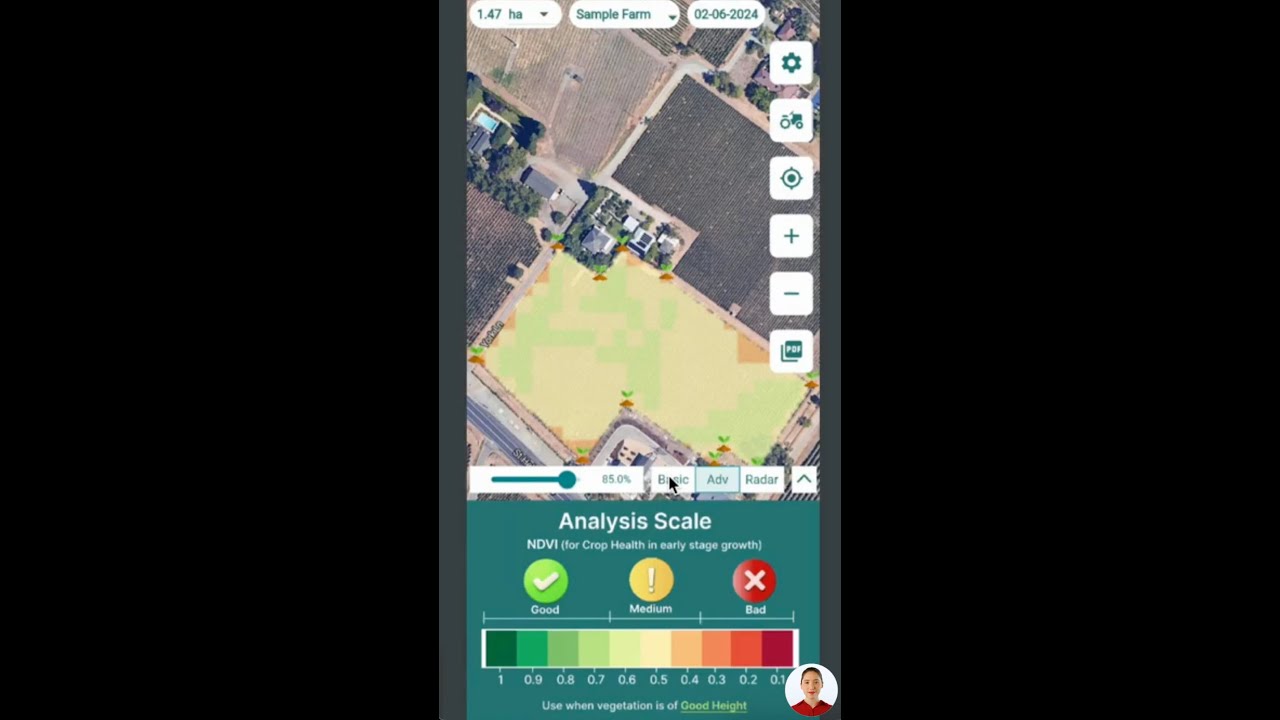
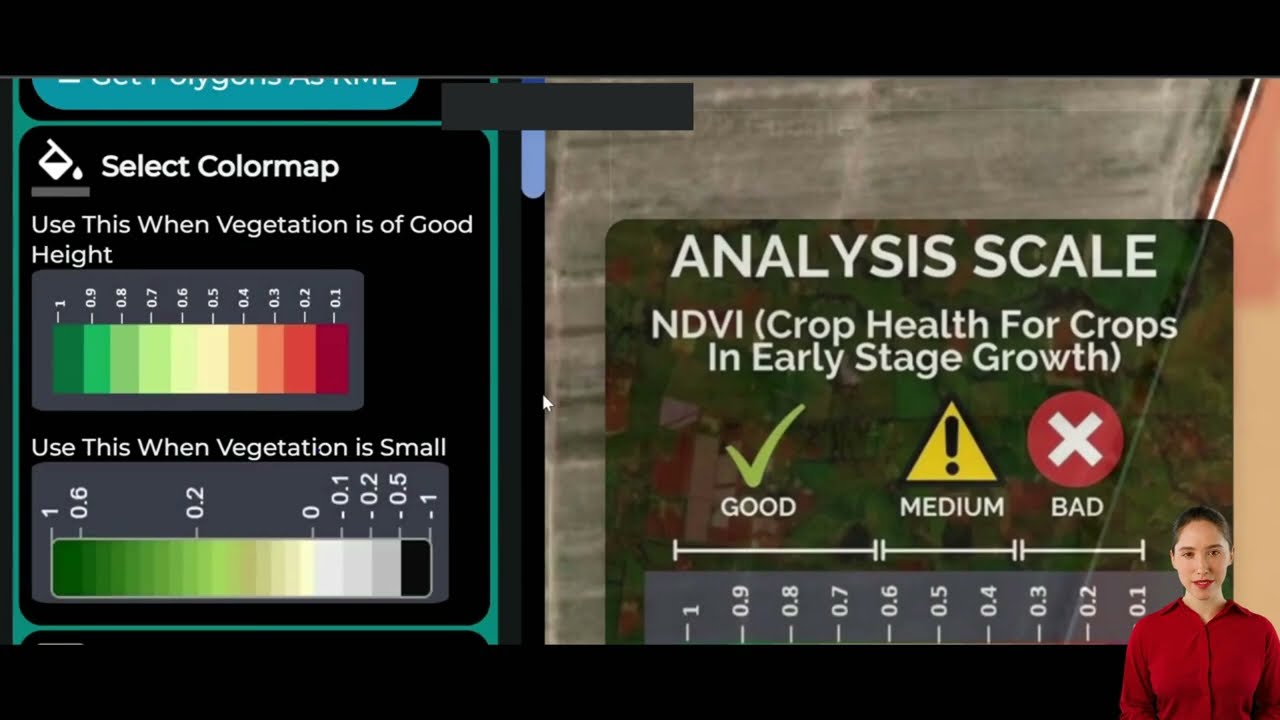
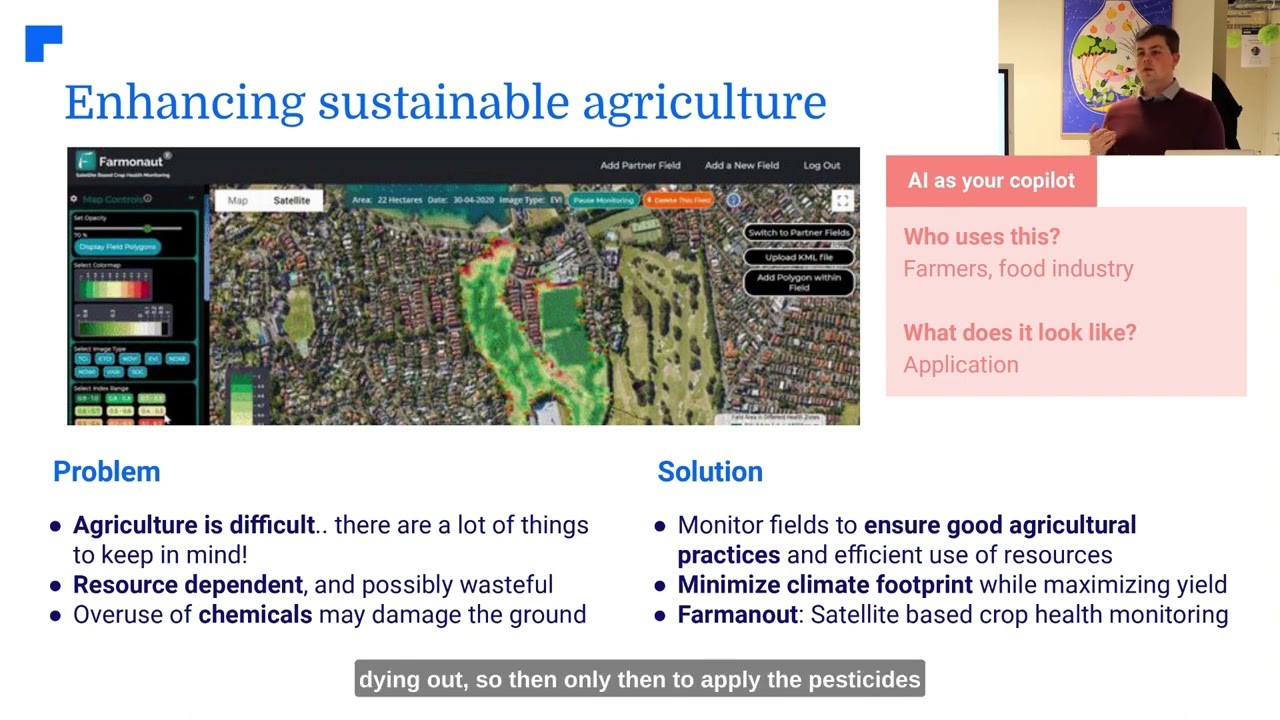
- Satellite-based crop health monitoring: Multispectral imagery flags vegetation-health changes consistent with early-stage infection, ahead of visible symptoms, so growers can inspect and act on specific trees rather than scouting an entire grove by eye.
- AI-powered Jeevn Advisory: Automated, crop-specific recommendations on nutrient management, irrigation, and pest and psyllid control, refined against incoming field data.
- Blockchain product traceability: Tracks disease status and handling from grove to retail. Explore traceability options.
- Carbon footprinting: Our carbon footprinting tool records emissions data relevant to sustainability compliance for citrus operations.
- Large-scale farm management: Farmonaut's farm management platform coordinates spraying, fertilization, and removal decisions across multiple blocks and teams.
- API and developer integration: Build custom disease-management workflows using the Farmonaut API and developer docs, including approaches covered in our organic control tips guide.
Video Guides: Satellite Data for Citrus Groves
These walkthroughs cover how to read satellite vegetation data and apply it to grove-level decisions:
FAQ: Citrus Greening, HLB, and Florida Citrus
What is citrus greening disease?
Citrus greening disease (HLB) is a bacterial infection caused by Liberibacter species, spread by the Asian citrus psyllid. It was first found in Florida in 2005. There is no cure; management focuses on slowing spread and extending infected-tree productivity.
What are the symptoms of citrus greening?
- Asymmetrical, blotchy yellowing on leaves (versus symmetrical patterns from nutrient deficiency).
- Small, lopsided fruit that stays green at the blossom end.
- Bitter juice, thickened peel, premature fruit drop.
- Twig dieback and progressive canopy thinning as the tree declines.
How bad is citrus disease in Florida right now?
USDA NASS recorded 208,183 acres of Florida citrus in production for the 2025-26 season, a 24% drop from 2024-25 and a 75% decline since 2020. USDA's Economic Research Service separately tracks a 92% production decline from the 2003-04 season to 2023-24. Because these are updated on a quarterly and seasonal cycle, check USDA NASS's Florida Citrus Forecast page for the current release.
Is there a treatment for citrus greening disease?
There is no cure for an infected tree. Treatment options that slow the disease or extend a tree's productive life include regulated antibiotic trunk injection, precision nutrition programs, biological psyllid control, and thermal therapy. Gene-edited resistant varieties are in research and early trial stages, not widespread commercial planting.
What is the difference between citrus greening symptoms and a nutrient deficiency?
The key visual test is symmetry. Nutrient deficiencies typically produce yellowing that mirrors symmetrically across the leaf's midrib. HLB produces an asymmetrical, blotchy mottle pattern that does not mirror — this is the fastest field check before lab confirmation.
How does technology, including Farmonaut, help manage citrus greening?
Farmonaut uses satellite monitoring, AI-driven advisory, and blockchain traceability to flag likely infection earlier than visual scouting, guide nutrient and treatment scheduling, and verify disease status through the supply chain.
How can growers access Farmonaut's platform?
Farmonaut is available via web app, Android app, iOS app, and direct API access.
Where Citrus Greening Goes From Here
Citrus greening isn't a story with an endpoint yet — it's an ongoing management problem that Florida's citrus acreage numbers make concrete every season. USDA NASS's own forecast cycle is the most reliable way to track whether the trend is stabilizing or continuing to fall: check the quarterly Citrus Production Forecast and the Citrus Abandoned Acreage report for the current figures rather than relying on any single year's number, including the ones cited in this article.
On the ground, the approaches that are actually moving outcomes — regulated antibiotic injection, precision nutrition, biological psyllid control, and early satellite-based detection — work by combination, not substitution. A grower running one of these alone is managing slower than one layering two or three. Gene-edited resistant varieties remain the long-run bet, funded through grants like UF's $5 million NIFA award and USDA NIFA's near-$11 million commitment, but they are not yet a near-term fix for existing groves.
Further reading:
Farmonaut Subscription Plans
Access scalable technology solutions for citrus disease management and precision agriculture:

 Geospatial Lab Africa
 KhetiBuddy
 Agro La Gándara
 Global Agrifood
 HIPSAC
 ZOL Zimbabwe
 Juligerm
 AdBio
AdBio MISE Maroc
 NWNS
NWNS Red August Group
 Farm Inc
 WeMe Global
 Agrotoken
 Blue BearX
 Insignito
 Croptimum
 DnCubed
 Field Capacity
 Indosistim Teknologi
