

Autonomous Crop Management Market: US Size, ROI, Risks
Reviewed August 2026 against Grand View Research, USDA’s Economic Research Service, and Purdue University’s Center for Commercial Agriculture.
Try it: Autonomous Equipment Breakeven Wage Calculator →
The global autonomous crop management market generated USD 1,683.4 million in revenue in 2022 and is forecast to reach USD 5,581.6 million by 2030, a 16.2% compound annual growth rate (CAGR), according to Grand View Research. That figure covers the software-and-analytics layer — AI advisories, satellite imagery, IoT sensor networks. The machinery underneath it, the separate autonomous agricultural vehicle market of self-driving tractors, harvesters, and sprayers, was valued at USD 6.7 billion in 2024 and is projected to reach USD 23.7 billion by 2034. On the ground, USDA’s most recent farm-management survey put guidance autosteer on 70% of large-scale U.S. crop farms versus 52% of midsize operations in 2023, while only 27% of all U.S. farms and ranches used any precision-agriculture practice at all.
What follows is a breakdown of both markets’ real figures, where U.S. adoption stands by farm size, what is holding the rest back, and a calculator built from a published Purdue breakeven model so you can check whether autonomy pencils out for a specific operation rather than a national average.
Table of Contents
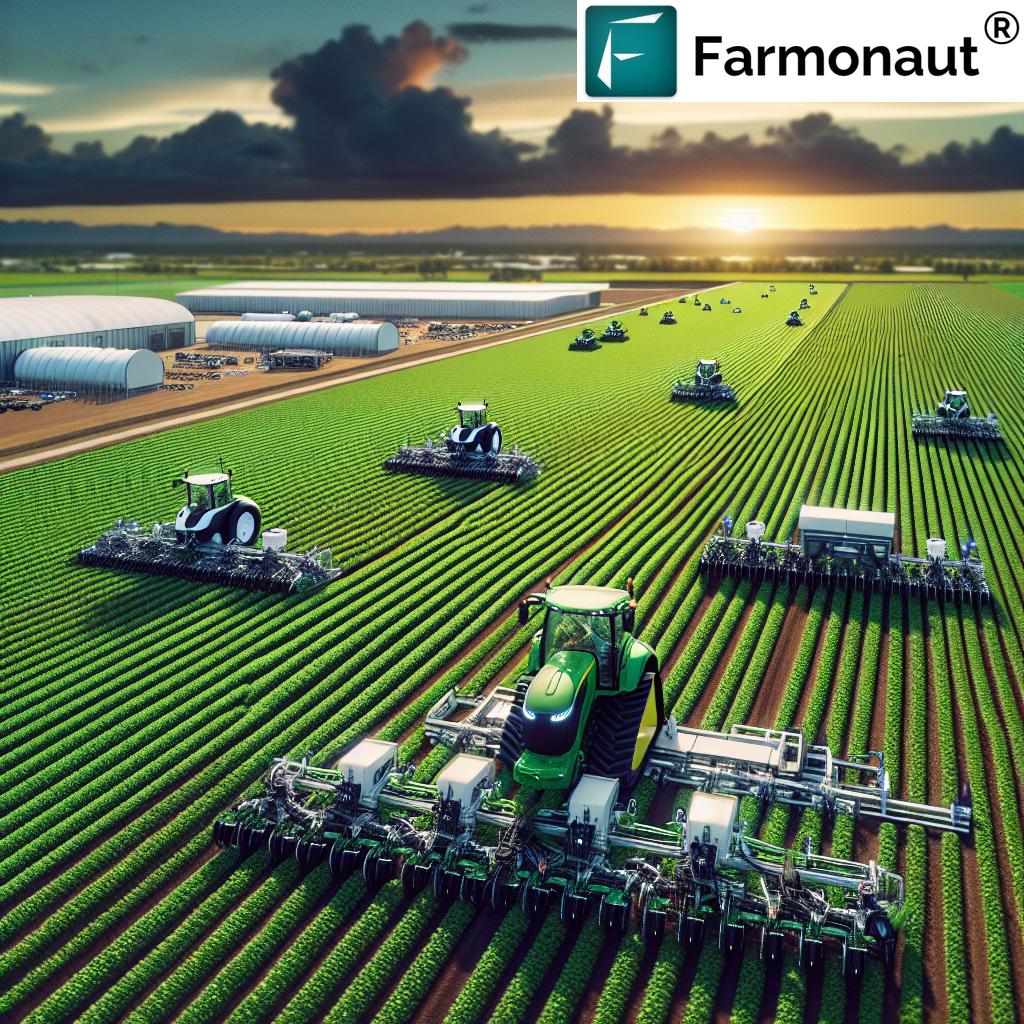
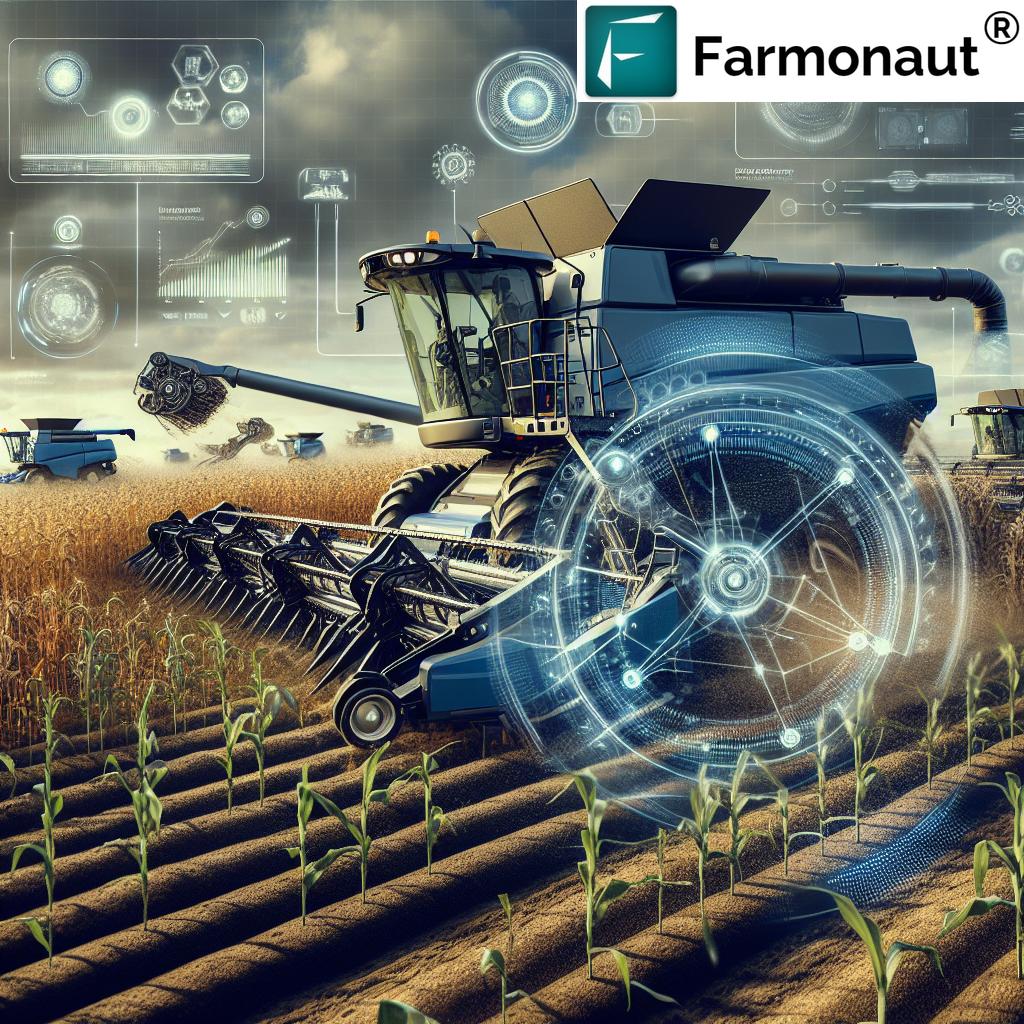
— USDA Economic Research Service, 2023 farm survey data
Market Overview: Autonomous Crop Management Market Size
Grand View Research puts the 2022 global autonomous crop management market at USD 1,683.4 million, with North America accounting for 37.2% of that revenue — the largest single region. The firm’s forecast carries the market to USD 5,581.6 million by 2030 at a 16.2% CAGR for 2023–2030. This outlook page is a live, periodically revised estimate rather than a fixed report, so before quoting these numbers in a deck, reopen the link above and check whether Grand View Research has since updated the base year or the CAGR.
These dollars buy AI advisory software, multispectral satellite and drone analytics, IoT soil and canopy sensors, and the machine-learning models that turn that data into planting, irrigation, and spraying decisions. It is a distinct market from the physical machines that carry out those decisions, which is the subject of the next section.

U.S. Autonomous Crop Management Market Size
For readers who need the U.S. figure rather than the global one, Grand View Research puts U.S. autonomous crop management revenue at USD 431.9 million in 2022. It forecasts USD 1,221.4 million by 2030, a 13.9% compound annual growth rate for 2023 to 2030.
That makes the United States about 25.7% of the global market in 2022, and the firm expects it to remain the largest single country by revenue in 2030. Software was the largest solution segment in 2022, while services are forecast to grow fastest.
| Measure | United States | Global |
|---|---|---|
| Revenue, 2022 | USD 431.9 million | USD 1,683.4 million |
| Forecast, 2030 | USD 1,221.4 million | USD 5,581.6 million |
| CAGR, 2023–2030 | 13.9% | 16.2% |
The U.S. growth rate is lower than the global rate because adoption here started earlier. USDA already counts autosteer guidance on 70% of large-scale crop farms, per its 2023 survey data, so much of the next growth comes from software and services layered onto machines farmers already own.
Autonomous Agricultural Vehicle Market: A Separate, Bigger Number
Search interest in the autonomous agricultural vehicle market is smaller than for crop management overall, but the underlying market is not: Global Market Insights sizes it at USD 6.7 billion in 2024, growing to USD 23.7 billion by 2034 at a 13.4% CAGR for 2025–2034. North America held 44.1% of that global revenue in 2024, and within North America the U.S. accounted for around 84% of the regional total. Tractors are the largest vehicle category at 35.9% market share, with harvesters the fastest-growing segment. Split by autonomy level, semi-autonomous machines — which still require a human for setup, headland turns, or supervision — held 89.71% of the 2024 market, against 10.29% for fully autonomous units that run unsupervised end to end.
The distinction matters for anyone comparing quotes: a “self-driving tractor” advertised today is almost always the semi-autonomous kind, guided by GPS and computer vision but still requiring a operator on standby. Genuinely driverless field equipment remains a small slice of a market that is itself smaller than the software layer it serves. For a walkthrough of the seven automation categories — guidance, variable-rate application, robotics, drones, and more — that make up this hardware layer, see Farmonaut’s agricultural automation breakdown.
Key Market Drivers Behind U.S. Autonomous Crop Management Growth
1. Labor Shortages and the Push for Efficiency
The clearest driver is the shrinking farm workforce. USDA’s Economic Research Service (report EIB-248, published February 22, 2023, authored by Jonathan McFadden, Eric Njuki, and Terry Griffin) tracked digital agriculture adoption on U.S. farms from 1996 through 2019 using the Agricultural Resource Management Survey (ARMS). It found that automated guidance — auto-steer on tractors, harvesters, and sprayers — climbed from 5.3% of planted corn acreage in 2001 to 58% by 2016, and by the end of the study window covered well over 50% of the acreage planted to corn, cotton, rice, sorghum, soybeans, and winter wheat.
Example: an automated grain cart or auto-steer sprayer lets one operator cover acreage that once needed a second hand riding along, which is exactly the kind of substitution large operations are making as hired labor gets harder to schedule during planting and harvest windows.
2. Technological Advancements: AI, IoT, and Data-Driven Agriculture
Modern autonomous crop management runs on three layers: AI models that flag disease risk and prioritize spray targets, IoT sensor networks that stream soil-moisture and canopy data, and machine-vision systems that let robotic weeders and sprayers act on that data without a human pulling the trigger on every pass. Farmonaut applies the first two layers through satellite-based monitoring paired with its large-scale farm management tools, giving agribusiness managers a single dashboard across many fields instead of one spreadsheet per farm.
3. Sustainability and Precision Agriculture Technologies
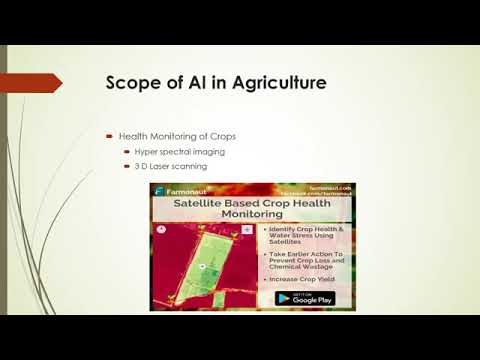
Water restrictions and input costs are pushing precision tools into the sustainability conversation as much as the labor one. Multispectral satellite imaging lets growers target irrigation and fertilizer to the zones that need it rather than blanket-applying across a field, which is the mechanism behind the input-reduction figures documented in the adoption table further down this page.
Technology and Innovation Trends Shaping U.S. Autonomous Crop Management
1. Integration with Smart Precision Agriculture Software
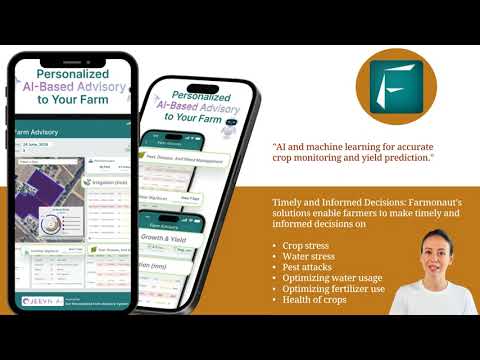
Hardware alone does not close the loop — it needs a software layer telling it where to go and when. Farmonaut’s Jeevn AI Advisory System combines satellite-sourced crop data with weather forecasts and machine-learning models to generate planting, irrigation, and pest-management recommendations, the same integration pattern that separates a self-steering tractor from a genuinely autonomous crop-management workflow.
2. Drones in Crop Monitoring and Aerial Analytics
Drones equipped with multispectral cameras scout for soil-moisture stress and disease symptoms across acreage that would take a scouting crew days to walk. Repeated flights build a time series that flags a problem zone before it is visible from the road — the same early-detection logic that satellite monitoring applies at a larger scale.



3. Subscription Models Are Lowering the Entry Cost
A high sticker price used to be the main barrier to precision tools. Subscription pricing — paying monthly or annually for satellite analytics rather than buying hardware outright — has become the standard route for small and mid-sized farms to get access without the capital outlay, a shift covered in the cost section below alongside the actual dollar figures behind it.

4. Blockchain for Traceability and Transparency
Blockchain-based product traceability lets a buyer trace a batch from planting to sale on one immutable record. Farmonaut’s traceability solution records each production stage, which matters for both regulatory audits and consumer-facing food-safety claims.
5. Robotic Harvesters and Mechanical Weeders
Machine-vision harvesters and weeders are already operating on U.S. specialty-crop farms, using an AI-guided robotic arm to identify ripe produce and pick individual items without the blanket pass a mechanical harvester makes. Systems like FarmWise Labs’ Titan FT-35 and the open-source FarmBot platform cut both hand-weeding labor and herbicide volume on the acreage where they run — figures that are specific to each vendor’s field trials, so check the manufacturer’s published data before budgeting a return on investment (ROI) figure for your own crop and row spacing.
6. Autonomous Growing: Controlled-Environment and Vertical-Farming Automation
A related but distinct segment — sometimes searched as “autonomous growing” — covers indoor, controlled-environment systems: vertical racks or hydroponic beds where sensors and robotics manage light, temperature, humidity, and nutrient dosing without daily manual intervention. This sits outside open-field autonomous crop management, since the growing environment itself is engineered rather than monitored from above. USDA does not publish a national adoption rate for controlled-environment automation the way it does for field-crop guidance systems, so a grower evaluating this category should request throughput and yield data directly from the equipment vendor rather than relying on a market-wide figure.
7. Fleet and Resource Management
Large operations running several autonomous machines at once need to know where each one is and whether it is working, idle, or broken down. Farmonaut’s fleet management service tracks location and operational status across tractors, drones, and support vehicles, which is the coordination layer that makes running more than one autonomous machine at a time practical.
Market Restraints, Costs, and a Breakeven Calculator
1. High Initial Investment and Ownership Costs
The clearest published economics come from Purdue University’s Center for Commercial Agriculture. In a February 2026 summary of their peer-reviewed study, Chad Fiechter and Josh Strine used the Purdue Crop Linear Programming model to test when large autonomous machines beat conventional equipment on a Midwest corn-soybean farm. Subscription fees, field efficiency and human supervision were the deciding factors. Under today’s performance assumptions, hired labor would need to cost more than USD 140 an hour before autonomy pays better — well above current wage levels, which is why the researchers conclude autonomy is not yet cost-competitive on most commercial grain farms when labor is actually available to hire.
Try the assumptions against your own farm below — Purdue’s result depends on acreage, wage and fee assumptions, so every input is yours to change.
Autonomous Equipment Breakeven Wage Calculator
2. Technical and Operational Complexity
Sophisticated software and hardware still require training and support infrastructure that not every operation has in place. Farmonaut's mobile and web farm management platform is built for growers without a dedicated IT staff, while enterprise users needing direct system integration can use the Farmonaut API and its developer documentation.
3. Limited Access in Rural Areas
Connectivity and power gaps still limit autonomous-system uptime in some rural U.S. counties, particularly for equipment that depends on a continuous data link. Platforms that deliver insights across API, web, Android, and iOS and that tolerate low-bandwidth connections narrow that gap without requiring new infrastructure investment on the farm's part.
4. Data Security, Privacy, and Interoperability
Digitized farm and supply-chain data raises the stakes on security, and equipment from different manufacturers still does not always exchange data cleanly. Blockchain-based traceability addresses the tampering risk directly by making the record itself hard to alter after the fact.
Documented U.S. Adoption by Technology and Farm Size
Rather than repeat estimated efficiency percentages that no single agency has published, the table and chart below use only the adoption figures that USDA and Global Market Insights have actually reported, broken out by technology and by farm size.
| Technology / Segment | Documented Figure | Source & Year |
|---|---|---|
| Guidance autosteer, large-scale crop farms | 70% of farms | USDA ERS Charts of Note #110550, 2023 data |
| Guidance autosteer, midsize farms | 52% of farms | USDA ERS Charts of Note #110550, 2023 data |
| Decision-support tools (yield/soil maps), large farms | 68% of farms | USDA ERS / GAO-24-105962 |
| Decision-support tools (yield/soil maps), small farms | 13% of farms | USDA ERS / GAO-24-105962 |
| Any precision-agriculture practice, all U.S. farms/ranches | 27% of farms | USDA, 2023 reporting |
| Automated guidance on corn/cotton/rice/sorghum/soy/wheat acreage | 5.3% (2001) → 58% (2016) | USDA ERS EIB-248, Feb 2023 |
| Autonomous ag vehicles, semi- vs. fully-autonomous share | 89.71% vs. 10.29% | Global Market Insights, 2024 |
| Tractors as share of autonomous vehicle market | 35.9% | Global Market Insights, 2024 |
No agency currently publishes a national adoption rate specifically for drone-based crop scouting, robotic weeders, or blockchain traceability. If you need one, USDA's Census of Agriculture technology-use tables and NASS's annual survey program are the first places to check for a future release.
Farmonaut: Accelerating Autonomous Crop Management Adoption
Closing the gap between the 70% adoption at large farms and the 13-27% at smaller ones is largely a cost and complexity problem. Farmonaut is one of the platforms built to make the smart farming innovations above available to operations of every size, not only the large ones that can absorb a six-figure equipment purchase.
Farmonaut Technologies for Autonomous Crop Management
- Satellite-Based Crop Health Monitoring: multi-spectral imagery for vegetation health, soil moisture, and stress indices.
- AI-Powered Farm Advisory: the Jeevn AI Advisory System blends crop data, weather, and machine learning into in-app planting, irrigation, and pest-management guidance.
- Blockchain Traceability: product authenticity and traceability at each supply-chain stage.
- Fleet & Resource Management: scheduling and tracking for tractors, drones, and support vehicles.
- Carbon Footprinting: carbon tracking tools to quantify and reduce environmental impact.
Farmonaut's Business Model
- Subscription pricing: area-based packages that avoid the upfront capital cost documented in the Purdue model above.
- Multi-platform access: web, Android, iOS, and API.
- API integration: satellite and weather data via the Farmonaut API (Developer Docs).
- Product-specific tools: crop loan and insurance verification or large-scale farm management.
Impact on Labor and Workforce: Transforming Farm Jobs & Roles
The Purdue breakeven figures above cut against a common assumption: at today's wage levels, autonomous equipment is not yet the cheaper option on most commercial grain operations, so it is not displacing hired labor at scale on those farms today. Manufacturers report using autonomy mainly where labor cannot be secured at all — idle acreage is the alternative being weighed, not an existing worker's job.
- Where automation is actually used: operations facing an unfilled labor gap, not a straightforward cost swap.
- Efficiency, not just headcount: autonomous systems extend operating hours and reduce fatigue-related error during peak planting and harvest windows.
- New roles emerging: equipment operators, data analysts, and system technicians as automation spreads.
- Displacement concerns persist: as reported by AP News, farmworker advocates note that automation can shift bargaining power away from workers even where no one has been laid off directly, and some states have restricted autonomous equipment on worker-safety grounds.
The policy question is less "will robots take farm jobs" than how training, wage growth, and equipment costs interact — the same three variables the Purdue model isolates.
Future Outlook and Emerging Opportunities in U.S. Autonomous Crop Management
- Wider ecosystem integration: supply-chain traceability extending upstream to seed selection and downstream to retail.
- Cost curves moving: if hardware and subscription costs keep falling relative to wages, the Purdue breakeven gap narrows from both directions — worth rerunning the calculator above annually with updated figures.
- Next-gen robotics: continued work on autonomous sprayers and harvesters aimed at closing the fully-autonomous share of the vehicle market beyond its 2024 level of 10.29%.
- Data-driven financing: lenders and insurers increasingly relying on satellite-verified digital farm data for underwriting.
Further reading:
FAQ: Autonomous Crop Management & AgriTech
-
How big is the autonomous crop management market?
Grand View Research valued it at USD 1,683.4 million globally in 2022, forecasting USD 5,581.6 million by 2030 at a 16.2% CAGR. Check the live outlook page linked above for any revision to these figures. -
Is the autonomous agricultural vehicle market the same thing?
No. It is the hardware layer — tractors, harvesters, sprayers — sized separately at USD 6.7 billion in 2024, rising to USD 23.7 billion by 2034 per Global Market Insights. Crop management software directs what the vehicles do. -
What does "autonomous growing" mean?
It typically refers to controlled-environment or vertical-farm systems where sensors and robotics manage light, temperature, and nutrients indoors, distinct from open-field autonomous crop management. -
How much of U.S. farmland actually uses this technology?
USDA put guidance autosteer at 70% of large-scale crop farms and 52% of midsize farms in 2023, but only 27% of all U.S. farms and ranches used any precision-agriculture practice. -
Does autonomous equipment pay for itself?
Per Purdue's 2026 analysis, hired-labor wages would need to exceed USD 140 an hour before autonomy beats conventional equipment on a typical Midwest corn-soybean farm with reliable labor — use the calculator above with your own numbers. -
How can I access Farmonaut's solutions?
Via web, Android, iOS, or API — sign up or subscribe to begin using satellite monitoring, AI advisory, and traceability tools.
The autonomous crop management market and the autonomous agricultural vehicle market underneath it are both growing, but neither is close to universal on U.S. farms: adoption still tracks farm size closely, and the economics documented by Purdue explain why. As subscription pricing lowers the entry cost and wage-versus-hardware math shifts, the gap between the 70% adoption at large operations and the 27% economy-wide figure is the number worth watching — recheck USDA's ERS Charts of Note series and Grand View Research's outlook page periodically, since both are the kind of live data sources that get revised rather than republished from scratch.

 Krishi GK
 Geno
Geno Hayleys Agriculture
 Linx Agritech
 Adinet
 Save Your Soils
 Grandstream Algérie
 XOS Realty
 Geospatial Lab Africa
 Agro La Gándara
 HIPSAC
 ZOL Zimbabwe
 Juligerm
 AdBio
AdBio MISE Maroc
 NWNS
NWNS

test