

20 Importance of Agriculture in Kenya: Agroforestry Practices for Sustainable Growth (2025 & Beyond)
“Agroforestry in Kenya can increase crop yields by up to 30% while improving soil fertility and water retention.”
- Agriculture in Kenya: Overview & Current Landscape
- 20 Importance of Agriculture in Kenya, Agroforestry Practices in Kenya
- Comparative Impact Table: Agriculture & Agroforestry in Kenya
- Agroforestry Practices in Kenya: Methods, Benefits, & Integration
- How Agroforestry Enhances Agricultural Importance in Kenya
- The Role of Satellite Technology and Farmonaut in Modern Kenyan Agriculture
- Challenges & The Way Forward: Strengthening Sustainability for 2025
- Farmonaut Products & Services Relevant to Kenyan Agriculture
- Farmonaut Subscription Plans
- FAQ: Agriculture, Agroforestry, and Technology in Kenya
- Conclusion: Sustainable Growth for Kenya’s Future
Agriculture in Kenya: Overview & Current Landscape
Agriculture remains the backbone of Kenya’s economy, playing a pivotal role in sustaining livelihoods, ensuring food security, and driving economic growth. As we move into 2025 and beyond, the importance of agriculture in Kenya is even more pronounced due to contemporary challenges—such as climate change, a rising population, and the pressing need for sustainable land management. With over 75% of Kenya’s population dependent on agriculture and rural livelihoods, comprehensive and sustainable practices are not just important—they are essential to Kenya’s future.
Among the various farming practices, agroforestry has emerged as a transformative approach, integrating trees into agricultural systems alongside crops and livestock. This method fosters environmental conservation, improves soil health, and increases resilience of local farmers to shocks and climate variability.
In this exhaustive post, we will explore the 20 importance of agriculture in Kenya alongside agroforestry practices in Kenya, and examine how this synergy supports economic prosperity, environmental sustainability, and social stability into 2025 and beyond.

20 Importance of Agriculture in Kenya, Agroforestry Practices in Kenya
Let us delve into the core 20 importance of agriculture in Kenya, explicitly linking each to their impact—and examining where agroforestry practices in Kenya are driving innovation and sustainability.
-
Economic Contribution (Backbone of the Economy)
Agriculture accounts for approximately 33% of Kenya’s GDP and employs over 75% of the rural population. This makes it the largest economic sector, key in national development and growth. By integrating trees, agroforestry enhances long-term economic returns and diversified income. -
Food Security
Agriculture remains the primary source of food for Kenyans, producing staples including maize, beans, and potatoes. Agroforestry supports year-round food production by providing fruits, nuts, and other edible products, ensuring resilient nutrition outcomes. -
Employment
The main source of employment, especially in rural areas where alternative jobs are limited. Agroforestry-based enterprises (tree nurseries, fruit processing) multiply employment opportunities. -
Foreign Exchange Earnings
Tea, coffee, and horticultural products are major exports that generate significant foreign exchange. Incorporating diversified agroforestry products (timber, fruits) expands export portfolios. -
Rural Development & Infrastructure
Through agriculture, improved infrastructure—roads, schools, markets—are developed. Agroforestry supports accessible and sustainable rural growth. -
Poverty Reduction
Increasing income and livelihood opportunities for smallholders are achieved through both agriculture and the multi-strata benefits of agroforestry practices. -
Raw Materials and Industrial Growth
Agriculture supplies key raw materials to agro-based industries. Agroforestry contributes wood, resins, gums—vital for supporting robust industrialization. -
Cultural Significance
Farming traditions are deeply embedded in Kenyan culture and heritage. Agroforestry practices revive indigenous knowledge while fostering new cultural adaptability. -
Environmental Sustainability
Thoughtfully managed agricultural systems incorporating trees support biodiversity conservation, soil health, and water cycles. -
Social Stability
Access to productive land reduces rural-urban migration and related social tensions. -
Nutrition
Diverse produce from agroforestry (like fruits, nuts, honey) enhances dietary diversity and child development. -
Innovation Driver
Agriculture is a catalyst for innovation in technology, notably in irrigation, improved seeds, and pest management. Agroforestry stimulates newer research on sustainable hybrid systems. -
Climate Adaptation
Integrated tree-crop-livestock systems help farmers adapt to unpredictable climate, with trees buffering against drought, wind, and temperature extremes. -
Resource Management
Sustainable farming helps conserve water and soil, essential in Kenya where degradation threatens productivity. -
Economic Diversification
Agriculture supports auxiliary sectors (transport, marketing, retail); agroforestry multiplies benefits with more marketable products. -
Women Empowerment
Many women are at the forefront of Kenyan farming; agroforestry offers them additional opportunities through nurseries, value-added processing, and forest products. -
Youth Engagement
With modern agribusiness and technology-driven farming, youth are attracted to agriculture, including eco-friendly tree planting. -
Government Revenue
Taxes and levies on agricultural produce contribute to national revenue; agroforestry can broaden taxable products (like commercial tree crops). -
Global Trade Integration
Kenya’s agricultural exports connect the country to global value chains, with agroforestry products like hardwood, fruit, and honey gaining international markets. -
Resilience to Shocks
Diversified farming systems strengthen resilience against climate, economic, and health shocks—vital with increasing climate variability.
“Over 75% of Kenya’s population relies on agriculture, with agroforestry practices enhancing long-term environmental sustainability.”
Comparative Impact Table: Agriculture & Agroforestry in Kenya
| Agricultural Importance | Description/Impact in Kenya | Estimated Contribution to Economy/Environment | Related Agroforestry Practice |
|---|---|---|---|
| Economic Contribution | Largest sector, backbone of GDP and employment | ~33% GDP, 75% rural employment | Trees for timber/fuelwood, diversified products |
| Food Security | Primary source of staple foods | Feeds ~85% of population | Fruit & nut trees, homegardens, mixed cropping |
| Employment | Main employer, especially for rural youth and women | Over 75% of rural jobs | Nurseries, agroforestry product processing |
| Foreign Exchange | Tea, coffee, horticultural, tree products | ~55% export earnings | Timber, honey, non-timber forest products |
| Rural Development | Drives infrastructure (roads, schools, markets) | Improved rural quality of life | Tree-lined pathways, shelterbelts, living fences |
| Poverty Reduction | Increases household income, reduces poverty | Up to 30% higher income with agroforestry | Sale of fruits, timber, medicinal plants |
| Raw Materials | Provides input for agro-based industries | ~25% of industrial input | Woodlots, bamboo for construction |
| Cultural Significance | Farming practices embedded in Kenyan culture | Preserved traditional knowledge | Indigenous tree planting, sacred groves |
| Environmental Sustainability | Conserves soil, water, biodiversity | Reduces erosion by up to 65% | Contour planting, parkland trees |
| Social Stability | Prevents rural-urban migration, conflict | Lower migration rates | Community woodlots, shared resources |
| Nutrition | Diversifies diets, improves health | Reduces malnutrition risk | Fruit, nut, leguminous trees |
| Innovation Driver | Spurs agricultural & environmental innovation | Adoption of new tech/practices | Biological pest control, improved seedling tech |
| Climate Adaptation | Helps farmers adapt to climate change | Builds resilience to shocks | Shade trees, drought-tolerant species |
| Resource Management | Improves soil and water conservation | Up to 30% increase in soil fertility | Nitrogen-fixing trees, mulching |
| Economic Diversification | Spreads risk, supports auxiliary sectors | Stabilizes rural income | Agroforestry-based businesses |
| Women Empowerment | Women gain economic power via agriculture | 40% of farm labor by women | Women-led tree nurseries |
| Youth Engagement | Youth attracted to modern, tech-driven farming | Reduces rural youth unemployment | Tree planting projects, digital farming |
| Government Revenue | Agriculture taxes/levies fund public services | ~12% of government revenue | Expansion of taxable tree crops |
| Global Trade | Access to international markets, supply chains | Boosts national trade balance | Exportable tree products |
| Resilience to Shocks | Diversification buffers against economic, climatic shocks | 30% lower risk of crop failure | Multilayered agroforestry systems |

Agroforestry Practices in Kenya: Methods, Benefits, & Integration
Agroforestry practices in Kenya integrate trees, crops, and livestock in the same land-use systems, delivering a blend of environmental, economic, and social benefits. Let’s break down the main techniques and the science behind their impact.
Key Agroforestry Systems in Kenya:
- Boundary Planting: Planting trees along farm boundaries for windbreaks, physical demarcation, and additional yield (timber/fuel).
- Parkland Systems: Scattered, mature trees left in crop fields for extensive shade, water retention, and soil biodiversity.
- Alley Cropping: Cultivation of crops between rows of nitrogen-fixing trees (like Sesbania, Calliandra), improving soil fertility.
- Home Gardens: Multilayered cultivation of fruit trees, vegetables, medicinals, fodder plants around homesteads—ensuring year-round food and income diversity.
- Silvopastoral Systems: Integration of trees in livestock pastures, providing fodder, shade, and improved animal health.
Major Tree Species Used
- Faidherbia albida (fertility enhancement via nitrogen fixation)
- Grevillea robusta (timber, shade)
- Calliandra calothyrsus (fodder, erosion control)
- Mango, citrus, and avocado (fruit for income & nutrition)
How Agroforestry Benefits Kenya’s Agricultural Systems
-
Soil Fertility Improvement
Nitrogen-fixing trees restore nutrients and reduce dependency on chemical fertilizers, increasing soil organic matter. -
Erosion Control & Soil Conservation
Deep-rooted trees stabilize soil and prevent erosion on slopes and in vulnerable rural areas. -
Water Management
Tree canopies reduce rainfall impact, slowing runoff and enhancing water infiltration. This helps farms store more water where it is needed. -
Microclimate Regulation
Trees provide vital shade and cut wind, moderating crop field climates and increasing crop resilience. -
Climate Mitigation
Agroforestry is a highly effective carbon sequestration approach, storing carbon both above and below ground. -
Biodiversity Conservation
Mixed cropping with trees fosters diverse species—offering habitat for pollinators, birds, and beneficial insects for natural pest control. -
Diversified Income Streams
Beyond staple crops, farmers harvest timber, fruits, honey, resins, and medicinal herbs for stable, year-round income. -
Livestock Integration
Trees offer protein-rich fodder and shade for animals, improving livestock health and pasture productivity. -
Pest and Disease Control
Biodiverse systems reduce pest outbreaks and provide a balanced ecosystem where useful species thrive.




How Agroforestry Enhances Agricultural Importance in Kenya
Given the 20 importance of agriculture in Kenya, agroforestry specifically reinforces—and multiplies—the value delivered by traditional systems. Here’s how:
- Diversifying Risk: By integrating multiple crops and trees, farmers are less vulnerable to crop failure due to pests, diseases, or climate shocks.
- Increasing Productivity: Agroforestry in Kenya can increase crop yields by up to 30%—boosting both food security and farm profitability.
- Improving Soil Quality: Nitrogen-fixing and mulching trees restore fertility lost to decades of intensive agriculture.
- Promoting Sustainability: Multi-strata systems reduce the need for synthetic inputs, lower greenhouse gas emissions, and help conserve critical water resources.
- Empowering Women & Youth: Customizable tree crops and nursery businesses provide accessible income for traditionally disadvantaged groups, enhancing equity in rural areas.
As Kenya approaches 2025, adoption of diverse agroforestry systems is projected to play a vital role in managing land sustainably in the face of changing weather and growing population.

The Role of Satellite Technology and Farmonaut in Modern Kenyan Agriculture
In the rapidly evolving landscape of agriculture in Kenya, digital and satellite-based solutions are becoming indispensable. At Farmonaut, we leverage satellite imagery, AI-driven carbon footprinting, blockchain, and traceability solutions to help Kenyan farmers, government, businesses, and cooperatives make smarter, more resilient farming decisions.
Why Satellite Technology Matters for Kenya
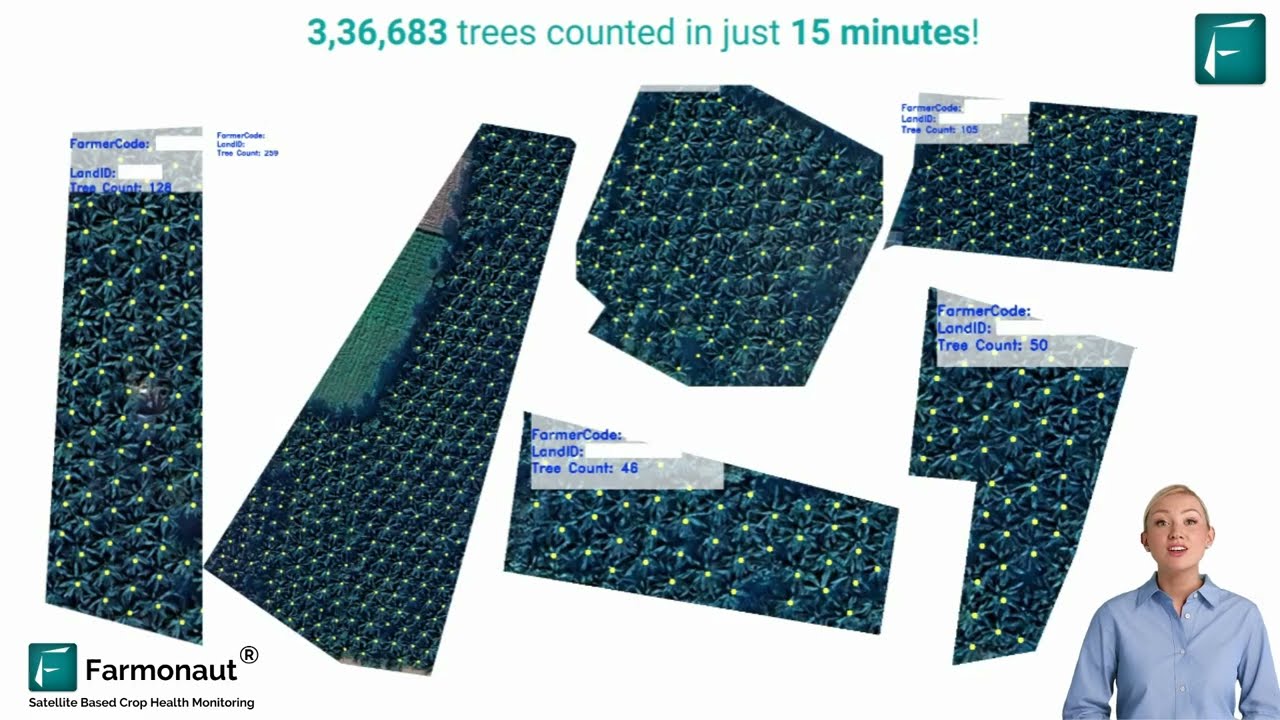
- Real-Time Field Monitoring: Our satellite NDVI imagery enables large-scale farm management, providing critical insights into both crop and tree health.
- Resource Optimization: Optimal water and nutrient management across agroforestry systems, supporting sustainable agriculture.
- Environmental Impact Tracking: Accurate carbon sequestration monitoring helps quantify agroforestry’s climate benefits.
- Blockchain-Based Traceability: Enable market access for Kenyan agroforestry products by ensuring transparency from farm to global shelf.
- Access to Financing: Banks & insurance providers use satellite verification from our Crop Loan & Insurance platform to reduce fraud and provide affordable credit to smallholders.
- Custom Advisory: Our Jeevn AI system delivers tailored guidance for nutrient and pest management in agroforestry settings, further reducing input costs and environmental hazards.
- Fleet Management: Fleet tracking tools optimize the transport of produce, timber, and seedlings, improving revenue and reducing operational costs for rural enterprises.

Future-Ready Technology for 2025 and Beyond
With Kenya’s agriculture sector under increasing pressure from climate change, the need for data-driven, environmentally sound farm management is more urgent than ever. With our platform for large-scale and smallholder farm operators, and robust developer satellite APIs, we empower stakeholders throughout Kenya’s food chain to build resilience and scale up sustainable agroforestry.

Challenges & The Way Forward: Strengthening Sustainability for 2025
Despite these transformative benefits, agroforestry adoption faces barriers in Kenya. Key challenges include:
- Limited awareness & training on modern and traditional agroforestry systems.
- Land tenure insecurity, discouraging long-term tree planting.
- Upfront investment costs, especially with perennial species.
- Inadequate extension services—knowledge transfer and technology outreach do not yet reach all rural areas.
- Pests and diseases for tree crops, often under-addressed.
- Market risks for lesser-known value-added tree products.
The Way Forward
- Scaling up training through government, NGOs, and digital extension platforms for farmers and youth groups.
- Securing land tenure to incentivize tree planting investments long-term.
- Supporting credit access for agroforestry establishment via satellite-based loan verification.
- Promoting public-private partnerships in seedling supply, processing, and export channels.
- Boosting digital solutions for monitoring, advisory, traceability, and climate risk management using platforms like ours and accessible APIs (developer docs).
Government & Policy Role
The Kenyan government’s support—through favorable policies, research, and market facilitation—is vital in scaling up the integration of agroforestry practices. Incentives for sustainable land management, seedling subsidies, and environmental monitoring frameworks will underpin a climate-resilient, socially inclusive agricultural sector.

Farmonaut Products & Services Relevant to Kenyan Agriculture
- Carbon Footprinting: Measure and reduce the carbon footprint across agricultural and agroforestry systems. This feature allows users to monitor carbon sequestration from tree planting activities, track emissions from field operations, and support sustainable certification.
- Traceability: Blockchain-based solutions certify the origins and movement of Kenyan agricultural and agroforestry products, enhancing transparency for domestic and global trade.
- Crop Loan and Insurance: Leverage satellite verification and AI-advice to streamline the process of securing credit and insurance, reducing fraud and ensuring faster payouts, critical to support resilience against climatic and market shocks.
- Fleet Management: Optimize logistics, produce transport, and monitoring across large farms and cooperative groups—enhancing operational efficiency.
- Large Scale Farm Management: Digital tools for monitoring health of crops and trees, vital in managing diversified and dispersed farming/agroforestry units.
- Crop Plantation & Forest Advisory: Our advisory services provide AI-based satellite guidance for optimizing agroforestry layouts, crop-rotation, and integrated nutrient/pest management.
Farmonaut Subscription Plans
We provide affordable and scalable subscription options for individual users, business enterprises, and government stakeholders in Kenya, designed to meet diverse agricultural and agroforestry monitoring needs across 2025 and beyond.
FAQ: Agriculture, Agroforestry, and Technology in Kenya
Q1: Why is agriculture so important for Kenya?
Agriculture is the mainstay of Kenya’s economy, employing over 75% of the rural population, contributing 33% to GDP, ensuring food security, and supporting export earnings. As population and climate risks increase, its role in resilience and sustainable development is more pronounced than ever.
Q2: What is agroforestry and why is it gaining popularity?
Agroforestry refers to integrating trees with crops and/or livestock on the same land. It boosts productivity, supports biodiversity, improves soil and water health, provides diversified income, and makes the whole farm system more climate resilient.
Q3: What types of trees are ideal for agroforestry in Kenya?
Common choices include Faidherbia albida (fertility), Grevillea robusta (timber, shade), Calliandra (fodder/pest control), and fruit trees like mango, citrus, and avocado.
Q4: What barriers exist for agroforestry adoption?
Barriers include limited farmer awareness and training, insecure land tenure, insufficient access to finance, upfront investment in seedlings, and weak connection to markets for tree-based products.
Q5: How does Farmonaut support Kenyan agriculture?
At Farmonaut, we provide satellite monitoring, AI-based advisory, blockchain traceability, fleet/resource management and carbon/environmental impact tracking services through user-friendly apps and APIs. This supports smarter, resilient, and sustainable decision-making for Kenyan farmers, cooperatives, and businesses.
Q6: How can I start using Farmonaut solutions in Kenya?
You can get started quickly using our Web App, Android App, or iOS App for satellite-based monitoring and advisory. Businesses and developers seeking integration can use our API and developer documentation.
Conclusion: Sustainable Growth for Kenya’s Future
The 20 importance of agriculture in Kenya, agroforestry practices in Kenya collectively underpin the nation’s journey toward economic empowerment, food sovereignty, and environmental sustainability. As we move toward 2025 and beyond, climate challenges, population growth, and land degradation require us to pursue transformative approaches—integrating trees, innovative technology, and diversified management practices.
By embracing modern agroforestry and digital solutions like those we deliver at Farmonaut, Kenyan stakeholders can ensure that agriculture remains not only the nation’s economic backbone but also its pillar of resilience, growth, and ecological stewardship for generations to come.
Start your journey towards more sustainable, productive, and climate-smart agriculture in Kenya today!
Discussion
Questions, corrections or field experience? Share them below. First-time comments are reviewed before they appear, and your email is never published.
No comments yet. Be the first to add a question or your experience.

 Agro La Gándara
 Global Agrifood
 Cazlv
Cazlv HIPSAC
 ZOL Zimbabwe
 Juligerm
 AdBio
AdBio MISE Maroc
 NWNS
NWNS Red August Group
 Farm Inc
 WeMe Global
 Agrotoken
 Blue BearX
 Insignito
 Croptimum
 DnCubed
 Field Capacity
 Indosistim Teknologi
 Licence holder · Niger · Gold
 Licence holder · Nigeria · Gold + lithium










