

Agribusiness in Namibia: 7 Powerful Trends Shaping 2026
Unlocking Sustainable, Climate-Smart, and Inclusive Agribusiness for Namibia’s Future
“By 2025, over 60% of Namibian agribusinesses are expected to adopt climate-smart farming practices for sustainability.”
“Women now represent 35% of Namibia’s agribusiness workforce, driving rural economic resilience and sustainable growth.”
Table of Contents
- Introduction: Agribusiness in Namibia Today
- Key Trends Shaping Namibian Agribusiness for 2026
- Key Trends in Namibian Agribusiness (2024–2026): Impact and Sustainability Focus
- 1. Surge in Climate-Smart Agriculture
- 2. Transitioning Farming Systems: Commercial, Mixed, and Smallholder Models
- 3. Women in Agribusiness: Driving Inclusive Growth
- 4. Expanding Market Access and Value Chains
- 5. Digitalization, Innovative Finance, and Risk Management
- 6. Rapid Rise in Value-Added Processing and Export Focus
- 7. Sustainable Water and Land Management for Resilience
- Our Role: Farmonaut’s Technological Contributions
- Get Started: Apps, APIs & Farmonaut Subscriptions
- Frequently Asked Questions (FAQs)
- Conclusion: Resilient, Inclusive, and Climate-Smart Agribusiness in Namibia
Introduction: Agribusiness in Namibia Today
Agribusiness in Namibia is increasingly recognized as a linchpin for national economic growth, food security, and environmental stewardship in both rural and urban contexts. The farming systems in Namibia are diverse—spanning commercial ranching and mixed smallholder production to dynamic cropping along key river basins. The importance of agriculture in Namibia goes beyond food production: it anchors rural livelihoods, sustains land and water resources, and drives employment across value chains.
Yet, Namibia’s agribusiness sector remains challenged by climate variability, ranging from erratic, low rainfall and high evapotranspiration to poor soils, as well as the complexities of land reform. These, combined with globalized markets, the imperative for climate-smart intensification, and the ongoing evolution of commercial farming in Namibia, shape both current outcomes and future opportunities.
Let’s explore seven powerful trends transforming Namibian farming systems, market chains, and rural development for a sustainable 2026—and how Farmonaut’s innovations can help realize the nation’s full potential.

Key Trends Shaping Namibian Agribusiness for 2026
Seven interlinked trends are shaping the evolution of agribusiness in Namibia through to 2026. These trends connect advances in policy, technology, gender equity, and environmental management. Before diving deep into each trend, here’s a high-level overview:
- Climate-smart agriculture becoming mainstream
- Flexibility and diversification in farming systems in Namibia
- New leadership and inclusion for women in agribusiness
- Market access and value-chain integration
- Uptake of digitalization, finance innovations, and risk tools
- Expansion of value-added processing and exports
- Sustained focus on water, soil, and land resource management
Key Trends in Namibian Agribusiness (2024–2026): Impact and Sustainability Focus
| Trend Name | Estimated Sector Impact | Sustainability Contribution | Affected Stakeholders | Example Initiatives/Practices in Namibia |
|---|---|---|---|---|
| Climate-Smart Agriculture | High | Reduces resource use, boosts climate resilience, stabilizes yields | Smallholders, commercial farmers, extension agents | Adoption of drought-tolerant crop varieties; water harvesting systems; rotational grazing |
| Transformation of Farming Systems | High | Diversifies risk, builds resilience, enables land-use optimization | Mixed, smallholder, and commercial farmers | Expansion of mixed farming in central & northern Namibia; intensified cattle and horticulture |
| Women’s Empowerment | Medium-High | Enhances productivity, improves equity, supports rural livelihoods | Women, youth, farmer organizations | Women-led cooperatives, targeted finance/training, inclusion in land governance |
| Market Access & Value Chains | High | Reduces rural poverty, increases returns, supports regional economies | Producers, agro-processors, exporters | Refrigerated transport, cold chains, market info platforms |
| Digitalization & Innovative Finance | Medium-High | Enables precision farming, improves access to finance, reduces risk | Financial institutions, farmers, service providers | Satellite crop monitoring, e-vouchers, blockchain traceability |
| Value-Added Processing & Exports | High | Reduces food loss, increases export potential, stimulates jobs | Processors, exporters, SMEs | Development of new game meat, dairy, and horticultural processing hubs |
| Sustainable Water & Land Management | High | Secures natural resources, enhances farm system resilience | Households, regional authorities, landholders | Irrigation expansion, soil health restoration, agroforestry in drier zones |
1. Surge in Climate-Smart Agriculture
Namibia’s unpredictable climate and resource constraints demand resilience. By 2025 and beyond, climate-smart agriculture is at the center of agribusiness in Namibia, fundamentally reshaping strategies for sustainable intensification and food security.
Why the Climate-Smart Shift?
- ✔ Erratic rainfall, often concentrated in narrow windows, makes crop planning risky
- ✔ High evapotranspiration rates and nutrient-poor soils restrict yield potential
- ✔ Climate variability drives the need for resilient, adaptive farming practices
- ✔ Drought-tolerant varieties and improved soil, grazing, and water management underpin productivity
The Namibian Ministry of Agriculture and international partners now invest heavily in climate-smart packages: drought-resistant maize, millet, sorghum, and legumes in the north; rotational grazing and bush thinning for rangelands; conservation agriculture and soil water harvesting.
What’s Powering This Trend?
- 🌱 Advanced input supply from private companies, government, and NGOs
- 🌱 Community-based pastoral resilience initiatives for small cattle, sheep, and goats in drier swaths
- 🌱 Agroforestry and conservation tillage adoption in targeted regions to sustain farm incomes and stabilize the land
- 🌱 Improved veterinary services, animal health, and livestock management to stabilize beef and game meat production
Namibia’s Climate-Smart Priorities for 2026:
- ✔ Expansion of irrigation near Zambezi and Orange River basins—stabilizing volatile yields
- ✔ Soil health restoration (organic amendments, reduced tillage)
- ✔ Resilient crop-livestock systems: rotating grazing to prevent overuse, integrating herding/cropping/agroforestry
- ✔ Climate-smart training and extension: empowering farmers, especially women-led smallholders
2. Transitioning Farming Systems: Commercial, Mixed, and Smallholder Models
Farming systems in Namibia are experiencing a profound transformation. Traditionally, commercial farming in Namibia dominated in central regions with cattle, dairy, and game. Simultaneously, mixed and smallholder production models underpin drier northern and communal areas—anchoring rural food security and employment.
How Are Systems Evolving?
- 📊 Commercial ranching: Largest sector contributor, often concentrated in central Namibia (cattle, sheep, game) with high-tech management, fenced pastures, and export orientation.
- 📈 Mixed farming: Combines livestock, cropping, occasional horticulture—especially among smallholders in northern regions near Zambezi, Omusati, and Kavango.
- ⚡ Expanding horticulture: Along irrigation schemes by rivers—carrots, tomatoes, onions, and fruits are increasing in economic importance for both domestic and export markets.
- 🌾 Staple crop production: Maize, millet, sorghum, legumes—forming the bedrock of rural household nutrition.

Benefits of Diversified Approaches
- ✔ Spreading risk: Multi-enterprise systems (livestock, cropping, agroforestry) reduce vulnerability to drought/flood cycles.
- ✔ Optimizing use of water and soils—making most of scarce resources.
- ✔ Extension support increasingly empowers mixed system farmers, especially women smallholders, with new information and organizational leverage.
What Still Limits Farming Systems?
- ⚠ Constraints: Low, erratic rainfall and high evapotranspiration rates are still widespread nationally.
- ⚠ Poor soils affect yields and increase dependence on inputs and services (veterinary, extension).
- ⚠ Access to finance and markets is limited outside of main urban corridors—curbing rural development and sector growth.
Visual List: Key Elements of Farming Systems in Namibia
- 🐄 Commercial Cattle/Game Ranching (central regions: Otjozondjupa, Omaheke, Khomas)
- 🐑 Sheep/Goats for Drier Areas (south, west: Hardap, //Karas)
- 🌽 Cropping Focus (north: Omusati, Zambezi, Oshana, Kavango, Ohangwena)
- 🥕 Irrigated Horticulture (Zambezi/Orange River)
- 🌳 Agroforestry and Pasture Management (transition/savannah)
- 🏠 Mixed Smallholder Systems (peri-urban and communal)
3. Women in Agribusiness: Driving Inclusive Growth
The spotlight on women in agribusiness has never been brighter. By 2025, women are expected to constitute at least 35% of the workforce, powering Namibia’s agribusiness transformation and rural development. Their participation stretches from seed selection and planting, through harvesting and post-harvest management, to processing, packaging, and market linkage.
Major Roles and Contributions
- ✔ Seed selection, planting, and crop management—often the primary responsibility in smallholder households
- ✔ Post-harvest handling—prevents losses and increases sector value
- ✔ Local marketing, small-scale processing, and business leadership within cooperatives
- ✔ Game meat, horticulture, and dairy chains—increasingly managed by women-led enterprises

Challenges & Opportunities for Women
- 📊 Land and finance access gaps: Still a major issue, but targeted microfinance and land tenure reforms are improving.
- 📊 Training in climate-smart and digital practices: Organizations expand extension to reach women, especially in northern and central communal regions.
- 📊 Cooperative and value-chain integration: Greater support for women-led groups in processing maize, millet, sorghum, and dairy products.
Visual List: Areas Where Women Lead in Namibia’s Agribusiness
- 👩🌾 Smallholder crop and livestock management
- 👩🔬 Processing hubs for staples and horticulture
- 👩💼 Farmer organizations and cooperatives
- 👩 sienience:💧Water-user associations
- 👩🔧 Market linkage initiatives
4. Expanding Market Access and Value Chains
Access to working markets and robust value chains remains central for agribusiness in Namibia—transforming the sector from primary production to higher-value, diversified, and resilient income streams. The expansion of market access involves connecting rural producers to regional, national, and export opportunities, especially for beef, game meat, horticulture, and value-added staples.
Why is Market Access Transformative?
- ✔ Improved income stability and ability to invest in productive assets
- ✔ Increased bargaining power for smallholders and women-led enterprises through farmer organizations
- ✔ Enables local value addition (processing near farm gates)—reducing post-harvest losses and transport costs
- ✔ Promotes regional economic anchors, stimulating employment and rural development
Market Access Drivers for 2026
- 📈 Refrigerated transport and expanded cold chains for beef, game meat, and dairy—crucial in Namibia’s hot climate
- 📈 Agro-processing facilities located near major production basins and irrigation schemes
- 📈 Market information platforms (including mobile and web) for price risk mitigation
- 📈 Compliance with export standards (phytosanitary, veterinary, traceability)
Traceability is vital for compliance with export standards:
Discover Farmonaut’s Blockchain Product Traceability for verifiable supply chains—building consumer trust and enabling entry into premium markets in the region and internationally.
5. Digitalization, Innovative Finance, and Risk Management
Digital tools, real-time data, and innovative finance are accelerating Namibia’s agribusiness transformation. Smallholder and commercial systems alike are leveraging everything from weather forecasts and digital extension to microfinance and performance-based lending to manage risk, optimize inputs, and stabilize livelihoods.
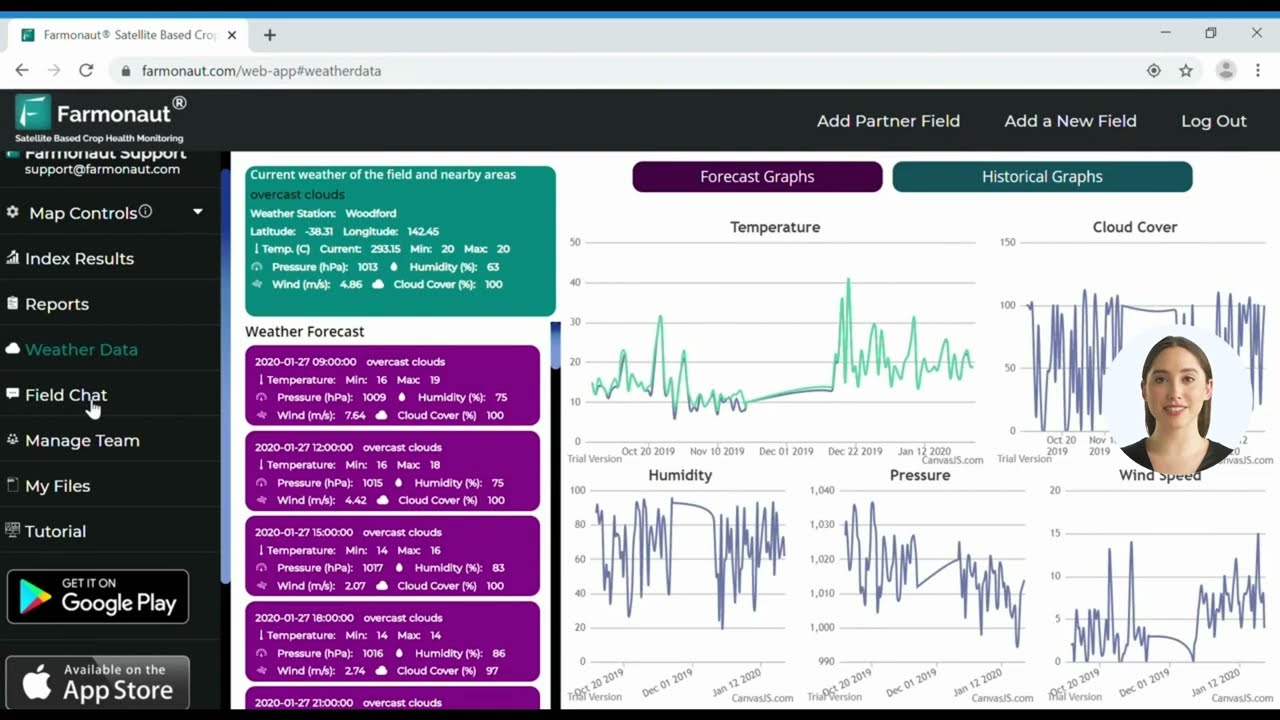
- 💡 Remote sensing and satellite crop monitoring have become core for yield estimation, water-use planning, and early drought warning.
- 💡 Digital finance platforms: Access to micro-loans, mobile payments, and e-vouchers is expanding, reducing barriers for women and small-scale operators.
- 💡 Blockchain-enabled crop and livestock insurance minimizes fraud and facilitates credit for expansion and risk mitigation.
- 💡 Real-time market, weather, and extension information empowers smarter decision-making at both communal and commercial levels.
Innovative Finance & Risk Trends:
- ✔ Microfinance and input-voucher programs for remote regions, with gender inclusivity focus
- ✔ Performance-based lending—credit linked to environmental or production benchmarks
- ✔ Collateral-free insurance—satellite and blockchain-backed
- ✔ Data-driven extension services using SMS, web apps, and AI-enabled platforms
Lowering risk and improving financing is possible with Farmonaut’s:
Crop Loan and Insurance Verification Service—trusted by financial institutions and input providers for accurate, real-time and cost-effective lending decisions.
6. Rapid Rise in Value-Added Processing and Export Focus
The next frontier for agribusiness in Namibia is in value addition: transforming primary agricultural products into branded goods for both domestic and export markets. This shift—already visible in meat (beef, game), dairy, horticulture, and cereals—multiples employment and sector GDP, reduces food loss, and brings rural communities into higher income brackets.
Key Value Addition Hotspots
- ✅ Agro-processing hubs in northern and central corridors for maize, millet, legumes, and fruit/vegetable puree
- ✅ Game meat and beef processing facilities—complying with EU and regional safety/traceability standards
- ✅ Specialty dairy production—cheese, butter, and yogurt with regional branding
- ✅ Cold chain management for horticultural exports along the Orange and Zambezi basins
Export-Driven Trends:
- 🌍 Game meat exports: Namibia is Southern Africa’s regional leader in game meat, leveraging strict veterinary controls and traceable chains.
- 🌍 Processed foods: Surplus produce in good years is processed and exported, increasing farmgate prices for smallholders and commercial outgrowers.
- 🌍 Premium market entry: Meeting international quality and sustainability standards through blockchain-based traceability and enhanced farmer organizations.
Managing large, multi-enterprise farms and value chains?
Explore Farmonaut’s Large Scale Farm Management Platform for mapped, satellite-powered oversight—driving productivity, resource optimization, and compliance.
7. Sustainable Water and Land Management for Resilience
Underlying all sectoral advances in Namibia is the critical need for sustainable management of water and land. This is non-negotiable: persistent droughts, poor soils, and erratic rainfall continue as existential threats, particularly in drier southern and highland regions.
How Are Farmers and Stakeholders Responding?
- ✅ Expanding irrigation networks along the Zambezi and Orange Rivers—boosting the resilience and yield stability of cropping zones
- ✅ Soil conservation practices: cover cropping, reduced tillage, organic amendments in large swaths
- ✅ Catchment management and water harvesting—building resilience in communal & smallholder areas
- ✅ Pasture rehabilitation, rotational grazing, and bush management to sustain livestock productivity
Measuring and improving environmental impact?
View Farmonaut’s Carbon Footprinting Solution—for farm-level to regional tracking of resource use, emissions, and climate compliance.
Bullet Points: Benefits of Sustainable Management
- ✔ Reduced yield volatility (especially rainfall-dependent systems)
- ✔ Enhanced water use efficiency—critical in Namibia’s semi-arid climate
- ✔ Long-term soil fertility and land value security
- ✔ Integrated approaches enabling rural livelihoods and biodiversity
- ✔ Resilience to climate shocks and futureproofed agribusinesses
Seeking species and practice advice for local conditions?
Our Crop Plantation & Forest Advisory App delivers region-adapted, AI-driven guidance for optimizing production in Namibia’s landscapes.
Our Role: Farmonaut’s Technological Contributions
At Farmonaut, we harness the power of satellite and AI-driven solutions to strengthen every major trend in Namibian agribusiness. Our tools are designed to be accessible, scalable, and tailored to local realities—empowering individual farmers, commercial operators, cooperatives, businesses, and government agencies throughout Namibia.
Key Benefits You Gain with Farmonaut
- ✔ Satellite crop, land, and resource monitoring for real-time, actionable insights
- ✔ AI-based advisory systems (Jeevn) providing region-specific, climate-smart recommendations
- ✔ Blockchain traceability—bolstering compliance for both domestic and export-focused market chains
- ✔ Environmental impact tracking (carbon, water) to meet sustainability targets and investor expectations
- ✔ Fleet and resource management for cost-effective logistics and machinery oversight
- ✔ APIs and developer tools for seamless integration with banks, insurance, and ERP platforms
- 📲 Mobile and web access—optimized for farmers and stakeholders on any device
- 🔒 Data-driven decisions—enabling both strategy and compliance
- ⚙️ Subscription model—scales with your operational needs
- ⏳ Time-saving automation of monitoring and reporting tasks
- 🌍 Regional customization—all insights fully localized for Namibian context
Farmonaut Apps & Services for Namibia:



Developers & Institutions:
- ⭐ Integrate satellite and weather data directly via Farmonaut API: https://sat.farmonaut.com/api
- ⭐ API Documentation available: Farmonaut API Developer Docs
Farmonaut Subscription Plans
Get Started: Apps, APIs & Farmonaut Subscriptions
- Ready to monitor your crops anywhere in Namibia? Try our Web App or download our Android or iOS app for instant, satellite-driven insights.
- Developers & agribusiness teams: Get direct API access at Farmonaut Satellite API
- Institutional and commercial users: Learn about large scale management tools or fleet/resource solutions to boost operational efficiency
- Traceability, carbon, and sustainability: Track supply chain and carbon footprint directly with carbon modules and blockchain traceability features
Frequently Asked Questions (FAQs)
-
What are the biggest opportunities for agribusiness in Namibia in 2025 and beyond?
Expanding irrigation and horticulture, developing value-added processing (meat, dairy, vegetables), embracing climate-smart farming, and integrating women and smallholders are leading growth areas supported by digital data, resilient finance, and enhanced market chains.
-
How do Namibian farmers manage risk in a climate-affected context?
Through diversification (mixed farming, climate-resilient crops), digital early-warning/monitoring systems, crop and livestock insurance, market information access, and robust farmer organization participation—supported increasingly by satellite, AI, and blockchain technologies.
-
Why is women’s empowerment in agribusiness so important in Namibia?
Women drive productivity, household food/nutrition security, and business leadership across the value chain. Targeted investments in finance, training, land access, and cooperative support unlock transformative impacts at both household and sector levels.
-
How can Farmonaut assist Namibian agribusinesses specifically?
We provide cost-effective, region-specific satellite monitoring, AI-based advice, blockchain traceability, and environmental impact tools—via apps, web, APIs, and dashboards—ideal for smallholders, commercial farms, agribusinesses, organizations, and public agencies.
-
What policy issues are critical for Namibia’s agribusiness by 2026?
Ensuring inclusive land reform, scaling climate-smart and digital extension services, supporting financing/insurance for underserved producers, harmonizing export standards, and prioritizing sustainable water and land management underpin Namibia’s future-ready agribusiness.
Conclusion: Resilient, Inclusive, and Climate-Smart Agribusiness in Namibia
As Namibia moves towards 2026, agribusiness will remain the linchpin of national rural and economic vibrancy—shaped by resilient farming systems, inclusive value chains, and data-driven, climate-smart adaptation. The trends we highlighted—mainstreamed climate action, empowered women, digitalization, robust water/land management, market access, and value addition—define a sector capable of withstanding shocks while delivering prosperity and environmental sustainability for all communities.
Namibian farm and agribusiness leaders, whether commercial ranchers in the central belt, smallholders in the northern regions, women-led cooperatives near key river basins, or large-scale processors, are invited to leverage these trends, new tools, and partnerships for a secure and sustainable future.
At Farmonaut, we are dedicated to supporting this transformation by providing affordable, advanced satellite, AI, blockchain, and analytics solutions tailored for all Namibian stakeholders. Let’s build a thriving, equitable, and climate-resilient agribusiness sector—together.
Discussion
Questions, corrections or field experience? Share them below. First-time comments are reviewed before they appear, and your email is never published.
No comments yet. Be the first to add a question or your experience.

 Tres Valles
 LACOS Geoinformation
 Pulsar Supernova
 Magrifly
 LatConnect 60
 Disease Free Life
 WebsEdge
 Blickwinkel
 Agricultural Credit Policy Council
 MCSOD
MCSOD Marei Nursery
 eKGIS
eKGIS Mostas Tech
 Andex
Andex FCF India
 Unifrutti Gulf
 Deluxe Conseil
 WICO
WICO
 Licence holder · Niger · Gold
 Licence holder · Nigeria · Gold + lithium










