

Agriculture Fish Farming India: Top 10 Innovations for 2026
“By 2026, India’s aquaculture output is projected to reach 18 million tonnes using advanced technologies and scientific breeding.”
Summary: Advancements and Challenges in Agriculture and Fish Farming in India (2025–2026)
As India enters 2026, agriculture fish farming and broader agriculture and farming practices remain vital pillars of the nation’s economy, underscoring food security and supporting rural livelihoods. These sectors are deeply interwoven with both traditional and modern innovations, adapting rapidly amid the evolving challenges of climate change, resource scarcity, and population growth.
This article delves into the current landscape of agriculture fish farming india and aquatic sectors for 2025 and beyond—highlighting emerging trends, digital tools, and sustainable practices that are transforming the future.
You’ll discover the top 10 innovations redefining Indian aquaculture, how digital and satellite technology supports productivity, how integrated systems create resilience, and what farmers and stakeholders must know to thrive in 2026.
The Current Landscape: Agriculture & Fish Farming India 2026
Agriculture in India is the backbone of the rural economy, engaging more than 50% of the nation’s workforce and contributing significantly to GDP. The sector is broad, encompassing cereal grains, pulses, oilseeds, cotton, spices, fruits, and vegetables. However, the landscape is rapidly shifting:
- Consumer demand is aligning with organic and sustainably produced food.
- Climatic changes and resource scarcity are necessitating smarter cultivation and efficient resource management systems.
- International trade and food safety requirements are reshaping production and post-harvest practices.
At the same time, the fish farming sector in India is rapidly expanding. India ranks second globally in fish production, with aquaculture accounting for nearly 60% of total output. States like West Bengal, Andhra Pradesh, Odisha, Assam, Kerala, and Tamil Nadu remain leaders in both inland freshwater aquaculture and marine fisheries.
Modern agriculture and aquaculture practices, from biofloc technology to integrated rice-fish cultivation, digital sensors, mobile farm management apps, AI-driven analytics, and sustainable resource management are at the forefront of this transformation—all key to witnessing enhanced yields, environmental protection, and climate resilience.
Let’s explore these transformative changes in detail and their anticipated impact for 2026 and beyond.

Top 10 Innovations Transforming Agriculture Fish Farming India by 2026
“Digital fish farming tools will boost India’s rural aquaculture yield by an estimated 35% between 2025 and 2026.”
In 2026, a combination of digital technologies, biological innovations, and integrated systems are revolutionizing agriculture fish farming india. These advancements are enabling better decision-making for farmers, optimizing inputs, increasing yields, reducing environmental impacts, and enhancing sustainability across the country.
Innovation Focus Areas
- Smart Sensors & Digital Monitoring – enabling real-time health tracking for both soils and aquatic environments.
- Biofloc Aquaculture Systems – increasing nutrient recycling, reducing feed costs, and minimizing water pollution.
- Satellite-Based Farm Management Tools – supporting the entire lifecycle of crops, fisheries, and livestock management.
- Blockchain for Traceability – ensuring food quality, safety, and market trust.
- AI-Driven Pest and Disease Prediction – leveraging big data for early intervention and yield protection.
- High-Efficiency Breeding and Scientific Stock Management – boosting productivity with selectively bred species.
- Integrated Rice-Fish and Fish-Livestock Systems – maximizing resource use and income.
- Renewable Energy in Aquaculture & Irrigation – reducing carbon footprint and operational costs.
- Automated Feeding, Drones & Robotics – optimizing feed, labor and monitoring.
- Sustainable Water & Waste Management Solutions – recycling, reducing environmental hazards, increasing sustainability.
Each of these innovations is now seeing rapid adoption in Indian agriculture and fish farming sectors, unlocking opportunities for diverse stakeholders. Let’s see how they compare side by side.
Innovations Table: Agriculture Fish Farming India (2026)
| Innovation Name | Technology Involved | Estimated 2026 Adoption (%) | Main Benefit | Example/Application |
|---|---|---|---|---|
| Smart Sensors & Digital Monitoring | IoT, water/soil sensors, cloud apps | 60% | Optimize real-time health and productivity monitoring | Farmers receive alerts on mobile for water/soil issues in ponds and fields |
| Biofloc Aquaculture Systems | Bacterial/biological recycling tanks | 45% | Reduce feed cost, enhance fish density, minimize pollution | Carp and tilapia farms in Andhra Pradesh use biofloc to increase stocking rates |
| Satellite-Based Farm Management | Multispectral imagery, analytics, AI, mobile/web platforms | 35% | Precision guidance, spatial management, decision support | Farmonaut’s satellite tools for monitoring crop and pond health |
| Blockchain Traceability | Distributed ledger, QR, track & trace apps | 25% | Trust, quality assurance, better market prices |
Farmonaut traceability tools to authenticate farm to fork (See Traceability Solution) |
| AI Pest & Disease Prediction | AI/ML, big data, mobile dashboards | 55% | Early action, higher yields, reduced pesticide use | AI-driven advisories for disease in catfish ponds or rice fields |
| High-Efficiency Breeding | Genetics, scientific stock selection | 40% | Faster growth, disease resistance | Genetically improved carps and indigenous strains |
| Integrated Farming Systems | Agri-aqua-livestock combinations | 33% | Diversified income, closed-loop nutrient cycles | Rice-fish or fish-duck/silkworm integration in Assam, Bengal |
| Renewable Energy Adoption | Solar pumps, biogas, microgrids | 20% | Cost savings, climate sustainability | Solar aerators in fish ponds, solar irrigation pumps in Telangana |
| Automated Feeding, Drones & Robotics | Smart feeders, UAVs, robotics | 12% | Precision feeding, labor reduction, 24/7 monitoring | Drones for crop spraying, robots in shrimp aquaculture |
| Sustainable Water & Waste Management | Recirculating systems, effluent treatment | 30% | Water saving, pollution reduction | Recirculating aquaculture in urban Maharashtra, effluent ponds in Punjab |

Digital Transformation: Smart Tools Empowering Indian Agriculture Fish Farming (2026)
Digital technology and satellite-driven tools now underpin almost every aspect of agriculture fish farming india. Their adoption is not just a trend but a crucial enabler for scaling up, optimizing resource utilization, and sustaining growth.
Key Digital Advancements:
- IoT Sensors: Monitor water quality, temperature, oxygen levels in real time in fish ponds and tanks.
- Mobile and Cloud Apps: Record farm operations, receive AI advisories, and execute sales and market linkages remotely. These tools eliminate distances between rural farmers and urban/tier-I markets.
- Satellite Imagery & Analytics: Platforms like Farmonaut provide crop health, pest/disease outbreak alerts, soil moisture status, and irrigation needs via NDVI and other remote sensing indices.
- Blockchain Authentication: Authenticate production, track produce from pond/field to retail shelf—building consumer trust in India’s exports.
- AI-Assisted Decision Support: Leverage big data analytics for production planning, pest forecasting, and market price optimization.
For example, our Farmonaut platform delivers real-time satellite monitoring and AI-based advisory systems (Jeevn AI) via user-friendly apps and APIs. This empowers Indian farmers to precisely optimize soil fertility, moisture, nutritional plans for crops and aquaculture—a leap towards reducing costs and enhancing sustainability.

Farmonaut additionally supports:
- Carbon footprint monitoring for agriculture and aquaculture operations, helping farms align with evolving sustainability and export requirements.
- Fleet management tools to optimize logistics, track agricultural or aqua-fleets, and reduce operational costs on large rural estates and fishery clusters.
Integrated Agriculture-Fish Farming Systems: A Sustainable Future
Integrated and circular farming systems are rapidly growing trends across rural India, fundamentally changing how we approach agriculture fish farming. In these integrated systems:
- Fish and crops are co-cultivated. For instance, in rice-fish systems, paddy fields are seeded with carp or catla—enhancing nutrient cycling, biodiversity, and farm incomes.
- Aquaculture wastes serve as fertilizers for agriculture. Fish excreta provide nutrient-rich water, reducing chemical fertilizer use and improving soil health.
- Agro-residues (like rice bran or wheat bran) are converted into fish feed, creating a closed-loop system lowering external input costs.
- Integrated fish-livestock systems (fish-duck, fish-goat) multiply resource efficiency and rural employment.
The synergy offered by integrated agriculture and farming models alone can increase per-farm profitability by 30–50% and provide stronger resilience against market or weather shocks.

Climate-Smart, Sustainable Practices in Indian Agriculture Fish Farming
Climate change, water scarcity, soil degradation, and biodiversity loss are immense challenges for agriculture farming india. To address these, farmers and fishers are adopting sustainable, climate-smart practices:
Key Sustainable Solutions:
- Climate-resilient crop & fish varieties: Breeding robust, fast-maturing, disease-tolerant genotypes for rice, pulses, carps, and shrimp.
- Agroforestry and tree-based farming: Integrating trees with annual crops and aquaculture to enhance soil biodiversity, fertility, and microclimatic resilience.
- Precision water & nutrient management: Using satellite analytics to guide irrigation, fertigation, and soil amendment schedules.
- Organic & regenerative practices: Promoting composting, minimal tillage, native inputs, and cover crops reduces chemical dependency and enhances carbon capture.
- Smart pest management: AI-driven forecasts and eco-friendly pest control strategies reduce pesticide use and keep ecosystems healthy.
Digital solutions, such as Farmonaut’s crop advisory modules (see our crop & plantation forest advisory), help stakeholders embrace regenerative, sustainable practices that build long-term resilience and profitability.
Government initiatives such as the PM Matsya Sampada Yojana, increased access to satellite-based crop loans and insurance, and stricter pollution controls are pushing sustainable aquaculture and agriculture even further into the mainstream.
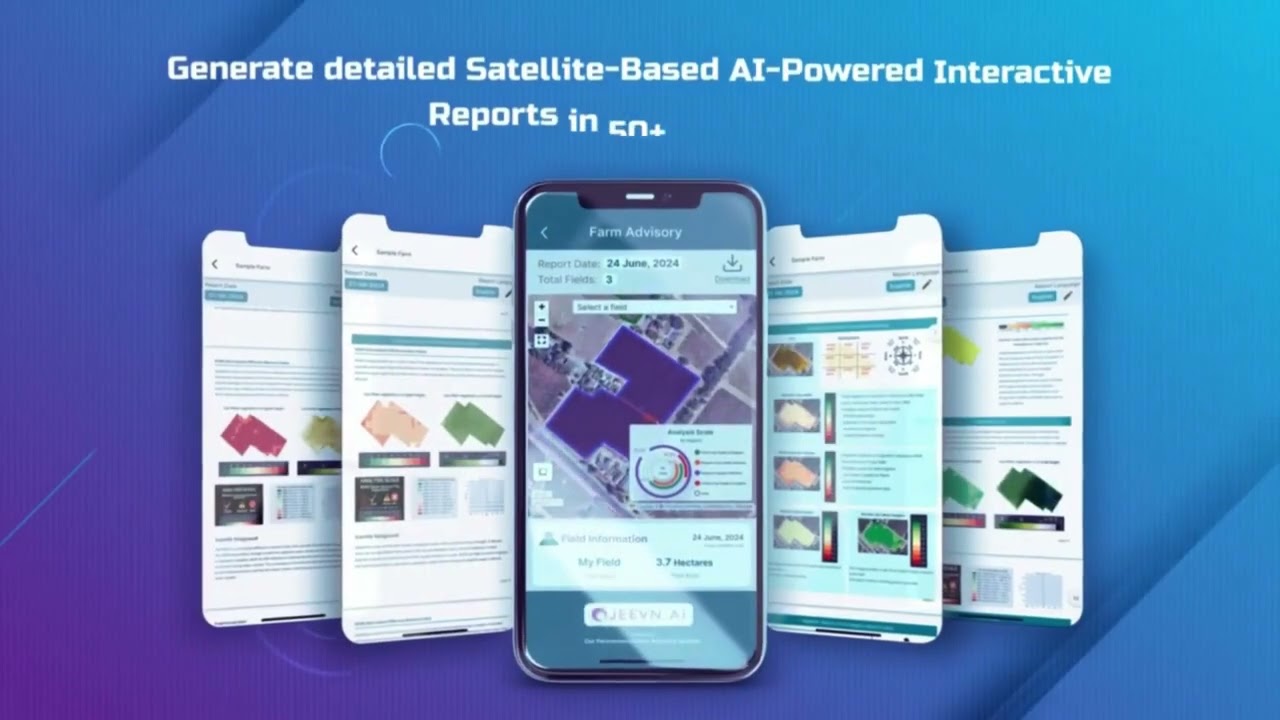
How Satellite Technology (Farmonaut) Empowers Modern Agriculture Fish Farming
Satellite technology is reimagining how Indian agriculture and fish farming operate—empowering farmers, businesses, and governments with:
- Real-time, remote insights into crop health, soil status, and water bodies, ensuring timely interventions that protect yields and reduce resource use.
- Environmental impact tracking—from carbon footprints to water and land use footprints; see our carbon footprint product page.
- AI-based advisory systems (Jeevn AI): Custom strategies for optimal crop and fish pond management delivered to user-friendly apps.
- Blockchain-enabled supply chain traceability—protecting both export value and domestic market trust (read more about product traceability and blockchains).
- Fleet and resource management: Planning and optimizing fleets, reducing costs, and enabling scale for both aquaculture and agriculture enterprises (see our large scale farm management solution).
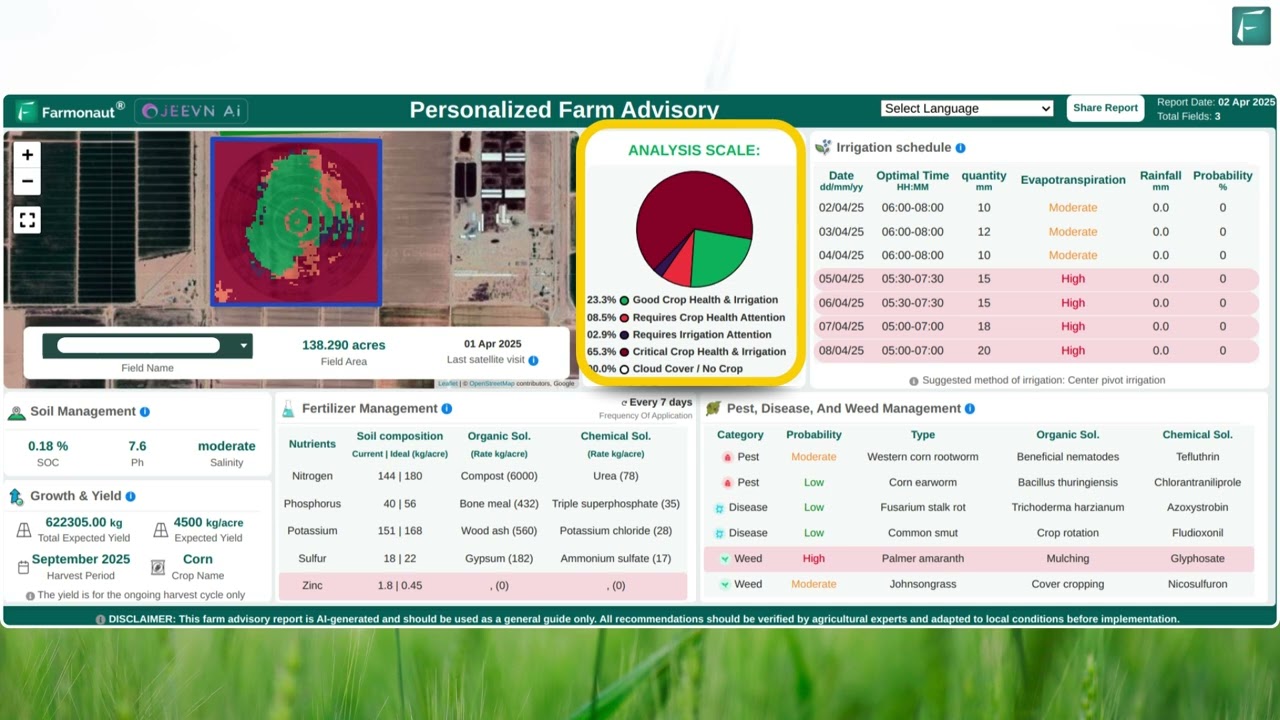
By democratizing access to satellite imagery, AI, and environmental advisories, we at Farmonaut are ensuring that both smallholders and large agribusinesses make data-driven decisions that reduce environmental impact, build sustainability, and enhance food security—all in alignment with India’s 2026 rural transformation agenda.
Farmonaut App, API & Key Solutions
Ready to leverage satellite-driven agriculture, aquaculture, and sustainability tools? Explore our key Farmonaut services below!



- Farmonaut API – Integrate satellite agriculture, aquaculture, and sustainability insights into your own digital system or app.
- API Developer Docs – Comprehensive integration guide for developers.
Farmonaut Flexible Subscription Plans
Frequently Asked Questions: Agriculture Fish Farming India (2026)
Q1: What is the main difference between traditional and modern fish farming in India?
Modern fish farming in India relies on scientific, data-driven tools like biofloc, satellite monitoring, and AI advisories to optimize feed, water, and yield—while traditional systems often rely on intuition and basic methods, resulting in lower productivity and increased environmental impact.
Q2: How do digital tools improve crop and aquaculture yields?
Digital tools such as IoT sensors, satellite imagery platforms (like Farmonaut), and mobile apps provide real-time data on soil health, water quality, pest outbreaks, and optimal input schedules. These insights allow farmers to intervene quickly and reduce unnecessary costs—leading to higher yields and better resource use.
Q3: What is biofloc technology, and why does it matter?
Biofloc technology uses beneficial bacteria to recycle waste into nutrients within fish ponds—allowing for higher stocking densities and reducing the cost and need for external feed. This method increases yield and minimizes environmental impact, making it a critical innovation for 2026.
Q4: How does integrated farming benefit rural communities in India?
Integrated farming systems combine aquaculture, crop cultivation, and sometimes livestock, enabling resources to be reused efficiently across the farm. This diversifies farmer income, improves soil/pond health, and increases overall farm resilience—especially in rural areas where risk diversification is key.
Q5: How is climate change being addressed in agriculture fish farming india?
Climate-resilient varieties, precision agriculture via digital technology, water-saving practices, and sustainable waste management are at the core of India’s adaptation strategies. These innovations help maintain productivity even in the face of erratic rainfall, rising heat, and changing pest patterns.
Conclusion: A Future-Ready Rural India, Supported by Innovation in Agriculture & Aquaculture
As India strides forward to 2026, agriculture fish farming will remain critical pillars of the nation’s food security, GDP, and rural prosperity. From precision farming powered by digital innovation to sustainable aquaculture with biofloc and integrated systems, India’s farming landscape is witnessing transformative and deeply interwoven changes.
The synergy between agriculture and fish farming in India will define future resilience to climate and market shocks—amplifying farmer incomes, reducing environmental pressure, and meeting growing protein demand.
- Emerging technologies—including IoT sensors, satellite intelligence, and AI—are no longer optional but essential for rural transformation.
- Integrated farming systems and climate-smart practices are now mainstream, turning sustainability into a competitive advantage for Indian producers.
- Challenges remain—fragmented land, infrastructure gaps, financing, and need for skill development—but are increasingly addressed by targeted policy and private innovations.
As we look forward, embracing digital, sustainable innovations ensures India’s agriculture and aquaculture sectors remain not just the backbone but the robust future of a food-secure, economically vibrant nation.
Explore, adopt, and thrive—integrating technology, sustainability, and tradition for India’s next rural revolution in agriculture fish farming.

 Lunar Edge IT
 FieldZero
 Indico Company
 Kubota
 FFBS
FFBS Jontra
 Kalustyan
 Tucor
Tucor Geno
Geno Hayleys Agriculture
 Linx Agritech
 Adinet
 Save Your Soils
