

Agriculture Managed IT Services India: 2025 Blueprint
Agriculture managed IT services in India are the operational backbone of modern farming in 2025, uniting IoT sensors, AI-driven agronomy, edge/cloud computing, satellite imagery, precision irrigation, forestry services, and interoperable platforms into turnkey, managed solutions. This 2025 blueprint explains how managed services integrate weather, soil, crop, and machinery data to enable precision, resilience, and market linkages for farmers, cooperatives, agribusinesses, and forest managers across India.
Meta summary: Agriculture managed IT services now combine farm IoT, AI agronomy, edge/cloud, and satellite analytics to deliver measurable yield optimization, risk reduction, and sustainability reporting for India.
URL hint: /agriculture-managed-it-services-india-2025-blueprint
“India’s 2025 edge–cloud stacks slash agronomy latency from 20 minutes to 90 seconds across managed farm networks.”
Why 2025 Is the Inflection Point for Agriculture Managed IT Services India
In 2025, agriculture managed IT services have become the backbone of modern farming in India, aligning digital infrastructure with on-ground agronomy. Rural 4G/5G build-out, low-power wide-area networks (LoRa/LPWAN), and affordable edge devices finally bridge connectivity gaps that long separated farms from advanced analytics. At the same time, interoperable platforms and API-first models connect farm data—weather, soil, crop, machinery—to AI services that deliver timely, localized decisions.
- Operational precision and resilience: Not only do managed services reduce input variability through targeted application, they strengthen resilience via weather/pest forecasting and alerts.
- Market linkages and reporting: Buyers and regulators increasingly require verifiable traceability and sustainability metrics. Managed solutions standardize data capture and reporting.
- Economics of scale: Delivered at scale and bundled through cooperatives and FPOs, services lower per-acre costs for smallholder inclusion within emerging digital ecosystems.
India’s indian agriculture service landscape now integrates agricultural land services, agriculture support services, and forestry services into cohesive managed offerings. Providers combine IoT hardware, edge computing, cloud analytics, satellite imagery, and AI agronomy into turnkey packages tailored to regions, crops, and cooperatives.

We at Farmonaut operate as a satellite technology company offering satellite-based monitoring, AI advisory, blockchain traceability, and resource management via Android, iOS, web, and API. We focus on making satellite-driven insights affordable and accessible across agriculture and allied sectors. While many providers manage on-field IoT devices and irrigation controls, we complement such stacks with satellite analytics, AI-powered insights, and secure data exchanges to help deliver measurable outcomes at farm and landscape levels.
Explore our APIs: Farmonaut API and Developer Docs for integrating weather, vegetation indices, and advisory into your FMS or custom platform.
Core Offerings and Architectures for Agriculture Managed IT Services
Comprehensive managed services include an integrated Farm Management System (FMS), satellite and drone analytics, precision irrigation and fertigation, pest/disease AI, and fleet/asset control. These systems integrate multiple data streams to enable timely interventions and resource optimization.
1) Farm Management Systems (FMS)
- Data integration: Weather forecasts, soil moisture, crop growth stages, machinery telemetry, and input logs converge in a single pane.
- Decision support: Variable-rate application recommendations for seed, water, and nutrients; timely operations scheduling.
- Compliance and reporting: Traceable records for markets and regulators; sustainability audit support.

2) Remote Sensing Analytics: Satellite and Drone Imagery
- Health and biomass: Vegetation indices detect health anomalies and biomass trends across zones.
- Water stress mapping: NDWI-based workflows track water stress to guide irrigation planning and control.
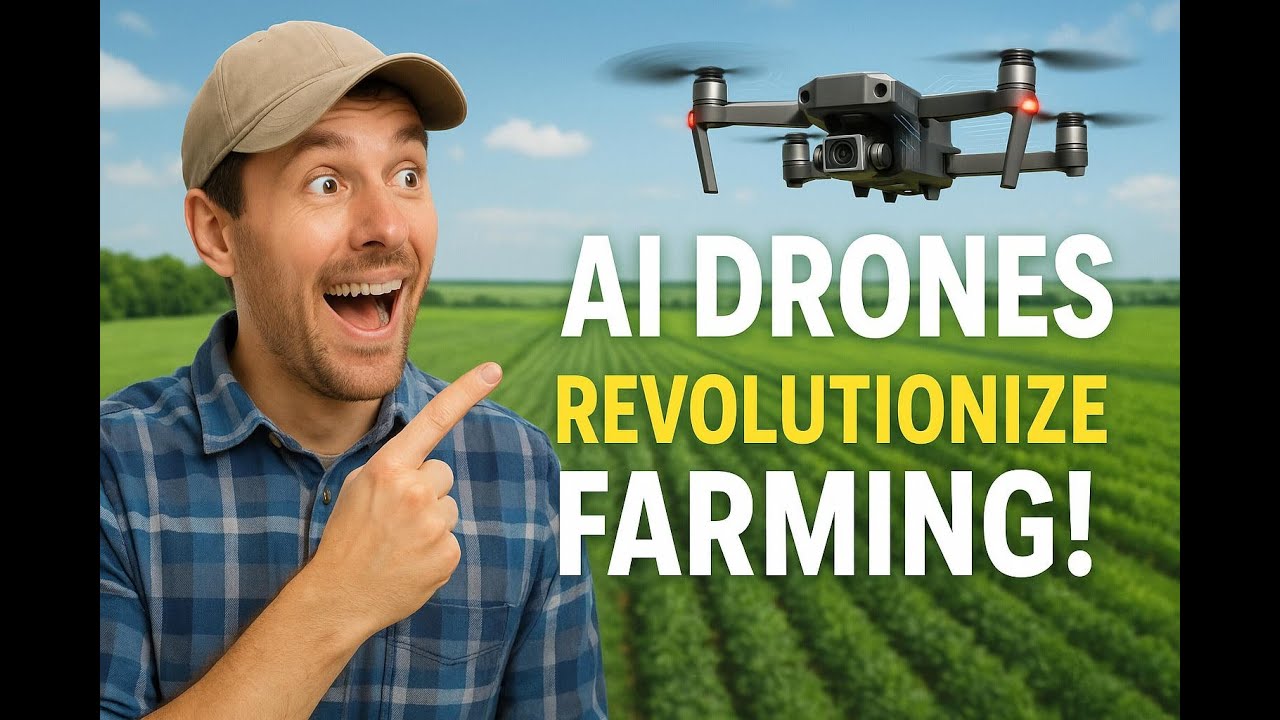
- Drone complements: Higher-resolution scouting for disease, pest hotspots, and stand counts.

We provide multispectral satellite monitoring and Jeevn AI advisory that analyze field variability to enable better resource allocation and application timing. Through our traceability solution, we also help encode farm events on blockchain, enhancing buyer trust and audit readiness without adding operational overhead to field teams.
3) Precision Irrigation and Fertigation Control
- Soil moisture sensors: Root-zone moisture data drives irrigation windows and valves actuation.
- Automated valves and pumps: Closed-loop control using thresholds and weather-adjusted setpoints.
- Fertigation scheduling: Nutrient dosing aligned to phenology and evapotranspiration models.

4) Pest and Disease Early-Warning Using AI Vision
- Leaf-level detection: On-device vision models flag early-stage disease and pest pressure.
- Edge analytics: Low latency alerts despite patchy network conditions.
- Integrated advisories: Actionable recommendations using local thresholds and regulations.

5) Fleet and Asset Management
- Tractors and equipment: Telemetry for tractors, harvesters, and processing equipment utilization.
- Fuel and maintenance: Preventive maintenance scheduling, idling reduction, and safety.
- Inventory visibility: Grain tanks, cold storage, and input logistics.
We offer fleet management tools that help optimize logistics, reduce costs, and enhance resource allocation for machinery and vehicles. For large-scale program oversight, we also provide large-scale farm management capabilities to monitor expansive operations via satellite and AI-driven insights.

6) Cloud Platforms and Interoperable APIs
- Data lakes: Unified data fabrics for time-series sensors, images, advisories, and audit logs.
- Interoperable APIs: Integrate FMS, satellite analytics, AI models, and finance systems securely.
- Edge/cloud balance: Hybrid computing minimizes bandwidth demands while enabling advanced analytics.
To accelerate integrations, we maintain API endpoints and developer guides for weather, NDVI, and advisory delivery into your existing systems. We also support carbon footprinting to help quantify emissions and sustainability outcomes as part of routine farm reporting.

7) Financial Linkages and Risk Enablers
- Insuranceability and credit access: Consistent digital reporting and verified field data improve risk scoring.
- Bundled offerings: Providers can bundle digital advisory, microfinancing, and input supply with service tiers.
- Verification: Remote sensing and operational logs help reduce fraud and improve claim processing.
We support lenders and insurers with remote verification through our crop loan and insurance solutions, streamlining due diligence and enabling responsible access to finance without field-heavy paperwork.
“12‑band satellite workflows map irrigation stress over 150,000 Indian hectares nightly at 3–5 m resolution.”
Managed Stack: Procurement to Cyber Security
Best-in-class agriculture managed IT services are delivered as packages that handle hardware procurement, on-field installation, network set-up (including rural 4G/5G and LoRa networks), routine maintenance, cyber security, backups, software updates, and ongoing support. Commercial options often combine subscription and pay-per-use components, so small and large farms can align costs to seasonal cashflows.
- Hardware layer: Sensors for moisture, weather stations, gateways, valve controllers, GNSS trackers.
- Connectivity layer: Rural 4G/5G, LPWAN/LoRa, and satellite fallback in remote or forested zones.
- Edge layer: Gateways run local analytics for latency-sensitive control in low-bandwidth areas.
- Cloud layer: Persistent data storage, model training, dashboards, alert orchestration, and reporting.
- Security layer: Encrypted telemetry, IAM, policy-based access control, incident response playbooks.
- Service layer: SLAs, on-ground teams, training, and farmer helplines in local languages.
We provide the satellite and AI intelligence layers—real-time monitoring, Jeevn AI advisory, and blockchain-based traceability—that plug seamlessly into managed provider stacks through API and developer documentation. We are a satellite technology provider, not an online marketplace or a manufacturer/seller of farm inputs or machinery, and not a regulatory body.



Benefits and ROI: Yields, Costs, Risk, and Reporting
Across India, the benefits of agriculture managed IT services are measurable and compelling. Precision optimization and timely interventions reduce wasted input and increase output reliability.
- Yield optimization: Variable-rate application and localized guidance can raise average yields by 5–20% depending on crop and region.
- Input cost reduction: Data-driven targeting reduces costs by 10–30% through efficient water, nutrients, and crop protection use.
- Risk reduction: Weather and pest forecasting improves planning, reduces loss exposure, and improves insuranceability and access to credit.
- Operational efficiencies: Scheduling and automation lower labor demands, cut fuel consumption, and streamline asset utilization.
- Traceability and sustainability: Standardized reporting enhances trust with buyers and aligns with markets and regulators requirements.
Managed services further enable better landscape-scale outcomes—soil water balance, carbon accounting, and biodiversity co-benefits—by aligning farm-level actions with catchment-level objectives.
Smallholder Inclusion and Market Linkages
When delivered at scale, managed services empower smallholder farmers to join emerging digital ecosystems. Providers partner with input suppliers, financial institutions, and cooperatives to bundle digital advisory, microfinancing, and market linkages. This bundling makes precision tools accessible to farms that otherwise could not afford or manage complex setups themselves.
We strengthen inclusion by supplying affordable satellite-driven insights, localized Jeevn AI advisory, and traceability rails that reduce paperwork and increase buyer confidence. For forestry-aligned agriculture (agroforestry, plantations), we provide carbon footprinting analytics to support new revenue streams through verified environmental outcomes.
Forestry Services and Landscape Stewardship
Forestry services are integral to India’s climate-smart rural economy in 2025. Managed providers combine satellite imagery, edge analytics, and patrol teams to monitor forests and plantations, protect resources, and ensure compliance.
- Inventory management: Periodic canopy assessments and growth modeling for thinning and harvesting decisions.
- Illegal logging detection: Multispectral change detection and anomaly alerts in remote compartments.
- Fire-risk modeling: Weather-driven indices and fuel-load mapping for early warnings.
- Regrowth monitoring: Longitudinal vigor and biomass recovery tracking for carbon projects and restoration.
These capabilities extend agricultural land services into landscape stewardship, helping reconcile productivity with conservation. We support monitoring and environmental impact tracking via satellite analytics and reporting tools accessible through our apps and APIs.
Hybrid Edge–Cloud Architectures and Data Governance
Key challenges—connectivity gaps in remote/forested areas, fragmented data standards, limited digital literacy, and ownership concerns—are addressed by hybrid architectures and clear data governance.
- Edge analytics: Compute at the gateway minimizes backhaul and keeps critical controls responsive.
- Interoperable APIs: Federated data via open interfaces allows FMS, finance, and third-party tools to cooperate.
- Local service teams: On-ground teams handle training, calibration, and maintenance.
- Data governance: SLAs define ownership, anonymization, and permitted re-use; DPDP-ready practices improve trust.
We design our platforms with APIs to help managed providers integrate satellite intelligence into their stacks, maintaining clear boundaries over data exchange and ownership through contracts and documented interfaces.
2025 Managed Agri-IT Solutions Comparison Matrix
The matrix below compares core service categories across use cases, deployment, costs, and outcomes in India’s 2025 conditions. It is designed for quick scanning when planning an agriculture managed IT services program spanning IoT, AI agronomy, edge/cloud, satellite imagery, irrigation, and forestry.
| Service Category | Primary Use Case | Target Farm Profile | Tech Stack (sensors, models, edge/cloud mix) | Integration Level with Farmonaut | Deployment Model | Estimated Time-to-Deploy (weeks) | Estimated Monthly Managed Cost (₹) | Estimated Yield Uplift (%) | Estimated Water Savings (%) | Estimated Latency (ms) | Data Residency/Compliance | Connectivity Requirement | SLA & Support Window | Notable Differentiators (Farmonaut value adds) |
|---|---|---|---|---|---|---|---|---|---|---|---|---|---|---|
| IoT Sensor Networks | Soil/ambient monitoring, precision seeding, input timing | Smallholder, FPO, Enterprise | Moisture, pH, EC, weather; simple edge rules + cloud dash | API or custom integration to map sensor data with satellite layers | Hybrid (edge + cloud) | 2–6 | ₹250–₹800/acre or ₹10k–₹75k/site | 3–10 | 5–20 | Edge 50–300 / Cloud 400–1200 | India residency; DPDP-ready logging | LoRa + 2G/4G uplink | 8×5 to 24×7 tiers | Satellite context and weather fusion via Farmonaut APIs |
| AI-Driven Agronomy | Input optimization, disease/pest advisories, phenology tracking | Smallholder, FPO, Enterprise | AI models on satellite + weather; edge inference for vision | Native via platform + API access to Jeevn AI advisories | Cloud with edge assist | 1–4 | ₹150–₹600/acre | 5–20 | 5–15 (via precise scheduling) | Edge 80–250 / Cloud 500–1500 | India, FSSAI/DPDP readiness for food/ag data | 4G/5G preferred; 2G fallback for alerts | 8×5 or 12×6 | Jeevn AI + satellite-driven advisories and blockchain traceability |
| Edge Computing Gateways | Low-latency control, local alerting, bandwidth minimization | FPO, Enterprise, remote clusters | ARM gateways; rule engines; intermittent sync to cloud | API-based data exchange to Farmonaut layers | Edge-first hybrid | 3–8 | ₹1.5k–₹6k/gateway + data | 2–8 (via timely actions) | 10–25 (smart irrigation triggers) | Edge 20–150 / Cloud 400–1200 | Local residency; audit logs retained in India | LoRa + 2G/4G; Sat fallback optional | 24×7 critical; 4-hour response | Satellite-layer context for prioritizing edge alerts |
| Cloud Data Lake/Analytics | Unified dashboards, KPIs, compliance reporting, AI training data | All profiles; multi-farm portfolios | Object storage, time-series DB, analytics engines, APIs | Native Farmonaut platform + API exports | Cloud-centric hybrid | 1–3 (config-driven) | ₹10k–₹75k/org/month (tiered) | Portfolio uplift 4–12 avg. | 5–15 via policy adherence | Cloud 500–2000 (dash queries) | India residency; DPDP-ready export controls | 4G/5G recommended | 8×5 to 12×6 + on-call | Blockchain traceability + carbon metrics overlays |
| Satellite Imagery/NDVI | Crop health, biomass, water stress, anomaly detection | Smallholder to enterprise landscapes | Multispectral imagery, NDVI/NDWI, AI layers via cloud | Native Farmonaut layers + API delivery | Cloud, with edge-ready alerts | 1–2 (activate & map) | ₹100–₹400/acre monitored | 4–15 (via timely response) | 5–20 (irrigation efficiency) | Cloud 600–1800 (processing window) | India data processing; DPDP controls | Any mobile data; even 2G for alerts | 8×5 standard | Jeevn AI advisories tied to satellite signals |
| Smart Irrigation Automation | Water optimization, fertigation control, scheduling | FPO, Enterprise, progressive smallholders | Moisture sensors, automated valves, ET models; edge logic | API integration for weather/satellite triggers from Farmonaut | Hybrid (edge control + cloud policy) | 3–8 (field installs) | ₹20k–₹1.2L/site + per-acre fee | 3–12 (stress avoidance) | 20–40 typical; up to 50 in deficit areas | Edge 30–200 / Cloud 500–1500 | India residency; audit-ready logs for water boards | LoRa + 4G; solar-backup recommended | 12×6 + emergency on-call | Satellite NDWI triggers and localized weather from Farmonaut |
| Forestry Monitoring & Compliance | Inventory, illegal logging alerts, fire risk, regrowth/carbon MRV | Plantations, community forests, govt estates | Multispectral change detection; patrol apps; cloud reporting | Native satellite analytics + API exports to compliance tools | Cloud with offline-capable field apps | 2–5 | ₹15–₹60/ha monitored/month | N/A (safeguards productivity indirectly) | N/A (focus on compliance/risks) | Cloud 700–2000 (alert window) | India; DPDP-ready; audit trails preserved | 2G/4G for alerts; offline patrol sync | 8×5 to 24×7 for fire seasons | Illegal logging alerts and carbon-ready reports via Farmonaut |
Security and Resilience for OT/IT in Agriculture
With OT/IT convergence—where irrigation, storage, and processing controls meet enterprise IT—security and resilience are non-negotiable. Compromised devices can affect food safety, water systems, and supply continuity.
- Hardened endpoints: Secure boot, signed firmware, protected credentials, and physical tamper resistance.
- Encrypted telemetry: TLS over cellular/LPWAN and mutual authentication to prevent spoofing.
- Network zoning: Segregate control networks from user internet; strictly limit lateral movement.
- Backups & updates: Routine backups and staged software updates with rollback plans.
- Incident response: Playbooks for device isolation, credential rotation, and rapid recovery.
We emphasize secure data exchange through documented APIs and platform-side safeguards, supporting resilient deployments in agriculture and forestry monitoring contexts.
Implementation Roadmap: Pilot to Scale
A phased approach reduces risk and builds capacity across teams while aligning financing to outcomes.
- Pilot plots (Proof-of-Value): Select representative fields across soil types and connectivity conditions. Instrument with sensors, activate satellite layers, and run AI advisories for a full season.
- KPIs and baselines: Track input savings, yield gains, water use, and labor time. Include qualitative feedback from field teams.
- Phased scaling: Add blocks and clusters, prioritize high-ROI practices (e.g., irrigation control, targeting hotspot disease zones).
- Capacity building: Train local service personnel and champion farmers; ensure multilingual advisories and visual dashboards.
- Financing mechanisms: Structure subscription or pay-per-use with seasonal cycles; consider result-linked terms for larger portfolios.
- Governance and SLAs: Document ownership, anonymization, re-use permissions, retention, and export pathways for portability.
- ROI and outcomes reporting: Measure at farm and landscape scales: yields, reduced emissions (carbon), water productivity, and social outcomes.
For plantation or agroforestry rollouts, consider bundling a carbon-footprinting workstream early to monetize co-benefits and satisfy sustainability-linked market expectations. For program managers overseeing multiple districts, large-scale farm management via satellite oversight reduces travel and accelerates intervention cycles. And for plantation planning and farm-forest advisory, use crop plantation & forest advisory access through our app for map-centric decisions.
Subscriptions and Access
We operate on a subscription-based model with packages for individuals, businesses, and governments. Our platform is accessible on web and mobile, with APIs for developers to integrate satellite and data insights into FMS, finance, and compliance platforms.
Frequently Asked Questions
What falls under agriculture managed IT services in India?
Managed services include FMS platforms, IoT sensor deployment, edge gateways, cloud analytics, satellite/drone imagery analytics, precision irrigation/fertigation control, AI for pest/disease, fleet/asset management, and ongoing support with SLAs. They handle procurement, installation, maintenance, cyber security, backups, and software updates, commonly via subscription.
How do managed services improve yields and reduce input costs?
By using sensor and satellite data with AI agronomy, farmers get precise timing and rates for water, fertilizer, and crop protection. This optimization increases average yields by about 5–20% and reduces costs by 10–30%, depending on region and crop.
How are connectivity gaps addressed in rural/forested India?
Hybrid architectures process mission-critical logic at the edge and sync summaries to the cloud. Providers mix LoRa for in-field hops with 2G/4G/5G uplinks, and in some remote locations use satellite backhaul. Local teams support calibration and upkeep.
What about data ownership and compliance?
Service-level agreements define ownership, anonymization, and resale rights. India residency and DPDP readiness protect privacy and portability. Interoperable APIs ensure data can be exported when needed.
How does Farmonaut fit into managed service stacks?
We provide satellite-based monitoring, Jeevn AI advisory, blockchain-based traceability, fleet and resource management tools, environmental impact tracking (carbon), and accessible APIs. We integrate with FMS and on-field systems through API and docs. We are not a marketplace, not a seller of inputs or machinery, and not a regulatory body.
Which commercial models work best?
Blended subscription and pay-per-use is common. OEM-bundled platforms work for enterprises with specific machinery; independent managed service providers with SaaS + field support suit diverse farm clusters. Public mechanisms can help bridge early adoption for smallholder communities.
How can forestry and plantations leverage managed IT?
Forestry deployments combine satellite change detection, illegal logging alerts, fire risk modeling, and regrowth monitoring for compliance and carbon MRV. Plantation managers gain inventory visibility and climate risk preparedness.
What should stakeholders prioritize for rapid impact?
Start with connectivity readiness, choose interoperable platforms, and invest in locally embedded teams. This combination ensures technology translates into sustainable outcomes—higher yield, lower input waste, resilient operations, and credible reporting.
Closing Thoughts
The story of agriculture managed IT services in India is one of convergence: IoT, edge, cloud, ai agronomy, and satellite sensing combine to create turnkey solutions that are finally practical at scale. With clear governance over data, robust cyber security, and on-ground support, the sector can unlock measurable productivity, resilience, and sustainability—benefiting farmers, agribusinesses, and landscapes alike.
If you are building or upgrading an agriculture program in 2025, focus on hybrid architectures, interoperable APIs, and local service capacity. We welcome you to explore how satellite-led insights can complement your stack through our API, developer documentation, traceability, carbon-footprinting, crop loan & insurance, and fleet management pages.

 Insignito
 Croptimum
 Dalmia Bharat Sugar
 DnCubed
 Pistachio ST
 Field Capacity
 Indosistim Teknologi
 Liquify Digital
 CU Foods
 BeyondTech Global
 Rouge VC
 AgroGreen Dynamics
 AgroRisk
 Oath Inc
 Reddane Farming
 Esri North East Africa
 Cresol
 MDCV UK
 Etech Consulting Madagascar
