

Victoria · Farm support guide
Agriculture Victoria Services: What Farmers Can Use
Agriculture Victoria offers biosecurity hotlines and livestock tracing, extension programs such as the Farm Business Resilience Program (funded to 2029), grants, six online calculators and monthly climate updates. Call 136 186 to start. Drought grants closed on 30 September 2026.
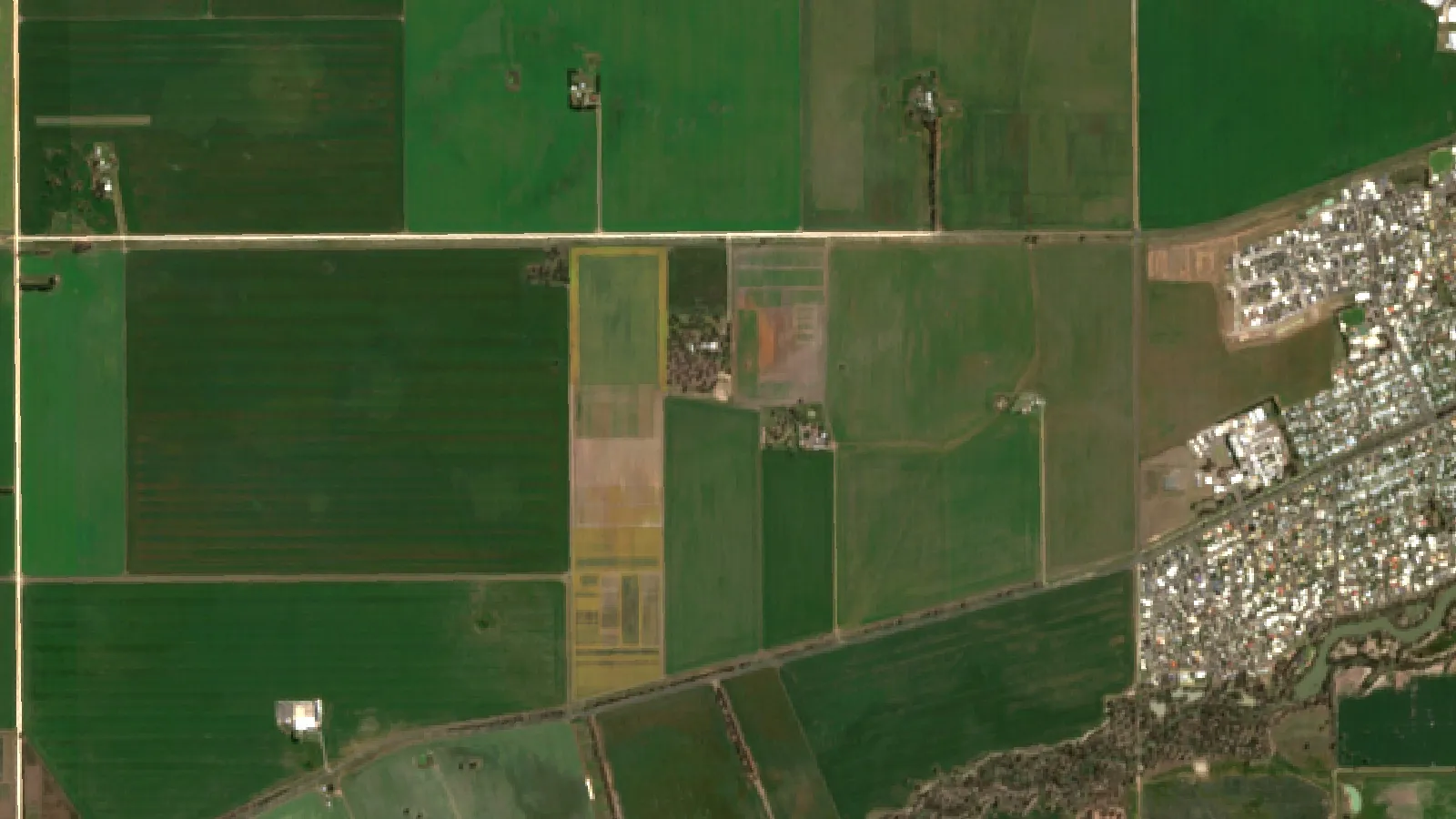
Key takeaways
- Report plant pests on 1800 084 881 and suspected emergency animal disease on 1800 675 888 (Agriculture Victoria, 2026).
- Every property with livestock needs an 8-character PIC; sheep and farmed goats born from 1 January 2025 need an NLIS electronic tag before leaving their birth property.
- The Farm Business Resilience Program has more than $66.8 million in federal and state funding through to 2029.
- Farm Drought Support Grants (up to $5,000, or $10,000 in south-west Victoria) closed on 30 September 2026.
- Victoria’s farm output was a record $22.2 billion in 2023-24, and food and fibre exports reached $22.1 billion in 2024-25.
In this article
- Agriculture Victoria services at a glance
- Victoria's farm sector in numbers
- Biosecurity services: report, register and trace
- Extension programs and farm advice
- Grants and funds: what is open and what has closed
- Online tools, apps and calculators
- Weather and climate services for Victorian farmers
- Export and market access support
- How to use Agriculture Victoria services step by step
- Where satellite monitoring fits with these services
- How we checked this guide
- FAQ
Agriculture Victoria services are the farm support the Victorian Government offers through Agriculture Victoria, part of the Department of Energy, Environment and Climate Action. The main ones today are biosecurity (pest and disease reporting, property codes, livestock tracing), extension programs and farm advice, grants and funds, online tools and calculators, and seasonal climate updates. Farmers reach most of them by calling 136 186 or through the agency’s website.
This guide lists what is on offer, which programs are open or closed as of October 2026, and how to use each one step by step. It also includes charts of Victoria’s farm output and exports, and a stock water calculator you can run with your own numbers.
Agriculture Victoria services at a glance
The table sums up the main service areas. Each one has its own section below with dates and the official page behind it.
| Service area | What you get | How to start |
|---|---|---|
| Biosecurity | Pest and disease hotlines, PICs, NLIS livestock tracing, permits | Call 1800 084 881 (plants) or 1800 675 888 (animals) |
| Extension and advice | Farm Business Resilience Program, on-farm demonstrations, farm monitor projects | Submit an expression of interest or join an event |
| Grants and funds | Industry funds, show society grants, drought support | Check the funds, grants and programs page for open rounds |
| Online tools | Agriculture Victoria Connect, crop, hay and water calculators | Create an account or open a calculator online |
| Climate and weather | The Fast Break newsletter, soil moisture probes, podcasts, courses | Subscribe by email or watch the short videos |
| Lab services | Veterinary and crop health diagnostics | Send samples with the submission form |
Victoria’s farm sector in numbers
The services exist because farming is a large part of the state economy. Victoria’s gross value of agricultural production reached a record $22.2 billion in 2023-24, which was 26% of Australia’s total, according to Agriculture Victoria’s overview of Victoria’s agriculture and food industries. The state had about 21,300 farm businesses managing around 11 million hectares, roughly half of its land (2021-22).
Chart
Most valuable farm commodities in Victoria
Gross value of agricultural production, $ billion (AUD), 2023-24 estimate, selected groups
Grains and horticulture were the two most valuable groups in 2023-24, at about $4.6 billion each. Dairy came next at $3.8 billion, then beef at $2.9 billion and sheep meat at $2.0 billion. Around 73,000 people worked in agriculture and another 77,700 in food and fibre processing in 2022-23.
Total value rose 1.9% from 2022-23 to 2023-24. Not every group grew. Beef value fell about 4% even though beef production rose 31% in tonnes, which points to lower prices per tonne. Wool fell on both value and volume.
Chart
Change in farm value by commodity
Gross value of production, $ million (AUD), 2022-23 vs 2023-24 estimate, selected groups
Biosecurity services: report, register and trace
Biosecurity is the service area most farmers will use, often because the law requires it. Agriculture Victoria is the control agency for biosecurity emergencies in the state. It runs surveillance for exotic plant pests, manages outbreaks and keeps the records that let livestock be traced.
How to report a pest or disease
Agriculture Victoria asks people to report anything unusual, even if they are not sure. There are two hotlines on its page to report a biosecurity incident:
- Exotic Plant Pest Hotline, 1800 084 881: plant pests and diseases, weeds and bees.
- Emergency Animal Disease Hotline, 1800 675 888: sick livestock, poultry and aquatic animals.
For plant pests you can also use the online form. The agency asks for several clear photos, where and how you found the pest, and the plant it was on. For animals, have the location (address or GPS), the signs you see, how many animals are affected out of the total on the property, and recent history such as travel or treatments. Each state keeps a list of notifiable animal diseases, and the national Outbreak website notes that by law you must report signs of them. Do not move samples without advice, because poor handling can spread a pest or spoil the sample.
Property Identification Codes and livestock tracing
Every property where livestock are kept needs a Property Identification Code (PIC). A Victorian PIC has 8 characters: the number 3, four letters and three numbers, for example 3ABCD123. Agriculture Victoria uses PICs to trace disease and residue problems and to contact owners during fires, floods and animal disease outbreaks. You can apply for or change a PIC online.
The PIC is one of three parts of the National Livestock Identification System (NLIS). The other two are an approved NLIS tag or device on each animal, and a record in the NLIS database of every move to a different PIC. For sheep and farmed goats born on or after 1 January 2025, the rules are stricter. Integrity Systems says these animals must carry an approved electronic tag (eID) before they leave the property where they were born, and visual tags are no longer accepted for them.
On-farm biosecurity plans and training
Agriculture Victoria suggests a simple farm biosecurity plan. Its basic steps include farm-only boots, a visitor record, a wash-down area, clean vehicles and machinery, signs at entries, and knowing the signs of disease in your animals. The agency offers online biosecurity training courses at no charge, including hygiene and signs of disease.
Agriculture Victoria Connect handles several permit and compliance tasks online. These include plant consignment notifications and inspection requests, food safety registrations and the Agricultural Chemical Use Permit (ACUP). For help with the portal, call the Biosecurity Services Centre on 1800 403 224. Always follow the product label and local rules for any chemical use.
Laboratory diagnostic services
Agriculture Victoria also runs two paid laboratory services. Veterinary Diagnostic Services investigates disease in livestock and wildlife, issues health certificates and supports export testing. Its work covers microbiology, virology, serology and pathology. Crop Health Services is the commercial plant pest and disease lab, used by growers, agronomists, crop consultants, nurseries and chemical resellers.
To use either lab, fill in the sample submission form and check the current price list and terms on the diagnostic services page before you send anything. Ask the lab how to pack and post samples, because a poorly packed sample may not give a result.
Extension programs and farm advice
Extension means advice, training and field days that help farmers apply research. Agriculture Victoria runs several programs. These are the main ones listed on its pages in 2026.
Farm Business Resilience Program
The Commonwealth and Victorian governments are putting more than $66.8 million into the Farm Business Resilience Program and the Regional Drought Resilience Planning Program through to 2029. The program helps farmers and First Peoples land managers build skills to manage drought and a changing climate. It offers courses, business planning, follow-up support, networking and tools. It is the Victorian arm of the national Farm Business Resilience Program under the Future Drought Fund, which the Australian Government delivers through the states.
Agriculture Victoria reports that more than 4,000 people have taken part in intensive program activities since 2021, and more than 2,400 farm business plans have been written or updated. To join, fill out the expression of interest form or sign up for an event.
On-farm demonstrations and farm monitor projects
The on-farm demonstrations program supports groups of sheep and beef producers to run local trials on their own issues. Groups work through BestWool/BestLamb, BetterBeef or other producer groups. Demonstrations listed in 2026 include arrowleaf clover for finishing lambs and pasture inputs.
Two benchmarking projects publish farm data each year. The Dairy Farm Monitor Project analyses the physical and financial results of 90 dairy farms in northern Victoria, Gippsland and south-west Victoria. The Livestock Farm Monitor Project does the same for sheep and beef farms across the state. You can compare your own costs and returns with these reports.
Phone advice, regional offices and financial counselling
Farmers can call 136 186, Monday to Friday, 8 am to 6 pm. Staff give advice on feed planning, pasture recovery, stock water, land and water management and grant programs. Agriculture Victoria has offices across the state, from Horsham and Hamilton to Tatura, Ellinbank and Irymple. All offices open from 9 am to 1 pm on set days, so call before you visit.
The Rural Financial Counselling Service gives primary producers free, independent financial information and decision support. It is co-funded by the Commonwealth and state governments and has run since 1986. Counsellors can help with cash flow budgets, talks with lenders and grant applications. For any loan, tax or legal decision, get professional advice.
▶ Seven simple sustainable farming practices that protect soil and water, explained with an earthworm. · 4:34
Grants and funds: what is open and what has closed
Grants change often, so check dates before you plan. Agriculture Victoria lists current programs on its funds, grants and programs page. Here is the position in October 2026 from the official pages.
- Agricultural and Pastoral Society Grants 2026-27: up to $10,000 per eligible show society for facilities, amenities, utilities and biosecurity upgrades. Best for: show societies, not individual farms.
- Livestock Biosecurity Funds Grant Program: funds projects that prevent, monitor and control animal disease in cattle, sheep, goats, pigs and honey bees. The 2026 round ran from 3 March to 14 April 2026 and is closed.
- Industry compensation funds: the Cattle, Sheep and Goat, Swine, and Honey Bee funds pay for projects that benefit those industries.
- Partnerships Against Pests grants: help community groups run education and training on established weeds and pest animals.
- Distillery Door Program: supports skills, visitors, infrastructure and exports for distilleries.
Drought support
The Victorian Government provided a $146.5 million Drought Support Package. As farmers move into recovery, some parts have closed. Farm Drought Support Grants and the Farm Advisory Service closed to new applications on 30 September 2026. Look Over the Farm Gate community events run to 31 December 2026, and household financial relief is available in south-west Victoria.
The closed farm grants paid up to $5,000 (ex-GST), or up to $10,000 in south-west Victoria, as a dollar-for-dollar co-contribution for water infrastructure, stock containment, fodder storage, water carting and pasture work. Rural Finance, a brand owned by the Victorian Government, ran them. It still delivers other grant and concessional loan programs for the Victorian and Commonwealth governments, so check its site for open rounds. Grant rules and eligibility vary; read the guidelines and get advice before you apply.
Online tools, apps and calculators
Agriculture Victoria’s tools and calculators page lists six web tools. All run in a browser, so you can use them on a phone in the paddock.
- Crop plant density calculator: helps manage canopy density and inputs based on the spring outlook.
- Crop yield calculator: estimates grain yield in mid-spring.
- Dry matter calculator: estimates dry matter in tonnes per hectare to help decide when to cut hay.
- Farm water calculator: helps plan water supplies on your farm.
- Hay versus grain calculator: compares the gross margin per hectare of cutting hay or harvesting grain.
- Summer water calculator: estimates how long dam or tank water will last for stock.
Agriculture Victoria Connect is the main online account for regulation and compliance. You can create a personal and business profile, see linked licences and permits, pay renewals and track what you have sent, at any hour. Start by registering as an individual, then add your business.
The calculator below follows the same idea as the summer water tool. Enter your own stored water, herd and losses to see how many days your stock water could last.
Try the numbers for your own farm below.
Calculator
How many days will your stock water last?
Enter your own stored water, herd, daily intake and dam evaporation.
- Stock use per day: 13.5 kL
- Evaporation loss per day: 7.5 kL
- Days spare (negative means a shortfall): 2 days
Example values only, not a benchmark or a forecast; every number is your input. Intake per head varies with stock class, feed, weather and water quality, so use Agriculture Victoria’s guidance or its summer water calculator for your stock. Evaporation is a loss in millimetres per day over the dam surface; 1 mm over 1 square metre is 1 litre (a fixed conversion). The result ignores seepage, the unusable water at the bottom of a dam and any rain, so treat the result as a rough guide.
Weather and climate services for Victorian farmers
Agriculture Victoria turns national forecasts into farm terms. Its seasonal risk team publishes The Fast Break newsletter, usually monthly. Each issue reviews ocean and air climate drivers over the past month and sums up three-month model outlooks for rainfall and temperature in Victoria. The Very Fast Break gives the same update as short YouTube videos.
Other climate services include:
- Milking the weather: a newsletter on climate impacts for dairy farmers.
- Soil moisture monitoring: probes on pasture sites and in cropping regions, with regular updates.
- My Rain Gauge is Busted: a podcast on weather and climate for farmers.
- Climate webinars and online courses: topics include climate, forecasting and emissions in agriculture.
The official forecasts behind these updates come from the Bureau of Meteorology’s climate outlooks, which map the chance of above-median rainfall and temperature for the coming weeks and months. Use both: the Bureau for the forecast, Agriculture Victoria for what it may mean for crops, pasture and stock.
Export and market access support
Victoria is Australia’s largest food and fibre exporter by value. Exports reached a record $22.1 billion in 2024-25, up 10% on the year before and 28% of the national total. Meat led at $8.2 billion, followed by grain ($4.6 billion), dairy ($2.8 billion), horticulture ($1.9 billion) and prepared foods ($1.4 billion). Products went to 174 markets.
The top five markets took about 52% of the total. Agriculture Victoria’s export pages cover market access, traceability, an “Am I export ready?” check and exporter stories. PICs and NLIS records also matter here, because buyers in overseas markets rely on traceable livestock.
Chart
Top markets for Victoria’s food and fibre exports
Export value, $ billion (AUD), 2024-25
How to use Agriculture Victoria services step by step
If you are new to the state or new to farming, work through these steps in order.
Infographic
Getting set up in 5 steps
- 1Get a PICNeeded for any livestock.
- 2Open a Connect accountFor permits and registrations.
- 3Save the hotlines1800 084 881 and 1800 675 888.
- 4Plan biosecurityUse the agency’s guide.
- 5Join programsNewsletters, FBR events and grants.
- Get a PIC if you keep any cattle, sheep, goats, pigs, horses or deer, or more than 50 poultry. Apply online.
- Create an Agriculture Victoria Connect account as an individual, then add your business. You will need it for permits and registrations.
- Save the two biosecurity hotlines in your phone: 1800 084 881 for plants and 1800 675 888 for animals.
- Write a simple farm biosecurity plan using the agency’s guide and industry templates.
- Subscribe to The Fast Break and any industry newsletter that fits your farm.
- Register interest in the Farm Business Resilience Program and check the events page for field days near you.
- Check the grants page and Rural Finance before each season, and call 136 186 if you are unsure what you qualify for.

▶ Six plain steps to start precision agriculture on your farm without buying a robot. · 4:18
Where satellite monitoring fits with these services
Agriculture Victoria’s tools work best with good records from your own paddocks. Satellite images can add a field-by-field view of crop and pasture growth between visits. Farmonaut, a US-based company, offers satellite vegetation maps for drawn fields on web and mobile, and an agriculture API for agtech teams that want to add field data to their own apps. Satellite maps show where growth changes; they do not identify a pest or its cause, so confirm on the ground and report anything unusual to the hotlines above.
For a wider view of planning on farms, see our article on decision-making in farm management.
▶ How satellite NDVI maps show crop stress before you can see it in the paddock. · 4:09
How we checked this guide
We read Agriculture Victoria’s own pages in October 2026 and noted the “page last updated” date on each one we used. Farm and export figures come from the agency’s industry overview, which draws on ABS data. Livestock tag rules come from Integrity Systems, the national NLIS body. Rural Finance and the Bureau of Meteorology were checked on their own sites. Programs that have closed are marked closed. We removed claims from an earlier version of this page that we could not match to an official source.
FAQ
What services does Agriculture Victoria provide?
It provides biosecurity services (hotlines, PICs, livestock tracing, permits), extension programs such as the Farm Business Resilience Program, grants and industry funds, online tools and calculators, seasonal climate updates, and lab diagnostics for animal and crop health.
How do I contact Agriculture Victoria?
Call 136 186 from anywhere in Australia, Monday to Friday, 8 am to 6 pm. For pests call 1800 084 881, and for suspected emergency animal disease call 1800 675 888. For help with Agriculture Victoria Connect call 1800 403 224.
Are Agriculture Victoria drought grants still open?
No. Farm Drought Support Grants and the Farm Advisory Service closed to new applications on 30 September 2026. Applications received by then are still being processed. Longer-term support continues through the Farm Business Resilience Program to 2029.
Do I need a PIC for a small hobby farm?
Yes, if you keep livestock. Agriculture Victoria says PICs are required for all properties on which livestock are kept. That includes one or more cattle, sheep, goats, pigs, horses or deer, or more than 50 poultry. You can apply online.
Do sheep in Victoria need electronic tags?
Sheep and farmed goats born on or after 1 January 2025 must have an approved NLIS electronic tag before they leave the property where they were born. Check Agriculture Victoria for rules on older stock.
Related pages on our site: web app, Android app, iOS app, agriculture API, API developer docs, large farm management, product traceability, carbon footprinting, fleet management and crop loan and insurance verification.
Farmonaut agriculture API
Add satellite field data to your own app
Agtech teams can pull satellite vegetation and weather data for drawn fields into their own tools through the Farmonaut agriculture API.




Keep reading

Sources
- Agriculture Victoria, Victoria’s agriculture and food industries (page updated 10 Jun 2026): agriculture.vic.gov.au
- Agriculture Victoria, Report a biosecurity incident (updated 9 Jul 2026): agriculture.vic.gov.au
- Agriculture Victoria, Report an unusual plant insect pest or disease (updated 22 Jul 2026): agriculture.vic.gov.au
- Agriculture Victoria, Property Identification Codes (updated 20 Jul 2026): agriculture.vic.gov.au
- Integrity Systems, What is Sheep and Goat eID (2026): integritysystems.com.au
- Agriculture Victoria, Biosecurity basics (2026): agriculture.vic.gov.au
- Agriculture Victoria, Agriculture Victoria Connect (updated 26 Feb 2026): agriculture.vic.gov.au
- Agriculture Victoria, Farm Business Resilience Program (updated 1 Oct 2026): agriculture.vic.gov.au
- Agriculture Victoria, Funds, grants and programs (October 2026): agriculture.vic.gov.au
- Agriculture Victoria, Agriculture in Victoria (2026): agriculture.vic.gov.au
- Agriculture Victoria, Contact us (updated 12 Aug 2026): agriculture.vic.gov.au
- Agriculture Victoria, Drought support (October 2026): agriculture.vic.gov.au
- Agriculture Victoria, Funds, grants and programs (October 2026): agriculture.vic.gov.au
- Agriculture Victoria, Funds, grants and programs (October 2026): agriculture.vic.gov.au
- Agriculture Victoria, Funds, grants and programs (October 2026): agriculture.vic.gov.au
- Agriculture Victoria, Drought support (October 2026): agriculture.vic.gov.au
- Agriculture Victoria, Farm Drought Support Grants (updated 1 Oct 2026): agriculture.vic.gov.au
- Rural Finance, Welcome to Rural Finance (2026): ruralfinance.com.au
- Agriculture Victoria, Tools and calculators (2026): agriculture.vic.gov.au
- Agriculture Victoria, The Break newsletters (updated 29 Jul 2026): agriculture.vic.gov.au
- Bureau of Meteorology, Climate outlooks (2026): bom.gov.au
- Agriculture Victoria, Diagnostic services (updated 28 Oct 2025): agriculture.vic.gov.au
- Australian Government DAFF, Farm Business Resilience Program (Future Drought Fund, 2026): agriculture.gov.au
- Australian Government Outbreak, Report a concern (2026): outbreak.gov.au
- Agriculture Victoria, Dairy Farm Monitor Project: agriculture.vic.gov.au
Discussion
Questions, corrections or field experience? Share them below. First-time comments are reviewed before they appear, and your email is never published.
No comments yet. Be the first to add a question or your experience.

 AgroRisk
 Oath Inc
 Reddane Farming
 Esri North East Africa
 Farmer Amigo
 Cresol
 Atur Kuliner
 MDCV UK
 Zerella Group
 Etech Consulting Madagascar
 Vestlandsforsking
 Agritein
 Delicio
 WB Dev
 Sama Premium
 Prochecker
 Tres Valles
 LACOS Geoinformation
 Magrifly
 LatConnect 60
 Blickwinkel
 Agricultural Credit Policy Council

 Exploration consultancy · South Africa · Gold
 Licence holder · Niger · Gold
 Licence holder · Nigeria · Gold + lithium










