

Agriculture Market Research in India: 5 Key Trends 2026
- Introduction
- Trivia: Data & Startup Insights
- Importance of Agricultural Market Research in India
- Scope & Dimensions of Agriculture Market Research
- Trend Comparison Table: 2026 Outlook
- Agricultural Market Research in India: 5 Key Trends for 2026
- How Farmonaut Supports Tech-Led Market Research
- Visual Lists & Key Takeaways
- Tools, Resources & App Links
- Challenges and the Way Forward
- FAQ: Agricultural Market Research in India
- Conclusion
Agriculture market research in India is rapidly transforming the entire agricultural landscape. By 2026, India’s agriculture sector is poised for dramatic evolution—powered by technology, digital platforms, and data-driven insights—fueling cropping, supply chains, and sustainable practices that underpin the country’s food security and farmer prosperity.
The agricultural sector in India holds a pivotal role, employing nearly half the workforce and contributing significantly to GDP. As India strides toward its $5 trillion economy ambition, the need for robust, actionable market research—for understanding patterns in demand, supply, and pricing—becomes even more critical. This article offers a comprehensive, SEO-optimized exploration of key agriculture market research trends in India for 2026, supported by data, analysis, and technology innovations driving decision-making, policy, and business strategy.
“By 2026, over 65% of India’s agri-tech startups are predicted to focus on data-driven farm solutions.”
The Importance of Agricultural Market Research in India
Agricultural market research in India involves systematic data collection, analysis, and interpretation related to farming practices, crop production, supply chain dynamics, consumer behavior, and market trends. In a country marked by small landholdings, diverse cropping patterns, and climate variability, such research equips all stakeholders—farmers, policymakers, agribusinesses, financial institutions—with the insights required for evidence-based decisions.
- ✔ Understanding market demand, pricing, and consumer trends – Essential for choosing profitable crops and market timing.
- ✔ Identifying investment opportunities – Market research guides input allocation, diversification, and policy adoption.
- ✔ Assessing government schemes and interventions – Ensures effective deployment of resources (e.g., PM-Kisan, crop insurance, MSP).
- ✔ Mitigating risks – Predicts price fluctuations, crop failures, and supply chain disruptions.
- ✔ Enabling modern technology adoption – Research drives precision farming, digital services, and sustainability transitions.
Timely, localized agricultural market research supports not only farmers but the entire value chain: improving productivity, guiding policy, and stimulating economic development across India’s states.
Scope & Dimensions of Agriculture Market Research in India
Agriculture market research covers multiple dimensions, each critical for optimizing market outcomes and boosting incomes:
- 📊 Crop Production & Yield Patterns: Analysis of sowing area, per-hectare yield, and seasonal variations delivers actionable forecasts for supply and pricing.
- 📦 Input Markets: Assessing seeds, fertilizers, pesticides, and machinery demand enables smarter supply chain management.
- 🔗 Market Access & Supply Chains: Research guides logistics, infrastructure investments, and post-harvest interventions to minimize losses.
- 🛒 Consumer Preferences: Ongoing monitoring of market trends for organic, processed, and value-added products shapes cropping and marketing strategies.
- 📄 Policy Impact Assessment: Rigorous evaluation of government schemes (like insurance and MSP) supports realignment for better outcomes.
- 🤖 Technology Adoption: Research tracks penetration and impact of precision and digital farming, enhancing process modernization.
Integrating on-the-ground field data collection with digital satellite-based monitoring ensures both micro (local) and macro (regional/national) accuracy in market forecasts.
Trend Comparison Table: Agriculture Market Research in India – Outlook to 2026
| Trend Name | Estimated Market Impact (2026) | Related Technologies/ Innovations | Leading Agri-tech Startups/ Initiatives | Brief Description |
|---|---|---|---|---|
| Data-Driven Farming | $6–8 billion (~20% CAGR) |
Satellite imagery, IoT, mobile apps, AI analytics | Farmonaut, CropIn, Intello Labs | Use of real-time data from satellites, sensors, and AI for agriculture market research, boosting precision and timely decision-making. |
| AI & Analytics Adoption | $4–6 billion (~18% CAGR) |
AI-based advisory, machine learning models, predictive analytics | Gramophone, DeHaat | AI tools analyze market trends, demand, and supply patterns to enhance cropping strategies and market access. |
| Sustainable Agri-Practices | Up to 25% growth in sustainable product value chains | Carbon footprint monitoring, regenerative agriculture tools, blockchain traceability | Farmonaut, Agrostar | Market research supports investing in sustainable practices, climate resilience, and traceable supply chains. |
| Digital Supply Chain Technology | $3.5 billion+ | Blockchain, digital procurement, logistics optimization | AgNext, FarmGuru | Enhances end-to-end transparency and efficiency for producers, consumers, and intermediaries. |
| Government Policy Support & Financial Integration | 15–20% increase in credit and insurance penetration | Satellite-based eligibility, e-KYC, digital insurance, financial APIs | Farmonaut, Samunnati | Data-backed assessment for loans/insurance, improving access and reducing risk for farmers and lenders. |
“Digital agriculture adoption in India is expected to boost crop yield analysis accuracy by up to 30% by 2025.”
Agricultural Market Research in India: 5 Key Trends Shaping 2026
Let’s delve into the five most influential agriculture market research trends expected to define the future of India’s agricultural sector through 2026 and beyond.
1. Data-Driven Farming & Satellite Insights
Powered by increasingly affordable satellite technology, IoT sensors, and mobile platforms, data-driven farming brings hyper-localized intelligence right to the Indian farmer’s hand. Market research leverages this influx of data for crop health, soil conditions, weather, and market dynamics.
- ✔ Real-time monitoring: Immediate risk detection (weather, pest, disease).
- 📊 Yield pattern analysis: Improved supply forecasting and price prediction.
- 🔗 Integration with agri supply chains: Seamless logistics based on field conditions.

Many agri-enterprises still rely on outdated, static datasets rather than dynamic satellite-fed data. This leads to misreads in both crop health and market timing—adopt real-time solutions to stay competitive!
2. Agri-Tech Startups, AI & Advanced Analytics
India’s agri-tech ecosystem is booming. Agri-tech startups are at the forefront of big data, advanced analytics, and AI-powered platforms—translating vast market data into tailored advisories for farmers, policymakers, and supply chain managers.
- 🤖 Predictive analytics: Optimize cropping based on demand/supply cycles.
- 💹 Pricing model enhancements: Reduce volatility, enable better procurement strategies.
- 🔔 Direct farmer-consumer linkages: Accelerate access to markets and reduce middlemen costs.

With AI-analytics penetration accelerating in 2025-26, the Indian agri-tech market is among the top investment destinations in Asia-Pacific. Startups with real-time, actionable market research platforms are forecasted to lead funding rounds.

3. Sustainability, Regenerative Agriculture, and Climate Resilience
Agricultural market research now extends beyond yields and profits, emphasizing sustainable practices, climate resilience, and environmental impacts. This trend empowers market participants to invest in regenerative agriculture, water conservation, carbon footprinting, and resilient cropping patterns.
- 🌱 Regenerative practices: Market data favors crops and methods improving soil health and ecological balance.
- 🌍 Carbon monitoring: Links to government/NABARD-led incentives and premium pricing strategies.
- 🌤 Climate adaptation insights: Predict best-fit resilient crop varieties for each region.

Over 30% of global agri-food buyers now insist on traceable, low-carbon produce—a major export boost for Indian farmers investing in sustainable agri-practices and carbon footprint monitoring solutions.
4. Digital Supply Chain Platforms & Blockchain Traceability
Digital transformation of procurement and logistics through integrated supply chain platforms—bolstered by blockchain traceability—is a game changer. Market research now enables end-to-end visibility from farm gate to export.
- 💼 Smart procurement: Adapt pricing to real-time supply-demand metrics.
- 🌐 Blockchain-based traceability: Adds value and authenticity for export & premium domestic markets.
- 🚚 Fleet and logistics optimization: Minimizes post-harvest losses and maximizes returns.
For full supply chain transparency and to boost consumer trust in food origin, explore robust solutions like blockchain-based product traceability provided by Farmonaut.
For streamlined logistics, Farmonaut’s fleet management tools offer real-time vehicle tracking and operational optimization, reducing costs across the supply chain.
5. Financial Services Integration: Agri Credit, Loan, and Insurance
Market research in India is now critical for financial services—enhancing accuracy of risk assessment and enabling wider access to loans & crop insurance for farmers. Satellite-aided verification and real-time crop monitoring reduce fraud and support tailored insurance offerings.
- 💰 Satellite-driven eligibility checks: Fast-track credit and insurance approvals with data-backed field verification.
- 🙌 Digital onboarding: Simplify e-KYC and documentation for millions of rural users.
- ⚠ Reduced risk exposure: Monitor real-time crop failures and deliver timely intervention.
Banks and insurance providers can leverage Farmonaut’s crop loan and insurance solution—speeding up assessment and safeguarding financial investments.

How Farmonaut Supports Tech-Led Agriculture Market Research in India
At Farmonaut, we are dedicated to democratizing satellite-driven insights for agriculture market research in India and beyond. By merging advanced satellite imagery, AI, blockchain, and machine learning, we deliver comprehensive, real-time data for all market players: farmers, agribusinesses, policymakers, and financial institutions.
Our solutions enable:
- ✔ Crop & supply chain monitoring – With our app and web platform, users get field-to-market visibility on yield, health, and logistics.
- 🧠 AI-based advisory via Jeevn AI – Real-time, actionable intelligence for timely cropping, irrigation, and harvesting decisions.
- 🔗 Blockchain-based traceability – Verify origins and ensure secure, transparent agriculture supply chains.
- 🌱 Environmental impact tracking – Support for carbon footprint monitoring, making sustainable agriculture practices measurable and verifiable.
- 🚜 Resource and fleet management – Optimize farm vehicles, machinery, and operations to minimize costs and losses.
All Farmonaut tools are accessible across devices (web app, Android, iOS), making satellite-based agriculture monitoring widely accessible.
Focusing solely on yield data without integrating risk assessment (weather, pests, market volatility) can leave farming businesses exposed. Use a platform like Farmonaut to get a full spectrum of data for holistic decision-making.
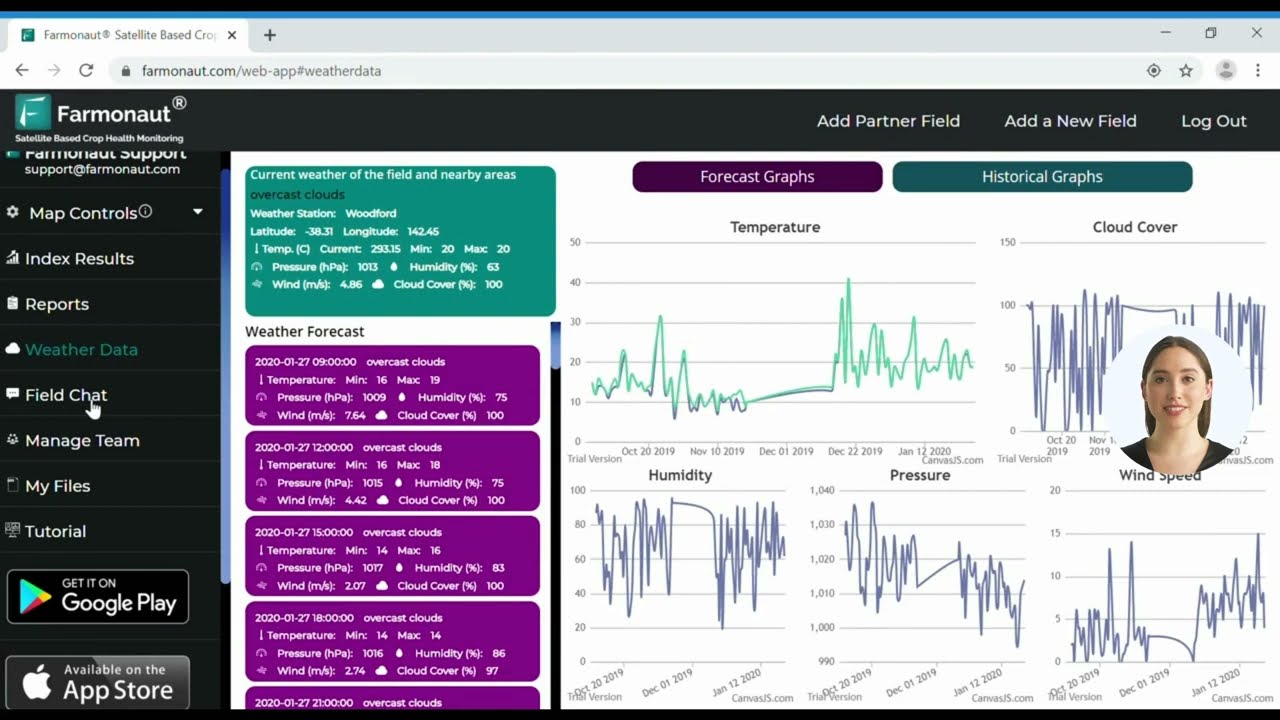
For organizations managing large agricultural portfolios, use Farmonaut’s large scale farm management suite to efficiently track, plan, and optimize farming operations from a single dashboard across hundreds of sites.

- 🚀 Speed: Real-time field intelligence for rapid response.
- 📈 Precision: Targeted, hyper-local recommendations boost yield and profit.
- 🌍 Sustainability: Track and manage carbon and water footprints.
- 🔒 Transparency: End-to-end product verification with blockchain.
- 💡 Scalability: Monitor a few hectares or thousands—anytime, anywhere.
- 🔍 Precision crop selection based on market demand analysis
- 🔄 Optimized supply chain logistics with satellite fleet tracking
- 🌱 Sustainable farming program validation for grant/loan applications
- 📊 Yield forecast modeling to inform input & machinery procurement
- 💳 Risk-free credit & insurance onboarding for underserved farmers
Key Takeaways: What Makes Agricultural Market Research in India Critical for 2026?
- ✔ Enables evidence-based policymaking supporting Atmanirbhar Bharat & food security.
- ✔ Empowers farmers with data to improve productivity and incomes.
- ✔ Guides agribusiness strategy for digital, sustainable supply chains.
- ✔ Advances environmental and social impact goals in a changing climate.
- ✔ Attracts global capital and premium for Indian farm products by supporting traceability and certification.
India’s digitally transformed agricultural market research sector is set for exponential growth post-2025—making agricultural analytics platforms and data-enabled agri-fintech startups prime targets for sustainable investment.
Tools, Resources & How to Get Started with Farmonaut
Empower your decision-making and access real-time agricultural market research insights with Farmonaut’s broad suite of tools, available on all major platforms:



Find out more about how to leverage satellite data APIs for your business:
Farmonaut API | Developer Docs
For rapid compliance with export, certification, or environmental mandates, integrate traceability modules and carbon footprinting tools directly into your agriculture value chains.
Subscription-based access to real-time satellite and market insights has reduced the technology adoption gap between large agribusinesses and smallholder farmers in India.
Challenges and the Way Forward
The path to data-driven agricultural market research in India is not without hurdles:
- ⚠ Fragmented data sources lead to inconsistency in forecasts and business strategies.
- ⚠ Lack of standardization hinders seamless integration across platforms, schemes, and market actors.
- ⚠ Limited technology penetration in remote and smallholder-dominated regions—requires sustainable rural outreach and digital literacy initiatives.
- ⚠ Delayed or outdated policy adaptation might slow agricultural innovation.
Overlooking the importance of end-user (farmer) input in system design can render high-tech research platforms less effective. Include farmers in training, feedback, and feature co-creation processes.
The way forward requires:
- Investment in open data infrastructure and research standardization.
- Capacity building—include grassroots training and field support.
- Strengthening public-private partnerships and attractive incentive policies.
- Supporting platforms and APIs for broad integration: Farmonaut’s APIs make data seamless for businesses and developers.
- Policy reforms that encourage digital adoption at all nodes of the agri value chain.
FAQs: Agricultural Market Research in India
Agricultural market research supports evidence-based decision-making, enabling stakeholders to optimize cropping patterns, pricing, inputs, and marketing strategies—directly improving rural incomes and agricultural sustainability.
Q2: How does satellite technology empower Indian agricultural market research for 2026?
Satellite technology delivers granular, real-time data on crop health, soil, weather, and land use helping all stakeholders—from policymakers to farmers—make informed, timely decisions, lower risks, and plan business strategies for evolving consumer and export markets.
Q3: Are agri-tech startups critical to India’s market research landscape?
Yes, agri-tech startups (like Farmonaut) are pivotal in pioneering digital tools, AI analytics, and integrated platforms that transform traditional farm research into dynamic, actionable market intelligence accessible for all.
Q4: What are the top 5 trends in agricultural market research in India for 2026?
Key trends include data-driven farming, AI and analytics adoption, sustainability and climate resilience, digital supply chain tech with blockchain, and financial integration for loans/crop insurance.
Q5: How do I access and deploy satellite-based crop monitoring or market research in India?
Use specialized platforms like the Farmonaut app/web dashboard, available on iOS, Android, and via API integrations for your business or government needs.
Conclusion: The Future of Agricultural Market Research in India
As we drive toward 2026 and beyond, agriculture market research in India stands at the crossroads of digital transformation, sustainability, and global market opportunity. Powered by satellite data, AI analytics, and innovative supply chain platforms, the sector is better placed than ever to enhance yields, incomes, and climate resilience for India’s farmers and agribusinesses.
As a technology enabler, Farmonaut is committed to making agricultural market research more accurate, accessible, and impactful for every stakeholder—delivering on India’s vision of food security, rural prosperity, and Atmanirbhar (self-reliant) agriculture.
Invest in actionable intelligence. Embrace digital agriculture. Transform India’s farms, markets, and futures with the power of data.
For more insights on agriculture market research in India, supply chain management, and satellite-based analytics, follow Farmonaut’s knowledge hub and stay updated on the latest 2026 trends.

 GlobalQuant
 MDCV UK
 Zerella Group
 Etech Consulting Madagascar
 Vestlandsforsking
 Agritein
 Delicio
 WB Dev
 Sama Premium
 Prochecker
 Tres Valles
 LACOS Geoinformation
 Magrifly
 LatConnect 60
 Blickwinkel
 Agricultural Credit Policy Council
 Marei Nursery
 eKGIS
eKGIS Mostas Tech
