

#arecanut: 1 Acre How Many Arecanut Trees in India? Insights & Innovations for 2026
“1 acre in India can optimally hold around 550 arecanut trees using high-density planting techniques.”
Arecanut Cultivation: Plant Density and Yield Insights for One Acre in 2026
Arecanut (Areca catechu), widely referred to as betel nut, is a vital commercial crop across the tropical regions of India, Southeast Asia, and the Pacific. The demand for arecanut remains robust, playing an integral role in local cultural ceremonies and in the thriving chewing industry. As we look ahead to 2026, a strategic, scientific approach to planting density and management is crucial for Indian farmers aiming to optimize per-acre income, improve yield, and embrace innovative agricultural techniques.
This comprehensive guide provides actionable, up-to-date insights into:
- #arecanut, 1 acre how many arecanut trees can be planted with both traditional and high-density practices
- Modern spacing, irrigation, and management techniques
- Expected yield per acre in 2026
- Environmental and economic impacts
- Farmonaut’s technology for future-ready arecanut farming
Understanding Arecanut: A Vital Commercial Crop in India and Beyond
Arecanut, or Areca catechu, stands as a vital commercial crop extensively grown across the tropical regions of India (notably Karnataka, Kerala, Assam, Tamil Nadu, and West Bengal), as well as in Southeast Asia and parts of the Pacific. Its uses are embedded in local culture, rituals, and the ever-active chewing industry. The export market for dried split and whole arecanut signals a sustained demand, and with increasing population, its importance only continues to mount.
Key Characteristics of Arecanut:
- Tall palm reaching 15–20 meters at maturity
- Prefers humid, tropical climates (annual rainfall: 1500–4000 mm)
- Major Indian producers: Karnataka, Kerala, Assam, Tamil Nadu
- Integral role in chewing industry and cultural activities

- India accounts for over 50% of the world’s arecanut production, making it a linchpin of the region’s agri-commerce.
- Modern farming methods and precision management are increasingly adopted to cater to growing demand, improve yield, and enhance farmer income.
#arecanut, 1 Acre How Many Arecanut Trees Can be Planted? Modern Planting Density & Spacing in 2026
A pivotal question for every arecanut grower is: 1 acre how many arecanut trees? The answer in 2026 hinges on cultivation techniques, variety of areca, irrigation facilities, and the management approach adopted.
Let’s break down the current and future-facing solutions for per-acre arecanut density:
The optimal number of arecanut trees planted per acre in India varies:
- Traditional – 300 to 400 trees per acre
- High-density – 500 to 600 trees per acre (using modern spacing and irrigation)
Choosing the right spacing and planting density can increase yield, reduce manual labor, and improve plantation health and sustainability.
Traditional Planting Density & Spacing for Arecanut in India
The traditional arecanut plantation approach — still widely followed in Karnataka, Kerala, Assam, and West Bengal — relies on 7.5m x 7.5m (25ft x 25ft) grid spacing. This spacing supports healthy tree growth, robust maintenance, and intercropping with crops like black pepper or coconut. Each acre (4047 square meters) allows approximately 350 arecanut trees using this method.
- Benefits: Ample space for tree expansion, improved soil health and aeration, easier manual maintenance, and support for multi-crop systems (intercropping with bananas, cocoa, black pepper).
- Limitations: Lower density can limit total productivity per acre and slow initial economic returns compared to high-density approaches.

Comparison Table of Arecanut Planting Density and Yield per Acre (2026)
| Planting Technique | Spacing Between Trees (meters) | Estimated Number of Trees per Acre | Estimated Yield per Tree (kg) | Total Estimated Yield per Acre (kg) |
|---|---|---|---|---|
| Traditional Spacing | 7.5 x 7.5 (25ft x 25ft) | ~350 | 5-6 | 1,750–2,100 |
| High-Density Planting | 5 x 5 (16ft x 16ft) | 500–600 | 5–6 | 2,500–3,600 |
| Modern Innovation (with Tech-assisted Irrigation & Precision Inputs) | 4.5 x 4.5 | 600–750 | 4.5–5.5 | 2,700–4,125 |
- ✔ Traditional: 7.5m × 7.5m grid, optimal for mixed/intercropping
- 📊 High-Density: 5m × 5m, boosts early returns and production
- ⚡ Modern Innovation: Incorporates satellite-based monitoring to optimize every aspect of plantation management
High-Density Planting: The Science of Tighter, More Productive Plantations
High-density planting is revolutionizing arecanut farming in India. By reducing spacing to 5m x 5m (16ft x 16ft) or even tighter (4.5m x 4.5m in experimental farms), farmers can plant up to 600-750 trees per acre. This approach is especially beneficial in regions with excellent soil fertility, consistent drip irrigation facilities, and a focus on intensive nutrient management.
- Earlier Yield: 3–4 years compared to 6–7 years under traditional methods.
- Higher Annual Production: 3,000–4,000 kg per acre in peak years, assuming optimal nurturing and pest/disease control.
- Requirements: Intensive fertility and water management, increased labor for harvesting and pest control.
- Limitations: Higher risk of root crowding, pest/disease incidence, and rapid nutrient depletion unless properly managed.
For successful high-density planting, adopt drip irrigation and schedule regular nutrient applications based on soil monitoring. Tech tools like Farmonaut can deliver remote soil health, moisture, and growth insights, boosting your management precision.

“By 2025, innovative spacing methods are projected to boost arecanut yield per acre by up to 20%.”

Key Factors Influencing Arecanut Tree Density and Spacing for 2026
- Variety: Dwarf arecanut varieties permit higher density — some need less space compared to tall types.
- Soil Type & Fertility: Well-drained, fertile soils support denser planting, ensure vibrant growth, and minimize disease risk.
- Irrigation Facilities: Consistent drip irrigation or modern sprinkler systems are musts for tight grids to maintain soil moisture without waterlogging.
- Intercropping Practices: Arecanut is often intercropped with coconut, black pepper, banana, or cocoa — these systems may require wider spacing for light and root health.
- Mechanization & Labor: High-density plantations require more precision in input application and potentially more labor for harvesting.
- 🌱 Fertile soil with high organic content
- 💧 Reliable drip irrigation system that delivers moisture without waste
- 🔬 Scientific grid design for maximizing sunlight and air flow
- ⚠ Early pest control to prevent major losses in tight plantations
- ⚙ Efficient labor for faster harvest and input management
- 🤝 Support from agri advisory or tech tools to interpret satellite data (see Farmonaut section)
- 🧪 Soil health and nutrient tracking for sustainability

Yield Expectations Per Acre: What Will You Achieve in 2026?
A mature arecanut tree generally yields 5–6 kg of nuts per year. Factoring in planting density:
- Traditional Density (350 trees/acre): ≈ 1,750–2,100 kg per year
- High-Density (500–600 trees/acre): ≈ 2,500–3,600 kg per year
- Modern Innovation (up to 750 trees/acre): ≈ 2,700–4,125 kg per year under optimal irrigation and soil health conditions
These numbers are influenced by factors such as soil fertility, disease/pest management, efficient water supply, and climate stability.
Yield per acre is the primary driver of profit for arecanut plantations. Adoption of modern planting density, satellite-assisted monitoring, and AI-driven field advisory systems (like those by Farmonaut) will be a game-changer for forward-thinking farmers, enabling more predictable returns and rapid scalability.
Best Practices: Cultivation, Irrigation, and Tech for Arecanut Plantation Success
The optimal planting density is not the sole factor for maximizing yield — excellence in management makes the difference. Here’s what 2026-ready arecanut farmers should focus on:
-
Soil Fertility and Health:
- Regular soil testing and improvement with organic manure and green cover crops help retain nutrients and moisture, as well as decrease pest risks.
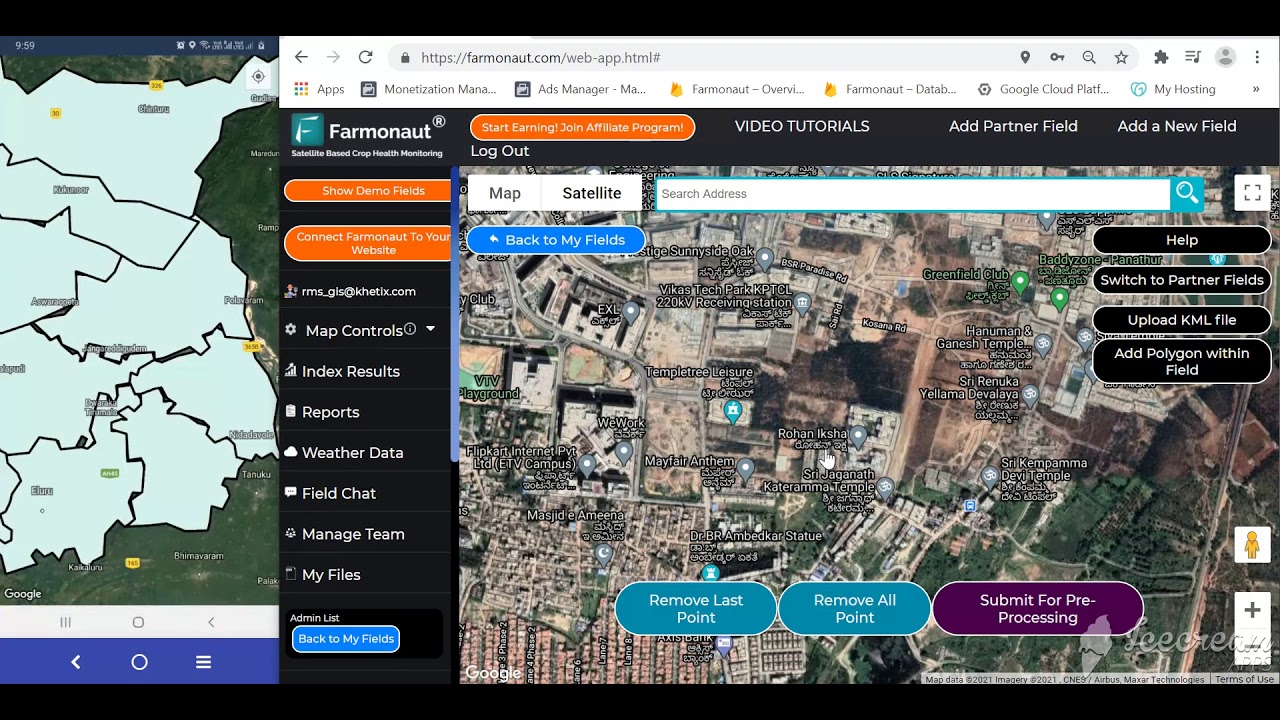
- Satellites & AI tools (like those we offer at Farmonaut) streamline soil health monitoring, enabling data-driven amendments.
-
Irrigation – Precision is Key:
- Arecanut is sensitive to both drought and waterlogging. Drip irrigation systems deliver consistent moisture and support denser plantations.
- Remote moisture and stress detection via Farmonaut’s environmental monitoring tools help avoid productivity loss and increase water use efficiency.
-
Pest & Disease Control:
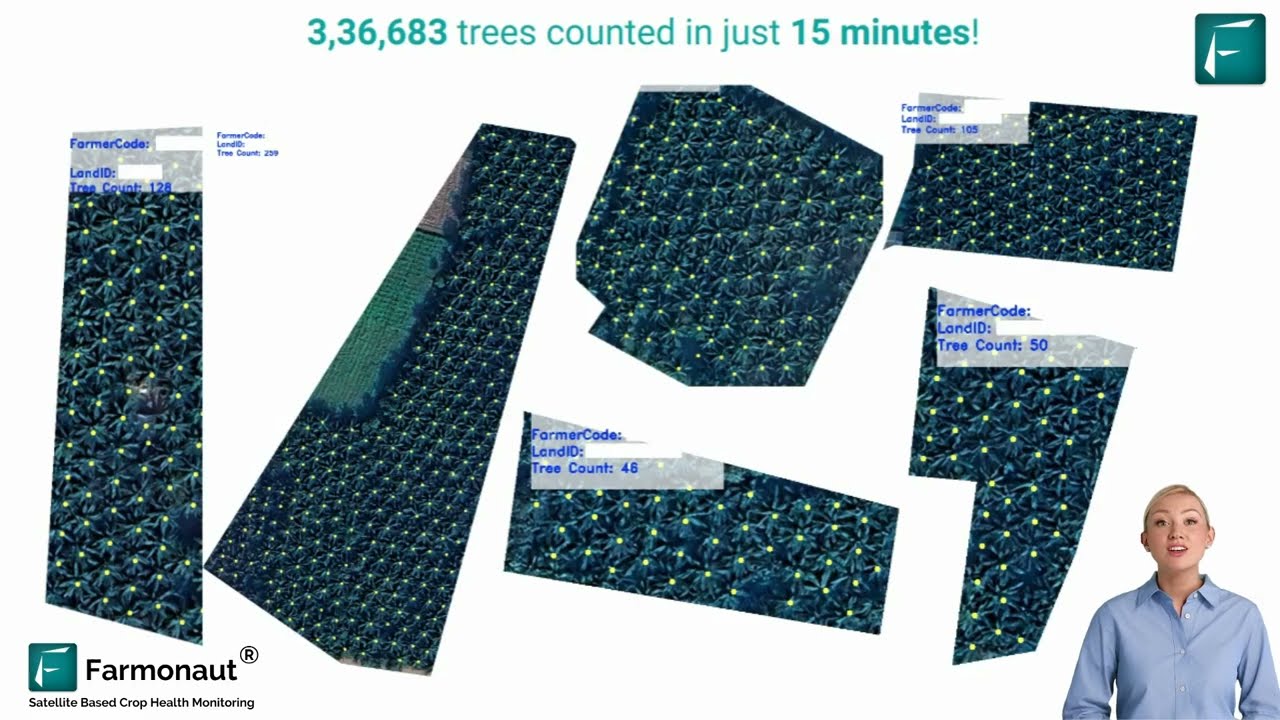
- Arecanut is susceptible to root grubs, yellow leaf disease, and stem bleeding. Early satellite-based symptom detection (NDVI & disease mapping) aids in minimizing outbreaks, reducing manual scouting time and cost.
- Biological controls and precision chemical application are best practices in modern plantations.
-
Nutrient Management for Maximum Yields:
- Balanced NPK application, micronutrient sprays, and periodic organic manure additions are needed, especially in high-density plantations.
- Tech solutions deliver custom schedules and digital reminders for seamless management.
-
Intercropping and Mixed Farming:
- Intercropping with black pepper, banana, cocoa, or coconut not only diversifies income but also adds organic matter and improves soil health.
- However, such systems often require slightly wider spacing.
Overcrowding or poorly draining soils in high-density arecanut plantations, without adequate moisture and nutrient management, can lead to root diseases and lower yields. Monitor using tech-based solutions for proactive adjustments in real time!
- ✔ Balanced irrigation & rainfall monitoring are essential for denser planting
- ✔ Adopt scientific spacing based on variety and region-specific recommendations
- 📊 Integrate AI-driven crop health monitoring to optimize inputs
- ⚠ Avoid root zone crowding—monitor using real-time field mapping for better results
- 🔬 Track nutrient status via regular testing & digital advisories

Environmental & Economic Considerations: Sustainability, Profitability, Carbon Tracking
The environmental and economic pillars go hand in hand for future-ready arecanut cultivation:
-
Economic Viability:
- Arecanut prices are dictated by local and export markets. Maximizing productivity per acre while controlling input costs is the key to maintaining healthy income levels in the face of market volatility.
- High-density systems generate quicker, higher yields, and enable earlier break-even, but require more management.
-
Environmental Impacts and Sustainability:
- Dense arecanut plantations sequester more carbon per hectare—but only if soil fertility and biodiversity are sustained.
- Mixed cropping with coconut, black pepper, and cocoa bolsters soil health and reduces environmental footprint.
- Adopting periodic monitoring (such as with Farmonaut’s carbon footprinting tools) aligns plantation management with climate-smart agriculture standards.
-
Labor & Mechanization:
- Higher density may increase labor input, but integrating satellite & AI-based mapping (see large-scale farm management options here) streamlines workforce utilization and cost control.
-
Traceability & Supply Chain Assurance:
- High-value buyers and exporters will increasingly demand digital supply chain traceability solutions.
- Blockchain-based transparency (as offered by Farmonaut) reduces fraud and improves market access.
- 💰 Maximize profit per unit area with optimized planting density
- 🌿 Reduce chemical use with precise pest and nutrient plans
- 🔗 Gain market edge via blockchain traceability
- 🛡 Sustain crop health using real-time environmental tracking
- ☁ Meet carbon regulations with automated carbon footprinting
Farmonaut’s Tech Edge: Satellite Solutions for the Next-Gen Arecanut Grower
As precision agriculture becomes the hallmark of 2026, access to affordable, satellite-powered advisory is the game-changer. At Farmonaut, we empower arecanut farmers and agri-managers to future-proof their plantations by leveraging our advanced technology stack:
- Crop, Plantation & Forest Advisory: Leverage satellite imagery, AI, and machine learning for crop health, disease, and water status monitoring—ensuring every palm counts and boosting plantation yield.
- Large Scale Farm Management: Mobile and web platforms deliver field mapping, digital record-keeping, and labor management, tailored for high-density arecanut and mixed plantations.
- Farmonaut API + API Developer Docs: Add satellite data, crop health, and yield prediction to your agri tech stack or custom farm ERP—ideal for plantation companies, digital ag start-ups, and government agriculture agencies.
- Carbon Footprinting & Environmental Impact: Automate emission tracking and climate reporting as required by new sustainability regulations and global carbon markets.
- Crop Loan & Insurance Application Verification: Banks and NBFCs can instantly verify arecanut plantation health through satellite snapshots, reducing fraud and expediting finance.
- Fleet & Resource Management: Optimize vehicle and labor deployment for large arecanut farms and agro-processing units.



Download the Farmonaut App for instant remote plantation monitoring, advisory, and yield tracking. Empower your arecanut farm to succeed in 2026 and beyond!
Expert Callouts & Highlight Boxes: Arecanut Plantation Wisdom
Optimal spacing is not “one size fits all”. Match tree variety, region, and soil with the right density for sustainable success.
Plan for a plantation lifecycle—replant gaps every 8–15 years to maintain consistent yield per acre.
Ignoring the need for nutrient recharge in high-density plots leads to rapid soil exhaustion.
The market for traceable, sustainably grown arecanut is rising. Digital tracking is now a premium trigger for bulk buyers and exporters.
Future-ready farms combine density optimization with precision tech for best-in-class productivity and environmental performance.
Frequently Asked Questions: #arecanut, 1 Acre How Many Arecanut Trees & Plantation Best Practices
Q1: How many arecanut trees can be planted on 1 acre in India using high-density techniques?
With 5m x 5m spacing, 500–600 arecanut trees per acre are optimal. Experimental modern grids (4.5m x 4.5m) may allow up to 750 trees per acre, provided intensive management and fertile soils.
Q2: How much yield can a farmer expect per acre in 2026?
Generally, a mature tree yields 5–6 kg nuts per year.
- Traditional: 1,750–2,100 kg/acre
- High-density: 2,500–3,600 kg/acre
- Modern innovation: 2,700–4,125 kg/acre (tech-driven)
High-density and modern tech solutions are likely to further boost productivity by 15–20% versus traditional methods.
Q3: What are the risks of high-density planting for arecanut?
Risks include higher pest and disease incidence due to less airflow, increased competition for nutrients, and root crowding. Careful water and nutritional management, along with tech-enabled risk monitoring, is critical.
Q4: Can intercropping be done in high-density arecanut plantations?
Yes, intercropping with crops like black pepper, coconut, cocoa, and banana is common. Spacing may be increased slightly to accommodate these crops, and farmers should monitor shading and root competition.
Q5: How can technology improve arecanut cultivation outcomes?
Remote sensing and AI-based advisory systems like Farmonaut’s platform aid in monitoring crop health, irrigation needs, pest/disease outbreaks, and environmental indicators. This reduces input wastage, increases productivity, and supports sustainability standards demanded by new markets.
Conclusion: Optimizing #arecanut Planting Density and Yield for One Acre in India (2026 & Beyond)
As arecanut demand remains strong and environmental responsibilities rise, understanding the ideal number of trees planted per acre — and leveraging scientific spacing — will define the profitability and sustainability of every farm.
To summarize:
- Traditional density: About 350 trees per acre (7.5m x 7.5m grid), supporting intercropping and easy management
- High-density planting: 500–600 trees per acre (5m x 5m grid), enabling 20–40% more yield with close input management
- Modern, tech-empowered strategies: Up to 750 trees per acre, only when paired with automated monitoring, precise irrigation, and careful fertilization
- Expected yields can reach 4,000+ kg per acre under optimal density and integrated management
Embracing arecanut farming for the 2026 landscape means blending science with tradition. Farmonaut delivers affordable satellite and digital solutions enabling remote monitoring, yield prediction, carbon footprinting, and supply chain traceability. With these tools, Indian arecanut farmers can confidently optimize their plantations for both income and sustainability as technology continues to shape the agri sector for the better.
Ready to revolutionize your arecanut plantation?
Deploy the latest in satellite, AI, and digital farm management with Farmonaut:
Grow smarter. Plant more effectively.
Secure your yield — with #arecanut, 1 acre how many arecanut trees for 2026 and beyond!

 Esri North East Africa
 Farmer Amigo
 Cresol
 Atur Kuliner
 MDCV UK
 Zerella Group
 Etech Consulting Madagascar
 Vestlandsforsking
 Agritein
 Delicio
 WB Dev
 Sama Premium
 Prochecker
 Tres Valles
 LACOS Geoinformation
 Magrifly
 LatConnect 60
 Blickwinkel
 Agricultural Credit Policy Council
