

Cooperative Farming Models: 7 Benefits & Indian Examples
“Over 90,000 cooperative farming societies in India support millions of smallholders with shared resources and market access.”
Introduction to Cooperative Farming Models
Cooperative farming models form a robust pillar of agricultural development throughout India and worldwide. At their core, these models empower smallholder farmers to collaborate—pooling resources, sharing knowledge, and strategizing collectively in areas such as production planning, input procurement, processing, storage, and marketing. By working together, cooperatives enable farmers to reduce individual vulnerability to price volatility, climate shocks, and input shortages. Furthermore, they unlock economies of scale, improve bargaining power with suppliers and buyers, and foster long-term sustainability and resilience in farming communities.
The benefits of cooperative farming are vast—ranging from increased access to credit, better market integration, reduced costs, and improved adoption of sustainable farming practices. Whether in the fertile plains of Punjab, the rolling hills of Maharashtra, or the tea estates of Assam, the role of cooperatives in agriculture in India remains critical to achieving food security, rural development, and environmental stewardship.
Below, we delve into the seven key benefits of cooperative farming models, provide real-world cooperative farming examples, and explain how these frameworks enable Indian farmers to elevate productivity and sustainability. We also uncover how modern technology, including real-time remote sensing and digital decision-support, is transforming the cooperative landscape for the better.
Cooperative models have reshaped Indian agriculture, delivering significant improvements in input access, financial inclusion, and rural market development.
Why Cooperatives? Foundations of Collective Agriculture
The concept of cooperative farming dates back over a century, driven by the need to overcome challenges faced by individual smallholders. These include limited land holdings, lack of working capital, insufficient access to quality inputs, and weak negotiating positions with traders and financial institutions. Cooperative models group farmers into collectives that cooperate on core aspects of farming, from input procurement and shared infrastructure to collective marketing and training.
Supported by the Department of Agriculture and Cooperation (now Department of Agriculture, Cooperation & Farmers Welfare) and state agencies, the cooperative movement in India now encompasses over 90,000 registered societies, making it one of the world’s most extensive rural networks. These cooperatives bring together farmers of diverse backgrounds and scales, building resilience against unpredictable markets and environmental risks.
- ✔️ Pooling of resources: Land, labor, and finances combining for greater efficiency
- 📊 Collective planning and procurement: Bulk buying of seed, fertilizer, and irrigation equipment
- ⚡ Shared risks & benefits: Smoothing out price and production shocks
- 🔗 Joint marketing: Strengthened bargaining power with buyers and suppliers
- 🌾 Inclusive growth: Empowering smallholders, women, and marginalized farmers
“Cooperative farming can increase smallholder incomes by up to 30% through collective bargaining and reduced input costs.”
Comparative Table: 7 Benefits of Cooperative Farming with Indian Examples
If you’re planning to form a cooperative, focus on transparent governance and member participation from the start. This creates trust and ensures long-term sustainability.
1. Improved Access to Credit and Financing
One of the defining benefits of cooperative farming models is their power to increase access to credit. Most smallholders in India often face barriers like lack of collateral, thin credit histories, and exposure to high interest rates by local moneylenders. Cooperatives overcome these hurdles by aggregating the needs, assets, and credit records of their members.
- Loan aggregation: Cooperatives negotiate for bulk financing with banks and credit institutions, greatly improving loan terms for members.
- Collective collateral: Land, machinery, and other assets are pooled, reducing individual risk and enabling asset-based lending.
- Improved repayment records: Cooperatives maintain repayment histories, boosting overall group creditworthiness and trust among lenders.
- Asset creation: With better access to finance, farmers can invest in new implements, seed varieties, and irrigation equipment, strengthening productive capacity.
- Timely operations: Members access timely working capital, enabling on-schedule planting, input application, and harvest, reducing yield gaps in lean periods.

Major banks and financial institutions increasingly use technology for satellite-based verification and risk assessment—resulting in lower transaction costs and higher loan approval rates. Cooperative societies that tap digital tools further widen their access to institutional finance.
The aggregate repayment records and risk-sharing of cooperatives make them attractive clients for rural credit portfolios and lending innovations, lowering default risks.
2. Enhanced Market Access & Value Chain Integration
Market access remains a key challenge for individual smallholders. Cooperative farming models enable members to directly engage with buyers, negotiate for better prices, and enter premium markets by aggregating supply and certifying quality standards.
- Collective marketing: Bulk sales boost bargaining power, reducing dependence on middlemen.
- Branding and value addition: Cooperatives market produce under a common brand, engaging in primary processing (milling, grading, packaging) to capture more value.
- Expanded market opportunities: Enabling organic, fair-trade, or GI certifications widens premium market access domestically and internationally.
- Storage facilities: Cooperatives set up storage and cold chains, reducing post-harvest losses by up to 15%.
- Transparent price realization: Members benefit from standardized pricing and fair revenue sharing.

Examples like Amul Dairy Cooperative (Gujarat) and Mother Dairy demonstrate how marketing cooperatives scale up farmers’ reach, enhance value chain integration, and boost income by up to 30% through bulk sales and direct contracts with major buyers and processors.
Adopting traceability solutions, such as Farmonaut’s blockchain-based traceability, further unlocks transparent supply chains and brand trust, especially when exporting to stringent markets that require full product journey records and quality certifications.
3. Resource Sharing & Economies of Scale
One of the most powerful enabling factors in cooperative farming models is resource sharing. By pooling assets, members reduce overhead costs and maximize utility from infrastructure and inputs:
- Bulk procurement: Negotiating as a group ensures lower input prices (fertilizer, seed, irrigation equipment) and priority access during shortages.
- Shared machinery and implements: Equipment rental and use are coordinated, making modern machinery affordable and accessible—even for smallest members.
- Water and irrigation management: Group investment enables efficient water allocation, joint irrigation schemes, and shared resource monitoring.
- Reduction in individual risks & costs: Pooling distributes risk, reduces per-farmer costs, and unlocks group insurance or maintenance contracts.
- Economies of scale: Larger procurement and production volumes enable discounts from suppliers and processors, improving group profitability.

For Indian Farmer Fertiliser Cooperative (IFFCO) and KRIBHCO members, input costs are reduced by up to 20% due to bulk deals and prioritized fertilizer allocation. Water-user and irrigation cooperatives in states like Andhra Pradesh and Maharashtra have seen 50% improvement in irrigation efficiency and equitable resource distribution.
Many new cooperatives underestimate the value of proper asset-sharing protocols. Set up clear usage, maintenance, and scheduling rules to prevent internal disputes and ensure fair access.
- ✔️ Reduced input costs: Negotiated discounts with suppliers
- 📊 Shared logistics: Lower transportation expenses per unit
- 🌱 Accessible modern technology: Group investments in advanced irrigation and storage
- 💡 Increased operational efficiency: Less downtime and resource wastage
4. Risk Reduction & Resilience Through Joint Management
In the face of climate change, price volatility, and crop-specific risks, cooperatives offer a robust framework for risk management and resilience. By spreading exposure across members, they help to absorb shocks such as severe weather, pest outbreaks, and sudden drops in market demand.
- Diversified cropping: Members collectively grow a range of crops, reducing group vulnerability to a single crop’s failure.
- Weather monitoring and advisories: Joint investment in weather stations or remote advisory services provides timely information for mitigating losses.
- Insurance schemes: Group insurance (for crop failure, input loss, or livestock) offers risk protection and improved recovery rates.
- Disaster relief coordination: Cooperatives mobilize rapid support during disaster events, including assisting with documentation for insurance claims.
- Water and soil conservation: Joint water harvesting and watershed interventions reduce drought impacts and improve soil health.
Integrated satellite-monitoring and climate-adaptive advisory tools, such as those found on the Farmonaut platform, now support cooperatives in real-time risk assessment and response, enabling data-driven adaptation strategies at scale.
5. Knowledge Transfer, Training & Technical Advisory
One of the critical building blocks for sustainable growth in agriculture is the effective transfer of knowledge. Cooperative farming models foster a conducive environment for:
- Peer learning: Best practices are shared informally among members during group meetings, field days, and demonstrations.
- Extension services: The Department of Agriculture and Cooperation and local agricultural universities provide focused training on seed selection, soil health, pest management, irrigation scheduling, and sustainable techniques.
- Rapid adoption of innovations: Exposure to collective demonstrations means that new variety trials, integrated nutrient management, and climate-smart practices spread faster through the group.
- Soil testing and advisories: Periodic soil health checks and digital advisories lead to improved yield and rationalization of fertilizer use.

Dairy and horticulture cooperatives have witnessed yield increases of up to 22% due to organized training sessions and collective demonstration plots. In Kerala and Himachal Pradesh, horticulture and fruit producer cooperatives organize annual training for thousands of smallholders, driving rapid technology adoption and improved incomes.
Cooperative-led extension programs report up to 5x faster adoption of sustainable farming practices compared to areas without effective farmer organizations.
6. Shared Infrastructure: Processing, Storage, and Logistics
Investing in infrastructure such as processing facilities, storage units, and transportation networks is often out of reach for individual smallholders. Through cooperative farming models, these services become accessible and affordable:
- Warehousing: Cooperative-owned warehouses help farmers avoid distress sales during harvest gluts and allow for strategic storage until prices improve.
- Primary & secondary processing: Onsite cleaning, grading, and packaging add value and improve quality standards.
- Cold chains: Especially vital in dairy and horticulture, reducing perishability and post-harvest losses.
- Joint logistics: Shared vehicles and distribution systems cut costs while improving timely delivery to markets.
- Branding and product traceability: Building group reputations in new markets via standardized protocols.

Prominent Indian examples include Mother Dairy’s extensive cold chain and processing network, and Maharashtra’s grain cooperatives, which run farmer-owned storage with transparent access protocols. These collective investments directly result in reduced post-harvest losses (up to 15%) and higher sale prices for members.
7. Promotion of Sustainable Farming Practices
As climate risk and environmental constraints increase, cooperative farming models stand out as champions of sustainability. Collective planning, resource management, and certification efforts enable wider and more effective adoption of sustainable, climate-smart agriculture:
- Organic certification: Cooperatives facilitate member-wide organic certification, helping entire communities tap into premium, export-grade markets.
- Soil and water stewardship: Group initiatives for vermicomposting, water harvesting, and low-input management improve aggregate sustainability and soil health.
- Adoption of eco-friendly practices: Efficient use of fertilizer, integrated pest management, and carbon tracking become feasible at scale.
- Community forest management: Federations help groups jointly restore and manage local forest assets, combining agricultural and environmental goals.
- Compliance for carbon and sustainability reporting: Cooperatives can measure and report group carbon footprints, positioning members for green finance and sustainability-linked incentives. Learn more about carbon tracking technology.

The Organic Farmers Producer Cooperatives of Sikkim, Kerala, and Uttarakhand have enabled communities to certify over 90% of cultivated areas as organic, opening new export markets and boosting local soil health scores.
We at Farmonaut provide real-time, satellite-driven carbon footprint tracking and soil health monitoring to support cooperatives and large-scale farm management—with affordable, easy-to-use dashboards and mobile app tools. (Explore Farmonaut Carbon Footprint Tracking)
- 🌱 Boosts smallholder bargaining power
- 🔵 Reduces per-unit cost on quality inputs
- 📦 Enables efficient storage & value addition
- 🛟 Improves coping capacities for climate and market risks
- 🧑🔬 Accelerates knowledge transfer and technology adoption
Prominent Cooperative Farming Examples in India
Throughout India, cooperative societies have become vital engines of inclusive rural development. Here are some notable sectors and examples:
- Dairy Cooperatives: Gujarat’s Amul and Mother Dairy (Delhi)—linking millions of households to urban markets, focusing on quality, storage, and processing facilities.
- Input and Seed Cooperatives: Indian Farmers Fertiliser Cooperative (IFFCO) and KRIBHCO manage bulk fertilizer procurement, input distribution, and access to certified seed.
- Horticulture Cooperatives: Kerala’s Horticultural Development Programme—driving peer-based training and extension, marketing, and export readiness.
- Water-User Associations: Andhra Pradesh and Maharashtra run numerous irrigation cooperatives, ensuring equitable water distribution and collective investment in drip/sprinkler systems.
- Organic Producer Cooperatives: Sikkim Organic Farmer Producer Organisations support community-wide certification and export-oriented sustainability.
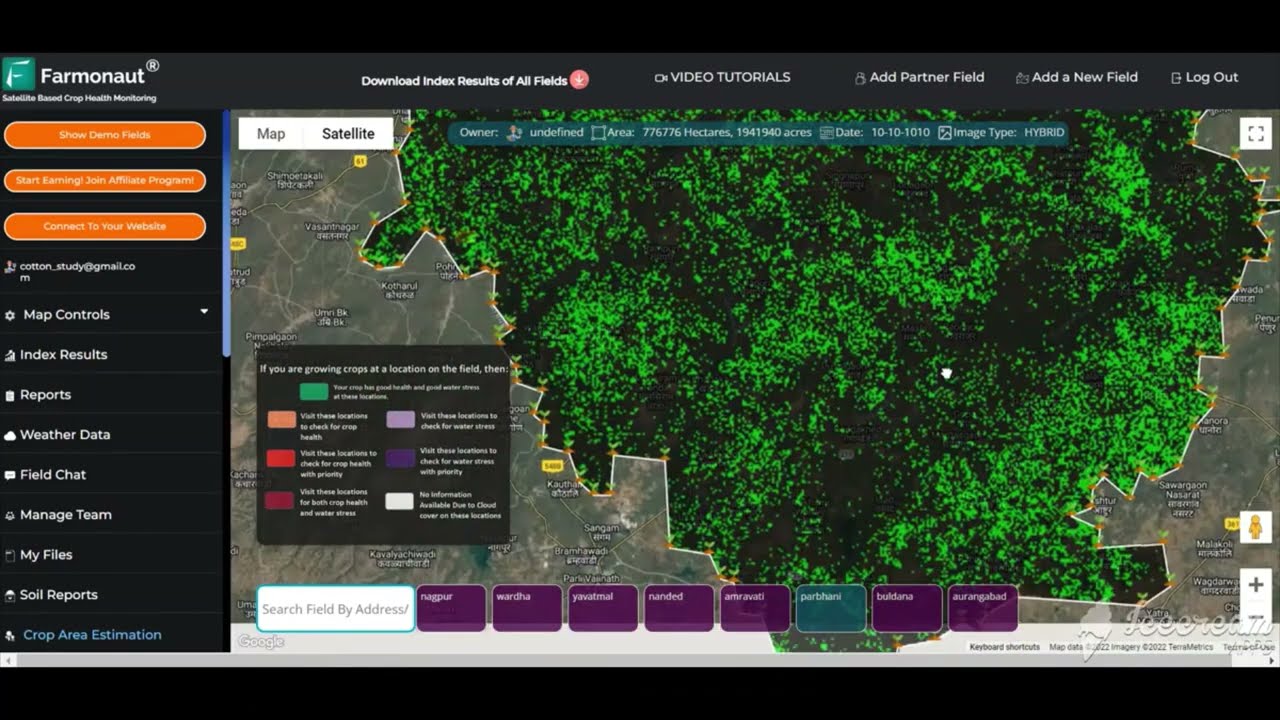
Expansion of Farmer Producer Organisations (FPOs)
India’s government, through the Department of Agriculture and Cooperation, actively promotes FPOs—modern, business-like cooperatives that improve access to finance, processing, and marketing for member producers. As of 2024, over 10,000 FPOs have been established, increasingly acting as critical marketing and knowledge hubs in both major and remote agricultural zones.



Access precision agri-data, imagery, and monitoring for your cooperative projects via the Farmonaut Satellite API.
Detailed documentation: API Developer Docs
The Role of Technology in Empowering Cooperative Farming
Modern agriculture is rapidly transforming and cooperatives are at the forefront of digital adoption. New-age technologies make robust, collective management and monitoring affordable for even the smallest groups. Here’s how:
- Remote sensing & satellite imagery: Regular crop monitoring, yield forecasting, and soil health assessment—essential for planning and risk mitigation at cooperative scale.
- AI-based decision support: Tools like Farmonaut’s Jeevn AI Advisory System provide real-time weather insights, growth tracking, and pest disease alerts to cooperative field leaders, driving science-based actions.
- Blockchain traceability systems: Protects product authenticity, builds brand trust for both local and export marketing, and enables proof of origin for organic/specialty markets.
- Fleet and input management: AI-optimized use of transportation, machinery, and irrigation assets for all co-op members, helping reduce waste and costs. See how Farmonaut enables this.
- Environmental impact monitoring: Tracking group carbon footprints, enabling access to green finance and demonstrating adherence to domestic and global sustainability standards.
Accessible Platforms & Agri Digital Tools
We at Farmonaut believe in democratizing access to advanced digital tools for cooperatives and rural agri-leaders. Our Android, iOS, and web apps (see links above) offer dashboards and alerts for crop health, water stress, and timely operational guidance—streamlining both small and large group management. Cooperatives can integrate our platform with their existing workflows via API for seamless agri operations and resource optimization.

Whether you’re growing organic fruits in Sikkim, managing dairy in Gujarat, or monitoring climate-resilient grains in the Deccan, digital platforms & resource dashboards are transforming how cooperatives function at every level.
How Farmonaut Supports Agricultural Cooperatives
We at Farmonaut have built an easy-to-use suite of tools tailored to meet the needs of agriculture cooperatives—from small rural collectives to large state-spanning organizations:
- Satellite-based monitoring: Multispectral imaging for field, crop area, and soil health status, empowering data-driven decisions.
- Jeevn AI Advisory System: Real-time weather forecasts, risk analysis, and pest/disease alerts for proactive group action. Try Jeevn AI now.
- Blockchain product traceability: Transparent, tamper-proof records for group-labeled, certified, or export-bound produce.
- Resource and fleet management: Centralized scheduling and logistics—for machinery, irrigation, and vehicles. See details on fleet management solutions.
- Carbon footprint tracking: Demonstrate group sustainability for climate reporting and tap into green value chains. Explore now.
- Crop loan and insurance support: Satellite-based field verification for co-op-driven lending or group insurance. See how verification works.
Interested co-ops and agri-leaders can manage large-scale operations using Farmonaut’s Admin App and get real-time insights for all members.
Best Practices in Cooperative Governance
The success of cooperative farming models depends on well-structured, transparent, and inclusive governance systems. Key strategies include:
- Transparent decision-making: Open meetings, clearly documented minutes, and digital tools for voting when feasible.
- Equitable revenue sharing: Clear rules for profits, investment recovery, and reinvestment.
- Comprehensive member training: Regular skill-building on both technical and organizational aspects.
- Financial discipline: Regular audits, digital accounting, and accessible group-led accounts.
- Strategic partnerships: Linkages with public agencies, research bodies, and input suppliers to expand group resources.
- Conflict resolution mechanisms: Dedicated committees or local forums reduce disputes and ensure ongoing member satisfaction.
Long-term cooperative strength is rooted in trust, transparency, and capacity building—pillars essential for sustainable rural transformation and robust agricultural development.
Frequently Asked Questions (FAQ) on Cooperative Farming Models
Q1. What are “cooperative farming models”?
These are organizational structures where farmers collaborate to pool land, resources, knowledge, and market access—aiming to reduce costs, minimize risks, and increase collective bargaining power.
Q2. What is the role of government departments in grassroots cooperative development?
The Department of Agriculture and Cooperation provides policy support, capacity building, and guidance for cooperative formation, credit linkage, and marketing.
Q3. Are only smallholders eligible for cooperative participation?
No. While smallholders benefit the most, medium and large farmers, women farmers, and institutions can also join or form sector-specific cooperatives.
Q4. Are there risks or limitations in cooperative models?
Potential challenges include internal conflicts, governance issues, or lack of active participation. However, these are addressed by strong protocols, regular communication, and transparent systems.
Q5. How can technology enhance cooperative farming?
Digital tools—like those offered by Farmonaut—enable real-time monitoring, predictive analytics, input logistics, and climate-smart advisories, making cooperative management more accurate, efficient, and resilient.
Conclusion: The Pathto Sustainable, Inclusive Farming
Cooperative farming models are a robust pillar of agricultural progress in India, bridging the gap between smallholder vulnerability and resilient rural prosperity. Their power lies in pooling resources, reducing per-unit costs, widening market access, and rapidly spreading innovation. Equally crucial is their role in building community resilience against climate shocks and price volatility, through joint asset creation, transparent governance, and sustainable practices.
Whether a dairy collective in Gujarat, an organic producer group in Sikkim, or an irrigation cooperative in Maharashtra—the benefits of cooperative farming reach millions of Indian farmers and set globally relevant benchmarks for rural development. As digitalization accelerates, technology solutions—like those we provide at Farmonaut—are unlocking the next wave of efficiency, traceability, and sustainable growth for cooperatives of all sizes.
By embracing collective action and leveraging innovation, Indian rural communities are paving the way for an inclusive, environmentally responsible, and prosperous agricultural future.
Embrace the strength of togetherness—move forward with cooperative models for a greener, more resilient tomorrow.

 Godrej Agrovet
 Hayleys Agriculture
 Linx Agritech
 Adinet
 Save Your Soils
 GalaxEye Space
 Grandstream Algérie
 XOS Realty
 Geospatial Lab Africa
 Agro La Gándara
 HIPSAC
 ZOL Zimbabwe
 Juligerm
 AdBio
AdBio MISE Maroc
 NWNS
NWNS Red August Group
 Farm Inc
 WeMe Global
 Agrotoken
 Blue BearX
 Insignito
 DnCubed
 Indosistim Teknologi
 Liquify Digital
 CU Foods
 BeyondTech Global
 Rouge VC
 AgroRisk
 Oath Inc
 Esri North East Africa
 MDCV UK
 Etech Consulting Madagascar
 Vestlandsforsking
 WB Dev
 Sama Premium
 Tres Valles
 Blickwinkel
 Agricultural Credit Policy Council
 eKGIS
eKGIS Mostas Tech
 Andex
Andex Deluxe Conseil
 WICO
WICO Chimera Innovation
 SkyHarvest
 Teledarbas
 Exurbia Geospatial
 FieldZero
