

Australian uranium · Producer guide
Uranium Miners in Australia: Mines, Owners, Output
Three uranium mines produced in Australia in 2024, all in South Australia: Olympic Dam, Four Mile and Honeymoon. See who owns each, what it mined in its latest year, and which projects have stalled.
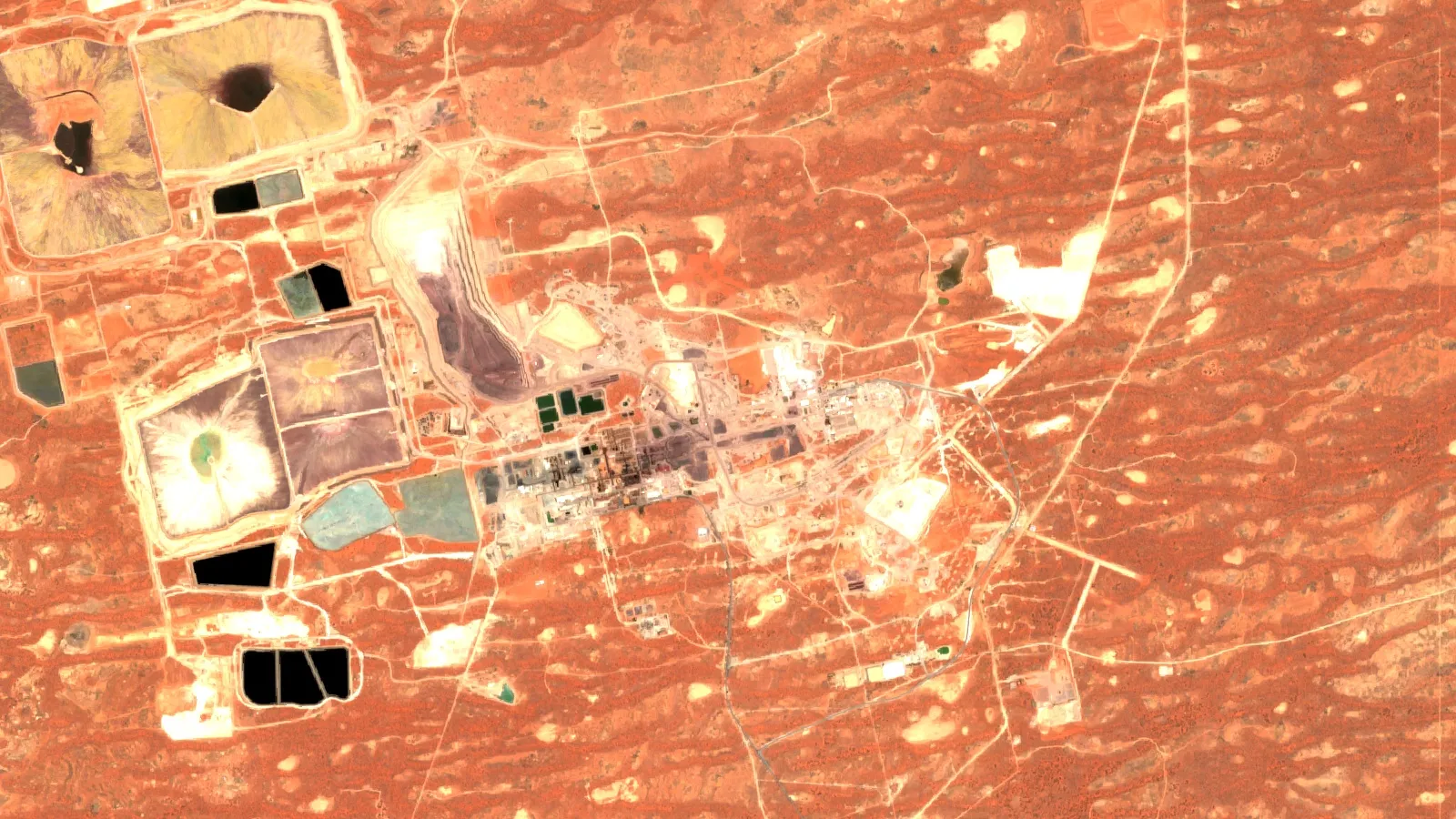
Key takeaways
- Australia produced 4,656 tonnes of uranium in 2024, about 8% of world output and fourth among producing countries (Geoscience Australia, 2026).
- BHP’s Olympic Dam made 3,647 tonnes of payable uranium in the year to June 2026, up 16% (BHP operational review, 16 July 2026).
- Boss Energy produced 1.407 million pounds of U3O8 at Honeymoon in the year to June 2026 at an AISC of US$41 per pound, and guides 1.25 to 1.30 million pounds for the next year (Boss Energy, 27 August 2026).
- Cameco says it missed the state deadlines for Yeelirrie (January 2022) and Kintyre (March 2020), the extensions were declined, and no work is planned at either in 2026 (Cameco, 2025 Annual Information Form).
- ERA’s 2022 reforecast put Ranger rehabilitation at A$1.6 to A$2.2 billion, up from a 2019 closure estimate of A$973 million, with completion between late 2027 and late 2028 (World Nuclear News, 2022).
In this article
- Who are the uranium miners in Australia
- The three producing mines, one by one
- How much uranium does Australia produce
- Where Australia lets uranium be mined
- Closed, stalled and proposed uranium mines
- Uranium price and what it means for Australian miners
- Uranium margin calculator
- Land, water and rehabilitation at uranium mines
- Traditional owners and royalties
- Screening ground and land impact from space
- Frequently asked questions
Three uranium mines produced in Australia in 2024, all in South Australia: BHP’s Olympic Dam, the Four Mile mine operated by Heathgate Resources and owned through its affiliate Quasar Resources, and Boss Energy’s Honeymoon. Together they produced 4,656 tonnes of uranium, about 8% of world output and the fourth-largest national total, according to Geoscience Australia (2026). This guide names each producer, shows what it mined in its latest reported year, lists the mines that closed or are still proposed, and explains how the land and water side of uranium mining is regulated and cleaned up.
Figures are dated and come from company filings and government agencies. Units differ between sources (tonnes of uranium, tonnes of U3O8, pounds of U3O8), so each number says which one it uses. U3O8 is uranium oxide concentrate, also called yellowcake, the product that Australian mines sell.
Who are the uranium miners in Australia
Only three companies currently run producing uranium mines. A fourth, Energy Resources of Australia (ERA), stopped processing at Ranger in the Northern Territory in January 2021 and now spends its money on cleaning the site up. The table puts the producers side by side, using each company’s own latest reporting where it exists.
| Miner | Mine and state | Method | Latest figure found |
|---|---|---|---|
| BHP | Olympic Dam, South Australia | Underground copper-gold-silver-uranium mine; uranium is a by-product | 3,647 tonnes of payable uranium in the year to June 2026 (BHP) |
| Heathgate Resources and Quasar Resources (General Atomics affiliates) | Four Mile, South Australia, processed at the Beverley plant | In situ leach (ISL), where the ore is dissolved underground and pumped out | 1,503 tonnes of U3O8 in 2022 (World Nuclear Association); listed as producing in 2024 (Geoscience Australia) |
| Boss Energy | Honeymoon, South Australia | In situ leach | 1.407 million pounds of U3O8 (about 638 tonnes) in the year to June 2026 (Boss Energy) |
Company reporting years end in June for BHP and Boss, so “latest year” is not a calendar year for them. The World Nuclear Association table gives Four Mile output only to 2022; Geoscience Australia lists the mine as producing in 2024.
The three producing mines, one by one
Olympic Dam (BHP), South Australia
Olympic Dam is the world’s largest known uranium deposit, with 1,026 thousand tonnes of uranium in economic demonstrated resources, which is most of Australia’s 1,280 thousand tonnes (Geoscience Australia, 2026). The mine is run mainly for copper. BHP’s operational review for the year ended 30 June 2026 shows payable uranium of 3,647 tonnes, up 16% on the 3,154 tonnes of the previous year, with an average uranium grade of 0.58 kg per tonne of ore (BHP, 16 July 2026).
Chart
BHP payable uranium by quarter
Tonnes of payable uranium in concentrate, Copper South Australia (Olympic Dam)
Uranium output follows the copper plant rather than the uranium market. About 80% of the uranium is recovered by acid leaching the flotation tailings that are left after copper is recovered, and most of the rest comes from the copper concentrate, according to the World Nuclear Association (profile updated February 2025). That is why the quarterly series in the chart moves with plant performance and not with price.
Four Mile (Quasar and Heathgate), South Australia
Four Mile is an in situ leach mine on sand-hosted deposits 5 to 10 km from the older Beverley mine. Quasar Resources bought out Alliance Resources’ 25% interest in 2015, so Four Mile is now wholly owned by that General Atomics affiliate, and loaded solution is processed through the Beverley plant (World Nuclear Association). Beverley itself is mined out. Four Mile output ran at 1,815 to 2,241 tonnes of U3O8 a year from 2017 to 2021 and fell to 1,503 tonnes in 2022 (same source). Geoscience Australia still lists it as one of the three producing mines in 2024.
Honeymoon (Boss Energy), South Australia
Honeymoon is the restart story. It was put on care and maintenance in 2013, agreed to be bought by Boss Energy (then Boss Resources) in 2015 (World Nuclear Association) and returned to production in 2024 (Geoscience Australia). For the year to 30 June 2026 Boss reported production of 1,407 thousand pounds of U3O8 at Honeymoon, a C1 cash cost of A$39 per pound (US$26) and an all-in sustaining cost (AISC) of A$61 per pound (US$41). Sales revenue doubled to A$151.1 million at an average realised price of A$111 per pound (US$74.4, which includes a A$15.5 million uranium loan repayment), and the company reported a net profit of A$2.5 million (Boss Energy ASX release, 27 August 2026).
The company’s guidance for the next year is lower: 1.25 to 1.30 million pounds, with AISC of A$83 to A$92 per pound (US$58 to US$64). Boss says this reflects a decision to stop investing in older wellfields and to move to a wide-spaced wellfield design that began in January 2026. AISC is the cost per pound including sustaining capital and overheads, the number to compare with the price.
How much uranium does Australia produce
Geoscience Australia puts 2024 national production at 4,656 tonnes of uranium, 0.6% below 2023, and says the whole output was exported under bilateral safeguards agreements (Geoscience Australia, 2026). For comparison, the World Nuclear Association records 4,820 tonnes of U3O8 (4,087 tonnes of uranium) for 2022 and 7,315 tonnes of U3O8 for 2020, the last year Ranger ran at scale. Output dropped sharply once Ranger stopped, and Honeymoon has only partly filled the gap. The chart covers mine-by-mine tonnages through 2022 and the 2024 national total comes from Geoscience Australia.
Chart
Where Australian uranium was exported
Share of 2024 exports (4,869 tonnes of uranium)
Chart
Uranium oxide produced by mine
Tonnes of U3O8 per year, 2015 to 2022, selected mines
The charts show production by mine for the years the World Nuclear Association tabulates, and where the 2024 exports went. BHP’s quarterly series, shown under the mine profiles above, is the most recent producer data.
Where Australia lets uranium be mined
Geoscience Australia notes that uranium mining is currently permitted only in South Australia and the Northern Territory. The other states differ:
- Western Australia: in June 2017 the state government banned uranium mining on all future-granted mining leases, but let four projects that already held state ministerial approval proceed: Toro Energy’s Wiluna, Cameco’s Kintyre and Yeelirrie, and Vimy Resources’ Mulga Rock (Government of Western Australia, 20 June 2017). Vimy later merged into Deep Yellow.
- New South Wales and Victoria: the Uranium Mining and Nuclear Facilities (Prohibition) Act 1986 and the Nuclear Activities (Prohibitions) Act 1983 prohibit uranium mining, and exploration is illegal in Victoria (World Nuclear Association).
- Federal level: Yeelirrie also needed, and received, federal approval in 2019 (Cameco). Australia exports uranium only to countries that have signed bilateral safeguards agreements.
Those rules decide which of the proposed mines in the next section can be built at all. For anyone planning fieldwork, they also decide where exploration licences for uranium can be held.
Closed, stalled and proposed uranium mines
Outside Olympic Dam, most of Australia’s identified uranium sits in places with no operating mine. The World Nuclear Association says the large majority of resources lie in five deposits: Olympic Dam, Ranger, Jabiluka, Kintyre and Yeelirrie. Here is where each project stands.
| Project | Owner | State | Status |
|---|---|---|---|
| Ranger | Energy Resources of Australia (Rio Tinto holds over 98%) | Northern Territory | Processing ended January 2021; site in rehabilitation |
| Beverley | Heathgate Resources | South Australia | Mined out; its plant processes Four Mile solution |
| Jabiluka | Energy Resources of Australia | Northern Territory | The Northern Territory Government declined to renew ERA’s mineral lease in July 2024 (World Nuclear News, 26 July 2024); Rio Tinto has said it has no plans to invest in developing Jabiluka (Mining Technology, November 2024) |
| Mulga Rock | Deep Yellow | Western Australia | Environmental approval since 2017; revised definitive feasibility study scheduled for the third quarter of 2026 (Geoscience Australia) |
| Yeelirrie | Cameco (100%) | Western Australia | State approval required substantial commencement by January 2022, not achieved, extension declined; federal approval runs to 2043; no work planned in 2026 (Cameco) |
| Kintyre | Cameco (100%) | Western Australia | State approval required substantial commencement by March 2020, not achieved, extension declined; no work planned in 2026 (Cameco) |
| Wiluna | IsoEnergy (completed its takeover of Toro Energy on 25 June 2026) | Western Australia | One of the four projects exempted from the 2017 ban |
| Valhalla | Paladin | Queensland | Large deposit near Mount Isa; the World Nuclear Association profile says state policy stalled it to 2012 |
Cameco’s 2025 Annual Information Form is the clearest statement of how the Western Australian rules bite. It says the Yeelirrie state approval required substantial commencement by January 2022 and the Kintyre approval by March 2020, that neither was achieved, and that the current government declined to extend them. Cameco can apply again and a future government could grant an extension (Cameco, 2025 Annual Information Form). Both projects still hold federal approval, Yeelirrie to 2043 and Kintyre to 2045 (Cameco, 2025 Annual Information Form).
Uranium price and what it means for Australian miners
Uranium is not traded on an open exchange. Cameco publishes month-end spot and long-term indicators averaged from UxC and TradeTech. At 30 September 2026 the spot price was US$89.63 per pound of U3O8 and the long-term price US$96.50 (Cameco uranium price page, September 2026 month-end). The chart shows how the two moved over 2026. These are market indicators, not the price any one miner receives, because most output is sold under long-term contracts.
Chart
Spot and long-term uranium price, 2026
US$ per pound U3O8, month-end indicators
Compare the price with costs. Boss Energy’s FY2026 AISC of US$41 per pound sat well below its US$74.4 average realised price (which includes a loan repayment), but its guided AISC for the next year rises to US$58 to US$64. BHP’s own cost guidance for Olympic Dam assumes a uranium price of US$70 per pound as a by-product credit, and its FY2026 results presentation (18 August 2026) uses a long-term consensus uranium price of US$82 per pound, based on UBS consensus as of May 2026. The calculator below lets you test your own price, cost and royalty.
Exploration money has followed prices. Australian uranium exploration spending reached A$71 million in 2024, the highest in over a decade, after a low in 2019 to 2020 (Geoscience Australia, citing ABS). For a sense of scale in another country, our note on mineral exploration spending in Canada lays out the same kind of data.
Uranium margin calculator
Enter a year’s output, a price, your all-in cost and a royalty rate to see the margin before tax. It is a simple model with example inputs, not a mine valuation.
Calculator
What does a year of uranium output earn before tax?
Enter your own output, price, cost and royalty. Defaults are round examples.
- Revenue (US$): $80,000,000
- Royalty (US$): $4,000,000
- All-in cost (US$): $45,000,000
- Output in tonnes of U3O8: 454
Example values only, not a benchmark or forecast. Price is an input in US$ per pound of U3O8: example, use today’s price. Cost is your all-in sustaining cost per pound (Boss Energy reported US$41 for its year to June 2026). Royalty is a share of revenue; set it to 0 if your cost figure already includes royalties, and check the rate for your jurisdiction. One tonne is 2,204.62 pounds.
Land, water and rehabilitation at uranium mines
Uranium mining affects land and water differently by method, because Australia’s mines use three different ones: underground with acid leach (Olympic Dam), conventional open-pit mining and milling (Ranger, now closed) and in situ leach (Beverley, Four Mile, Honeymoon).
Ranger: the cost of finishing the job
Ranger is the best documented example of what closing a uranium mine costs. The mine in the Northern Territory sits in a lease surrounded by Kakadu National Park, and ERA must return the land to an environment similar to the adjacent park (World Nuclear News, February 2024). The cost figures below come from different dates and are not all measured the same way: a 2019 closure estimate and a 2022 reforecast that includes spending since 1 January 2019.
- A closure estimate based on a 2019 feasibility study was A$973 million.
- In February 2022 ERA’s preliminary reforecast was A$1.6 to A$2.2 billion, with completion between late 2027 and late 2028 (World Nuclear News, 2 February 2022).
The lesson for any new project is that the cost of closure can rise well above the first estimate, so it has to be funded and planned from the start. The disturbed footprint was small next to the park: about 500 hectares of a 7,860-hectare lease inside a park of 1.98 million hectares, per the World Nuclear Association’s mine appendix.
In situ leach and groundwater
In situ leach changes the land very little at the surface. There is no pit, no waste rock and no tailings, because the uranium is dissolved from the sand underground and pumped to a plant. The cost is that the ore zone is deliberately changed chemically. In Australia the solution is native groundwater with sulfuric acid and hydrogen peroxide added (World Nuclear Association, In Situ Leach Mining of Uranium). The World Nuclear Association describes Beverley’s ore as sitting in a saline aquifer isolated from other groundwater, which is a site condition each new ISL project has to show for its own aquifer.
Olympic Dam: arid land and a nature reserve
Olympic Dam is on formerly pastoral land, and the World Nuclear Association notes that the 18,000-hectare lease is managed as a nature reserve. The mine submits an annual environmental management and monitoring report to the South Australian mining department and the Environment Protection Authority (World Nuclear Association mine appendix). The same source notes that the operation used about 12 gigalitres of water a year from the Great Artesian Basin, and that a planned expansion was scrapped in October 2022.
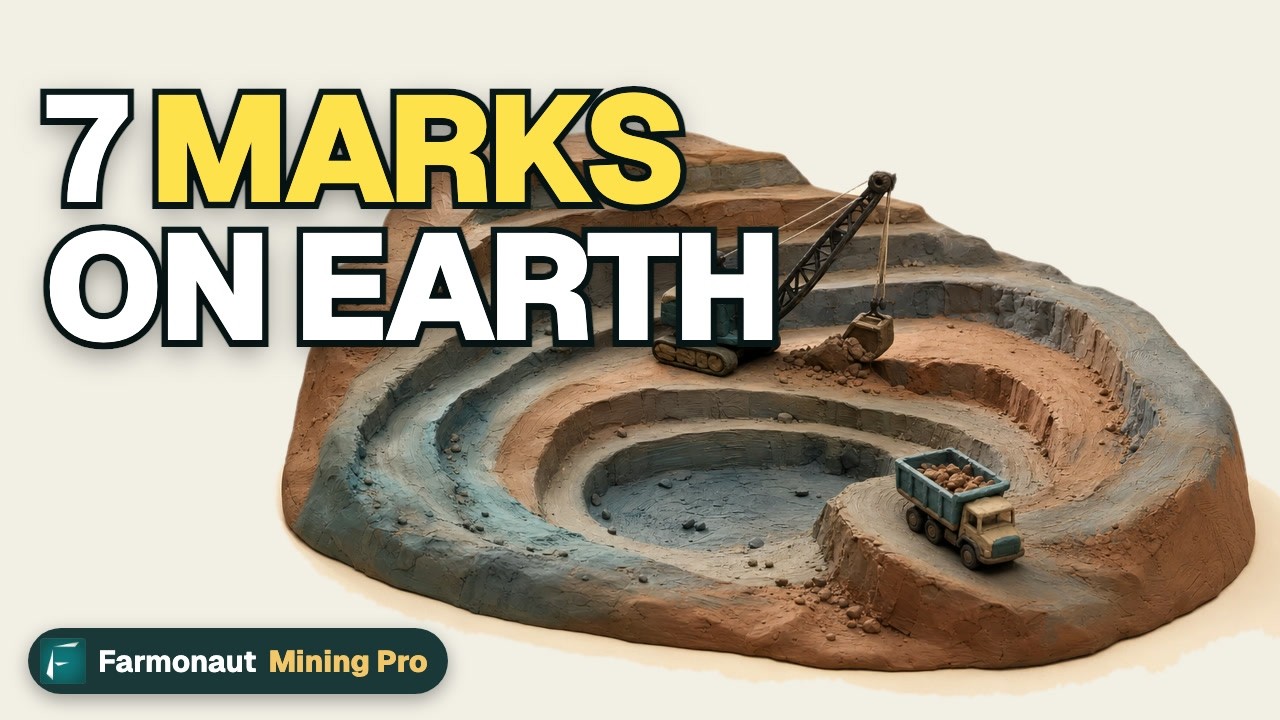
▶ A short claymation on the seven environmental impacts of mining, with satellite maps. · 2:31
Traditional owners and royalties
Ranger and the former Nabarlek mine are on Aboriginal land in the Alligator Rivers region. Traditional owners receive royalties of 4.25% of sales of uranium from Northern Territory mines, according to the World Nuclear Association (February 2025 update), and land title at Ranger is held by the Kakadu Land Trust. At Jabiluka, the Northern Territory Government declined in July 2024 to renew ERA’s mineral lease.
For anyone considering a licence, the practical point is that native title and cultural heritage processes can take longer than the geology. Checking land access early can avoid wasted fieldwork; our explainer on the Australian uranium mines and market trends covers the commercial side in more detail.
Screening ground and land impact from space
Satellites do not replace drilling or a radiometric survey, and they cannot clear a site for environmental or social purposes. What they can do is show the surface that surrounds a licence before anyone drives onto it: alteration minerals, drainage lines, vegetation, existing disturbance and neighbouring land use.
Farmonaut’s satellite-based mineral detection service covers uranium among 20+ minerals. A licence boundary (KML, KMZ or polygon) goes in, and an exploration-target report comes back, typically within 5 to 20 business days. The results are exploration targets that sit ahead of a resource estimate. If you want a project area screened, send it through the mining query form or contact the team.
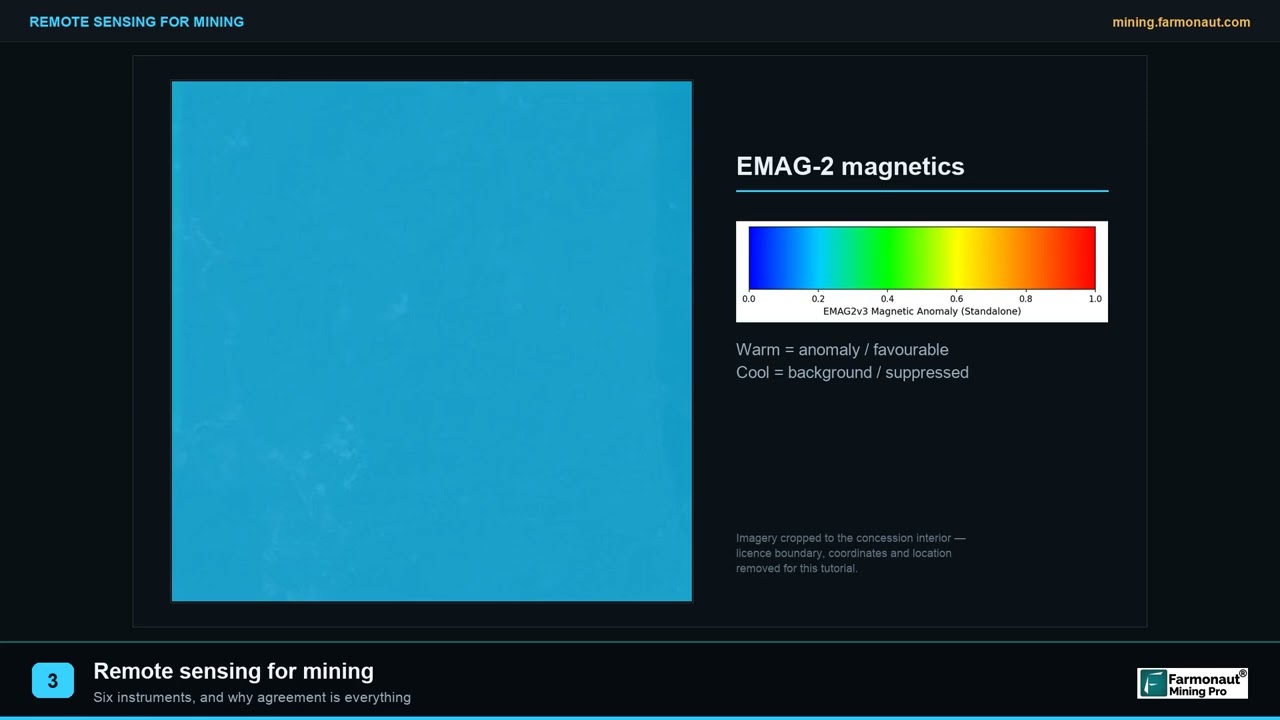
▶ Explains how remote sensing measures ground from a distance, in plain words. · 2:01
If this topic matters to you, read Porgera Gold Mine: Owners, Output, Reserves and Impacts next.
Related reading on this site: Gold Mines in Victoria, Australia: Owners and Output.
Frequently asked questions
Which companies mine uranium in Australia
BHP at Olympic Dam, Quasar Resources and Heathgate Resources at Four Mile (all in the General Atomics group), and Boss Energy at Honeymoon. All three are in South Australia (Geoscience Australia, 2026).
How many uranium mines are operating in Australia
Three produced in 2024: Olympic Dam, Four Mile and Honeymoon. Ranger in the Northern Territory stopped processing in January 2021.
Where is the biggest uranium mine in Australia
Olympic Dam, about 560 km north of Adelaide in South Australia, holds the world’s largest known uranium deposit. In the year to June 2026 it produced 3,647 tonnes of payable uranium as a by-product of copper (BHP).
How much uranium does Australia produce
4,656 tonnes of uranium in 2024, about 8% of the world total and fourth place among producing countries (Geoscience Australia, 2026).
Who buys Australian uranium
In 2024, 67% of exports went to the United States, 17% to Canada and 16% to Europe, from 4,869 tonnes exported (Geoscience Australia, citing ASNO).
Is uranium mining allowed in every Australian state
No. Mining is currently permitted only in South Australia and the Northern Territory. Western Australia banned new uranium leases in 2017 while exempting four approved projects, and New South Wales and Victoria prohibit it by law.
What happened to the Ranger uranium mine
Processing ended in January 2021. ERA is rehabilitating the site and reported a provision of A$2.44 billion at 30 June 2026.
Why are Yeelirrie and Kintyre not being built
Cameco’s state approvals required work to start by deadlines in 2022 and 2020 that were not met, and extensions were declined. Cameco reports no planned work at either in 2026.
What is the Australian uranium price per pound
Cameco’s month-end indicators for 30 September 2026 were US$89.63 spot and US$96.50 long-term per pound of U3O8. Check a current UxC or TradeTech quote before using a price in any decision.
Can satellites find uranium
Satellites map surface clues such as alteration minerals and landforms that guide where to sample, but only drilling and radiometric work confirm uranium. They are used to rank where to look first.
This page is for information only. It is not investment advice or legal advice. Confirm licence and approval rules with the regulator.
Farmonaut mining
Map your mining site from space
Consultants can screen a licence area for exploration targets and surface land use before planning fieldwork.
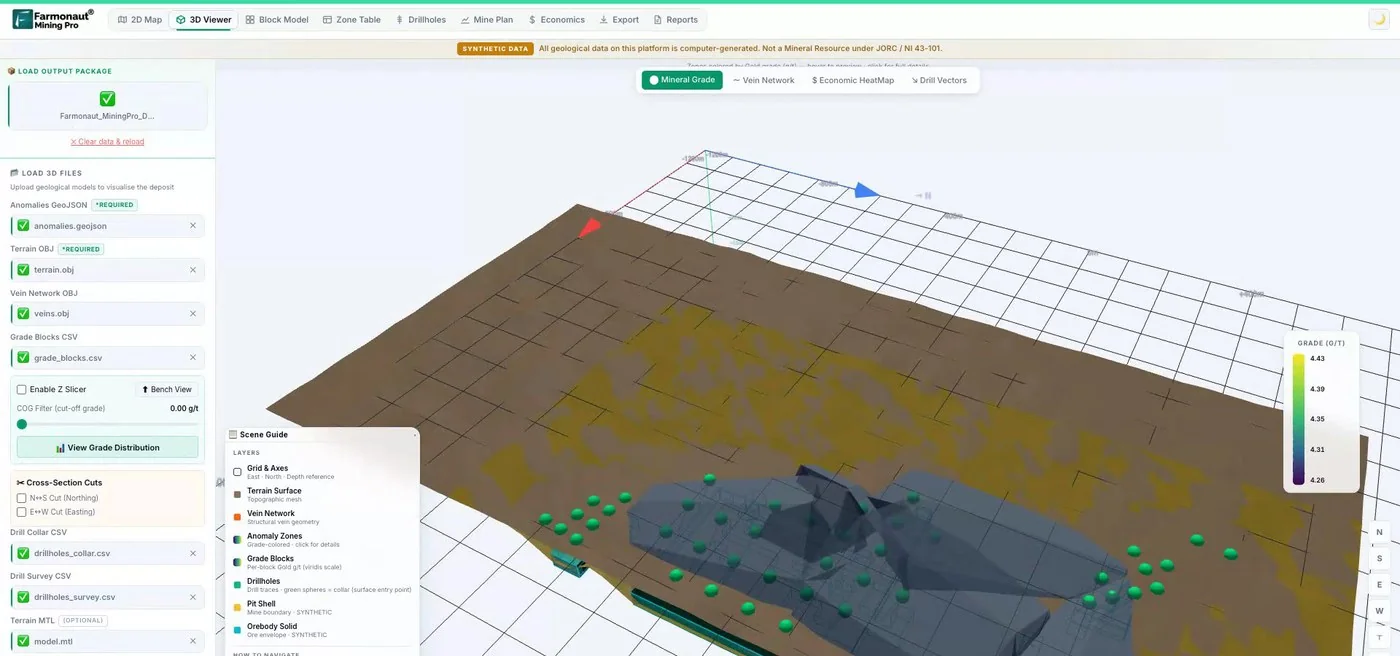
Mining Pro sample view, synthetic data
Keep reading
Sources
- Geoscience Australia, Australia’s Energy Commodity Resources 2026: Uranium and Thorium: ga.gov.au
- World Nuclear Association, Australia’s Uranium: world-nuclear.org
- World Nuclear Association, Australia’s Uranium Mines (appendix): world-nuclear.org
- World Nuclear Association, In Situ Leach Mining of Uranium: world-nuclear.org
- BHP, Operational review for the year ended 30 June 2026 (16 July 2026): announcements.asx.com.au
- BHP, Operational review for the year ended 30 June 2025 (18 July 2025): announcements.asx.com.au
- BHP, FY2026 results presentation (18 August 2026): announcements.asx.com.au
- Boss Energy, FY2026 Financial Results and FY2027 Guidance (27 August 2026): yourir.info
- Cameco, 2025 Annual Information Form: cameco.com
- Cameco, Uranium Price: cameco.com
- Government of Western Australia, McGowan Government announces uranium policy (20 June 2017): wa.gov.au
- World Nuclear News, ERA reforecasts Ranger rehabilitation costs and schedule (2 February 2022): wnn.world-nuclear.org
- World Nuclear News, Australian miners provide updates on past and future operations (28 February 2024): wnn.world-nuclear.org
Discussion
Questions, corrections or field experience? Share them below. First-time comments are reviewed before they appear, and your email is never published.
No comments yet. Be the first to add a question or your experience.

 Omsri International FZE
 G.I.T.T.
 Jaunita Erss Ltd
 Almosi SARL
 SRK Consulting
 Berks Gold Limited
 Mwerezi Minerals Company Limited
 Mining SARL
 SenGold Invest SAS
 Sean Mining Limited
 NTS Group (Pty) Ltd
 Mine4Africa
 Lithspo Minerals Limited
 Tintina Mining Group
 Dalgety Minerals Pty Ltd
 Licence holder · Nigeria · Gold + lithium










