

Hydroponic Farming in Bangalore: 7 Powerful Ways to Succeed
Hydroponic farming in Bangalore has emerged as a resilient and highly efficient solution to the urban agriculture and food security challenges that India faces today. As a focal point for innovation, Bangalore leads the charge in bringing soilless cultivation, high-precision nutrient delivery, and controlled environment agriculture into the urban landscape. In this comprehensive guide, we will explore the essential reasons for Bangalore’s success, provide a powerful side-by-side comparison of hydroponics versus traditional farming, and detail seven action-packed methods to ensure success for growers, investors, businesses, and policy-makers.
Join us as we decode the ecosystem of hydroponic farming setups, modular systems, environmental considerations, government involvement, training programs, and data-driven technologies now shaping the future of agriculture in Bangalore, and beyond.



Why Bangalore Leads the Hydroponics Revolution
Bangalore is home to a dynamic urban population, rapidly shrinking available land, and an innovative tech ecosystem that has embraced hydroponic farming. The city’s unique blend of climate suitability, high demand for safe, fresh produce, and growing interest among municipalities and the private sector fuels robust hydroponic systems uptake.
- ✔ Efficient Use of Resources: Hydroponic farms use up to 90% less water than conventional methods in periods of variable rainfall.
- ✔ Compact Footprint: Vertical configurations allow growers to maximize yields in dense urban landscapes.
- ✔ Year-Round Production: Climate-controlled environments enable uninterrupted crops cycles, regardless of weather changes.
- ✔ Sustainable Agriculture: Recirculated nutrient solutions minimize waste while reducing disease and pest pressures.
- ✔ Economic Opportunity: Bangalore now hosts over 50 commercial hydroponic farms, with many supplying restaurants, supermarkets, and canteens.

See how mobile vertical farming is supercharging urban hydroponics globally.
Comparison Table: Hydroponic Farming vs. Traditional Soil-Based Farming in Bangalore
| Aspect | Hydroponic Farming (Estimated Values) | Traditional Farming (Estimated Values) |
|---|---|---|
| Water Usage (liters/kg yield) | 15–20 | 150–200 |
| Land Requirement (sq. meters/kg yield) | 0.3–0.5 | 2–3 |
| Crop Yield (kg/sq. meter) | 6–8 | 2–3 |
| Growth Cycle Duration (weeks) | 3–5 | 6–8 |
| Pesticide Usage (applications/month) | <1 | 3–4 |
| Investment Cost (INR/sq. meter) | 1500–3000 | 300–700 |
| Urban Suitability | High | Low |
📊 Data Insight: As per the table above, hydroponic farming delivers dramatic water savings, higher yields, and faster cycles, making it the system of choice for urban Bangalore.

Explore trending agri-business models in India—hydroponics leads innovation!
7 Powerful Ways to Succeed in Hydroponic Farming in Bangalore
-
Master the Art of System Selection
Choose your hydroponic system wisely. In Bangalore, nft (nutrient film technique) and drip irrigation systems are popular due to their energy and nutrient efficiency. Evaluate available area, target crops (like lettuce, microgreens, herbs), and your capital to select between vertical stacking, polyhouse modules, or climate-controlled rooms.
-
Optimize Water and Nutrient Management
Control is key: monitor water quality, recirculate nutrient solutions, and regularly check pH and EC (electrical conductivity) levels. Automation, including timers and nutrient dosing systems, reduces errors and maximizes yields—especially during Bangalore’s variable rainfall periods!
-
Leverage Environmental Control—Light, Temperature, and Humidity
Invest in reliable sensors and remote-controlled systems for light, temperature, and humidity management within grow rooms. In Bangalore’s dense urban landscapes, even small variations can affect crop cycles and quality. Climate automation ensures consistent, high-quality output all year.
-
Use Disease-Resistant Genetics and Integrated Pest Management
Select crop varieties bred for soilless cultivation. Deploy integrated pest management (IPM) strategies—barrier netting, beneficial insects, and minimal organic sprays—cutting down on disease vectors and ensuring clean produce for local markets.
-
Systematically Scale Operations
Begin with a modular pilot project before expanding to larger facilities. Modular setups allow fine-tuning of nutrient recipes, disease management protocols, and operational processes—delivering lessons for expansion into high-volume commercial hydroponic farming visible across Bangalore.
-
Integrate with Supply and Marketing Channels
Connect directly with local restaurants, supermarkets, and online grocers. Focus on leafy greens, specialty vegetables, and premium microgreens, which are always in demand. Establish regular contracts with school canteens and health-food retailers for stable revenue streams.
-
Continuously Upskill with Hydroponic Farming Training in Bangalore
Enroll in hands-on workshops offered by training centers across the city. Courses cover everything from nutrient preparation to cost analysis, energy efficiency, and disease prevention. The right training directly impacts yield, quality, and bottom-line profits.
🔧 Essential Hydroponic System Components
- ⚗️ Nutrient Solution Reservoirs: Store and mix nutrients
- 💡 LED Grow Lights: Supplement natural light for faster growth cycles
- 🌡️ Environmental Sensors: Monitor humidity, temperature, and pH
- 🚿 Pumps and Drip Lines: Ensure efficient delivery of nutrient solution
- 🪴 Growth Chambers or Channels: For plant roots to absorb nutrients

See how our Jeevn AI advisory offers real-time agricultural insights using satellite technology.
📌 Investor Note: Vertical farming units using hydroponic techniques in Bangalore show significant ROI—especially where efficient supply chain integration and modular expansion are applied.
Hydroponic Farming in Government Policy and Public Initiatives
The government’s involvement in hydroponic farming has rapidly increased, reflecting recognition of food security, water use efficiency, and sustainable agriculture as core public priorities:
- 🏛 Urban Farming Policies: Support pilot projects, city-based farming subsidies, and infrastructure investment.
- 📑 Training & Accreditation: Public programs promote hydroponic farming training in Bangalore and offer certifications for urban farmers.
- 👩🔬 Knowledge Dissemination: Government demonstration centers display NFT, vertical, and drip hydroponic technologies for crops like basil, lettuce, spinach, and microgreens.
- 🤝 Rural-Urban Linkages: Encourage peri-urban employment and skill-upgrading programs to meet the demands of large commercial hydroponic farming facilities.
- ⚡ Sustainability Mandate: Promotion of water-saving, energy-efficient, and disease-resistant hydroponic system designs.
Pro Tip: When selecting hydroponic equipment, always check for local certifications and support for government subsidies. This can ease CapEx and speed up setup timelines.

Monitor crop health, soil conditions, and NDVI using our advanced web system—ideal for hydroponic farm management in Bangalore.
The Importance of Hydroponic Farming Training in Bangalore (and Kenya)
Effective training programs are the backbone of successful hydroponic farming in Bangalore and other urban environments, including international examples like Kenya. Key elements include:
- 🎓 Modular Courses: Field-ready modules train farmers on system design, resource management, grafting, climate control, and post-harvest handling.
- 💼 Entrepreneurship Guidance: In-depth instruction on business modeling, ROI tracking, marketing channels, and supply contract negotiation—key for commercial farm scaling.
- 🌍 Global Knowledge Exchange: Inspiration from hydroponic farming training in Kenya—tailored for low-cost setups, water conservation, and integrated crop selection.
- 🛰️ Sustainable Practice Emphasis: Integration of renewables, water recycling, and local market adaptation into the training curriculum.
🌱 Hydroponic Training Outcomes
- Efficient nutrient & water management strategies
- Pest and disease identification & control
- Yield consistency across urban climate zones
- Energy budget calculation & sustainability planning
- Business acumen and supply chain integration skills
Training centers in Bangalore promote hands-on learning—crucial for everyone from small hobbyist farmers to large commercial ventures.

Our admin tools simplify hydroponic farm monitoring and operations at scale.
Scaling Up: Commercial Hydroponic Farming Design and Operations
Commercial hydroponic farming requires scalable design, robust infrastructure, and continuous data-driven management. Here’s what defines successful commercial ventures in Bangalore:
- 🤖 Automation & Data Analytics: Integrated control systems monitor nutrient delivery, optimize light/temperature, and automate energy budgeting—enabling larger, multi-crop setups with consistent quality.
- 🏢 Facility Planning: Modular expansion allows for gradual scaling. Vertical racks, polyhouses, and climate zones are connected for tailored environmental control and minimal land use.
- 💧 Resource Efficiency: Recirculated solutions dramatically reduce water consumption and cut nutrient waste, which is monitored in real time for environmental compliance.
- 🚚 Integrated Supply Chains: Onsite packing, cold storage, and direct-channel distribution to supermarkets, restaurants, and schools ensure a rapid and reliable revenue cycle.
- 🪴 Disease Prevention: Use of sterile media, IPM, and regular monitoring for pests and disease—supported by satellite advisory systems for environmental risk assessment.
✔ Key Benefit: Commercial hydroponic farming complements traditional Indian agriculture by delivering fresh food, faster cycles, and year-round yield, especially of high-value greens and vegetables.

Learn how our technologies support large-scale farm management, resource optimization, and monitoring across sectors.
Where Technology Empowers Farming: Satellite & AI-Based Solutions
At Farmonaut, we believe that the next leap in hydroponic farming in Bangalore will be driven by satellite imagery, AI insights, and real-time monitoring tools. Our products and services empower commercial growers, small farmers, and policy-makers with actionable, affordable intelligence for every stage of the farming and supply cycle.
- 🛰️ Farmonaut Satellite Monitoring: Offers fleet management for hydroponic and soil-based farms—track vehicle and equipment usage for best operational efficiency in Bangalore’s dense urban environment.
- 🔗 Blockchain-Based Traceability: Our traceability platform ensures total transparency from seedling to supply chain, helping Bangalore’s hydroponic farms maintain top food quality and safety standards.
- 🌍 Carbon Footprint Monitoring: See details on our carbon footprinting platform—essential for sustainable hydroponic production and for farmers accessing green finance.
- 💰 Loan and Insurance Compliance: Our crop loan and insurance solutions use satellite-based verification, reducing fraud and accelerating financial services for urban and peri-urban hydroponic farms.
- 🔎 Large-Scale Hydroponic Farm Management: Our admin platform helps commercial farm managers organize, monitor, and optimize operations—improving crop cycles, nutrient use, and environmental control.
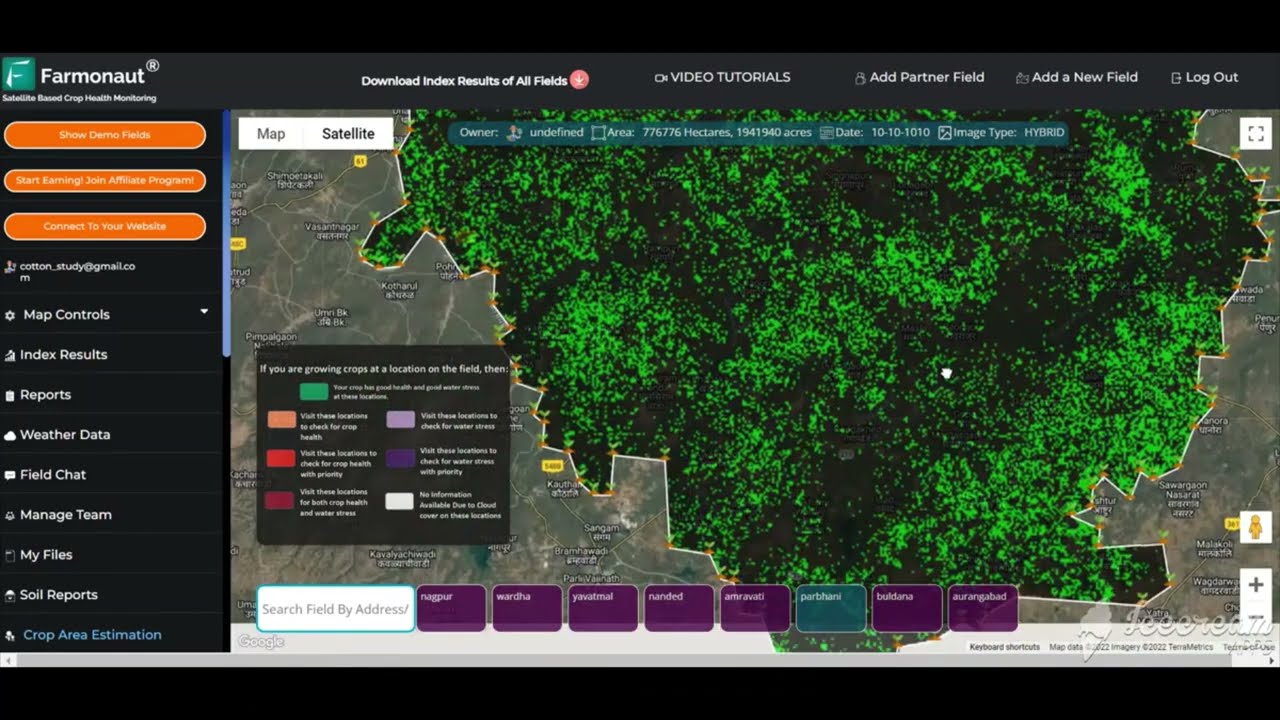
Measure and manage your hydroponic crop areas with satellite precision using our technology.
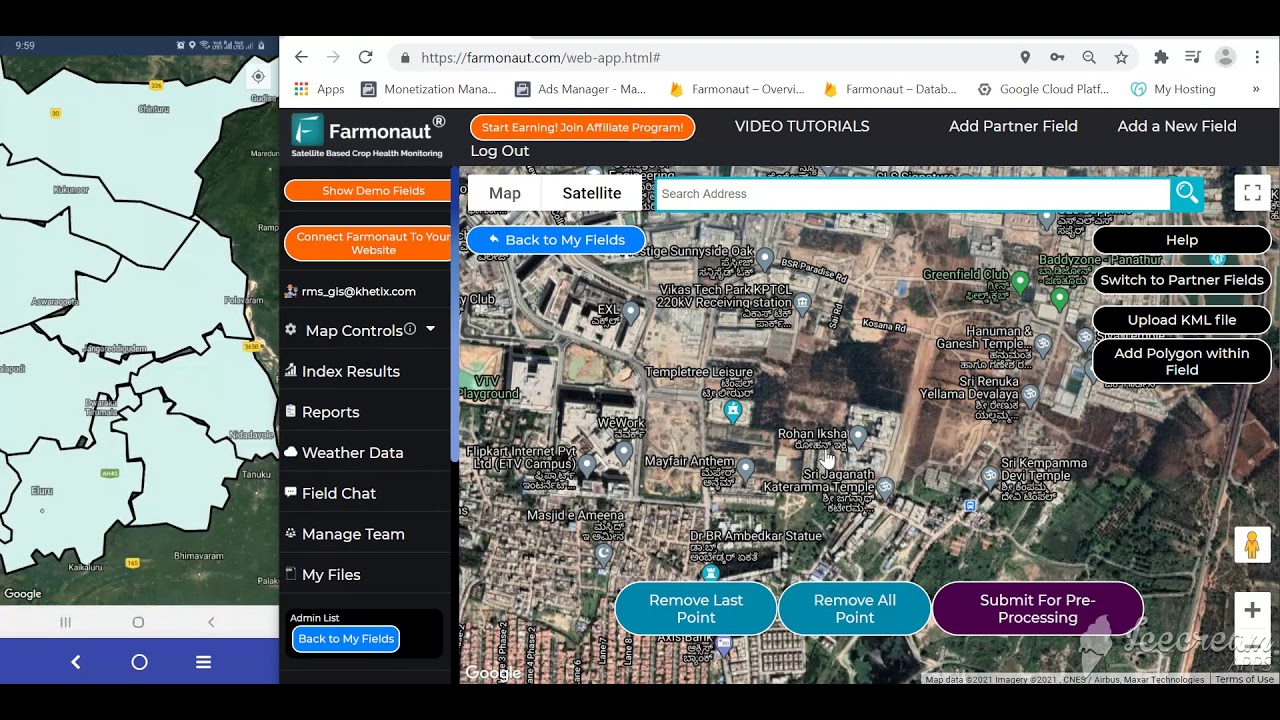
Start with scalable, satellite-based monitoring on our web, Android, and iOS apps for precision hydroponic farming in Bangalore.
Hydroponic farms using Farmonaut’s tools can demonstrate superior water use metrics, sustainability compliance, and verified supply chains—essential for attracting institutional investors and eco-conscious partners.
🌐 Developers, integrate real-time farm and supply analytics into your platforms via our public API and developer docs. Empower your agritech apps or monitoring platforms with satellite-driven data, perfect for hydroponic and urban agriculture solutions.
Essential Insights: Pro Tips, Key Insights & Common Mistakes
- ✔ Key Benefit: Hydroponic farming in Bangalore empowers urban dwellers to grow safe, pesticide-free food even on rooftops or small courtyards.
- 📊 Data Insight: Automated hydroponic facilities reduce staffing needs by up to 40% vs. conventional soil farms.
- ⚠ Risk or Limitation: High upfront investment and energy costs—can be offset by government subsidies or access to green/tech financing.
- 🪴 Quality Focus: Hydroponic farming produces consistently shaped, colored, and flavored vegetables and herbs for high-end markets.
- 🚚 Supply Chain Strategy: Short distribution cycles mean fresher produce, longer shelf life, and greater market penetration in fast-growing Bangalore districts.
FAQ: Hydroponic Farming in Bangalore
What is hydroponic farming?
Hydroponic farming is a soilless method of growing crops using solutions rich in nutrients, precise environmental controls, and innovative systems such as NFT, drip, or vertical farming units.
Why is hydroponic farming important in Bangalore?
Bangalore’s dense urban landscapes, shrinking arable land, and variable rainfall make hydroponics ideal for year-round, high-efficiency, local food production—especially of leafy greens, herbs, and specialty vegetables.
What are the most common hydroponic crops in Bangalore?
Leafy greens (lettuce, spinach), basil, cilantro, and microgreens top the list, along with cherry tomatoes and bell peppers in advanced systems.
Are there government programs supporting hydroponics in Bangalore?
Yes, numerous municipal and government policy initiatives foster hydroponic pilot projects, provide subsidies, and promote training and technical accreditation for farmers shifting to soilless systems.
What kind of training is available for hydroponic farming in Bangalore?
Training centers and modular workshops focus on system setup, water and nutrient management, crop selection, pest/disease prevention, and business development, ensuring readiness for commercial scaling.
Can hydroponic systems really reduce water use by 90%?
Yes! Controlled hydroponic setups recirculate water and deliver nutrients directly to plant roots, slashing water use compared to traditional soil systems.
Conclusion
With hydroponic farming in Bangalore surging ahead, the path is set for a sustainable, resilient, and highly productive urban agriculture landscape. By harnessing modular system design, government support, top-tier training, and the technological advantages of satellite insights and real-time monitoring, growers at all levels—from hobbyists to large commercial ventures—can achieve consistent success.
Our role at Farmonaut is to empower this new class of data-driven, tech-forward growers by delivering actionable insights, blockchain-based traceability, and integrated resource management tools that optimize every stage of the soilless farming journey. As Bangalore continues to innovate and urban hydroponics takes root in dense city centers and peri-urban fringes, the future of food production in India has never looked brighter.
Ready to advance your farm?
Start monitoring, optimizing, and scaling with Farmonaut’s satellite-powered tools—try our mobile/web apps or APIs today.

 Godrej Agrovet
 Hayleys Agriculture
 Linx Agritech
 Adinet
 Save Your Soils
 GalaxEye Space
 Grandstream Algérie
 XOS Realty
 Geospatial Lab Africa
 Agro La Gándara
 HIPSAC
 ZOL Zimbabwe
 Juligerm
 AdBio
AdBio MISE Maroc
 NWNS
NWNS Red August Group
 Farm Inc
 WeMe Global
 Agrotoken
 Blue BearX
 Insignito
 DnCubed
 Indosistim Teknologi
 Liquify Digital
 CU Foods
 BeyondTech Global
 Rouge VC
 AgroRisk
 Oath Inc
 Esri North East Africa
 MDCV UK
 Etech Consulting Madagascar
 Vestlandsforsking
 WB Dev
 Sama Premium
 Tres Valles
 Blickwinkel
 Agricultural Credit Policy Council
 eKGIS
eKGIS Mostas Tech
 Andex
Andex Deluxe Conseil
 WICO
WICO Chimera Innovation
 SkyHarvest
 Teledarbas
 Exurbia Geospatial
 FieldZero
