

Reviewed September 2026 against the US Trade Office’s Malaysia agricultural sector guide and USDA Economic Research Service precision-agriculture data.
Malaysia farming tech means sensors, satellite monitoring, and farm management software applied to a sector that generated $33.6 billion in agricultural exports against $24.4 billion in imports in 2023, according to the US International Trade Commission and US Trade Office. Agriculture contributes about 8% of Malaysia’s GDP and employs roughly 10% of its workforce across agriculture, fisheries, and forestry. The technology question that matters for anyone researching agriculture monitoring system Malaysia options is not whether sensors and satellites work — global studies already answer that — but which combination fits a specific crop, farm size, and budget. This article works through the numbers, the trade-offs, and a calculator you can run with your own field data.
Malaysia Agriculture by the Numbers
Start with the trade picture, because it explains why farming tech adoption in Malaysia looks different from row-crop agriculture in the US Midwest. Malaysia supplied 26% of global palm oil production in the 2020 marketing year, per USDA FAS data cited by the US Trade Office’s Malaysia agricultural sector guide. That single crop dominates the country’s plantation economy, while rice — Malaysia’s staple food crop — runs the other way: about 30% of domestic rice consumption is met through imports rather than local production, according to the same US Trade Office guide. That import dependency is a direct argument for yield-boosting technology on the remaining paddy acreage, since every percentage point of yield improvement reduces the import gap.
The trade surplus of roughly $9.2 billion (exports minus imports) is carried almost entirely by palm oil and a handful of other export crops, not by the staple crops that feed the domestic population. That imbalance is the real backdrop to any “farming tech” or “farming Malaysia” search: the country needs technology gains on two different fronts — export competitiveness for plantation crops, and yield/import-substitution for rice and vegetables — and a single technology stack rarely serves both equally well.
Why Farming Tech Matters for Malaysia’s Sector
Three pressures explain why agriculture monitoring system Malaysia searches have grown: labor availability on plantations, exposure to flood and drought risk in paddy regions, and the need to defend export share in palm oil against lower-cost competitors. None of these pressures are new, but the tools available to respond to them have changed. The global agriculture IoT market was sized at $8.5 billion in 2024 by Markets and Markets, and the Asia-Pacific precision farming market is projected to grow at a 13.95% compound annual growth rate between 2024 and 2033, per Mordor Intelligence. That regional growth rate is the clearest available proxy for where Malaysia sits: precision agriculture spend across Asia-Pacific is compounding faster than the global average, driven by exactly the labor and climate pressures described above.
For direct comparison, the US Department of Agriculture’s Economic Research Service found that 27% of US farms used precision agriculture practices as of 2023. No equivalent Malaysia-specific adoption percentage has been published in English-language sources — this is a genuine gap, not an oversight, and is flagged again in the adoption-gap section below. What is published and verifiable: the yield and water-efficiency gains from IoT-based precision agriculture sensors, drawn from peer-reviewed research rather than vendor claims.
Key Technologies Behind Farming Tech in Malaysia
Peer-reviewed research published in Frontiers in Plant Science found that IoT-based precision agriculture sensors improved crop yields by 12% to 35% and water use efficiency by 61% to 64.1% across the studies reviewed. Those are wide ranges because they span different sensor types, crops, and climates — but they are real, cited figures, not marketing copy. Here is how the main technology categories map onto that range:
1. Soil and Field Sensors
Soil moisture, nutrient, and pH sensors feed real-time data that informs fertilizer, lime, and irrigation decisions. This is the category most directly responsible for the 61–64.1% water-efficiency gains reported in the Frontiers research, since precise irrigation timing is the single biggest lever on water waste.
2. IoT Connectivity (LPWAN, Cellular)
Low-power wide-area networks and cellular IoT connect remote fields, greenhouses, and livestock pens to a central dashboard, pushing alerts for equipment faults, pest outbreaks, or irrigation needs directly to a farmer’s phone.
3. Satellite and Aerial Monitoring
Multispectral and thermal imagery — from drones or from satellite platforms — flags nutrient deficiency, water stress, and disease hotspots before they are visible on the ground, enabling targeted rather than blanket chemical application.

4. Farm Management Software and AI Advisory
Software layers on top of sensor and satellite data to recommend harvest timing, flag pest and disease risk, and plan input schedules. This is the category with the least field-level cost (typically a subscription rather than hardware) and the fastest path to scale across smallholder plots.
5. Automation and Robotics
Automated harvesters, robotic weeders, and pruning equipment reduce dependence on manual labor — directly relevant given Malaysia’s plantation labor shortages — though this is the highest-capital category, discussed in the comparison table below.
Comparison Table: Technology, Yield Impact, and Cost
The table below separates the two figures that are actually verified (yield and water-efficiency ranges, from the Frontiers peer-reviewed research) from the categories where no published Malaysia-specific cost or adoption figure exists. Where a cell says “not published,” treat that as an instruction to run your own numbers using the calculator in the next section, not as a blank to guess at.
| Technology | Main Function | Verified Yield Range | Verified Water-Efficiency Range | Malaysia-Specific Cost Data |
|---|---|---|---|---|
| IoT Soil/Water Sensors | Real-time moisture, nutrient, pH monitoring | 12–35% (Frontiers, 2024) | 61–64.1% (Frontiers, 2024) | Not published — get vendor quotes for your acreage |
| Drones / Aerial Imaging | Crop health mapping, targeted spraying | Within the 12–35% IoT sensor range where imaging feeds variable-rate application | Indirect (reduces over-irrigated zones identified by thermal imaging) | Not published for Malaysia |
| Satellite Monitoring (NDVI/AI) | Remote crop and environmental tracking at field or estate scale | Same peer-reviewed IoT range applies where satellite data drives input timing | Contributes to the same water-efficiency mechanism as ground sensors | Subscription-based; see Farmonaut plans below |
| Farm Management Software / AI | Decision support, harvest timing, pest prediction | Depends on how directly recommendations are acted on | Indirect | Subscription-based; not Malaysia-benchmarked in published sources |
| Automation & Robotics | Harvesting, weeding, sorting | Not isolated from sensor-driven gains in available research | Not directly water-related | Highest capital outlay of the categories above; get equipment-specific quotes |
Two rows in the table above (drones, farm management software) do not have their own isolated yield percentage in the Frontiers research — the study measured IoT sensor deployments specifically. Where a vendor or forum quotes a single, precise yield number for drones or software alone without naming the study behind it, treat that as unverified rather than repeating it.
Irrigation Water-Savings Calculator
Use your own field size and current water use to estimate the range of savings the Frontiers-reviewed studies found (61–64.1% water-use efficiency improvement) rather than relying on a single blended percentage that may not fit your paddy or plantation block.
Assumptions: applies the 61% or 64.1% water-use efficiency range reported by Frontiers in Plant Science (2024) for IoT-based precision agriculture sensors uniformly across your entered acreage. It excludes sensor hardware and subscription costs, installation labor, and any yield-side revenue change — it estimates water and pumping-cost savings only. Actual results depend on your existing irrigation method, soil type, and crop.
The 61–64.1% water-efficiency range and 12–35% yield range are the two most defensible figures in this entire field of research — both trace to peer-reviewed publication rather than market-research estimates. Anchor your own ROI math to these ranges rather than to unsourced percentages you may see elsewhere.
Crop and Sector Focus in Malaysia
Palm Oil and Agroforestry
Palm oil is the crop where Malaysia’s 26% global production share (2020, USDA FAS) makes farming tech an export-competitiveness issue rather than a yield-only one. Soil health monitoring, fertilizer management, and traceability tools help estates protect against disease pressure and defend the quality claims that support premium export pricing. Agroforestry systems that mix oil palm with rubber and other tree species can use data analytics for carbon footprinting and biodiversity tracking.
Explore Carbon Footprinting for Palm Oil Farms
Carbon emissions tracking is increasingly part of export due diligence for palm oil buyers in the EU and elsewhere. Farmonaut’s Carbon Footprinting tools give growers and exporters the underlying data.
Rice and Staple Crops
Rice is the crop where the 30% import-dependency figure (US Trade Office) makes farming tech a food-security issue. Smart irrigation — drip and flood control informed by soil moisture sensors — targets exactly the water-efficiency mechanism described above. Total Malaysia rice production tonnage is not confirmed in the sources available for this article (USDA FAS country-level production data was not directly accessible); readers who need current tonnage should check USDA’s International Production Assessment Division database, which updates by marketing year.
Discover Crop Plantation & Forest Advisory for Peri-Urban & Rural Farmers
Satellite-driven recommendations for fruits, vegetables, and forest species alongside staple crops.
Deploying sensors, weather feeds, and satellite imagery as separate, unconnected systems limits the benefit of each. The 12–35% yield gains and 61–64.1% water savings cited above were measured in integrated systems, not single-sensor deployments.
Vegetables, Fruits, and Urban Agriculture
Hydroponics, vertical farming, and polyhouse systems reduce land and water demand for vegetable production serving urban centers, cutting the time between planting cycles and reducing exposure to import-supply shocks — relevant given that Malaysia already imports $24.4 billion in agricultural products annually (2023, US Trade Office).
Livestock and Aquaculture
Automated feeding and environmental monitoring support biosecurity in livestock pens, while water-quality sensors and analytics help prevent disease outbreaks in aquaculture operations raising prawns, tilapia, and catfish.
The Adoption Gap: What’s Published and What Isn’t
Being direct about gaps is more useful to a reader than filling them with invented numbers. Here is what is and isn’t published, as of this review:
- Malaysia-specific precision agriculture adoption rate: not published in the sources reviewed for this article. The closest available benchmarks are the US figure — 27% of US farms used precision agriculture practices in 2023, per USDA Economic Research Service — and the regional growth rate of 13.95% CAGR (2024–2033) for Asia-Pacific precision farming, per Mordor Intelligence. Neither substitutes for a Malaysia-only figure; if one is published later, USDA ERS periodically updates its precision-agriculture adoption survey and is the right place to check.
- Total Malaysia rice and rubber production volumes: not confirmed in the sources available here. Check USDA’s IPAD database (ipad.fas.usda.gov), which refreshes country/crop production estimates by marketing year.
- Government subsidies or digital agriculture policy specifics: no English-language published source was located for this review. Readers researching current programmes should consult Malaysia’s Ministry of Agriculture and Food Security directly, since this kind of policy detail changes between budget cycles and is not something a single article can keep current.
- Smallholder technology cost barriers: not quantified in available sources. The IoT and precision-agriculture cost figures that do exist (US and global market sizing) are not a substitute for a Malaysia-smallholder-specific cost study.
Where this article cites a range instead of a single number — yield gains of 12–35%, water efficiency of 61–64.1% — that range comes directly from the peer-reviewed studies reviewed in the Frontiers in Plant Science article cited above, not from an editorial choice to hedge.

How Farmonaut Fits: Satellite & AI Tools
Farmonaut’s platform applies satellite monitoring and AI advisory to the technology categories described above, aimed at farmers, estates, and agribusinesses working across Malaysia’s mixed crop portfolio.
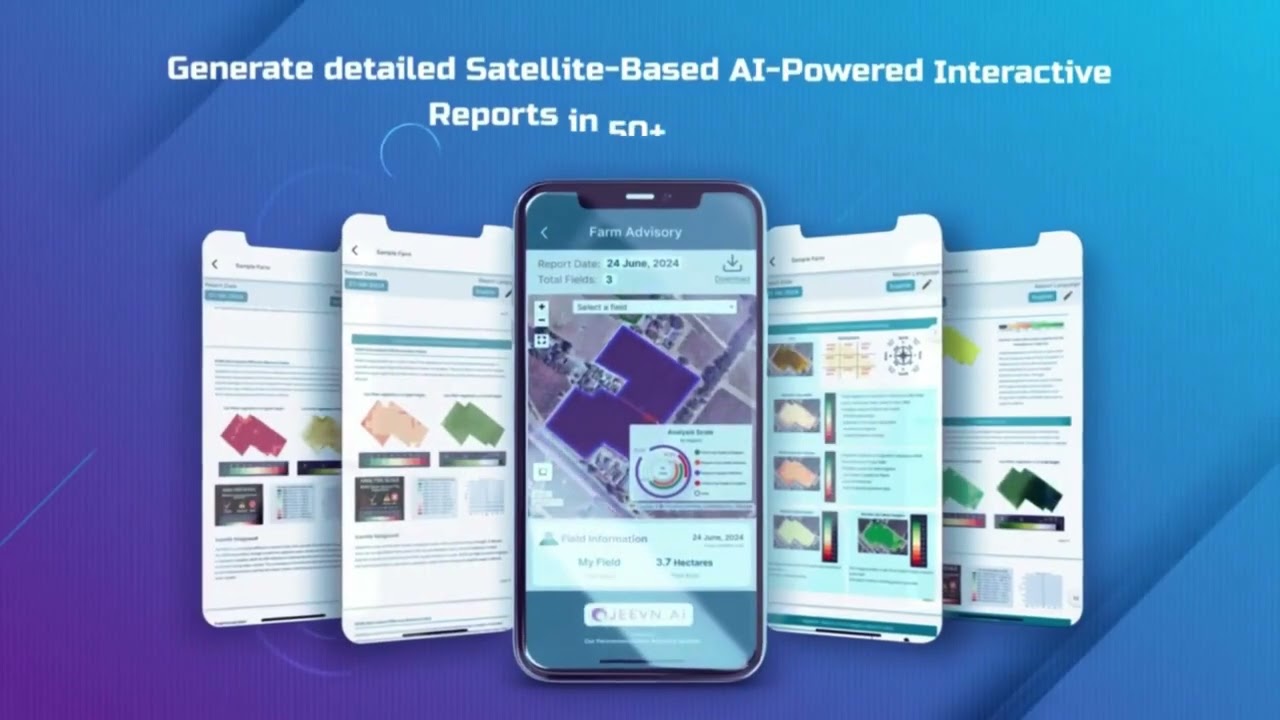
- Satellite-Based Monitoring: Multispectral imagery tracks crop health (NDVI), soil status, and water stress across large or scattered field holdings.
- Jeevn AI Advisory: Weather-aligned, field-specific guidance generated from the satellite and sensor data layer.
- Blockchain Traceability: Supply-chain transparency for export markets via Traceability Technology.
- Fleet & Resource Management: Fleet Management solutions for plantation and multi-crop vehicle/equipment oversight.
- Environmental Monitoring: Carbon footprinting to support export-market compliance requirements.

None of these tools require expensive on-farm hardware to get started — access is via web and mobile apps, which matters for the smallholder cost-barrier gap noted above, even without a published Malaysia-specific cost benchmark to compare against.



Building on Malaysia’s agriculture monitoring infrastructure? The Satellite Data API and Developer Docs support rapid integration for mapping and analytics applications.
Apps, APIs, and Subscription Options
Farmonaut’s subscription tiers cover the range from single-field smallholder use to enterprise-scale plantation management:
Best Fit Solutions:
Large Scale Farm Management Suite — for agricultural businesses managing extensive land holdings across multiple sites.
Product Traceability Solutions — for export competitiveness and regulatory compliance covering fruits, vegetables, palm oil, and other export crops.
Further reading:
FAQs: Farming Tech and Agriculture Monitoring in Malaysia
What counts as “farming tech” in Malaysia today?
IoT soil and water sensors, drone and satellite imagery, farm management software with AI advisory, and automation/robotics. The peer-reviewed evidence base (Frontiers in Plant Science, 2024) covers IoT sensor deployments specifically, showing 12–35% yield gains and 61–64.1% water-use efficiency gains — the two most defensible figures in this field.
Does an agriculture monitoring system pay for itself on a smallholder plot?
No Malaysia-specific cost-barrier study has been published to answer this directly. Use the water-savings calculator above with your own acreage and current water cost to estimate the operating-cost side of the equation, then request vendor quotes for sensor hardware to complete the picture.
How does Malaysia’s rice import dependency relate to farming technology?
About 30% of Malaysia’s domestic rice consumption is met through imports, per the US Trade Office. Yield-boosting technology on existing paddy acreage is one of the few levers that reduces that dependency without expanding cultivated area.
Is Malaysia’s precision agriculture adoption rate published anywhere?
Not as a standalone national figure in the sources reviewed here. The nearest available benchmarks are the US figure (27% of farms, USDA ERS, 2023) and the Asia-Pacific regional growth rate (13.95% CAGR 2024–2033, Mordor Intelligence) — useful as context, not as a direct substitute.
How does Farmonaut support Malaysian farmers and agribusiness?
Through satellite monitoring, Jeevn AI advisory, blockchain traceability, and fleet/resource management, accessible via web and mobile apps.
Where can I access Farmonaut’s tools?
Via the main platform, the Android app, the iOS app, and the Satellite Data API for developers.

 Godrej Agrovet
 Hayleys Agriculture
 Linx Agritech
 Adinet
 Save Your Soils
 GalaxEye Space
 Grandstream Algérie
 XOS Realty
 Geospatial Lab Africa
 Agro La Gándara
 HIPSAC
 ZOL Zimbabwe
 Juligerm
 AdBio
AdBio MISE Maroc
 NWNS
NWNS Red August Group
 Farm Inc
 WeMe Global
 Agrotoken
 Blue BearX
 Insignito
 DnCubed
 Indosistim Teknologi
 Liquify Digital
 CU Foods
 BeyondTech Global
 Rouge VC
 AgroRisk
 Oath Inc
 Esri North East Africa
 MDCV UK
 Etech Consulting Madagascar
 Vestlandsforsking
 WB Dev
 Sama Premium
 Tres Valles
 Blickwinkel
 Agricultural Credit Policy Council
 eKGIS
eKGIS Mostas Tech
 Andex
Andex Deluxe Conseil
 WICO
WICO Chimera Innovation
 SkyHarvest
 Teledarbas
 Exurbia Geospatial
 FieldZero
