

Reviewed August 2026 against FAO STAT, the World Bank, and Statista’s Vietnam agriculture datasets.
Vietnam agriculture is built on three pillars: rice covering 7.12 million hectares as of 2023, a coffee sector supplying roughly 40% of the world’s Robusta beans as of 2024, and a shrimp aquaculture industry that produced 1,080,600 tonnes in 2022. Farming in Vietnam employs an estimated 6 million people across the coffee and rice sectors combined, according to the World Bank. This guide walks through what agriculture of Vietnam actually looks like on the ground — the systems, the regions, and the numbers behind them — plus where to find fresher data than what’s printed here.
Vietnam Agriculture by the Numbers
Ask “what is agriculture in Vietnam actually worth, and where does it happen?” and the honest answer starts with three verified figures. Rice occupies 7.12 million hectares nationally as of 2023, concentrated in the Mekong and Red River Deltas, per Statista’s FAO-sourced Vietnam rice market data. The Mekong Delta alone produced 24.5 million tonnes of rice in the 2023/24 season. Vietnam’s Robusta coffee output represented approximately 40% of global Robusta supply in 2024, according to International Coffee Organization figures compiled by Colipse Coffee. And in aquaculture, Vietnam’s farmed shrimp harvest reached 1,080,600 tonnes in 2022, generating $4.3 billion in export value the same year per the Vietnamese Ministry of Agriculture and Rural Development, as reported via Statista.
These three sectors — rice, coffee, and shrimp — are where agriculture of Vietnam concentrates its labor, land, and export earnings. The World Bank estimates that coffee and rice production alone employ around 6 million farmers. The sections below break down each sector’s systems and techniques, then cover the soil, water, and pest management practices that keep yields stable across deltas, uplands, and coastal zones.
Rice: The Backbone of Vietnam Farming
Rice is the clearest entry point into farming in Vietnam because it is the most measured crop in the country’s agricultural statistics. National paddy production stood at 42.4 million tonnes in 2011 and had grown to 44 million tonnes by 2018, according to FAO STAT. As of 2023, the crop is grown across 7.12 million hectares nationally, with the Mekong Delta — Vietnam’s largest rice-growing region — contributing 24.5 million tonnes in the 2023/24 season alone, roughly half to two-thirds of national output depending on the year.
One of the more consequential shifts in Vietnamese rice farming over the past two decades has been the System of Rice Intensification (SRI). FAO’s Agroecology Database documents that Vietnamese farmers adopting SRI methods — wider spacing, younger seedlings, reduced flooding — have realized income gains of $200 per hectare compared with conventional flooded-paddy practices since the method’s introduction in the early 2000s. That figure matters because it’s a documented per-hectare economic outcome, not a yield estimate alone: it captures reduced input costs (seed, water, sometimes fertilizer) alongside comparable or improved output.
- 🍚 Paddy Cultivation: Centered in the Mekong and Red River Deltas, using bunded fields for controlled irrigation and water retention.
- 🐟 Rice-Fish Symbiosis: Integrating aquaculture with rice fields so fish stir soil and consume pests, cutting fertilizer and pesticide use.
- 🥬 Rice-Vegetable Intercropping: Short-duration vegetables or green manures follow the rice harvest, maximizing land use across the calendar year.
To get production and yield numbers newer than the figures above, the Global Yield Gap Atlas (yieldgap.org) aggregates FAO data on rice yields by country, and FAO STAT itself updates on a quarterly cycle with fresh harvest data as it’s reported by national statistical agencies.

Coffee: Vietnam’s Global Robusta Position
Vietnam agriculture’s second major export pillar is coffee, and here the country holds an outsized global position: approximately 40% of the world’s Robusta coffee supply came from Vietnam in 2024, per International Coffee Organization data cited by Colipse Coffee. Robusta, grown predominantly in Vietnam’s Central Highlands, differs from Arabica in that it tolerates lower elevations and warmer temperatures, which is part of why Vietnam — rather than a highland Arabica producer — dominates this specific market segment.
The World Bank’s brief on transforming livelihoods for coffee and rice producers places coffee alongside rice as the two sectors anchoring roughly 6 million farming livelihoods in the country. For readers who need current-season coffee volumes, crop condition, or export pricing, the USDA Foreign Agricultural Service publishes a Vietnam Coffee Annual report each February that tracks planted area, production forecasts, and trade flows — it’s the standard US reference point for Vietnamese coffee data and is more current than any figure printed in this article by the time you’re reading it more than a few months out.
Coffee’s role in agriculture of Vietnam also intersects with the deforestation question covered later in this guide: Central Highlands coffee expansion has historically been one driver of pressure on forested land, which is why certification schemes and traceability tools matter as much for coffee as they do for rice or timber.
Shrimp and Aquaculture Exports
Vietnam’s coastal and mangrove zones support a shrimp aquaculture industry that produced 1,080,600 tonnes in 2022, according to Vietnamese government statistics compiled by Statista. That harvest translated into $4.3 billion in export revenue in 2022, per the Vietnamese Ministry of Agriculture and Rural Development. Shrimp farming is concentrated in the Mekong Delta’s brackish coastal provinces, where it’s frequently rotated with rice cultivation on the same land within a single year.
- 🦐 Rice–Shrimp Rotation: In salty, flood-prone coastal areas, alternating rice in the wet season with shrimp or fish in the dry season maximizes output while maintaining soil quality.
- 🥒 Brackish and Saline-Tolerant Cultivars: Crop varieties bred for higher salt tolerance extend productive farmland into marginal coastal zones.
For current export volumes and destination-market breakdowns, USDA FAS publishes an annual Vietnam Fishery and Aquaculture report, and Vietnamese customs data reported through Statista refreshes on a monthly basis for trade values — useful if you need a figure closer to today’s date than the 2022 numbers cited here.

What Factors Promote Farming in Vietnam?
Vietnam’s agricultural output rests on a combination of natural endowments and structural support:
- 🌱 Fertile Alluvial Soils: The Mekong and Red River Deltas function as Vietnam’s rice bowls, supporting the 7.12-million-hectare rice base along with diversified vegetable and fruit production.
- 🛣️ Infrastructure Investment: Ongoing improvements in rural roads, irrigation canals, and electrification support both production and market access to ports for coffee and shrimp exports.
- 🌾 Smallholder Networks: A dense base of small farms and cooperatives sustains community seed-saving and knowledge exchange, particularly for rice varieties adapted to local salinity and flood conditions.
- 🏫 Extension Services: Government and NGO-run extension programs — including the FAO-documented SRI rollout that delivered the $200-per-hectare income gain cited above — help farmers adopt improved practices at scale.
- 🌍 Export Demand: Global demand for Robusta coffee (40% global share) and farmed shrimp ($4.3 billion in 2022 exports) continues to draw investment into these two sectors specifically.
Traditional Knowledge Meets Modern Agriculture Technology
Vietnamese farming blends inherited practices with modern agriculture technology. Traditional methods — crop rotation, intercropping, diversified cropping — carry documented ecological benefits: improved soil fertility, reduced pest pressure, and more stable income across seasons. Precision techniques now layer on top of these, targeting exactly how much water and fertilizer a field needs rather than applying a blanket amount.
- 🔬 Data-Driven Decisions: Satellite imagery, soil sensors, and weather analytics support timely, field-specific interventions.
- 💡 Eco-Friendly Inputs: Organic amendments and beneficial insects reduce chemical dependency.
- 🧑🌾 Extension Networks: Farm organizations disseminate practices such as SRI, which FAO’s Agroecology Database credits with the $200-per-hectare income improvement over conventional methods.
- 🌳 Agroforestry: Integrating trees and shrubs into fields promotes biodiversity and moderates local microclimates.
“Multitier cropping combined with soil sensors and alternate wet-dry irrigation raises yields while cutting water use — a documented advantage in Vietnam’s drought-prone highlands and coastal zones.”
Core Farming Systems Across Vietnam’s Regions
Vietnam farming techniques divide along three broad geographies, each shaped by its own climate constraints and market position.
1. Delta Rice Systems
- 🍚 Paddy Cultivation: The Mekong and Red River Deltas rely on bunded fields for controlled irrigation, underpinning the national 7.12-million-hectare rice base.
- 🐟 Rice-Fish Symbiosis: Fish stir soil and consume pests, reducing fertilizer and pesticide inputs while adding a secondary protein output.
- 🥬 Rice-Vegetable Intercropping: Short-duration vegetables or green manures follow the main rice harvest.
2. Upland and Central Highlands Farming
- ☕ Coffee Cultivation: Concentrated in the Central Highlands, this is where Vietnam generates its 40% share of global Robusta supply.
- 🌾 Multitier Cropping: Stacking maize, legumes, and fruit trees at different heights preserves soil and stabilizes income on slopes.
- 🐔 Livestock Integration: Poultry, pigs, and cattle are kept alongside fields, recycling nutrients as manure.
3. Coastal and Mangrove Zone Techniques
- 🦐 Rice–Shrimp Rotation: The rotation system behind Vietnam’s $4.3 billion shrimp export sector, alternating rice and shrimp on the same coastal plots by season.
- 🥒 Saline-Tolerant Cultivars: Salt-tolerant rice varieties extend cultivation into brackish zones affected by saltwater intrusion.
4. Crop Rotation and Intercropping
- ♻️ Rotation: Alternating cereals with legumes and vegetables breaks pest cycles and preserves soil structure.
- 🌻 Intercropping: Nitrogen-fixing legumes grown alongside cereals reduce fertilizer dependency; pest-prone crops are interplanted with repellent species.
“With Vietnam supplying roughly 40% of global Robusta and $4.3 billion in shrimp exports as of 2022, traceability and verified sustainability practices are increasingly what separates commodity pricing from premium market access.”
Discover Farmonaut’s blockchain-based traceability solution that helps supply chains verify authenticity.
Soil and Water Management
Efficient irrigation and soil stewardship underpin every system described above, from the Mekong Delta’s rice paddies to Central Highlands coffee plots.
A. Soil Management
- 🌱 Composting and Organic Amendments: Compost, manure, and green manures restore nutrients and improve water retention.
- 🛑 Reduced Tillage: Minimizing ploughing preserves soil structure and decreases erosion.
- 🦠 Biofertilizers: Rhizobia and mycorrhizae increase natural nitrogen and phosphorus availability, cutting chemical input needs.
Learn about Farmonaut’s carbon footprinting technology for continual evaluation of soil health.
B. Water Management
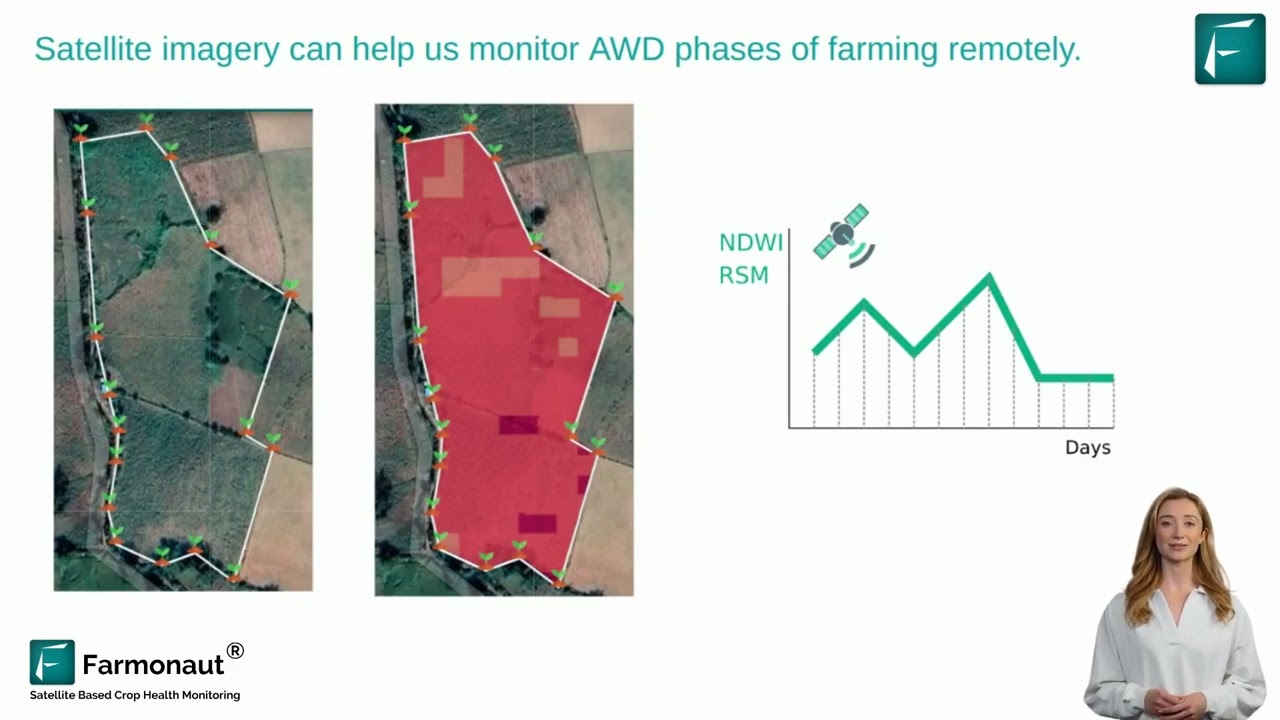
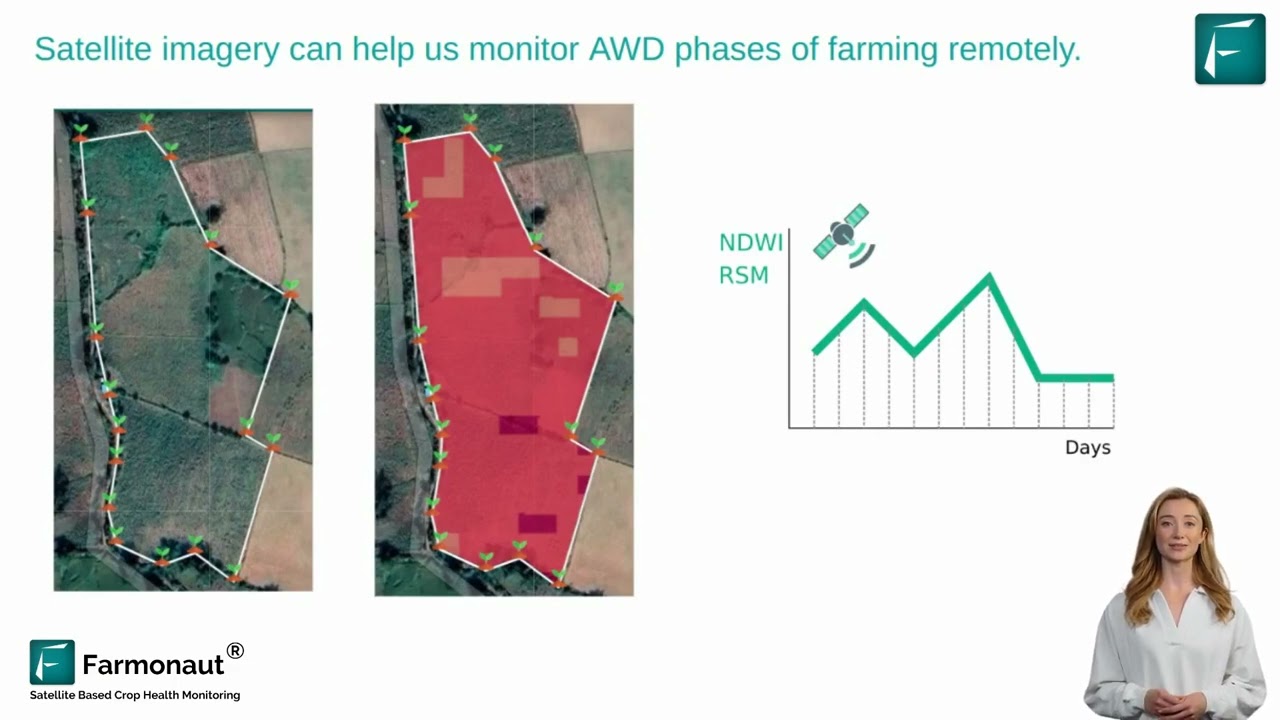
- 💧 Alternate Wetting and Drying (AWD): Cycling wet and dry phases instead of continuous flooding is one of the documented water-saving techniques in Vietnamese rice systems, and directly reduces methane emissions from paddy fields.
- 💡 Precision Scheduling: Weather data and soil moisture sensors, including satellite monitoring, target irrigation to when it’s actually needed — important in the Central Highlands and saline coastal zones.
- 🦐 Salinity Management: Sluice gates, embankments, and brackish-tolerant cultivars enable both rice and shrimp production where saltwater intrusion threatens yields.

Vietnam’s SRI adoption since the early 2000s produced a documented $200-per-hectare income gain over conventional flooded-paddy methods, according to FAO’s Agroecology Database — a rare case where a sustainable practice has a verified dollar figure attached to it, not just an environmental claim.
Calculator: Rice-Field Water Savings from AWD
Alternate wetting and drying changes both water use and, indirectly, farm economics. Enter your own field size and local water cost below to see what a shift to AWD could be worth on your plot — the calculator does not assume a fixed savings percentage for you; you set the reduction based on what your extension service or field trial reports for your soil type.
Assumptions: this tool estimates water volume and any direct cost savings only. It excludes yield effects, labor changes for cycling irrigation, and methane-reduction value, since those depend on soil type, season, and local carbon-payment programs that are not standardized nationally. Confirm your own reduction percentage against a local field trial or your provincial agricultural extension office before budgeting against it.
Mobile and Remote Monitoring for Vietnamese Farmers
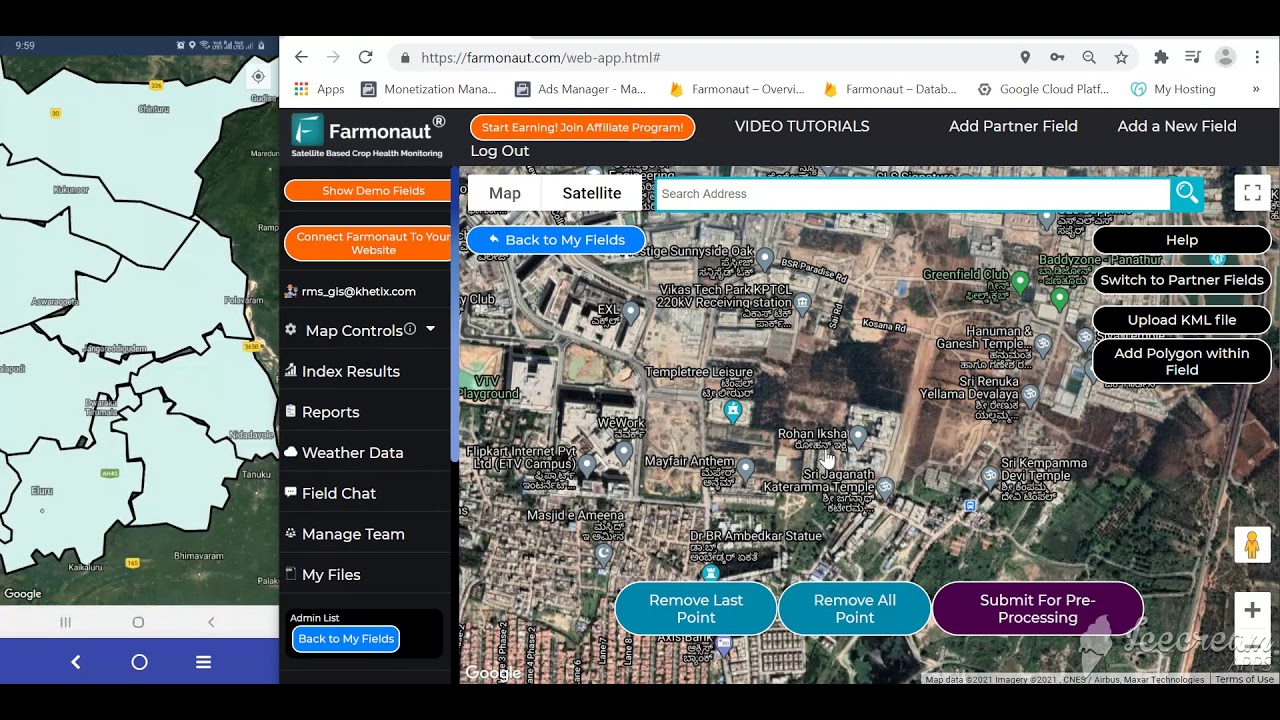
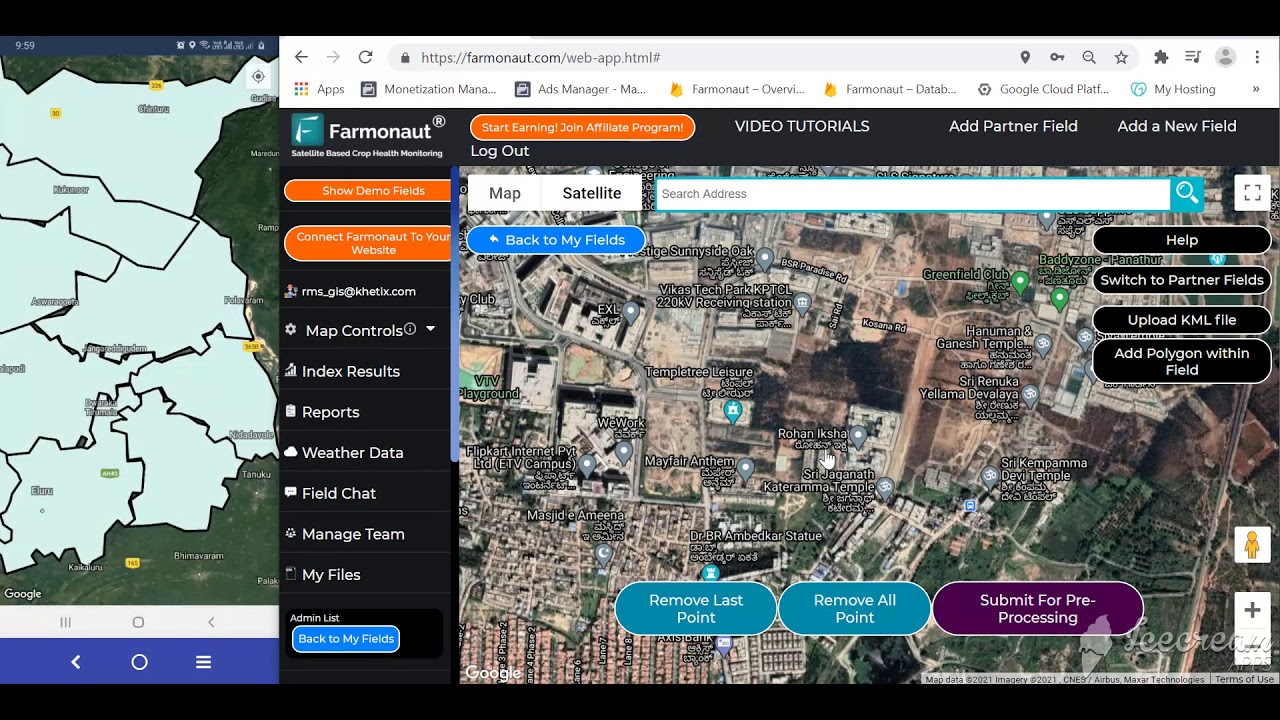
Satellite technology and app-based platforms like  let both smallholders and larger operators monitor fields across Vietnam’s delta, upland, and coastal landscapes. Tracking NDVI, soil moisture, and crop health in real time — via mobile, web, or API tools including
and  — supports the kind of responsive water and soil management described above.

Integrated Pest Management
Pest and disease control across Vietnamese rice, coffee, and vegetable systems combines biological control, cultural practice, and modern analytics rather than relying solely on chemical inputs.
- 🪲 Beneficial Insects: Spiders, parasitoids, and predatory beetles naturally suppress insect pests in rice and vegetable fields.
- 👨🌾 Cultural Practices: Timely planting, synchronized cropping, and removal of diseased plant material limit outbreak spread.
- 🌺 Crop Diversity: Mixed crops and varieties disrupt pest cycles and host beneficial insect populations.
- 💊 Judicious Input Use: Chemical treatments are reserved as a last resort, selected for target specificity and rapid breakdown.
Investment in large-scale field mapping and monitoring tools helps agricultural managers in Vietnam spot pest pressure early.
“Overreliance on chemical control leads to pest resistance and reduces the beneficial insect diversity that keeps IPM systems working over the long term.”


Agroforestry and Forest Integration
Vietnam’s mountainous and degraded lands offer room for agroforestry — deliberately integrating trees, crops, and sometimes livestock on the same plot. This matters most in the Central Highlands, where coffee cultivation and forest cover directly compete for land.
- 🌳 Forest Farming: Fruit trees, medicinal plants, and timber species provide shade, stabilize soil, and diversify income beyond a single coffee or rice harvest.
- 🌾 Non-Timber Forest Products: Mushrooms, honey, and herbs supplement household income while preserving forest ecosystems.
- 📈 Reforestation: Hill-slope restoration programs increase biodiversity, sequester carbon, and moderate local microclimates.
Deforestation Pressure and Sustainable Pathways
As Vietnam agriculture expands and demand for coffee and rice land rises, pressure on remaining forest cover persists. Deforestation threatens biodiversity while undermining watershed regulation and carbon storage — issues that intersect directly with the Central Highlands coffee expansion described earlier in this guide.
- ⚠️ Drivers: Farmland expansion into forested zones, infrastructure projects, and wood harvesting, exacerbated by continued rice and coffee demand.
- 💡 Solutions: Sustainable landscape planning, protected-area enforcement, and reforestation with native and economically useful species.
- 🌱 Certification Schemes: Eco-labels for timber, coffee, and tea incentivize stewardship while unlocking premium market access — relevant given Vietnam’s position supplying roughly 40% of global Robusta.
Farmers and communities are increasingly incentivized to restore forest cover through carbon markets and environmental payment programs. For plantation or conservation managers, Farmonaut’s crop plantation and forest advisory solutions provide real-time environmental impact tracking for compliance and long-term monitoring.
“Sustainable forest management and degraded-land rehabilitation in Vietnam are prerequisites for long-term agricultural productivity, particularly for a coffee sector supplying roughly 40% of world Robusta output.”
Diversification and Market Access
Vietnam is expanding beyond rice, coffee, and shrimp into dragon fruit, lychee, cocoa, black pepper, spices, and medicinal plants, often grown in coastal, hill, or shaded systems. This diversification is supported by:
- 🌱 Climate-Resilient Varieties: Drought- or flood-tolerant cultivars suited to local microclimates and shifting rainfall patterns.
- 🧑🔬 Seed Systems: Community-based and formal networks that ensure access to improved, disease-resistant planting material.
- 📈 Value Addition: Post-harvest processing, branding, and certification that improve price stability for smallholders.
- 🏢 Extension and Advisory Services: Continuous training that helps farmers explore new crops and farm management tools.
- ✅ Diversified cropping increases farm resilience to market- and weather-induced price shocks.
- 🔥 Specialty crops offer higher margins per hectare and access to international markets.
- 🔄 Post-harvest efficiency adds value and reduces food loss.
- 📢 Market access through digital platforms and certification rewards investment in sustainable practices.
Digital Tools and Farmonaut’s Role
Vietnamese agriculture contends with flood, drought, saline intrusion, and storm risk, and long-term resilience depends on both technique adaptation and smallholder access to information. Key pathways include:
- Farmer Organizations and Networks: Cooperatives facilitate knowledge exchange, collective input purchasing, and shared processing or marketing — the same structure behind SRI’s documented $200-per-hectare gain.
- Localized Research: Field trials and participatory breeding identify region- and climate-specific varieties matching local stressors.
-
Integrated Digital Tools: Real-time advisory apps, satellite imagery, and weather forecasting are available via web, Android, and iOS platforms —
Explore Farmonaut’s satellite data API for scalable deployment, and the API Developer Docs for technical integration. - Environmental Safeguards: Monitoring of agricultural expansion and compliance with eco-label standards support landscape stewardship.
Digital farm management tools accelerate data-driven decisions and improve resource efficiency on every hectare — particularly valuable given how unevenly water, soil, and pest pressure vary between the Mekong Delta, the Central Highlands, and coastal shrimp zones.
Traditional vs. Modern Vietnam Farming Techniques
| Farming Aspect | Traditional Technique | Modern Technique | Combined Approach | Sustainability Benefit |
|---|---|---|---|---|
| Soil Management | Composting, green manure, crop rotation | AI-based analysis, satellite monitoring, precision inputs | Crop rotation plus remote sensing for variable input management | Stable yields, reduced environmental footprint |
| Water Conservation | Bunded fields, continuous flood irrigation | Alternate wet-dry (AWD), sensors, app-based scheduling | Local practice plus digital scheduling | Less water loss, improved drought resilience |
| Pest Control | Beneficial insect preservation, field hygiene | Targeted biopesticides, AI/satellite pest prediction | IPM plus real-time alerts | Healthier farms, lower input costs |
| Forest Integration | Shade farming, forest-edge cropping | Satellite monitoring for reforestation and compliance | Native tree planting plus digital tracking | Carbon sequestration, watershed health |
| Crop Diversity | Intercropping, rotation | Stress-tolerant varieties, digital market links | Integrated planning and real-time advisory | Diversified income, ecosystem resilience |
Satellite-based monitoring and fleet management services play a role in optimizing logistics for agricultural and mining operations moving product from Vietnam’s delta, highland, and coastal production zones to port.
Discover satellite-driven fleet and resource management here.
Get Started with Affordable Satellite-Driven Insights
Unlock crop, forest, and environmental monitoring for Vietnam’s diverse landscape via web, Android, iOS, and API. Subscription plans are tailored to individuals, businesses, and the public sector.
FAQ: Vietnam Agriculture and Farming
-
Q: What is Vietnam’s most important agricultural crop?
A: Rice, grown across 7.12 million hectares as of 2023 (FAO/Statista), remains the largest crop by area. Coffee is Vietnam’s most globally significant export crop by market share, supplying roughly 40% of world Robusta output in 2024 per the International Coffee Organization. -
Q: How big is Vietnam’s rice sector?
A: National paddy production reached 44 million tonnes in 2018 (FAO STAT), grown across 7.12 million hectares as of 2023. The Mekong Delta alone produced 24.5 million tonnes in the 2023/24 season. -
Q: What share of global coffee does Vietnam produce?
A: Approximately 40% of world Robusta coffee supply came from Vietnam in 2024, according to International Coffee Organization data. For current-season figures, check the USDA FAS Vietnam Coffee Annual report, published each February. -
Q: How large is Vietnam’s shrimp and aquaculture export sector?
A: Vietnam produced 1,080,600 tonnes of farmed shrimp in 2022, generating $4.3 billion in exports, per the Vietnamese Ministry of Agriculture and Rural Development via Statista. -
Q: What are the principal sustainable farming techniques used in Vietnam?
A: Multitier cropping, crop rotation, rice-fish symbiosis, agroforestry, alternate wetting and drying (AWD), integrated pest management, and the System of Rice Intensification (SRI), which FAO documents delivering a $200-per-hectare income gain over conventional methods. -
Q: How many people work in Vietnamese agriculture?
A: The World Bank estimates roughly 6 million farmers work across the coffee and rice sectors combined — the two largest employment pillars in Vietnamese agriculture. -
Q: How does Vietnam manage deforestation while expanding agriculture?
A: Through sustainable land planning, protected zones, reforestation, and agroforestry, particularly in the Central Highlands where coffee expansion has historically pressured forest cover. -
Q: How do Farmonaut’s solutions support Vietnamese agriculture?
A: By delivering satellite-driven insights, real-time environmental monitoring, AI-based advisory, traceability, resource management tools, and scalable APIs for Vietnamese farmers, businesses, and government agencies.






Conclusion: Where Vietnam Agriculture Stands and Where to Track It Next
Agriculture in Vietnam is not one story but three overlapping ones: a rice sector spanning 7.12 million hectares and 44 million tonnes of production by 2018, a coffee sector supplying roughly 40% of the world’s Robusta as of 2024, and a shrimp aquaculture industry worth $4.3 billion in exports as of 2022. Roughly 6 million farmers work across just the coffee and rice sectors, per the World Bank. Techniques like SRI, AWD, rice-fish and rice-shrimp rotation, and agroforestry are the durable methods behind these numbers — they don’t expire when a given year’s tonnage figure does.
To keep any of these figures current, use the refresh paths noted throughout this guide: FAO STAT for quarterly production updates, the USDA FAS Vietnam Coffee Annual and Fishery & Aquaculture reports for annual sector detail, the Global Yield Gap Atlas for yield benchmarking, and Statista’s Vietnamese government data feeds for trade values. Combined with satellite monitoring tools, these sources let you verify how Vietnam farming techniques are performing on any given field, in any given season, rather than relying on a single year’s snapshot.
🌱 For crop, soil, water, and forest monitoring across Vietnam’s agricultural landscape, explore Farmonaut’s traceability, carbon footprinting, and plantation advisory services today!

 Qzense Labs
 Kubota
 FFBS
FFBS Jontra
 Kalustyan
 Tucor
Tucor Geno
Geno Hayleys Agriculture
 Linx Agritech
 Adinet
 Save Your Soils
 Grandstream Algérie
 XOS Realty
 Geospatial Lab Africa
 Agro La Gándara
