

Reviewed September 2026 against the Australian Bureau of Statistics and Beef Central’s ABS-sourced livestock tracking.
Try it: Run your own numbers →
Table of Contents
- Overview: The 6 Big Farming Industries in Australia
- Comparative Industry Table
- 1. Grain and Cereal Production
- 2. Livestock: Beef, Sheep & Wool
- 3. Horticulture & High-Value Crops
- 4. Forestry & Agroforestry
- 5. Dairy Farming
- 6. Mining-Adjacent Agriculture & Infrastructure
- Export Value Calculator
- How Farmonaut Fits Into These Industries
- Other Agricultural Businesses and Farm Factories
- Frequently Asked Questions
- Conclusion
- Try it: Run your own numbers
6 Big Farming Industries in Australia: What the Numbers Actually Show
The six big farming industries in Australia are grain and cereal production, livestock (beef, sheep and wool), horticulture, forestry, dairy, and mining-adjacent agriculture. Beef alone produced 2.87 million tonnes in 2025 and exported 1.34 million tonnes in 2024, a record, according to Australian Bureau of Statistics data reported by Beef Central. Cotton was worth $4.2 billion and canola $6.0 billion in the ABS’s most recent full-year commodity accounting for 2021–22, per the Australian Bureau of Statistics. Those three figures alone show why “farming industries” in Australia is not one thing — it’s several export businesses of very different sizes, each with its own supply chain, technology stack, and buyer base.
This page ranks and sources all six, tells you exactly which agency publishes which number and how often, and gives you a calculator to translate raw production tonnage into farm-gate value using the current price you enter. It does not repeat what an AI summary can already tell you — every figure below carries a source, a date, and a link so you can check whether it’s moved since this was written.
Beef production: 2.87 million tonnes (2025). Beef exports: 1.34 million tonnes (2024), a record. Adult cattle slaughter: 9.28 million head (2025). Cotton value: $4.2 billion (2021–22). Canola value: $6.0 billion (2021–22). All figures sourced below, with the ABS release schedule for getting a current number.
Comparative Industry Table: Australia’s Big Farming Industries
The table below separates what’s independently verifiable right now (beef, cotton, canola) from figures that are directionally accurate but need a fresh check before you cite them in a report — marked “unverified in this review” rather than presented as current fact.
| Industry | Most Recent Verified Figure | Main Products | Primary Technology in Use | Export Orientation |
|---|---|---|---|---|
| Beef | 2.87M tonnes produced (2025); 1.34M tonnes exported (2024, record) — ABS/Beef Central | Beef, veal | RFID tracing, genomic selection, satellite pasture monitoring | ~47% of production exported by volume (1.34M of 2.87M tonnes) |
| Grains | Unverified in this review — see ABS commodity release for current year | Wheat, barley, canola, oats, sorghum | Precision ag, variable-rate seeding, satellite crop analytics | Majority exported; check ABS for current split |
| Canola | $6.0 billion production value (ABS, 2021–22) | Canola seed, oil, meal | Precision seeding, drought-tolerant varieties | Majority exported to EU and Asia; check ABS for current split |
| Cotton | $4.2 billion production value (ABS, 2021–22) | Raw cotton, cottonseed | Drip and furrow irrigation telemetry, satellite water-use monitoring | Majority exported, principally to Asia; check ABS for current split |
| Wool | Unverified in this review — see ABARES for current figures | Merino, crossbred wool, sheepskins | Automated shearing, DNA and EID traceability | Majority exported; historically China is largest buyer |
| Dairy | Unverified in this review — see Dairy Australia for current figures | Milk, cheese, butter, infant formula | Robotic milking, precision feeding | Minority exported; check Dairy Australia for current split |
| Horticulture | Unverified in this review — see ABS/Hort Innovation for current figures | Fruits, vegetables, nuts, grapes | Protected cropping, AI harvest and yield prediction | Minority exported; strong domestic market |
| Forestry | Unverified in this review — see ABARES forestry statistics | Timber, woodchips, pulp, biomass | Drone mapping, satellite forest monitoring | Majority exported, principally to Japan, China, Korea |
Two things stand out from what’s actually verifiable today versus what the industry commonly repeats as fact. First, the ABS’s most complete cross-sector commodity value release is still the 2021–22 financial year at the time of this review — later sector-specific figures exist (like the 2025 beef numbers above) but a single unified “all commodities” table for 2024–25 was not located in this review. Second, beef’s export share by volume — 47% of the 2.87 million tonnes produced in 2025 left the country as 1.34 million tonnes of exports in 2024 — is one of the few ratios in Australian agriculture you can currently state with a verified number on both sides.
1. Grain and Cereal Production: Australia’s Largest Farmed Land Area
Grain and cereal production covers more farmed land in Australia than any other sector, concentrated in Western Australia, New South Wales, Victoria, and South Australia’s grain belt. Wheat, barley, canola, oats, and sorghum are the primary crops, with Australia consistently ranking among the world’s top wheat exporters in seasons with average or better rainfall.
What’s Verified and What Isn’t
Of the grains, canola has a directly sourced figure: the ABS placed canola production value at $6.0 billion in its 2021–22 release, the most recent year that agency published unified commodity values across the sector. Wheat and barley production values for the current season were not located in this review — the ABS updates its Value of Agricultural Commodities Produced release (catalogue 7503.0) annually, and the current edition is linked below rather than guessed at.
- ✔ Canola production value: $6.0 billion (ABS, 2021–22) — see the Australian Bureau of Statistics for the current-year figure.
- ✔ Wheat and barley: use the same ABS release, which breaks out each grain crop by state and value.
- ✔ Main growing regions: Western Australia’s wheatbelt, southern NSW, the Victorian Mallee and Wimmera, and South Australia’s Yorke Peninsula and Mid North.
Technology in Use
- 🤖 Precision agriculture: satellite imagery, soil sensors, and variable-rate equipment for seeding, fertilizing, and irrigation.
- 🌱 Drought-tolerant varieties: bred through GRDC-funded research programmes.
- 📦 Supply chain traceability: digital systems verifying grain provenance for export certification.
- 🛰️ Satellite crop monitoring: in-season monitoring supports fungicide timing and harvest-readiness decisions.

Australian grain growers manage seasonal variability through diversified rotations that include legumes and pulses alongside cereals, plus crop insurance and forward contracts to manage price risk. The US grain industry outlook covers how comparable dynamics play out in the world’s largest grain-exporting economy, useful context for comparing Australia’s export exposure against a market of similar scale.
The ABS releases the Value of Agricultural Commodities Produced dataset annually, covering each financial year (July–June). Check the latest release page directly rather than a cached figure — sector values shift materially year to year with rainfall and global prices.
2. Livestock: Beef, Sheep & Wool — the Best-Documented Sector
Beef is the one industry on this list with a fully sourced, current-year figure on both production and exports, making it the clearest case study in how Australian agriculture actually performs versus how it’s usually described.
Beef: The Numbers
- 🐄 Production: 2.87 million tonnes in 2025, per Australian Bureau of Statistics data reported by Beef Central.
- 📦 Exports: 1.34 million tonnes in 2024 — a record for Australian beef exports, according to Beef Central’s trade reporting.
- 🔪 Adult cattle slaughter: 9.28 million head in 2025, per ABS data via Beef Central.
Those figures update on different cycles: production and slaughter are reported by the ABS and tracked monthly by Beef Central against the ABS livestock products series, while the annual export record (1.34 million tonnes) is a full calendar-year total published once the year closes. If you’re citing beef numbers for a current report, check ABS livestock products data for the latest monthly figures rather than reusing the 2025 annual total once a new year has started.

Sheep, Wool, and What’s Not Yet Verified
Sheep and wool production volumes and wool value by grade were not located with citable precision in this review — ABARES publishes both, but the specific tonnage and per-kilogram figures need a direct pull from their current release rather than repeating an unsourced industry-wide estimate. What is well documented across the sector is the technology stack: automated shearing systems, DNA-based provenance testing, and electronic identification (EID) tagging are now standard tools for wool and sheepmeat producers seeking premium buyer access.
Technology and Risk Management Across Beef, Sheep and Wool
- Genetic improvement: selective breeding and genomic testing for growth rate, marbling, and wool micron.
- Monitoring: RFID tagging, satellite-based herd tracking, and precision feed management.
- Biosecurity: digital monitoring and on-farm isolation protocols that protect export market access — a single detected outbreak can close a major buyer market within days.
- Welfare certification: rotational grazing and integrated pest management schemes that underpin premium contracts with buyers in Japan, the US, and the EU.
Treating biosecurity as a compliance afterthought. A lapse can trigger export suspensions to key markets within days — the 1.34 million tonnes of 2024 beef exports depend on maintained disease-free status recognized by importing countries.

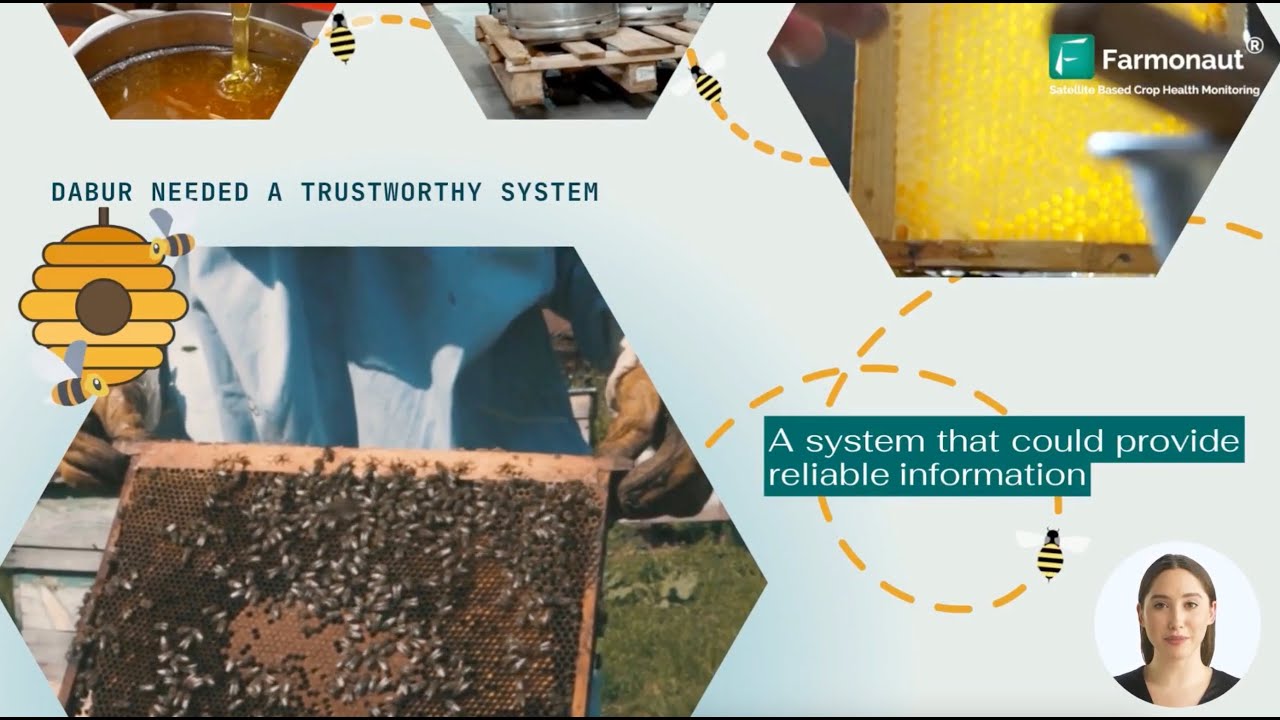
Wool producers increasingly rely on DNA traceability and automated shearing to cut waste and document provenance for buyers who pay premiums for verified origin. To extend that same verification into your own supply chain, see Farmonaut’s product traceability tools, which give producers a documented chain of custody buyers can check directly.
3. Horticulture & High-Value Crops
Horticulture covers fruit, nuts, grapes, berries, and vegetables — a category that supplies both the domestic market and export buyers in Asia, North America, and Europe. Australia is a major global almond exporter, and table and wine grape production spans regions from the Riverland to the Yarra Valley.
Main Products
- 🍏 Apples, citrus, berries, table and wine grapes
- 🥜 Almonds, macadamias — Australia is among the world’s leading almond exporters by volume
- 🥦 Vegetables: carrots, tomatoes, leafy greens
A sector-wide production value figure for horticulture in the current season was not located with citable precision in this review. The ABS’s Value of Agricultural Commodities Produced release breaks horticulture out by crop type, and Hort Innovation publishes annual statistics handbooks with subsector detail — check either directly rather than reusing a prior year’s total, since horticulture values move with both yield and export demand year to year.

Technology and Sustainability Practices
- 👩🌾 Protected cropping: climate control and water efficiency under glass or plastic, extending growing seasons.
- 🦋 Pollinator stewardship: habitat creation and monitoring to protect yield-critical pollination.
- 🔬 AI-powered yield prediction: harvest forecasting that improves buyer matching and reduces post-harvest loss.
- 💧 Water-use optimization: soil moisture analysis, drip irrigation, and satellite-enabled monitoring.
For orchard, berry, or vineyard management, Farmonaut’s crop plantation and forest advisory tools apply satellite monitoring and AI-based recommendations to productivity and soil-health decisions.

Hort Innovation’s annual statistics handbook and the ABS commodity release both break out horticulture value by crop. Neither was pulled into this review with a citable figure — check the current edition of either before quoting a sector total.
4. Forestry & Agroforestry
Forestry sits alongside farming in Australia’s rural economy through plantation timber, native forest management, and increasingly, agroforestry systems that combine trees with cropping or grazing on the same land. The sector supplies woodchips, sawn timber, pulp, and biomass, with a substantial share of output shipped to Japan, China, and Korea.
Industry Structure
- 🌲 Plantations and managed native forests supply woodchips, sawn timber, pulp, and renewable composites.
- 🔥 Biomass and bioenergy: forestry residues increasingly feed into renewable energy supply chains.
- 🌐 Export orientation: a majority of product value is shipped to Asian buyers — check ABARES forestry statistics for the current export split.
A current production value figure for Australian forestry was not located with citable precision in this review. ABARES publishes annual forest and wood product statistics with export volumes by destination — that is the primary source to check for a current figure rather than an industry estimate.

Technology in Forestry and Agroforestry
- 🌐 Satellite-based forest monitoring: tracks harvest activity, restoration progress, and unauthorized logging.
- 🌱 Agroforestry integration: planting trees alongside crops and livestock to support soil health and diversify farm income.
- 🌍 Certification schemes: FSC and PEFC certification supports premium export access.
- 🪓 Drone-based assessment: forest health surveys and harvest planning at lower cost than manual ground survey.
For carbon sequestration and forest-based sustainability tracking, Farmonaut’s carbon footprinting tools provide monitoring for environmental impact reporting and supply chain credentials.
ABARES publishes Australian forest and wood product statistics twice yearly, with export volumes and values by destination market. Check the current edition rather than an industry rule of thumb.
5. Dairy Farming
Dairy is concentrated in Victoria, New South Wales, and Tasmania, producing milk, cheese, butter, and infant formula for both domestic supermarkets and export buyers, particularly in Southeast Asia and China. Dairy is one of the more capital-intensive sectors on this list, with automated milking and precision feeding systems now standard on larger operations.
What the Data Shows
A current production volume (megalitres) and farm-gate milk price figure were not located with citable precision in this review — Dairy Australia publishes both in its annual Situation and Outlook report and monthly farm-gate milk price tracking. That is the source to check directly rather than reusing a prior figure, since milk prices are renegotiated annually between processors and suppliers and shift materially with global dairy commodity prices.
- 🥛 Automated milking systems are widely adopted across larger Australian dairy operations, alongside AI-based herd health monitoring — check Dairy Australia’s Situation and Outlook report for the current adoption rate rather than an unsourced percentage.
- 🌱 Pasture-to-processor traceability systems support export certification requirements in premium markets.
- 💧 Effluent management and pasture renewal programmes align with state-level emissions and water-quality targets.
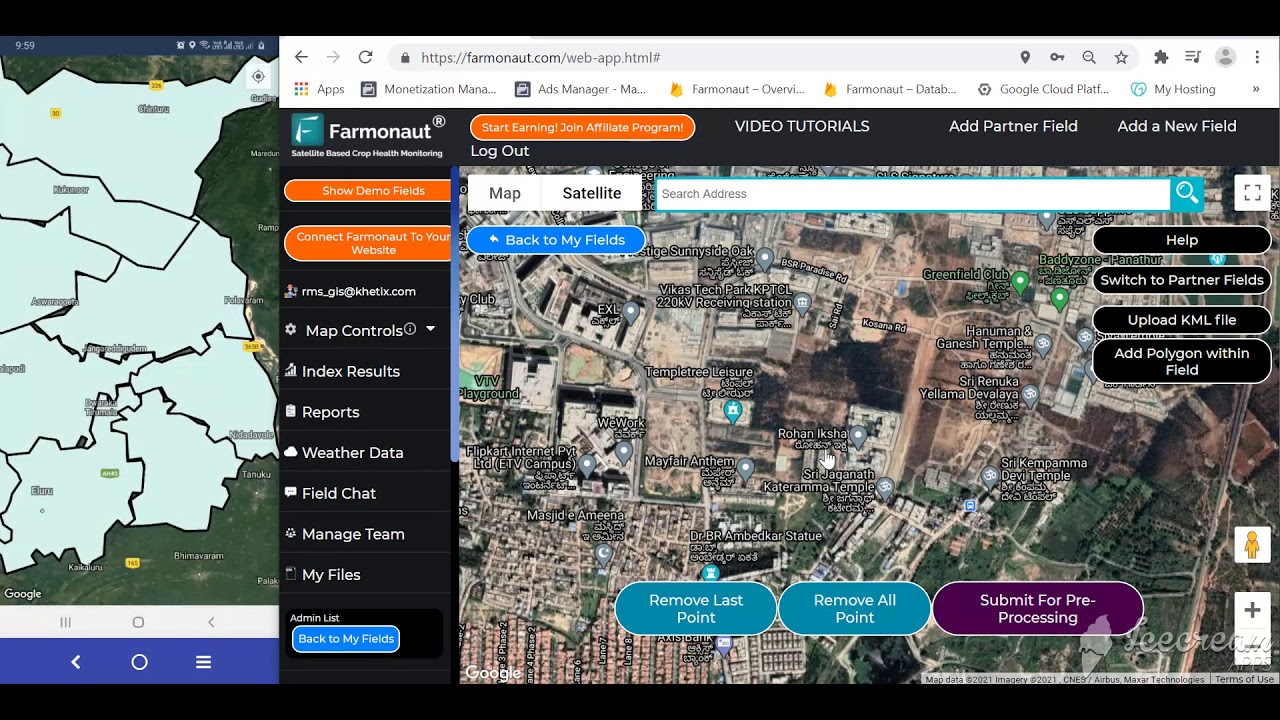
For producers seeking capital against verified pasture and herd condition, Farmonaut’s crop loan and insurance verification tools provide satellite-based evidence of pasture health that lenders and insurers can check independently.
Dairy Australia’s Situation and Outlook report (published annually) and its monthly farm-gate milk price series are the primary sources for current dairy production volumes and prices — check them directly rather than a cited industry average.
6. Mining-Adjacent Agriculture & Infrastructure
Mining is not a farming industry, but its infrastructure and land-use footprint shape agricultural viability across large parts of regional Australia — this is the sixth “big farming industry” on this page because of that interface, not because mining itself is agriculture. Roads, power, and water infrastructure built for mining projects frequently serve nearby agricultural operations, and land rehabilitation programmes convert former mine sites into grazing or conservation land.
Key Intersections
- 📦 Shared infrastructure: roads, storage, and power built for mining also reduce costs for rural producers in the same region.
- 🌱 Land rehabilitation: mined land converted to productive grazing or conservation use under state rehabilitation requirements.
- 🤝 Resource-sharing partnerships: water access and ecosystem restoration agreements between mining operators and neighboring agricultural land.
- 🔗 Digital logistics: satellite resource mapping used by both sectors to plan transport and comply with land-use regulation.
For farmers and agribusinesses managing large or remote properties, transport logistics is often the binding constraint. Farmonaut’s fleet and resource management solution tracks farm vehicles and equipment to reduce transport costs across those large-area operations.
If you need mine-site rehabilitation status or land-use approval data for a specific region, that sits with the relevant state mining department (e.g. the NSW Resources Regulator or WA’s Department of Energy, Mines, Industry Regulation and Safety), not with agricultural statistics agencies — check the state register directly.
Export Value Calculator
Use your own tonnage and price to estimate farm-gate or export value — the two verified 2024–2025 beef figures above (2.87 million tonnes produced, 1.34 million tonnes exported) are preloaded as a starting point, but every field is yours to change.
Run your own numbers
Assumptions: this is a simple volume × price estimate and excludes freight, processing margin, currency hedging costs, and quality/grade premiums or discounts. The default figures (2.87 million tonnes production, 47% export share, based on 1.34 million tonnes of 2024 exports against 2025 production) come from ABS data reported by Beef Central; the AUD/USD conversion is a rounded approximation you should replace with the current exchange rate for any real calculation. Replace all defaults with your own commodity, volume, and current price.
How Farmonaut Fits Into These Industries
Across all six sectors above, the common constraint is visibility: knowing crop or pasture condition, water use, or herd location across large or remote holdings without a physical site visit. Farmonaut provides satellite-based monitoring tools across crops, livestock pasture, forestry, and regional land management, available through Android, iOS, web, and API access.
- 🌍 Multispectral satellite imaging for crop and pasture health monitoring
- 🤖 AI-powered advisory (Jeevn AI) for in-season guidance and operational planning
- 🔗 Blockchain-based traceability for export compliance and buyer transparency
- 🔋 Carbon footprinting and environmental impact measurement
- 🚚 Fleet and resource management for logistics across large properties
For system integration, access the Farmonaut API for remote sensing, monitoring, and advisory data. Technical documentation is available in the API Developer Docs.
For operations managing multiple properties or teams, the Agro-Admin App consolidates field mapping and satellite yield data into a single management view.
Other Agricultural Businesses and Farm Factories in Australia
Beyond the six sectors above, "agricultural businesses" and "agriculture companies in Australia" as search terms also cover input suppliers (seed, fertiliser, and agchem companies), farm equipment dealers, grain and livestock marketers, agtech firms, and vertically integrated operations sometimes referred to informally as "farm factories" — large-scale, highly mechanized operations that combine production with on-site processing, most common in poultry, intensive horticulture (protected cropping), and feedlot beef.
Feedlot beef operations are a specific example: cattle are finished on formulated feed rations in a controlled facility rather than solely on pasture, a model that increases throughput per hectare of land used for finishing but depends on grain input costs. This model sits inside the beef figures cited above (2.87 million tonnes of 2025 production) rather than as a separate category, and is one reason beef production and export volumes can grow even in years when pasture conditions are mixed.
A specific company search like "rb farm Australia" typically refers to an individual private operation rather than an industry segment — if you're trying to verify a specific business's registration, ABN, or trading status, the Australian Business Register (ABR) and ASIC's company register are the authoritative lookups, not an industry statistics source like the ABS.
Frequently Asked Questions (FAQ)
1. What are the 6 big farming industries in Australia?
Grains, livestock (beef, sheep, and wool), horticulture, forestry, dairy, and mining-adjacent agriculture. Beef is the most completely documented by current public data: 2.87 million tonnes produced in 2025 and 1.34 million tonnes exported in 2024, both per ABS data reported by Beef Central.
2. Which Australian farming industry exports the most by volume?
Beef is the clearest documented case: 1.34 million tonnes exported in 2024 against 2.87 million tonnes produced in 2025, a roughly 47% export share. Forestry and wool are also majority-export sectors, but this review did not locate a current, citable tonnage figure for either — check ABARES forestry statistics and ABARES wool reporting directly.
3. What counts as an "agricultural business" in Australia?
Anything from a single-property grain or livestock operation to input suppliers, equipment dealers, agtech companies, and vertically integrated processors. To verify a specific company's registration status, use the Australian Business Register (ABR) or ASIC's register rather than an industry statistics source.
4. What are "farm factories" in the Australian context?
An informal term for highly mechanized, vertically integrated operations — most commonly feedlot beef, intensive poultry, and protected-cropping horticulture — that combine production with on-site processing or finishing at larger scale than a traditional pasture or dryland operation.
5. How is sustainability tracked across these industries?
Through soil health monitoring, carbon footprinting, rotational grazing, supply-chain traceability, and certification schemes such as FSC and PEFC for forestry. Sector-specific emissions and water-use targets are set at state and federal level and tracked by the relevant industry body (Dairy Australia, ABARES, GRDC) rather than a single national dataset.
6. Where can I get satellite monitoring for farm, pasture, or forestry land?
Farmonaut provides this through mobile and web apps and API access, covering crop and pasture monitoring, resource management, and fleet tracking.
Conclusion: What's Verified, What to Check, and When
Of the six big farming industries in Australia, beef is currently the best-documented by volume: 2.87 million tonnes produced in 2025, 1.34 million tonnes exported in 2024 (a record), and 9.28 million adult cattle slaughtered in 2025 — all sourced to ABS data reported by Beef Central. Cotton ($4.2 billion) and canola ($6.0 billion) have verified production values from the ABS's 2021–22 commodity release, the most recent unified cross-sector figure this review located.
For grains beyond canola, wool, dairy, horticulture, and forestry, this review did not find current, precisely sourced figures — rather than restate an old or rounded number as current fact, each section above names the specific agency (ABS, ABARES, Dairy Australia, Hort Innovation) and release to check directly. That's the durable part of this page: the sources don't change even when the numbers inside them do. Beef Central tracks ABS livestock data monthly, and the ABS's Value of Agricultural Commodities Produced release updates annually each financial year — bookmark those two if you need a number newer than the one on this page.
Whichever sector you're researching — a single feedlot, a wool clip, or a multi-property grain operation — start with the primary agency release rather than a secondary summary, and use the calculator above to convert your own production and price figures into an export-value estimate.
Discussion
Questions, corrections or field experience? Share them below. First-time comments are reviewed before they appear, and your email is never published.
No comments yet. Be the first to add a question or your experience.

 FarmSetu
 Progenseed
 SkyHarvest
 Polaris Digitech
 Teledarbas
 Wild Oak Farm
 SFX
SFX BACF Africa
 Doodlakine
 Exurbia Geospatial
 FieldZero
 Indico Company
 Kubota
 FFBS
FFBS
 Licence holder · Niger · Gold










