

2HP Water Pump for Agriculture: Govt Schemes & Agro Pump – Boosting Irrigation Efficiency in 2025
“In 2025, government schemes cover up to 60% of the cost for 2HP water pumps in Indian agriculture.”
Introduction: The Role of 2HP Water Pumps in Modern Agriculture
As we progress through 2025, the 2hp water pump for agriculture remains pivotal in driving irrigation efficiency, sustainability, and cost reduction for farmers across India and other agrarian economies. In nations that heavily emphasize modernizing agriculture, the adoption of 2HP water pumps—whether as an agro water pump, part of an agriculture pump set, or an agri motor pump—has been catalyzed not merely by technology, but also by robust agriculture water pump government scheme programs and subsidies. These pumps continue to empower farmers by ensuring reliable, energy-efficient, and eco-friendly irrigation practices that support both food security and sustainable development.
Beyond hardware innovations, integration with smart monitoring systems and real-time satellite data has transformed traditional irrigation systems. For example, platforms like Farmonaut are making advanced data-driven decisions more accessible in the agri sector, supporting optimized pump operation, resource management, and environmental compliance. In this comprehensive guide, we explore the importance, technology, government support, and benefits of 2HP agriculture water pumps, with actionable insights for farmers, policy-makers, and agri-entrepreneurs looking to navigate irrigation challenges in 2025 and beyond.
Let’s delve deep into the technological advancements, practical benefits, and the latest government schemes shaping the future of agri irrigation!




Importance of 2HP Water Pumps for Agriculture
Why 2HP Water Pumps Remain a Cornerstone in 2025
The 2hp water pump for agriculture stands out due to its moderate power output, making it ideally suited for lifting water from wells, canals, or borewells to irrigate fields, especially amid regions with limited water resources. While large pumps may be excessive and smaller ones insufficient, the 2HP capacity strikes a balance for small to medium-sized farms that seek to:
- Handle sufficient water volume for a few acres without incurring high electricity consumption
- Maintain low operational costs, a critical factor given the price sensitivity in rural India and other agrarian economies
- Efficiently replace traditional flood irrigation (which is often neither feasible nor efficient in terms of water wastage and labor)
- Meet sustainable farming practices standards, aligning with government goals
Moreover, the adoption of these pumps is strongly supported by evolving irrigation trends and smart systems that help farmers monitor and optimize usage, thus maximizing irrigation efficiency and ensuring reliable crop supply even during erratic weather patterns in 2025.
“Modern 2HP agro pumps can increase irrigation efficiency by 30%, saving thousands of liters of water per acre annually.”

Types and Technology Advancements in 2HP Agro Pumps
Main Types of 2HP Water Pumps for Agriculture
In 2025, the 2hp water pump for agriculture market is primarily dominated by two types:
- Centrifugal Pumps:
- Preferred for surface water irrigation from canals, tanks, or shallow wells
- Features a horizontal arrangement, low maintenance, and rapid discharge capability
- Conventional yet effective for many traditional farming needs
- Submersible Pumps:
- Optimal for deep water extraction from borewells or deep wells
- Placed below water level; reduces priming issues and energy wastage
- Increasingly equipped with anti-corrosive materials for longer durability
Choosing between these types depends on field layout, water source depth, power availability, and farm size. Both have evolved through design and materials advancements, offering improved corrosion resistance, energy efficiency, and adaptability to modern agricultural practices.
Technological Advancements Enhancing 2HP Agro Water Pumps
- Materials & Durability: Use of advanced, anti-corrosive alloys and polymers increases lifespan in aggressive, mineral-rich or muddy water environments.
- Energy Efficiency: Integration of BEE-compliant energy-efficient motors reduces power wastage and operational costs.
- Smart Sensors & Monitoring: IoT-enabled systems equipped with sensors monitor water levels, flow rates, and soil moisture in real-time—allowing for timely and optimized irrigation schedules while minimizing energy and water wastage.
- Solar-Powered Solutions: Emphasizing sustainability, solar 2HP agro pumps reduce dependence on grid electricity and fossil fuels, especially in rural regions facing unreliable grids.
- Automation & Remote Control: Farmers can operate and diagnose pumps remotely via mobile apps or integrated farm platforms for better management and minimal manual intervention.

The market is gradually witnessing an upsurge in smart pump sets that facilitate automated, data-driven irrigation. These advancements enable farmers to optimize irrigation—leading to cost savings, improved sustainability, and higher yields.
Agriculture Pump Set and Agri Motor Pump: Integrated Efficiency
What is an Agriculture Pump Set?
An agriculture pump set typically consists of a water pump coupled with a motor (the agri motor pump), controls, and connecting plumbing. Proper integration of the electric motor significantly influences both overall performance and energy consumption.
Modern agri motor pump designs boast high-efficiency motors (including BEE 4-star or 5-star rated units) and improved impeller mechanisms. They come in various configurations to match AC grid, solar, or hybrid sources. India, being at the forefront of agricultural modernization, continues to promote these energy-efficient agri motor pump setups through government support programs and rural electrification schemes.
Key Features & Benefits
- Lower energy bills & reduced carbon footprint
- Better durability thanks to anti-corrosive and rugged housing
- Compatibility with modern monitoring systems for efficiency optimization
- Alignment with government goals for sustainable agriculture and energy conservation

If you’re interested in detailed crop, water, and soil monitoring solutions powered by satellites and integrated with farm machinery data, our Large Scale Farm Management Platform can help you achieve next-generation resource optimization, fleet management, and sustainability compliance.
Agriculture Water Pump Government Schemes in 2025
How Government Schemes Drive 2HP Agro Pump Adoption
Government intervention continues to fuel the adoption of 2hp water pump for agriculture by making efficient irrigation technologies financially accessible. In 2025, a significant policy focus area has been the promotion of solar-powered, BEE-compliant, and smart irrigation solutions.
Central and state governments in India have scaled up their agriculture water pump government scheme portfolios to include:
-
Central Schemes (e.g., PM-KUSUM):
- Provides subsidies of up to 60% for solar-powered 2HP agri pumps
- Enables farmers to secure off-grid water supply—reducing irrigation costs, diesel dependency, and carbon emissions
- Solar pumps are particularly impactful for smallholder farmers in remote, grid-deficient regions of India
-
State-Level Programs:
- Further top-up subsidies, sometimes up to 80% total, for energy-efficient pump replacements
- Low-interest loans and instant credit schemes designed to minimize the initial investment barrier for modern agri motor pumps and sets
- Schemes often prioritize BEE-star rated, durable, low-maintenance, and IoT-ready pumps
Through such support programs and favorable credit lines, governments are facilitating the replacement of inefficient, legacy pump sets with modern 2HP pumps for agriculture—significantly improving irrigation efficiency and crop management.

Popular Government Schemes & Their Focus (2025)
- PM-KUSUM (Pradhan Mantri Kisan Urja Suraksha evam Utthaan Mahabhiyan): Largest national scheme for solar irrigation pumps, including 2HP units.
- State “Suryashakti” or “Jal Shakti” programs: Special schemes for electric and solar agri pumps; often focused on energy-efficient replacement.
- NABARD and Cooperative Loan Programs: Prioritize smart agri motor pump adoption for small farmers, including easy financing for 2HP agriculture pump sets.
Eligibility Essentials & How Farmers Benefit
- Small and Marginal Farmers: Direct beneficiaries; priority under most subsidy and credit programs.
- Women Farmers & SHGs (Self-Help Groups): Often provided higher or additional subsidy slabs.
- Old Pump Replacement: Many state programs require submission of details/return of old, inefficient pump for maximum subsidy.
For efficient resource management, Farmonaut’s Fleet Management tools can be used to track equipment use, reducing operational costs and maximizing scheme benefits for both individuals and agri co-operatives.
Comparison Table of 2HP Agricultural Water Pumps: Technology, Efficiency & Govt Scheme Benefits
| Pump Type/Model (2025 Most Popular) |
Technology Used | Est. Water Discharge (L/hr) | Energy Consumption (kWh/HP) | Approx. Cost (INR) | Available Govt Scheme | Subsidy % (Est.) | Key Benefits |
|---|---|---|---|---|---|---|---|
| Centrifugal Surface Pump, 2HP (BEE 5-Star) | Electric (Grid) | 18,000–24,000 | 1.3–1.7 | 18,000 – 22,000 | Yes (PM-KUSUM, State) | 50% | High efficiency, low power, durable, easy maintenance |
| Solar Submersible Pump, 2HP (Hybrid Ready) | Solar + Grid Hybrid | 12,000–18,000 | 0.95–1.2 | 76,000 – 100,000 | Yes (PM-KUSUM) | 55–60% | Grid-independent, saves electricity cost, eco-friendly, IoT-ready |
| Diesel Centrifugal Pump, 2HP | Diesel Engine | 14,000–18,000 | 0.55–0.7 (litre/hr) | 23,000 – 25,000 | No | N/A | Portable, usable in remote/off-grid, higher long-term cost |
| Smart Electric Submersible Pump, 2HP (IoT) | Electric, IoT-enabled | 15,000–21,000 | 1.1–1.4 | 28,000 – 35,000 | Yes (State, Select Central) | 40–50% | Remote/automated controls, smart scheduling, water/energy savings |
*Data is for 2025 and represents commonly available models and scheme estimates. Always check official portals for latest eligibility, subsidy, and pricing changes.
For those interested in integrating pumps with satellite monitoring and advanced irrigation analytics, our Farmonaut API provides seamless data-driven control. Developers can visit the API Developer Documentation to maximize agri-tech synergies.

How Farmonaut Empowers Sustainable Irrigation and Pump Adoption
At Farmonaut, our mission is to democratize satellite-driven agricultural intelligence for farmers, businesses, and government agencies. We support sustainable irrigation management and optimal pump operation in several ways:
- Satellite-Based Crop and Soil Monitoring: We enable farm managers to monitor water stress, soil moisture, and crop health through high-resolution, affordable satellite imagery. This allows for better decisions about irrigation timing, pump run schedules, and input application.
- AI-Powered Advisory Systems (Jeevn AI): Our AI tools deliver real-time recommendations for irrigation scheduling, pump maintenance, and solar-diesel hybridization based on weather and field conditions.
- Blockchain-Enabled Resource Traceability: Farmers and cooperatives can verify resource use—ensuring eligibility for scheme benefits, minimizing wastage, and improving sustainability reporting. Read more about these solutions at our Traceability Platform.
- Carbon Footprinting & Environmental Impact: By tracking the carbon footprint of farming activities—like solar vs. diesel pump operation—users can quantify emissions and qualify for green schemes. Explore the Farmonaut Carbon Footprinting service to drive compliance and sustainability.
- Fleet & Resource Management: Our tools provide fleet tracking for agri-machinery, minimizing idling, and optimizing pump set usage and deployment in larger farming operations or agri cooperatives.
- Loan & Crop Insurance Verification: With satellite verification, access to credit for pump set upgrades and scheme claims is simplified for farmers and institutions. Discover more at Farmonaut Crop Loan & Insurance Solutions.
Our vision is to empower each stakeholder in the agri sector to maximize the benefits of efficient 2HP water pumps and government schemes while promoting sustainability, traceability, and productivity in every field.
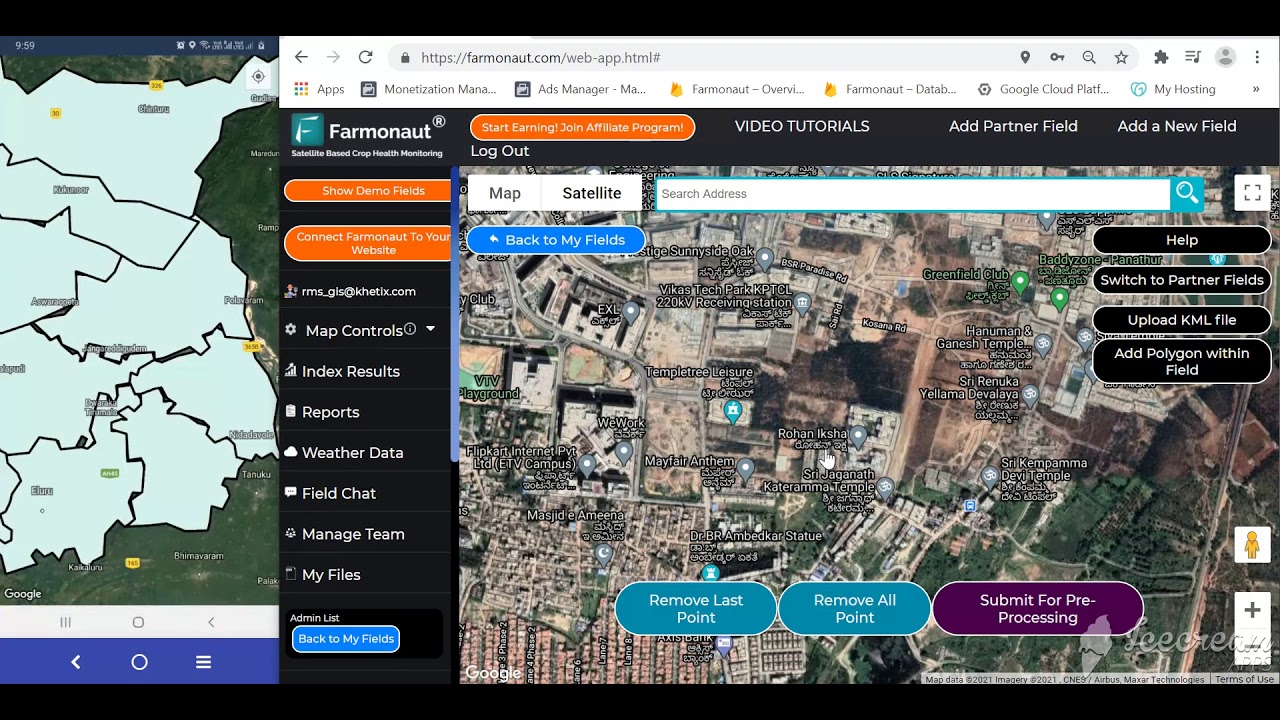
Benefits of 2HP Water Pumps to Farmers
Direct and Indirect Advantages for the Farming Community
Adopting a 2hp water pump for agriculture—especially under subsidized government schemes—provides farmers with numerous socio-economic and operational benefits:
- Reliable Water Supply: Ensures that irrigation is possible even amidst erratic monsoons or climate challenges.
- Optimization of Water Use: Modern, efficient pumps reduce water wastage, promoting sustainable irrigation practices and resource conservation.
- Boosted Crop Productivity: Timely and adequate irrigation leads to better germination, reduced crop stress, and increased yields/output per acre.
- Reduction in Labor & Energy Costs: Smart, automated agriculture pump sets minimize manual labor and cut electricity/fuel bills, maximizing profitability.
- Diversification & Income Enhancement: Improved irrigation infrastructure enables farmers to cultivate a wider range of crops, supporting farm income resilience.
- Eligibility for Financial & Green Incentives: Subsidies, easy loans, and carbon credits become accessible for those using regulated, tracked, and efficient pump models.
- Contributes to Food and Water Security: As these pumps form the backbone of smallholder and cooperative irrigation, they support food security and rural livelihoods.

Challenges and Future Outlook: Water Pumps & Irrigation in 2025 and Beyond
Key Challenges for Universal Adoption
- Electricity Inconsistency: Despite grid expansion, many rural areas still suffer from intermittent or unreliable power, impacting pump operation.
- Initial Investment Barriers: The upfront cost (even after subsidies) for solar or IoT-enabled pumps is often prohibitive for smallholders without access to credit.
- Maintenance Knowledge Gaps: Advanced or smart pump sets require skilled maintenance, which is lacking at the village level.
- Water Resource Management: Over-extraction in certain regions due to increased pump use can lead to falling water tables, requiring robust policy and monitoring.
- Inequitable Scheme Awareness: Many eligible farmers remain unaware of available agriculture water pump government schemes and support programs.
Emerging Solutions & The Road Ahead
- Hybrid Solar + Grid Pumps: Ensuring 24×7 irrigation coverage even in areas with unreliable grid access.
- Community Irrigation Systems: Cooperative pump ownership and shared infrastructure, especially for smallholder clusters.
- Advanced Automation: Next-gen pumps integrate weather, soil data, and AI controls for optimal resource management.
- Real-Time Satellite and IoT Monitoring: Platforms such as Farmonaut make it possible to monitor, predict, and optimize irrigation and pump scheduling, ensuring sustainable long-term use.
For advanced plantation, crop, and forest management supported by AI- and satellite-driven advisory, visit our Crop Plantation, Forest, and Advisory Platform.
FAQ: 2HP Water Pumps for Agriculture
1. What is the main advantage of a 2HP water pump for agriculture?
The 2hp water pump for agriculture is highly energy-efficient, ideal for small to medium-sized fields, and ensures timely, reliable irrigation with low operational costs—especially under subsidized government schemes.
2. Are government schemes available for all types of 2HP pumps in India?
Most government schemes prioritize energy-efficient (BEE-rated) and solar-powered 2HP pumps. Diesel pumps are rarely subsidized. Both central and state governments offer subsidies and easy finance for electric and solar pump sets.
3. How can I check eligibility and apply for a 2HP pump subsidy?
Applications can be made online on state agriculture or the official PM-KUSUM portal, or through local agriculture offices and banks. Eligibility often includes ownership of arable land and, sometimes, linkage to old pump replacement.
4. What kind of savings can farmers expect from switching to modern 2HP pumps?
Switching to modern 2HP pumps and smart irrigation systems can save up to 30% water and 15–25% energy annually compared to older models, significantly reducing electricity bills and resource wastage.
5. Can smart/IoT-enabled pumps be integrated with satellite or AI monitoring platforms?
Yes, many new pumps are IoT-compatible and can sync with platforms like Farmonaut for real-time monitoring, weather forecasting, automatic pump control, and data reporting.
6. Are there loan and insurance options available for purchasing 2HP agriculture pump sets?
Yes. Government and cooperative banks, often in partnership with platforms like ours, allow satellite verification and rapid loan/insurance disbursal for pump upgrades under eligible schemes.
Conclusion: Modernizing Irrigation with 2HP Agro Pumps
In 2025, the 2hp water pump for agriculture continues to be the backbone of efficient irrigation for millions of farmers in India and other developing agrarian economies. Support from government programs, the emergence of solar and smart pumps, and sustainable monitoring platforms like Farmonaut signal a bold new future—one where water, energy, and food security are tightly interlinked through technology. Every stakeholder must now leverage these solutions, schemes, and innovations to ensure water-efficient, cost-effective, and climate-resilient farming for the years ahead.
For cost-effective, data-driven irrigation and sustainable farm management, explore the full range of Farmonaut Large Scale Solutions.
Let’s make every drop count—empowering agri-communities with the right pump set, technology, and data insights!

 M11 Agri
 Sapoznick Farms
 Agrotoken
 Blue BearX
 Insignito
 Croptimum
 DnCubed
 Field Capacity
 Indosistim Teknologi
 Liquify Digital
 CU Foods
 BeyondTech Global
 Rouge VC
 AgroGreen Dynamics
 AgroRisk
 Oath Inc
 Reddane Farming
 Esri North East Africa
