

7 Powerful Water-Saving Technologies in Agriculture for 2024
“Drip irrigation can reduce water usage by up to 60% compared to traditional flood irrigation methods.”
Introduction: The Imperative for Water-Saving Technologies in Agriculture
Water-saving technologies in agriculture are rapidly transforming how the world’s farms grow crops, conserve scarce resources, and sustain productivity across diverse landscapes. Agriculture remains the largest consumer of freshwater globally, accounting for up to 70% of all freshwater withdrawals. As climate change, population growth, and urban expansion increase demand for food and fiber, the core goal for agriculture and forestry is obvious: maximize water use efficiency (WUE) while maintaining or boosting yields. This is a critical balance for farming, forestry, and all related sectors that depend on irrigation, rainfall capture, and soil health.
The rise of future farming technologies, latest farming technologies, and water conservation technologies in agriculture—from satellite-driven monitoring to AI-powered irrigation—empowers farmers to make smarter, data-backed choices. With an array of systems, practices, and innovations, it is now possible to optimize water use, reduce losses, and support sustainable productivity across landscapes. Below, we explore seven of the most powerful, game-changing technologies reshaping agricultural water use in 2024.

Key Insight: Adopting water-saving technologies in agriculture is no longer optional—it’s essential for climate resilience, food security, and economic viability in farming communities worldwide.
Trivia Spotlight: Surprising Facts About Water Efficiency
“Precision soil moisture sensors can increase crop yields by 20% while cutting irrigation water use by 30%.”
Comparative Table: Top 7 Water-Saving Technologies in Agriculture (2024)
| Technology Name | Description | Estimated Water Savings (%) | Estimated Cost ($/acre) | Implementation Complexity | Main Benefits |
|---|---|---|---|---|---|
| Precision Drip & Micro-Irrigation | Delivers water directly to the root zone, minimizing evaporation, and runoff. Suitable for row crops, vegetables, fruits, and orchards. | 30–60% | $600–$1,500 | Medium | Saves water, reduces labor, improves yields, uniformity, and soil moisture control. |
| Smart Irrigation Controllers | Uses sensors and weather data to synchronize schedules, delivering water only as needed per field zone and forecast. | 15–35% | $100–$400 | Low/Medium | Improves timing, prevents overwatering, increases efficiency and automates irrigation. |
| Soil Moisture Sensors | Provides real-time readings on volumetric water content, temperature, and matric potential to guide irrigation decisions. | 20–35% | $150–$400 | Low | Enables precise scheduling, reduces water losses, helps maximize yield with less input. |
| Soil Health Innovations | Uses mulching, cover crops, organic matter to increase soil retention, structure, and reduce evaporation and runoff. | 10–25% | $50–$250 | Low | Improves soil fertility, water holding, canopy cover, and overall field health. |
| Crop Genetics & Drought-Resistant Plants | Breeding and biotechnology for deep rooting, osmotic adjustment, tolerance, efficient stomatal regulation, and improved WUE. | 10–40% | Varies (seed cost) | Low | Reduces irrigation needs, boosts resilience on sloped or degraded land, supports yield under stress. |
| Rainwater Harvesting & Water Reuse | Collects, stores, and distributes rainfall & runoff from rooftops, roads, or fields; reuses processed water for irrigation. | 15–40% | $300–$1,000 | Medium/High | Buffers dry spells, reduces pressure on groundwater, improves reliability of supply. |
| Remote Sensing, Drones & AI Water Management | Uses satellite & drone data, AI, and analytics for large-scale monitoring, targeted irrigation, and yield optimization. | 15–35% | $60–$150 | Low/Medium | Monitors water use, detects stress, supports rapid, data-informed field decisions. |
✔ Key Benefits: Water Conservation Technologies in Agriculture
- 🌎 Conserves scarce freshwater resources by reducing unnecessary losses and runoff in irrigated and rainfed farming systems.
- 📈 Supports higher crop yields even under drought or uncertain rainfall, boosting food security and farm income.
- 🥇 Maximizes water use efficiency (WUE) by targeting water application directly to the plant root zone.
- ♻️ Reduces energy and labor costs by automating or optimizing irrigation and reducing water pumping needs.
- 🌱 Improves soil health and sustainability by maintaining moisture levels and minimizing compaction or erosion risks across landscapes.
1. Precision Drip and Micro-Irrigation Systems
When discussing water-saving technologies in agriculture, no system is more foundational or widely adopted than precision drip and micro-irrigation. These innovative irrigation systems deliver water directly to the root zone of crops, significantly minimizing evaporation, runoff, and non-target losses.
How Drip & Micro-Irrigation Work
Drip irrigation consists of a network of pipes and emitters that apply water slowly and continuously, maintaining uniform soil moisture around each plant. Micro-sprinklers target the base of crops or trees in orchards, ensuring droplets penetrate only where needed. These methods allow for frequent, smaller quantities of water—ideal for water-scarce regions and varied crop needs.
The impact is profound: drip irrigation can reduce water use by up to 60% compared to traditional surface or flood irrigation, while often boosting crop yields and quality. By delivering water directly, the soil between plants remains dry, reducing weed growth, fertilizer leaching, and disease pressure.
Applications & Innovations
- Widely adopted in permanent tree crops, vineyards, vegetable rows, and berry plantations.
- Integrated with deficit irrigation and crop/soil-specific schedules, supported by field sensors.
- Use of mulch or subsurface drip setups to further curtail surface evaporation and foster uniform root development.

Pro Tip: Design your drip system in zones so you can manage irrigation timing and quantity for different soil, crop, and exposure types—maximizing efficiency.
2. Smart Irrigation Controllers and Data-Driven Scheduling
A new generation of smart irrigation controllers and weather-synchronized systems enables watering schedules to be based on real-time data—soil moisture, field conditions, evapotranspiration rates, and weather forecasts. Instead of fixed routines, these controllers apply water only when and where it’s needed, thus supporting both water conservation technologies in agriculture and optimal crop health.
- 🔧 Key benefit: Avoids over-irrigation and under-irrigation by responding to actual crop needs.
- ⏱️ Precision: Reduces labor and error compared to manual adjustment of irrigation systems.
- 📲 IoT-Ready: Can be controlled and monitored remotely through mobile apps or web platforms.
- 🔋 Energy Efficient: Limits pump use and field visits, saving energy and fuel costs.
These controllers are increasingly paired with soil moisture sensors (see next section) and can be integrated into precision agriculture platforms, including those supported by satellite and AI-based analytics.

For example, when weather data predicts rain, the controller can delay or adjust the irrigation schedule—minimizing unnecessary water use. On sunny, windy days with rapid evaporation, the system can adapt proactively.

Common Mistake: Failing to calibrate or routinely update sensor-controller systems can lead to inaccurate scheduling. Always review system logs and field data!
3. Advanced Soil Moisture Sensors & Monitoring
Cutting-edge soil moisture sensors have become indispensable tools for water-saving technologies in agriculture. These devices measure the soil’s volumetric water content, matric potential, and temperature at varying depths across the field. With this data, farmers can optimize irrigation timing and quantity, delivering just enough water to keep crops thriving without excess or waste.
Modern sensors connect wirelessly—reporting live data to web dashboards, apps, or controllers—allowing for precision irrigation based on real-time conditions rather than routine guesswork. Systems often support alerts or automations, enabling decisions that conserve water and yet maximize yields. These technologies are central to integrated soil moisture management and can be paired with weather forecasts and evapotranspiration models.

Types of Soil Moisture Sensors
- Capacitive and TDR probes for measuring real-time volumetric water content
- Gypsum blocks for tracking soil matric potential
- Simple tensiometers for in-season irrigation scheduling
By harnessing the data generated from these sensors, farms can make evidence-based decisions—a hallmark of the latest farming technologies in large-scale farm management platforms.

Investor Note: Precision soil sensing is a high-growth segment—offering strong returns on investment for farms, agritech businesses, and geospatial solution providers.
📊 Data-Driven Insights for Efficiency
- Actionable readings on root zone moisture allow for dynamic irrigation adjustments.
- Analytics highlight where water is lost or over-applied across different field zones.
- Support deficit irrigation techniques for key stages in crop growth cycles without compromising yields.
4. Soil Health Innovations: Mulching, Cover Crops, and Organic Additions
Soil is the world’s largest water reservoir—and soil management practices are central to water-saving technologies in agriculture and forestry. Healthy soil holds more moisture, reduces percolation losses, and increases availability to the root zone. Three core practices make a huge difference:
- Mulching: A layer of organic or plastic mulch on the surface reduces direct soil evaporation by up to 25–30%. It fosters uniform soil temperature, keeps weed growth at bay, and supports soil biota activity, which enhances soil structure and infiltration.
- Cover Crops: Using legumes, grasses, or mixed swards during off-seasons prevents erosion, improves soil organic matter, and enables fields to capture and store more rainfall—especially helpful on sloped or erodible landscapes.
- Organic Matter Additions: Compost, manure, or green manure break down to increase soil carbon content, improving its capacity to retain and distribute water evenly through the profile.
In agroforestry, forestry, and land restoration projects, contour farming, terracing, and trenching also slow runoff and maximize infiltration, providing long-term water conservation across challenging or degraded sites.
🌱 Soil Practices for Maximum Water Savings
- 🌳 Reduces evaporation and runoff, protecting precious water resources.
- 💧 Improves field infiltration rates so more rainfall stays in the root zone.
- 🌾 Increases crop resilience to drought or irregular rainfall, supporting yield stability.
- 🌻 Boosts soil fertility and microbial health, ensuring sustainable productivity across years.
Discover how advanced carbon footprinting technologies can help track the climate benefits of improved soil health practices and water use, supporting both productivity and sustainability goals in agriculture.

Key Insight: A single percentage point increase in soil organic matter can help the field hold 20,000–30,000 more liters of water per hectare!
5. Crop Genetics & Plant Science for Water Efficiency
Plant breeders and geneticists are accelerating the development of crop varieties and trees with improved drought tolerance, osmotic adjustment, deep rooting, and efficient stomatal regulation. These scientifically engineered traits enable plants to make the most of limited water supplies—often requiring less irrigation input per unit yield.
- Drought-Tolerant Crops: New cultivars maintain yield under low water availability using physiological and biochemical mechanisms.
- Deep Root Architecture: Roots can penetrate compacted, dry layers—accessing deeper soil moisture or subsoil water where surface supply is limited.
- Selective Stomatal Regulation: Genetically optimized stomata adjust gas exchange to minimize water loss while maintaining photosynthesis during heat or water stress.
For a more practical standpoint, integrating crop genetics, balanced nutrient management, and traceability solutions allows farmers and agribusinesses to demonstrate low-water, climate-smart production practices—and reduce costs related to excess irrigation or input use.

Pro Tip: Select crops based on both water use efficiency (WUE) and market demand, creating a sustainable rotation that matches your farm’s water profile and local climate!
6. Rainwater Harvesting and Water Reuse Systems
Capturing and reusing water is increasingly at the heart of water conservation technologies in agriculture. Rainwater harvesting systems collect, store, and deliver rainfall (and surface runoff) from rooftops, farm roads, terraces, and field edges into tanks, farm ponds, or small reservoirs. This water can then be treated and reused at critical crop development stages, buffering the impacts of dry spells or unreliable supply.
- Rooftop and Road Runoff Collection: Practical for greenhouse, barn, or shed roofs and sloped fields, especially in regions with seasonal rainfall.
- On-Farm Reservoirs and Managed Aquifer Recharge: Ponds and infiltrations basins store excess water for use across dry periods and help recharge groundwater in over-extracted regions.
- Water Reuse in Processing and Cleaning Lines: Closed-loop systems collect rinse and wash water from post-harvest handling, treat it, and reuse it in field irrigation, reducing the overall agricultural water footprint.

These integrated systems (water saving technology in agriculture) are particularly important in regions where mining has degraded land, requiring careful water management and soil stabilization to kick-start re-vegetation with less irrigation input.
- ✔️ Reduces dependence on rivers, wells, and aquifers—improving farm resilience to drought.
- ⚠️ Substantial initial investment and land allocation required for ponds or reservoirs.
- ✔️ Supports environmental restoration, wildlife, and year-round water retention.

Key Insight: Effective water harvesting can increase available water by 10,000 to 30,000 liters per hectare during the dry season—enough to sustain critical crop stages or mother tree irrigation in forestry projects.
7. Remote Sensing, Drones & AI for Water Resource Management
No list of future farming technologies is complete without the mention of remote sensing, drones, and AI-driven analytics—the ultimate leap for precision agriculture and integrated resource management. Leveraging satellites and advanced software, these tools:
- 📡 Monitor crop water stress, evapotranspiration, and irrigation coverage across hundreds or even thousands of hectares.
- 🎯 Pinpoint “thirsty” zones or over/under-irrigated blocks, enabling targeted interventions and adaptive scheduling.
- 📈 Analyze and predict water use patterns, supporting data-backed irrigation decisions for higher efficiency.
- 🤖 AI decision tools: Translate raw data into actionable guidance, optimizing field, block, or row-level distribution.
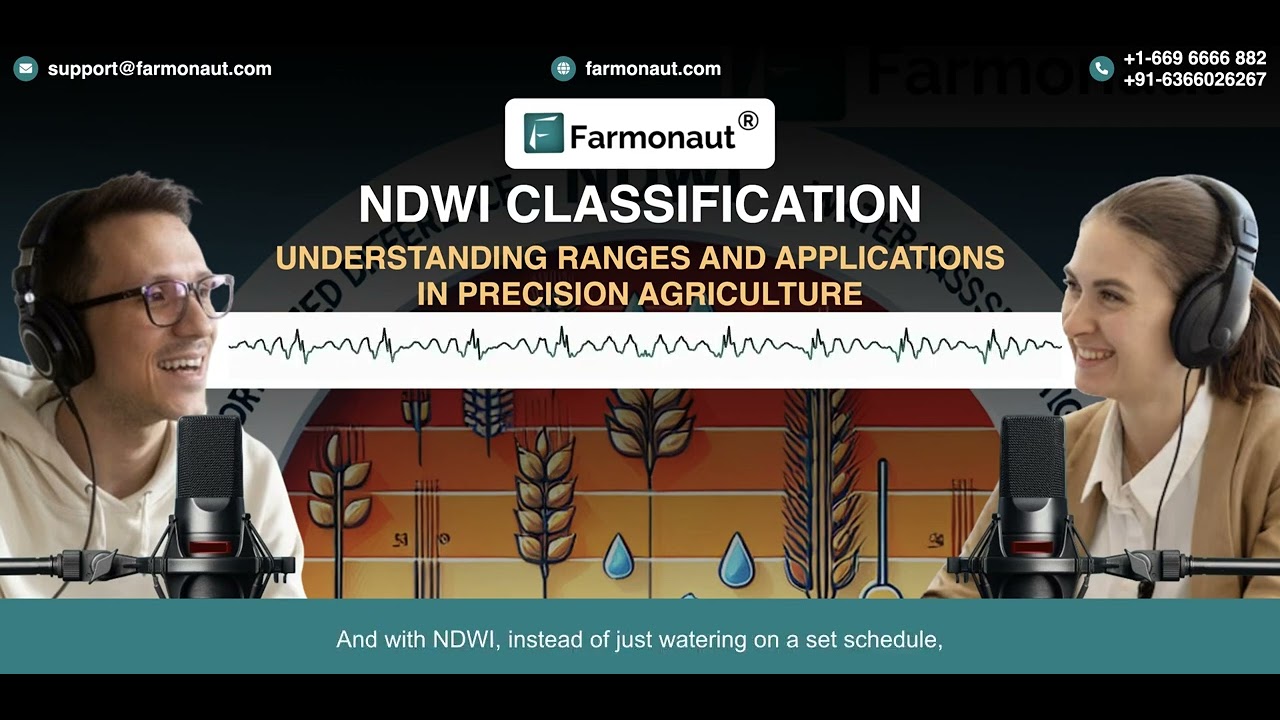
Our Farmonaut platform uses this combination of satellite imagery, AI, and machine learning to empower farmers and businesses globally. We enable evidence-based crop monitoring, yield forecasting, irrigation optimization, and environmental impact tracking—all from a mobile app, web dashboard, or API.



Farmonaut Data Solutions: Monitoring, Advisory & Traceability
- Live NDVI, NDWI, and soil moisture mapping for irrigation planning and crop health assessment
- Weather & growth forecasting for precise water application timing
- Resource & fleet management to reduce operational costs (see our Fleet Management page)
- Traceability from field to market via blockchain and AI reports (learn more about traceability)

Pro Tip: Connect field-level sensor data with remote sensing imagery using our satellite data API for seamless, multi-layered water management across all your operations.
Farmonaut: Empowering Precision Water Management with Technology
At Farmonaut, we believe satellite and AI-powered solutions are key to sustainable, efficient water management in agriculture and forestry. Our platform integrates multispectral satellite images, weather data, and real-time analytics to give users—whether individual farmers, businesses, or governments—the power to monitor, manage, and optimize water use across their operations.
- Real-time monitoring: Track vegetation health, soil moisture content, and field variability using mobile, web, or API access.
- AI-Driven Advisory: Jeevn AI system delivers weather forecasts, tailored crop irrigation schedules, and actionable water-saving strategies based on up-to-date satellite imagery and local conditions.
- Blockchain Traceability: Build trust by offering transparent field-to-market data on your water-efficient and climate-smart farming practices.
- Environmental Impact: Easily track your farm’s carbon footprinting and water use efficiency for regulatory compliance, sustainability branding, or internal optimization.
- Access to Financing: Financial institutions rely on satellite-based data for crop loan and insurance approval, reducing risk and delivering affordable growth to the agricultural sector.
Our technology democratizes access to sophisticated water-saving analytics—enabling smallholders, agribusinesses, and land restoration teams to maximize yields, reduce input costs, and sustain productivity in the face of growing water scarcity.

Policy Highlight: Training, affordable financing, and clear standards are vital for scaling up adoption of water-saving technologies in agriculture at the landscape level.
Want to transform your land management with technology? Explore our crop planting and forest advisory services to see how satellite and field intelligence can revolutionize your irrigation strategies.
Farmonaut Subscription Plans
Ready to empower your operation with advanced water management insights? Check out our pricing options below and start using real-time satellite technology today.
FAQs About Water-Saving Technologies in Agriculture
Q1: Which water-saving technology is best for small farms?
Answer: For small farms, precision drip irrigation combined with affordable soil moisture sensors is often the best starting point. These systems minimize waste and can be easily applied on a small land base with quick ROI, supporting both water conservation and yield improvement.
Q2: How does remote sensing contribute to water use efficiency (WUE)?
Answer: Remote sensing uses satellite or drone imagery to detect areas of water stress, overwatering, or field variability. By targeting interventions (like additional irrigation or adjusting schedules) only where needed, farms maximize WUE and minimize excess costs.
Q3: Are rainwater harvesting and reuse systems suitable in all regions?
Answer: They are especially effective where rainfall is seasonal but sufficient for collection (e.g., monsoon regions). They may be less effective where rainfall is both low and unpredictable, but are often paired with groundwater recharge strategies or supplementing other water-saving technologies.
Q4: What is the estimated cost and ROI for implementing water-saving technologies?
Answer: Costs vary: drip systems are typically $600–$1500/acre, while soil moisture sensors or controllers can start at $100–$400. Most water-saving installations recoup investment within 2–4 years through reduced water bills, higher yields, and labor savings.
Q5: Can smallholder farmers access satellite or AI-powered monitoring?
Answer: Yes. Platforms like Farmonaut make advanced satellite insights affordable and user-friendly for all farm sizes. Subscription options, mobile app access, and flexible pricing enable inclusivity across the agricultural sector.
Conclusion: The Path Forward for Sustainable, Water-Efficient Agriculture
The integration of water-saving technologies in agriculture—from the foundational drip and sensor solutions to remote sensing, AI, and genetic innovation—is transforming how farms and forestry operations worldwide grow, conserve, and sustain productivity. By maximizing the efficiency of every drop, we can balance the critical goals of yield, profitability, and long-term resource stewardship across landscapes.
Modern agriculture in 2024 is driven by data, connectivity, and smart management. As new future farming technologies emerge and spread, the ability to precision-manage irrigation, soil health, and water distribution will underpin food security and environmental health for generations.
Farmonaut is proud to help farmers, agribusinesses, and governments worldwide harness the power of technology for sustainable growth. Explore our satellite-based insights for intelligent crop management—and join the movement reshaping the world’s most essential resource: water.
Discussion
Questions, corrections or field experience? Share them below. First-time comments are reviewed before they appear, and your email is never published.
No comments yet. Be the first to add a question or your experience.

 Farm Inc
 JJM Farms
 WeMe Global
 Pixxel
 Agrotoken
 Blue BearX
 Insignito
 Croptimum
 DnCubed
 Field Capacity
 Indosistim Teknologi
 Liquify Digital
 CU Foods
 BeyondTech Global
 Rouge VC
 AgroGreen Dynamics
 AgroRisk
 Oath Inc
 Reddane Farming
 Esri North East Africa
 Licence holder · Niger · Gold










