

Agricultural Marketing: 7 Secrets for Massive Growth
Table of Contents
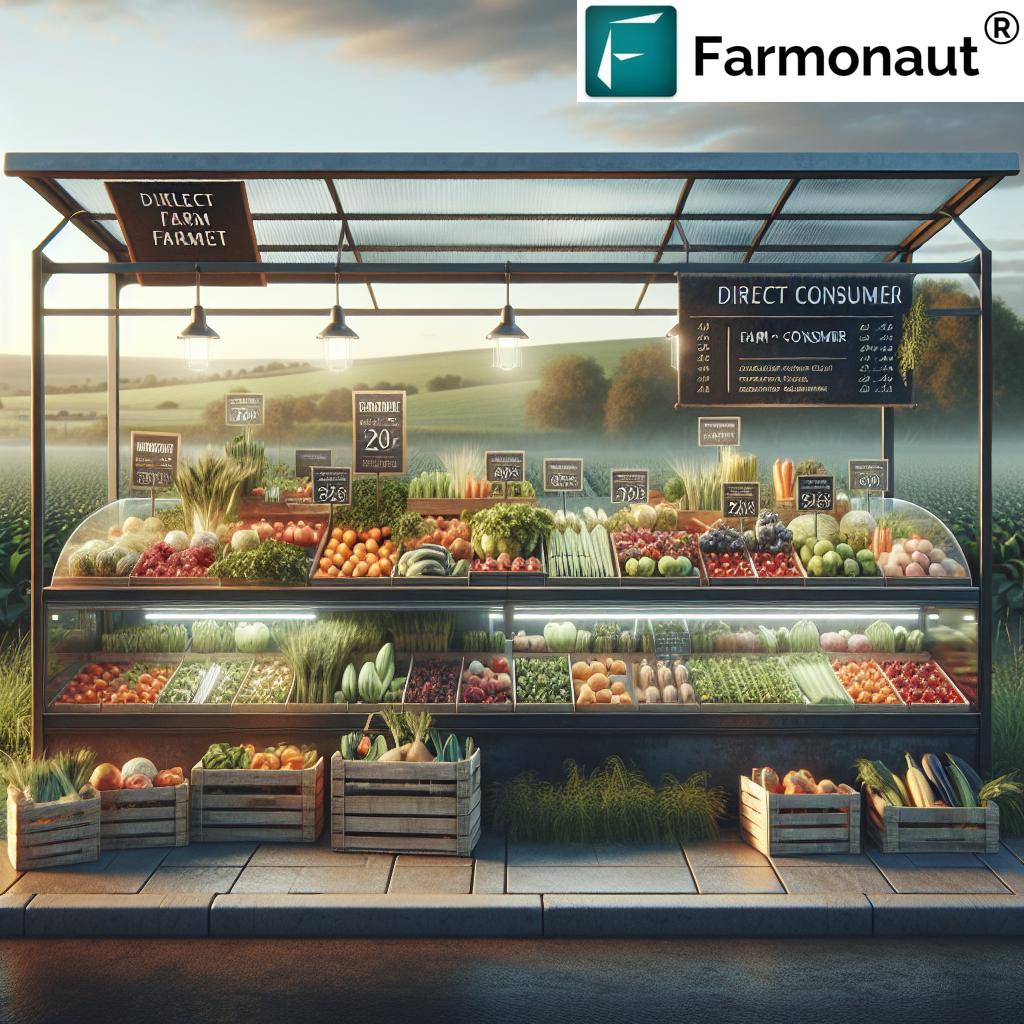




Agricultural marketing is a multifaceted discipline that lies at the core of global agriculture, connecting farmers to consumers, and ensuring production converts into value and growth. Below, the marketing process step by step, then seven approaches farms use, including direct to consumer farm sales, sustainable agriculture practices, and the digital technologies pushing the boundaries of what is possible in the farm to consumer supply chain.
Understanding Agricultural Marketing: The Backbone of Farm Value
Agricultural marketing involves the entire journey from farm production to the final sale to consumers. It interconnects the processes of product development, pricing, promotion, distribution, and market research to form the backbone of the farm to consumer supply chain.
- Product Development: Crafting products that resonate with evolving consumer preferences, health patterns, and demand trends.
- Pricing: Setting pricing that adapts to costs, market value, and profitability.
- Promotion: Engaging consumers through compelling branding, storytelling, and packaging that differentiate products.
- Distribution: Ensuring farm offerings access markets through optimal channels.
- Market Research: Systematically analyzing market data, consumer behavior, and emerging trends to adapt strategies.
By intentionally managing these elements, we as producers and marketers can enhance market presence, strengthen customer relationships, and foster long-term sustainable growth.
The agriculture marketing process, step by step
Whatever the crop, produce passes through the same basic steps between the field and the final buyer. A farm can do some of them itself and pay others to do the rest.
- Plan before planting. Decide what to grow, for whom, and roughly at what price. Check buyer specifications and public price reports, such as USDA Market News in the US or AHDB in the UK.
- Harvest and grade. Sort produce by size, quality and condition. Buyers pay by grade, so grading sets the price you can ask.
- Pack and label. Packaging protects the product and carries the information the buyer or law requires, such as origin and lot codes.
- Store. Storage lets you sell later, when prices may be better, but it costs money and risks losses.
- Transport. Move the product to a buyer, a packhouse or a market, on time and at the right temperature.
- Process, if it adds value. Turning fruit into jam or milk into cheese raises the price per unit and extends shelf life.
- Sell through a channel. Options run from a cooperative, a wholesaler or a processor to a retailer or direct sales to consumers. Each step closer to the consumer usually brings a higher price and more work.
- Get paid and review. Record prices, costs and complaints, and use them to plan the next season.
Promotion and market research, covered below, run through every step.
7 Secrets for Massive Growth Using Agricultural Marketing Strategies
1. Direct-to-Consumer Sales: Building Trust and Maximizing Value
Direct to consumer farm sales (DTC) are transforming how farmers engage with consumers. By eliminating traditional intermediaries, DTC channels allow us to directly manage pricing, branding, and relationships, while increasing profitability.
- Farmers’ Markets: Connecting local farmers with consumers face-to-face, enabling immediate feedback and fostering community bonds.
- Community Supported Agriculture (CSA): Subscriptions that guarantee sales upfront, offer fresh produce routinely, and promote food traceability and farm loyalty.
- On-Farm Sales & Experiences: Welcoming consumers onsite for purchasing and pick-your-own activities brings farm stories to life and builds unique brand loyalty.
These DTC methods not only increase market access but enhance profitability, transparency, and direct communication. Localized sales also encourage shorter supply chains, contributing to sustainability by reducing food miles.
Explore how technology is empowering DTC channels—with Farmonaut’s farm management app, farmers have data-driven insights to optimize harvest timing, ensure crop quality, and engage with emerging markets.
2. Brand Building for Farms: Storytelling, Branding & Packaging
Creating an authentic, memorable brand is foundational for differentiating farm products. Branding for farms should clearly communicate values (e.g., sustainability, local heritage), production methods, and unique selling points. Strategic packaging must inform, attract, and build consumer confidence.
- Storytelling: Share the origin, development, and mission of your farm—build connections beyond just food.
- Labeling & Certification: Highlight quality, traceability, and sustainable practices with certifications and digital QR codes using tools like Uniqode’s Dynamic QR Codes.
- Design: Thoughtful packaging reflects freshness, health, and the uniqueness of our products on all sales platforms.
Brand building for farms is strengthened by transparency; linking customers to your story, soil health initiatives, and sustainability efforts increases loyalty and perceived value.
To ensure full traceability and transparency from farm to consumer, leverage Farmonaut’s blockchain-based product traceability solutions. This technology secures origin data, supply chain records, and real-time journey tracking for your agricultural products.
3. Digital Marketing and E-commerce: Online Expansion for Agriculture
To reach today’s digitally native consumers, digital marketing and e-commerce platforms are vital. Online presence lets farmers showcase their products, share data-driven insights, and build communities.
- Social Media Marketing: Facebook, Instagram, X (formerly Twitter) and YouTube enable us to share farm stories, highlight sustainable agriculture practices, respond to inquiries, and promote sales and events directly to consumers. If you hire remote social media managers or digital marketing contractors to handle these channels, you should use remote employee monitoring software to track their productivity.
- Farm Websites & Blogs: A well-crafted website increases legitimacy and provides educational resources on crop health, soil management, and sustainability initiatives.
- Online Stores & Apps: E-commerce expands access beyond local markets, serving a global or regional audience around the clock, while apps help manage customer relationships and sales data.
Strategic digital marketing enhances brand awareness, captures market trends, and strengthens the farm to consumer supply chain.
Interested in monitoring farm health and productivity with real-time data? Download the Farmonaut Android app or iOS app for instant, mobile-friendly crop and field insights.
Search engine marketing (SEM) for farms and agtech firms
Search engine marketing means paying to appear in search results, usually alongside work on the organic listings (SEO). It suits farms selling direct and agtech companies selling to growers, because both reach people who are already looking.
- How paid search is priced. On Google Ads you bid on keywords. Your ad’s position depends on your bid, the quality of the ad and landing page, and the search context, not the bid alone. You set the most you will pay per click, and the actual charge is often less (Google Ads Help).
- Local listings. For a farm shop, pick-your-own or CSA, a complete Google Business Profile matters more than ads. Google ranks local results on relevance, distance and prominence, and there is no way to pay for a better local ranking (Google Business Profile Help).
- Keywords for agtech. Growers search for the problem, not the product category. Target terms like a pest, a crop or a task, and add negative keywords to block job seekers and students.
- Timing. Farm buying is seasonal. Raise budgets before planting and input-buying decisions, and cut them in harvest.
- Measure sales, not clicks. Track calls, form fills and orders as conversions, so spend goes to the searches that bring buyers.
4. Collaborative Marketing and Local Partnerships
Collaborative marketing is about working together—farms can multiply their marketing efforts and expand distribution through alliances with neighboring farms, local retailers, food artisans, and event organizers.
- Bundled Offers: Combine local produce with value-added goods (cheeses, jams, wines) for unique DTC subscription packages.
- Agro-Tourism Events: Co-host farm-to-table dinners, harvest festivals, or workshops to attract new customer demographics and deepen loyalty.
- Joint Promotions: Share advertising assets and promotional content, reducing marketing costs for all partners while boosting reach.
These partnerships increase access to new markets and cement a strong, regional food identity.
5. Experiential Marketing: Making the Farm a Destination
Immersive experiences bring consumers closer to our farm values, story, and sustainability efforts. Offering tours, workshops, or “pick-your-own” events fosters deeper bonds.
- Harvest Festivals & Seasonal Events: Engage guests in the rhythm of farm life while promoting local foods and agricultural traditions.
- Farm-to-Table Experiences: Demonstrate high-quality production methods and innovation by inviting chefs or local foodies to create on-site meals.
- Education Days: Offer insights on soil health, agroecology, and crop management to educate guests and strengthen the ‘why’ behind our products.
Experiential marketing turns customers into advocates as they become emotionally invested in our agricultural journey.
6. Market Research and Agricultural Data Analytics
Market research and agricultural data analytics are essential for understanding consumer preferences, projecting market trends, and optimizing production decisions.
- Demographic Analysis: Who is our ideal customer? What are their food preferences and spending patterns?
- Pricing Analysis: Identifying optimal pricing structures that maximize profit and access for various consumer segments.
- Trend Spotting: Using agile data tools to detect emerging trends—from plant-based proteins to soil health innovations.
Leveraging technologies for analyzing consumer behavior, demand, and online search activity enables us to adapt offerings and minimize risk.
Farmonaut’s platform API access and developer documentation empower large and small farms alike to integrate satellite-based weather, soil, and health data directly with their internal management systems.
7. Sustainable Branding & Agroecology: Delivering on Environmental Promise
Sustainable agriculture practices—including agroecology and soil health management—matter to many buyers. This emphasis on sustainability not only protects the environment but also builds lasting brand value and consumer trust.
- Agroecology Integration: Promote practices such as organic farming, cover cropping, reduced chemical inputs, and biodiversity in all branding and outreach.
- Transparency: Use blockchain in agriculture for full traceability, reassuring consumers about production methods and ethical sourcing.
- Soil Health Metrics: Regularly communicate how our practices improve soil vitality, water retention, and carbon sequestration.
Engagement in regenerative agriculture and ecological transparency are increasingly decisive factors in the agricultural market trends of today and tomorrow.
Farmonaut’s carbon footprint tracking (learn more) allows us to measure, monitor, and reduce carbon emissions, supporting claims of sustainable, environmentally responsible production.
For those seeking financing for crops or crop insurance verification, Farmonaut’s digital platform provides satellite-based verification, streamlining access and reducing fraud for farmers and institutions.
Comparison Table of Agricultural Marketing Strategies
To help decide which agricultural marketing strategies best suit your operation, we present this comparative table featuring ROI, key benefits, implementation level, and technology needs.
Trends Shaping Agricultural Marketing: Digital, Sustainable, Transparent
Agricultural marketing keeps changing under the influence of technological advancements, shifting consumer behavior, and global economic factors. Here are the crucial agricultural market trends we cannot afford to ignore:
- 1. Digital Agriculture Technologies & Big Data:
Digital agriculture technologies provide real-time data through satellite imagery, IoT sensors, and cloud platforms. They enhance decisions, improve yield, reduce resource waste, and enable rapid adaptation to climatic and market shifts.- Farmonaut stands at the forefront, offering multispectral monitoring, AI-driven advisories, and API integration. Learn more about large-scale farm management solutions built for enterprises.
- 2. Agroecology and Soil Health:
Agroecology merges ecological principles with farming, emphasizing biodiversity, natural pest management, and soil health restoration. These practices enhance sustainability, resilience, and consumer trust in agricultural products. - 3. Robotics and Automation:
Robots, drones and autonomous machines are used for planting, spraying, monitoring and harvesting, mainly where labour is scarce or costly. - 4. Alternative Proteins and Plant-Based Products:
Alternative proteins, from plant-based meats to precision-fermented ingredients, are still a category to watch, but demand has cooled: US retail dollar sales of plant-based meat and seafood fell 10% in 2025, to about $1.0 billion, according to GFI analysis of SPINS data. - 5. Blockchain in Agriculture for Chain Transparency:
Blockchain records can add traceability to the supply chain. We can now track every step from field to shelf, building trust with consumers and validating product claims.
Farmonaut: Enabling Precision Agricultural Marketing for a Sustainable Future
At the crossroad of agricultural data analytics, digital agriculture technologies, and supply chain transparency lies Farmonaut. Our mission is to democratize access to precision farming and data-driven insights for farms of all sizes.
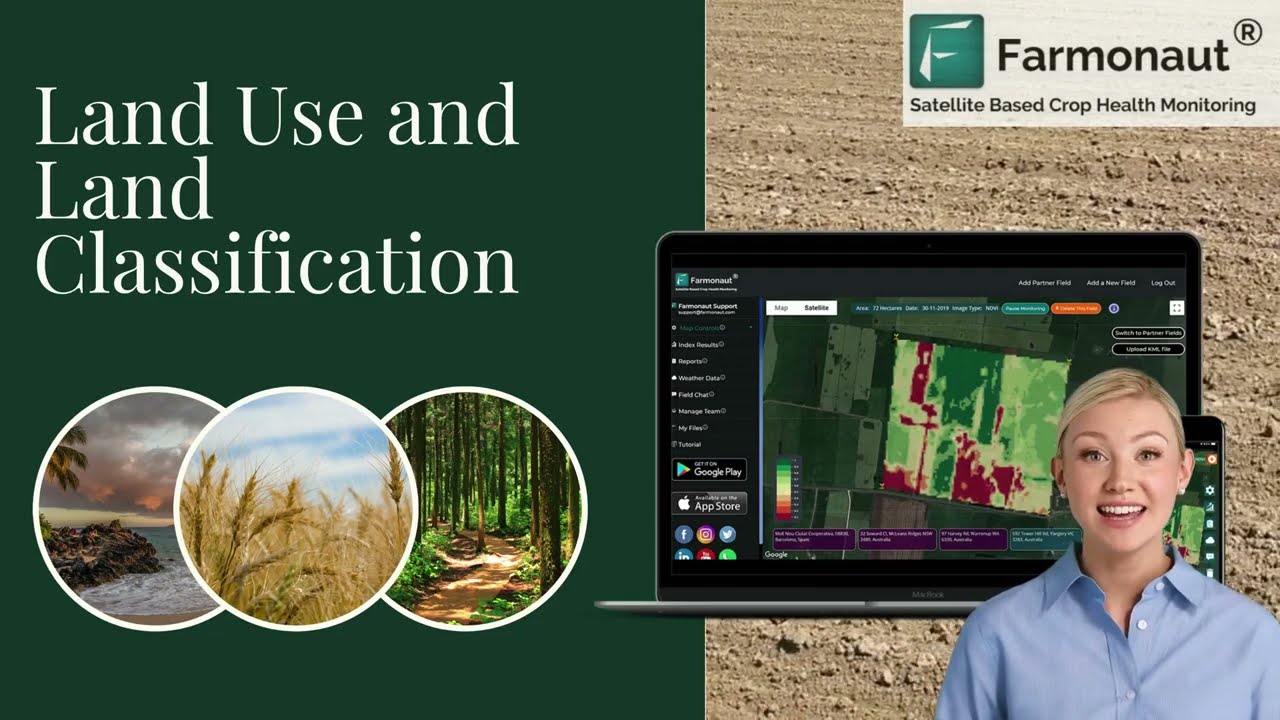
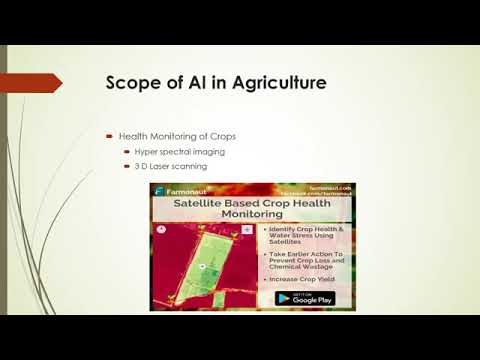
- Satellite-Based Crop Health Monitoring: Analyze NDVI, soil moisture, weather, and health indices remotely. Make informed decisions that reduce input costs, minimize waste, and improve yield and quality across the production cycle.
- JEEVN AI Advisory System: Personalized, real-time recommendations for crop management, pest advisories, and resource allocation, tailored to your farm’s data and local conditions.
- Blockchain-Based Traceability: Secure, end-to-end documentation of all production and transportation stages. Deliver consumers transparency and authenticity in every purchase decision.
- Fleet and Resource Management: Efficient coordination of assets, route planning, and logistics minimize operational costs and environmental footprint. Discover more in our fleet management solution page.
- Carbon Footprinting: Proactively measure, report, and reduce your carbon emissions footprint—in line with consumer expectations and compliance standards.
Farmonaut’s API (explore now) opens the door for integration of satellite, weather, and advisory data into third-party software, empowering developers and operations to build new agricultural value.
Get started instantly:
Try the Farmonaut web app now or browse our developer documentation.
Tailored for Every Stakeholder
- Individual Farmers: Access real-time crop and soil data, receive AI-driven advisories, and monitor fields from anywhere.
- Agribusinesses: Scale precision farming, manage plantations, optimize logistics, and validate sustainable certification across the board.
- Governments & NGOs: Enable large-scale monitoring, yield estimation, area mapping, and support for sustainable agriculture practices.
- Financial Institutions: Use satellite-based verification to streamline crop loans and agricultural insurance.
- Corporate Clients: Guarantee supply chain authenticity and sustainability via blockchain-powered traceability.
Frequently Asked Questions on Agricultural Marketing
What is the importance of agricultural marketing for farmers?
Agricultural marketing is crucial as it connects farmers with consumers, maximizes product value, improves profitability, and ensures sustainable farm growth by bringing production to the markets efficiently and transparently.
How does direct to consumer (DTC) sales benefit my farm?
DTC eliminates intermediaries, enabling better margins, direct customer feedback, relationship building, and increased loyalty. DTC also strengthens local food systems and often allows for real-time adaptation to consumer preferences.
What are some key digital agriculture technologies for marketing?
Digital agriculture technologies like Farmonaut’s satellite-based health monitoring, AI-driven advisory (JEEVN), blockchain traceability, and digital resource management help optimize production, reduce costs, and improve marketing effectiveness.
How can I ensure transparency and traceability in my supply chain?
By using blockchain in agriculture, every step in the supply chain can be securely traced. Farmonaut’s traceability tools provide consumers with complete transparency.
Why is sustainable agriculture branding important?
Trending consumer demand for environmentally responsible production means sustainable branding builds trust, garners premium pricing, and aligns your farm with global values on soil health, low inputs, and carbon reduction.
How do I start with precision agriculture without a large budget?
Farmonaut offers affordable, scalable subscriptions for smallholders, enabling access to real-time satellite data and advisories without expensive on-field hardware. Try the web or mobile app for precision insights.
What role does market research play in agricultural marketing?
Market research identifies emerging trends, consumer behavior patterns, and helps optimize product offerings and pricing, allowing farms to remain agile and competitive in the face of evolving demand.
Conclusion
Agricultural marketing is a dynamic, industry-defining discipline integrating everything from product development and distribution to branding, transparency, and data-driven adaptation. As farmers and agribusiness decision-makers, our ability to embrace direct to consumer channels, digital agriculture technologies, blockchain in agriculture, sustainable agriculture practices, and data analytics will determine future growth, competitiveness, and trust along the farm to consumer supply chain.
With companies like Farmonaut lowering the cost barrier and democratizing precision agriculture, it has never been easier to access advanced, actionable information—optimizing outputs, ensuring transparency, and delivering on the promise of sustainability for farms of all scales.
Take your first step towards massive growth and sustainable agricultural marketing—download the Farmonaut app, explore our precision tools, and watch your farm thrive in the digital era.
Discussion
Questions, corrections or field experience? Share them below. First-time comments are reviewed before they appear, and your email is never published.
No comments yet. Be the first to add a question or your experience.

 Kalustyan
 Tucor
Tucor Saraswati Agro
 Geno
Geno Hayleys Agriculture
 Linx Agritech
 Adinet
 Save Your Soils
 Grandstream Algérie
 XOS Realty
 Geospatial Lab Africa
 Agro La Gándara
 HIPSAC
 ZOL Zimbabwe
 Juligerm
 MISE Maroc
 NWNS
NWNS
