

Agri Commodity Prices 2026: Key Ag Commodities Trends
The Dynamics of Agri Commodity Prices in 2025: Navigating Challenges and Opportunities
Agricultural commodities are not just the backbone of rural economies—these products shape global food security, drive international trade, and sustain billions of livelihoods across continents. As we look towards 2025 and beyond, the global agricultural landscape presents a complex mix of challenges, risks, and unprecedented opportunities. In this comprehensive exploration of agricultural commodity markets, we provide clarity on the factors influencing agri commodity prices, major trends shaping the sector, and actionable insights for all stakeholders involved.
Table of Contents
- Introduction: Understanding Agri Commodity Prices
- Key Drivers of Agri Commodity Prices in 2025
- Global Market Trends & Dynamics
- Comparative Commodity Price & Trend Table (2024–2026)
- Market Volatility and Risk Management
- Technology and Infrastructure: The Road to Efficiency
- Sustainability and Changing Market Preferences
- Smart Farming Future: Technology, Data & Satellite Monitoring
- Farmonaut Technologies: Empowering the Agri Commodity Ecosystem
- Navigating Challenges and Opportunities in Agri Commodity Markets
- FAQ: Agri Commodity Prices 2026
- Conclusion
Introduction: Understanding Agri Commodity Prices
Agricultural commodities—including grains, oilseeds, fibers, and livestock—are fundamental to the world’s food supply and the economic health of rural communities. In 2025, the outlook for agri commodity prices remains highly dynamic, as international markets absorb shocks from climate, trade, technology and policy decisions.
Well beyond the farm gate, these commodities ripple through broader supply chains, influencing global food prices, trade balances, rural livelihoods, and national food security strategies. By understanding the intricate web of forces that drive price volatility, stability, and long-term trends, stakeholders ranging from farmers, traders, agribusinesses to policymakers can make informed decisions and position themselves for success well into 2026 and beyond.
The world’s agricultural commodity prices are no longer dictated solely by regional yields—factors like technology adoption, supply chain efficiency, climate events, and evolving consumer preferences now play equally critical roles.
Key Drivers of Agri Commodity Prices in 2025
The agri commodity landscape in 2025 is shaped by multiple, often-intertwined drivers. Let’s dig deeper into the critical factors directly influencing prices, demand, supply chains, and production patterns:
1. Weather Variability & Climate Change
- Increasingly unpredictable rainfall and prolonged droughts disrupt global crop cycles.
- Incidences of extreme weather events—floods, heatwaves, hurricanes—cause yield variations across continents.
- Emerging innovations in climate-resilient varieties offer hope, but aren’t yet enough to offset these shocks fully.
2. Global Demand Growth & Market Preferences
- Rapid population growth, urbanization, and rising incomes boost global food consumption.
- Shift in dietary patterns (especially in South Asia and Africa): More demand for high-protein foods, oils, and processed products.
- Changing market preferences for traceable, sustainable, and value-added commodities.
3. Supply Chain Disruptions
- Recent supply chain bottlenecks from the COVID-19 pandemic, ongoing geopolitical tensions, and labor shortages.
- Need for enhanced storage, processing infrastructure, and robust digital trade platforms.
4. Technological Advancements
- Adoption of precision agriculture, satellite monitoring, and AI-driven insights improves farm management.
- Data analytics enable real-time crop health assessment, loss reduction, and sustainability monitoring.
5. Policy, Trade, and Regulatory Factors
- Government interventions in export-import policies, subsidies, and sustainability mandates.
- Increased attention on carbon footprinting and supply chain traceability.

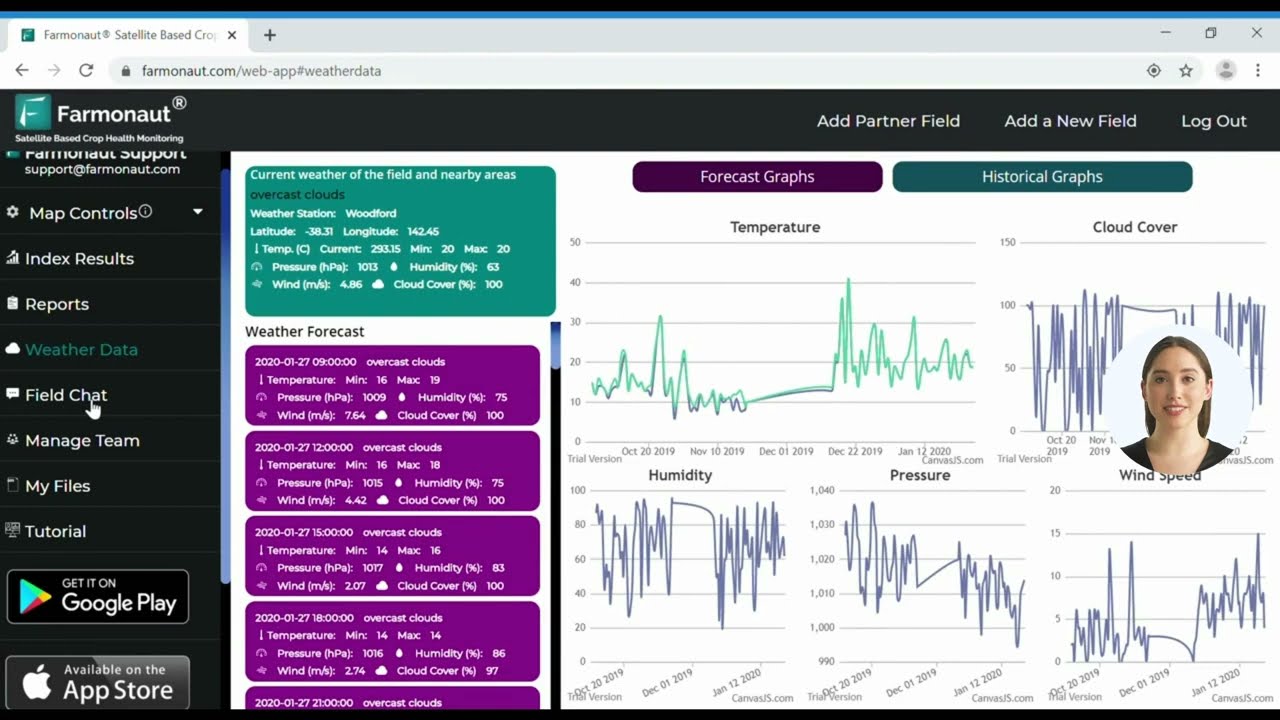
Stakeholders who act on real-time weather and market data—such as those delivered by advanced digital platforms and satellite-based advisory systems—can make more informed decisions, reducing exposure to unpredictable ag commodity price swings.
Global Market Trends & Dynamics for Agricultural Commodities
The commodity market in 2025–2026 is more interconnected than ever, marked by intense competition, trade uncertainties, and technological shifts. Let’s review what’s driving volatility and transformation across the world’s leading ag commodities.
Key Influencing Factors for Major Farm Commodities
- Crop Yields & Productivity: Crop output influenced by climate, seed varieties, pest/disease incidence, and effective management.
- Supply Chain Infrastructure: Modern storage, efficient transportation, and value-added processing are crucial for reducing post-harvest losses.
- Global Trade Patterns: Export restrictions, regional trade agreements, and currency trends impact market flows and prices.
- Consumer Preference Evolution: Health, sustainability, and traceability increasingly guide buying patterns, especially in high-value export markets.
Markets in South Asia and Africa display some of the fastest rates of food demand growth, driven by population expansion and dietary change. Investors tracking agri commodities should closely watch regional transformation—especially in rice, wheat, oils, corn, and pulses.
Comparative Commodity Price & Trend Table (2024–2026)
Below is a comparative table displaying projected price trends, major drivers, and sustainability factors for leading agricultural commodities through 2026. This snapshot not only highlights estimated price changes, but also provides vital insight for those navigating volatility and market risk.
| Commodity Name | 2024 Estimate (USD/ton) |
2025 Estimate (USD/ton) |
2026 Projection (USD/ton) |
% Change (2024–2026) |
Key Drivers | Sustainability Impact |
|---|---|---|---|---|---|---|
| Wheat | 285 | 300 | 315 | +10.5% | Weather variability, supply chain disruptions, tech adoption in Asia | Increased adoption of precision farming & reduced water use |
| Corn | 245 | 270 | 282 | +15.1% | US weather events, demand for feeds & biofuels, storage bottlenecks | Push towards regenerative agriculture in Americas |
| Soybeans | 540 | 560 | 582 | +7.7% | Demand growth in Asia, international trade tensions, sustainability certifications | Strong focus on carbon reduction; industry-backed traceability systems |
| Rice | 430 | 455 | 460 | +7.0% | Asia climate shocks, consumption growth, government export policies | Increased water efficiency, digital monitoring of fields |
| Cotton | 1,660 | 1,720 | 1,789 | +7.7% | Global demand for fibers, water use, competitive alternatives | Water-saving techniques and fair labor certification |
(Note: Figures are estimates/projections. Actual ag commodity prices may differ due to unforeseen events.)
- 📊 Wheat: Projected price gain led by erratic yields and growing demand in Asia.
- ⚙️ Corn: Tech adoption and storage investment drive future price trends.
- 🌎 Soybeans: Global supply and sustainability certifications influence premiums.
- 💧 Rice: Resilience depends on climate adaptation and digital monitoring.
- 🧵 Cotton: Market focus shifting toward ethical, eco-friendly sourcing.
Market Volatility and Risk Management in Agri Commodities
Market volatility is not new to ag commodities—but in 2025 and 2026, the stakes are even higher. Trading volumes, price swings, and market uncertainty have been amplified by the convergence of unpredictable weather, shifting global trade alliances, and speculative activity. Both farmers and agribusiness firms must strengthen risk management and adaptation strategies to weather these cycles.
How Stakeholders Manage Volatility:
- 🔒 Diversified Cropping Patterns—Offsetting risk across multiple agricultural commodities.
- 📈 Futures & Contracts—Hedging against unforeseen price volatility.
- 📱 Digital Information Access—Utilizing satellite-driven advisory apps for up-to-date market and weather alerts.
- 🛡️ Insurance Solutions—Crop insurance, often verified with geospatial data.

Ignoring emerging risk management tools—such as real-time satellite monitoring and digital insurance verification—can leave growers vulnerable to market fluctuations and unexpected climate events.



Technology and Infrastructure: The Road to Efficiency in the Commodity Market
Modern infrastructure and technology platforms are proving fundamental for stabilizing agri commodity prices and ensuring resilient supply chains. Digital transformation is rapidly altering food production, distribution, and consumption patterns across both developed and emerging economies.
Key Technological Trends Influencing Ag Commodities:
- 📲 Real-time Crop Monitoring: Satellite tools enable farm-level intelligence, identifying yield risks and input needs.
- ☁️ AI & Machine Learning: Automated data analytics for smarter decision-making and risk anticipation.
- 🧮 Blockchain Traceability: Ensures authenticity and aids compliance in the supply chain.
- 🚚 Logistics & Fleet Management: Satellite-backed platforms optimize resource allocation and transportation for agricultural commodities and related sectors.
- 💡 Precision Farming: Smart devices and data-driven recommendations enhance productivity and sustainability.
- 🌱 Environmental Impact Tracking: New tools, like carbon footprinting, monitor emissions for compliance and market access.

- 🌟 Precision Tech = More Efficient Input Use
- 🛰️ Remote Monitoring = Less Labor, Fewer Losses
- 📡 Data-Driven Advisory = Better Market Timing
- 🔗 Blockchain = Supply Chain Transparency
- 🌍 Sustainability Tracking = Premium Market Access

Sustainability and Changing Market Preferences
Today’s agri commodity markets are increasingly shaped by sustainability—not just yields or prices. Buyers, investors, and regulators are demanding traceability, environmental stewardship, and ethical practices across supply chains. These trends are rapidly altering how agricultural products are produced, traded, and valued globally.
How Sustainability Influences Commodity Prices and Access:
- Eco-labels & Certifications: Verified sustainable ag commodities fetch price premiums and open doors to lucrative markets.
- Carbon Credits & Offsets: Producers participating in carbon footprinting schemes gain new revenue streams and compliance advantages.
- Regenerative Practices: Methods such as cover cropping and reduced tillage balance production with soil health and long-term viability.
- Supply Chain Traceability: Blockchain solutions verify origin, practices, and reduce fraud for both agricultural commodities and mineral resources.
Producers who integrate blockchain-based traceability and carbon monitoring position themselves ahead of regulatory changes—while also attracting premium buyers in developed markets.

Smart Farming Future: Technology, Data & Satellite Monitoring
As the digital revolution continues, the future of agricultural commodities will be increasingly defined by smart, connected farming systems and real-time supply chain intelligence.
Farmonaut: Satellite-Driven Insights Empowering Agriculture
We, at Farmonaut, are committed to democratizing access to affordable, advanced, satellite-based solutions for agriculture, infrastructure, mining, and other sectors. Our platform fuses AI, blockchain, and multispectral satellite imagery to empower stakeholders—including farmers, agribusinesses, governments, and financial institutions—with the actionable intelligence needed to:
- 🔍 Monitor Crop Health: Rapid and real-time analysis of NDVI, soil, and vegetation.
- 🔗 Ensure Traceability: Blockchain-backed verification across the commodity journey—see our Product Traceability solution.
- 🛡️ Streamline Finance Access: Satellite verification for loans and insurance—learn more about Crop Loan & Insurance digital services.
- 🌍 Monitor Carbon Impact: Real-time carbon footprint tracking for sustainable commodity markets.
- 🛠️ Enhance Resource Management: Optimize fleet and infrastructure for improved efficiency and reduced losses—see our Fleet Management system.
Farmonaut operates across web, Android, iOS, and API integration channels—accessible here.
Access our API for seamless integration of satellite-based analytics in your agri business applications.
API Access |
API Developer Docs
- ✔ Real-time geospatial crop monitoring for optimized yield.
- ✔ Automated weather alerts for risk preparedness.
- ✔ Blockchain-backed market traceability.
- ✔ AI-driven farm advisory via our Jeevn system.
- ✔ Resource maximization with digital fleet tools.

The biggest wins for 2026 will go to those who integrate technology across the entire agricultural commodity lifecycle, from in-field satellite-driven monitoring to market-traceable exports.
Farmonaut Technologies: Empowering the Agri Commodity Ecosystem
We at Farmonaut are focused on transforming the agri commodity ecosystem with next-gen technologies:
- 📡 Satellite Imagery & NDVI Monitoring: Detect crop health, forecast risks, and guide smart interventions.
- 💡 AI-Driven Advisory (Jeevn): Tailored, real-time recommendations for farmers, traders, and agribusinesses—optimized for diverse crops and regions.
- 🔗 Blockchain Traceability: End-to-end verification to boost trust and command higher premiums in global ag commodity markets.
- 🌍 Environmental Monitoring: Instantly calculate carbon footprints, meeting new market and governmental sustainability mandates.
- 🛠️ Integrated Resource Management: Advanced fleet management tools for streamlining logistics across agricultural, mining, and infrastructure sectors.

With Farmonaut’s web and mobile apps, both individual farmers and enterprise users can access modular, scalable solutions for monitoring any acreage, anywhere in the world! Try our large-scale management platform or crop plantation & forest advisory today.
Navigating Challenges and Opportunities in Agri Commodity Markets (2026 & Beyond)
- Dynamic Demand: Growing urbanization and income rises in South Asia, Africa, and Latin America will keep food commodity demand outpacing supply in crucial categories.
- Climate Adaptation: Investments into irrigation, water management, and drought-resilient seed varieties are essential to counteract climate risks.
- Sustainability Compliance: Meeting evolving carbon, traceability, and labor standards will become a primary requirement for market participation.
- Digital Literacy: Stakeholders embracing digital platforms and data tools are poised for more stable and profitable operations.
- Efficiency or Exclusion: Regions and businesses unable to adapt may find themselves priced out of lucrative global markets.
The transition to technology-powered, sustainable farming and trading holds the promise of unlocking fairer prices, decreased losses, and improved environmental security—if stakeholders seize the moment!
- ⏩ Price Shifts: Up to 15% fluctuation expected in 2026 due to supply chain volatility.
- 💼 Tech Drives Value: Over 45% of price changes result from technology adoption and sustainability practices.
- 📊 Agri Commodity Markets: Remain sensitive to climate cycles, policy shocks, and global trade flows.
- 🌱 Sustainability Premium: Certified, traceable products command higher premiums.
- 🛰️ Satellite Tools: Offer actionable, field-to-fork insights for stability and growth.
FAQ: Agri Commodity Prices 2026
Q1: Why do ag commodity prices fluctuate so much?
Ag commodity prices are highly sensitive to a variety of factors—climate events, policy shifts, trade disruptions, technology adoption, and consumer demand patterns. Weather-driven yield variation and global supply chain shocks can cause rapid price swings, while the adoption of new technologies and regulatory changes increasingly drive long-term trends.
Q2: What are the best strategies to manage market volatility?
Diversification of crops, utilization of futures contracts, crop insurance, and real-time data platforms are among the top strategies to hedge risk. Satellite technology platforms, like those offered by Farmonaut, add an extra layer of market intelligence for better decision-making.
Q3: Which agricultural commodities show the most promising price outlook for 2026?
Commodities like wheat, corn, soybeans, rice, and cotton are projected to experience price growth due to demand surges—especially in emerging markets—and the increasing importance of certified, sustainable production.
Q4: How does sustainability factor into future prices?
Sustainability features—reduced carbon emissions, ethical labor practices, and supply traceability—are increasingly required by major buyers. Products that meet these standards often receive price premiums and better market access.
Q5: How can stakeholders access advanced commodity insights?
By leveraging satellite-driven digital platforms, real-time crop monitoring, and data-backed advisory tools (see Farmonaut’s web and mobile apps), stakeholders can gain an edge in planning and executing their commodity strategies.
Conclusion: Navigating the Future of Agri Commodity Prices
The journey into 2026 will test the agility and vision of everyone across the agricultural commodity supply chain. By embracing digital technology, enhancing infrastructure, adapting to sustainability requirements, and monitoring global trends, stakeholders can convert volatility into opportunity.
With the right tools and strategies—such as those enabled by Farmonaut’s satellite-based analytics, AI advisories, and blockchain traceability—market participants can unlock more stable prices, access new global markets, and contribute to food security and environmental stewardship on a global scale.
Join us in revolutionizing the future of agricultural commodities—where technology, sustainability, and smart risk management drive both prosperity and resilience!

 Godrej Agrovet
 Hayleys Agriculture
 Linx Agritech
 Adinet
 Save Your Soils
 GalaxEye Space
 Grandstream Algérie
 XOS Realty
 Geospatial Lab Africa
 Agro La Gándara
 HIPSAC
 ZOL Zimbabwe
 Juligerm
 AdBio
AdBio MISE Maroc
 NWNS
NWNS Red August Group
 Farm Inc
 WeMe Global
