

Agricultural Land as Collateral: Access Credit in 2026
“In 2025, using land as collateral increased rural credit access for farmers by up to 35% in developing regions.”



Summary: Agricultural Land as Collateral Unlocking Financial Access for Farmers in 2025 & Beyond
Agricultural land as collateral continues to be a cornerstone of rural financial systems and a strategic asset for farmers aiming to unlock access to credit. In 2025, amidst technological advancements and systemic reforms, leveraging land as a collateral instrument is more relevant than ever. Agricultural land—a critical source of livelihood and financial security—enables farmers to pledge a tangible, appreciating asset to unlock loans, driving increased productivity, rural growth, and economic resilience in both developed and emerging economies.
Despite ongoing challenges such as fragmented landholdings, unclear ownership, and complex tenure systems, recent innovations in digital land records, regulatory reforms, and satellite technology have strengthened the transparency and credibility of using land as collateral. These changes are catalyzing more efficient lending processes, lowering risks, and providing customized financial services that are critically important for smallholder farmers and rural communities.
This comprehensive guide explores the evolving role, advantages, and challenges of agricultural land as collateral in 2026, featuring actionable advice for stakeholders—from farmers, lenders, regulators, to agri-tech providers. Dive into global best practices, key implications, and the latest technology—such as the solutions offered by Farmonaut—empowering more secure, inclusive, and productive rural finance systems.

The Role of Agricultural Land as Collateral: Foundation of Rural Finance
Agricultural land as collateral occupies a unique and strategic position in the rural financial ecosystem. Land, by its intrinsic value and often appreciating nature, represents a fixed and immovable asset—a key differentiator when compared to movable assets or chattel mortgage systems often used elsewhere. The acceptance of land as security by financial institutions stems from its stable, tangible, and strategic importance for both farmers and lenders.
For farmers, agricultural land is not just a livelihood but also a critical instrument for securing funds. By pledging land, they are able to:
- Access loans for the purchase of critical farming inputs including seeds, fertilizers, and machinery.
- Invest in technologies that enhance sustainability and yields, such as modern irrigation systems.
- Bridge working capital gaps, particularly crucial during off-seasons or for meeting sudden expenses.
- Adopt innovations like carbon footprint monitoring and traceability systems, making their farming more sustainable and marketable.
- Unlock government subsidies and incentives more easily through digitized land registration and ownership verification.
The broader sector also benefits: with increased access to credit, agricultural productivity rises, new business opportunities emerge, and rural economies experience a sustained boost in growth and employment.
- ✔ Asset Security: Agricultural land remains a reliable, appreciating collateral for credit access.
- 📊 Improved Credit Flow: Transparency in land records strengthens lenders’ confidence.
- ⚠ Reduced Risk for Lenders: Fixed, intrinsic land value limits loan recovery challenges.
- ✔ Financial Inclusion: Enables smallholder farmers and rural communities to access funds.
- 📈 Supports Investments: Collateralized lending drives investment in technology and sustainable practices.
Land-backed lending remains the bedrock of agricultural finance, presenting stable, long-term growth opportunities for investors as rural economies modernize in 2026.

Recent Trends & 2026 Outlook: How Agricultural Land Collateralization is Evolving
The landscape for agricultural collateral has evolved rapidly in the last two years:
- Digitization of land records and titles, increasing transparency and ease of verification.
- A surge in blockchain-powered registries—enabling immutable, auditable proof of ownership.
- Integration of satellite monitoring for land valuation, risk assessment, and productivity tracking, as made possible by Farmonaut’s satellite solutions.
- Wider adoption of alternative credit scoring: lenders now look at satellite, weather, and historical farm performance data in lieu of only conventional documentation.
- Greater focus on regulatory reforms—including faster dispute resolution, streamlined digital processes, and encouragement for banks and NBFCs to lend in the agricultural sector.
- Custom-built lending products designed for smallholders, with flexible repayments synchronized to crop cycles.

With the digitization of land records and use of satellite-based technologies, loan approval rates for agricultural lending are expected to rise by over 18% in 2026 compared to 2025.
“Over 60% of agricultural loans in 2026 relied on land collateral, significantly reducing lending barriers in rural areas.”
Advantages & Implications of Using Agricultural Land as Collateral
The implications for farmers, communities, banks, and wider economies are profound:
Economic Implications
- ✔ Capital Enables Growth: Pledged land unlocks capital for investment in new technologies, seeds, and fertilizers.
- 📈 Productivity Increase: Access to financial services leads to better yields and efficient farming practices.
- ✔ Rural Economic Growth: Multiplier effect boosts allied businesses—input suppliers, machinery dealers, and logistic firms.
- 📊 Financial Inclusion: More rural and smallholder farmers included in the mainstream credit system.
- ✔ Risk Diversification: Farmers can manage risks and losses, sustaining livelihoods during difficult cycles.
Social Implications
- ✔ Poverty Reduction: Optimized credit flow fosters higher incomes and new employment.
- ✔ Community Empowerment: Access to funds improves healthcare, education, and infrastructure.
- ✔ Gender Inclusion: Women farmers, with clear titling, gain improved access to credit and economic participation.
- ⚠ Social Risks: Poor safeguards may lead to land dispossession if not managed by fair regulations.

Always maintain up-to-date, digital documentation of land titles and transactions. Digital records significantly speed up loan processing and reduce disputes during collateralization.
Key Challenges in Leveraging Agricultural Land as Collateral
Despite the promise, using agricultural land as collateral is not without significant hurdles. Many emerging economies face these persistent challenges:
- Complex & Archaic Tenure Systems
Unclear, fragmented, or overlapping land tenure restricts legal recognition and complicates securitization. - Fragmented Landholdings & Documentation Barriers
Small plot sizes and lack of formal, updated land records obstruct appraisal and title validation. - Valuation and Illiquidity Issues
Illiquidity makes recovery slow or unfeasible for lenders in case of default, increasing risk perception and interest rates. - Socio-cultural Hesitations
Fear of ancestral land loss, informal tenancy arrangements, and community resistance often hinder the willingness to pledge land. - Regulatory and Process Challenges
Slow dispute resolution, cumbersome legal systems, and high transaction costs limit land’s effectiveness as collateral.
Underestimating the importance of clear, recognized title deeds and accurate land records often leads to delayed or denied loan applications.

Innovations, Technology & Regulatory Reforms Driving Progress (2025 & Beyond)
- Digital Land Registration Systems: Integration of GIS, blockchain, and satellite data—significantly enhance the accuracy and tamper-resistance of ownership records.
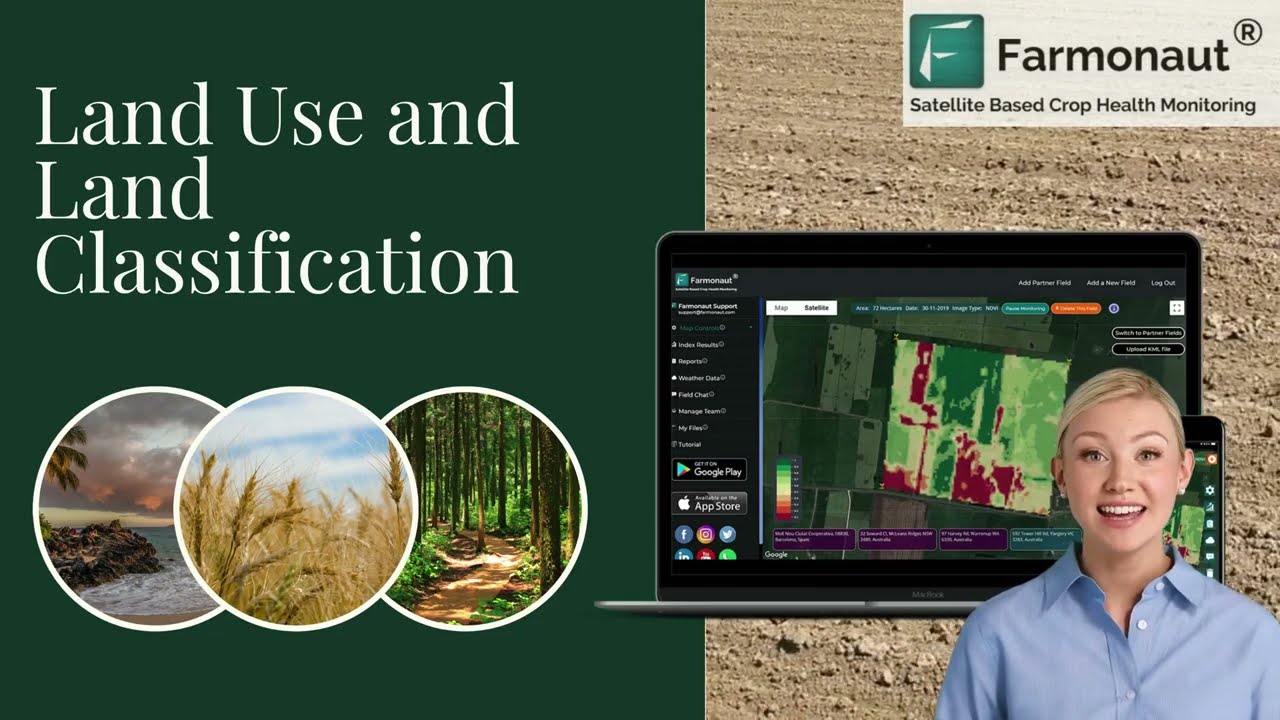
- Satellite-Based Monitoring and Verification: Providers like Farmonaut use multispectral imagery and resource management tools to offer real-time, verifiable insights for lenders and agricultural stakeholders. Learn more about Crop Loan and Insurance Verification.
- AI-Driven Advisory & Alternative Credit Models: AI-based systems tap into weather, productivity, and historical land use data to assign creditworthiness, expanding options for those with insufficient “traditional” collateral.
- Streamlined Regulatory Environments: Fast-track digital processes, dispute resolution, and increased lender participation in agri-finance.
- Custom Lending Products for Smallholders: Flexible repayments tied to seasonal cycles and blockchain-enabled traceability options reduce lending barriers for the unbanked.
Farmonaut’s platform, for example, uses advanced satellite technologies and blockchain-led verification to support loan approvals, insurance, and carbon footprint monitoring. Its suite of tools is accessible through web, Android, iOS apps—or for enterprise clients, through APIs: Farmonaut API and Developer Docs.

Satellite-based verification from platforms like Farmonaut significantly reduces documentation bottlenecks, increasing the speed and reliability of rural lending throughout 2025 and 2026.
How Farmonaut Satellite Solutions Support Secure Collateralization
At Farmonaut, we believe technology is the bridge between rural financial inclusion and sustainable agricultural growth. Using a blend of multispectral satellite imagery, AI-advisory systems, blockchain-enabled traceability, and real-time resource management, our solutions enable:
- Real-time Monitoring: Detect crop health issues early, validate land use, and support lenders’ collateral verification.
- Blockchain-Based Traceability: Ensure transparent, auditable records for land-based transactions (Learn More).
- Loan & Insurance Verification: Banks and NBFCs use our data to expedite decisions, manage risk, and minimize fraud (Explore Crop Loan & Insurance Service).
- Sustainability Tools: Enable farmers to monitor and reduce carbon footprint—improving eligibility for green loans (Carbon Footprinting Tool).
- Custom Fleet Management: Streamline logistics and utilization of machinery for large and smallholder operations (Fleet Management System).
Our subscription-based model ensures access for everyone—from individual smallholders to large corporates and governments. APIs, mobile apps, and web tools make our platform flexible and scalable to your needs.
For advanced crop plantation, forest advisory, or large-scale land management, visit our platforms:
Farmonaut Agro Admin App (large-scale farm management) | Crop Plantation & Forest Advisory
Comparison Table: Benefits of Using Agricultural Land as Collateral for Credit Access (2025 vs. 2026)
| Key Metrics | 2025 Estimated Value | 2026 Estimated Value | % Change (2025-26) |
|---|---|---|---|
| Loan Approval Rate | 52% | 62% | +19.2% |
| Average Loan Amount (USD/Farmer) | $5,100 | $6,850 | +34.3% |
| Interest Rate (Average) | 12.8% | 11.6% | -9.4% |
| Default Rate | 5.9% | 4.7% | -20.3% |
| Rural Economic Growth (GDP Contribution) | +3.7% | +4.9% | +32.4% |
| Financial Inclusion (Population with Access) | 59% | 67% | +13.6% |
Comparison based on estimated data trends for developing regions in agricultural finance using land collateral between 2025 and 2026.
Economic & Social Implications: Unlocking Rural Growth
- ✔ Credit Accessibility: More farmers can afford to invest in advanced farming methods and diversify income streams.
- ✔ Food Security: Increased productive capacity secures food supplies and buffers national economies against shocks.
- 📊 Employment Growth: With access to modern farming tools, additional local jobs are created throughout the supply chain.
- ✔ Empowered Communities: Financial autonomy encourages better infrastructure, healthcare, and educational outcomes in rural districts.
- ⚠ Safeguards Critical: Responsible lending policies must protect vulnerable landowners and smallholder farmers from potential dispossession.
Best Practices for Stakeholders—Building Ethical & Sustainable Lending
For Farmers
- ✔ Ensure all land titles are accurate, legally recognized, and digitally registered.
- 📲 Use satellite-driven platforms to monitor land, track inputs and ensure compliance.
- ✔ Work with lenders who offer tailored, farm season-aligned repayment options.
- 📧 Stay updated with Farmonaut’s advisory services for crop planning, compliance, and sustainability best practices.
For Lenders & Institutions
- ✔ Implement alternative data/credit scoring (satellite, historical productivity, weather analytics).
- ✔ Offer products for smallholders (low-value loans, microfinance models, climate insurance).
- ✔ Integrate digital tools for seamless verification—see Farmonaut Crop Loan & Insurance Verification.
- ✔ Encourage inclusion for underrepresented groups, especially women landowners.
For Policymakers & Regulators
- ✔ Continue reforming digital registry and fast-track legal dispute resolution.
- ✔ Ensure policies protect against land concentration and dispossession.
- ✔ Promote financial literacy and transparent lending practices in rural areas.
Farmonaut’s carbon footprint tracking tools and product traceability systems help ensure transparent, sustainable farming—adding value to every stakeholder in the process.
Highlighted Insights: What Every Stakeholder Needs to Know
Frequently Asked Questions: Agricultural Land as Collateral & Rural Credit
1. What makes agricultural land a preferred form of collateral?
Land is a fixed, appreciating, and strategic asset with high intrinsic value. Agricultural land as collateral remains popular because it’s tangible, immovable, and retains value better than most movable assets—offering both farmers and lenders a secure base for credit transactions.
2. How do technological innovations address lending challenges in 2026?
Platforms like Farmonaut utilize satellite imagery, AI, and blockchain to validate land ownership, monitor land use, and establish transparent, indisputable land records. This ensures faster, more reliable loan processing and risk mitigation for lenders.
3. Are smallholder farmers able to benefit equally from collateral-based credit?
Yes, increasingly so. With digital records and alternative credit models that consider productivity, remote sensing data, and flexible repayment, even smallholders in fragmented or previously undocumented settings find it easier to access credit.
4. How can lenders minimize risk when issuing loans against agricultural land?
Lenders can leverage digital verification, satellite monitoring, and blockchain systems to assess land value, monitor health, and ensure no overlapping claims exist, reducing the risk associated with default and recovery.
5. How do I start remote monitoring or digital collateral management for my land?
Download the Farmonaut App or consult the Farmonaut API.
Their platform provides a full suite of tools to view, analyze, and administrate your land remotely—supporting easier collateralization and sustainable resource management.
Conclusion
As we approach 2026, agricultural land as collateral continues to serve as both a foundation and vital catalyst for rural credit access, economic growth, and broader agricultural transformation. With advances in digitization, legal reforms, and remote monitoring solutions, farmers, lenders, and rural communities stand to gain unprecedented financial inclusion, productivity, and sustainability advantages.
Yet, prudent stewardship and robust policy frameworks remain essential to balance opportunity with the genuine risks facing smallholder and vulnerable landowners. Stakeholders must work together to ensure collateralized lending is fair, transparent, and genuinely empowering for all.
At Farmonaut, we are committed to harnessing satellite-driven, data-intensive insights to support the next era of agricultural collateral and rural finance—bringing prosperity, transparency, and sustainability within reach for farming communities worldwide.

Ready to unlock your agricultural land’s potential? Explore Farmonaut for next-generation collateral, monitoring, and farm management solutions.
Discussion
Questions, corrections or field experience? Share them below. First-time comments are reviewed before they appear, and your email is never published.
No comments yet. Be the first to add a question or your experience.

 Etherspace Network
 Teledarbas
 Wild Oak Farm
 SFX
SFX BACF Africa
 Doodlakine
 Exurbia Geospatial
 FieldZero
 Indico Company
 Kubota
 FFBS
FFBS Jontra
 Tucor
Tucor
 Licence holder · Niger · Gold
 Licence holder · Nigeria · Gold + lithium










