

Agricultural LED Lighting: Costs, Payback, Yield Data
Reviewed September 2026 against USDA’s National Institute of Food and Agriculture, the US Department of Energy Solid-State Lighting Program, and Greenhouse Management Magazine’s grower survey.
Try it: Run your own numbers →
Agricultural LED lighting cuts electricity use for supplemental greenhouse lighting by roughly 75% compared with high-pressure sodium lamps, according to USDA-ARS research cited in a 2020 US Department of Energy report, and typically pays back its installation cost in about 2.2 years in commercial greenhouse operations, per a University of Minnesota CARD program study. Below are the numbers behind those claims, how they compare across fixture types and use cases, and a calculator to run them against your own greenhouse.
What Agricultural LED Lighting Actually Costs and Saves
Agricultural lighting — supplemental illumination for greenhouses, high tunnels, and indoor growing operations — has moved from a niche upgrade to a mainstream capital decision for US specialty crop producers. The driver isn’t novelty; it’s the electricity bill. USDA’s National Institute of Food and Agriculture estimates that roughly 4,200 acres of US greenhouse space currently use supplemental lighting, and if that entire footprint converted to agriculture LED lighting from legacy high-pressure sodium (HPS) systems, national energy use for greenhouse lighting could drop by an estimated 3.5 billion kWh per year (USDA NIFA).
That’s not a marginal efficiency gain. USDA-ARS research summarized in a US Department of Energy Solid-State Lighting Program report found LED systems cut electricity consumption by 75% relative to traditional HPS lamps for equivalent light output (US DOE, 2020). At the average US agricultural electricity rate of $0.16 per kWh in 2025, per greenhouse industry analysis, that reduction is the single biggest line item most growers can move without changing what they grow.
Key Insight
A 2023 University of Minnesota CARD program analysis put LED payback at 2.2 years for a commercial greenhouse conversion, with $5,745 in net present value from energy and maintenance savings over a 5-year fixture lifespan (Minnesota CARD program summary). That figure will move with local electricity rates and fixture pricing — rerun it for your operation using the calculator further down this page.

How Many US Growers Use LED Lighting Right Now
Adoption has crossed the majority threshold. A 2026 Greenhouse Management Magazine survey of US greenhouse operators found 75% are currently using LED lighting in some part of their operation, and 47% said they plan to install new LED fixtures, expand an existing system, or replace an older LED installation within the next three years (Greenhouse Management Magazine, 2026 Lighting Market Report). That combination — high current adoption plus continued near-term capex — is consistent with an industry analysis projecting the US horticulture lighting market will grow at a 24.2% compound annual rate from 2023 through 2030.
Those numbers describe the current state of a fast-moving market, not a fixed one. The 2026 Greenhouse Management report is published annually in Q1; check the current edition at the link above before citing an adoption figure more than a year old, since a market growing at that rate can shift materially year to year.
Why Agriculture LED Lighting Outperforms Sodium and Fluorescent Systems
Agriculture led lighting and led lighting for agriculture both describe the same shift: replacing broad-spectrum, high-heat lamps with diodes tuned to the wavelengths plants actually use for photosynthesis. The core differences that show up in a grower’s utility bill and harvest data are:
- ✔ Spectrum control: LEDs let growers dial in red, blue, and full-spectrum wavelength ratios by crop and growth stage — sodium and fluorescent lamps emit a fixed, broad spectrum that wastes energy on wavelengths the plant doesn’t use.
- ✔ Electricity reduction: the USDA-ARS-backed 75% reduction figure above applies specifically to LED-versus-HPS comparisons at equivalent light output, not a generic marketing estimate (US DOE, 2020).
- ✔ Reduced heat load: lower waste heat from diodes reduces the cooling burden on greenhouse HVAC, which is a secondary but real cost saving not captured in the lighting-only kWh figures above.
- ✔ Yield and quality response: a study on single-truss tomatoes found nighttime supplemental LED inter-lighting increased yield by 27%, raised total soluble solids (sugar content) by 20%, and increased ascorbic acid (vitamin C) content by 25%, compared with unlit controls (NCBI/Horticulture Research).
- ✔ Fixture lifespan: the 5-year fixture lifespan used in the Minnesota CARD program’s net-present-value calculation reflects typical commercial LED duty cycles; ask any fixture vendor for their specific rated hours before you budget around it, since rated life varies by manufacturer and drive current.
Put together, those effects are why innovative lights in agriculture attract capital even at a $0.16/kWh average electricity rate: the energy savings alone often clear the payback bar inside three years, before yield and quality gains are counted.
Pro Tip
Before switching red-to-blue ratios on a whole greenhouse, run a nighttime inter-lighting trial on a single tomato truss line and track soluble solids and yield against an unlit control block — the 27% yield and 20% sugar-content gains documented in the NCBI horticulture study were measured this way, on tomatoes specifically, not as a universal crop response.

Agricultural Lighting Technologies: 7 Approaches Compared
“Agricultural lighting technologies” now covers more than a single fixture upgrade. Here are the seven approaches US commercial growers are evaluating, with what’s independently documented versus what’s still vendor-claimed.
-
1. Dynamic Spectrum LEDs
Dynamic spectrum fixtures shift red-to-blue ratios across growth stages — more blue during vegetative growth, more red approaching flowering — based on programmed schedules or sensor feedback. This is the fixture category closest to the inter-lighting trial documented in the NCBI tomato study above; growers evaluating dynamic spectrum systems should ask vendors for their own third-party yield trial data rather than accepting blanket percentage claims, since published, peer-reviewed dynamic-spectrum yield studies specific to this fixture class were not found in the sources reviewed for this article.
What to verify before buying:- Whether spectrum adjustment is sensor-driven or a fixed preset schedule
- Tunable range (UV through far-red) and whether it matches your crop’s documented response
- Integration compatibility with existing greenhouse climate control systems
-
2. Hybrid Solar-LED Lighting Systems
Hybrid systems use LEDs only to supplement natural daylight — running at reduced output on bright days and full output during overcast periods or at night. Because the LED component only supplements rather than replaces daylight entirely, the energy-savings math differs from a full LED retrofit: the baseline for comparison is a shorter LED runtime, not the full HPS-versus-LED comparison in the 75% figure above. Growers should have their supplier quote expected annual LED runtime hours for their specific latitude and greenhouse orientation before estimating savings.
Common Mistake
Budgeting hybrid solar-LED savings using the full HPS-to-LED 75% reduction figure. That number applies to full-time supplemental lighting, not a system that spends most daylight hours running at partial or zero output.
-
3. Multi-Layer and Vertical Farm-Optimized LEDs
Vertical and multi-layer production needs compact, low-heat fixtures mounted close to the canopy without scorching leaves — a different design constraint than open-greenhouse overhead lighting. This category sits outside the greenhouse-specific USDA and DOE figures cited above, since NIFA’s 4,200-acre estimate covers greenhouse supplemental lighting rather than stacked indoor vertical systems; treat vertical-farm energy and yield figures from equipment vendors as vendor claims until you can find an independent trial.
-
4. UV and Far-Red Supplemented LEDs
Adding UV wavelengths in controlled doses is used experimentally to increase pest and disease resistance, while far-red is used to influence flowering timing and biomass accumulation. These are active research areas at USDA-ARS regional centers; the most current field trial data for UV and far-red supplementation is published through ARS’s own research output rather than through NIFA’s grower-facing summaries — search ars.usda.gov for “LED lighting” plus the current year for the latest trial results.
-
5. AI-Integrated Smart LED Systems
Smart LED controllers ingest sensor and weather data to adjust output automatically rather than running on a fixed timer. The efficiency gains here are additive to the base LED-versus-HPS reduction — an AI-controlled system captures the 75% baseline reduction from switching to LED at all, then layers additional savings from not running fixtures at full output when they aren’t needed. No independent US field study quantifying that incremental AI-specific savings percentage was found for this article; ask any smart-controller vendor to show metered before-and-after data from an existing installation, not a modeled estimate.
-
6. Modular, Expandable LED Arrays
Modular arrays let growers light one greenhouse bay at a time and expand as budget allows, rather than committing capital to a whole-facility retrofit up front. This matters directly for the 2.2-year payback figure cited earlier: that number assumes a full commercial installation, so a grower phasing in modular arrays should expect their own blended payback period to track closer to whichever bays were converted first and are already generating the electricity savings.
Pro Tip
Convert your highest-electricity-cost bay first — typically the one with the longest daily supplemental lighting hours — so the measured savings from that first phase can be used to validate the payback assumption before committing capital to the rest of the facility.
-
7. Blockchain-Logged Lighting for Traceable Production Records
Some commercial LED controllers now log light recipes and schedules to a blockchain ledger, creating a permanent record of every lighting input applied to a crop batch. This supports certified-organic labeling and export compliance documentation, since the environmental inputs applied to the crop become independently verifiable rather than self-reported. Farmonaut’s blockchain-based traceability system applies this same logging approach to broader supply-chain data beyond lighting alone.

Comparison Table: Fixture Types by Cost, Efficiency, and Fit
The table below separates documented figures from vendor-typical claims. Where a column says “not independently published,” that’s a gap in publicly available research, not a zero.
| Approach | Electricity Reduction vs. HPS | Independently Documented Yield/Quality Data | Best Fit | Capital Commitment |
|---|---|---|---|---|
| Standard full-spectrum LED retrofit | 75% (USDA-ARS/DOE, 2020) | General LED-vs-HPS baseline only | Any greenhouse currently on HPS or fluorescent | Full facility or phased by bay |
| Nighttime LED inter-lighting (tomato) | Same 75% baseline applies | +27% yield, +20% soluble solids, +25% vitamin C (NCBI, single-truss tomato study) | Fruiting crops, especially tomato | Add-on to existing overhead lighting |
| Dynamic spectrum LED | 75% baseline plus scheduling efficiency (unquantified) | Not independently published for this fixture class | Multi-crop or multi-stage greenhouses | Full facility |
| Hybrid solar-LED | Lower than 75% (partial runtime only) | Not independently published | Sunbelt regions with high natural daylight hours | Full facility, higher upfront design cost |
| Modular/expandable arrays | 75% baseline per converted bay | Same as standard retrofit, applied incrementally | Budget-constrained or growing operations | Phased, bay-by-bay |
Common Mistake
Applying the tomato inter-lighting yield gains to other crops. The 27% yield, 20% sugar content, and 25% vitamin C figures come from a single-truss tomato study — they describe that crop’s response to nighttime inter-lighting specifically, not a general LED effect across species.

Calculator: Size Your LED Conversion Payback
Use the figures above — the $0.16/kWh average US agricultural electricity rate and the 75% HPS-to-LED reduction — against your own fixture count and hours to estimate your payback period.
Run your own numbers
Assumes a flat electricity rate with no time-of-use pricing, no utility rebates or incentive programs applied, and constant daily lighting hours year-round. It excludes maintenance savings, HVAC load reduction, and any yield or quality gains — those are separate benefits on top of the energy payback shown here. The default 75% reduction and $0.16/kWh rate reflect the USDA-ARS/DOE and 2025 greenhouse industry figures cited above; replace them with your utility's actual rate and your vendor's quoted reduction for your fixtures.
Integrating LED Schedules With Satellite and Weather Data
The AI-integrated and hybrid solar-LED approaches described above depend on accurate, real-time environmental data to actually deliver their efficiency gains — a smart controller adjusting output for "current daylight conditions" is only as good as the data feeding it. Key integration points for 2026-era greenhouse operations:
- 👁️🗨️ Plant and environmental sensing: Real-time data on plant health, moisture, and canopy conditions — captured by ground sensors or satellite imagery — can inform adaptive lighting schedules rather than relying on a fixed timer.
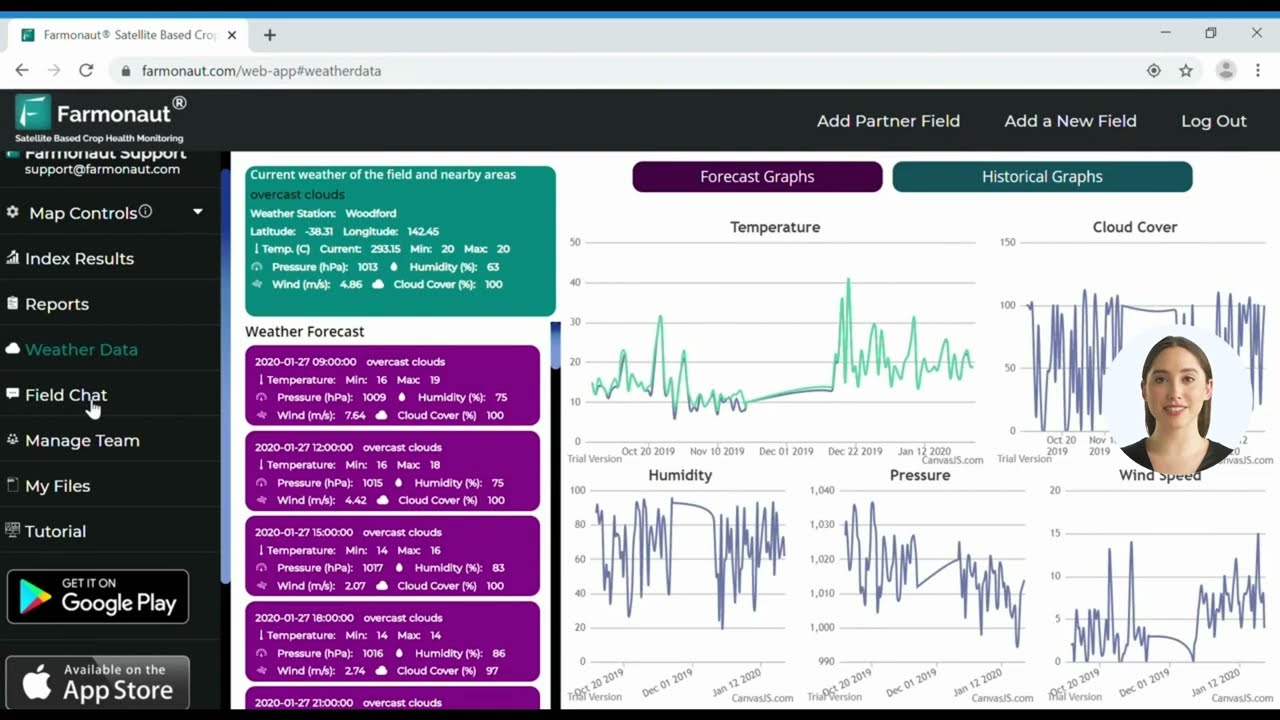
- 🔄 Weather-responsive control: Hybrid solar-LED and AI-integrated systems adjust output based on cloud cover and forecast sunlight. See how Farmonaut's AI advisory system brings hyper-local weather insight into that kind of scheduling decision.
- 🛠️ Fleet and resource coordination: Larger or multi-site operations benefit from sequencing lighting alongside irrigation and nutrient delivery through a single coordination layer. Learn more about fleet management technology for agricultural operations.

Farmonaut: Satellite Monitoring to Plan Lighting Investment
Farmonaut doesn't manufacture LED fixtures. What the platform provides is the environmental and plant-health data that makes a lighting investment decision — dynamic spectrum, hybrid solar-LED, or a phased modular retrofit — easier to size correctly before you commit capital:
- 🔭 Real-time monitoring: Multispectral satellite imagery provides NDVI and plant health data that can flag where supplemental lighting is under- or over-delivering across a large or multi-site growing operation.
- 🤖 AI-based advisory (Jeevn): Dynamic insights that can inform lighting schedule adjustments based on crop development stage and incoming weather.
- ⬆️ Blockchain traceability: For growers documenting environmental inputs for certification or export buyers, Farmonaut's blockchain traceability system logs those records including lighting schedule data.
- 🌏 Fleet and resource tools: Fleet management to sync machinery, lighting schedules, and crop maintenance tasks from one dashboard.
- 🌿 Environmental impact monitoring: Farmonaut's carbon footprinting feature provides measurable data on emissions impact tied to energy-use changes like an LED conversion.
- 🌱 Access to financing: Satellite-verified operational data through crop loan and insurance support services can help growers document collateral or performance history when financing an LED upgrade.
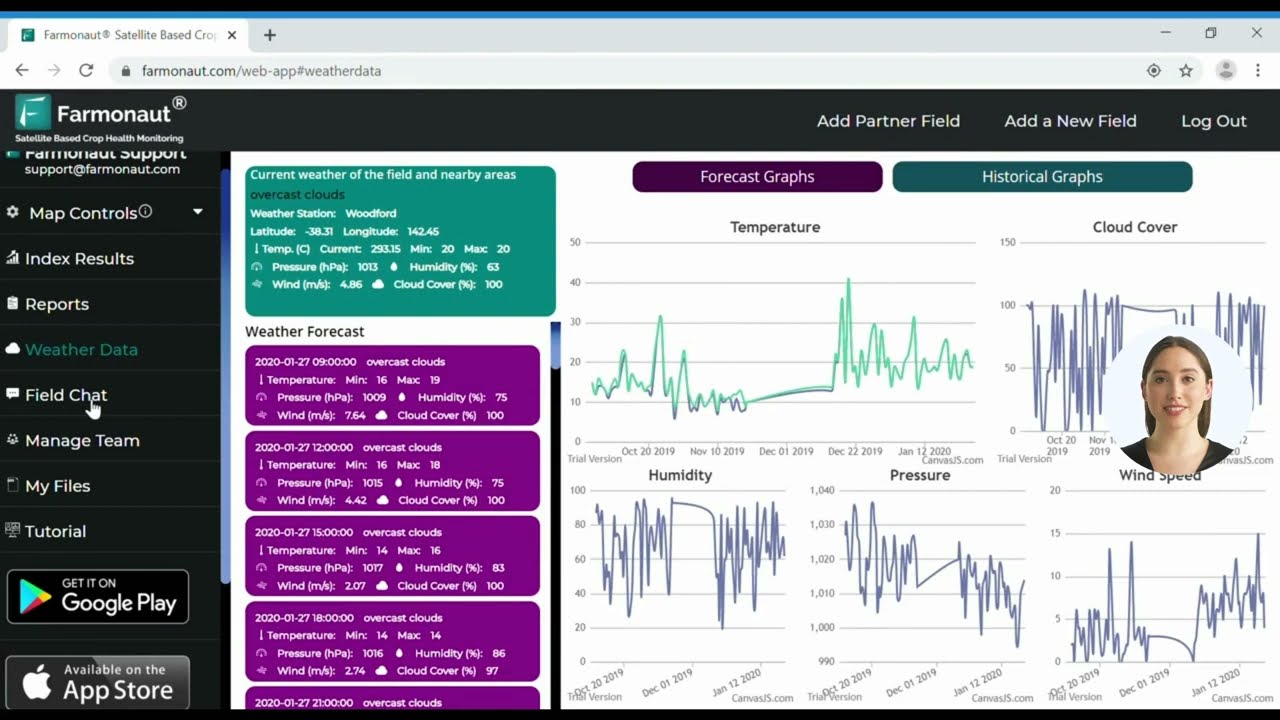
Farmonaut's platform works across Android, iOS, and browser — usable whether you're sizing a lighting upgrade for one greenhouse bay or coordinating capital planning across a multi-site operation.
API-first agriculture: Building or integrating custom agri-data systems? Get API access here. See the developer docs for integration guides.

Key Insight
The strongest case for agricultural LED lighting right now isn't a single flashy innovation — it's the combination of a documented 75% electricity reduction, a 2.2-year typical payback, and 75% of surveyed US growers already using it. That's a maturing technology, not an experimental one.
FAQ: Agricultural LED Lighting
How much does agricultural LED lighting reduce electricity costs compared to sodium lamps?
USDA-ARS research cited in a 2020 US Department of Energy Solid-State Lighting Program report found LED systems reduce electricity use by 75% compared with high-pressure sodium lamps at equivalent light output. At the 2025 average US agricultural electricity rate of $0.16/kWh, that reduction is what drives most conversion decisions.
What is the payback period for converting a commercial greenhouse to LED?
A 2023 University of Minnesota CARD program study found a typical payback period of 2.2 years for a commercial greenhouse LED conversion, with $5,745 in net present value from energy and maintenance savings over a 5-year fixture lifespan. Your own payback depends on your electricity rate, fixture cost, and daily lighting hours — use the calculator above with your own numbers.
Do LED lights actually increase crop yield, or just save energy?
Both, for at least one documented case: a study on single-truss tomatoes found nighttime supplemental LED inter-lighting increased yield by 27%, raised sugar content (total soluble solids) by 20%, and increased vitamin C content by 25% versus unlit controls. That result is specific to tomatoes; ask for crop-specific trial data before assuming the same gains for other crops.
How many US growers are currently using LED lighting?
A 2026 Greenhouse Management Magazine survey found 75% of surveyed US greenhouse growers currently use LED lighting, and 47% plan to install, expand, or replace LED systems within the next three years. Check the current year's Greenhouse Management Lighting Market Report, published each Q1, for an updated figure.
Is agricultural LED lighting only viable for large commercial operations?
No — modular, expandable LED arrays let growers convert one greenhouse bay at a time rather than financing a full-facility retrofit up front. The 2.2-year payback figure above assumes a full commercial installation; a phased approach spreads that capital outlay but should still hit a similar per-bay payback once each phase is converted.
Common Mistake
Treating every LED percentage claim as interchangeable. The 75% electricity reduction, the 2.2-year payback, and the 27% tomato yield gain come from three different studies measuring three different things — cite the one that actually matches the decision you're making, not whichever number sounds best.






Where This Data Comes From, and How to Refresh It
Every figure in this article traces to a named source above: USDA's National Institute of Food and Agriculture for greenhouse acreage and potential energy savings, the US Department of Energy's Solid-State Lighting Program for the USDA-ARS electricity-reduction research, the NCBI-indexed horticulture study for tomato yield and quality data, the University of Minnesota CARD program for payback economics, and Greenhouse Management Magazine's annual survey for adoption rates. None of these figures are static — here's where to check for a more current number:
- Grower adoption and capex plans: Greenhouse Management Magazine publishes its Lighting Market Report annually in Q1, reflecting the coming three years of grower intentions.
- USDA field trial data: Search USDA NIFA's LED lighting page and ars.usda.gov for "LED lighting" plus the current year for the most recent regional research center results.
- State-by-state adoption: Not currently published in a disaggregated form — USDA NASS's Controlled Environment Agriculture surveys, filtered by lighting technology and state where available, are the closest public source, but coverage gaps exist by design of the survey methodology.
- Current fixture cost-per-watt: No standardized, publicly published dataset exists for this; request current quotes from at least two commercial horticulture lighting vendors and compare against the payback calculator above using your own numbers.
Want to size your own conversion or monitor an existing lighting investment against real crop performance? Try Farmonaut's platform, connect satellite intelligence to your farm via API, or explore large-scale farm management tools for coordinating lighting alongside irrigation and nutrient delivery.
Discussion
Questions, corrections or field experience? Share them below. First-time comments are reviewed before they appear, and your email is never published.
No comments yet. Be the first to add a question or your experience.

 Tucor
Tucor Saraswati Agro
 Geno
Geno Hayleys Agriculture
 Linx Agritech
 Adinet
 Save Your Soils
 Grandstream Algérie
 XOS Realty
 Geospatial Lab Africa
 Agro La Gándara
 HIPSAC
 ZOL Zimbabwe
 Juligerm
 MISE Maroc
 NWNS
NWNS
 Licence holder · Niger · Gold










