

Agricultural Waste to Energy: Top Agriculture Waste Recycling Innovations for 2025
“By 2025, agricultural waste-to-energy innovations could recycle over 30% of global crop residues, reducing landfill waste significantly.”
Introduction
As the global population continues to rise, the demand for sustainable agricultural waste management and energy production is never more critical. The year 2025 marks a promising period for innovations in agricultural waste to energy and agriculture waste recycling. By transforming crop residues, fruit peels, animal manure, and other agricultural by-products into valuable power sources, we address multiple sustainability challenges simultaneously—reducing environmental pollution, cutting greenhouse gas emissions, enriching soils, and empowering rural farming communities.
This technological transformation is revolutionizing the agriculture sector by integrating circular economy principles with sound waste management practices. Instead of viewing residues simply as waste, new technologies focus on recycling these materials as renewable resources. This comprehensive blog explores the latest strategies, core technologies, and the many benefits of agricultural waste to energy and agriculture waste recycling, offering a roadmap for sustainable farming practices in 2025 and beyond.
The Landscape of Agricultural Waste to Energy in 2025
In 2025, the convergence of agricultural, energy, and environmental priorities has propelled waste-to-energy innovations to center stage. The transformation of agriculture residues into energy has evolved beyond experimental or pilot scales—these methods are now critical components within national and regional sustainability policies.
What are agricultural wastes? These include crop stalks, husks, leaves, fruit peels, and animal manure—all of which are typically discarded or burned, causing severe environmental damage such as air pollution and enhanced greenhouse gas emissions. Through innovative conversion technologies, these residues now offer valuable resources for energy generation, soil enrichment, and rural economic development.
Agricultural waste to energy is no longer just an environmental solution; it is an economic engine, a driver of rural autonomy, and a cornerstone of circular agriculture. The sector is empowered with more affordable, accessible, and efficient systems for energy production, aligning with global commitments such as the Paris Agreement and the United Nations Sustainable Development Goals (SDGs).
“Converting agricultural waste to energy can cut rural carbon emissions by up to 20%, supporting cleaner, sustainable farming.”
Key Agricultural Waste Types and Their Energy Potential (2025 Estimates)
| Waste Type | Estimated Annual Availability (Million Tons, 2025) | Energy Conversion Method | Estimated Energy Yield (kWh/Ton) | Main Environmental Benefits |
|---|---|---|---|---|
| Rice Husk | 150 | Biomass Combustion, Gasification | 3,000-3,500 | Reduces open burning, cuts air pollution, sequesters carbon |
| Sugarcane Bagasse | 210 | Cogeneration, Biogas | 2,200-2,600 | Displaces fossil fuels, enables circular energy production |
| Corn Stover | 165 | Biogas, Bioethanol, Gasification | 3,200-3,800 | Prevents waste burning, lowers greenhouse gas emissions |
| Livestock Manure | 250 | Anaerobic Digestion (Biogas) | 2,000-2,400 | Cuts methane emissions, produces organic fertilizer |
| Fruit Peels & Processing Waste | 95 | Composting, Biogas | 1,500-1,800 | Enriches soils, closes nutrient loop, reduces landfill use |

Core Methods of Converting Agricultural Waste to Energy
The roadmap to agricultural waste to energy and agricultural waste recycling in 2025 centers around three leading methods:
Anaerobic Digestion: From Organic Residues to Biogas Power
Anaerobic digestion is a biological process in which microorganisms break down organic matter—such as animal manure, crop residues, or fruit peels—in the absence of oxygen. Through this process, two crucial substances are produced:
- Biogas – primarily methane and carbon dioxide, used to generate electricity, heat, or as a renewable vehicle fuel.
- Digestate – the residual material is a nutrient-rich organic fertilizer, directly supporting soil health and closing the nutrient loop.
Advantages in 2025:
- Mitigates pollution: Reduces open waste burning and methane release from untreated manure.
- Empowers rural communities: Establishes a decentralized power source supporting off-grid energy autonomy in rural areas.
- Monetizes waste: Enables farmers and agribusinesses to generate income from residues.
- Enhances productivity: By using digestate as fertilizer, farms can reduce reliance on costly synthetic inputs.
Biomass Combustion and Gasification: Clean Heat and Electricity
Biomass combustion is the most established form of agriculture waste recycling. Here, dry residues (such as rice husk, sugarcane bagasse, and corn stover) are burned in specialized reactors (boilers or stoves) to generate heat or electricity.
Gasification is a more advanced method, wherein biomass is converted at high temperatures but with restricted oxygen, resulting in the production of syngas (a mix of carbon monoxide, hydrogen, & methane), which can be used for electricity generation or as a clean fuel in industrial and agricultural applications.
- Modern gasifiers and micro power plants: These units have become more affordable and accessible in 2025, providing farms and rural communities with small-scale, decentralized energy solutions.
- Environmental and economic impact: Biomass energy significantly reduces dependence on fossil fuels, lowers greenhouse gas emissions, and can even be used for heating greenhouses, powering irrigation pumps, or charging agricultural machinery.

Composting and Its Role in Energy and Soil Health
Composting is vital in the context of agriculture waste recycling. Organic residues—including leaves, fruit peels, husks, and animal litter—are decomposed aerobically (in the presence of oxygen) to create compost.
- Compost as a resource: Serves as a rich organic fertilizer, enriching soils and supporting improved soil structure and fertility.
- Integrated energy strategies: Mixing composting with biogas production or biochar generation allows for comprehensive waste management systems that maximize nutrient recycling and energy recovery.
- Reduces pollution and landfill: Composting ensures organic waste is recycled, reducing methane emissions from landfill and prevents soil and water contamination.

Benefits of the Agricultural Waste to Energy Transformation
The move towards agricultural waste to energy and agricultural waste recycling in 2025 presents multi-dimensional advantages:
Environmental Impact
- Reduces air pollution: Circular waste management reduces open-field burning and associated severe smog and particulate emissions, especially post-harvest.
- Controls greenhouse gases: Efficient biogas systems capture methane, a gas 25 times more potent than CO2. With organic waste management, the total carbon emissions from farms are significantly reduced.
- Enriches soils: The residual digestate and compost greatly improve soil health, fertility, and moisture retention.
Economic Advantages
- Diversifies farmer incomes: Monetizing residues provides rural communities new revenue streams and supports local employment in the energy sector.
- Reduces energy costs: Decentralized energy systems cut farm expenditures on diesel or grid power, ensuring energy autonomy.
- Stimulates local economies: Investment in biogas and biomass plants builds new supply chains, boosting rural development.
Societal and Policy Outcomes
- Improves public health: By reducing smoke and air pollutants, waste-to-energy practices benefit community wellbeing, lessening respiratory and cardiovascular problems.
- Supports climate goals: Agricultural waste conversion aligns with Paris Agreement commitments for carbon neutrality and sustainable resource management.
- Builds energy security: Rural areas gain greater resilience to power shortages or price volatility.

The Impact of Digital Technologies and Precision Agriculture in Agricultural Waste to Energy
The future of agriculture waste recycling and energy management is driven by digitalization and data-driven systems:
- IoT (Internet of Things) and sensors: Deployed across biogas plants and supply chains for real-time monitoring of feedstock volumes, gas production, pressure, and equipment efficiency.
- AI-based analytics: AI-powered models forecast waste supply, recommend process adjustments, and optimize returns by predicting peaks in feedstock availability.
- Automated management systems: Ensure consistent production, maintain quality, and reduce human error in decentralized or rural environments.
- Blockchain traceability: Enhances transparency and accountability in biomass trading, waste sourcing, and carbon credit verification.
Such precision tools reduce inefficiency, support regulatory compliance, and streamline resource management.

Rural Community Empowerment and the Circular Agriculture Economy
Circular economy in agriculture is realized when waste products are routinely reintegrated as energy or inputs, closing material loops and reducing overall losses. In 2025, these principles are operationalized through decentralized, small- to medium-scale solutions tailored for rural communities:
- Energy autonomy: Farmers harness local waste resources, decreasing reliance on unreliable grid connections or costly diesel.
- Job creation: Building and maintaining biogas plants and supply chains creates employment—from feedstock collection to plant operations and maintenance services.
- Employment in adjacent fields: New skills are required in technology installation, quality assurance, and system management.
- Community co-ownership: Cooperative and collective investments allow smallholders to participate and benefit mutually.
As a result, rural areas emerge not only as agricultural hubs but also as innovation clusters, fostering sustainable livelihoods and climate-smart farming practices.

Farmonaut’s Role in Sustainable Agricultural Waste Management
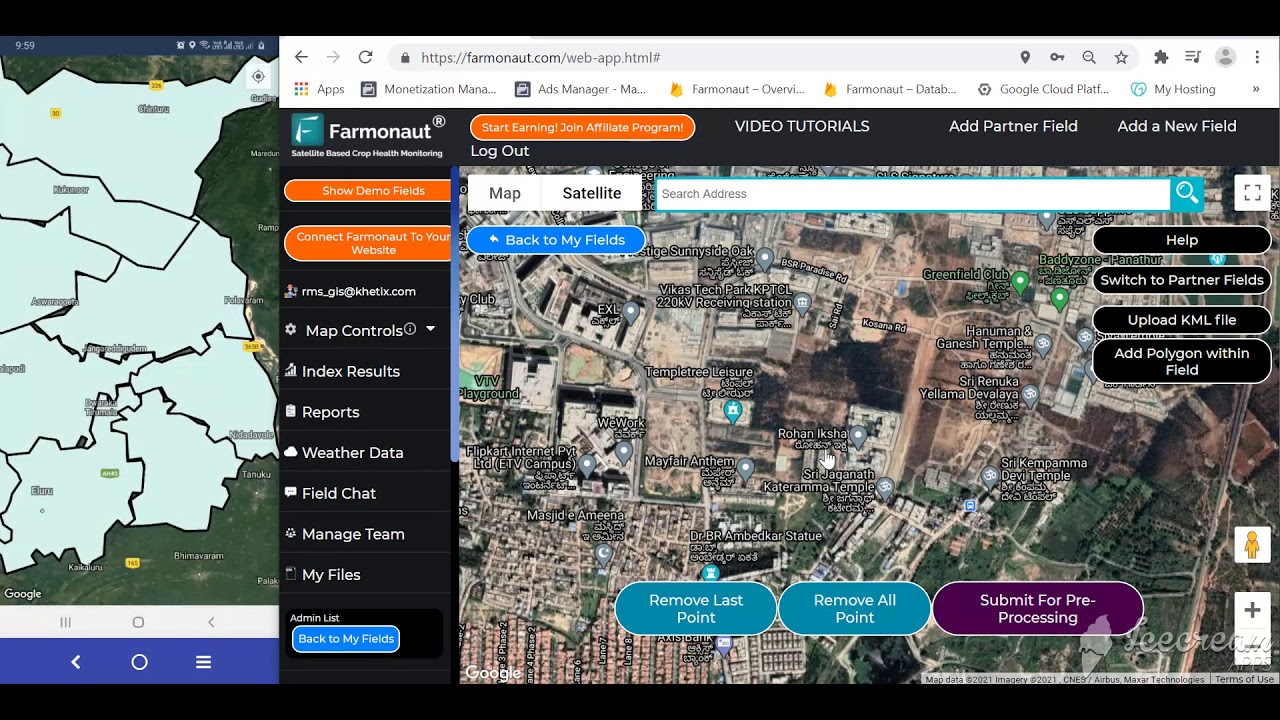
We at Farmonaut play an enabling role by delivering satellite-driven insights, AI-based advisory systems, and resource management tools that directly contribute to agricultural waste to energy and waste recycling initiatives:
- Satellite-based monitoring: Our systems provide real-time data on crop health, residue availability, and soil conditions. This is essential for planning biomass supply and predicting waste production cycles.
- Environmental impact tracking: Through our Carbon Footprinting Solution, users can monitor and manage farm carbon emissions—making it easier to meet climate targets and optimize both energy and waste practices.
- Resource and fleet management: Our platform offers Fleet Management Tools helping optimize supply logistics for residue collection and delivery to energy plants, cutting operational costs and improving reliability.
- Blockchain traceability: Utilizing our Blockchain Product Traceability, agricultural businesses ensure the authenticity and responsible sourcing of biomass feedstocks along with carbon credits verification.
- Real-time digital advisory: Our Jeevn AI system supports operational decision-making, providing farmers and businesses with guidance on residue processing, risk mitigation, and maximizing energy yields.
- Easy access via app and API: Gain actionable insights through our mobile and web app, public API, or delve deeper with our API Developer Docs.



In summary, our suite of satellite, AI, blockchain, and resource management tools makes sustainable practices affordable and scalable across different classes of users in the agriculture sector, helping farms of all sizes to thrive in a data-driven, circular economy.
Practical Steps for Farmers: Implementing Agricultural Waste-to-Energy Systems in 2025
Transitioning from traditional waste disposal to waste-to-energy production is a systematic process. Here’s a 2025-ready approach:
- Audit your waste sources: Quantify annual generation of crop residues, husks, leaves, manure, and fruit peels.
- Identify suitable energy conversion methods: Select between anaerobic digestion, biomass combustion, or composting based on feedstock type and farm size.
- Invest in technology: Choose modular biogas plants, micro gasifiers, or compost units. Seek equipment that integrates real-time monitoring for operational efficiency.
- Leverage data platforms: Use solutions like large-scale farm management platforms to schedule, manage, and optimize wastes and inputs.
- Connect with energy markets or cooperatives: Explore selling surplus energy, organic fertilizer, or carbon credits through certified supply chains—supported by blockchain traceability.
- Train workers and engage the community: Educate all stakeholders on waste segregation, safety practices, and the operation of waste-to-energy technologies.
- Comply with regulations: Align with national environmental standards and reporting requirements, using digital tools to track and document compliance.
Frequently Asked Questions (FAQ)
What qualifies as agricultural waste suitable for energy generation?
Agricultural waste includes crop stalks, husks, leaves, fruit peels, animal manure, and food processing by-products. The suitability depends on moisture, energy density, and decomposability.
How does agricultural waste to energy reduce environmental pollution in 2025?
By recycling residues instead of burning or dumping them, farms reduce severe air pollution and methane emissions, producing renewable power and organic fertilizers instead of pollutants.
What are the main renewable energy technologies for agricultural waste in 2025?
Leading technologies are anaerobic digestion (biogas), biomass combustion, gasification, bioethanol production, and composting.
Are these solutions affordable for smallholders?
Yes, thanks to technology advances and digital resource management tools (like those offered by Farmonaut), biogas digesters, micro gasifiers, and compost units are now accessible and scalable, even for small farms.
How does Farmonaut support sustainable agricultural waste management?
We provide satellite monitoring, carbon accounting, AI-based farm advisory, resource management, and blockchain tracing services—enabling precision management of residues, transparency in supply chains, and optimization of waste-to-energy systems.
Can farmers earn additional income through carbon credits?
Yes. By reducing greenhouse gas emissions from waste, farmers may qualify for carbon credits, especially if they use certified traceability and carbon footprint measurement.
Is specialized training required to run these systems?
Basic training is advisable for safety and operational efficiency. Digital platforms, satellite-derived data, and AI-driven advisory (as offered by us) increasingly simplify system operation, reducing the learning curve.
Farmonaut Subscription Options for Sustainable Agriculture
Ready to bring satellite-powered insights and digital management into your agricultural waste to energy practice or farm management? Explore our subscription plans below for tools in crop monitoring, carbon tracking, traceability, and more.
Conclusion: A Circular, Sustainable Agriculture Sector in 2025 and Beyond
The dawn of agricultural waste to energy and agricultural waste recycling in 2025 signifies a revolution in sustainable farming. By transforming residues—once regarded as troublesome by-products—into valuable resources such as biogas, electricity, heat, and organic fertilizer, the agriculture sector achieves a win-win for farms, communities, and the environment.
The integration of advanced conversion systems, digital management tools, blockchain traceability, and data-driven resource platforms underpins the practical implementation of circular economy principles in agriculture. This transition reduces greenhouse gas emissions, improves air quality, enriches soils, and provides new streams of farm income—all while empowering rural communities to become climate solutions leaders in their own right.
With ongoing technological advances and supportive policy frameworks, the potential of agricultural waste to energy and recycling innovations will continue to expand. The year 2025 represents not just a milestone, but a new chapter in revolutionizing sustainable farming for a resilient, low-carbon, and prosperous agricultural future.
Join us at Farmonaut to experience the power of affordable, satellite-driven agriculture and resource management in building this future.
Ready to transform your agricultural waste into renewable energy and boost farm sustainability?
Get started with Farmonaut’s platform today!
Discussion
Questions, corrections or field experience? Share them below. First-time comments are reviewed before they appear, and your email is never published.
No comments yet. Be the first to add a question or your experience.

 Mobitech Wireless
 FCF India
 Unifrutti Gulf
 Deluxe Conseil
 TVS Electronics
 BW Pipelines
 WICO
WICO Gen Chayat
 Chimera Innovation
 SkyHarvest
 Polaris Digitech
 Teledarbas
 Wild Oak Farm
 SFX
SFX Doodlakine
 Exurbia Geospatial
 Licence holder · Niger · Gold










