

Agriculture Cycle 2025: Key Steps in Cycle Farming
“By 2025, sustainable agriculture practices can increase crop yield by up to 30% while improving soil health.”
Introduction: Understanding the Agriculture Cycle for 2025
The agriculture cycle remains the essential engine for humanity’s survival, providing food, raw materials, and employment to billions worldwide. As we stride into 2025, understanding each step in the cycle of agriculture—from land preparation to post-harvest management—is fundamental for farmers, agronomists, and stakeholders seeking sustainable, efficient, and high-yield food production systems.
The agriculture farming cycle consists of a series of interrelated and cyclical stages: it governs every modern farm, urban rooftop garden, and rural landscape worldwide. These steps are not isolated; they form a closed-loop system that integrates crop, soil, water, and environmental stewardship. Optimizing this cycle ensures food security, maximizes yields, and preserves our ecosystems for the future.
What is the Agriculture Cycle?
The agriculture cycle (or cycle of farming) refers to the ordered sequence of stages in crop production—from land preparation and seed selection to planting, nurturing, harvesting, and post-harvest management. This process systematically nurtures crops, maximizes yield, and maintains soil fertility and environmental balance. Additionally, the cycle encompasses crop rotation, integration of forestry and livestock, and efficient resource loops, all vital for sustainability in 2025.
- Focus: Maximizing crop yield with fewer inputs and lower environmental costs
- Key steps: Land preparation → Seed selection → Sowing → Care & nutrition → Pest control → Growth tracking → Harvest → Post-harvest & residue management
- Goal for the future: Close the loop with minimal waste and high ecosystem balance
“Modern farming cycles in 2025 aim to reduce water usage by 20% through advanced soil management techniques.”

2025 Sustainable Agriculture Cycle Steps Overview (Table)
To visualize the modern cycle of agriculture and highlight key sustainable advancements for 2025, here’s a practical overview:
| Phase | Key Sustainable Practices (2025) | Estimated Timeframe | Estimated Yield Improvement (%) | Soil Health Impact |
|---|---|---|---|---|
| Land Preparation | Precision mapping (satellite-based), minimal tillage, organic biomass addition, erosion control | 1-4 weeks | 5–8% | High |
| Crop & Seed Selection | Climate-resilient varieties, local genetic improvement, organic & certified seeds | 1 week | 5–10% | Medium |
| Sowing & Planting | Automated drills, satellite-guided seed distribution, moisture monitoring | 1-3 weeks | 3–6% | Medium |
| Irrigation & Crop Care | IoT sensors, precision irrigation, Integrated Pest Management (IPM), AI-driven advisory | 3-12 weeks | 10–18% | High |
| Growth Monitoring | Satellite/Drone imaging, NDVI & moisture analytics, remote sensing | On-going | 5–10% | High |
| Harvesting | Mechanized/Smart harvesting tools, yield mapping, reduced grain loss methods | 1-2 weeks | Up to 10% | Medium–High |
| Post-Harvest Handling & Storage | Cold storage, moisture-regulated bins, traceability (blockchain), waste-to-compost | 1-6 weeks | 8–12% | High |
| Residue & Nutrient Cycling | Cover cropping, composting, mulching, biochar use | 1-2 weeks | 4–8% | Very High |
Stages of the Agriculture/Farming Cycle Explained
The cycle of farming is made up of distinct, yet interconnected stages. Let’s explore each:
1. Land Preparation: Laying a Strong Foundation
- Involves clearing debris, tilling, and adjusting pH and nutrient profiles of the soil.
- Precision mapping via satellite data is now common (Farmonaut’s crop analytics assist in this).
- Modern minimal tillage methods (no-till farming) preserve soil structure and reduce erosion, essential for sustainable agriculture in 2025.
- Goal: Prepare the land for optimal crop germination and healthy growth cycles.

2. Crop & Seed Selection: Science-backed Choices
- Careful selection of crop species and seeds is crucial for region-specific climate resilience and market demand.
- In 2025, genetically improved and drought-tolerant seed varieties, as well as certified organic options, dominate choices.
- Tools like Farmonaut’s Crop & Plantation Advisory (see more) enhance data-driven selection tailored for local conditions.
Pro tip: Align seed choice with climate forecasts, soil analytics, and satellite-derived insights for maximum yield and sustainability.
3. Sowing/Planting: Precision Meet Tradition
- Sowing includes precise distribution of seeds/seedlings—either manually, via traditional planters, or with automated drills and advanced machinery.
- Incorporate soil moisture sensors for timing; optimizing germination results in healthier crops and fewer losses.
- Satellite-supported planting schedules reduce risk and allow for field-wide synchronization (watch: Satellite Soil Moisture Monitoring 2025).
4. Crop Care & Maintenance: Protect & Nurture
- Integrates nutrient management, irrigation scheduling, pest and disease control across the cycle.
- Integrated Pest Management (IPM) and AI-powered crop health monitoring limit reliance on chemicals, preserving soil and water quality.
- Precision irrigation, enabled by satellite and sensor data, can reduce water use by 20% or more in 2025.
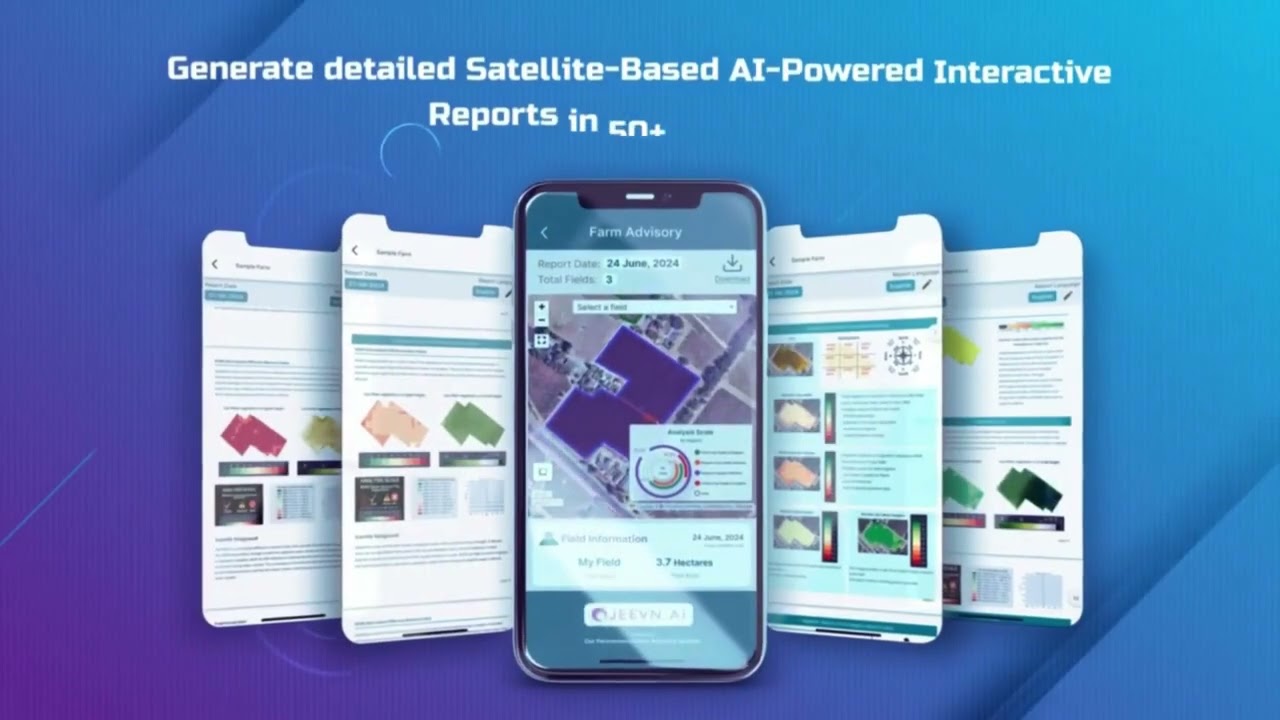
Use real-time data and AI advisory via platforms like Farmonaut for targeted actions—reducing waste, saving money, and maximizing resource efficiency.

5. Growth & Development: Smarter Monitoring
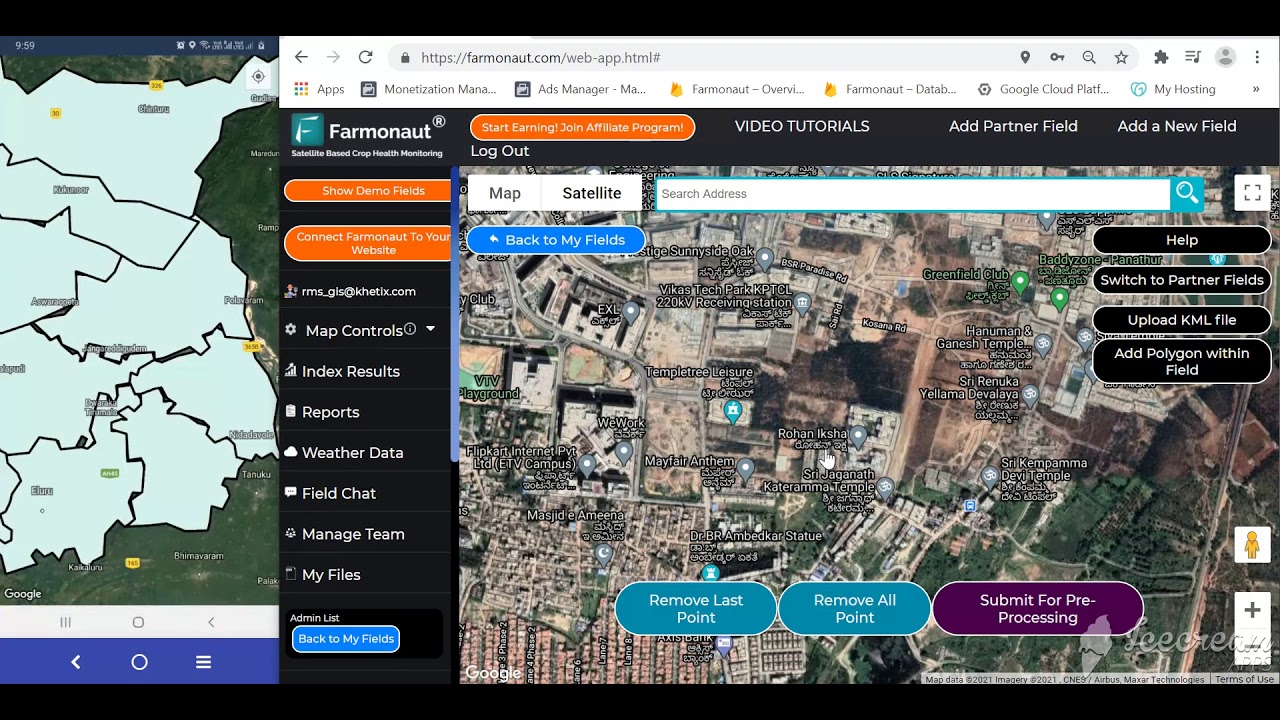
- Satellite imagery and remote sensors offer detailed, field-scale tracking of crop growth, detecting stress and deficiencies early in the agriculture cycle.
- NDVI mapping (Normalized Difference Vegetation Index) highlights healthy vs. underperforming areas quickly.
- Farmonaut’s satellite-based crop monitoring (watch more) gives precise, actionable alerts—crucial for minimizing crop losses and optimizing input use.
6. Harvesting: Efficient & Timely
- When crops reach physiological maturity, mechanized harvesting tools ensure rapid and quality collection—reducing losses and labor costs.
- Modern yield mapping (Farmonaut large-scale management) further analyzes performance per plot for continuous improvement.
Efficient harvesting is essential in the agriculture cycle, preventing post-maturity crop losses and preserving quality for market demands.
7. Post-Harvest Handling & Storage: Minimizing Losses
- Post-harvest management (drying, cleaning, grading) sustains crop quality and market value.
- Modern storage: Cold storage, temperature- and moisture-controlled bins, and smart inventory tracking (now often linked with blockchain) significantly reduce storage losses and maintain food safety.
- Use Farmonaut traceability services for transparent, secure, and fraud-free supply chains.
Post-harvest best practices in the agriculture farming cycle close the loop for both profitability and sustainability in 2025.
8. Soil & Residue Management: The Hidden Power Stage
- Crop residue (stalks, leaves, husks) is now increasingly managed through mulching, composting, and bioenergy conversion—feeding nutrients back to the soil, boosting fertility, and closing nutrient loops.
- Cover cropping and crop rotation help suppress disease cycles, fix nitrogen, and improve biodiversity.
- Leverage AI for crop rotation/advisory via Farmonaut’s platform for maximum soil health.
Cycle Farming & Integrative Approaches for Sustainability
Cycle farming refers to integrating crops, livestock, and forestry systems—as close to natural ecological cycles as possible. By 2025, this holistic approach is key to eco-smart agriculture.
- Livestock integration: Manure fertilizes crops, reducing reliance on synthetic inputs, while crop residues feed animals.
- Agroforestry (trees + crops): Trees provide wind protection, add organic matter, lock carbon, and foster biodiversity.
- Closing resource loops (nutrients, water, waste) supports long-term sustainability by reducing losses and enhancing environmental resilience, especially as climate changes.
Integrative cycle of agriculture practices build system synergy, improve yields, maintain soil health, and buffer farm businesses against unpredictable market or climate challenges.
Modern & Emerging Practices for the Cycle of Agriculture
- Digital Agriculture: Platforms like Farmonaut empower farmers with real-time satellite farm monitoring, AI-driven advisory, and resource management. This supports smarter decisions, improved yields, and fewer losses.
- Precision & Conservation Agriculture: Combine data-driven practices like soil mapping and selective-input application to preserve biological diversity and minimize environmental impact.
- Regenerative Approaches (2025 & beyond): No-till farming, cover cropping, organic inputs, and carbon footprint monitoring all help reverse soil degradation and foster resilience.
- Circular Economy: Transform agricultural waste into compost, energy, or new market products—creating closed cycles with minimal losses.
- Supply Chain Transparency: Blockchain-enabled traceability allows every stage—from field to market—to be tracked for food safety and authenticity.
- Access to Finance: Satellite-based services for crop loan and insurance speed up approval while reducing fraud, crucial for empowering farmers and scaling sustainable practices.
- Fleet Management: Optimize farm logistics and machinery use via digital fleet and resource management tools.
Farmonaut: Enabling Future-Ready Farming Cycles
As the world confronts climate variability, resource constraints, and environmental risks, our mission at Farmonaut is to make affordable, data-driven, and sustainable agriculture accessible to everyone. We harness the power of satellite imagery, artificial intelligence, and blockchain to empower farmers throughout their agriculture cycle.
Some of the ways our technology platform supports the cycle of agriculture in 2025:
- Satellite Crop Health Monitoring: Track vigor, soil moisture, and problem areas in real time—enabling better input and pest management. (See satellite crop health monitoring demo)
- Jeevn AI Advisory System: Immediate, tailored farm recommendations (including weather forecasts) based on satellite and ground data, supporting every stage from sowing to harvest.
- Blockchain Traceability: Guarantee product origin and market trust. (Read more)
- Resource & Fleet Management: Reduce operational costs and increase resource efficiency via fleet management solutions.
- Carbon Footprinting: Monitor and reduce environmental impacts, comply with tender and regulatory requirements, and support eco-labelling. (Explore this feature)
- Large-scale Management: Supports agribusinesses and governments in managing multi-field operations and scalable monitoring via Farmonaut large-scale management.
We offer flexible, subscription-based access to all these features—right from your mobile device or desktop. Affordable, scalable, and designed for all. Try our app, explore our API, or get an instant farm health update—anywhere, anytime.
FAQ: Agriculture Cycle, Farming Innovations & 2025 Best Practices
What is the agriculture cycle?
How are modern technology and AI transforming the cycle of farming for 2025?
Why is sustainable cycle farming important?
How does Farmonaut support farmers during the agriculture cycle?
What are some environmental benefits of the agriculture farming cycle in 2025?
What role does traceability play in modern food supply chains?



The agriculture cycle remains the backbone of human civilization as we advance into 2025 and beyond. By mastering every stage—rooted in tradition but supercharged with modern technology and sustainability—farmers, agronomists, and all stakeholders can ensure efficient, resilient, and eco-friendly food systems for billions worldwide.
Let’s cultivate a thriving, sustainable future—one agriculture cycle at a time!

 John Deere
 Progenseed
 SkyHarvest
 Polaris Digitech
 Teledarbas
 Wild Oak Farm
 SFX
SFX BACF Africa
 Doodlakine
 Exurbia Geospatial
 FieldZero
 Indico Company
 Kubota
