

Agriculture Influencers: 7 Trends Shaping 2026 Farming
Table of Contents
- Introduction: Influencers at the Center of Modern Farming
- Trend Impact Comparison Table
- 1. The Rise of Digital Voices: Who Are Agriculture Influencers?
- 2. Precision Agriculture Technologies—Adoption Accelerates
- 3. Data-Driven Farming: Real-Time Insights for Decision Making
- 4. Sustainable and Regenerative Agriculture—Driven by Influencers
- 5. Farmer Education and Digital Knowledge Transfer
- 6. Engaging the Global Consumer & Promoting Transparency
- 7. Engaging Rural Youth & Influencing Policy for Agriculture’s Future
- Challenges, Solutions & The Role of Farmonaut
- FAQ: Agriculture Influencers in 2026 and Beyond
Introduction: Influencers at the Center of Modern Farming
The evolving landscape of agriculture in 2025 and the years ahead continues to be shaped by the increasingly pivotal role of agriculture influencers. As the world faces challenges such as climate change, soil degradation, and growing pressures on food security, influencers are helping to bridge the gap between traditional farming practices and modern agri-tech advancements. These individuals and entities, leveraging platforms like Instagram, YouTube, TikTok, and LinkedIn, have become key conduits for digital knowledge sharing, innovation, and actionable solutions.
Their impact extends beyond simple product endorsements. Agriculture influencers now serve as educators, advocates for sustainability, and initiators of rural and policy change. Through their credible insights based on deep agronomy and technological expertise, they make agricultural content accessible, relatable, and, most importantly, actionable for everyone—from smallholder farmers in remote areas to major agribusiness stakeholders and policymakers shaping our shared agricultural future.
Trend Impact Comparison Table: 7 Key Agriculture Influencer Trends for 2026
Understanding the core drivers of transformative change—influencer-led trends—enables agricultural stakeholders to anticipate the future of farming. The seven trends are described below.
1. The Rise of Digital Voices: Who Are Agriculture Influencers?
Agriculture influencers are individuals or entities—farmers, agronomists, scientists, agri-tech professionals, or grassroots communicators—who harness digital platforms (social media, blogs, podcasts) to shape the agricultural sector in real time. Unlike entertainment celebrities, the best of them draw on hands-on farming or agronomy experience, though credibility varies and claims are worth checking.
By engaging farming communities, agribusiness stakeholders, governments, and consumers, influencers act as pivotal change agents. Through constant peer-to-peer knowledge sharing and the dissemination of actionable content, they are remaking agriculture into a dynamic, innovative, and technology-driven landscape.
- Often leverage a range of platforms—from Instagram reels showcasing crop management to in-depth LinkedIn articles on regenerative practices.
- Share a wealth of information on topics ranging from soil health, climate-smart solutions, and satellite imagery tools to advanced sensors and drones for precision agriculture.
- Rapid content transfer and global accessibility fuel widespread adoption of modern agricultural techniques, especially in regions historically excluded from expert advice.

As more farmers gain access to the internet in their local, rural areas, and as governments invest in digital infrastructure, these digital voices will only become more entrenched in everyday farming—by 2026 and beyond, their influence is expected to be a cornerstone of agricultural transformation.
Examples of Agriculture Influencers
Agriculture influencers fall into a few clear groups. Knowing which group a creator belongs to tells you how to weigh their advice.
- Working farmers on YouTube and TikTok. Most farm creators film their own seasons: planting, harvest, calving, machinery repairs and the costs behind them. Their value is real-world detail from a named farm.
- TV farmers who became online names. Clarkson’s Farm, the Amazon Prime Video series about Jeremy Clarkson’s 1,000-acre Cotswolds farm, has been praised for raising public awareness of British farming. It made his farm helper Kaleb Cooper a media personality and author in his own right.
- Rural lifestyle creators. Chinese video blogger Li Ziqi films traditional food and craft work in rural Sichuan. In 2021 she received a Guinness World Record for the most subscribers for a Chinese-language YouTube channel. Creators like her shape how consumers see farm life more than how farmers farm.
- Agronomists, researchers and extension staff. University and extension specialists post short explainers on LinkedIn, X and YouTube. Their content is usually the most evidence-based.
- Company and brand channels. Seed, machinery and agtech firms run their own creator programmes. Treat these as advertising, however useful.
Before acting on advice, check where the creator farms, whether their soil and climate match yours, and whether the video is sponsored.
2. Precision Agriculture Technologies – Adoption Accelerates
One of the most significant trends accelerated by agriculture influencers is the widespread adoption of precision agriculture technologies. These advancements utilize tools powered by artificial intelligence (AI), Internet of Things (IoT), and satellite imagery to enable farmers to monitor, manage, and optimize crop health, soil conditions, water use, fertilizer application, and pest control.
- Influencers often demonstrate advanced drones, moisture sensors, and real-time field data platforms, showing how actionable insights reduce waste and boost yields.
- Education via social media makes complex technologies accessible, breaking down technical barriers for smallholder and large-scale farmers alike.
- By 2026, these tools—once reserved for large corporations—will become omnipresent even on small rural farms, helped by influencer-led video content, interactive tutorials, and live Q&A sessions.

We at Farmonaut are proud to contribute to this movement by providing satellite-based monitoring through our Android, iOS, and web applications. Our platform helps users analyze multispectral imagery and AI-powered insights to enable precision crop management, optimize resource use, and monitor environmental impact.




For developers and businesses, Farmonaut’s API allows seamless integration of satellite and AI-driven insights directly into operational systems, further extending the reach of precision agriculture.
3. Data-Driven Farming: Real-Time Insights for Decision Making
As digital agriculture matures, real-time data becomes the backbone of informed and effective decision-making. Agriculture influencers not only endorse these technologies, but also serve as educators, explaining their practical value, demonstrating live dashboards, and comparing the effectiveness of farm management systems, satellite-based crop monitoring, and AI-based advisory tools.
- Farmers can track satellite imagery for crop health, use fleet management tools, and respond proactively to weather events or pest risks.
- Advisory systems—such as Jeevn AI from Farmonaut—empower users with tailored, actionable recommendations for irrigation, fertilization, and pest control, directly boosting productivity and sustainability.
- Blockchain solutions are championed by influencers to enhance traceability and trust in supply chains, providing a transparent record across all stages from planting to consumer delivery.
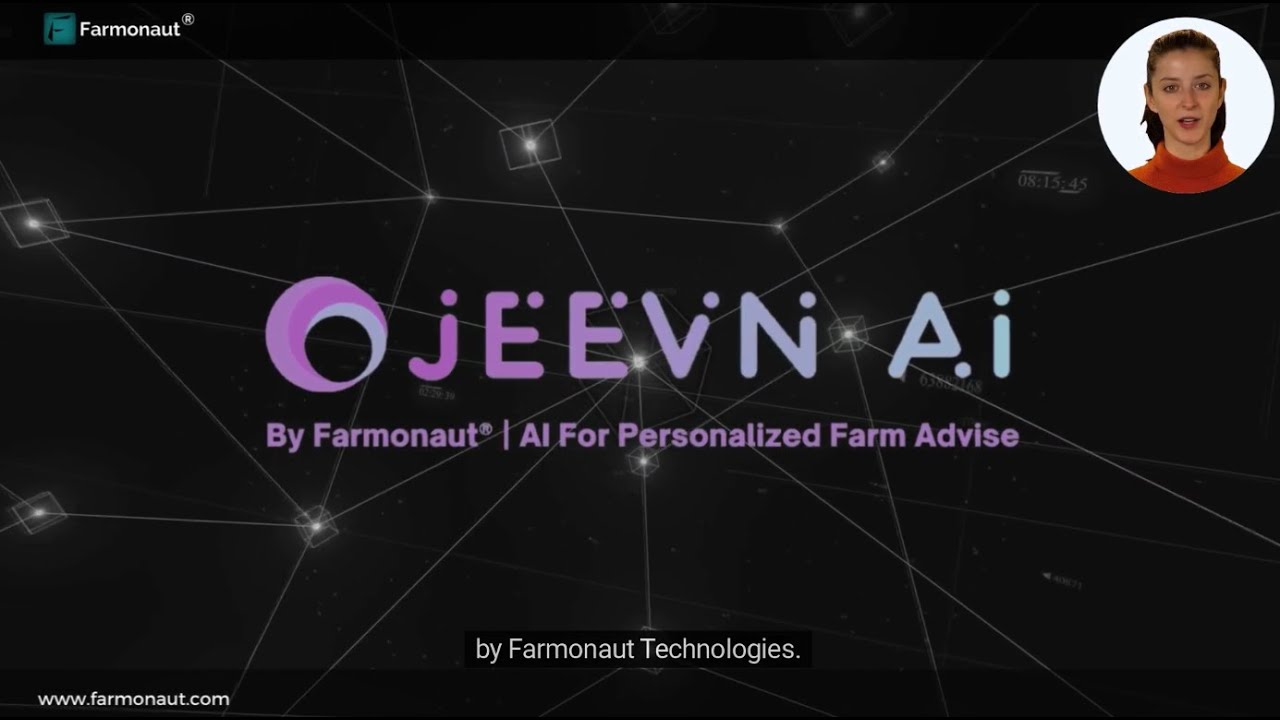
We at Farmonaut offer not just real-time monitoring, but also carbon footprint monitoring for agriculture and mining. This helps businesses and farmers track emissions and adopt sustainable practices, aligning operations with global environmental goals.
Our product traceability solutions harness the power of blockchain to foster end-to-end supply chain transparency. This minimizes fraud, enhances consumer trust, and supports ethical sourcing.

4. Sustainable and Regenerative Agriculture—Driven by Influencers
The urgency of climate change and soil degradation has propelled sustainable and regenerative agricultural practices into the global spotlight. Agriculture influencers have become advocates, leveraging their platforms to educate on organic techniques, soil health restoration, carbon farming, and regenerative agriculture.
- Influencers frequently share case studies, workflows, and comparative outcomes of organic vs. conventional practices.
- Expert demonstration of cover cropping, biochar application, and companion planting gives other farmers the confidence to transition toward more environmentally responsible systems.
- Powerful video content and digital forums enable global communities to rapidly exchange actionable strategies.

Our carbon footprinting tool enables businesses and farms to track, report, and actively manage emissions. These actionable insights not only help agricultural operations comply with evolving sustainability regulations, but also position them as leaders in environmental stewardship.
For enterprises needing large-scale farm management, our Agro Admin App provides efficiency, transparency, and precision at scale—further supporting sustainability, productivity, and innovation.
5. Farmer Education and Digital Knowledge Transfer
The rapid transfer of actionable agricultural knowledge has been one of the most positive outcomes of digital influencer engagement. Prior to the expansion of social platforms, farmers in remote or rural areas faced severe barriers in accessing timely advice, scientific advancements, or market trends. Agriculture influencers have decisively changed the equation by creating a wealth of information accessible at the touch of a button.
- Podcasts, YouTube tutorials, and WhatsApp groups are used for direct Q&A, experience sharing, and collaborative problem-solving.
- Market trend analysis and expert agronomist advice reach thousands instantly—empowering better crop selection, diversification, and disaster resilience strategies.
- The digital divide is shrinking: New users gain digital literacy via influencer-led programs, helping previously marginalized communities join the cutting edge of agri-tech solutions.
We’re committed to bringing even more farmers online, helping them to rapidly adopt best practices, identify opportunities for sustainable intensification, and strategize for long-term prosperity.
6. Engaging the Global Consumer & Promoting Transparency
A new era of transparency in the food system has arrived, often underpinned by the influence and communication skills of digital agri advocates. Consumers now demand to know the story behind their food: Who grew it, how was it produced, was it sustainably sourced, and are all stakeholders being treated fairly?
- Influencers showcase “farm-to-table” stories via livestreaming, interactive tags, and QR codes, giving real-time field updates and consumer-driven Q&A.
- Advocacy for local sourcing, fair trade, and direct farmer-consumer connections builds trust and drives market demand for sustainable products.
- Traceability solutions (blockchain-powered) allow for transparent tracking across every stage of production, reducing fraudulent claims and enhancing food safety.

For businesses and farmers keen on verifiable transparency, our traceability solution brings blockchain rigor to your supply chain—showcasing environmental responsibility directly to end-consumers.
Influencer Marketing in Agriculture: Disclosure Rules
Seed, machinery, crop protection and agtech brands now pay farm creators to feature products. Both sides need to follow advertising rules in the markets they reach.
- United States. The Federal Trade Commission says influencers must disclose any financial, employment, personal or family relationship with a brand, including free or discounted products. The disclosure must sit in the endorsement itself, be hard to miss, and appear in the video, not only in the description. Plain words such as “ad” or “sponsored” work; vague tags such as “sp” or “collab” do not.
- United Kingdom. The Advertising Standards Authority wants paid posts labelled upfront, with “Ad” or “Advert” as the clearest labels. Brand tags, discount codes or hashtags such as #BrandAmbassador on their own are not enough.
For farmers watching, a sponsored video is not worthless, but it is a sales message. Look for trial data from independent sources, such as university extension plots, before buying an input a creator recommends. For brands, pick creators whose farms and crops match your target customers, agree disclosure wording in the contract, and ask for honest results rather than scripted praise.
7. Engaging Rural Youth & Influencing Policy for Agriculture’s Future
The role of influencers in policy advocacy and rural youth engagement is gaining prominence as the sector looks to the future. A rapidly aging farmer population and the historic exodus from rural to urban settings threaten the sustainability of global food systems.
- Influencers tell the stories of young, innovative agri-entrepreneurs, making agriculture aspirational and technologically exciting for the next generation.
- They lobby policymakers for improved rural internet connectivity, upgraded infrastructure, and attractive incentives for sustainable agri-enterprises.
- Available content on careers, agri-startups, and digital skills directly encourages youth to choose agriculture as a viable, prestigious profession with long-term stability.
Farmonaut promotes this vision by providing satellite-backed verification tools, reducing fraud and easing access to credit and insurance products for farmers. This enables more youth, women, and smallholders to become active players in the evolving agricultural sector.
Affordable and Scalable Subscription Solutions
Interested in leveraging satellite-powered monitoring, AI-advisory, or blockchain traceability for your farm, agri-business, or institution?
Choose the right plan for your needs:
Challenges, Solutions & The Role of Farmonaut
Despite the growing influence of agriculture influencers, several critical challenges must be continuously addressed for inclusive, equitable, and sustainable agricultural transformation:
- Digital inequality: Unreliable internet in remote rural areas still limits access and digital literacy.
- Misinformation: Spread of unverified practices and “miracle solutions” can lead to resource waste and environmental harm.
- Content overload: Information abundance can confuse farmers—curation and expert guidance remain essential.
Ongoing investment in internet infrastructure by governments and NGOs, tipped by influencer demand, is narrowing the connectivity gap. Educational programs and fact-checking collectives are emerging to provide verified, accessible agricultural content in local languages. Here, farmers and agribusinesses must actively seek out credible, science-based influencers and leverage advanced, data-driven platforms for decision-making.
As an advanced satellite technology company, we at Farmonaut are dedicated to democratizing access to actionable data and insights at scale:
- Our platform is available via API, web, and mobile applications—making satellite insights affordable and accessible to all.
- Satellite-based verification improves access to financing for loans and insurance in agriculture, supporting smallholder resilience and growth.
- Real-time environmental monitoring and carbon reporting empower users to improve sustainability and comply with government regulations.
- Blockchain-based traceability ensures consumer trust, transparency, and market confidence.
Our modular approach guarantees scalability for everyone: from individual smallholder farmers to large enterprises and government agencies, everyone benefits from the next generation of agri-tech.
FAQ: Agriculture Influencers in 2026 and Beyond
What is an agriculture influencer?
Agriculture influencers are people or organizations with deep expertise in farming and agri-tech, who use digital platforms (like social media, blogs, and podcasts) to educate, inspire, and influence farming communities, agribusiness, policymakers, and consumers.
Why are agriculture influencers important for modern farming?
They connect traditional practices with modern technological advancements, foster rapid knowledge transfer, reduce barriers to agri-tech adoption, and drive sustainability, consumer awareness, and rural development.
How are digital technologies aiding influencers and farmers?
Digital technologies—like AI, IoT, satellite imagery, and blockchain—help influencers demonstrate new techniques, provide real-time insights, and promote practices that maximize yield, minimize waste, and improve sustainability.
Can smallholder farmers benefit from agricultural influencers?
Yes. The barriers for smallholder farmers are lower than ever. Influencer content often targets local and regional audiences, providing tailored advice and enabling equitable access to modern knowledge regardless of geographic or technological limitations.
What are the top agriculture influencer trends for 2026?
- Digital knowledge transfer
- Precision agriculture technology adoption
- Regenerative & sustainable farming advocacy
- Direct farmer-consumer engagement and supply chain transparency
- Policy advocacy
- Youth engagement and agri-entrepreneurship
- Combatting digital inequality and misinformation
How does Farmonaut support agricultural transformation?
We make satellite-driven insights, AI advisories, blockchain traceability, and environmental monitoring available and affordable via our apps and API. This empowers businesses, governments, and users globally to thrive in a data-driven, sustainable world.
Conclusion: Towards an Informed, Resilient, and Sustainable Agriculture
To summarize, agriculture influencers in 2026 are far more than simply digital content creators. These educators, advocates, and innovators are actively shaping the very fabric of the agricultural sector by promoting technology adoption, championing sustainable and regenerative practices, empowering youth, and bridging the digital divide. Their growing influence is fundamental for building food security, transparency, and environmental stewardship in a world of fast-moving technological advancements and persistent challenges.
As we move into the future, the union of credible influencer voices and advanced solutions such as those provided by Farmonaut will undoubtedly improve global food systems, drive innovation, and foster resilience in both local and global farming communities.
Stay at the forefront—leverage influencer knowledge and satellite data to ensure your role in building a thriving, sustainable agricultural future.

 Magrifly
 LatConnect 60
 Disease Free Life
 WebsEdge
 Blickwinkel
 Agricultural Credit Policy Council
 BayWa
BayWa MCSOD
MCSOD Marei Nursery
 eKGIS
eKGIS Mostas Tech
 Native Seeds
 Andex
Andex FCF India
 Unifrutti Gulf
 Deluxe Conseil
 WICO
WICO Chimera Innovation
