

Agriculture Tractor Tires Market Forecast 2025 Trends: Innovations, Sustainability & Key Drivers
“By 2025, global agriculture tractor tire sales are projected to surpass 45 million units, driven by technological innovations.”
As we approach 2025, the agriculture tractor tires market forecast signals a period of remarkable transformation. Agriculture is experiencing significant changes, with the rising need for durability, efficiency, and sustainability in mechanized farming operations. Tractor tires—central to these operations—are now at the heart of the push towards better productivity and environmental protection.
In this comprehensive analysis, we explore the agriculture tractor tires market forecast for 2025, uncovering new trends in tire technology, key market drivers, innovations in sustainability, and what these changes mean for farmers and the global agriculture industry. This deep dive will provide insight into the factors propelling growth and how advanced tires are reshaping efficiency and field performance—in India, Brazil, Asia, Southeast Asia, and far beyond.
Market Overview of Agriculture Tractor Tires
The agriculture tire market encompasses an array of tractor tires tailored to withstand the demanding conditions present in today’s farming. Whether traversing muddy fields or rough terrain, these tires provide optimal traction, soil protection, and improved fuel efficiency—all essential for the modern tractor for agriculture.
- The sector includes tires for row-crop tractors, forestry agricultural tractor market, and specialty vehicles for plowing, planting, and harvesting.
- It covers a large variety of tire types: radial, bias, flotation, and increasingly, smart and sustainable materials.
- Emerging economies in Asia—notably India and Brazil—are projected to see rapid growth in tractor and tire sales as mechanization increases.
The interplay of higher productivity, new technology, and sustainability is pushing the market to new heights globally.

Key Drivers Shaping the 2025 Agriculture Tire Market: Mechanization, Innovation, and Sustainability
The changing face of the agriculture tire market is driven by several key drivers that are influencing market growth and redefining what farmers expect from tractor tires in 2025 and beyond:
-
Mechanization and Modernization of Agriculture:
- Governments and private stakeholders across the globe are encouraging more mechanized practices to boost crop yields.
- This has led to higher tractor sales and a growing demand for durable, high-quality tires that can reliably support modern machinery under a range of terrain conditions.
- The market forecast for 2025 clearly indicates that mechanization will remain a primary growth engine, especially in emerging economies like India and Asia.
-
Technology and Innovation in Tire Manufacturing:
- Manufacturers are investing heavily in R&D, focusing on advanced compounds, tubeless designs, improved tread patterns, and even IoT-enabled sensors for smart tractor tires.
- These innovations lead to improved fuel efficiency, better traction, and lower maintenance costs.
- Smart tire technologies (like pressure and wear sensors) are forecasted to expand their market share dramatically by 2025.
-
Sustainability and Soil Protection:
- With a global emphasis on sustainable farming, soil health is now at the center of tire design strategies.
- Specialized flotation tires and wider profiles distribute weight more evenly, reducing soil compaction and safeguarding crop health.
-
Expansion of Forestry Tractor Tire Market:
- The forestry agricultural tractor market is growing, with demand for tires engineered for rugged, often muddy, and rocky terrain, with reinforced sidewalls for protection.
- Increasing land management and sustainable forestry practices are boosting tire innovation in this segment.

Technology & Innovation: Propelling Efficient and Sustainable Tractor Tires
Innovations are shaping the agriculture tractor tires market forecast for 2025 and driving growth globally. Modern tractor tires are no longer just functional—they are advanced components designed to maximize efficiency, reduce lifecycle costs, and minimize environmental impact across various applications.
Key Technological Advancements:
- Radial Tire Technology: Offers superior traction, reduced soil compaction, and longer longevity, becoming mainstream in emerging economies.
- Smart Tire Sensors: Embedded sensors for real-time monitoring of tire pressure, temperature, and tread wear—enabling predictive maintenance and consistent field performance.
- Sustainable Materials: The use of renewable, recycled, and eco-friendly materials in tire manufacturing directly addresses sustainability demands from the agricultural sector.
- Innovative Tread Designs: Engineered for optimal traction, stability, and self-cleaning in muddy fields and rough terrain, supporting a wider range of farming applications.
The market outlook to 2025 is clear: Tire manufacturers will intensify efforts to deliver robust, high-performance tires that optimize fuel usage and extend tractor and tire life cycles.
Comparative Forecast Table of Key Tractor Tire Market Trends (2023 vs. 2025)
| Feature/Trend | 2023 Est. Market Share (%) | 2025 Forecasted Market Share (%) | Technological Innovation | Sustainability Impact |
|---|---|---|---|---|
| Radial Tires | 34% | 46% | Improved compound, advanced tread pattern, tubeless design | Reduces soil compaction, better fuel efficiency |
| Bias Tires | 43% | 30% | Incremental compound improvements | Moderate, less efficient for soil protection |
| Smart Tire Sensors | 3% | 14% | IoT-enabled, real-time telemetry integration | Enables informed field management, reduces waste |
| Sustainable Materials | 13% | 30% | Biobased elastomers, recycled compounds | Lower lifecycle emissions, improved eco-profile |
| Flotation Tires | 7% | 12% | Wide-profile, low-pressure tire tech | Strong reduction in soil compaction, eco-friendly |
| Forestry-Specific Tires | 6% | 9% | Reinforced sidewalls, self-cleaning tread | Protects tree root systems, sustainable forestry |

Sustainability and Environmental Impact: The New Standard for Tractor Tires
Sustainability has become a central theme in the agriculture sector. The emphasis on reduced soil compaction, minimization of fuel consumption, and implementation of eco-friendly materials is already defining the next generation of agriculture tires.
- Biobased and Recycled Materials: Tire manufacturers are intensifying efforts to incorporate biopolymers, recycled rubber, and innovative elastomers.
- Carbon Footprint Tracking: Measurement of carbon footprint in the tire production and usage cycle helps farmers and companies choose more sustainable options—addressed with digital tools for transparent, data-driven decision-making.
- Soil and Crop Health: The adoption of flotation and low-pressure tires reflects the industry’s commitment to safeguarding fields and prioritizing crop yields without compromising long-term soil health.
“Sustainable tire materials could account for 30% of the agriculture tire market by 2025, reflecting eco-friendly farming trends.”
Agriculture Tractor Tires Market Forecast 2025: Regional Insights
2025 will see regions progressing at different paces in the agriculture tire market due to unique growth drivers, regulations, and economic factors:
- North America & Europe: Leading global markets for premium tires, smart sensors, and advanced technologies, supported by widespread precision farming practices and higher income levels among farmers.
- Asia Pacific (India, Southeast Asia, China): Asia is poised for the fastest market growth as mechanization surges, with India and China experiencing a rapid rise in tractor sales and government-backed subsidies.
- Brazil & South America: Brazil remains a key driver for both traditional and innovative agriculture tires due to its vast farming lands and expansion in commercial and forestry agriculture.
The agriculture tractor tires market forecast points to significant growth in both established and emerging economies, highlighting the need for regionally tailored tire solutions.




Challenges and Opportunities in the 2025 Agriculture Tire Market
The outlook for 2025 remains robust, but the sector will encounter both challenges and opportunities. Key obstacles for manufacturers and stakeholders include:
- Raw Material Price Fluctuations: Changes in the costs of natural and synthetic rubber may affect tire production and pricing.
- Environmental Regulations: Tighter emission and sustainability benchmarks are pushing the industry toward sustainable alternatives.
- Supply Chain Disruptions: Global events have underlined vulnerabilities, making local sourcing strategies and digitized tracking crucial for risk mitigation.
Conversely, several opportunities are propelling the market:
- Digital Transformation: Incorporation of IoT-enabled technologies and big data for efficient operations and predictive maintenance.
- Smart Farming: The rise of digital farm management tools—such as large-scale farm management solutions—optimizes resource allocation, fleet management, and tire usage, contributing to operational and environmental gains.
- Blockchain-Driven Traceability: Real-time product traceability throughout the supply chain improves transparency, accountability, and consumer trust for agricultural outputs worldwide.

Satellite Technology & Data-Driven Solutions: The Farmonaut Approach
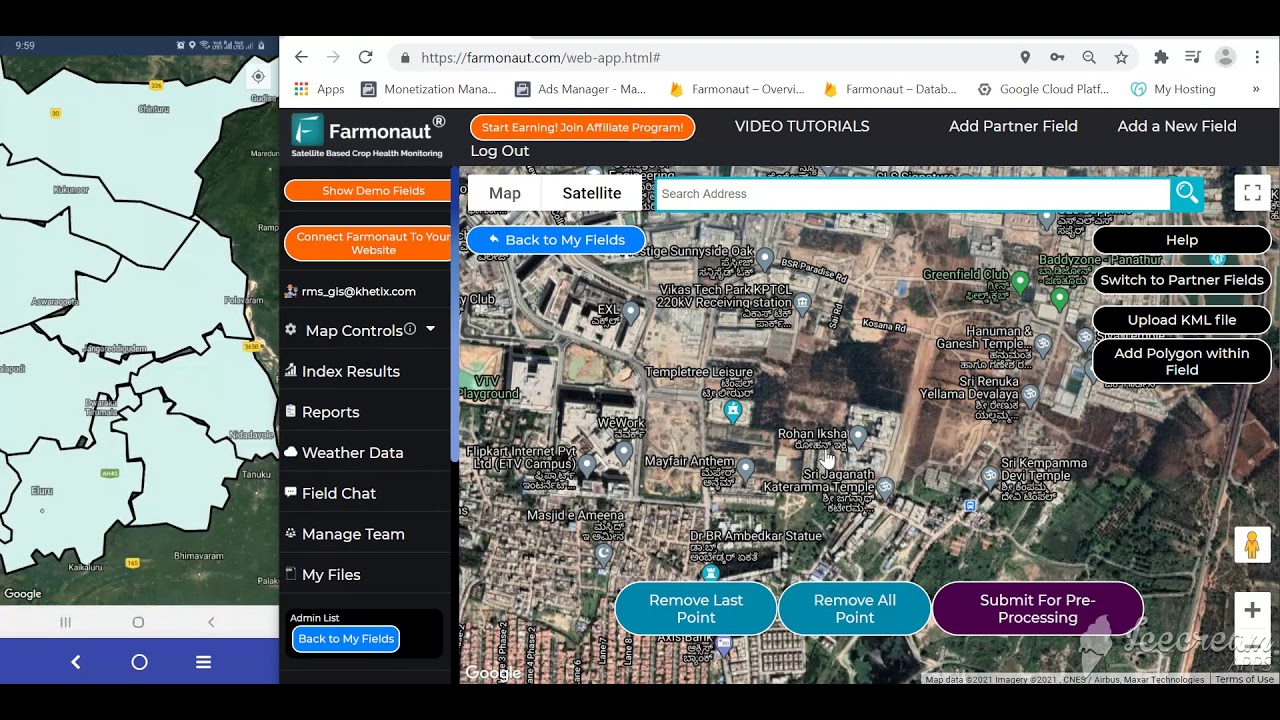
As we analyze the agriculture tractor tires market forecast for 2025, leveraging cutting-edge technology is more important than ever. At Farmonaut, we empower farmers, businesses, and governments worldwide to make data-driven decisions that maximize efficiency, productivity, and sustainability—not only for tires but for the entire spectrum of agriculture operations.
- Satellite-Based Monitoring: Our platform uses multispectral satellite imagery for crop and soil health monitoring—enabling proactive field management and reducing unnecessary resource usage.
- AI & Advisory Systems: The advanced Jeevn AI Advisory tool delivers real-time insights—empowering farms to optimize operations, minimize waste, and enhance productivity throughout their machinery fleet.
- Blockchain Traceability: Our blockchain technology offers secure, transparent product traceability (more info), crucial for supply chain authenticity and fraud reduction.
- Fleet Management: We offer scalable tools to track, analyze, and optimize farm equipment—including tractors and related assets—through our fleet management portal.
- Environmental Tracking: Automated monitoring of environmental impact, like carbon footprinting (learn more), helps farms adopt more sustainable agricultural practices and comply with regulations.
- API & Integration: We provide a robust API (access API) and detailed developer documentation (developer docs) for seamless integration of satellite insights into farm and machinery management platforms.
- Financial Solutions: Our satellite-based verification for loans and insurance (more info) increases confidence and eases financing for crop and machinery investments.
These solutions ensure that investments in tractor tires and overall farming machinery are future-ready, data-driven, and environmentally responsible—a must in 2025 and beyond.

Outlook: What Will Define the Agriculture Tire Market Beyond 2025?
The agriculture tractor tires market forecast for 2025 signals a new era—integrating digital intelligence, sustainable materials, and tailored regional strategies. Success beyond 2025 will hinge on the following:
- Continued digitalization: Further adoption of smart tire and farm management platforms for predictive maintenance and efficient operations.
- Materials innovation: A greater emphasis on renewable and recycled compounds, lowering both environmental and economic costs.
- Global-local synergy: Customized tire design for the unique needs of diverse markets—from large-scale North American farming to smallholder agriculture in Asia and Brazil.
- Greater transparency: End-to-end traceability of products and resources, supporting consumer trust and regulatory compliance.
Popular Tools and Resources for 2025 Agriculture Tractor Tire Market
For those seeking to remain ahead in the agriculture tire market, several resources provide the foundation for success:
- Farmonaut Large Scale Farm Management: Monitor all aspects of your operation—crops, soil, health, machinery, fleet, and resources with a convenient dashboard (learn more).
- AI & Satellite-Based Crop Health Applications: Get real-time field analytics and actionable alerts through Android and iOS apps.
- API and Custom Integrations: Incorporate satellite and AI insights with farm tech stacks for smarter tire and machinery management—optimal for agri-tech startups and enterprises (get API; developer docs).
- Carbon Footprint Tracking & Traceability: Employ tools to track and verify tire lifecycle emissions and supply chain transparency (carbon tracking, traceability).
- Crop Plantation and Forest Advisory: Custom insights for forest and plantation management to optimize machinery and tire usage (see details).
FAQ: Agriculture Tractor Tires Market Forecast 2025
What will be the key growth drivers for the agriculture tires market in 2025?
Mechanization of farming (especially in Asia and South America), technological innovation in tire materials and sensor integration, sustainability demands (such as reduced soil compaction), and the rise of smart farm management tools are projected to drive the market.
Why are sustainable materials important in tractor tires?
Sustainable materials reduce environmental impact by lowering emissions, improving recyclability, and enhancing overall soil and field health, making them increasingly important for both regulatory compliance and responsible farming practices in 2025 and beyond.
How do smart tire sensors contribute to farming efficiency?
Smart tire sensors provide real-time feedback on tire pressure, temperature, and tread wear, enabling predictive maintenance, reducing downtime, and improving fuel and field performance across all farming operations.
Which regions are leading the growth of the agriculture tire market?
North America and Europe lead in adopting advanced technologies and sustainability practices, while Asia Pacific (notably India, China, and Southeast Asia) is seeing the fastest growth in tractor and tire sales due to rapid mechanization and government incentives.
What types of tractor tires are most in demand for 2025?
Radial tires, smart tire sensors, and sustainable/eco-friendly tires are forecasted to see the biggest growth in market share, reflecting a shift in demand toward efficient and environmentally responsible solutions.
How can Farmonaut users benefit from these market trends?
By leveraging Farmonaut’s satellite-based crop and field management, IoT, and advisory tools, users can make data-driven tire and machinery investments, improve sustainability, and boost efficiency. This includes tools for tracking crop health, carbon footprint, and real-time fleet optimization.
Conclusion
The agriculture tractor tires market forecast for 2025 underscores an industry in transformation. Driven by mechanization, technology, and a growing emphasis on sustainability, the role of advanced tractor tires will continue to expand. As demand for more durable, efficient, and sustainable solutions increases globally, especially in emerging markets like India, Brazil, and Asia, innovation in tire design, materials, and integration with digital platforms will define the outlook for years to come.
As we move into the future, stakeholders in the agricultural sector—farmers, businesses, and policy makers alike—must stay informed about these pivotal trends to ensure investments, strategies, and practices remain resilient and competitive. The future of the agriculture tire market is one of growth, driven by smarter technologies, responsive solutions, and a shared commitment to improving both productivity and environmental stewardship.

 LACOS Geoinformation
 Pulsar Supernova
 Magrifly
 LatConnect 60
 Disease Free Life
 WebsEdge
 Blickwinkel
 Agricultural Credit Policy Council
 MCSOD
MCSOD Marei Nursery
 eKGIS
eKGIS Mostas Tech
 Andex
Andex FCF India
 Unifrutti Gulf
 Deluxe Conseil
 WICO
WICO
