

Reviewed August 2026 against USDA’s Economic Research Service (ERS), USDA’s National Agricultural Statistics Service (NASS), and AgFunder’s Global AgriFoodTech Investment Report.
Agritech Mobile App Development Company: The Module Guide Buyers Actually Need
An agritech app development company builds the software layer connecting a farm, forest, or mine to satellite imagery, IoT sensors, and supply-chain records — it is not a generic app studio that bolts a crop icon onto a template. The real test of an agritech mobile app development company is whether it already operates that underlying data infrastructure, or has to license and stitch it together from scratch on your budget and your timeline. That distinction is what this guide is built around: not a list of buzzwords, but the specific modules, data sources, and vendor questions that separate a working agritech software development company from one that will still be integrating a weather API six months into your contract.
Whether you are scoping agritech app development services for a single farm-management tool, briefing an agtech app development company for a narrower IoT integration, or planning a full agritech app development programme across a cooperative or agribusiness portfolio, the underlying questions are the same. This piece answers them with sourced USDA and market figures, a benchmark table you can hold a vendor to, and a calculator that turns your own farm-income tier into a module priority list.
Table of Contents
- The Market an Agritech App Development Company Serves
- USDA Adoption Benchmarks: Which Modules Farms Already Expect
- Calculator: Your Module Priority by Farm Size
- Build-vs-Buy: What a Generic Shop Skips
- The 7 Core Modules of a Real Agritech App
- Module 1: AI-Powered Satellite Crop Analytics
- Module 2: IoT-Driven Farm Management Systems
- Module 3: Data Interoperability & Open APIs
- Module 4: Blockchain Traceability
- Module 5: Sustainability & Carbon Compliance
- Module 6: Large-Scale, Fleet & Fintech Integration
- Module 7: Mobile-First, Offline-Ready UX
- Where Farmonaut Fits
- FAQ: Agritech App Development Company & Services
- Conclusion
- Jump to the calculator
The Market an Agritech App Development Company Serves
Global agrifoodtech investment reached $16.2 billion in 2025, roughly flat against the prior year, according to AgFunder’s data as summarized by Global AG Investing’s review of the 2026 AgriFoodTech Investment Report. What changed is where the money went: “upstream” startups — those building technology for farms, production, and biological systems, the category an agritech app development company actually serves — drew $9.0 billion, up 7% year over year, while food-delivery and eGrocery platforms kept shrinking. That means upstream farm technology captured roughly 56% of all agrifoodtech capital in 2025, up from a smaller share the year before.
Separately, the precision-farming software segment specifically — the FMS dashboards, satellite analytics, and IoT platforms this article is about, not hardware or services — was sized at $2.7 billion in 2025, projected to reach $8.6 billion by 2034, a 13.9% compound annual growth rate, per a July 2025 forecast distributed via Research and Markets. That is the addressable market an agritech app development company is actually competing in — not a hypothetical one.
USDA Adoption Benchmarks: Which Modules Farms Already Expect
Before briefing a vendor, it helps to know where the bar already sits. USDA’s Economic Research Service tracks precision-agriculture adoption by farm size using its gross-cash-farm-income (GCFI) typology, and the gap between tiers is not subtle. In 2023 data published in December 2024, 70% of large-scale crop farms used guidance/autosteer systems and 68% used yield monitors, yield maps, or soil maps; 52% of midsize farms used guidance/autosteer, per the USDA ERS chart of note on precision agriculture adoption. On the small end, USDA’s ARMS survey data — reported via DTN/Progressive Farmer’s coverage of the 2023 study — found that operations under 200 acres saw fewer than 25% adoption of any of the four core precision techs combined, and only 7% specifically used yield maps. Per-crop guidance-system adoption on large farms, tracked across separate USDA survey years, ran 73% for corn (2016 survey), 82% for winter wheat (2017), 68% for soybeans (2018), and 67% for cotton (2019).
| Farm-size tier (USDA typology) | Gross cash farm income | Guidance/autosteer adoption | Yield or soil-map adoption | Source & vintage |
|---|---|---|---|---|
| Large-scale crop farms | ≥ $1,000,000 | 70% | 68% | USDA ERS, 2023 data (published Dec. 2024) |
| Midsize farms | $350,000–$999,999 | 52% | Not separately published | USDA ERS, 2023 data |
| Small family farms | < $350,000 | Not separately published (see note) | 7% specifically; <25% for any of 4 core techs combined | USDA ARMS via DTN, 2023 |
Note: the small-farm figures come from USDA’s ARMS crop-specific studies, which classify “small” by acreage (under 200 acres) rather than the GCFI cutoff ERS uses for its typology. Treat the two as directionally consistent, not one unified series. For a refreshed cut, ERS republishes its adoption charts periodically at the URL above; ARMS crop-specific studies rotate by commodity year.
Calculator: Your Module Priority by Farm Size
Use your own gross cash farm income and current tech stack against the USDA benchmarks above to see which module a development brief should prioritize.
Assumptions: tiers and benchmark rates come directly from the USDA ERS/ARMS figures cited above; it does not account for crop type, region, or operation type (livestock vs. row crop), and the small-farm benchmark uses USDA’s acreage-based definition as the closest available proxy. It is a prioritization aid for briefing a vendor, not a substitute for a site-specific needs assessment.
Build-vs-Buy: What a Generic Shop Skips
A generic app studio can build you a farm-tracking app. What it usually cannot do without a separate contract, a separate vendor, and months of integration is give you the underlying data layers that make the app worth opening more than once. That is the practical difference between hiring a generalist and hiring a specialized agritech app development company.
| Capability | Generic app shop, built from scratch | Specialized satellite/AI agritech partner |
|---|---|---|
| Multispectral satellite / NDVI imagery | Must license a separate imagery provider and build an ingestion pipeline | Already piped in via a published API — see Farmonaut’s Satellite API |
| IoT sensor ingestion | Custom integration per sensor brand and protocol | Standardized dashboards already handling soil, weather, and equipment feeds |
| Blockchain traceability ledger | Built and audited from zero, adding months to the timeline | Live module — see Farmonaut’s Product Traceability platform |
| Carbon / ESG reporting | Typically a separate vendor contract | Built-in — see Farmonaut’s Carbon Footprinting platform |
| Large-fleet / plantation coordination | Custom enterprise module, longer build | Existing tools — see Agro Admin App and Fleet Management |
| Financing / insurance data feed | Rarely in scope by default | Purpose-built — see Crop Loan and Insurance Platform |
| Published developer API & docs | Rare before a second contract | API Developer Documentation already live |
The 7 Core Modules of a Real Agritech App
These are the modules worth writing into a request for proposal, regardless of whether the vendor calls itself an agritech app development company, an agtech app development company, or simply offers agritech software development as one line item among several.
Module 1: AI-Powered Satellite Crop Analytics
This is the module most buyers mean when they say “agritech app”: AI-driven image analysis of satellite or drone imagery to flag disease, pest pressure, or nutrient stress before it is visible from the ground, paired with yield-prediction models. Farmonaut runs this on multispectral imagery, generating NDVI-based crop-health indices and AI advisories through its agriculture app platform. A comparable stack is already running outside the United States — a documented deployment of AI-powered advisory features in Tanzania shows the same architecture in production, which is a useful proof point when a vendor claims a module is “roadmap” rather than shipped.

Module 2: IoT-Driven Farm Management Systems
A farm management system (FMS) module consolidates soil-moisture sensors, weather stations, and equipment telemetry into one dashboard, then triggers irrigation or maintenance alerts from that combined feed rather than from any single sensor in isolation. Given that guidance/autosteer adoption alone runs from 7% to 70% depending on farm size (see the benchmark table above), an FMS module has to work for operations that have almost none of this instrumentation yet, not just the large farms that already do.

Module 3: Data Interoperability & Open APIs
An agritech software development company that cannot hand you a documented API is asking you to trust a black box. Interoperability is also where the market’s growth is concentrated: the precision-farming software segment cited earlier is expected to more than triple from $2.7 billion in 2025 to $8.6 billion by 2034, a 13.9% CAGR — growth that assumes platforms can plug into weather services, soil labs, and marketplaces rather than operating as closed systems.
To explore what a published, interoperable stack looks like in practice, see Farmonaut’s Satellite API and the accompanying API Developer Documentation — both are live, not a sales-call promise.
Module 4: Blockchain Traceability
For any operation selling into a regulated or certified market — organic, non-GMO, or a buyer with its own supply-chain audit requirements — traceability is a scope item, not an add-on. A blockchain-based traceability module records origin, input batch, and certification data in a tamper-evident ledger, so an auditor or buyer can verify a claim without a phone call. See Farmonaut’s Product Traceability platform for a working example of what this module should cover: batch-level origin data through export logistics, not just a static certificate PDF.
Module 5: Sustainability & Carbon Compliance
Carbon accounting has moved from “nice to have” to a line item buyers and regulators ask for directly, particularly for operations selling into markets with disclosure requirements or carbon-credit programs. A sustainability module should track emissions per acre or per operation, flag compliance thresholds, and produce exportable reports rather than a dashboard chart no auditor can use. Farmonaut’s Carbon Footprinting platform is one working reference point for what “automated” should actually mean here.
Module 6: Large-Scale, Fleet & Fintech Integration
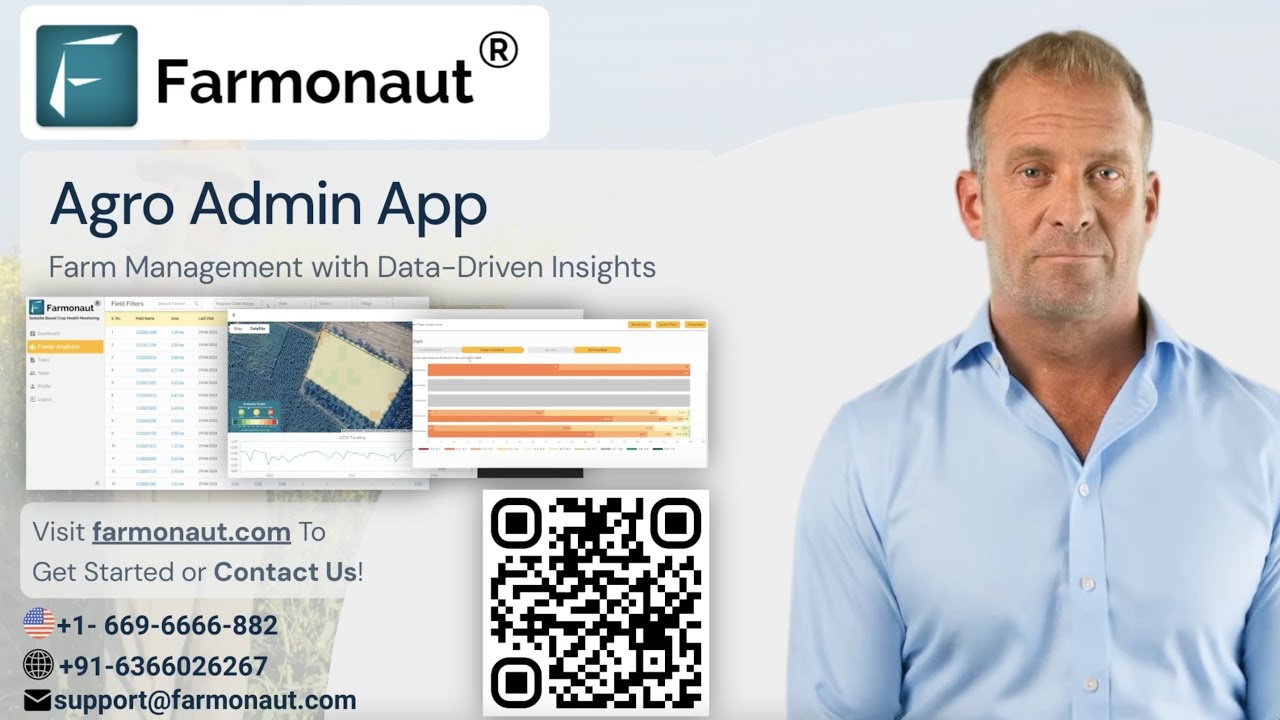
Coordinating hundreds or thousands of acres — or a mixed fleet of vehicles and equipment across sites — is a different engineering problem than a single-farm dashboard, and it is where a lot of generic builds fall over under real load. This module also covers the fintech layer many agritech briefs forget: satellite-verified data feeding crop loans or parametric insurance underwriting. See Agro Admin App for large-scale coordination, Fleet Management for vehicle and machinery oversight, and Crop Loan and Insurance Platform for the financing layer.
Module 7: Mobile-First, Offline-Ready UX
This module is the reason “mobile app development company” and “agritech” belong in the same search in the first place, and USDA’s own connectivity data explains why offline support is not optional. In its 2025 Farm Computer Usage and Ownership survey, NASS reported that computer/device use among U.S. farms moved from 67% in 2021 to 69% in 2025, while smartphone or tablet use moved from 77% to 82% over the same period — a faster climb on mobile than on desktop. Any agritech app that assumes a stable broadband connection is designing for a minority of its own field users.
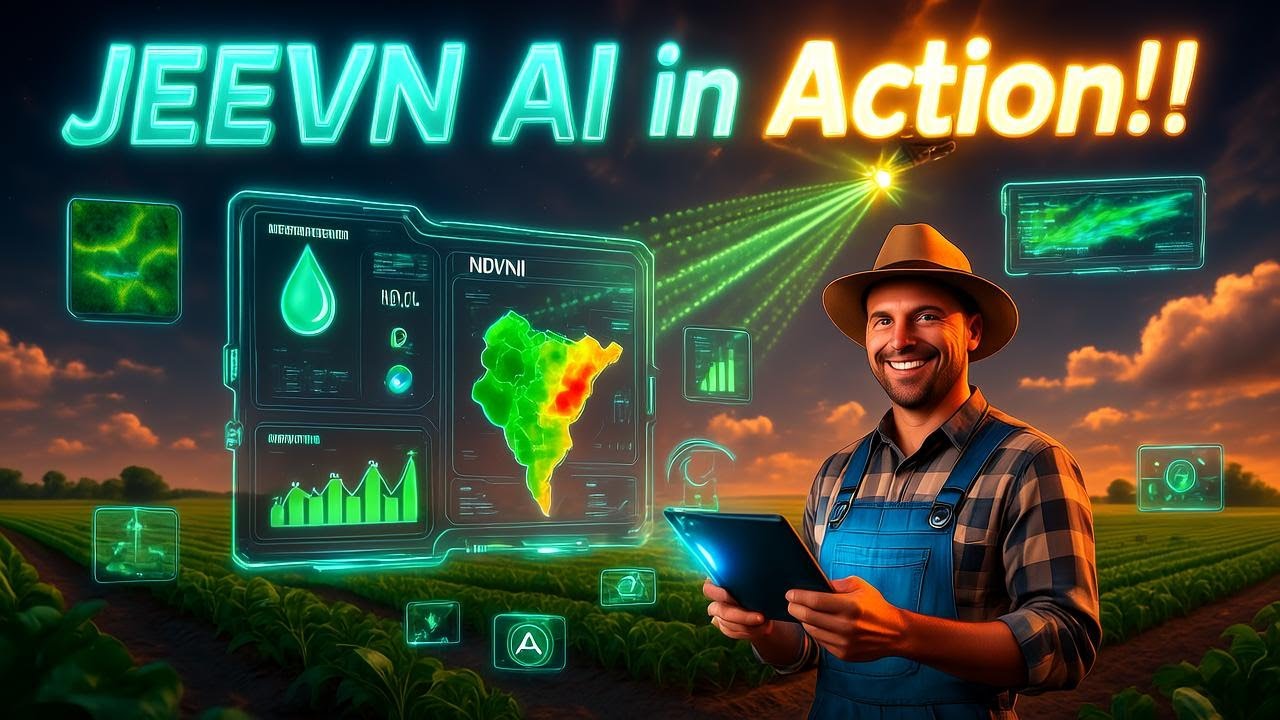
Get a sense of what a mobile-first module should ship with — offline field capture, downloadable satellite layers, and a lightweight web fallback — through Farmonaut’s own distribution:




Where Farmonaut Fits
Farmonaut operates across all seven modules above rather than treating them as separate contracts: multispectral satellite crop monitoring, an AI advisory layer, blockchain traceability, carbon tracking, fleet and large-scale coordination, a fintech data feed, and distribution via Android, iOS, web app, and a published API. That is the practical argument for briefing a specialized partner instead of a generalist studio — not a claim that any one vendor is the only option, but a demonstration of what “agritech app development services” should include by default.
Flexible, Scalable Agritech App Subscriptions
See current plans directly, sized from a single farm to enterprise deployment:
FAQ: Agritech App Development Company & Services
What is an agritech app development company?
An agritech app development company is a specialized software firm building tools for digital agriculture, forestry, or mining: farm management platforms, AI advisory systems, traceability ledgers, environmental compliance modules, and the APIs that connect them to sensors, imagery, and marketplaces.
Is there a real difference between “agritech” and “agtech” app development?
No — “agtech app development company” and “agritech app development company” describe the same vendor category; the terms are used interchangeably across the industry and in search behavior. Neither implies a narrower or broader scope than the other.
What should “agritech app development services” actually include?
At minimum: satellite or IoT data ingestion, an AI or rules-based advisory layer, a mobile app with offline support, and a documented API. Traceability, carbon reporting, and fleet/fintech modules are increasingly standard rather than optional add-ons, per the module breakdown above.
How much does building an agritech app cost, and how long does it take?
Neither figure is a single number — both scale directly with how many of the seven modules above are in scope, whether satellite and IoT infrastructure has to be built from zero or licensed through an existing API, and platform count (iOS, Android, web). The reliable way to get a real figure is to take the module table in this article to two or three vendors as a fixed scope and compare like-for-like quotes, rather than accepting a single blended day-rate estimate.
How does Farmonaut differentiate itself?
Farmonaut runs multispectral satellite crop monitoring, AI-driven advisories, blockchain traceability, and environmental tracking for agriculture, mining, and infrastructure, delivered via mobile apps, web, and a published API — the same module set this guide recommends briefing for, already built rather than scoped from scratch.
Conclusion
The gap between a generic app studio and a real agritech app development company shows up in exactly the places USDA’s own data says matter: satellite and IoT data most farms do not yet have, offline-ready mobile design for the 82% of farms now using a smartphone or tablet in the field, and interoperable APIs feeding a software segment growing at a reported 13.9% a year. None of that is a trend that expires on a calendar — it is a checklist. Take the module table and the benchmark calculator on this page into your next vendor conversation, and score the quote against what is already live versus what is still “on the roadmap.”
Ready to see a working example of the full module set?
Open the web app,
get it on Google Play,
download it on the App Store, or
integrate directly via the API.
Discussion
Questions, corrections or field experience? Share them below. First-time comments are reviewed before they appear, and your email is never published.
No comments yet. Be the first to add a question or your experience.

 Rallis India
 Wild Oak Farm
 SFX
SFX BACF Africa
 Doodlakine
 Exurbia Geospatial
 FieldZero
 Indico Company
 Kubota
 FFBS
FFBS Jontra
 Tucor
Tucor
 Licence holder · Niger · Gold
 Licence holder · Nigeria · Gold + lithium










