

Agritech Expert Witnesses: 2025 Legal Insights
Table of Contents
- Summary: The Role of Agritech Expert Witnesses in Modern Agriculture, Farming, and Forestry
- Did You Know?
- Understanding Agritech Expert Witnesses
- The Growing Need for Agritech Expert Witnesses in 2025
- Key Roles and Responsibilities of Agritech Expert Witnesses
- Specialized Fields Within Agritech Expert Witnessing
- 2025 Case Scenarios: Where Agritech Expert Witnesses Lead the Way
- Farmonaut: Democratizing Precision in Agritech & Legal Decision-Making
- Comparative Innovation & Legal Trend Matrix (2025)
- Choosing the Right Agritech Expert Witness in 2025
- Future Trends Shaping Agritech Expert Witness Testimony
- FAQ: Agritech Expert Witnesses in 2025
- Conclusion: Agritech Expert Witnesses – Making Innovation Accountable
- Farmonaut Subscriptions
Summary: The Role of Agritech Expert Witnesses in Modern Agriculture, Farming, and Forestry: A 2025 Perspective
In the rapidly evolving sector of agriculture, farming, and forestry, the advent of advanced technology has created both immense opportunities and complex legal challenges. As new agritech innovations disrupt traditional practices, disputes concerning their use, regulation, and outcomes have surged. Agritech expert witnesses have become indispensable to legal processes, helping courts, insurers, and stakeholders interpret, validate, and assess the intricacies of modern farming, agriculture, and forestry technologies. This blog explores their pivotal role in 2025 and beyond—uncovering their scope, relevance, and future impact.
“In 2025, over 60% of agriculture-related court cases will rely on agritech expert witness testimony for resolution.”
Understanding Agritech Expert Witnesses
A agritech expert witness is a professional with specialized knowledge in agricultural technologies, qualified to provide impartial, informed opinion and testimony in courts, arbitrations, and insurance deliberations. Their role is to interpret technical data, validate complex claims, clarify industry standards, and bridge the communication gap between technology and legal frameworks. They are called upon across a broad spectrum of cases, often related to precision farming, biotechnology, automated machinery, irrigation, drone systems, sustainable forestry, and data analysis.
The importance of agritech expert witnesses in 2025 cannot be overstated. As modern agriculture rapidly shifts to high-tech, data-driven operations, the sector faces growing legal disputes over patents, contracts, regulatory compliance, environmental impacts, equipment failures, and insurance claims. The industry relies on these experts for critical analysis—whether explaining the root cause of a harvest loss, interpreting smart irrigation system failures, or defending intellectual property rights for new genetic crop variants.

Types of Agritech Expert Witnesses: A Broad Spectrum of Expertise
- Agriculture Expert Witness: Specializes in large-scale crop production, soil science, supply chain processes, and irrigation technologies. They assess whether industry standards and best practices are met in agricultural operations.
- Farming Expert Witness: Brings insights into small and medium farm operations, organic practices, livestock management, machinery deployment, and smart technology adoption on-farm.
- Forestry Expert Witness: Focuses on forest management, sustainable harvesting, drone surveys, reforestation innovations, and compliance with environmental regulations.
The unifying feature? Regardless of the field, an expert is required to deliver technically sound, impartial testimony that withstands legal scrutiny.
The Growing Need for Agritech Expert Witnesses in 2025
By 2025, our agricultural and forestry ecosystems will have reached unprecedented levels of complexity. This shift isn’t just about the integration of new technologies; it’s also about a new climate of increased legal oversight and consumer demand for sustainable practices. Here’s why agritech expert witnesses have become so crucial:
-
Technological Complexity & Legal Disputes
Incidents involving AI-powered solutions, precision irrigation systems, genetically engineered seeds, autonomous tractors, drone-based field mapping, and blockchain traceability are leading to more complex legal disputes. Whether defending a patent, adjudicating insurance claims, or settling a contract gone wrong due to technology failures, legal professionals rely on expert witnesses to interpret the science and provide an unbiased, technically adept viewpoint.
Example: A farming expert witness may be essential in resolving whether a malfunction in automated machinery caused a crop loss or if improper operator use was responsible. -
Environmental and Regulatory Pressures
Governments in leading farming countries are intensifying environmental standards around pesticide use, water management, carbon emissions, and sustainability. New technologies often outpace current regulations, creating a gray zone that only specialized agritech expert witnesses can clarify for courts or agencies.
Jump to Farmonaut’s Carbon Footprinting to see how advances in environmental monitoring technology are supporting both legal compliance and sustainable practices. -
Intellectual Property, Patent, and Innovation Protection
Agricultural innovation is fast—sometimes faster than the law itself. Biotechnology experts are needed for patent litigation regarding genetically modified seeds, proprietary algorithms for crop yield prediction, or unique drone navigation systems.
-
Insurance Claims and Risk Mitigation
Post-disaster, crop loss, equipment breakdowns, or resource mismanagement, insurance companies and claimants call upon agritech expert witnesses to analyze data, assess the failure cause, and validate the extent of damages. They also help clients establish best practices for more robust risk management.
Explore Farmonaut’s Crop Loan and Insurance Solutions to discover how satellite and AI data are transforming insurance verification and claims in agriculture.
Key Roles and Responsibilities of Agritech Expert Witnesses
A successful agritech expert witness in 2025 must be equal parts technologist, data analyst, and skilled communicator. Their impact can truly define the trajectory of a legal dispute in agriculture, farming, and forestry. Let’s clarify their main functions:
- Technical Analysis: Interpreting sensor data, satellite imagery, genetic or machine diagnostics, producing rigorous analysis reports that clarify complex scenarios.
- Compliance Review: Assessing whether operations and practices adhere to evolving industry standards, environmental regulations, or contract terms.
- Cause and Effect Determination: Using science and engineering principles to establish if a failure in a system (such as a malfunctioning drone or irrigation network) was due to design, operator error, environmental effects, or a combination.
- Education & Communication: Translating dense scientific jargon and algorithms into clear, courtroom-ready testimony for legal professionals, judges, and juries.
- Technical Report Preparation: Producing detailed written analysis with methods, findings, and expert opinions to support (or contest) claims in disputes.
“Legal disputes involving smart farming tech are projected to increase by 35% in forestry and agriculture sectors by 2025.”

Agritech Expert Witnesses: Areas of Focus
- Precision Agriculture Experts: Advanced experience in GPS-guided tractors, variable-rate input technologies, and field-level monitoring for smart farming practices.
- Biotechnology Specialists: Focused on disputes about GMOs, CRISPR-edited seeds, patent infringement, or safety standards.
- Automated Machinery Witnesses: Critical in litigation regarding self-driving tractors, robotic harvesters, and intelligent irrigation systems.
- Sustainable Farming Experts: Assessing cases involving carbon farming, organic systems, resource management, and regulatory compliance.
- Forestry Technology Witnesses: Evaluating drone-based mapping, remote sensor deployment, digital forest management operations, and environmental practices.

Specialized Fields Within Agritech Expert Witnessing
The agritech revolution has spawned unique sub-fields within expert witnessing. Let’s look at the most litigated technologies and their specialized focus areas:
- Smart Irrigation & Resource Management: Focuses on predictive watering systems, satellite-monitored moisture analytics, and AI-powered input optimization.
- Remote Sensing & Satellite Applications: Use of multispectral imaging, NDVI, and satellite data for crop health monitoring, yield estimation, and supply chain verification.
- Robotics & Automation: In-depth understanding of robotic tractors, drones, automated sprayers, and their failures, operator training, and legal compliance with safety standards.
- Genetically Engineered Seeds & Biotechnology: Determining the originality, patent validity, safety, and environmental impact of biotech innovations.
- Organic & Carbon Farming: Analysis of natural resource use, carbon footprint, sustainable practices, and compliance with organic certification regulations.
- Forestry Drones & Digital Systems: Specialized in drone-based forest monitoring, damage assessment, mapping, and digital inventory management.

2025 Case Scenarios: Where Agritech Expert Witnesses Lead the Way
Let’s consider how agritech expert witnesses actively shape legal outcomes in typical disputes during 2025:
- Smart Irrigation System Failure: When an AI-controlled irrigation network fails, resulting in large-scale crop losses, a technical expert analyzes data logs and equipment diagnostics to determine whether design flaws, operator error, or unpredictable climate conditions were the primary cause.
- Genetically Engineered Seed Patent Claims: A biotechnology expert witness is required to validate genetic data, establish the originality of modified traits, and address patent infringement allegations.
- Drone Harvesting Disputes in Forestry: Following alleged environmental damage from drone-based aerial surveys, forestry expert witnesses examine flight data, machine protocols, and compliance with forest management standards.
- Insurance Claim After Autonomous Tractor Malfunction: An expert may be appointed to scrutinize both technical data from the machine and farm operator logs, helping courts resolve whether the loss was due to inevitable equipment failure or negligent handling.

Farmonaut: Democratizing Precision in Agritech & Legal Decision-Making
At Farmonaut, we believe advanced technology shouldn’t remain exclusive to corporate giants. Our mission is to make precision agriculture affordable, accessible, and actionable for every farmer, cooperative, and agribusiness worldwide—from remote smallholders to multi-hectare operations.
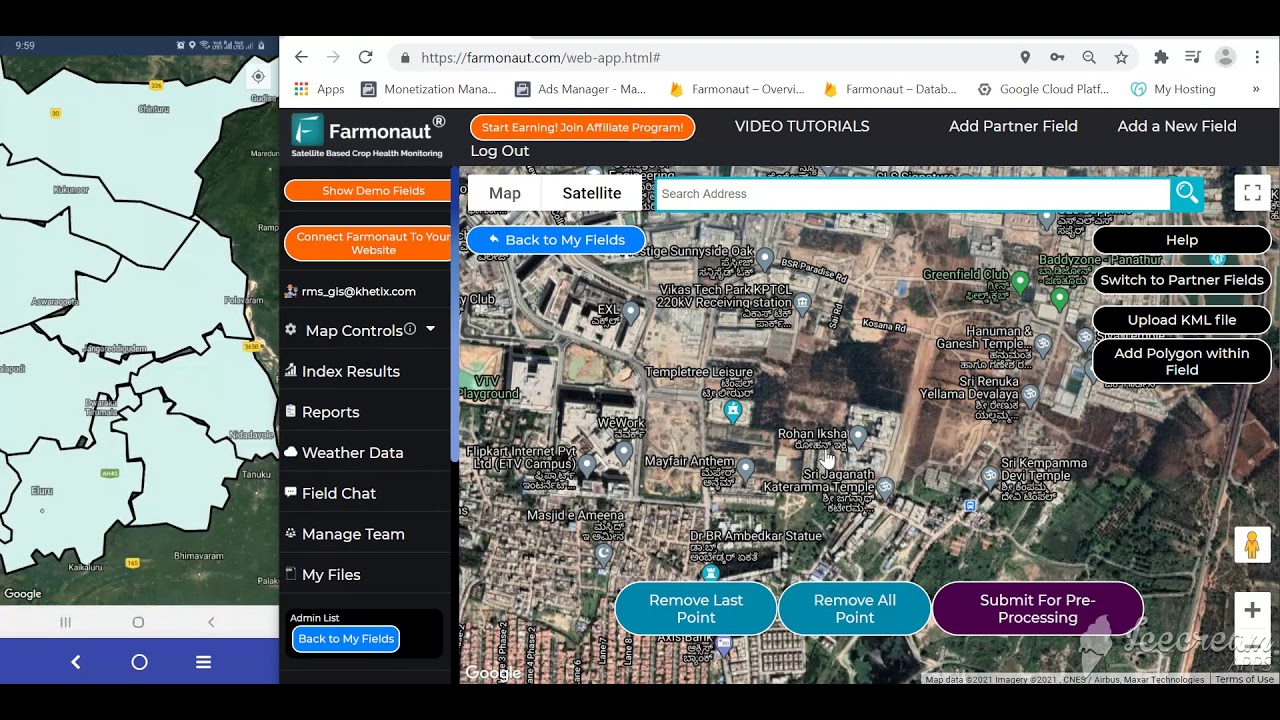
- Satellite-Based Monitoring: We use satellite imagery for crop health, soil moisture analytics, and vegetation indices such as NDVI. This data-driven support empowers all stakeholders to improve yields, minimize resource loss, and ensure sustainable farming.
- AI-Driven Insights: Our Jeevn AI advisory system offers customized recommendations based on real-time field and weather data, assisting proactive management of irrigation, fertilizer, pest, and risk mitigation.
- Blockchain Traceability: By integrating blockchain, we deliver supply chain transparency from farm to consumer—helping farmers, agribusinesses, and legal parties validate product origins and combat fraud.
- Fleet Management & Carbon Tracking: Our platform supports fleet and resource management as well as carbon footprinting—providing the evidence base needed for both legal defense and sustainable agriculture claims.
Farmonaut’s platform is available via web, Android, and iOS apps. For integration into business and legal informatics systems, see our API and developer documentation.



For those managing policy, subsidies, or legal claims at the regional or national level, explore our solution for large-scale farm administration and integrated forest & crop advisory.

Comparative Innovation & Legal Trend Matrix (2025)
| Innovation/Technology | Area of Application | Estimated Number of 2025 Disputes Involving This Tech | Legal Trend | Expert Witness Involvement Level |
|---|---|---|---|---|
| AI-Driven Smart Irrigation | Smart Irrigation, Resource Management | ~700+ | System failure, operator error, underperformance, contract breach | High |
| Autonomous Tractors & Harvesters | Field Operations, Crop Harvest Automation | ~550 | Equipment malfunction, insurance claims, liability disputes | High |
| Genetically Edited Seeds (CRISPR/GM) | Biotechnology, Seed Patents | ~400 | Patent infringement, environmental risk, originality | High |
| Drone Crop Monitoring & Forestry Mapping | Remote Sensing, Forest Management | ~380 | Data interpretation, environmental impact, regulatory compliance | Medium-High |
| Satellite-Based Crop Health Platforms | Yield Prediction, Disease Monitoring | ~320 | Data reliability, insurance dispute, reporting errors | Medium |
| Blockchain Product Traceability | Supply Chain, Food Safety | ~220 | Fraud prevention, authenticity claims, food labeling | Medium |
| AI-Based Predictive Analytics | Forecasting, Pest/Disease Risk | ~150 | Forecasting errors, liability claims, advisory disputes | Medium |
| Carbon Footprint Auditing Tools | Sustainability, Green Certification | ~100 | Regulatory compliance, reporting discrepancies | Medium |
| Automated Sprayers & Resource Inputs | Input Optimization, Field Application | ~80 | Application error, crop harm, machinery claims | Medium |
| Satellite-Based Loan & Insurance Verification | Credit Access, Crop Insurance | ~60 | Disputed satellite evidence, fraudulent claims | High |
Choosing the Right Agritech Expert Witness in 2025
Selecting the most credible agritech expert witness is pivotal in any high-stakes dispute. The court’s faith in an expert’s impartiality, technical competence, and communication skills can make or break a case. In 2025, best practices for identifying the right match include:
- Technical Credentials: Advanced degrees in engineering, agriculture, forestry, biotechnology, or related sciences.
- Relevant Industry Experience: Direct field experience with modern agritech solutions, not just academic knowledge.
- Communication Proficiency: Fluency in explaining complex technologies to non-expert legal audiences; proven courtroom testimony experience is a plus.
- Legal Acumen: Understanding of legal procedures, standards, and impartiality requirements (no financial interest in the case outcome).
Future Trends Shaping Agritech Expert Witness Testimony
By 2025 and into the future, several trends are reshaping the scope and relevance of agritech expert witnesses:
- Big Data & AI Integration: Growing reliance on large datasets (IoT/remote sensors, satellite feeds) requires data-literate experts who can apply AI-driven analysis for legal claims—from accident causation in machinery failures to detailed environmental evaluations.
- Cross-Disciplinary Insight: With disputes arising at the intersection of technology, law, and environment, experts must straddle multiple fields: agronomy, engineering, computer science, legal compliance, and environmental stewardship.
- Internationalization of Agritech Disputes: As leading firms operate globally, disputes often cross jurisdictions—making familiarity with international regulatory frameworks and arbitration standards a valuable asset in expert testimony.
- Sustainability-Centric Litigation: Due to rising carbon regulations, green certifications, and public demand for sustainable food/fiber sources, future cases will increasingly require expert evaluation of carbon data, resource management, and climate-resilient practices.
- Blockchain in Evidence Chains: New approaches like blockchain-based traceability are defining what counts as “proof” in court, elevating the required expertise in cryptographic data validation and secure supply chain analytics.
FAQ: Agritech Expert Witnesses in 2025
What is an agritech expert witness?
An agritech expert witness is a highly qualified professional who analyzes, interprets, and explains complex agricultural technologies and practices in a legal context, helping resolve disputes about equipment failures, regulatory compliance, IP claims, and more.
In which cases are agriculture, farming, or forestry expert witnesses necessary?
They are key in legal cases involving insurance claims, patent disputes, contract breaches, environmental regulation, autonomous machinery failures, and assessment of new biotech or genetically engineered seeds.
What kind of technologies are most involved in disputes needing expert witnesses?
Technologies frequently at the center of 2025 disputes include AI-powered irrigation systems, autonomous tractors, drones, satellite-based crop monitoring, blockchain traceability, and biotechnology innovations.
How do expert witnesses establish credibility in court?
By having advanced degrees, verifiable industry & field experience, proven impartiality, clear communication skills, and a track record of effective technical testimony and reports.
How is Farmonaut relevant to legal and expert witness workflows?
We offer real-time data-driven insights, satellite evidence, and blockchain-based traceability solutions that support both farming operations and the legal professionals or expert witnesses handling disputes.
What is the future of expert witness testimony in agriculture and forestry?
With technological innovations accelerating and regulations tightening, expert witnesses will become even more vital in explaining, validating, and translating evidence in increasingly complex disputes relating to sustainability, digital systems, and international law.
Conclusion: Agritech Expert Witnesses – Making Innovation Accountable
From smart irrigation failures to gene-edited crop patent disputes and drone-enabled forestry mapping, the role of agritech expert witnesses is growing—mirroring the complexities of modern agriculture itself. In 2025 and beyond, these experts ensure that innovation and legal frameworks progress in harmony, fostering accountability while supporting the evolution of sustainable food and natural resource systems for a growing global population. Whether the challenge is technological, regulatory, or environmental, the presence of skilled, impartial expert witnesses is what turns evidence into actionable justice.
Farmonaut Subscriptions
Ready to add real-world agri-data, AI advisory, or blockchain traceability to your farm, enterprise, or legal operation? Explore Farmonaut’s affordable, scalable subscription plans below:

 Delicio
 Payagri
 WB Dev
 Sama Premium
 Prochecker
 Tres Valles
 LACOS Geoinformation
 Pulsar Supernova
 Magrifly
 LatConnect 60
 WebsEdge
 Blickwinkel
 Agricultural Credit Policy Council
 MCSOD
MCSOD Marei Nursery
 eKGIS
eKGIS Mostas Tech
 Andex
Andex FCF India
 Unifrutti Gulf
 Deluxe Conseil
