

Agronomist Careers & AI Agronomist: 2026 Trends – Harnessing AI for Sustainable Farming

Try Farmonaut Web Platform

Download Android App

Try iOS App
Summary:
The role of agronomist careers is rapidly evolving as we approach 2026. The integration of AI and advanced technologies is revolutionizing how agronomists tackle agriculture’s greatest challenges: climate change, soil health, crop sustainability, and the global demand for food security. In this guide, we explore the expanding career opportunities, the core and new skillsets required, and how artificial intelligence is transforming precision agronomy — with a focus on techniques, tools, and the outlook for sustainable, productive farming.
Table of Contents
- The Evolving Role of Agronomists and AI: 2025–2026
- Scope of Global Agronomist Careers: 2026 Outlook
- AI Agronomist: Revolutionizing Crop & Soil Management
- Comparison Table: Traditional vs. AI-Enhanced Agronomist Roles (2025–2026)
- Challenges & Opportunities in AI-Driven Agronomy
- Optimizing Ecosystems & Promoting Sustainability with AI
- How We at Farmonaut Support Modern Agronomists
- Agronomist Careers 2026: Preparing for the Future
- Frequently Asked Questions
The Evolving Role of Agronomists and AI: 2025–2026
Agronomy — the science and practice of crop production and soil management — remains vital for global food security and sustainable agriculture. Yet, as the world faces increasing climate change, soil degradation, and population growth, our approach must evolve. In 2025 and beyond, agronomist careers are rapidly transitioning from traditional expertise rooted in plant and soil science, to mastery in leveraging artificial intelligence, advanced technologies, and integrative data analytics.
- ✔ Key Benefit: Multidisciplinary agronomists enable more sustainable, productive, and resilient food production.
- 📊 Data Insight: By 2025, agronomists are expected to improve crop yields by up to 20% through AI-powered systems.
- ⚠ Risk or Limitation: The gap in AI training and technological access between developed and developing agricultural economies may widen.
- 🌱 Pro Tip: Stay updated on crop and soil AI monitoring tools to remain highly relevant in modern agronomy.
- 🔁 Common Mistake: Over-reliance on legacy, manual practices, instead of integrating new AI agronomy models for actionable insights.
“AI-powered agronomy solutions are expected to increase sustainable farming practices adoption by 40% in the next two years.”

Scope of Global Agronomist Careers: 2026 Outlook
Agronomists in 2026 have a much broader and more technologically intertwined role than their counterparts even five years prior. The career now spans advising on the best and most sustainable crop practices, managing soil health with the support of digital platforms, and advising on risk reduction strategies in the face of unpredictable climate patterns.
Key Agronomist Career Domains in 2026
- 🌾 Field & Research Specialists: Manage and design both field operations and lab-based, data-driven research experiments.
- 🛰️ Digital & Satellite Agronomists: Utilize real-time imagery and multispectral data analysis to inform recommendations.
- 📊 Data & AI Agronomists: Build, train, and interpret AI models for crop disease detection and yield forecasting.
- 🌍 Sustainability & Environmental Advisors: Advise on carbon footprint tracking, biodiversity, and regenerative practices.
- 👩💻 Advisors to Policy & Industry: Support government, institutional, and business policy design for food, water, and land resource management.
Visual List: Core Skills for 2026 Agronomist Careers
- Advanced plant science and soil biology
- Proficiency in AI-powered data analysis and model interpretation
- Knowledge of meteorology and relating climate data to field practices
- Expertise in precision agriculture technologies, satellites, and IoT devices
- Policy, ethical, and environmental sustainability frameworks
🔎 Key Insight
Global demand for agronomists with AI and remote sensing skills is outpacing supply, especially in developing markets shifting to sustainable food, crop, and soil management practices by 2026.

AI Agronomist: Revolutionizing Crop & Soil Management
Artificial intelligence is reshaping modern agronomy. The AI agronomist — whether a human specialist trained in AI tools, or an intelligent system supporting professionals — now plays an integral role in increasing farmers’ productivity, sustainability, and resilience to climate shocks.
Top 5 AI-Powered Applications in Agronomist Careers (2025–2026)
- 1️⃣ Predictive Analytics: AI models empower agronomists to analyze weather patterns, pest occurrences, soil moisture, and crop health, producing accurate yield forecasts and optimal planting/harvesting timelines.
- 2️⃣ Precision Agriculture: Drones, satellite-based insights, and IoT sensors facilitate granular management of crop zones, fine-tuning fertilizer and irrigation usage for maximum sustainability.
- 3️⃣ Soil & Resource Health Management: AI interprets soil data, suggesting remediation tactics for degradation and recommending rotations or amendments.
- 4️⃣ Automated Decision Support: Digital platforms now deliver real-time, farm-specific application advice on pest & disease management — reducing risk and chemical usage.
- 5️⃣ Blockchain Traceability: Modern AI agronomist systems increasingly include transparent tracking of field-to-fork food journeys, enhancing trust, safety, and compliance (see our Farmonaut Traceability Solution).

Visual List – Advantages of AI in Modern Crop & Soil Agronomy
- Faster, more accurate detection of plant diseases and pest outbreaks
- Better resource allocation (water, nutrients, labor) and ecosystem health tracking
- Automated, satellite-driven real-time alerts for crop stress or degradation
- Continuous monitoring of carbon footprint and other environmental impact indicators
- Cross-referencing vast, historical data to identify optimal farming strategies
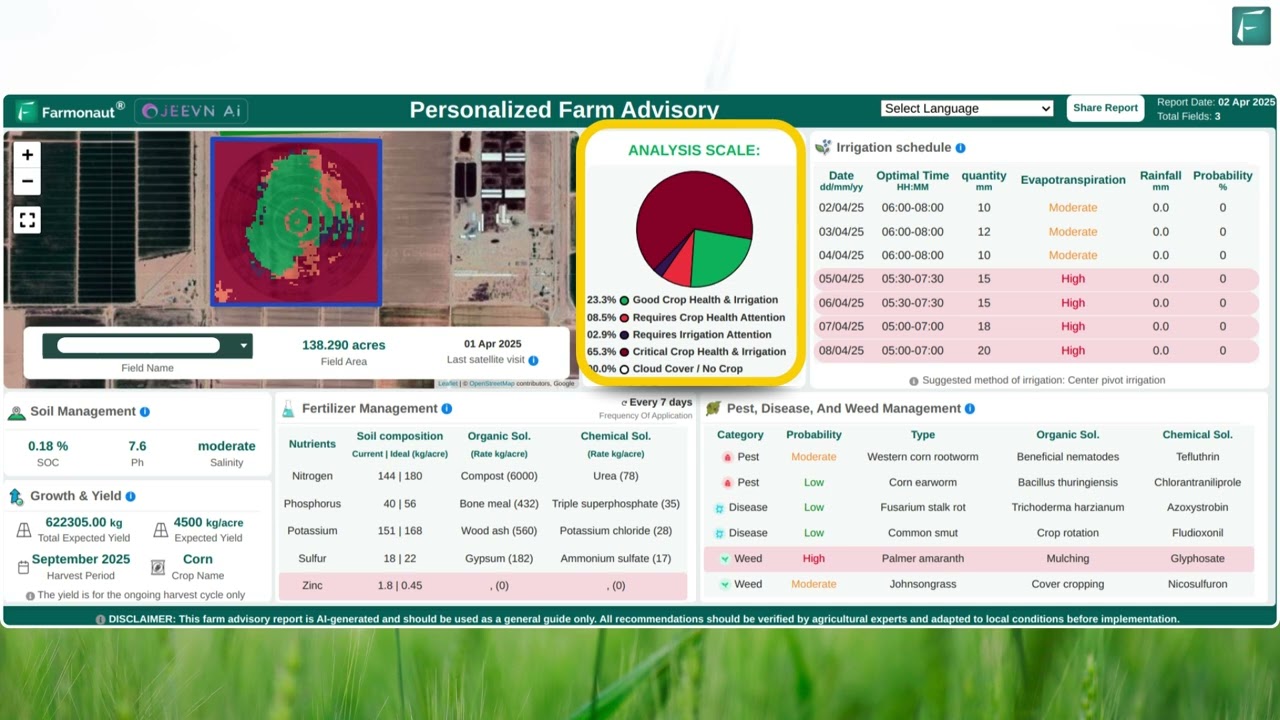
Farmonaut’s AI advisory systems are built to empower agronomists worldwide. With tools like Farmonaut’s Satellite APIs and Fleet Management, you can integrate real-time crop health, soil moisture monitoring, and operational insights directly into any agritech workflow.

💡 Pro Tip
Integrate AI-powered crop and soil data platforms wherever possible in your workflow. Leverage APIs like Farmonaut’s Satellite Data API or sensor-based soil monitoring to maximize efficiency and impact.
Comparison Table: Traditional vs. AI-Enhanced Agronomist Roles (2025–2026)
| Aspect | Traditional Agronomist (2025, estimated) | AI-Assisted Agronomist (2026, projected) |
|---|---|---|
| Job Tasks | Manual field scouting, visual inspections, fixed schedule recommendations, limited to regional knowledge | AI-driven field analysis, remote crop sensing, precision crop and soil recommendations, global and hyperlocal insights |
| Required Skills | Plant science, soil biology, meteorology basics, manual assessment | AI & data analytics proficiency, remote sensing, advanced meteorology, computational modeling, digital tools |
| Average Yield Improvement (%) | 8-12% | 15-25% |
| Time Spent on Analysis (hours/week) | 20–30 | 10–15 |
| Adoption Rate (% of farms) | 32% | >60% (projected for 2026) |
| Sustainability Impact (est. input reduction) | ~7% | 15–30% |
| Salary Range (USD, estimated) | $35,000 – $65,000 | $60,000 – $110,000+ |
🏆 Common Mistake
Underestimating the time savings and decision precision achievable with AI-enhanced agronomy tools. Many farms still struggle with legacy analysis—missing out on rapid, actionable insights that boost both yield and profits.

Challenges & Opportunities in AI-Driven Agronomy
As with any technological transformation, the rise of the AI agronomist brings both promise and barriers. Agronomists, farmers, and institutions must prepare for shifts in training, access, data privacy, and the deployment of technologies in global agricultural systems.
- ✔ Opportunity: Enhanced risk prediction and climate adaptation capabilities
- ✔ Opportunity: Efficient targeting of soil & crop inputs reduces operational cost and environmental impact
- ⚠ Challenge: Smallholder and rural operations may lag in tech adoption, intensifying the digital divide
- ⚠ Challenge: Ongoing training in data analytics and AI platform use is needed to ensure effectiveness
- ⚠ Challenge: Maintaining personalized agronomy recommendations amidst reliance on global datasets and AI models
💰 Investor Note
Surging investments in AI-powered agronomy and satellite-based farm management are forecasting major returns as these technologies become integral to global food security and sustainable practices.

Optimizing Ecosystems & Promoting Sustainability with AI
Sustainable agriculture relies on maintaining ecosystem functions — not just maximizing yield. AI agronomist careers now extend to platforms that monitor soil organic matter, biodiversity, carbon sequestration, and sustainable input usage.
How AI Transforms Sustainable Crop & Soil Practices
- 🌳 Soil Health Monitoring: AI analyzes multi-year trends in soil organic carbon, structure, and fertility (see Farmonaut Carbon Footprinting for advanced monitoring tools).
- 💧 Resource Optimization: Automated sensor and satellite data precisely gauge irrigation, fertilizer, and pesticide application — reducing waste and leaching.
- 🌦️ Climate Resilience: Predictive analytics integrate weather, pest, and disease patterns to design risk-averse cropping systems.
- 🔒 Traceability & Food Safety: Blockchain-supported platforms ensure field-to-table integrity and compliance (see Product Traceability).
- 🌿 Biodiversity Conservation: AI pinpoints areas for managed biodiversity strips, pollinator corridors, and regenerative rotations.
⚠ Risk Highlight
Solely relying on global AI models without accounting for local variation in soil and climate conditions may yield ineffective or unsustainable short-term recommendations. Local contextual calibration is essential.
How We at Farmonaut Support Modern Agronomists
At Farmonaut, we are committed to making satellite-driven AI insights affordable and accessible for agronomist careers and all agricultural stakeholders. Our multidisciplinary approach includes:
- 🛰 Satellite-Based Monitoring: Real-time, multispectral imagery detects crop stress, soil variation, and vegetation health for targeted action.
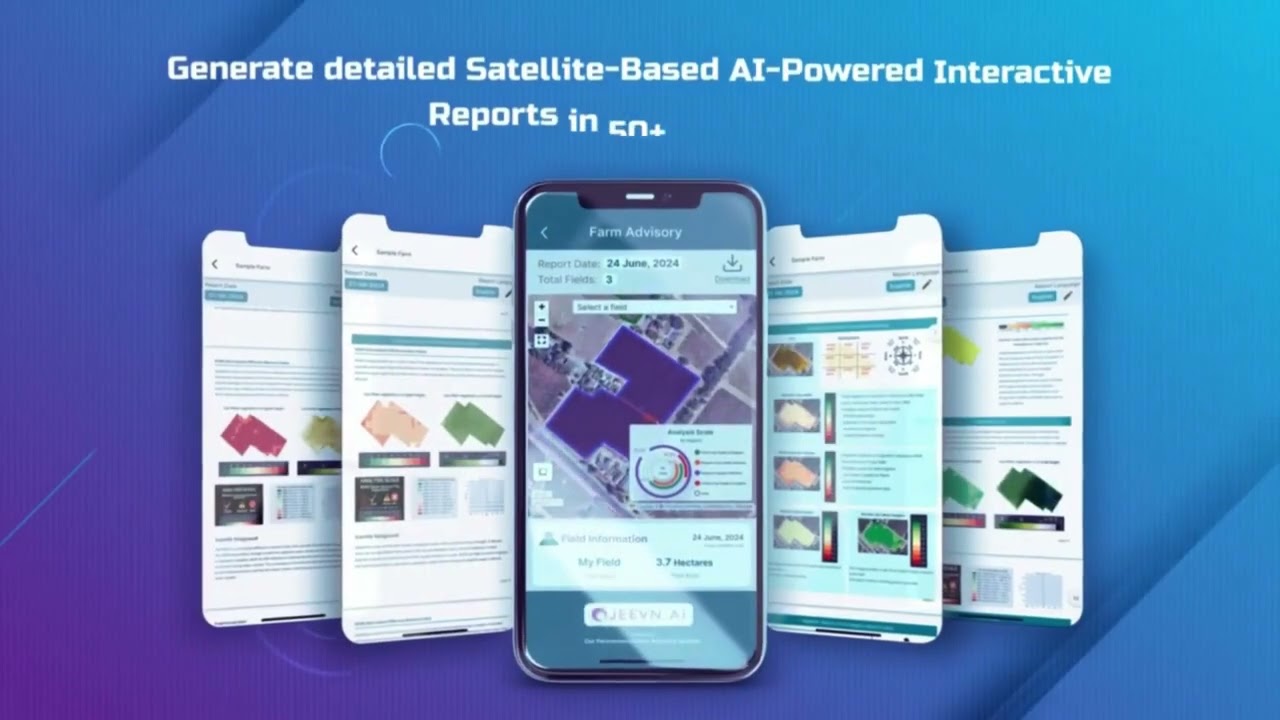
- 🤖 AI-Driven Jeevn Advisory: Our Jeevn AI system delivers tailored agronomy strategies, instant weather forecasts, and resource recommendations directly to farms.
- 🔗 Blockchain Traceability: Safeguarding the supply chain for agriculture from field to consumer.
- 🚜 Fleet & Resource Management: Our tools cut operational costs and ensure resource efficiency, supporting everything from fleet management to loan and insurance verification (crop loan and insurance solutions).
- 🌎 Environmental Impact: Live tracking of emissions and other environmental factors enables true sustainable practices (carbon footprint monitoring).
Our apps are available for Android, iOS, Web, and via API integration. Developers can use our API Documentation for customized agritech solutions.
For large farm management, advanced agro-administration solutions support extensive operations with precision.
All Farmonaut solutions are built to scale as your farm, business, or agricultural institution grows.
🧑💻 Developer Shortcut
Looking to build your own AI-driven crop or soil analytics platform? Try our Farmonaut API for fast, reliable integration of advanced agricultural data! For documentation, visit: API Docs
Agronomist Careers 2026: Preparing for the Future
The next wave of career opportunities will be defined by those who combine classical agronomy knowledge with proficiency in AI, remote sensing, satellite technologies, and sustainability. Whether you strive to become a modern AI agronomist, sustainability consultant, machine learning specialist, or a digital agriculture advisor, the key requirements now include:
- ✔ Cross-disciplinary training: Blend plant and soil science with computational skills
- ✔ Continual upskilling: Embrace online courses, certifications, and field workshops in AI and data analytics
- ✔ Hands-on with tools: Use apps and web dashboards for satellite and crop monitoring
- ✔ Networking with digital-first organizations: Connect with agencies and startups at the cutting edge
- ✔ Ethical and sustainability fluency: Stay updated on regulations, carbon standards, and farm to fork traceability solutions
🌟 Key Insight
The demand for “AI agronomist” roles is set to grow by more than 50% from 2025–2027. Building analytical and digital expertise now is the most effective way to capitalize on emerging, highly compensated positions.
Recommended Learning Tracks for Future Agronomists:
- 📚 Soil Sensing & Digital Field Monitoring
- 💻 Machine Learning & AI in Agriculture
- 🛰 Remote Sensing and Satellite Imagery
- 🌾 Crop Modelling & Decision Support Systems
- 🌍 Sustainability & Regenerative Agriculture
Frequently Asked Questions (FAQs)
An AI agronomist is a specialist who combines classical agronomy expertise (plant, soil, crop biology) with modern skills in artificial intelligence, data analytics, and technology platforms. They harness predictive analytics, remote sensing, and automated decision systems to optimize sustainability and productivity in farming.
Agronomist careers in 2026 are highly multidisciplinary — requiring knowledge in plant and soil sciences, AI modeling, climate data interpretation, and digital platform management. Traditional fieldwork is now smartly combined with real-time, data-driven crop and soil management using advanced AI technologies.
Key technologies include artificial intelligence, satellite-based remote sensing, multispectral imaging, IoT devices, machine learning algorithms, and blockchain-based traceability systems. Adoption of these technologies drives higher productivity and sustainability in agriculture.
AI boosts accuracy in crop yield forecasting, optimizes resource usage (fertilizers, water, labor), enables earlier detection of pests/diseases, tracks carbon footprint, and accelerates climate adaptation — making agriculture more resilient and environmentally friendly.
Farmonaut offers satellite-driven monitoring, AI-based advisory, and blockchain-supported traceability via web, mobile, and API. These solutions provide actionable insights for crop, soil, resource, and environmental management, enhancing both smallholder and enterprise operations.
🚨 Common Mistake
Mistaking AI-powered agronomy as a replacement for scientific judgement. The best results come when technological insights support, not replace, experienced human agronomists and field knowledge.
Conclusion: AI & Agronomist Careers – Shaping a Sustainable Food Future
Agronomist careers are more exciting and essential than ever. The combination of deep scientific knowledge, modern AI tools, and a commitment to sustainability ensures that future global agriculture will be smarter, more productive, and environmentally responsible.
Whether you are a farmer aiming to optimize your crop practices, a young professional seeking a rewarding, future-proof career, or an established agronomist looking to upskill, now is the time to embrace the AI-powered revolution in agronomy. Explore digital platforms, train in advanced analytics, and leverage technologies like those offered by Farmonaut to turn challenges into opportunities — and be at the forefront of the world’s most vital industry.
Start Your AI-Driven Agronomy Journey with Farmonaut

 Godrej Agrovet
 Hayleys Agriculture
 Linx Agritech
 Adinet
 Save Your Soils
 GalaxEye Space
 Grandstream Algérie
 XOS Realty
 Geospatial Lab Africa
 Agro La Gándara
 HIPSAC
 ZOL Zimbabwe
 Juligerm
 AdBio
AdBio MISE Maroc
 NWNS
NWNS Red August Group
 Farm Inc
 WeMe Global
 Agrotoken
 Blue BearX
 Insignito
 DnCubed
 Indosistim Teknologi
 Liquify Digital
 CU Foods
 BeyondTech Global
 Rouge VC
 AgroRisk
 Oath Inc
 Esri North East Africa
 MDCV UK
 Etech Consulting Madagascar
 Vestlandsforsking
 WB Dev
 Sama Premium
 Tres Valles
 Blickwinkel
 Agricultural Credit Policy Council
 eKGIS
eKGIS Mostas Tech
 Andex
Andex Deluxe Conseil
 WICO
WICO Chimera Innovation
 SkyHarvest
 Teledarbas
 Exurbia Geospatial
 FieldZero
