

Air Blower for Biofloc Fish Farming: 7 Innovations Transforming Aquaculture Sustainability in 2025
The Role of Air Blowers in Advancing Biofloc Fish Farming in 2025
Biofloc technology, or BFT, has rapidly emerged as a transformative and sustainable practice for aquaculture around the globe. By leveraging microbial communities to convert waste into nutritious protein, biofloc fish farming is revolutionizing fish farming—improving feed efficiency, fish health, and environmental sustainability.
The backbone of any efficient biofloc aquaculture system is the air blower. In 2025, the significance of air blower for biofloc fish farming is undeniable: these technologies supply and maintain oxygen, power the mixing and suspension of microbial flocs, and form the basis for advanced remote monitoring—all of which are critical for the success, productivity, and sustainability of the system.

What is Biofloc Fish Farming?
Biofloc fish farming is a revolutionary practice in modern aquaculture, focused on cultivating beneficial microbial aggregates (bioflocs) within ponds and tanks. These bioflocs—tiny clusters of microorganisms, organic waste, and nutrients—perform a dual function:
- Breaking down excess nutrients and waste, including uneaten feed and fish excreta
- Converting organic matter to microbial protein that is directly accessible and consumable by fish
This natural recycling process reduces water exchange requirements, minimizes environmental impact, and lowers operational costs. However, maintaining a stable biofloc system demands advanced technology: Proper aeration and mixing—delivered by efficient air blowers—are indispensable for system success.

Biofloc Technology: Core Components
- ✔ Bacterial and algal flocs for microbial recycling
- ✔ Minimal water exchange and environmental waste
- ✔ Continuous aeration through advanced air blowers
- ✔ High stocking density and feed conversion efficiency
- ✔ Sustainable aquaculture production
Why Biofloc? Advantages Over Traditional Aquaculture
- 📊 Reduces operational costs by minimizing reliance on external feed and reducing water usage
- ♻ Improves sustainability by recycling nutrients within the system
- 💧 Enhances water quality and health conditions for fish
- ⚠ Limits disease risk and environmental contamination
- 🌱 Boosts natural protein production for a more ethical and responsible farm output
Function and Importance of Air Blowers in Biofloc Fish Farming
Within biofloc systems, the importance of air blower for biofloc fish farming lies in their ability to provide a steady, continuous supply of oxygen and maintain consistent mixing. Unlike traditional surface aerators that simply agitate surface water, advanced air blowers actively oxygenate water throughout ponds or tanks and ensure suspension of microbial flocs.
Key Functions of Air Blowers in Biofloc Systems
- Oxygen Supply: Maintaining dissolved oxygen (DO) at optimal levels is critical. Fish and aerobic bacteria require oxygen to thrive; with high microbial loads in biofloc, oxygen demand intensifies—only efficient blowers can meet this need and prevent hypoxic (low oxygen) conditions.
- Microbial Floc Suspension: Proper airflow ensures flocs remain suspended—if they settle, microbial action and protein accessibility are compromised. Air blowers enable even distribution of nutrients and support comprehensive floc suspension.
- Waste Management: Advanced blowers ensure aerobic conditions, allowing beneficial bacteria to process ammonia and nitrites into less harmful nitrates, thereby enhancing water quality and fish health.
- Continuous Mixing: Proper mixing supplied by air blowers ensures all biological and chemical processes happen at their peak, leading to maximized productivity and superior operational success.
Did You Know?
- ✔ Fish stress and mortality often result from fluctuating oxygen levels. Reliable air blower systems deliver a continuous oxygen supply, greatly reducing risks in biofloc culture.
- ⚠ Over-aeration is wasteful—modern blowers now offer smart, responsive controls for tailored oxygen delivery, preventing unnecessary energy consumption.

7 Innovations in Air Blower for Biofloc Fish Farming: Leading Technology Trends for 2025
As we advance into 2026 and beyond, the air blower for biofloc fish farming has undergone cutting-edge technological transformations. These innovations not only further optimize oxygenation, water quality, and microbial activity, but significantly lower energy costs and enhance sustainability across global aquaculture systems.

- 🚀 Variable Frequency Drive (VFD) Controlled Blowers
Adaptive energy-saving and precision oxygen delivery - 📡 Smart Remote Monitoring and IoT Integration
Real-time oxygen, performance, and maintenance tracking - 🔇 Ultra-Low Noise and Vibration Reduction Designs
Quiet operation, reduced stress for fish and workers - 🌀 High-Efficiency Diffuser Systems
Smaller bubbles, better oxygen transfer, less clogging - 🔋 Renewable-Powered Blowers (Solar/Wind)
100% green aeration, reducing operational costs - 🛠 Automated Predictive Maintenance & Diagnostics
AI-driven alerts for proactive servicing - 🌱 Sustainable Materials & Circular Manufacturing
Low-impact, recyclable construction for eco-friendly aquaculture
Detailed Exploration of the 7 Innovations
- Variable Frequency Drive (VFD) Blowers: VFDs dynamically adjust blower speed according to real-time dissolved oxygen demand. This reduces energy consumption 35%–55%, delivers precise oxygenation, and adapts instantly as fish biomass or microbial activity changes.
- Smart IoT Remote Monitoring: Connects blowers with sensors and real-time analytics platforms. Enables farms to monitor oxygen, blower efficiency, and water quality remotely, reducing operational risk and enabling quick response to emergencies—even via smartphone.
- Ultra-Low Noise/Vibration Models: Use advanced insulation, suspension, and acoustic materials, minimizing disturbance for fish and staff. This technology is crucial for urban or sensitive environments and compliance with stricter regulations (often <48 dB in 2025 units).
- High-Efficiency Diffuser Systems: New micro-bubble diffusers increase surface-area-to-volume ratio for superior oxygen transfer rates (up to +40% OTR), decrease clogging with self-cleaning materials, and support even oxygen distribution throughout all pond or tank depths.
- Renewable-Powered Blowers: Solar, wind, or hybrid-powered units enable off-grid operation, reduce carbon emissions, and lower total energy costs—meeting global sustainability goals and making biofloc farming more affordable and eco-conscious.
- Automated Maintenance & Diagnostics: Integrated AI or machine learning-based diagnostics track operational wear-and-tear, alerting managers to predicted breakdowns before they happen. This minimizes downtime and extends equipment lifespan.
- Eco-Friendly Materials & Circular Manufacturing: Blowers now often use recycled or recyclable casings, sustainable supply chains, and non-toxic components—helping aquaculture system stay compliant with future regulations and minimize their ecological footprint.
Comparison Table of 7 Air Blower Innovations in Biofloc Aquaculture (2025)
| Innovation Name | Description | Oxygenation Efficiency (%) | Energy Consumption (kWh) | Noise Level (dB) | Impact on Water Quality | Estimated Cost ($) | Year of Adoption |
|---|---|---|---|---|---|---|---|
| VFD-Controlled Blowers | Auto-tuned to oxygen demand using VFDs for precise air delivery. | 90–94% | 0.90 / hr | 52 | Excellent DO stability; reduces fluctuations | $4200 | 2025 |
| Smart IoT Monitoring | Remote, sensor-integrated blowers for continuous performance tracking. | 88–92% | 1.05 / hr | 53 | Real-time alerts; minimizes O2 deficits | $3900 | 2025 |
| Ultra-Low Noise/Vibration | Innovative insulation for reduced vibration/noise pollution. | 85–90% | 0.95 / hr | 44 | Low stress for fish, better microbial health | $4700 | 2026 |
| High-Efficiency Diffusers | Micro-bubble, anti-clog, self-cleaning diffuser tech for optimal aeration. | 93–97% | 0.88 / hr | 47 | Superior oxygenation at all depths | $3999 | 2025 |
| Renewable-Powered Blowers | Solar/wind-powered; off-grid, eco-friendly operation. | 87–92% | 0.10 / hr (net) | 48 | Zero emission; supports green certification | $5800 | 2025 |
| Automated Maintenance | AI-driven predictive diagnostics for reduced downtime. | 88–91% | 0.96 / hr | 54 | Ensures operational longevity | $4100 | 2026 |
| Eco-Friendly Materials | Constructed with recyclable, non-toxic parts and packaging. | 83–88% | 0.93 / hr | 49 | Sustainable; minimizes microplastics | $4300 | 2026 |

Choosing & Maintaining the Right Air Blower for Biofloc Systems
Selecting an air blower for biofloc fish farming requires a balance of technical requirements, efficiency, and sustainability goals. Factors such as pond/tank size, fish species, stocking density, and expected microbial load play a vital role. Avoid underpowered blowers (risking hypoxia) or oversized units (wasting energy).
- 🔍 Airflow Rate & Pressure: Ensure chosen blower meets calculated biofloc system oxygen demand (typically measured in m3/hr and bar).
- 🔧 Easy Maintenance: Prefer models with accessible filters, modular designs, and automated diagnostics (predictive maintenance featured in top-tier units).
- 🌊 Diffuser Placement: Position at pond/tank bottom to enable uniform aeration and microbial floc suspension.
- 🌱 Energy Efficiency & Renewables: Consider solar or hybrid-powered blowers to reduce ongoing costs and environmental impact.
- 📲 Smart Monitoring Compatibility: Support IoT/AI integration for automated management of oxygen/water conditions.
Air Blower Maintenance Checklist
- 🛠️ Inspect and clean intake filters monthly
- 💡 Monitor blower temperature and vibration signals
- 🌀 Remove debris or fouling on diffuser heads quarterly
- 🔋 Check power systems, especially for solar blowers
- 📉 Review historical data for any performance anomalies

- ⚠ Risk: Unexpected power outages can lead to dangerous declines in DO. Always have backup power or alternative blowers for redundancy.
- 💸 Cost: High upfront costs for advanced blowers. Factor life-cycle savings and incentives for energy-efficient models.
- 🔍 Complexity: Integration of IoT/AI features may require initial technical setup. Choose systems with robust customer support.
How Farmonaut Empowers Sustainable Aquaculture Management
At Farmonaut, we specialize in satellite-based monitoring, AI-powered analytics, and data-driven decision tools designed for the requirements of industries like agriculture and aquaculture. Our solutions complement advanced biofloc systems by providing:
- 📡 Remote environmental monitoring to track water quality and health parameters in aquaculture and ponds
- 🔍 AI-based advisory systems for optimizing resource allocation, operational efficiency, and sustainability
- 🌐 Blockchain-based traceability for authenticating aquaculture products—boosting transparency/trust from farm to market
- 📉 Environmental impact monitoring including carbon footprinting—helping farms align with the latest eco-regulatory standards
- 🛠 Automated fleet and resource management—optimizing aquaculture logistics, material movements, and operational costs
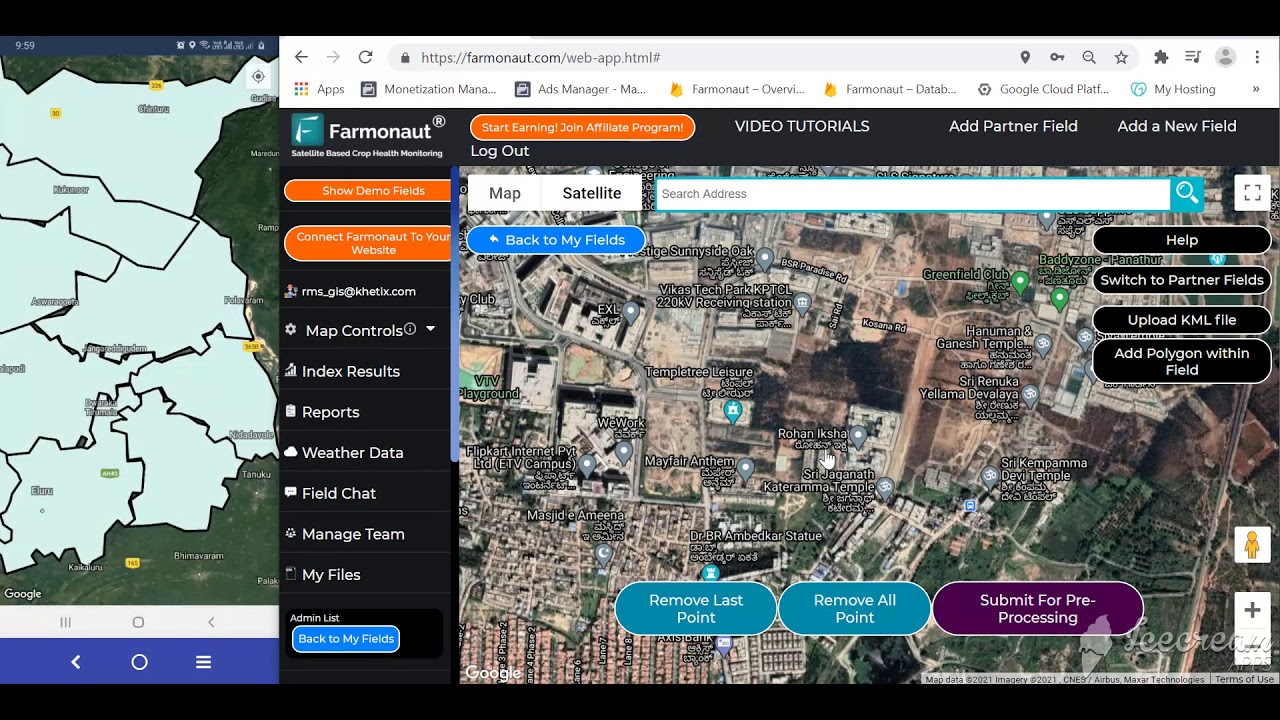
Our Farmonaut platform is available via Android, iOS, and Web Apps, delivering scalable subscription or API solutions tailored for individual farmers, businesses, or government users. 


- 🌎 APIs: For developers and automation needs, Farmonaut’s satellite weather API and developer documentation enable seamless data integration for aquaculture or crop models.
- 🌳 Forest and plantation: Large scale field and farm management for commercial organizations and governmental departments.
We are committed to making actionable, satellite-driven insights affordable and accessible—empowering our users in maintaining optimal environmental conditions, reducing operational costs, and enhancing the sustainability of all aquaculture and agricultural operations.
Frequently Asked Questions (FAQ) on Air Blower for Biofloc Fish Farming
What is the main role of an air blower in biofloc fish farming?
An air blower provides a continuous supply of oxygen necessary for fish respiration and aerobic microbial activity. It also ensures consistent mixing so that bioflocs stay suspended and accessible as feed, supporting optimal water quality and fish health.
Which types of air blowers are best for modern biofloc systems in 2025?
The best blowers use VFD control, smart IoT monitoring, low-noise technology, and high-efficiency diffusers. Solar-powered and eco-friendly material options are also highly recommended for sustainable, cost-effective operation.
How often should air blowers be checked and maintained?
Conduct monthly inspections for filters and quarterly for diffusers. Use smart maintenance alerts in newer models to reduce manual checking and minimize downtime.
What are the key risks if blowers are undersized or neglected?
Undersized or faulty air blowers can lead to oxygen shortages, causing fish stress, increased mortality, and poor microbial processing of waste. Proper sizing, ongoing monitoring, and modern diagnostics are essential for system stability and productivity.
How is digital and remote monitoring transforming aquaculture management?
Digital monitoring using IoT, AI, and satellite-driven analytics (like Farmonaut’s platform) empowers real-time water quality management, predictive maintenance, and agile response to risks. These advances are making aquaculture more efficient, transparent, and adaptable for the future.
Conclusion: Air Blower for Biofloc Fish Farming—Future-Proofing Aquaculture in 2026 and Beyond
The role of the air blower for biofloc fish farming is central to the ongoing revolution of aquaculture—boosting yields, efficiency, and environmental stewardship in every pond and tank worldwide. The technological advances explored here—including VFD controls, IoT monitoring, renewable energy conversion, and sustainable design—are driving the success of biofloc systems for 2025, 2026, and beyond.
Selecting and maintaining the right air blower allows farmers and aquaculture managers to ensure optimal oxygenation, proper mixing, and superior water quality while keeping operational costs low. Integrating such systems with real-time satellite and AI-powered advisory platforms—like those offered by Farmonaut—brings a new level of precision, scalability, and sustainability to the global challenge of feeding a growing population.
Ready to advance your aquaculture operations? Explore our apps, APIs, and large-scale farm management tools for the future of fish farming and biofloc technology!
Discussion
Questions, corrections or field experience? Share them below. First-time comments are reviewed before they appear, and your email is never published.
No comments yet. Be the first to add a question or your experience.

 M11 Agri
 Sapoznick Farms
 Agrotoken
 Blue BearX
 Insignito
 Croptimum
 DnCubed
 Field Capacity
 Indosistim Teknologi
 Liquify Digital
 CU Foods
 BeyondTech Global
 Rouge VC
 AgroGreen Dynamics
 AgroRisk
 Oath Inc
 Reddane Farming
 Esri North East Africa
 Licence holder · Niger · Gold










