

Biofloc Fish Farming: AI Use in Agri & Biofloc Farms – 2025’s Transformative Innovations
Table of Contents
- Introduction: Sustainable Aquaculture’s New Era
- Biofloc Fish Farming: Understanding the Technology
- Advantages of Biofloc Fish Farming in 2025
- AI Use in Biofloc Fish Farms: The Next Frontier
- Biofloc Technology and AI in Broader Agri Farming & Food Security
- Farmonaut: Accelerating AI-Driven Agriculture & Biofloc Systems
- Comparative Table: Traditional vs. Biofloc + AI Fish Farming
- Future Trends & Challenges in Biofloc, AI, and Aquaculture Management
- Frequently Asked Questions
- Conclusion: Making Sustainable Aquaculture a Cornerstone for 2025
Introduction: Sustainable Aquaculture’s New Era
In recent years, the integration of advanced technologies with sustainable farming practices has revolutionized both the aquaculture and agriculture sectors. Among these innovations, biofloc fish farming stands out as a transformative method that combines biological principles with modern technology.
By leveraging AI (artificial intelligence), machine learning algorithms, and real-time sensors for data-driven management, biofloc farming is enhancing sustainability, resource efficiency, and fish growth rates, all while reducing environmental impact.
As we move into 2025 and beyond, the integration of AI and biofloc systems is poised to redefine aquaculture and agri farming practices, making them core components in the drive towards food security and resource efficiency for an ever-expanding global population.
Biofloc fish farming is not only disrupting traditional fish farming methods but is also setting a new standard for sustainability and innovation—enabled in part by platforms like Farmonaut, which brings carbon footprint monitoring, fleet and resource management, and advanced API-based integration and developer tools to the fingertips of fish farmers and farm managers.



This detailed guide explores biofloc fish farming, AI use in farming, the synergies of biology, technology, and innovation, practical examples of applications, crucial advantages for 2025 and beyond, and the role of advanced technologies like those offered by Farmonaut in driving a sustainable aquaculture revolution.
Biofloc Fish Farming: Understanding the Technology
Biofloc fish farming is based on the principle of recycling nutrients within a closed fish farming system by utilizing a microbial community—mainly bacteria, algae, and protozoa. In these systems, bioflocs (dense, suspended clusters of beneficial microorganisms) actively convert nitrogenous wastes like ammonia from uneaten feed and fish excreta into valuable microbial biomass. This biofloc biomass ultimately serves as a supplementary protein-rich feed for the cultured fish.
How Does a Biofloc System Work?
- Water in the biofloc fish farm is aerated constantly, keeping the microbial populations suspended in the system.
- Bacterial communities convert ammonia into microbial biomass that fish can ingest (recycling nutrients and improving resource utilization).
- Unlike traditional aquaculture systems, biofloc farms do not depend heavily on water exchange. Instead, they maintain water quality via controlling the population of beneficial microorganisms.
- High stocking densities are possible in smaller volumes of water—making the method particularly suited to urban and peri-urban areas where water resources may be limited.
By harnessing this natural recycling mechanism, biofloc farms provide a sustainable aquaculture practice—reducing environmental impact while boosting productivity and fish growth.

Key Components of Biofloc Systems
- Bacteria: Bacillus subtilis and other strains dominate the conversion of ammonia to microbial protein.
- Algae & Protozoa: Supplement biological nutrient recycling.
- Continuous Aeration: Ensures bioflocs remain suspended for efficient nutrient cycling and fish access to microbial biomass.
- Managing C:N Ratio: Precise control of Carbon-to-Nitrogen ratio helps shape microbial composition and fermentation processes in the water.
The result is a **robust, self-sustaining environmental system** where biofloc acts as an organic platform for feed conversion, water quality management, and enhanced immunity within the farmed species.
Advantages of Biofloc Fish Farming in 2025
The rapid spread of biofloc farming across Asia, Europe, America, and urbanizing regions is no accident. Its advantages are most evident when compared to traditional fish farming.
1. Enhanced Sustainability and Environmental Impact
- By recycling nutrients, biofloc farming minimizes nutrient discharge into rivers and lakes, significantly reducing eutrophication risks to surrounding aquatic ecosystems.
- Biofloc systems require **up to 90% less water** than **traditional aquaculture** due to minimal water exchange requirements.
2. Cost Efficiency and Resource Utilization
- Feed costs—which typically constitute the major expense in fish farming—are lowered as fish gain additional protein from microbial biomass produced within the system.
- This is ideal for both smallholder farmers and large commercial operations seeking to reduce external inputs and operational costs.
3. Improved Fish Health & Growth Rates
- The biofloc environment reduces the presence of pathogenic bacteria and provides immunostimulants—resulting in healthier, more robust fish with stronger immunity.
- Fish growth rates can be up to **30% higher** due to improved protein-rich diets and stable water quality.
4. Greater Stocking Density and Flexibility
- Biofloc systems allowing higher stocking densities (kg fish per liter of water), optimizing land and water use—especially valuable in urban or peri-urban areas where resources are limited.
Additional Benefits in 2025
- Portability: Modular tanks enable urban rooftop biofloc fish farms or peri-urban operations.
- Climate Resilience: Enclosed biofloc systems insulate stock against floods, droughts, or polluting inflows.

With global water scarcity and the need to optimize every drop and every kilogram of feed, biofloc farming is rapidly becoming the preferred solution for sustainable aquaculture, more so with the addition of AI-driven technologies introduced in the next section.
AI Use in Biofloc Fish Farms: The Next Frontier
The introduction of artificial intelligence (AI) augments biofloc fish farming, unlocking unprecedented levels of efficiency, monitoring, and automation. AI use in biofloc combines real-time sensors, data analytics, computer vision, and smart algorithms for the optimized management of farming operations.
Real-Time Water Quality Monitoring
- AI-powered sensors and IoT devices continuously measure pH, dissolved oxygen, ammonia, nitrites, and temperature.
- Algorithms instantly analyze incoming data to detect early signs of water quality imbalance or potential toxic buildups, triggering proactive management (e.g., activating extra aerators, or adjusting feed schedules).
- Fish mortality and disease outbreak risks are dramatically reduced through early intervention.
AI-Powered Feed Optimization
- Intelligent feed management systems use AI to assess fish appetite, biomass size, and activity
- Feeds are automatically adjusted to reduce wastage and fine-tune protein conversion efficiency (lower cost, higher yields).
Disease Prediction and Rapid Response
- Computer vision cameras, image recognition, and data-driven models identify early symptoms of fish diseases.
- Prompt notifications allow for swift interventions (isolation, medicating, water parameter changes) before outbreaks occur.
System Automation & Energy Efficiency
- AI controls pumps, aerators, and feeding robots for smooth, hands-off operation, drastically reducing manual labor requirements.
- Energy is saved by optimizing aeration schedules and system cycles, nurturing both economic and environmental sustainability.
For fish farmers seeking rapid, data-driven decisions, these AI tools translate to increased productivity, system stability, and more predictable fish growth cycles.
AI Use in Agri Farming: Closing the Loop with Biofloc
The art of connecting biofloc fish farming with broader agri farming—such as aquaponics—is elevated by AI. Fish waste becomes plant fertilizer; AI-based irrigation regulates nutrient delivery; satellite data (as provided by platforms like Farmonaut) ensures optimal plant health downstream.
With AI, every element in the biofloc and agri loop is monitored, measured, and managed for peak performance.
Farmonaut: Accelerating AI-Driven Agriculture & Biofloc Systems
At Farmonaut, we are committed to democratizing access to satellite technology, AI, and advanced monitoring solutions for biofloc fish farms and agri farming operations across the globe. Our mission is to empower farmers, businesses, and government stakeholders with the power of real-time data, enabling them to optimize efficiency, cut costs, and operate sustainably—all via web platforms, mobile apps, and API integration.
Farmonaut’s Core Technologies for Biofloc & Agri Farming
- Satellite-Based Monitoring: High-resolution multispectral imagery for early warning on environmental parameters, water quality, and system management in aquaculture and farming.
- AI-Driven Jeevn Advisory: Our proprietary Jeevn AI advisory system delivers real-time insights, weather forecasts, and tailored farming strategies—critical for high-tech biofloc management.
- Blockchain Traceability: Product traceability systems for aquaculture supply chains, ensuring transparency, quality, and food security from farm to market.
- Environmental Impact Monitoring: Integrated carbon footprinting tools monitor emissions and compliance for sustainable certification—and better market access.
- Fleet & Resource Management: Fleet management modules optimize farm vehicle and aquaculture equipment usage, leading to reduced operational costs and enhanced response time for system maintenance.

We offer modular subscription plans for individual users, commercial operations, and governments, available both as mobile/web platforms and as APIs for developers and businesses. These solutions scale flexibly alongside your biofloc or agri farming systems, ensuring sustainable productivity growth.
By leveraging Farmonaut’s platform, farmers in regions affected by water scarcity, rising costs, or environmental risks can harness easy, affordable data-driven solutions for biofloc fish farm monitoring, environmental compliance, fleet management, and more.
Comparative Table: Traditional Fish Farming vs. Biofloc Fish Farming with AI Integration
| Parameter | Traditional Fish Farming (Estimated Values) |
Biofloc + AI Fish Farming (Estimated Values, 2025) |
|---|---|---|
| Water Usage (Liters per kg fish) |
4000 – 5000 | 350 – 600 Up to 90% reduction |
| Feed Efficiency Ratio (Feed:Fish Weight Gain) |
1.8 – 2.4 | 1.2 – 1.4 Up to 40% more efficient |
| Fish Growth Rate (% Increase) |
Baseline | +25% to +30% Faster growth with AI |
| Disease Outbreak Frequency (Incidents/year) |
1 – 3 | 0.3 – 0.7 Over 60% fewer outbreaks due to AI |
| Operational Cost Reduction | Baseline | 30% to 40% lower costs Due to feed savings, automation |
| Water Quality Improvement | Conventional Treatment | +55% to +70% better Automated AI-based control |
Biofloc Technology and AI in Modern Agriculture & Food Security
The broader integration of biofloc technology with AI use in farming holds transformative promise for solving some of agriculture’s greatest challenges in 2025:
- Closing Nutrient Loops: Integrating biofloc aquaculture with plants (aquaponics) creates a circular system—fish waste fertilizes crops, and crops help purify water for re-use.
- Boosting Resilience: AI-enhanced monitoring and predictive analytics mean farmers can adapt to climate shocks, optimize input timing, and safeguard yields.
- Scaling Localized Protein Production: Urban and peri-urban biofloc systems bring protein-rich food production closer to growing populations, bypassing land and water scarcity issues.
- Food Traceability & Security: With blockchain-based traceability (see Farmonaut Product Traceability), every step from farm to fork is logged—ensuring consumer confidence, regulatory compliance, and reduced fraud in the aquaculture supply chain.
- Environmental Monitoring: Satellite-driven carbon footprinting—like that from Farmonaut—empowers farms to
- measure and reduce emissions,
- comply with global standards,
- bolster access to sustainable finance and eco-conscious markets.
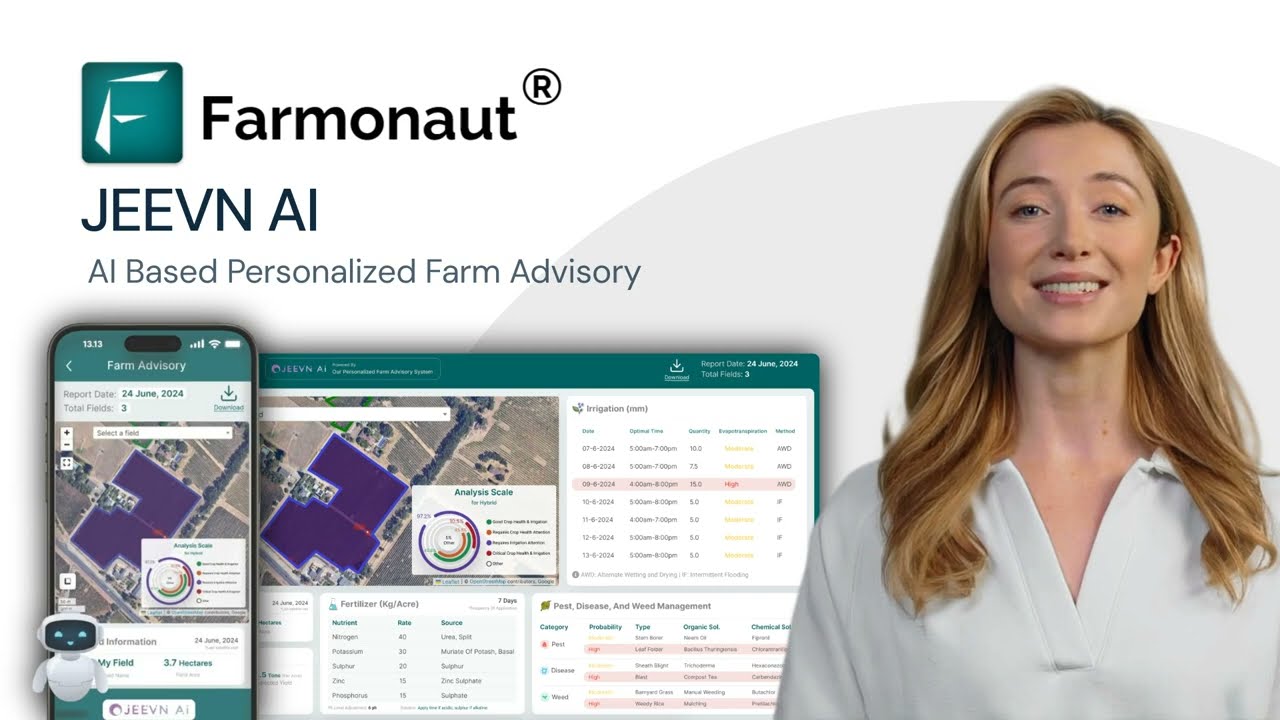
The integration of AI, IoT, and satellite technology with biofloc systems doesn’t just improve fish farming—it extends to crop monitoring, environmental impact tracking, and supply chain integrity, reshaping agriculture as a whole.
Future Trends & Challenges in Biofloc, AI, and Aquaculture Management
While biofloc fish farming and AI-enabled agri farming are proving effective, several considerations will shape future adoption:
- Data Literacy: Farmers and farm managers must interpret complex data from AI and sensors—training and user-friendly dashboards (as pursued by Farmonaut) are essential.
- Initial Investment: Advanced biofloc + AI systems require up-front capital for sensors, automation, and cloud platforms, but savings and productivity gains ensure long-term returns.
- AI Algorithms: Machine learning models must be continually updated to reflect changes in microbial ecology, climate, and local water quality standards.
- Environmental Safeguards: Even AI-driven systems require human vigilance to prevent unforeseen impacts on local ecosystems.
- Standardization: Certification schemes and sustainability auditing (like those tracked via Farmonaut) will become essential for market access and consumer trust as biofloc and AI-driven fish farms proliferate.

Frequently Asked Questions: Biofloc Fish Farming & AI Use
What is biofloc fish farming and how does it differ from traditional fish farming?
Biofloc fish farming is a modern aquaculture practice that uses dense microbial flocs (bacteria, algae, protozoa) to recycle nutrients and maintain water quality. Unlike traditional methods that rely on frequent water exchange and high external feed input, biofloc systems convert waste into edible microbial biomass, reducing feed costs and pollution.
How does artificial intelligence (AI) optimize biofloc fish farm operations?
AI analyzes sensor data (water pH, oxygen, ammonia, fish activity) in real time, predicts disease outbreaks, automates feeding, and controls system conditions. This maximizes fish growth, reduces operational costs, and improves environmental sustainability.
What types of fish are suitable for biofloc fish farming?
Common species include Tilapia, Catfish, Shrimp, and Carp. The dense, aerated conditions are ideal for hardy, fast-growing species that can utilize microbial protein as supplementary feed.
Does biofloc farming work in water-scarce, urban, or peri-urban areas?
Yes, biofloc systems are designed for minimal water use and can function in compact spaces, making them ideal for regions where land and water are limited.
What are the main cost savings in biofloc fish farms with AI?
Feeding costs drop by up to 30–40% (due to microbial feed and optimized AI schedules), water saving reaches 90%, and automation reduces labor and disease-related expenses.
Can biofloc and AI systems be integrated with other agricultural practices?
Absolutely. Biofloc outputs (wastewater/nutrients) are combined with aquaponics. AI can also monitor plant health, crop scheduling, and fertilizer use for integrated, circular agri-farming systems.
Conclusion: Making Sustainable Aquaculture a Cornerstone for 2025
The synergy between biofloc fish farming, AI use in farming, and cutting-edge agri technologies promises to redefine aquaculture by 2025. By recycling nutrients, minimizing water usage, and enabling high-density, high-growth operations, biofloc systems set new standards for sustainability, efficiency, and food security.
With the integration of artificial intelligence (AI), we see a future where resource management is automated, disease risks are minimized through data-driven early warning, and operational costs are dramatically reduced. This positions biofloc fish farms—augmented by AI and monitored via satellite and data platforms like ours at Farmonaut—as the cornerstone of resilient food systems and an inspiration for modern agriculture worldwide.
For those looking to supercharge their aquaculture and farming outcomes, Farmonaut’s application suite delivers the tools, data, and support necessary to succeed in the new era of biofloc, AI, and sustainable farming.
Together, we can build a future where technology, biology, and sustainability combine to feed our world—efficiently, responsibly, and resiliently.
Discussion
Questions, corrections or field experience? Share them below. First-time comments are reviewed before they appear, and your email is never published.
No comments yet. Be the first to add a question or your experience.

 Kubota
 Grow Indigo
 FFBS
FFBS Jontra
 Kalustyan
 Tucor
Tucor Geno
Geno Hayleys Agriculture
 Linx Agritech
 Adinet
 Save Your Soils
 Grandstream Algérie
 XOS Realty
 Geospatial Lab Africa
 Agro La Gándara
 HIPSAC
 ZOL Zimbabwe
 Juligerm
 Licence holder · Niger · Gold










