

Antarctica Agriculture: Practical Farming & Arctic Advances (2025 & Beyond)
“Antarctica’s first hydroponic farm produced 8 kilograms of fresh vegetables weekly in 2018, despite subzero temperatures.”
Farming in Antarctica: The Future of Agriculture in Extreme Environments
Antarctica—the coldest, driest, and most remote continent—has traditionally been seen as inhospitable to agriculture and farming. However, as global climate change, population growth, and evolving sustainability needs reshape agricultural priorities, the vast icy expanse of Antarctica has captured substantial scientific and commercial interest. Today, the concept of antarctica agriculture is leading the charge in experimental and technological advances, setting the standard for food production in extreme environments.
In this detailed blog, we’ll explore the practical realities of antarctica farming, the core challenges, the remarkable innovations happening within research stations, and what it means for the future of global food security, sustainability, and even space colonization. Along the way, we’ll unpack critical applications and the role that satellite solutions—like those offered by us at Farmonaut—play in driving agricultural innovation on Earth’s most formidable continent.
Challenges of Farming in Antarctica: Environment, Conditions & Human Obstacles
Antarctica’s agricultural ambitions confront a unique series of challenges:
-
Extreme Temperatures:
Winter temperatures can plunge below -80°C. Summer remains icy and unpredictable. Such cold is lethal to conventional crops and devastates traditional farming practices. -
Limited Sunlight & Polar Nights:
With polar nights, sunlight is extremely limited for months. Crop growth ceases without artificial light. -
Barren, Permafrost Soil:
The soil is mostly frozen permafrost, lacking the fertile profile needed for root expansion and nutrient absorption. -
Water Scarcity:
Though surrounded by ice, liquid water sources accessible for agriculture are sparse, imposing strict constraints on farming and production. -
Harsh Winds:
As the world’s windiest continent, Antarctica endures constant gales that hinder both outdoor and greenhouse cultivation. -
Environmental Restrictions:
The Antarctic Treaty System is designed to preserve pristine nature. This places tight restrictions on human activity, especially large-scale agriculture and farming. -
Logistical Barriers:
Importing food, materials, or fertilizers is costly and logistically complex, often delayed by weather and sea ice.
However, these obstacles have not deterred scientific communities from experimenting with controlled-environment agriculture (CEA) and innovative techniques. Rather, they fuel an urgent need: to support research stations, reduce reliance on imported food, and pioneer resilient, practical agriculture strategies for extreme environments worldwide.

Controlled-Environment Agriculture (CEA) in Antarctica: Techniques & Principles
To overcome Antarctica’s formidable environmental and soil conditions, antarctica agriculture has shifted towards high-tech indoor farming. These include:
- Hydroponics – Cultivating plants in nutrient-rich water solutions without soil.
- Aeroponics – Suspending roots in air and nourishing them via a mist of nutrients, maximizing water and nutrient usage.
- Vertical Farming – Growing crops upward in stacked layers to optimize space and support intensive, year-round production.
- Greenhouse Modules – Custom, insulated facilities with sophisticated climate and environmental control systems to simulate ideal growth conditions despite the cold, dry, and windy outside.
Inside these greenhouses, LED lighting compensates for the continent’s limited sunlight by providing the optimal photosynthetic spectrum, making it possible to cultivate a variety of crops such as leafy greens, herbs, and microgreens.
CEA systems allow antarctica farming to maintain temperature, humidity, CO₂, nutrient flow, and light at precise levels, ensuring productive growth cycles—no matter the external conditions.

Innovation in Antarctica Agriculture: Technology, Sustainability & Practical Solutions
“Controlled-environment agriculture in Antarctica uses 90% less water than traditional farming methods, revolutionizing food production in extreme climates.”
The Role of Automation & Digitization in Practical Agriculture
Antarctica’s farming facilities rely on integrated and automated environmental control systems. Advances in:
- Automated nutrient dosing (fertigation)
- Remote temperature, humidity, & CO₂ management
- Robotic crop handling and pruning
- Real-time crop health sensors and cameras
These technologies ensure consistent, high-quality crop production in environments largely inhospitable to human labor.
Lighting & Energy Efficiency
LED lighting delivers tailored photosynthetic spectra, compensating for the lack of natural light.
Modern deployments utilize energy-efficient power systems, often integrating renewable energy sources where possible to reduce carbon footprint—critical for sustainability in remote locations.
Water Conservation & Nutrient Recycling
Maximizing water efficiency is imperative, as every drop in Antarctica must be melted, purified, or recycled.
Hydroponic and aeroponic systems reduce water usage by up to 90% compared to traditional soil-based agriculture, vital in water-scarce, arctic environments.
Climate-Adapted Genetics and Crop Selection
Research stations focus on fast-growing, resilient plants suited to low-light and variable temperature conditions: lettuces, spinach, kale, chard, herbs and microgreens. Ongoing genetic work gradually introduces new varieties with enhanced nutrition and cold-resistance, supporting a diverse, stable food supply.
Data-Driven Monitoring & Satellite Solutions
At Farmonaut, we recognize that continuous monitoring of environmental parameters, plant health, resource use, and energy consumption are essential for sustainable antarctica agriculture:
- Carbon Footprinting Tools can accurately track and reduce the environmental impact of experimental farm modules, helping to comply with Antarctic Treaty sustainability guidelines.
- Blockchain-Based Traceability ensures secure record-keeping and transparent supply chain management, critical when controlling food quality and import/export logistics in sensitive environments.
- Real-time satellite data and API Integration allow facilities to streamline resource management and enable remote diagnostics for controlled-environment agriculture in Antarctic research stations.
For advanced developers, technical documentation is accessible at our API Developer Docs.

Example Technologies:
- Automated hydroponic dosing panels
- Wireless sensor networks
- Climate-optimized greenhouse glazing & insulation
- Remote satellite and AI-powered advisory systems
-
Mobile device-based apps for operational management:




Comparison of Controlled-Environment Agriculture Techniques in Antarctica
| Technique | Estimated Yield (kg/m²/year) | Water Usage (liters/kg) | Energy Requirement (kWh/kg) | Setup Cost (USD/100m²) | Key Advantages |
|---|---|---|---|---|---|
| Hydroponics | 45 | 15–20 | 22 | $15,000–$25,000 | Efficient water use, moderate setup, good for leafy greens |
| Aeroponics | 48 | 7–10 | 27 | $18,000–$30,000 | Ultra-low water, high oxygenation, rapid growth |
| Vertical Farming | 110 | 18–25 | 36 | $40,000–$70,000 | High space efficiency, scalable, year-round output |
| Aquaponics | 42 | 25–30 | 18 | $28,000–$45,000 | Integrates fish/reuse nutrients, closed-loop system |
Estimated values. Local logistics, insulation, and power costs markedly affect setup.

Global Implications: How Antarctica Farming Shapes Food Security & Sustainability
The practical innovations and techniques emerging from antarctica agriculture are redefining food production for all extreme environments. Several implications for global food security and sustainable agriculture include:
-
Urban Agriculture Transformation:
Techniques honed in Antarctica’s research stations now inspire hydroponic, aeroponic, and vertical farming installations in cities worldwide, supporting year-round, space-efficient urban food production. -
Reduced Resource Usage:
Hydroponics and aeroponics, as perfected in Arctic environments, enable farming with drastically less water and fewer synthetic inputs, supporting a regenerative model suitable for areas facing water scarcity due to climate change. -
Climate-Resilient Solutions:
Closed, controlled systems are becoming the go-to answer as traditional farming in favorable climates faces volatility, drought, and soil degradation. Antarctic CEA is the proving ground for such scalable models. -
Applications Beyond Earth:
Facilities in Antarctica act as analogs for space agriculture—helping refine life-supporting, closed-loop food production systems essential for lunar or Martian colonies. -
Food Import Reliance & Supply Chain Rethink:
Innovative antarctica farming systems directly reduce reliance on imported food and unreliable supply chains, a lesson vital as conflict or climate events disrupt global logistics.
Integrated Data & Traceability:
The use of blockchain-based traceability enables transparent and tamper-proof record-keeping for crops grown in Antarctica or urban CEA systems globally, improving consumer trust and reducing fraud.
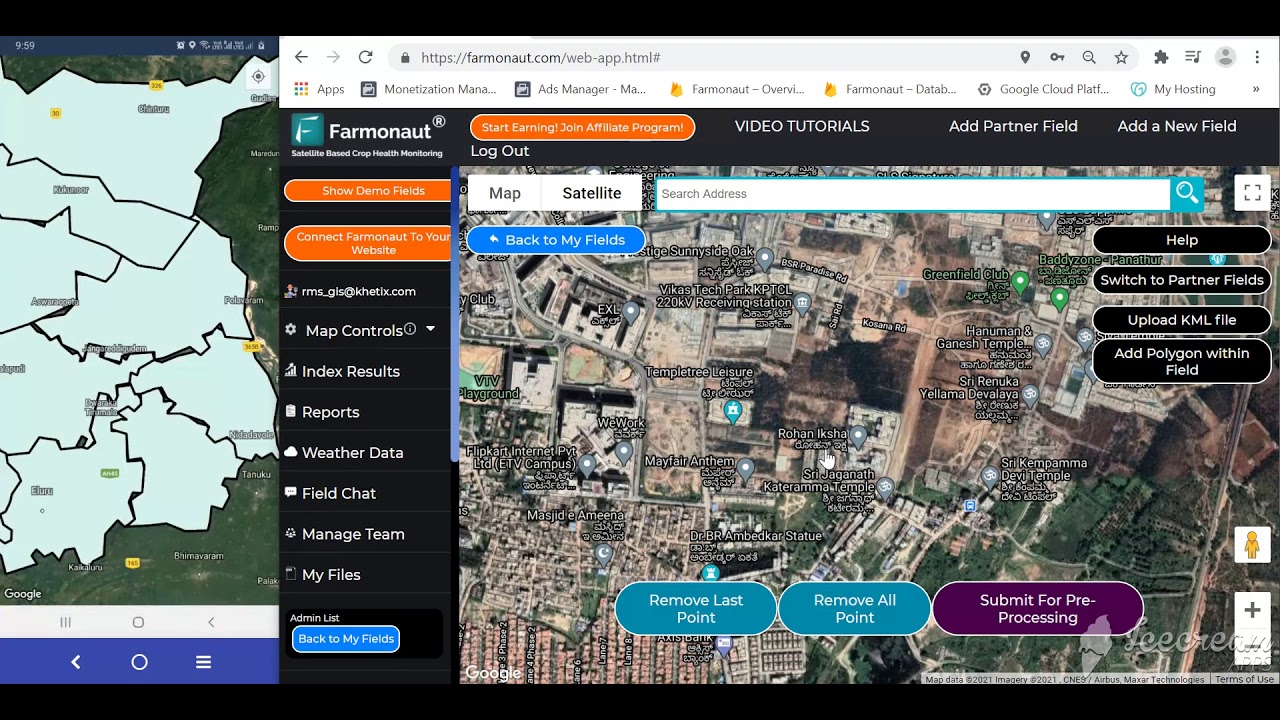
Farmonaut: Satellite Technology Empowering Extreme-Environment and Antarctic Agriculture
As satellite technology reshapes modern agriculture, Farmonaut’s satellite-driven platform is instrumental in making advanced monitoring and resource management accessible worldwide—including in extreme environments such as Antarctica.
-
Satellite Monitoring:
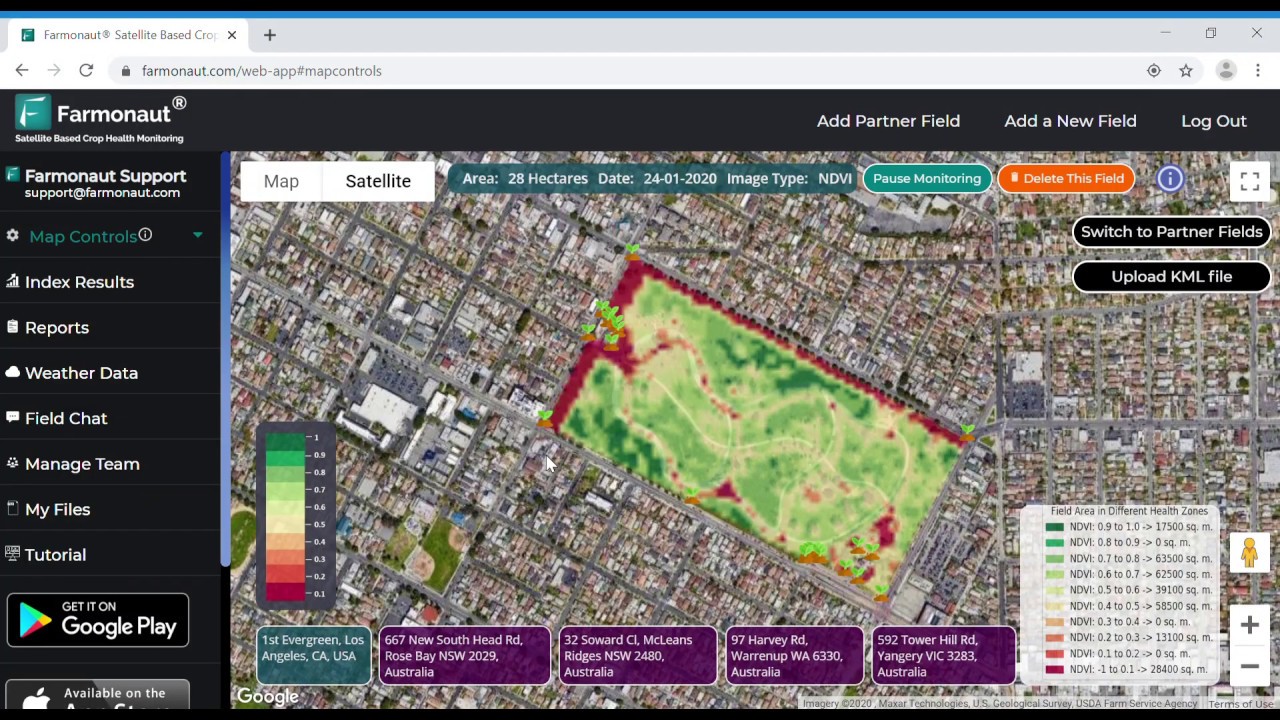
We provide multispectral satellite imagery that analyzes vegetation health (NDVI), soil conditions, and greenhouse performance, which support informed decisions in antarctica farming and beyond. -
AI-Based Advisory:
Our Jeevn AI System delivers customized, real-time advice for agriculture in hostile environments, enabling researchers and operators to optimize yields and operations even when physically remote. -
Blockchain Traceability:
Product Traceability Tools
enable tamper-proof record keeping for any food commodities or botanical materials produced in antarctica or similar sensitive systems. -
Resource, Fleet, & Environmental Management:
For operators of indoor greenhouses or distributed research modules across the continent, our
Fleet & Resource Management technology
optimizes logistics & reduces costs. -
Large Scale Farm Management:
Our
Agro Admin App
allows monitoring of crop growth and field conditions at scale—crucial where remote sensing is a necessity.
By lowering the cost of access to satellite technology and enabling flexibility across user groups (from individual scientists to government entities), we empower practical agriculture innovations for antarctica agriculture, arctic agriculture, and all high-tech food production systems in extreme environments.
Future Outlook: Antarctic Agriculture & Arctic Advances, 2025 and Beyond
As we move into 2025 and beyond, antarctica farming is poised for further innovation:
-
Energy Sustainability:
Greater use of renewables (wind, solar, geothermal) will power future research station greenhouses, shrinking environmental impacts. -
Augmented Reality & Remote Automation:
Interactive systems will allow global experts to support or even “operate” greenhouse modules from anywhere, overcoming extreme conditions. -
Crop Genetics Advances:
Further research will introduce genetically optimized plants able to thrive in low-light, freezing, or even space-borne closed systems—broadening the menu in antarctica and on other planets. -
Expanding Applicability:
Antarctica will remain a testing ground influencing CEA everywhere: in deserts, degraded lands, and urban megacities where traditional soil is unavailable or unsustainable. -
Integrated Life Systems:
Research will link antarctica agriculture with space colonization—building closed-loop systems that recycle water, nutrients, and waste to support long-term human life in the harshest frontiers.
The lessons learned from antarctic agriculture are already being used to address the need for reliable, sustainable food systems in a world challenged by climate change. By 2030, experts anticipate that hybrid indoor farming systems refined in Antarctica will become routine in global food production—supporting national food security and environmental resilience.
FAQ: Antarctica Agriculture, Farming Techniques & Innovations
What crops are grown in antarctica agriculture facilities?
Research stations primarily cultivate leafy greens, herbs, spinach, arugula, chard, microgreens, and occasionally tomatoes and cucumbers—crops that thrive in hydroponic or aeroponic indoor systems and withstand low-light, variable temperature conditions.
Is antarctica agriculture sustainable?
Yes. Advanced CEA installations reduce water and nutrient use, cut food import reliance, and minimize waste. Additionally, many initiatives use renewable energy and closed-loop resource cycles to enhance sustainability and compliance with environmental treaties.
Why is practical antarctica farming important for the future?
Techniques developed for antarctica farming directly influence urban ag, disaster relief, food security in arid/outlying regions, and space agriculture for planetary colonization—making them vital for a changing global climate.
Can individuals or companies use antarctic-style farming techniques elsewhere?
Absolutely. Hydroponic, aeroponic, and vertical farming are rapidly being adopted in arid regions, densely populated cities, and even for educational or home food production setups due to their efficiency and scalability.
How does Farmonaut support antarctica agriculture?
We offer affordable, real-time satellite-driven monitoring, resource management, blockchain-based traceability, and AI-powered advisory systems—all highly relevant for arctic agriculture as well as farms in extreme/harsh environments.
Conclusion: Why Antarctica Agriculture Matters for Global Sustainability
Antarctica agriculture stands as a testament to the adaptability and resilience of modern agricultural innovation. By pushing the boundaries of what is possible—transforming a barren, frozen landscape into a testing ground for futuristic food production—antarctica farming offers lessons with immediate implications for humanity’s future.
The practical agriculture techniques learned and refined in antarctic environments not only support the continent’s research stations but are already shaping how we will confront the food security and environmental challenges of tomorrow. From urban skyscraper farms to barren Martian domes, the innovations honed at the planet’s coldest edge will feed generations to come—sustainably and securely.
Ready to Harness Satellite Solutions for Your Agriculture?
Explore the power of real-time monitoring, AI insights, traceability, and resource management tailored for antarctica agriculture and beyond.
Get started with Farmonaut’s subscriptions or download our app for instant access.

 GalaxEye Space
 Soybean Processors Association
 Sun Palm Australia
 Grandstream Algérie
 XOS Realty
 Geospatial Lab Africa
 Agro La Gándara
 HIPSAC
 ZOL Zimbabwe
 Juligerm
 AdBio
AdBio MISE Maroc
 NWNS
NWNS Red August Group
 Farm Inc
 WeMe Global
 Agrotoken
 Blue BearX
 Insignito
 DnCubed
