

Table of Contents
- Introduction
- What Is Indoor Vertical Farming?
- Why Indoor Vertical Farming Matters Today
- Indoor Vertical Farming Market Outlook for 2025
- Technological Innovations Shaping the Sector
- Applications in Urban and Rural Contexts
- Comparison Table: Top 5 Indoor Vertical Farming Solutions (2025)
- Core Benefits and Challenges of Vertical Farming
- Farmonaut: Supporting the Future of Indoor Vertical Farming
- Frequently Asked Questions
- Conclusion
“Indoor vertical farms recirculate their nutrient water, so they use far less water per kilogram of greens than field irrigation.”
Indoor Vertical Farming Solutions: Top 5 for 2025
As we step into a future where the global population has passed 8 billion (United Nations) and urbanization continues its relentless ascent, our conventional farming methods face mounting challenges in meeting rising food demand. How can we, as a society, continue providing fresh, sustainable food for urban populations while reducing land and water consumption and addressing climate change impacts?
The answer is clear: indoor vertical farming is the groundbreaking solution poised to redefine the food production landscape in 2025 and beyond. In this in-depth post, we’ll examine what indoor vertical farming is, why it matters, the current market outlook, leading solutions for 2025, key technological advancements, and the pivotal role technology providers like Farmonaut are playing in this revolutionizing sector.
What Is Indoor Vertical Farming?
Indoor vertical farming is an innovative agricultural practice that involves growing crops in vertically stacked layers inside controlled environments. These are often repurposed warehouses, specialized shipping containers, or custom-built structures. By leveraging controlled-environment agriculture (CEA) technologies—including advanced LED lighting, climate control systems, hydroponics, aeroponics, and AI-powered sensors—vertical farms can optimize crop growth year-round, largely independent of weather or outdoor soil conditions.
To answer the ever-relevant question, “What is indoor vertical farming?”: it is the practice of growing food crops in vertically stacked layers, inside controlled indoor environments, using state-of-the-art systems to maximize space efficiency, crop yield, and resource conservation.
- Hydroponics: A soil-less system using nutrient-enriched water to feed plant roots directly.
- Aeroponics: Plants are suspended in air and their roots are misted with nutrient-rich solutions; ultra-efficient in reducing water consumption.
- LED Lighting: Highly customizable wavelengths allow for optimized photosynthesis and year-round growth cycles.
- Climate Control & Sensors: Maintain ideal temperature, humidity, and CO2 levels for maximum plant health.

Key Features of Indoor Vertical Farming Systems
- Stacking Crops Vertically: Maximizes crop yield per square meter—often in high-value urban settings where space is at a premium.
- Complete Control Over Environments: Reliable, adaptable growth conditions mitigate weather risks and seasonal fluctuations.
- The Use of CEA Technologies: From intelligent water recycling to realtime AI monitoring.
Why Indoor Vertical Farming Matters Today
Indoor vertical farming answers several problems field agriculture faces:
-
Land Efficiency:
In urban areas where space is a premium, vertical stacking enables us to maximize yield with a fraction of the land required by fields. It needs far less floor area per kilogram of crop than a field. -
Water Conservation:
Through hydroponic and aeroponic systems, water is recycled efficiently, using much less water than open-field irrigation, which matters in dry regions. -
Pesticide-Free Production:
Operating within a controlled indoor environment reduces pest risks, eliminating the need for most chemical pesticides—resulting in safer, cleaner produce with minimal residues. -
Year-Round Harvests:
No longer subject to weather conditions or seasonality, indoor vertical farming enables continuous, predictable crop cycles and bolsters urban food security.
These advantages are the drivers behind the rapid adoption and increasing demand for indoor vertical farming solutions as cities and rural communities alike seek innovative ways to optimize food production efficiency and improve sustainability.
“MarketsandMarkets valued the global vertical farming market at $5.6 billion in 2024 (MarketsandMarkets).”

Indoor Vertical Farming Market Outlook for 2025
As urbanization continues and the global population grows, MarketsandMarkets valued the global vertical farming market at $5.6 billion in 2024 and projects $13.7 billion by 2029, a 19.7% annual growth rate (MarketsandMarkets). This surge is powered by mounting demand for fresh, locally sourced, and sustainable produce, especially in urban regions facing rising cost and shrinking arable land.
- North America and Asia-Pacific: These regions lead in both adoption and market expansion, with robust government initiatives and technology-driven food security concerns.
- Key Market Drivers: technological innovation, energy efficiency, crop yield maximization, supply chain reliability, and consumer awareness.
- Industry Trends: Emphasis on AI-driven platforms, IoT-enabled real-time monitoring, blockchain traceability for produce authenticity, and renewable energy integration.
Investment in research and optimization, especially around automation, lighting innovations, and energy solutions, is rapidly reducing operational costs and opening doors for smaller growers as well as commercial enterprises.
Technological solutions such as fleet management and supply chain resource optimization play a pivotal role in meeting the projected market needs for a sustainable future.
Technological Innovations Shaping Indoor Vertical Farming in 2025
The rapid evolution of indoor vertical farming solutions is driven by innovative technological approaches that maximize crop production efficiency and drive down costs. Let’s highlight the key innovations transforming the sector:
1. Advanced CEA Systems and AI Analytics
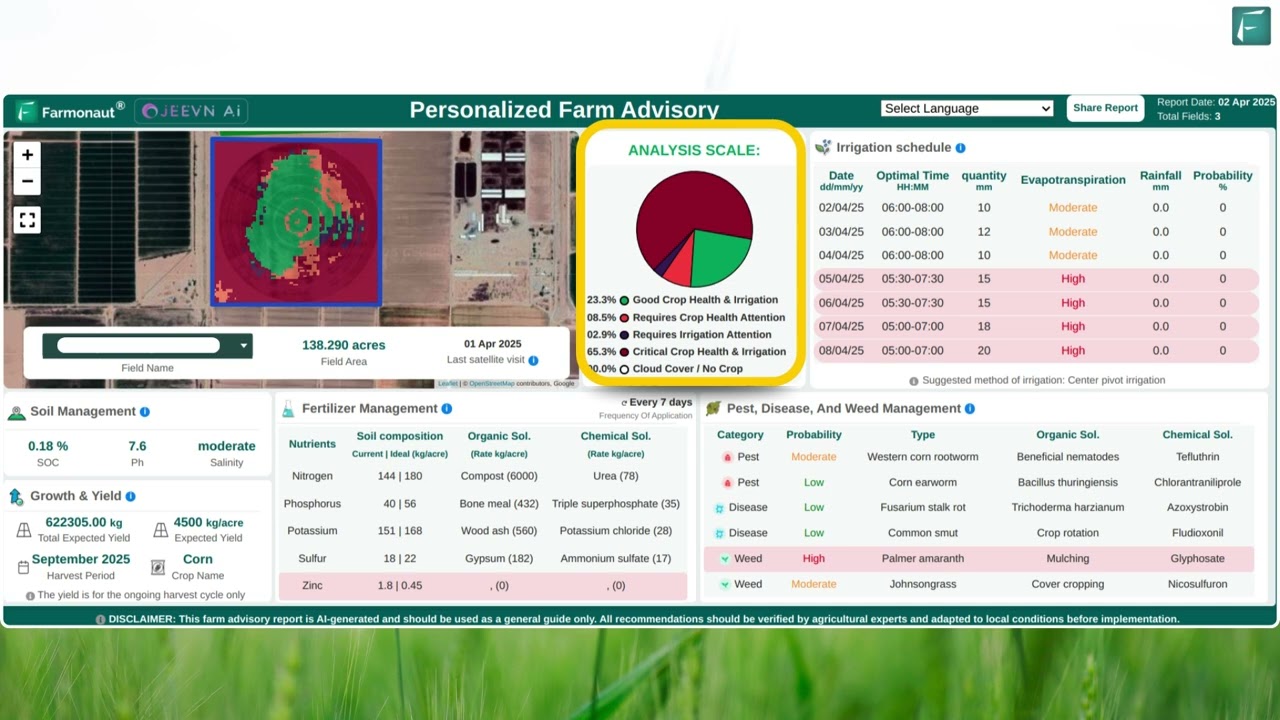
Controlled-environment agriculture technologies leverage advanced sensors, real-time data collection, and AI-based analytics to optimize plant growth and resource usage. Farmonaut’s Jeevn AI Advisory System is a prime example—providing real-time weather forecasts, data-driven recommendations, and remote monitoring for agricultural operations.
2. High-Efficiency LED Lighting
LED lighting technology now allows indoor vertical farmers to:
- Customize light spectra to match each crop’s photosynthetic profile
- Accelerate plant growth cycles
- Dramatically reduce energy consumption, driving up operational efficiency
3. Robotics & Automation
Automated planting, harvesting, maintenance, and packaging systems minimize labor requirements and enable scalable, large-scale food production operations.
4. Integration with IoT and Blockchain
The Internet of Things (IoT) brings seamless, real-time integration of sensors and devices, enabling predictive analytics and remote management. Blockchain traceability adds another layer—ensuring authenticity, supply chain transparency, and combatting fraudulent claims in produce origin.
5. Renewable Energy & Sustainability
To address high energy consumption, many cutting-edge vertical farms now integrate solar, wind, or hybrid power sources, offsetting their electrical usage and improving overall sustainability ratings.

Applications and Benefits: Urban and Rural Indoor Vertical Farming
The applications of indoor vertical farming solutions go far beyond the urban high-rises we typically imagine. These systems enable efficient food production for both urban and rural settings:
Urban Indoor Farming
- Proximity to Markets: Farms are positioned near consumers, cutting down food miles and lowering transportation costs and emissions.
- Improved Food Security: Fresh produce supply is stable year-round, regardless of outdoor weather, market volatility, or supply interruptions.
- Sustainable Urban Development: Repurposing unused warehouses and adaptive structures leverages existing urban assets.
Rural Deployment of Vertical Farming Solutions
- Decentralized Food Production: Modular, container-based vertical farms can operate anywhere, improving food access in remote regions.
- Year-Round Productivity: Controlled environments enable continuous cycles, keeping rural economies engaged in food supply, even in off-seasons.
- Water and Resource Conservation: Innovative systems reduce water use and improve sustainability compared to conventional practices.
Explore how Farmonaut’s carbon footprint monitoring capabilities can enhance sustainability tracking for both urban and rural growers by providing actionable insights for emission reduction and compliance.
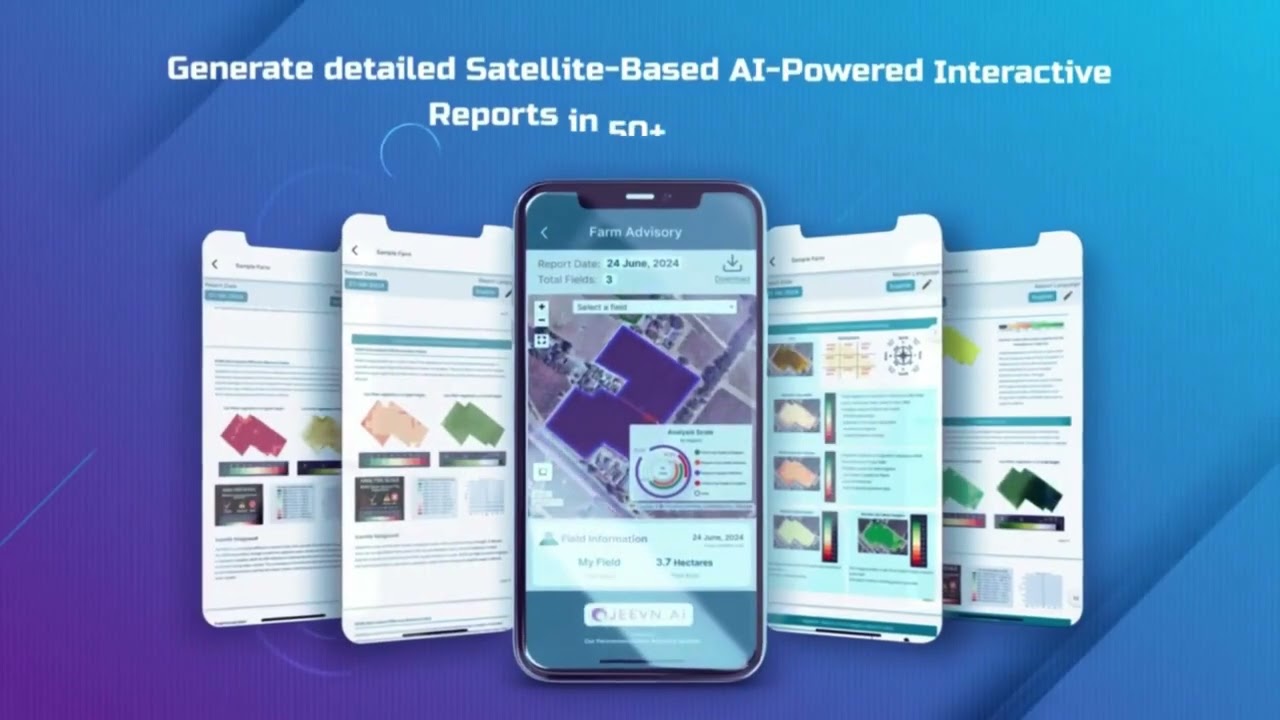
Experience hands-on farm management and data-driven insights via the

platform, available for seamless web and mobile integration.
Also, connect your agricultural business directly to advanced satellite insights via our
Farmonaut API
and implement flexible solutions with the help of our API Developer Docs.
Download the Farmonaut app for quick access


Comparison Table: Top 5 Indoor Vertical Farming Solutions (2025)
*
Key Takeaways from the Comparison
- Warehouse racks give the most output per square metre but cost the most to build and power.
- Towers and container farms are cheaper to start but depend heavily on the supplier for parts and software.
-
All leading systems integrate smart technologies for
- Resource monitoring
- AI-based yield optimization
- IoT-enabled remote management
The main types of vertical farming solution
Most indoor vertical farming solutions fall into four set-ups. They differ in cost, scale and what they grow well.
| Set-up | How it works | Typical use |
|---|---|---|
| Stacked racks in a warehouse | Shelves of hydroponic or aeroponic trays under LED lights, with full climate control | Commercial leafy greens, herbs and microgreens near cities |
| Vertical towers | Plants grow in columns; nutrient solution is pumped to the top and drains down | Restaurants, schools, small commercial growers, greenhouses |
| Shipping-container farms | A self-contained hydroponic farm built inside a 40-foot container | Remote sites, campuses, food banks, pilot projects |
| Vertical systems in greenhouses | Racks or towers under natural light, topped up with LEDs | Growers who want lower lighting bills than a closed warehouse |
Picking one comes down to three questions. What crop will you sell, and at what price per kilogram? Can you get electricity at a price that covers LED lighting and cooling all year? And who will service the control software and supplies if the vendor stops trading? Leafy greens and herbs remain the crops that pay back most reliably, because they grow fast, stay short and sell at a premium when fresh.
Indoor Vertical Farming: Core Benefits, Challenges, and Future Perspectives
Why We Need Indoor Vertical Farming Solutions in 2025 and Beyond
- Land and Water Conservation: Uses much less land and water per kilogram than field growing.
- Steady Supply of Fresh, Local Produce: Enhances urban and rural food security against climate disruptions.
- Cleaner, Healthier Produce: Pesticide-free environments lead to safer crops.
- Year-Round Growing Cycles: No downtime due to seasons or adverse weather conditions.
- Improved Traceability and Supply Chain Transparency:
Advanced platforms like Farmonaut’s blockchain traceability ensure credible records throughout the
produce supply chain.
Main Challenges Facing Indoor Vertical Farming
- High Initial Capital Expenditure: Building modern, technology-rich vertical farms requires significant upfront investment.
- Energy Demands: LED lighting and climate control, although optimized, still represent considerable energy usage—necessitating integration with renewables.
- Technical Expertise: Management and maintenance of advanced CEA systems require skilled operators and ongoing training.
- Crop Diversity: Most systems are currently optimized for leafy greens and microgreens; expansion into staple crops and fruits is still developing.
Nevertheless, as technology matures and scaling increases, costs are expected to decline, paving the way for broader adoption by 2025.
Tip: Pair your indoor farm with large-scale farm management and
crop loan and insurance verification systems to optimize performance
and financial planning in high-tech operations.
What recent failures show about vertical farming
Several of the best-funded vertical farming companies have failed or been restructured since 2023, which is worth knowing before you buy a system or sign a supply deal:
- AeroFarms filed for Chapter 11 in June 2023 and later emerged focused on its Danville, Virginia farm (Produce Grower).
- Bowery Farming, once valued at $2.3 billion, stopped operating in November 2024 (TechCrunch).
- Plenty Unlimited filed for Chapter 11 in March 2025 to restructure and focus on strawberries (New AG International).
- Container-farm maker Freight Farms ceased operations on April 30, 2025, leaving many customers without its cloud software (Boston Globe). Growcer later bought its assets (Freight Farms).
The common problems were high energy and building costs, and produce that sold at too small a margin over field-grown greens. For buyers, the Freight Farms case also shows the risk of a system that depends on one vendor’s cloud platform to run.
Farmonaut: Supporting the Future of Indoor Vertical Farming
At Farmonaut, we are dedicated to empowering growers, businesses, and governments with satellite-driven data and AI-powered advisory systems that directly enhance indoor vertical farming solutions for 2025 and beyond.
- Real-Time Satellite Monitoring: Our platform delivers multispectral imagery and analytics for crop health, soil condition, and resource management, regardless of farm location or scale.
- Jeevn AI Advisory System: Leverages the latest AI algorithms and satellite insights to customize recommendations, weather forecasts, and strategies for increased productivity.
- Blockchain-Based Traceability: Enables robust supply chain traceability for food safety, consumer trust, and regulatory compliance.
- Environmental Impact Tracking: Monitors carbon footprints and resource use, helping indoor vertical farm operators achieve—and report on—sustainability targets.
Our subscription-based model makes these sophisticated technologies accessible and cost-effective for a wide range of users, supporting the future of farming with the power of AI, IoT, satellite intelligence, and blockchain. We encourage you to explore our
carbon footprinting
and
blockchain traceability
solutions—designed to help indoor vertical farmers optimize sustainability, reduce costs, and achieve greater transparency.
Frequently Asked Questions: Indoor Vertical Farming 2025
Q1. What is indoor vertical farming?
Indoor vertical farming is an innovative agricultural practice that involves growing food crops in vertically stacked layers within controlled indoor environments. Using cutting-edge technologies like hydroponics, aeroponics, advanced LED lighting, and AI-driven sensors, this approach maximizes space, improves resource efficiency, and enables year-round crop production regardless of weather or soil conditions.
Q2. How does indoor vertical farming reduce water and land use?
Vertical systems maximize crop yield per square meter by stacking plants in multiple layers, cutting the land needed per kilogram of crop. Hydroponic and aeroponic systems recycle water, so they use far less than field irrigation, which is vital in regions threatened by water scarcity.
Q3. What crops are best suited for indoor vertical farming?
The most common crops are leafy greens, microgreens, herbs, and some fruiting crops. However, ongoing research and technological innovation are rapidly expanding the variety to include berries, tomatoes, and potentially staple grains in the future.
Q4. Is indoor vertical farming environmentally sustainable?
Yes. Indoor vertical farming solutions are significantly more resource-efficient than conventional agriculture, use less water, and reduce food miles. Many operators also use renewable energy sources to further reduce their carbon footprint.
Q5. How can Farmonaut support indoor vertical farm operators?
We provide satellite-based monitoring, AI advisory tools, and blockchain-backed traceability platforms to efficiently manage resources, monitor crop health, and deliver actionable insights. Learn more with our API for customized integration.
Conclusion: Indoor Vertical Farming—Revolutionizing Agriculture for 2025 and Beyond
Indoor vertical farming stands at the nexus of technology, innovation, and sustainability, offering a transformative approach to agricultural production in 2025 and beyond.
By integrating advanced CEA systems, AI-driven analytics, renewable energy, and blockchain, indoor vertical farms are poised to tackle the mounting challenges of rising food demand, land scarcity, water consumption, and climate change.
This leap in farming methods allows us to envision a future where urban and rural communities alike have sustainable access to fresh, nutritious food with minimized environmental impacts. As costs continue to fall and technology matures, indoor vertical farming solutions will become the cornerstone of urban food systems and a linchpin for global food security.
Now is the time to embrace the next era of farming—by choosing data-driven ways to optimize our resources, reduce our environmental impact, and supply the world’s cities and communities with the fresh produce they need.
To discover how we can support your indoor farming journey with affordable real-time monitoring and precision insights, try the Farmonaut platform on web, Android, or iOS.
Indoor vertical farming: Revolutionizing Agriculture, Redefining Sustainability.
Discussion
Questions, corrections or field experience? Share them below. First-time comments are reviewed before they appear, and your email is never published.
No comments yet. Be the first to add a question or your experience.

 Messina Beej
 Dirks Bros Farms
 Red August Group
 Farm Inc
 WeMe Global
 Agrotoken
 Blue BearX
 Insignito
 Croptimum
 DnCubed
 Field Capacity
 Indosistim Teknologi
 Liquify Digital
 CU Foods
 BeyondTech Global
 Rouge VC
 AgroGreen Dynamics
 AgroRisk
