

Aquaculture of Catfish: 7 Sustainable Trends for 2026
“By 2026, over 60% of global catfish farms are expected to adopt sustainable aquaculture systems.”
Introduction to Aquaculture of Catfish
In the realm of aquaculture, the aquaculture of catfish has become a cornerstone for global food security, especially among fisheries and modern aquatic farming. As of 2025, the catfish aquaculture sector continues to evolve—integrating sustainable systems, aquaponics catfish practices, and innovative methods to optimize productivity, minimize environmental impact, and elevate economic sustainability worldwide.
The catfish—thanks to its remarkable adaptability, fast growth rate, and high market demand—remains one of the most significant species cultivated in both freshwater and evolving recirculating aquaculture systems (RAS). With the integration of advanced monitoring systems and the shift towards more sustainable practices, the industry is set for extraordinary growth into 2026 and beyond.
Read on as we examine:
- The different types of aquaculture for catfish
- The emergence of aquaponics catfish systems
- The environmental and economic impacts dominating current trends
- Seven sustainable advancements likely to define the future of catfish aquaculture by 2026
- How cutting-edge tools—such as those offered by Farmonaut—are empowering the transformation of fish farming and data-driven resource management

“Aquaponics could reduce catfish farming’s water usage by up to 90% compared to traditional pond methods by 2025.”
Types of Catfish Aquaculture: From Pond to Recirculating Systems
Catfish aquaculture is as varied as it is dynamic. Understanding the types of aquaculture used worldwide helps highlight the sector’s adaptation to local climate, regulatory, and environmental conditions.
1. Pond Culture: The Traditional Backbone
Pond culture remains the widespread method for cultivating catfish—especially in the rural expanses of Southeast Asia (notably Vietnam, Thailand, Indonesia), Africa, and the southern United States where freshwater environments, ideal water conditions, and extensive knowledge make it a preferred practice.
- Advantages: Simplicity, low start-up costs, and community suitability
- Challenges: Disease management, water consumption, and risk of environmental degradation
2. Cage Culture: Efficient Use of Open Water
Cage culture involves enclosing catfish in netted enclosures placed within lakes, large rivers, or reservoirs—especially prevalent in regions with abundant aquatic resources and moderate climates.
- Allows higher stocking densities and easier harvesting
- Requires close monitoring to minimize environmental degradation
- Potential risks include water contamination and disease transfer
3. Recirculating Aquaculture Systems (RAS): Modern Sustainability
Recirculating aquaculture systems (RAS) are pioneering the movement toward closed-loop sustainability. RAS dramatically reduces water usage by continuously filtering and reusing water. This approach enables year-round production, optimal quality control, and better disease management, making it ideal for areas experiencing water scarcity or facing strict regulatory conditions.
- Lower water usage and minimal discharge
- Enables greater control over the farming environment
- Preferred in urban and peri-urban settings
These types of aquaculture reflect the sector’s evolutionary journey, integrating local knowledge with innovative technology to serve both economic and environmental needs.




Aquaponics Catfish: Sustainable Integration for 2026 and Beyond
Among the most exciting developments in the aquaculture of catfish is aquaponics: an innovative fusion of aquaculture and hydroponics that brings together catfish farming and soilless plant cultivation.
How Aquaponics Catfish Systems Work
- Fish waste provides nutrients for plants
- Plants filter and purify water before it returns to fish tanks
- Catfish are particularly well-suited due to their hardy nature, efficient feed conversion rates, and ability to thrive in recirculating water systems
Key Advantages of Aquaponics Catfish Farming
- Dramatically reduced water usage: Aquaponics typically uses up to 90% less water compared to traditional pond systems.
- Integrated waste minimization: Waste is re-purposed, lowering discharge.
- Dual income streams: Both fish and plants can be harvested and sold.
- Environmentally sustainable: Reduces pollutants and chemical runoff into surrounding environments.
- Optimized resource utilization: Aquaponics offers urban farmers and agriculture practitioners the ability to optimize limited space.
As of 2025-2026, aquaponics catfish is gaining momentum worldwide, particularly in urban centers and locations with water scarcity or land limitations. The US, Southeast Asia, and Africa feature prominent examples, with systems supporting leafy greens, tomatoes, herbs, and various aquatic organisms.
The Farmonaut Carbon Footprinting Solution supports sustainable initiatives by monitoring the carbon impact of aquaponics catfish projects, fostering compliance with environmental regulations.
Aquaculture and Fisheries: Economic and Environmental Impact of Catfish
Catfish aquaculture plays a significant role in the fisheries sector, contributing to economic growth, food security, and the livelihood of millions—especially in rural and coastal regions across Southeast Asia, Africa, and the southern United States.
1. Economic Significance
- Affordable protein source sustaining local and global markets
- Job creation—from hatcheries to processing and distribution
- Support for ancillary industries like fleet and resource management, feed production, and supply chains
2. Environmental Impact
- Risks of environmental degradation, water pollution, and habitat destruction
- Mitigated through sustainable practices—improved feed formulations, disease-resistant breeds, and enhanced waste management
- Use of technologies like Farmonaut Blockchain Traceability Solutions for greater supply chain transparency
Catfish aquaculture must balance economic output with environmental responsibility. Fortunately, advancements in AI-based monitoring, precision feeding, and data-driven management allow sustainable growth and protection for both workers and the wider ecosystem.
Governments and institutions increasingly prioritize sustainable fish farming policies, encouraging adoption of accountable, data-supported practices for long-term viability.
Shellfish Aquaculture & Aquaculture Saltwater Fish: A Complementary Outlook
While catfish farming primarily takes place in freshwater, the broader aquaculture sector includes saltwater fish and shellfish aquaculture, each with their own farming requirements and sustainability implications.
- Saltwater fish farming (e.g., salmon, sea bass) focuses on marine environments and navigates unique economic, environmental, and regulatory challenges.
- Shellfish aquaculture (mussels, oysters, shrimp) plays a vital role in maintaining ecological health, as shellfish can filter water and restore marine habitats, benefiting biodiversity and water quality.
- Integrated Multi-Trophic Aquaculture (IMTA)—combining fish, shellfish, and plant species—offers a forward-thinking approach to sustainable aquatic production and ecosystem restoration.
Lessons learned in shellfish aquaculture and saltwater fish farming can be leveraged to improve the environmental footprint of catfish aquaculture, especially as systems become more integrated and technology-driven.

7 Sustainable Trends in Aquaculture of Catfish for 2026
The future of catfish aquaculture lies in adopting innovative, environmentally friendly, and technologically advanced systems. By 2026, these seven sustainable trends are on track to redefine the sector:
1. Recirculating Aquaculture Systems (RAS) for Maximum Efficiency
- Closed-loop water reuse, filter-based waste management, and stable conditions dramatically lower environmental impact
- Enhances biosecurity and supports year-round catfish production
2. Integrated Aquaponics: Resource Optimization
- Combines catfish aquaculture with hydroponic plant cultivation
- Reduces water consumption, minimizes waste, and delivers dual harvests for economic resilience
3. Biofloc Technology: Probiotic-based Productivity
- Probiotic bacteria convert waste into feed, reducing input requirements and improving growth rates
- Significantly minimizes water exchange and supports improved fish health
4. AI-driven Remote Monitoring & Automation
- Satellite monitoring and IoT sensors—such as those used in Farmonaut’s platform—deliver real-time insights on water conditions, feed requirements, and disease outbreaks
- Automation optimizes feeder usage, aeration, and resource management
5. Blockchain-based Traceability for Catfish Supply Chains
- Embracing blockchain, as demonstrated in the Farmonaut Traceability Solution, enhances supply authenticity, safety, and consumer trust
- Crucial for compliance in global export markets
6. Climate-Resilient Selective Breeding
- Selective breeding programs produce catfish strains resilient to climate extremes, disease, and variable water conditions, supporting long-term sustainability
- Adopted widely in Southeast Asia and Africa for local adaptability
7. Sustainable Feed Innovations
- Pivoting from wild-caught fishmeal to plant-based, insect-based, and fermentation-sourced feeds to reduce environmental pressure
- Optimized nutrition results in faster growth and lower waste output
These sustainable trends support the transition to a more responsible, highly productive, and resilient aquaculture sector—vital for food security globally.
Farmonaut Large-scale Farm Management Modules empower farm operators to leverage remote monitoring, AI strategy, and advanced analytics for enhanced sustainability and performance in catfish aquaculture projects.

Comparison Table of Sustainable Catfish Aquaculture Trends (2026 Estimates)
| Sustainable Trend | Estimated Adoption Rate (% by 2026) | Environmental Impact Score (1-10) | Cost Efficiency (Reduction in Operational Costs, %) | Predicted Output Increase (% Yield Improvement) |
|---|---|---|---|---|
| Recirculating Aquaculture Systems (RAS) | 32% | 9 | 22% | 29% |
| Integrated Aquaponics | 21% | 10 | 33% | 18% |
| Biofloc Technology | 17% | 8 | 24% | 17% |
| AI-driven Monitoring/Automation | 44% | 8 | 28% | 22% |
| Blockchain Traceability | 12% | 9 | 17% | 13% |
| Climate-resilient Breeding | 53% | 7 | 19% | 16% |
| Sustainable Feed Innovations | 48% | 10 | 26% | 15% |
Farmonaut: Empowering Sustainable Catfish Farming with Satellite Insights
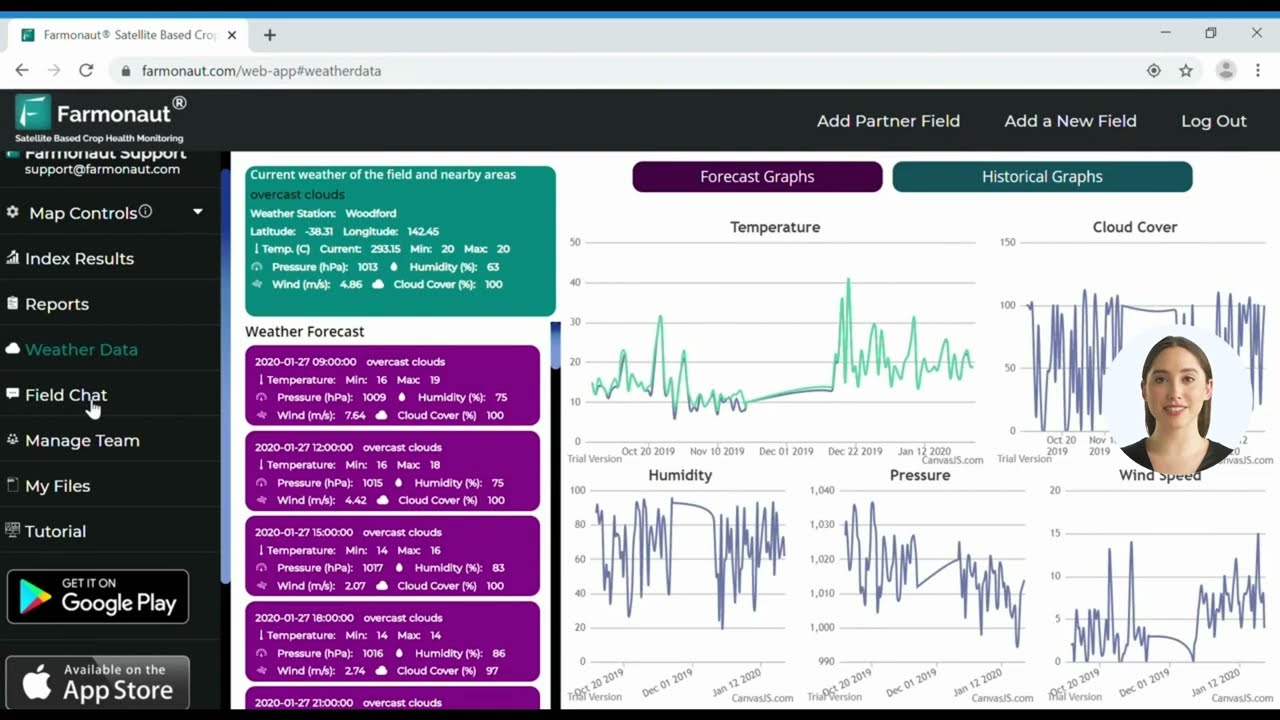
As satellite technology rapidly evolves, Farmonaut’s platform empowers aquaculture practitioners to monitor, manage, and optimize sustainable catfish production with unprecedented scale and precision.
- Satellite-based monitoring for water quality, nutrient loading, pond health, and targeted interventions
- AI-powered advisory systems guiding optimized feed management, growth tracking, and predictive analytics
- Environmental impact tracking—including carbon footprint monitoring, supporting compliance with sustainability benchmarks
- Blockchain-powered traceability for transparent, verifiable, and secure supply chains
- Fleet and resource management tools to maximize operational efficiency and safety
- Real-time management via Web App, iOS and Android applications and robust APIs (developer docs)
For those seeking to scale up their catfish aquaculture projects while achieving both economic efficiency and environmental leadership, we invite you to explore satellite-based insurance and crop loan verification—offering secure, verified data for better access to financing in the agricultural value chain.

FAQ: Catfish Aquaculture & Sustainability
Q1. What makes catfish ideal for sustainable aquaculture?
Catfish exhibit exceptional adaptability to fluctuating water conditions, efficient conversion of feed to biomass, and resilience to crowding. These attributes, combined with rising demand for sustainable protein, make them highly suitable for aquaponics catfish systems and recirculating aquaculture operations.
Q2. How does aquaponics benefit catfish farming and the environment?
Aquaponics enables dramatic reductions in water usage, minimizes nutrient discharge, and delivers dual food outputs via fish and plant production. It turns waste into valuable nutrients, with plants purifying water and supporting a closed-loop, environmentally responsible system.
Q3. Is biofloc technology suitable for all catfish farming environments?
Biofloc is particularly effective in intensive, controlled systems where water exchange is minimized. However, it requires careful management of microbial populations and is best suited to experienced operators or those using AI-based monitoring.
Q4. What is the role of blockchain in catfish aquaculture?
Blockchain traceability solutions—like those available through Farmonaut—create a tamper-proof record of every stage of the supply chain. This boosts consumer confidence, meets export standards, and deters fraud in fish markets.
Q5. How does climate change affect catfish aquaculture?
Changes in temperature, rainfall, and extreme weather events can stress fish populations. That’s why programs for climate-resilient selective breeding and data-driven farm management are so critical for resilience through 2026 and beyond.
Q6. What are the benefits of using satellite technology in fish farming?
Satellite tools—like those offered by Farmonaut—deliver real-time data on pond health, water quality, and environmental impact. This enables proactive farm management, early-warning for disease, and precision interventions for greater yields and lower resource use.
Q7. How can I integrate sustainable feed options into my catfish farm?
Transitioning to plant-based, insect-based, or fermentation-derived feeds reduces the environmental burden of aquaculture, lowers reliance on overexploited wild stocks, and can be phased in with support from specialist feed suppliers and sustainability advisors.
Conclusion: The Future Outlook of Catfish Aquaculture
The aquaculture of catfish stands as a shining example of synergy between tradition and innovation. As the global population grows and pressures on natural fisheries intensify, the need for sustainable aquatic food production has never been greater.
From the humble ponds of Southeast Asia and Africa to advanced RAS operations in the Southern United States, catfish farming continues to embrace transformation. By integrating aquaponics, adopting clean feed technology, leveraging AI, and ensuring streamlined supply chains with blockchain traceability, the sector is set on a resilient and ecologically sound path.
Sustainability is no longer a luxury—it’s fundamental to the future of aquaculture and fisheries. Technological solutions such as satellite monitoring, environmental impact assessment, renewable resource management, and transparent supply verification—as provided by Farmonaut—are rapidly becoming the industry standard.
As we look ahead to 2026 and beyond, aquaculture of catfish promises not just food, but a model of responsible innovation for global food security, economic opportunity, and planetary stewardship.
Ready to optimize your aquaculture operations? Try Farmonaut’s satellite-based solutions for predictive insights, seamless management, and sustainable success!
Discussion
Questions, corrections or field experience? Share them below. First-time comments are reviewed before they appear, and your email is never published.
No comments yet. Be the first to add a question or your experience.

 Sayaji Group
 eKGIS
eKGIS Mostas Tech
 Native Seeds
 Andex
Andex FCF India
 Unifrutti Gulf
 Deluxe Conseil
 TVS Electronics
 BW Pipelines
 WICO
WICO Chimera Innovation
 SkyHarvest
 Polaris Digitech
 Licence holder · Niger · Gold










