

Artificial Intelligence in Agriculture: 7 Farming Trends 2026
“By 2026, AI in agriculture is projected to grow at a CAGR of over 22%, transforming global farming practices.”
“AI-powered monitoring tools can increase crop yield by up to 35%, setting new standards for efficient farming by 2025.”
Summary: Artificial Intelligence in Agriculture—Revolutionizing Farming for 2025 and Beyond
Artificial intelligence in agriculture is fundamentally transforming global farming in the face of unprecedented challenges posed by climate change, rising populations, and resource pressures. In 2026 and beyond, AI stands at the center of this transformation, optimizing every aspect of agricultural processes—from soil analysis and crop monitoring to harvest prediction and supply chain management. Key benefits include enhanced sustainability, efficiency, and productivity, as well as improved access to finance, minimized resource waste, boosted yields, and greater resilience against climate variability.
Farmers worldwide are empowered by AI, using advanced satellite imagery, machine learning, and IoT sensors to drive data-driven decisions. Breakthroughs such as autonomous tractors, robotic harvesters, and AI-powered advisory systems are becoming integral to the agricultural landscape. By 2026, the adoption of AI technologies is projected to dramatically improve crop quality, minimize financial losses, and provide scalable solutions—from individual farm plots to continental agricultural operations.
Key Insight 🎯
Artificial intelligence in agriculture is not only revolutionizing modern farms, but also ensuring that farming is sustainable, climate-resilient, and data-driven for generations to come.
2026 Overview: The Paradigm Shift of Artificial Intelligence in Agriculture
Embedded in the global landscape of 2026, artificial intelligence in agriculture is responding to soaring demands for food and sustainability. As the global population continues to rise, agriculture faces unprecedented pressures—including environmental challenges that intensify due to shifting climate patterns, water scarcity, and labor shortages. With these realities, the integration of AI—from machine learning algorithms and computer vision, to robotics and cloud-based analytics—marks a historic paradigm shift in how we practice agriculture worldwide.
This article explores the seven most impactful AI-driven farming trends projected to define agricultural innovation in 2026 and beyond. Discover how AI is optimizing every stage of farming—from soil to table—and what this means for farmers, financial institutions, supply chains, and global food security.

📈 Key Drivers of AI in Farming 2026
- 🌍 Global demands for sustainable food supply
- 💧 Resource conservation (water, energy, fertilizer)
- 🌱 Yield maximization via informed data-driven decisions
- 🤖 Automation addressing labor & workforce shortages
- 🔗 Integrated supply chains powered by real-time AI analytics
Artificial Intelligence in Agriculture: 7 Farming Trends Transforming 2026 and Beyond
2026 is set to be a pivotal year for artificial intelligence in agriculture, with the following seven trends anticipated to have the most profound impact on productivity, sustainability, and resilience in farming:
- Precision Agriculture & Site-Specific Crop Management
- AI-Powered Crop Monitoring & Disease Detection
- Autonomous Farm Machinery & Robotics
- AI-Enabled Agriculture Finance & Risk Management
- Smart Irrigation & Water Resource Optimization
- AI-Driven Supply Chain & Market Forecasting
- Data-Driven Crop Breeding & Genetic Improvement
Data Insight 📊
Recent data from artificial intelligence in agriculture journals suggest that farms leveraging AI for precision management can realize input savings upwards of 25% and yield improvements as high as 40% in certain regions.
Let’s take a closer look at each trend shaping artificial intelligence farming in 2026:
1. Precision Agriculture & Site-Specific Crop Management
Precision agriculture is the core of artificial intelligence in agriculture, merging real-time data from satellites, drones, IoT sensors, and field equipment. AI algorithms analyze vast datasets to generate field-specific insights—informing irrigation, fertilization, and pest control. This optimizes resource use, minimizes waste, and strengthens yield, aligning with sustainability goals.
Our platform, Farmonaut, provides advanced precision agriculture advisory via its Jeevn AI module—delivering weather-adjusted recommendations for crop management and soil health monitoring using satellite technology.




Pro Tip 🌟
Deploying satellite-based precision agriculture tools early in the season can identify nutrient deficiencies or irrigation issues long before yield losses occur.
🚀 Benefits of Precision AI Farming Tools
- 🛰 Satellite-driven analysis for granular field insights
- 🌞 Weather-adjusted irrigation reduces waste by up to 30%
- 🦠 Early detection of pest and disease outbreaks
- 💹 15-40% potential increase in overall crop yield
- ♻ Low environmental impact and improved sustainability
2. AI-Powered Crop Monitoring & Disease Detection
In 2026, artificial intelligence farming harnesses computer vision and machine learning models to detect crop diseases, pest infestations, and nutrient issues sooner than ever before. These systems rely on processing large volumes of data and running complex models, reflecting broader advances in computing infrastructure, including platforms such as Bluequbit. Drones and satellites stream continuous visual data to AI systems, which analyze field conditions and trigger alerts before visible symptoms worsen. This reduces crop losses, maximizes input efficiency, and ensures higher-quality harvests.
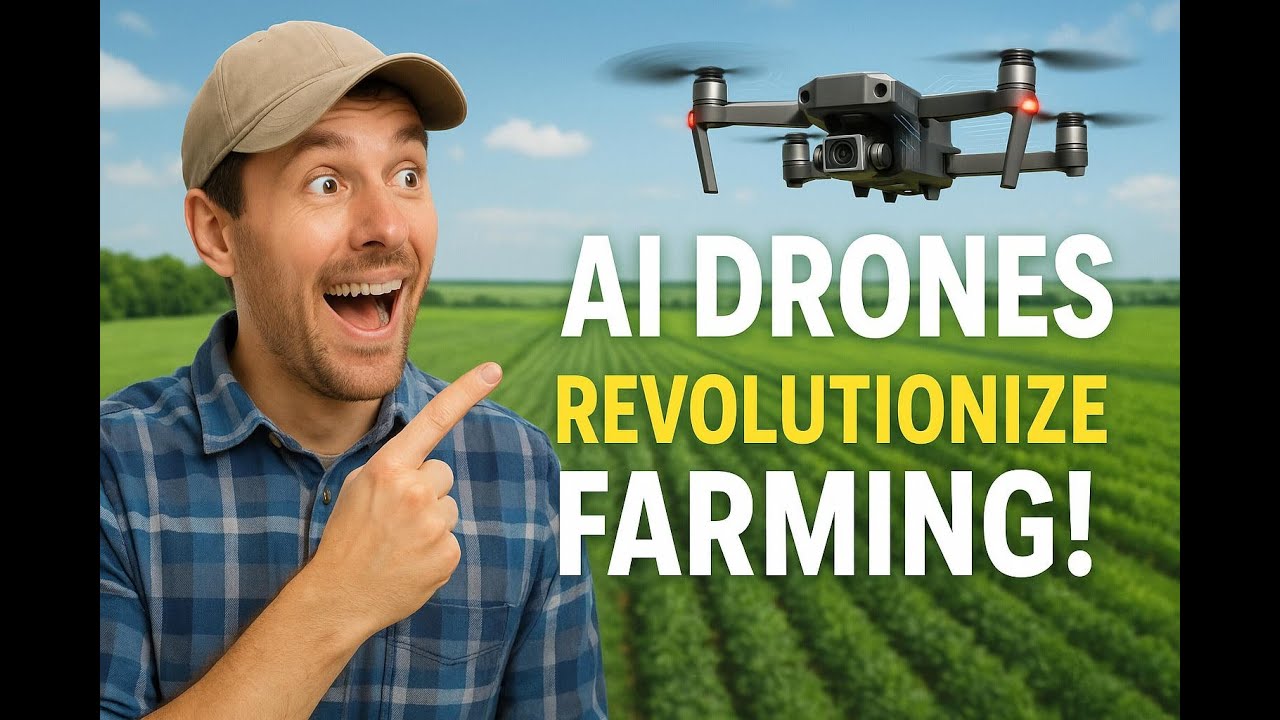
Farmonaut’s Jeevn AI module further strengthens early-warning systems by combining satellite NDVI analysis and hyperlocal weather alerts for actionable recommendations.
Common Mistake ⚠
Many farms deploy AI-based pest detection but neglect data integration from local weather and historic outbreaks—this can reduce predictive accuracy. Always feed AI systems with diverse, real-time datasets.
3. Autonomous Farm Machinery & Robotics
2026 will witness widespread deployment of autonomous tractors, robotic planters, and AI-driven harvesters on both large and mid-sized farms. These machines, guided by GPS and real-time AI algorithms, perform planting, fertilization, spraying, and harvesting with high precision—minimizing labor costs and overcoming workforce shortages that agricultural communities face.
Smart fleet management platforms, like Farmonaut’s solution for agriculture, assist in tracking and maintaining these fleets, optimizing resource usage and logistics.
Optimize your fleet and logistics: Discover Farmonaut’s AI Fleet Management Tools to reduce operational costs and boost equipment productivity across your agricultural operations.

Investor Note 💹
With autonomous robotics adoption in agriculture expected to exceed 65% by 2026 in developed regions, technology-driven equipment is a key focus for agri-tech investment and market expansion.
4. AI-Enabled Agriculture and Finance & Risk Management
Artificial intelligence in agriculture is transforming access to agriculture and finance. By 2026, financial institutions are deploying AI models to analyze farm-level data, assess credit risk, and deliver customized loan products and insurance for farmers. These models draw on historical crop yields, weather patterns, and market trends—enabling better risk assessment and reduced losses due to adverse climate or pest events.
Access innovative crop insurance and loan verification: Explore Farmonaut’s Satellite-Driven Crop Loan & Insurance Verification Solutions for transparent, rapid, and risk-mitigated agricultural financing.
5. Smart Irrigation & Water Resource Optimization
Increasingly erratic weather and dwindling water resources demand advanced intervention. In 2026, AI-powered irrigation systems automate water delivery based on real-time soil moisture data, weather predictions, and crop needs. This strategy can reduce overall water consumption by up to 35% while maximizing yield—a strong win for sustainability in arid and semi-arid agricultural communities.
For large-scale plantations and forest advisory, Farmonaut enables scalable, satellite-based irrigation management—try our Agro Admin App for enterprise-grade decision support.

6. AI-Driven Supply Chain & Market Forecasting
AI transforms supply chain management in agriculture by predicting market demand, optimizing post-harvest logistics, and reducing food waste. By 2026, integrated AI-models analyze data from weather, historical market trends, and logistics networks to enable real-time, adaptive distribution—getting fresh produce to markets faster and with fewer losses.
Enhance supply chain transparency and trust with blockchain-based product traceability. See Farmonaut’s AI-Enabled Traceability Tools for end-to-end visibility from field to shelf.
Caution ⚠
Supply chain AI systems require robust, clean data streams. Incomplete or delayed data integration can result in forecast errors and disrupt logistics.

7. Data-Driven Crop Breeding & Genetic Improvement
Machine learning accelerates crop breeding programs by identifying genetic traits for drought resistance, nutrient efficiency, and pest tolerance—far quicker than traditional methods. AI models in 2026 synthesize genomic datasets and real-time crop performance data, ensuring that the next generation of seeds can thrive in rapidly changing environmental conditions.

Advanced Tip 🧪
Collaborate with genomics experts and leverage open-source AI models for crop improvement projects—AI thrives on large, diverse datasets!
Comparison: AI-Driven Farming Trends Table for 2026
| Trend Name | Estimated Adoption Rate by 2026 (%) | Key Benefits (Quantitative*) | Example Application |
|---|---|---|---|
| Precision Agriculture & Site-Specific Management | 72% | – Up to 25% input savings – 35% avg. yield increase |
AI-based fertilizer and irrigation optimization with sensors/satellites |
| AI-Powered Crop Monitoring & Disease Detection |
69% | – Up to 40% reduction in losses – 95%+ early detection accuracy |
Drones/satellites with AI diagnosis; predictive alerts |
| Autonomous Farm Machinery & Robotics | 66% | – 20–30% labor cost savings – 99% field coverage accuracy |
Driverless tractors, robotic harvesters, automated sprayers |
| AI-Enabled Agriculture Finance & Risk Management |
58% | – Up to 50% faster loan processing – Lower insurance claim fraud rates |
Satellite-based verification for farm loans and insurance |
| Smart Irrigation & Water Resource Optimization | 52% | – Up to 35% water savings – Consistent crop quality |
Automated AI irrigation sensors, satellite moisture monitoring |
| AI-Driven Supply Chain & Market Forecast | 45% | – 20% reduction in post-harvest losses – Up to 17% higher logistics efficiency |
Market demand prediction, AI-powered produce traceability |
| Data-Driven Crop Breeding & Genetics |
37% | – 50%+ faster breeding cycles – Increased climate resilience |
AI analysis of genetic data for next-gen crop varieties |
*All quantitative benefits represent global median values for farms/adopters based on recent artificial intelligence in agriculture journal studies (2025/26).
✔ Takeaway Bullet Points: Why AI Adoption is Surging
- ✅ AI technologies in agriculture address both productivity and climate adaptation
- 📊 Data-driven insights are the new standard for informed decision-making on farms
- ⚙ Automation reduces reliance on manual labor and overcomes workforce shortages
- 💡 AI-powered apps make advanced monitoring accessible even to smallholder farmers
- 🔒 Transparency and risk mitigation attract more institutions to finance the agricultural sector
How Integration of Artificial Intelligence in Agriculture Optimizes Every Farming Stage
The integration of artificial intelligence in farming now marks every stage of the crop cycle. Let’s break down some key phases where AI and digital systems deliver maximum value:
Soil Analysis & Health Monitoring
AI evaluates multispectral satellite and sensor data to assess real-time soil health, pH levels, and organic content. Farmonaut’s satellite solution pinpoints even minor anomalies before they impact overall crop yield.
Smart Planting & Germination
Precision recommendations optimize seed placement and varietal selection, boosting germination rates and improving homogeneity across large plots.
Irrigation & Fertilization Scheduling
Machine learning algorithms process weather forecasts and soil moisture metrics to reduce water and fertilizer waste, delivering nutrients only when and where required.
Environmental Note 🍃
AI-driven precision application means less run-off, lower emissions, and enhanced ecosystem sustainability—vital for combating climate change.
In-Season Crop Monitoring & Adjustment
Continuous feedback via satellite and drone data enables on-the-fly adjustments for pest, weed, or disease outbreaks—significantly reducing chemical use and crop losses.
Harvest Prediction & Logistics
AI-powered models predict exactly when and where to harvest for maximum yield and market value, streamlining post-harvest logistics and labor allocation.
AI-Powered Tools & Infrastructure: Transforming Farming Operations
Artificial intelligence farming tools are now part of mainstream operations. Here’s a look at some key technologies driving the shift:
- 🛰 Satellite-driven monitoring systems for real-time crop health, weather risk, and yield estimation ([See API solutions](https://sat.farmonaut.com/api) or [API developer docs](https://farmonaut.com/farmonaut-satellite-weather-api-developer-docs/)).
- 🚜 Autonomous ground vehicles and UAVs for high-precision fieldwork, mapping, and surveillance.
- 📈 AI-powered analytics dashboards for unified insights across farms, seasons, and regions.
- 💡 Mobile/web apps and APIs for remote access to all functionalities—monitor, predict, or act from anywhere. Try Farmonaut’s all-in-one platform for farm, mining, or environmental monitoring.
Take your farm operations to the next level: Get started with Farmonaut’s satellite-based AI advisory platform today.
Artificial Intelligence in Agriculture and Finance: Enabling New Levels of Credit, Insurance & Investment
Farmers around the globe increasingly require access to capital, but traditional systems often fall short due to risk and information asymmetry. In 2026, artificial intelligence models integrated with on-ground and satellite data provide financial institutions with a granular understanding of risk—enabling the design of customized loan products and insurance designed for the realities of modern agriculture.
- 🏦 Faster, data-matched lending decisions
- 🤝 Better insurance risk profiling, reducing fraud
- 📉 Lowered default rates and fewer financial losses
- 📲 Blockchain-backed traceability to assure financiers of asset authenticity
See how satellite-based loan and insurance solutions are offered by Farmonaut on our Crop Loan & Insurance Product Page.
Artificial Intelligence and Supply Chain Management: Minimizing Waste, Maximizing Market Impact
Moving fresh crops from farm to table—efficiently and transparently—is a perennial challenge. Modern AI-powered supply chain management tools predict supply/demand, optimize storage, and automate logistics scheduling based on weather, harvest prediction, and market analytics. Blockchain-enabled product traceability, like that provided by Farmonaut, increases confidence for buyers and enables fair pricing for farmers.
- 🔗 End-to-end product traceability
- 🚚 Automated logistics management for better freshness and lower spoilage rates
- 💲 Market analytics for optimized pricing
Learn more about blockchain-powered traceability: Farmonaut Product Traceability Solution.
AI-Driven Sustainability Initiatives: Environmental Impact in Focus
Sustainability is at the forefront of global agricultural transformation. Artificial intelligence in agriculture is making measurable impacts:
- 🌳 Reduced use of water, chemicals, and fertilizer—preserving both land and biodiversity
- 🌾 Enabling climate-smart farming with more resilient, adaptive practices
- 🌀 Continuous monitoring of carbon footprint using satellite data—supporting compliance and green certifications
Monitor your operation’s environmental impact: Farmonaut’s Carbon Footprinting Module provides actionable insights based on the latest satellite analytics.
AI Accelerated Crop Genetics & Data-Driven Breeding Programs
Research in leading artificial intelligence in agriculture journals affirms that AI brings unprecedented speed to genetic selection in crops. Machine learning models identify traits—like drought resistance and pest tolerance—across vast genomic datasets, accelerating the development of superior seed varieties that can thrive amid climate uncertainty. This scientific leap is foundational for feeding the worldwide population in a resource-constrained future.
Farmonaut also supports monitoring crop trial performance at the field level using time-series NDVI analysis, empowering seed developers to validate which genetic improvements truly translate into real-world yields.
Farmonaut: Satellite & Artificial Intelligence Solutions for Global Agriculture
At Farmonaut, we bring cutting-edge satellite and AI-driven tools to make advanced agricultural insights accessible and affordable—empowering farmers, businesses, and government agencies globally via web, Android, iOS, and API platforms. Key features include:
- 🔍 Real-time monitoring of crop health, yield prediction, and field-level risks
- 🌦 AI-based advisory (Jeevn AI) for in-season decision-making, leveraging multispectral and weather data
- 🔗 Blockchain-based product traceability—ensuring authenticity throughout complex supply chains
- 🚛 Fleet and resource management for efficient logistics
- 🌱 Environmental impact tools—including carbon footprint monitoring and sustainability analytics
Our solutions are tailored to individuals, enterprises, and public sector clients for scalable, cost-effective digital transformation. We also provide robust APIs: Access Farmonaut’s API here and developer docs here: API Developer Documentation.
For comprehensive resource, crop, or environmental management, download our AI Satellite App or try our fleet and supply chain solutions.
Farmer’s Advantage 🚜
Whether managing a small farm or overseeing thousands of hectares, AI adoption will be the difference between thriving and surviving in agriculture beyond 2026.
Subscribe to Farmonaut for AI-Powered Satellite Insights
Unlock the benefits of satellite-driven, AI-based decision making for precision agriculture, mining, environmental sustainability, and more—all in one place.
FAQs: Artificial Intelligence in Agriculture 2026
-
Q: What is artificial intelligence in agriculture?
A: Artificial intelligence in agriculture refers to the use of AI technologies (machine learning, computer vision, robotics, analytics) in various farming processes such as soil analysis, crop monitoring, pest and disease prediction, yield estimation, and supply chain optimization.
-
Q: How does AI benefit farmers and the agricultural sector?
A: AI enables farmers to make informed, data-backed decisions, minimizes resource and input waste, increases productivity, helps adapt to climate change, and provides better access to modern financial products.
-
Q: What is the projected adoption rate for AI farming technologies by 2026?
A: Adoption rates for leading AI technologies vary from about 37% for new crop breeding programs to over 72% for precision agriculture and monitoring.
-
Q: How do AI satellite tools enhance agricultural outcomes?
A: Satellite-based monitoring provides unbiased field-level data for large and small farms, supporting early detection and ongoing decision support for every crop stage, improving efficiency and sustainability.
-
Q: What does Farmonaut offer for sustainable and efficient farming?
A: We deliver satellite-based crop monitoring, AI-powered advisory, traceability, environmental impact assessment, and resource management tools to users worldwide via web/app/API.
Conclusion: Artificial Intelligence—Unlocking Farming’s Future in 2026 and Beyond
Artificial intelligence in agriculture is not just a technological advancement—it’s a transformative force redefining every aspect of farming. From precision input application and autonomous field operations to financial risk management and sustainable environmental impact, the next era of agriculture is powered by intelligent data, automation, and global connectivity. 2026 and beyond will be defined by the extent to which farmers, businesses, and institutions harness these innovations to ensure food security, economic viability, and climate resilience for coming generations.
With Farmonaut, unlock your farm’s future—leveraging satellite insights, AI-powered tools, and blockchain-based transparency for sustainable growth, maximized yields, and optimized resource management.

 SP Farms
 Indosistim Teknologi
 Suminter India Organics
 Liquify Digital
 CU Foods
 BeyondTech Global
 Rouge VC
 AgroGreen Dynamics
 AgroRisk
 Oath Inc
 Reddane Farming
 Esri North East Africa
 Cresol
 MDCV UK
 Zerella Group
 Etech Consulting Madagascar
 Vestlandsforsking
 Delicio
