

AI in mining · Examples guide
AI in Mining Examples: 8 Real Deployments Compared
Autonomous haulage is the best documented use of AI in mining; Komatsu reports 1,000 trucks commissioned. This page lists eight named deployments with the result each company reported, plus charts and a downtime calculator.
Key takeaways
- Komatsu says it commissioned its 1,000th autonomous ultra-class truck in April 2026, and that its customers have moved over 11.5 billion metric tons (International Mining, April 2026).
- Fortescue reported 137 autonomous trucks, 1 billion tonnes moved and a 30% productivity gain at its site in 2019 (Canadian Mining Journal, November 2019).
- Antofagasta reported about 4% more SAG mill operating hours and a 0.8 point copper recovery gain in 2025, but gave no percentage for its haul truck predictive maintenance (Annual Report 2025).
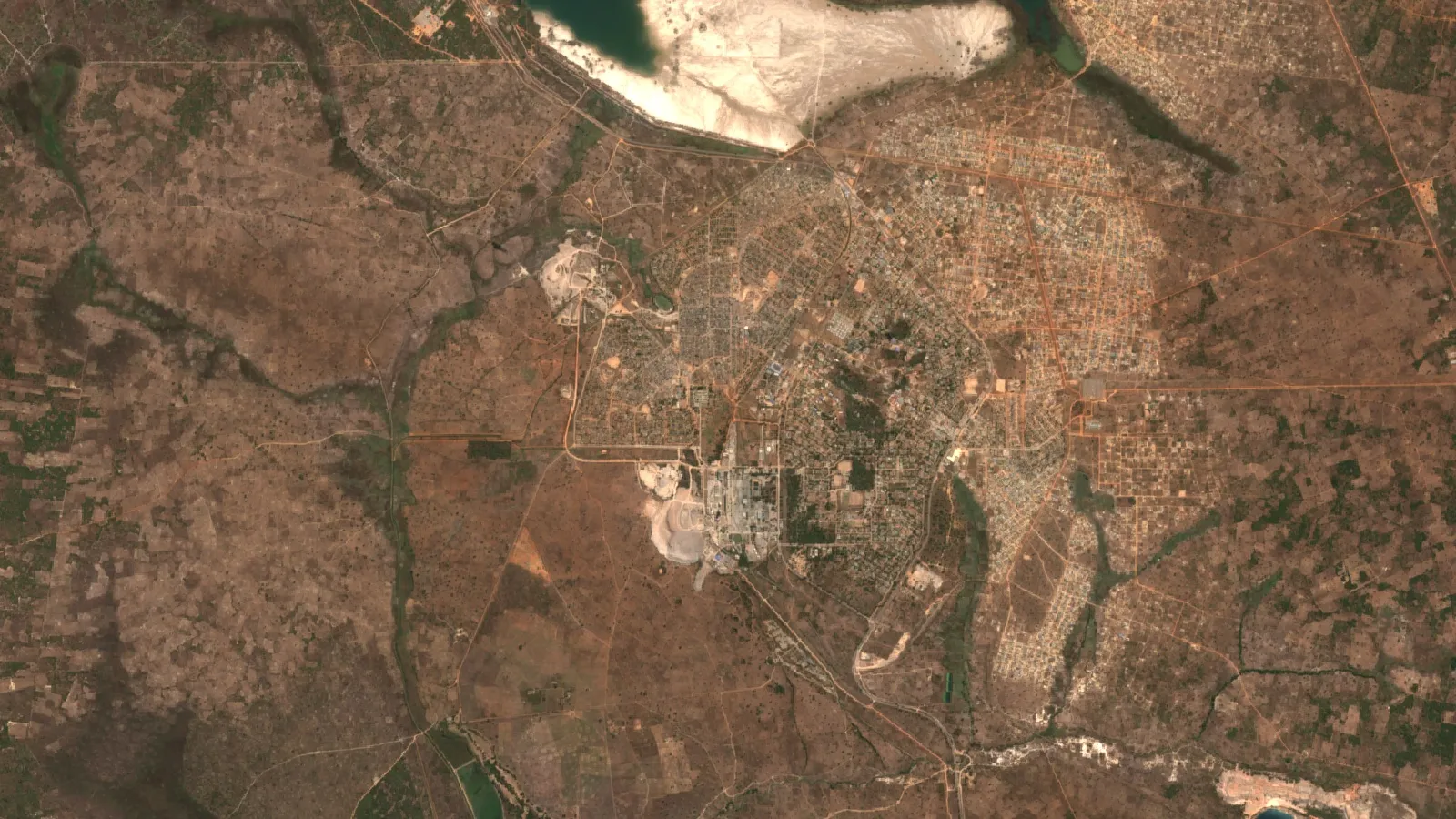
- In exploration, AI mostly ranks targets from existing data, as in the Geomorphic AI and Latin Metals deal in Argentina; KoBold describes its Mingomba copper project in Zambia as AI-and-human driven (company releases, 2026).
- Almost every result is self-reported by the operator; test any tool on your own site data before you scale it.
In this article
- How we chose these examples
- Autonomous haulage: where AI moves the most tonnes
- Predictive maintenance tools for mining equipment
- What unplanned truck downtime costs: a calculator
- AI in mineral processing: mills, leach pads and recovery
- AI in mineral exploration: KoBold and an Argentina prospect generator
- Satellite radar for tailings dam monitoring
- What the vendor figures do not show
- Frequently asked questions
Artificial intelligence in mining already runs at scale in one place: driverless haul trucks. Komatsu says it commissioned its 1,000th autonomous ultra-class truck in April 2026, and that customers using its system have moved more than 11.5 billion metric tons of material (International Mining, 21 April 2026). Other uses are smaller and less proven in public: engine-failure alerts on haul trucks, machine learning in grinding mills and leach pads, and software that ranks drill targets. This page lists eight real deployments with the result each company reported, and says where the evidence is thin.
Most figures come from the operators themselves, so they are company claims, not independent audits. We give the source and date next to each one.
How we chose these examples
Each example is a named company, at a named site or project, with a public source. We kept examples where the company states what the AI does and gives a measured, counted or contract figure. We left out vendor brochures with no site, market-size forecasts and percentage ranges with no source. Terms used below: machine learning means software that learns patterns from past data instead of following fixed rules; unplanned downtime means hours a machine is stopped by a failure nobody scheduled.
▶ Explains what an AI mining app does and who builds one. · 3:52
Autonomous haulage: where AI moves the most tonnes
Autonomous haulage means trucks that drive themselves between the shovel and the dump point, guided by GPS, sensors and a control room. It is the oldest and best documented use of AI in a mine.
Chart
Autonomous haul trucks at two operations
Number of trucks; Fortescue 2019 actual then mid-2020 plan, Gudai-Darri 2022 then 2023
Chart
Komatsu autonomous ultra-class trucks by model
Number of trucks commissioned, April 2026 (total 1,000)
1. Fortescue and Caterpillar, Western Australia
In 2019 Fortescue reported that its Cat Command trucks had moved 1 billion tonnes and driven more than 33.5 million km without a safety incident. The company said the system had delivered a 30% productivity improvement at the site and that 137 autonomous trucks were running, with 175 planned by mid-2020 (Canadian Mining Journal, 13 November 2019). These are 2019 figures and the fleet has changed since.
2. Nevada Gold Mines and Komatsu, Nevada
In July 2025 Barrick’s Nevada Gold Mines and Komatsu announced they would automate their 300-tonne and 230-tonne haul trucks with the FrontRunner system, the first use of it in the United States for both companies. Barrick’s chief executive said the aim was fewer people on board trucks, more predictable fleet performance and better fuel use (Nevada Gold Mines press release, 31 July 2025). By April 2026 Komatsu described the 1,000th FrontRunner truck, a 930E-5AT, as working at Nevada Gold Mines.
3. Rio Tinto, Gudai-Darri, Pilbara
Rio Tinto’s Gudai-Darri iron ore mine had 23 autonomous Cat 793F haul trucks and three autonomous drills when it opened (Rio Tinto, 21 June 2022). An October 2023 Rio Tinto release listed 26 autonomous 793F trucks (Rio Tinto, 18 October 2023).
The two charts show how large the Komatsu fleet is by truck model, and how two single-site fleets grew. Komatsu’s split is its own count of 1,000 trucks.
Predictive maintenance tools for mining equipment
Predictive maintenance watches data from a machine, such as engine temperature and pressure, and warns the maintenance team before a part fails. This is the topic most readers search for first, and the public evidence is more modest than the marketing.
Infographic
How a predictive maintenance alert works
- 1ReadSensors send live engine readings from the haul truck.
- 2CompareStatistical models flag readings that differ from normal.
- 3AlertThe maintenance team gets an early warning.
- 4FixThe part is repaired before it fails in service.
4. Antofagasta, Los Pelambres and Antucoya, Chile
Antofagasta put a predictive maintenance tool on the haul truck fleets at Los Pelambres and Antucoya in 2025. It uses statistical analysis and live engine readings to flag anomalies before failures happen. The company says this reduced critical engine failures at Los Pelambres and raised truck availability, but gives no percentage. At Antucoya it says the impact is still being measured (Antofagasta plc Annual Report 2025). That is a useful honest benchmark: a large operator reports a gain without a number.
What unplanned truck downtime costs: a calculator
You can test the value of an alert system on your own fleet. Enter your truck count, the hours each truck is stopped by unplanned failures in a year, the share of those hours you think alerts could remove, and what an hour of lost haulage costs you. All four are your inputs. Use your own maintenance records, not a published average.
Calculator
What could fewer unplanned truck stops be worth?
Enter your own fleet size, downtime hours and cost per hour.
- Fleet unplanned downtime today: 12,000 hours
- Value of hours saved (US$): $1,200,000
Example values only, not a benchmark or any company’s figures. The share of hours removed is your own estimate; Antofagasta published no percentage for its tool. Cost per hour is an input: example, use your own lost margin per truck-hour (US$).
AI in mineral processing: mills, leach pads and recovery
Processing is where ore becomes metal, and small gains pay off because every tonne passes through it. Crushing and grinding can account for up to half of a mine’s energy use, according to ABB specialists quoted by Mining Technology.
Chart
Reported 2025 effects of AI tools at Antofagasta
Per cent against 2024; the 0.8 point copper recovery gain at Antucoya is in the text
5. Los Pelambres SAG mill, Chile
A SAG mill is a large rotating drum that grinds ore with steel balls and rock. In 2025 Los Pelambres added a machine learning system called SIRO to its SAG mill. Antofagasta reports about 4% more unconstrained operating hours than in 2024, with mill availability of 94.4% for the year. The company also deployed a robot to replace mill liners, which keeps workers away from a hazardous task, and plans two more robots in 2026 (Antofagasta plc Annual Report 2025).
6. Antucoya heap leach, Chile
At Antucoya, the SIRO Ácido platform combines live ore characterisation with leach optimisation. Antofagasta reports a 0.8 percentage point rise in copper recovery, more than 1,000 tonnes of sulphuric acid saved and 5% less water used, all against 2024. The company adds that the system’s predictive analytics, which improved ore stacking and irrigation, supported a 1 to 2 percentage point rise in recovery (Antofagasta plc Annual Report 2025). Recovery means the share of the metal in the ore that ends up as product.
The second chart compares the effects of the two Antofagasta systems as the company reports them. They have different units, so read each bar against its own label.
AI in mineral exploration: KoBold and an Argentina prospect generator
Exploration is the stage before any mine exists, and it is where AI claims are hardest to check, because a discovery takes years to prove. Two cases are documented.
7. KoBold Metals, Mingomba copper, Zambia
KoBold Metals, which describes its approach as combining AI and human expertise, broke ground on shaft construction at Mingomba in Chililabombwe, Zambia on 29 April 2026. It estimates an investment of more than US$2 billion, targets about 300,000 metric tonnes of copper a year and expects first output in the early 2030s. The company started the project in late 2022 (KoBold Metals, 21 May 2026). For scale, USGS estimates Zambia’s 2025 copper mine output at 940,000 tonnes (USGS, Mineral Commodity Summaries 2026), so 300,000 tonnes a year would be a large addition. Mingomba’s figures are company targets, not production. The company’s page does not publish a resource estimate or an independent audit of how much the AI contributed to the find.
8. Geomorphic AI and Latin Metals, Argentina
On 31 August 2026 Geomorphic AI announced an agreement with Latin Metals (TSXV: LMS) to run its AI platform over about 25 years of Latin Metals’ exploration data in Argentina and rank new opportunities. If Latin Metals acquires property in a target area Geomorphic identifies, Geomorphic may earn a 0.5% net smelter return (NSR) royalty, which is a share of mine revenue after smelting costs, plus a US$5,000 success fee for each such target area (capped at US$50,000 in total). Latin Metals decides which targets to pursue (Geomorphic AI press release, 31 August 2026). This is a screening contract, not a discovery. It shows the common use of AI in exploration: sorting existing data to decide where to spend drilling money.
Satellite data does a similar sorting job at the surface. It can map iron staining, clay minerals and fault patterns over a whole licence and rank the areas that look most like known deposits. Farmonaut produces such exploration-target maps from satellite imagery; the output is a short list of places to sample, ahead of any resource estimate. See satellite-based mineral detection and our guide to technologies used in exploration.

▶ Explains how AI is used in mineral exploration, where it fails and how to check a claim. · 4:37
Satellite radar for tailings dam monitoring
Tailings are the waste slurry left after ore is processed, stored behind dams. Researchers applied a statistical-learning method to satellite radar (InSAR) ground-movement data from the Brumadinho dam in Brazil, which failed on 25 January 2019. The method flagged signs of emerging risk at least five months before the collapse (Das, Priyadarshana and Grebby, arXiv, 2023). The study looked back at old data, so it shows the signal was there, not that an alarm system would have worked in real time. It is research, not one of the eight deployments above.
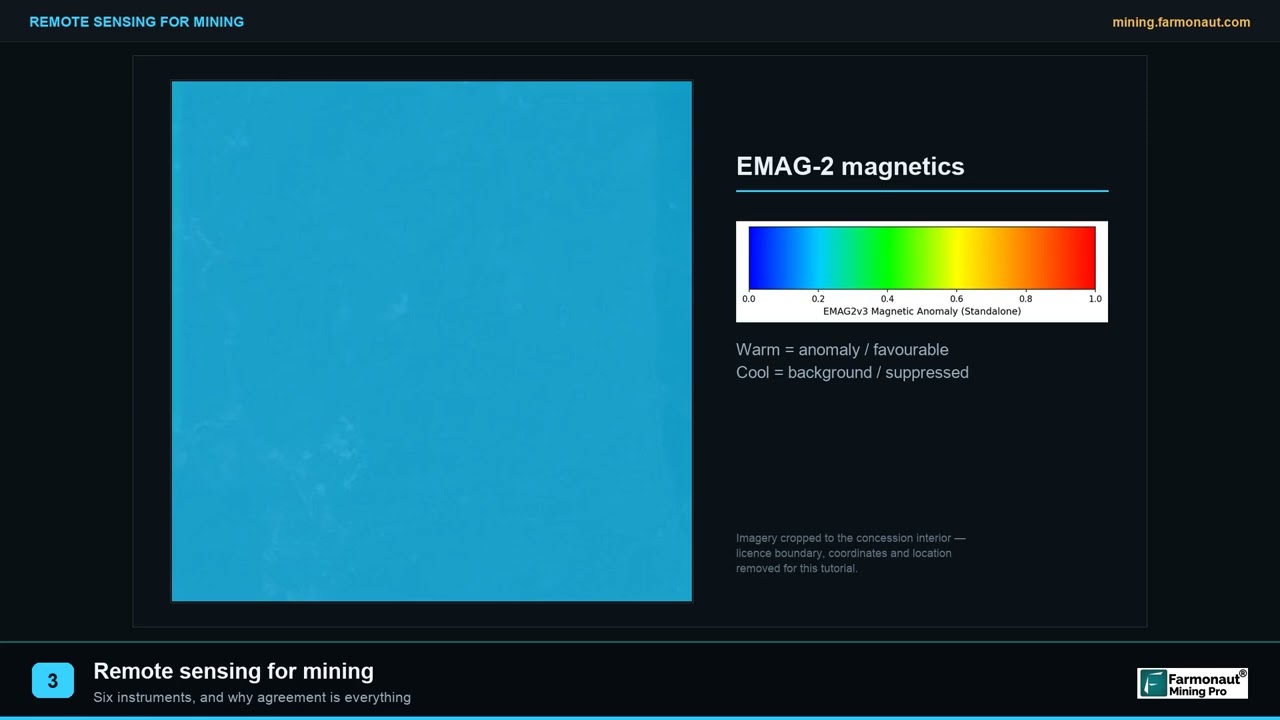
▶ Explains remote sensing for mining in three minutes. · 2:01
What the vendor figures do not show
- Most results are self-reported. Fortescue (through Caterpillar), Komatsu, Antofagasta and KoBold are describing their own operations or their customers’ trucks. None of the sources cited here includes an independent audit.
- Success is easier to count than failure. Operators publish the sites where a system works. A tool that was trialled and dropped rarely gets a press release.
- Gains are site-specific. A 0.8 point recovery gain at one leach pad does not transfer to another ore type. Test on your own data.
- Data comes first. Predictive maintenance needs sensors, history and people who act on the alerts. Antofagasta itself notes the Antucoya impact is still being measured.
- Safety needs rules as well as software. Autonomy lowers the number of people on board trucks, but US federal researchers at NIOSH said in 2022 that they were studying how to keep workers and operators safe near autonomous haulage equipment as more US mines considered automation (NIOSH, 2022).
If you are a consultant or licence owner choosing where to start, the lowest-cost step is usually data you already hold: maintenance logs, drill assays and imagery. Our overview of mining technology covers other tools, and the guide to reducing the impact of mining covers the environmental side. For a quote on mapping a licence area, use the mining query form, or contact us.
Frequently asked questions
How is AI used in mining?
The documented uses are autonomous haul trucks, predictive maintenance on equipment, machine learning in mills and leach pads, and software that ranks exploration targets. Komatsu alone reports 1,000 autonomous ultra-class trucks commissioned (International Mining, April 2026).
What is the most widely used AI in mining?
Autonomous haulage is the most widely documented. Komatsu reports more than 11.5 billion metric tons moved by customers using its system, and Fortescue reported 137 autonomous trucks in 2019.
Does predictive maintenance work for mining equipment?
Antofagasta reports fewer critical engine failures on haul trucks at Los Pelambres after adopting a predictive tool in 2025, but it does not publish a percentage. Measure the effect on your own fleet before you scale.
Which predictive maintenance tools are used in mining?
Operators use a mix of equipment-maker platforms, in-house models and third-party software. Antofagasta’s tool analyses live engine parameters to catch anomalies early. Ask any supplier for a named site and a measured result.
Can AI find new mineral deposits?
It can rank where to look. Geomorphic is sorting 25 years of Argentine data for Latin Metals. A deposit is only proven by drilling and a resource estimate.
Is there an example of AI in mining in Argentina?
Yes. Geomorphic AI and Latin Metals signed an agreement on 31 August 2026 to rank exploration targets from Latin Metals’ Argentine database. It is a screening contract at an early stage.
Will AI replace miners?
Autonomous trucks reduce the number of drivers on board, and robots now replace mill liners at Los Pelambres. None of the companies cited reports job totals, so the effect on roles is not known.
How much does AI cost a mine?
None of the companies cited publishes unit prices. Costs depend on sensors, communications (Nevada Gold Mines is adding a 5G network) and staff time, so ask suppliers for a quote against your site.
Can satellites help with tailings dam safety?
Research on the Brumadinho dam found warning signs in satellite radar data at least five months before the failure, in a retrospective study. Operators still need ground monitoring.
How do I start using AI at a small mine?
Start with data you already hold. Clean maintenance logs, drill results and a satellite scan of the licence are a smaller first step than a sensor network, and they help show whether a bigger project is worth it.
This page is for information only. It is not investment advice and names no share prices or targets. Company results are self-reported; check each company’s filings before you decide anything.
Farmonaut mining
Map your mining site from space
Consultants can see how satellite data screens a licence area for exploration targets, ahead of a resource estimate.
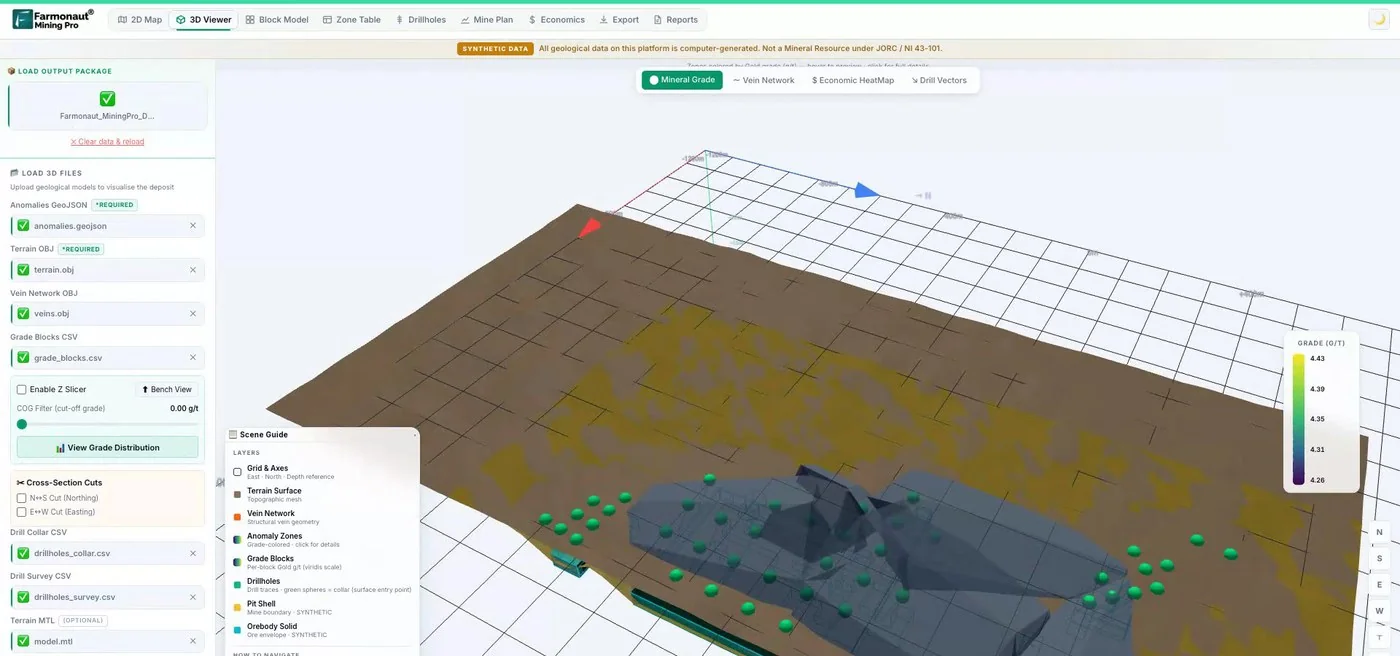
Mining Pro sample view, synthetic data
Keep reading
Sources
- International Mining, Komatsu commissions 1,000 autonomous ultra-class trucks (2026): im-mining.com
- Canadian Mining Journal via Mining.com, Caterpillar moves a billion tonnes autonomously at Fortescue (2019): mining.com
- Nevada Gold Mines and Komatsu press release (31 July 2025): s25.q4cdn.com
- Rio Tinto, Gudai-Darri opening (2022): riotinto.com
- Rio Tinto, Gudai-Darri capacity increase (18 October 2023): riotinto.com
- Antofagasta plc, Annual Report and Financial Statements 2025: antofagasta.co.uk
- Mining Technology, Assessing AI’s growing role in crushing and grinding: mining-technology.com
- KoBold Metals, Breaking ground at Mingomba (21 May 2026): koboldmetals.com
- Geomorphic AI and Latin Metals agreement (31 August 2026): newsfilecorp.com
- Das, Priyadarshana and Grebby, InSAR spectral analysis of the Brumadinho dam (arXiv, 2023): arxiv.org
- NIOSH, Spokane Research Laboratory expanded mission (2022): cdc.gov
- USGS, Mineral Commodity Summaries 2026: Copper: pubs.usgs.gov
Discussion
Questions, corrections or field experience? Share them below. First-time comments are reviewed before they appear, and your email is never published.
No comments yet. Be the first to add a question or your experience.

 CIMISCO SARL
 Mining SARL
 SenGold Invest SAS
 Sania Corporation
 Sean Mining Limited
 NTS Group (Pty) Ltd
 Mine4Africa
 Lithspo Minerals Limited
 Tintina Mining Group
 Dalgety Minerals Pty Ltd
 Vortex Minerals Pty Ltd
 Faith At Work (Pty) Ltd
 Geotech Mining Solutions plc
 Vulcan International Limited
 Kidepo Associates
 GKY Mining
 Alkimy SARL
 Double A Trading
 GemSprout Metals Limited
 Qader Group
 Ileys General Trading
 SG Gold Mining LLC
 VRV Global Pte Ltd
 Omsri International FZE










