

Barley Seeds for Planting: 7 Proven Innovations for 2026
Summary: Barley Seeds in Modern Agriculture – A Comprehensive Guide for 2025 & Beyond
Barley remains one of the world’s most important cereal grains, prized for its versatility in food, feed, and industrial uses. As farming practices evolve heading into 2025 and 2026, farmers must understand the nuanced differences between barley seed types, sourcing strategies, and the transformative impact of modern planting innovations. This in-depth guide explores barley seeds—including spring barley seeds, barley grass seeds, and certified high-yield varieties—while highlighting cutting-edge agritech for achieving resilient, sustainable, and profitable barley crops. We draw upon our expertise at Farmonaut, leveraging satellite, AI, and blockchain insights to advance the future of agriculture.
- Why Barley Seeds Remain Crucial in 2026
- Key Types of Barley Seeds: Varieties & Uses
- Comparison Table: 7 Proven Barley Seed Innovations for 2026
- Spring Barley Seed: Modern Favorite for Fast Rotations
- How to Source Quality Barley Seeds Near Me
- Modern Planting Methods & Precision Tools
- 7 Agricultural Innovations Transforming Barley Seed Cultivation
- Barley Seeds for Sale: Market Outlook & Economic Factors
- Farmonaut: Enabling Smart Barley Cultivation with Satellite Technology
- FAQ: Barley Seeds & Modern Planting Questions
- The Future of Barley Seeds: Thriving in 2026 & Beyond
Why Barley Seeds Remain Crucial in 2026
Barley is not just an ancient grain—it’s a cornerstone of global agriculture that’s continually reinvented through planting innovations and modern seed technologies. In 2026, barley’s role in food security, animal feed, industrial production, health trends, and sustainability is only set to grow. Climate change, variable growing seasons, and demand for high-yield, resilient crops mean that barley seeds for planting must be:
- Climate-adaptive: Tolerant of drought, heat, and unpredictable weather
- Nutritionally enhanced: Rich in proteins, vitamins, minerals, and antioxidants
- Tailored for end-use: Distinct varieties for malting, baking, feed, and grass supplements
- Fast-maturing: Enabling shorter rotations and efficient land use
- Disease and pest resistant: Improving yields and reducing agrochemical use
Farmers and agribusinesses increasingly seek certified barley seeds with proven stand establishment, high germination rates, and traits aligned with specific regional conditions.
Key Types of Barley Seeds: Varieties & Uses
Barley seeds come in a remarkable diversity of types and varieties, each tailored for distinct agricultural practices, climates, and markets. In 2026, understanding the difference between spring barley seed, winter barley seed, barley grass seeds, and specialty lines is vital for successful, sustainable farming.
Main Types of Barley Seeds
- Spring Barley Seeds:
Typically sown in early spring and harvested before winter’s onset, spring barley is ideal for shorter growing seasons and regions with harsher winters. Often used for malting, food, and fast rotating systems. - Winter Barley Seeds:
Sown in autumn, winter barley overwinters and resumes growth in spring. This leads to longer growth periods and, often, higher yields thanks to earlier crop establishment and extended photosynthetic time. - Barley Grass Seeds:
Cultivated primarily for livestock fodder, supplements, and soil health improvement, barley grass offers dense nutritional value, including vitamins, minerals, and antioxidants. Valued for pastures and ‘green superfood’ markets. - Malting Barley Varieties:
Specialty seeds bred for the brewing and distilling industries, these require tight quality and purity controls, ensuring suitable protein and enzyme profiles for malting. - Feed Barley Varieties:
Developed for high-volume livestock feed, emphasizing bulk yield and nutritional profile over malting properties. Often more resilient to disease and less stringent on protein content. - Hull-less & Specialty Barley:
Innovative hull-less ‘naked’ barleys are gaining ground for food processing efficiency and human health diets, with higher beta-glucan and fiber content. Some are tailored for gluten moderation and specialty baking.

Barley seeds are available in diverse forms to suit modern agricultural challenges and market opportunities. Careful variety selection is crucial for optimized yield and profit.
Barley Seeds for Planting: Why Quality, Purity, & Certification Matter
Regardless of type, ensuring seed quality is fundamental. Farmers should seek:
- Certified barley seed for sale: Backed by test reports on purity, germination, and disease resistance
- High germination rates—preferably over 93%
- Seed health and vigor testing, including fungicide/insecticide treatments for early protection
- Genetic traits including climate resilience and pest resistance
This attention ensures strong stand establishment and maximized yield in 2025-2026’s unpredictable growing conditions.

Comparison Table: 7 Proven Barley Seed Innovations for 2026
The table below summarizes the top seed varieties and planting innovations reshaping barley cultivation for 2026. Factors such as seed type, estimated yield benefits, disease/pest resistance, and technology adoption are compared to empower farmers’ decisions for thriving barley production.
| Seed/Innovation Name | Type | Estimated Yield Increase (%) | Disease Resistance | Suitable Climate/Region | Sourcing Availability (2025) | Featured Technology | Adoption Cost (USD/acre) |
|---|---|---|---|---|---|---|---|
| SpringMax 26 | Spring Barley Seed | +19% | Powdery mildew, rusts | Cool temperate, short growing season | Widespread (certified suppliers) | Genetic editing, vigor screening | $39–52 |
| DroughtShield Gold | Climate-adaptive Barley Seed | +23% | Root rot, Fusarium | Semi-arid, variable rainfall | Expanding (select regions) | Lab-bred stress tolerance | $48–66 |
| BioBoost Grass | Barley Grass Seed | +17% | Leaf spot, rust | Livestock zones, cool & warm | Readily available | Enhanced micronutrient profile | $23–31 |
| PrecisionPlant Smart | Precision Planting System | +14% (stand emergence) | N/A | All climates (machine-compatible) | Custom order | Real-time depth & spacing via AI | $110–190 (system lease) |
| WinterPrime 25 | Winter Barley Seed | +21% | Net blotch, mosaic virus | Mild winters, temperate zones | Broadly available | Early growth vigor genetics | $41–58 |
| TraceGenix Malt | Malting Barley Seed | +17% | Scald, scab | Malting regions, moist summers | Specialist channels | Blockchain-based quality traceability (See benefits) | $44–59 |
| AI-Fit Disease Scout | Automated Disease Monitoring | prevents -12% yield loss | All major diseases | All (tech access required) | Subscription-based | Satellite+AI pest/disease alerts (Large-scale management) | $15/mo (per operation) |

Spring Barley Seed: The Modern Favorite for Fast Rotations
Spring barley seed stands out in modern barley farming, valued for its shorter growing period, adaptability, and fit for mechanized planting. As farmers face tighter windows due to climatic shifts, spring barley is typically sown as soon as soils allow in spring, maturing before severe frost returns.
- Key regions: Northern Europe, the Canadian prairies, US Upper Midwest, highland Asia, and temperate Australia—where harsh winters or short seasons dominate
- Fast cycles: Most spring barley matures in under 90-110 days, enabling multi-cropping and better land use
- Malting & food use: Preferred in brewing due to enzyme profiles and in premium health-food sectors
The surge in high-tech spring barley seed reflects demand for climate-adaptive varieties and increased adoption of rapid, precision planting methods.

How to Source Quality Barley Seeds Near Me in 2025–2026
The phrase “barley seeds near me” is frequently searched by farmers aiming for localized supply advantages. Sourcing barley seeds near your farm:
- Improves suitability: Local distributors supply varieties already adapted to regional soils and climates
- Enhances germination and resilience: Reduced stress from long transport, seed conditioning in ambient conditions, and higher chance of stand establishment
- Assures certification: Proximity to certified suppliers often ensures regulatory standards, varietal purity, and integrated treatments (fungicides, insecticides)
How to source effectively:
- Utilize digital platforms and local networks—specialized seed buyer portals and mobile apps now connect you directly with certified seed distributors. (Look for transparent seed lot data, test reports, and geolocation features.)
- Request certification and test results—always review purity, vigor, and disease status, especially for spring and malting barley.
- Assess support services—top suppliers offer advisory on optimal seeding rates, agronomic best practices, and updates on new advancements.
- Verify seed treatments—ensure options for pre-treated seeds to guard against early fungal and insect pressures.
Barley seeds for sale from a reputable, near-farm supplier are one of the most critical decisions for 2026 planting success.



Use the Farmonaut App to monitor crop suitability, regional climate maps, and access the latest advisories for sourcing the best barley seeds from certified local suppliers.
Modern Planting Methods & Precision Tools
Historical barley planting methods—broadcast spreading and basic drill seeding—are rapidly being replaced by precision planting technologies. In 2026, we recommend:
- Precision planters: Ensure uniform seed depth and spacing, essential for boosting germination rates by up to 15% over traditional equipment. (See trivia!)
- AI-driven soil moisture sensing: Real-time recommendations on planting windows for optimal soil conditions, reducing “missed opportunity” days
- Variable seed rates: Modern equipment and analytics suggest optimal pound/acre rates based on localized soil fertility and weather patterns
- Minimal tillage and adaptive row widths: Reduce soil disruption, retain moisture, and allow faster field access after rain events
Many of these advances are accessible via mobile & web apps, enabling both small and large-scale farmers to make data-driven planting decisions.
Tip:
Use Farmonaut’s Carbon Footprinting tools to quantify environmental benefits when switching to minimal-tillage barley planting and other regenerative practices.
The 7 Agricultural Innovations Transforming Barley Seed Cultivation in 2026
Modern barley cultivation is undergoing a rapid transformation, driven by adoption of advanced agritech innovations. Below are the seven game-changing technologies and practices poised to redefine how barley seeds for planting are selected, sown, and managed:
- Lab-Bred Climate-Resilient Barley Seeds:
- Incorporate novel genes from wild relatives or via CRISPR/CAS editing
- Show superior yields in drought-prone and high-heat environments
- Higher resilience means stable supply amid climate volatility
- Automated, Precision Planting Systems:
- AI-driven drones/tractors adjust seed depth and spacing on-the-fly (link to Farmonaut’s large-scale farm management tools)
- Minimize seed wastage; enable accurate trials of new varieties
- Satellite & AI-Based Crop Monitoring:
- Real-time alerts on soil moisture, vegetation health (NDVI), and pest/disease emergence
- Apps/platforms help schedule irrigation, input use, and optimize harvest windows (Learn more)
- Blockchain-Based Traceability for Seed & Grain:
- Critical for food safety, malting barley, and premium supply chains (Trace your product authenticity here)
- Ensures purity, quality certification, and compliance for barley seed for sale
- Integrated Pest & Disease Management (IPM):
- Combines disease-resistant seed genetics with real-time digital scouting
- Alerts via platforms reduce losses to virulent diseases (barley yellow dwarf virus, Fusarium, net blotch, etc.)
- Remote Sensing & Fleet Management:
- Optimize machinery deployment, reducing in-field compaction (Fleet Management benefits)
- Supports contractors and large operators in scaling barley planting
- Big Data Platforms for Input Optimization:
- Combine historic yield, weather, and soil data to suggest best seed varieties and input strategies per region
- Accessible to farmers via smart apps & APIs (Integrate with Farmonaut’s API | Developer Docs)

Farmers adopting these seven innovations often realize higher yields, greater seed efficiency, improved sustainability, and higher market premiums for traceable, certified barley.

Barley Seeds for Sale: Market Outlook & Economic Considerations
The market for barley seeds for sale is set for significant evolution by 2026, shaped by:
- Expanding demand: Growing in food (ancient grains, gluten-moderate baking), premium animal feed, biofuel, and functional foods
- Premiums for certified and traceable grain: Especially in brewing and health-food industries, where authenticity and provenance command higher prices
- Government and corporate incentives: Sustainable barley rotations and soil health practices are increasingly rewarded through direct payments, carbon credits, and crop insurance discounts (Easy crop loan & insurance verification)
- Digital marketplaces: Reach wider pools of buyers; allow rapid comparison of spring and winter barley seed varieties and pricing
Buying and selling barley seed has never been more data-driven—as certified purity, climate match, and integrated tech become key selection criteria for farmers and resellers.
Farmonaut: Enabling Smart Barley Cultivation with Satellite Technology
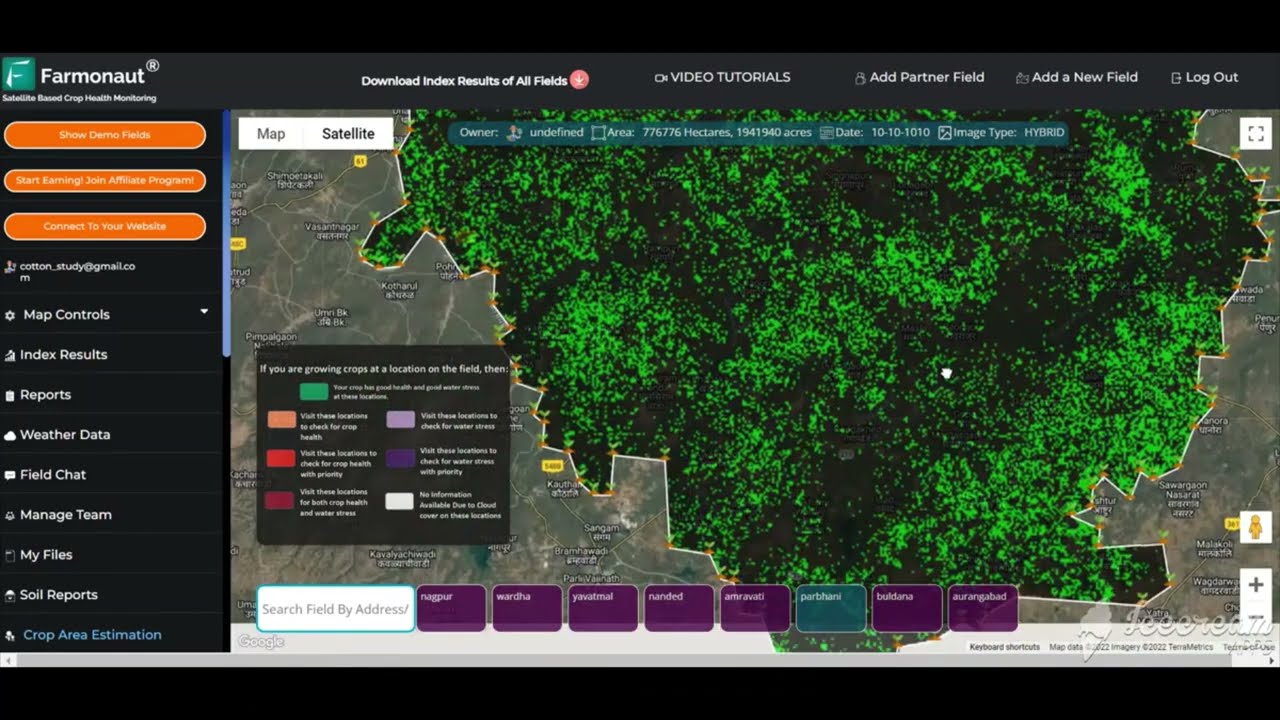
At Farmonaut, we believe in empowering farmers to adopt precision agriculture and modern crop management regardless of their location or operational scale. Our satellite-driven technologies provide:
- Real-time crop and soil monitoring: Multispectral satellite imagery and AI detect field anomalies, disease emergence, and barley crop stress—enabling targeted barley seed and input decisions
- Data-backed variety selection: Our advisories help farmers match the best barley seed variety to specific fields by referencing years of satellite, climate, and yield data
- Traceability via blockchain: Ensuring barley grain and barley seeds for sale are authentic, certified, and transparent, especially important for premium malting and health food supply chains
- Environmental footprint tracking: Track your carbon emissions, water use, and soil health improvement over time (visit our Carbon Footprinting service)
- Fleet and large-scale farm management: Streamlining logistics for barley planting, harvesting, and input operations (see Fleet Management tools)
- API access for automation: Use our API (here | developer docs) for automated input scheduling, disease prediction, and compliance reporting
By leveraging these tools, farmers gain a critical edge in the evolving global barley market.

Frequently Asked Questions: Barley Seeds & Modern Planting
1. What is the best type of barley seed for my farm?
The best barley seed depends on your region’s climate, end use (malting, feed, grass, or food), and management practices. For short, harsh seasons, spring barley seed offers rapid maturity; for areas with milder winters, winter barley seed provides longer growth and potentially higher yield. Consider disease resistance, certification, and traceability for premium markets.
2. How do I find certified barley seeds near me?
Use digital sourcing platforms or apps that list certified suppliers within your region. Check for test results, purity reports, and seed treatment information. For in-depth analytics, leverage satellite-driven tools like the Farmonaut app.
3. Are lab-bred or climate-adaptive barley seeds better?
For regions facing increased weather volatility or drought, lab-bred and climate-adaptive barley seeds can provide yield stability and higher resilience. Always balance innovation with field-tested performance in your local environment.
4. What are the key innovations to watch for in 2026?
Top innovations include AI-guided planting systems, disease-resistant seed genetics, blockchain for traceability, real-time satellite monitoring, climate-smart barley grass seeds, and data-driven input optimization platforms.
5. How do new planting technologies impact barley yield and sustainability?
Precision planters, AI, and satellite analytics boost germination rates, improve stand uniformity, and reduce input overuse. This means higher yields, greater profitability, and a lower environmental footprint for innovative barley growers.
The Future of Barley Seeds: Thriving in 2026 & Beyond
As global barley agriculture continues to evolve, successful farmers in 2026 will be those who embrace seed improvement, modern planting innovations, and digital management platforms. Quality barley seeds for planting—whether spring barley seed, barley grass seeds, or specialty varieties—remain the bedrock of yield and sustainability.
Prioritizing seed certification, purity, and regional adaptation is crucial. Digital platforms, real-time advisories, and agritech tools (like those from Farmonaut) are vital for maximizing yield, managing risk, and remaining competitive in an ever-changing market. From sourcing “barley seeds near me” to harnessing blockchain-backed traceability, the future is bright for growers leveraging data, technology, and innovation.
Ready to unlock smarter barley farming? Explore
traceability,
crop insurance,
carbon footprinting,
or integrate with our
API for your next barley season.
Let’s shape the next generation of barley farming—together with the smartest seeds, tools, and insights available.

 MCSOD
MCSOD Marei Nursery
 Sayaji Group
 eKGIS
eKGIS Mostas Tech
 Native Seeds
 Andex
Andex FCF India
 Unifrutti Gulf
 Deluxe Conseil
 TVS Electronics
 WICO
WICO Chimera Innovation
 SkyHarvest
 Polaris Digitech
