

Best Crops for Indoor & Vertical Farming (With Yield Data)
Reviewed September 2026 against IMARC Group’s US indoor farming market report and University of Georgia CAES’s Controlled Environment Agriculture Basics publication.
Try it: Run your own numbers →
Introduction: What Actually Grows Well Indoors
The best crops for indoor farming and vertical farming are, in order of commercial reliability: leafy greens (lettuce, spinach, kale, arugula), culinary herbs (basil, mint, cilantro), microgreens, and a smaller tier of fruiting crops (tomatoes, cucumbers, peppers) grown in dwarf or vine-trained form. That ranking isn’t a style preference — it follows directly from three numbers every grower needs before choosing a crop list: growth-cycle length, price premium over field-grown produce, and how much of a crop’s yield comes from vertical stacking versus horizontal footprint. This article works through all three, with sourced figures rather than the “yields up to 100x higher” claims that circulate on indoor farming blogs without a citation attached.
If you searched for indoor crop growing, vertical farming crops, or the most profitable indoor farming setup, the answer depends on which constraint binds hardest for your operation: rack space, energy cost, or labor. Below, each major crop category is scored against those three constraints using data from University of Georgia’s College of Agricultural and Environmental Sciences (CAES) and IMARC Group’s market sizing for the US sector.
How Big Is US Indoor Farming, and Why It Matters to Your Crop Choice
Roughly 2,000 commercial indoor farms were operating in the United States as of 2024, according to IMARC Group, feeding into a US indoor farming market valued at $5.3 billion in 2025 and projected to grow at a compound annual growth rate of 9.0% between 2026 and 2034 (IMARC Group, United States Indoor Farming Market). That growth rate is a market-wide average across all crop types and technologies — it is not a promise that any individual crop or farm will grow at 9% a year, and it should be checked against IMARC’s next annual update (typically released in Q1) before you use it in a business plan.
Scale matters here because it explains why leafy greens dominate the “best crops” conversation: University of Georgia CAES’s 2019 baseline count found 2,994 controlled-environment agriculture (CEA) operations in the US producing 786 million pounds of product that year (UGA CAES, Controlled Environment Agriculture Basics). That 2019 figure is the most recent full national production count in the CAES report — USDA’s Quick Stats tool (nass.usda.gov/quickstats) publishes updated greenhouse and controlled-environment acreage quarterly, so if you need a number newer than 2019, search “greenhouse” or “controlled environment” there rather than relying on a static blog figure that will go stale.
Best Crops for Indoor Farming
The crops below are ranked by how well documented their commercial performance is, not by hype. Each entry states the growth-cycle length and the resource profile that determines whether it belongs in a beginner’s rack or a specialized greenhouse.
1. Leafy Greens: Lettuce, Spinach, Kale, Arugula
- Growth cycle: 14–28 days from transplant to harvest
- Compact root systems allow multiple stacked layers per vertical unit
- Consistent year-round wholesale and retail demand
Lettuce is the crop most often cited in US vertical farming economics because its market price gap against field-grown lettuce is directly measured: vertical farm-grown lettuce sold for $7.82 per kilogram in US markets in 2024, versus $3.04 per kilogram for field-grown lettuce — a premium of roughly 2.6 times (UGA CAES). That premium is what makes short-cycle greens the default answer to “best crops for indoor farming” even though the produce itself sells at a small fraction of what fruiting crops fetch per pound — the turnover rate more than compensates.
2. Culinary Herbs: Basil, Mint, Cilantro
- Growth cycle: 20–30 days, with cut-and-come-again harvest extending total yield per planting
- Sell fresh-cut into restaurant and grocery channels at a meaningful markup over dried equivalents
- Low rooting depth keeps water and substrate costs down

3. Microgreens: The Fastest Turnover Crop
- Harvest in 7–14 days — the shortest cycle of any commercially viable indoor crop
- Extremely shallow rooting depth allows very high planting density per square foot
- Sold by weight at a premium into restaurant and specialty grocery channels
Because microgreens turn over every one to two weeks, a single rack tier can run 20+ harvest cycles a year versus roughly 13–18 cycles for full-size lettuce. That turnover rate is the reason microgreens appear on nearly every “most profitable indoor farming” list, even though the revenue per tray is small — the multiplier comes from cycle count, not per-unit price.
4. Fruiting Crops: Tomatoes, Cucumbers, Peppers
- Growth cycle: 55–95 days — three to five times longer than leafy greens
- Require supplemental lighting, vine support, and active pollination management
- Dutch-style greenhouse operations report annual tomato yields of 15–18 pounds per square foot (UGA CAES)
CO₂ enrichment is the single most effective lever documented for greenhouse tomato production, raising yield by 25–30% over ambient-CO₂ conditions (UGA CAES). For an operator already running full climate control, CO₂ dosing is usually the lowest-cost yield gain available because it doesn’t require new lighting or structural investment.

5. Strawberries: The Highest-Multiplier Fruit Crop
- Vertical farming systems produce 5–7 times the yield per square foot of field-grown strawberries (UGA CAES)
- Perpetual-bearing (day-neutral) varieties suit continuous indoor harvest cycles
- Higher capital cost per plant than leafy greens, offset by strong retail pricing
Strawberries are the crop most likely to be underrated by growers focused only on lettuce economics — the 5–7x field-yield multiplier is one of the largest documented in the CAES report for any crop category, indoor or field.
6. Tree Seedlings and Nursery Stock
- Grown in germination beds under controlled humidity to raise outplant survival rates for reforestation contracts
- Cycle length of 21–60 days depending on species and target sapling size
- A niche but growing use case tied to state and federal reforestation programs rather than retail produce markets
Best Crops for Vertical Farming: What Stacks and What Doesn’t
Vertical farming crops and indoor farming crops overlap heavily, but “vertical” adds one hard constraint: every tier below the top needs its own light source, since natural daylight can’t reach lower shelves. That single fact is why the list of crops for vertical farming is shorter and more leafy-green-weighted than the list for indoor farming generally, which also includes ground-level greenhouse fruiting crops that don’t stack.
What Stacks Well
- Lettuce, spinach, arugula, kale — short canopy height (under 12 inches) means tiers can be spaced tightly, maximizing shelves per vertical foot
- Microgreens — near-zero canopy height allows the tightest tier spacing of any crop
- Basil, mint, cilantro — moderate height but tolerate close tier spacing with regular trimming
What Doesn’t Stack Well
- Tomatoes and cucumbers — vine height and light intensity requirements make true multi-tier stacking impractical; these are usually grown in single-level greenhouses with vertical trellising instead of stacked racks
- Peppers — similar constraint; grown tall on a single level rather than stacked
This distinction matters for anyone searching “what can be grown in vertical farming” expecting tomatoes to stack the way lettuce does — they don’t, at least not in the shelf-and-tray sense most vertical farm photos depict. When a source shows tomatoes in a “vertical farm,” it usually means vertical trellising on one growing level, not multiple stacked tiers.

Quick Reference: Best Vegetables for Vertical Farming
- Lettuce (Romaine, Butterhead, Cos)
- Spinach
- Arugula
- Kale (Curly, Lacinato)
- Basil, mint, cilantro
- Microgreens (radish, broccoli, sunflower, pea shoot)
- Strawberries (day-neutral varieties)
For a deeper breakdown of exactly how yield per square meter is calculated for each of these crops — including the difference between nominal footprint and stacked-tier yield — see our dedicated guide: vertical farming yield per square meter and per acre.
Comparison Table: Yield, Price, and Cycle Time by Crop
| Crop | Growth Cycle | Stacks Vertically? | Yield/Price Data Point | Source |
|---|---|---|---|---|
| Lettuce | 14–28 days | Yes | $7.82/kg vertical-farm price vs. $3.04/kg field price (2024) | UGA CAES |
| Spinach, Kale, Arugula | 16–31 days | Yes | Short canopy height; same tier-spacing advantage as lettuce | UGA CAES |
| Microgreens | 7–14 days | Yes (tightest spacing) | Fastest cycle of any CEA crop; 20+ harvests/year possible per tier | UGA CAES |
| Basil, Mint, Cilantro | 20–30 days | Yes | Cut-and-come-again harvest extends yield per planting | UGA CAES |
| Strawberries | Perpetual (day-neutral) | Partial (tower systems) | 5–7x field-yield multiplier | UGA CAES |
| Tomatoes | 60–95 days | No (trellised, single-level) | 15–18 lb/ft²/year in Dutch-style greenhouses; +25–30% yield from CO₂ enrichment | UGA CAES |
| Cucumbers, Peppers | 55–75 days | No (trellised, single-level) | Grown alongside tomatoes in the same greenhouse systems | UGA CAES |
All cycle-length and yield figures above come from the University of Georgia CAES publication cited throughout this article (UGA CAES, Controlled Environment Agriculture Basics). Where the CAES report gives a range rather than a point estimate, that range is reproduced as-is rather than compressed to a single “typical” number.
Most Profitable Indoor Farming: The Numbers Behind the Margin
The most direct answer available for “most profitable indoor farming” comes from UGA CAES’s revenue modeling: a 10,000-square-foot vertical farm operating at full capacity can generate $1.2–1.8 million in annual gross revenue (UGA CAES). That figure is gross revenue, not profit — it does not net out energy, labor, seed, substrate, or capital equipment costs, and the CAES report does not publish a crop-specific profitability threshold after those costs, which the brief behind this article flags as a real gap in the public data. If you need a net-margin number for your own crop mix, the way to build one is to take your local electricity rate (energy is consistently the largest recurring cost in CEA operations), your local labor rate, and the wholesale price your buyer actually pays — then run those three inputs against the calculator below.
What the $1.2–1.8 million range does tell you: at full capacity, a 10,000-square-foot facility is generating $120–180 per square foot per year in gross revenue. That per-square-foot figure is the number worth comparing across crop choices, because it’s driven overwhelmingly by two things — cycle count per year and price per unit — both of which favor leafy greens and microgreens over slower fruiting crops when full stacking is available.
Indoor Farming Benefits: What the Data Actually Supports
Indoor farming benefits fall into two categories: benefits with a published number behind them, and benefits that are directionally true but not quantified in the sources available for this refresh. Being specific about which is which is the point of this section.
- Year-round production: Controlled temperature and lighting remove seasonality as a constraint — this is structurally true by design, not something that needs a citation.
- Price premium capture: Documented at $7.82/kg vs. $3.04/kg for lettuce (UGA CAES, 2024) — a 2.6x premium that direct-to-retail growers can capture if their buyer pays vertical-farm pricing rather than commodity wholesale.
- Yield multiplication on strawberries: 5–7x field yield per square foot (UGA CAES, 2024) — the single largest documented multiplier of any crop in this article.
- CO₂-driven yield gains on tomatoes: 25–30% increase from CO₂ enrichment (UGA CAES, 2024) — a specific, actionable lever rather than a general claim about “improved yields.”
- Market growth tailwind: A 9.0% CAGR projected for the US indoor farming market through 2034 (IMARC Group, 2025) suggests expanding wholesale demand, though this is a market-wide average, not a guarantee for any individual crop or farm.
Claims this article is deliberately not making: specific water-savings percentages, specific pesticide-reduction percentages, and specific fertilizer-runoff-reduction percentages. The sources behind this refresh describe water use as “significantly less” than field agriculture without a US-specific gallons-per-pound baseline, so a precise percentage would be invented rather than sourced. If you need a defensible water-use figure for a grant application or investor deck, USDA’s Agricultural Research Service and university extension programs (including UGA CAES’s ongoing CEA research) are the right place to request a crop-specific figure with its methodology attached, rather than reusing an unsourced percentage from a marketing page.

Rack Yield & Revenue Calculator
Use your own rack footprint, tier count, and crop cycle length to estimate annual harvest cycles and gross revenue potential — the same per-square-foot logic behind the $1.2–1.8 million UGA CAES revenue range above, scaled to your actual setup.
Run your own numbers
Assumes even yield across all tiers and no downtime between cycles for cleaning, replanting, or crop failure — real operations should discount the result by 10–20% for turnaround and loss. Excludes energy, labor, seed, substrate, and capital costs entirely; this is a gross-revenue-potential estimate, not a profit calculation.
Integrating Vertical Farming Into Land and Restoration Projects
Vertical and indoor farming increasingly functions as an added layer within working landscapes rather than a replacement for field agriculture — supporting reforestation nurseries, infrastructure-adjacent food production, and reclaimed industrial land, without requiring new arable acreage.
- Forestry and restoration: Indoor nurseries mass-produce tree seedlings under controlled humidity, raising outplant survival rates for reforestation contracts.
- Infrastructure corridors: Modular farms sited near transport hubs shorten last-mile delivery and reduce transport-related spoilage for short-shelf-life crops like leafy greens and microgreens.
- Reclaimed industrial land: Remediated sites can host high-yield indoor crop production or nursery seedling operations, adding economic value to land that would otherwise sit idle.
Indoor Crop Growing at Home: A Low-Cost Testbed
A home-scale indoor crop growing setup is the cheapest way to validate a crop choice before committing to commercial rack space. It won’t replicate a 10,000-square-foot facility’s economics, but it will tell you, in a few cycles, whether a given lettuce or basil cultivar performs well under your lighting and fertigation schedule before you scale it.
- Choose scalable racks or trays sized to test 2–3 crop varieties side by side
- Install programmable LED lighting matched to the crop’s photoperiod requirement
- Select rapid-cycle greens, herbs, or microgreens for the fastest feedback loop
- Log water and nutrient adjustments each cycle so results are comparable
- Use the cycle-length and yield data you collect to feed into a rack-scale revenue estimate like the calculator above
Monitoring an Indoor or Vertical Operation With Farmonaut
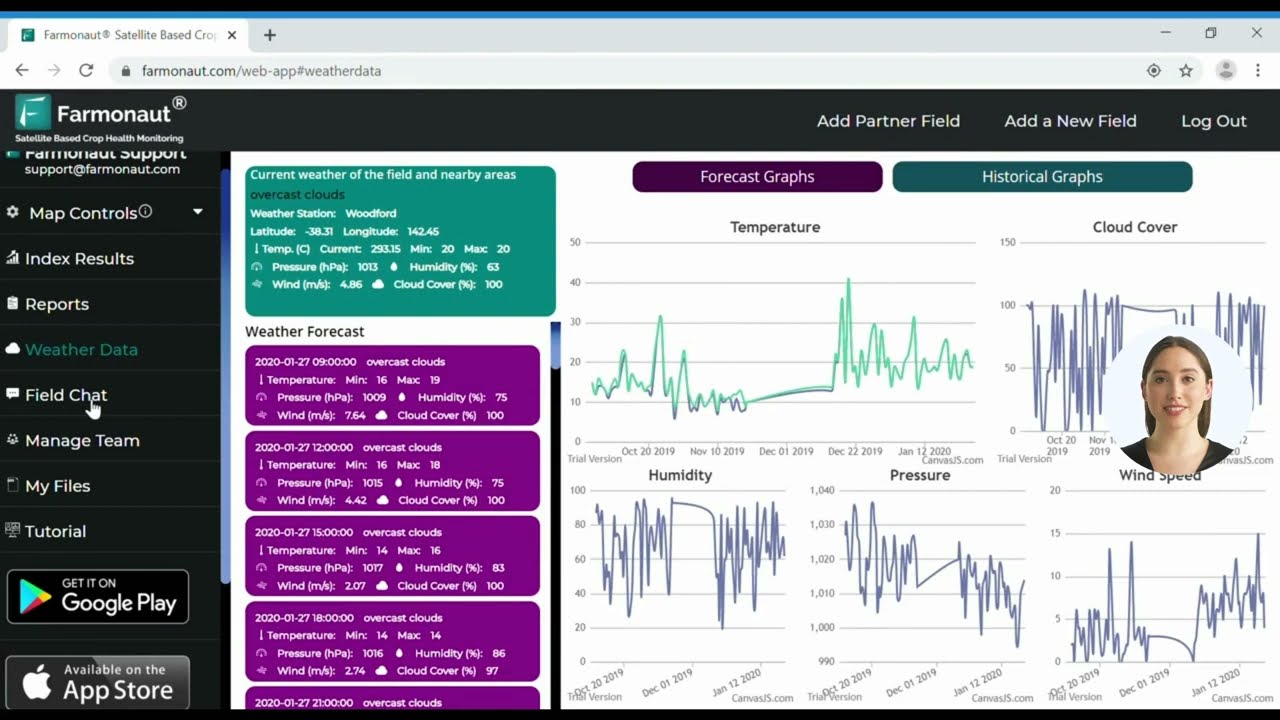
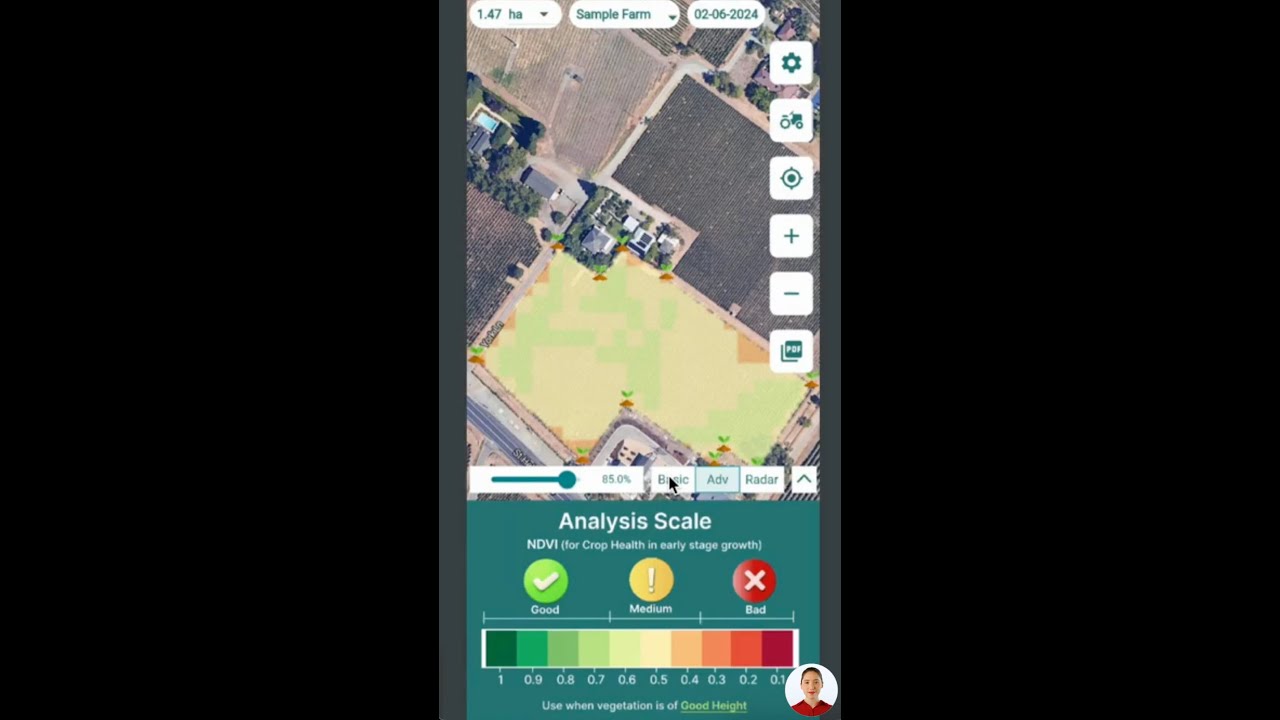
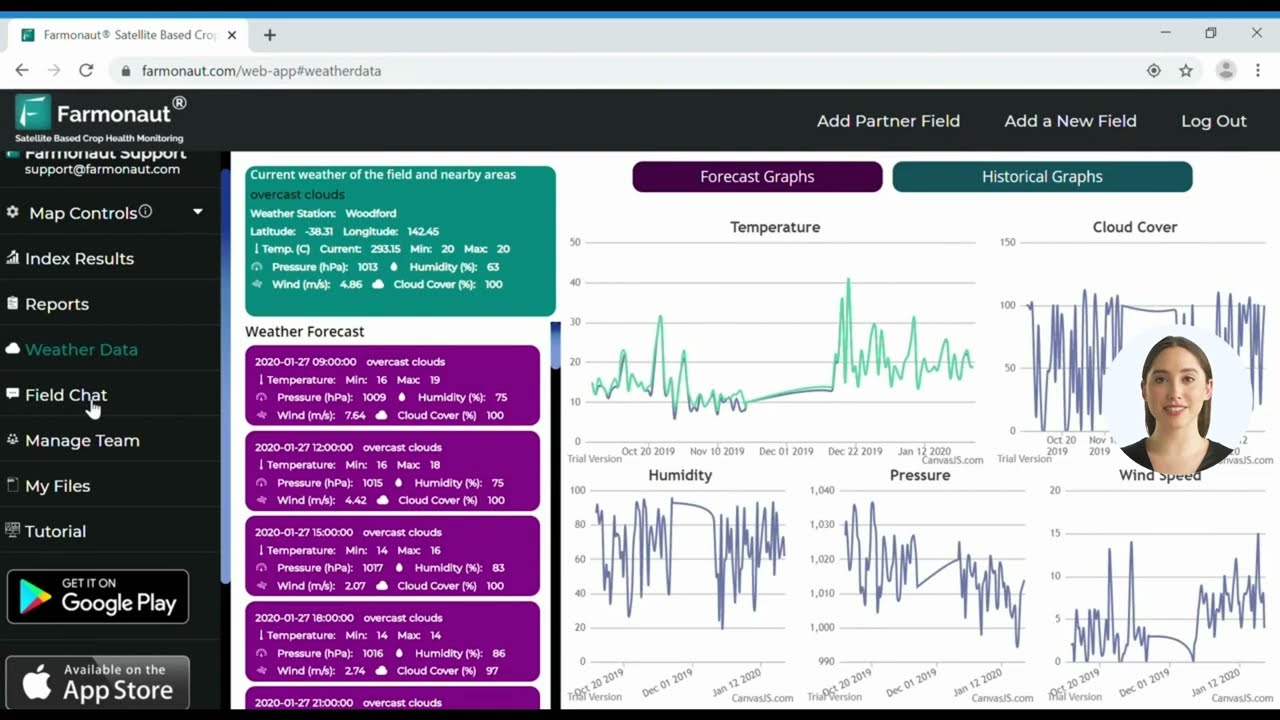
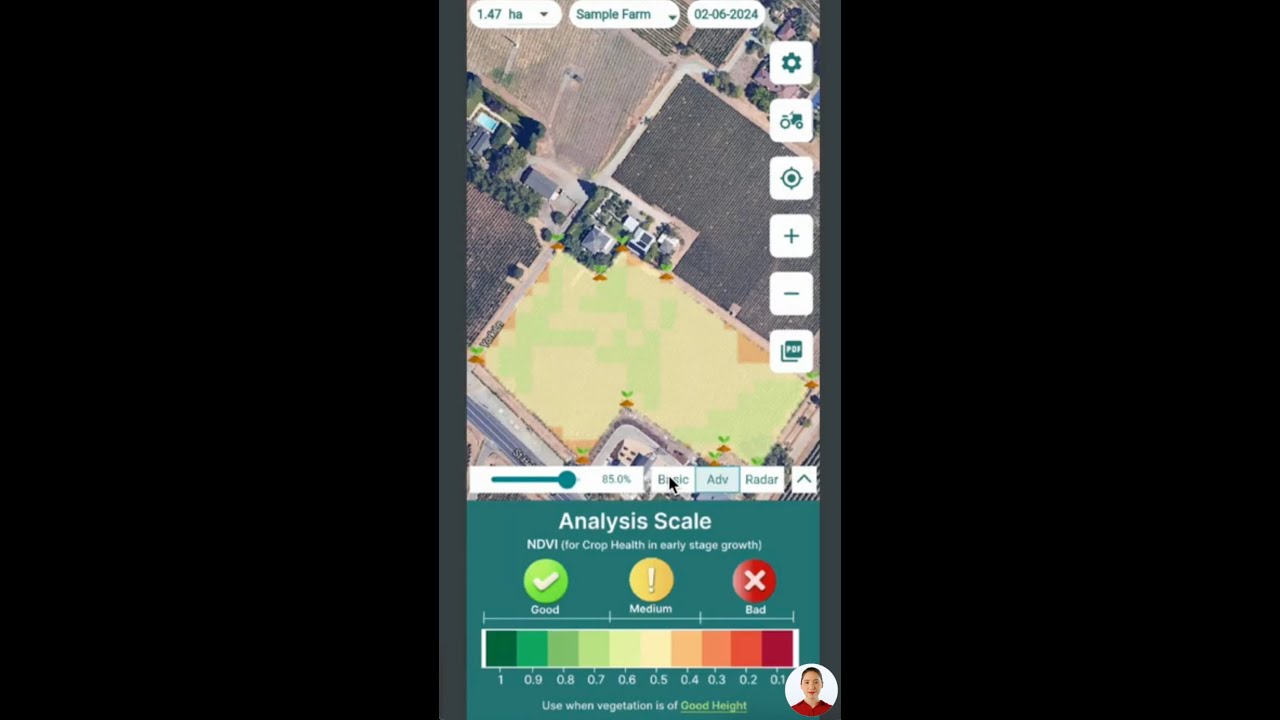
Farmonaut’s satellite and AI monitoring platform is built primarily for open-field and greenhouse operations that sit within a mapped land parcel, and it extends naturally to vertical and indoor facilities that also manage adjacent outdoor land, nurseries, or supply chains.
- 🛰️ Satellite-based monitoring: Track vegetation health and resource stress across any outdoor acreage tied to your indoor operation — nursery outplanting sites, adjacent field crops, or reclaimed land under restoration.
- 🔗 Blockchain traceability: Track produce from indoor rack to retail or export market with a fraud-resistant record. Learn about Farmonaut’s traceability tools.
- 🌍 Environmental footprint tracking: Document carbon and resource use for regulatory or investor reporting. Explore Farmonaut’s carbon footprinting.
- 💳 Financial verification: Satellite-based documentation supports crop loan and insurance applications for new indoor farming ventures with an outdoor land component.
Developers integrating monitoring data into their own farm management software can access the Satellite Data API and review the API documentation for full technical details.
Operations managing multiple sites — indoor facilities alongside outdoor acreage — can use the large-scale farm management solution for centralized oversight, and the fleet management module for logistics across land conversion, reclamation, or nursery-to-outplant supply chains.
Featured AgriTech Videos


Common Mistakes and How to Avoid Them
- Underestimating fruiting-crop resource needs: Tomatoes and peppers demand more precise climate and energy management than leafy greens — budget accordingly, and check whether CO₂ enrichment (worth 25–30% on tomato yield per UGA CAES) is already part of your system design.
- Choosing field genetics over indoor-bred cultivars: indoor-specific or dwarf varieties consistently outperform standard field varieties in density and disease resistance under rack conditions.
- Ignoring cycle staggering: Planting an entire facility on the same schedule creates harvest gluts and supply gaps; stagger plantings for continuous output.
- Treating gross revenue as profit: The $1.2–1.8 million UGA CAES revenue figure for a 10,000-square-foot facility is gross, not net — model your own energy and labor costs before using any published revenue figure in a business plan.
FAQ
What are the best crops for indoor farming?
Leafy greens (lettuce, spinach, kale, arugula) and culinary herbs (basil, mint, cilantro) lead on cycle speed and stacking efficiency, with microgreens turning over fastest of all — as short as 7–14 days per harvest. Strawberries post the largest yield multiplier of any crop measured against field cultivation, at 5–7x per square foot (UGA CAES, 2024).
What crops can be grown in vertical farming specifically, as opposed to indoor farming generally?
Crops with short canopy height stack well: lettuce, spinach, kale, arugula, basil, and microgreens. Tomatoes, cucumbers, and peppers are usually grown trellised on a single level rather than stacked in tiers, because their height and light requirements don’t suit multi-tier racks.
What is the most profitable indoor farming setup?
UGA CAES modeling puts a 10,000-square-foot vertical farm at full capacity at $1.2–1.8 million in annual gross revenue — before energy, labor, and capital costs are subtracted. Profitability depends most on crop cycle count per year and whether you can capture the premium price vertical-farm produce commands (documented at $7.82/kg for lettuce versus $3.04/kg field-grown).
What are the real benefits of indoor farming, with numbers attached?
Year-round production removes seasonality by design. Documented numeric benefits include a 2.6x price premium on vertical-farm lettuce, a 5–7x yield multiplier on strawberries, and a 25–30% yield increase on greenhouse tomatoes from CO₂ enrichment (all UGA CAES, 2024). Water-use and pesticide-reduction benefits are real but not published as a precise US-specific percentage in the sources behind this article — request that figure from your university extension program if you need one for a grant or investor deck.
How big is the US indoor farming industry?
About 2,000 commercial indoor farms were operating as of 2024, in a market valued at $5.3 billion in 2025 and projected to grow at a 9.0% CAGR through 2034 (IMARC Group). Check IMARC’s next annual update for a more current figure before using this in a business plan.
Where can I get technical support or API access for crop monitoring integration?
View the API documentation or contact the Farmonaut team for integration guidance.





Conclusion
The best crops for indoor and vertical farming are the ones whose cycle length, stacking geometry, and price premium you’ve actually measured against your own facility — not a generic “highest yield” list. Leafy greens and microgreens win on turnover and rack efficiency; strawberries and tomatoes win on per-unit value and yield multiplier when grown in the right system design. The durable method here doesn’t expire even as prices shift: rank your crop options by growth-cycle days, confirm which ones physically stack under your lighting setup, and price your output against the field-grown comparison for that crop before committing rack space.
For operations that also manage outdoor acreage, nurseries, or reclamation land alongside an indoor facility, Farmonaut’s satellite monitoring, traceability, and carbon-footprinting tools extend the same data discipline to the field side of the operation — closing the loop between what you grow indoors and what you’re responsible for outdoors.
Discussion
Questions, corrections or field experience? Share them below. First-time comments are reviewed before they appear, and your email is never published.
No comments yet. Be the first to add a question or your experience.

 Anaxee Digital Runners
 Patrick America
 Red Dog Management
 Liquify Digital
 CU Foods
 BeyondTech Global
 Rouge VC
 AgroGreen Dynamics
 AgroRisk
 Oath Inc
 Reddane Farming
 Esri North East Africa
 Cresol
 MDCV UK
 Zerella Group
 Etech Consulting Madagascar
 Vestlandsforsking
 Delicio
 WB Dev
 Sama Premium
 Prochecker
 Exploration consultancy · South Africa · Gold
 Licence holder · Niger · Gold










