

Reviewed August 2026 against Market.us Research, DataM Intelligence, and Frontiers in Sustainable Food Systems.
Try it: Run your own numbers →
Table of Contents
- Introduction: What Blockchain Food Traceability Actually Does
- Market Size: US and Global Blockchain Food Traceability
- How Blockchain Traceability Software Works
- How to Track Food Supply Chains Using Blockchain: The Six-Step Model
- Food Industry Blockchain Consulting: What It Costs to Build
- Consumer Adoption: Do Shoppers Actually Use It?
- Blockchain Traceability for Sustainable Agriculture
- USDA, FSMA 204, and the Regulatory Push
- Applications Beyond Wine: Honey, Coffee, and Livestock
- Farmonaut’s Traceability, Satellite, and Blockchain Tools
- Calculator: Should You Build Blockchain Traceability In-House?
- A Durable Checklist for Evaluating Any Blockchain Traceability Vendor
- FAQ
- Conclusion
- Try it: Run your own numbers
Introduction: What Blockchain Food Traceability Actually Does
Blockchain food traceability is a method for recording every handoff of a food product — farm, processor, distributor, retailer — on a shared, tamper-evident ledger so any stakeholder can verify origin and handling without trusting a single intermediary’s paperwork. It does not require cryptocurrency, and it does not replace existing food-safety testing; it replaces siloed spreadsheets and paper batch records with one verifiable log. The US market for this specific technology was worth $0.9 billion in 2024, according to Market.us Research, and is projected to grow at 29.6% a year over 2025–2034, according to Market.us — a pace that reflects how recently most of this infrastructure has been deployed, not how mature it is.
This article covers what the technology records, what it costs to build or buy, what regulators in the United States are currently requiring, and how to evaluate a vendor claim against a checklist that will still hold up after the market figures below are out of date.
Market Size: US and Global Blockchain Food Traceability
Two independent market research firms have sized this space from different angles, and the gap between their numbers is itself informative. Market.us Research puts the US blockchain-for-supply-chain-traceability market at $0.9 billion in 2024, growing at a 29.6% CAGR over 2025–2034 — a US-specific, blockchain-only figure (Market.us). DataM Intelligence sizes the broader global food traceability and blockchain solutions market, which bundles in adjacent traceability technology beyond blockchain, at $41.56 billion in 2024, with an 11.2% CAGR forecast for 2025 through 2032.
Read those two figures as answering different questions rather than contradicting each other: the US blockchain-specific segment is small and growing fast off a low base, while the global traceability category (RFID, sensors, labeling, and blockchain combined) is already a mature, large market growing at a normal industrial pace. If you’re sizing a vendor pitch or a grant application, ask explicitly which of these two market definitions the number you’ve been given actually belongs to — vendors sometimes cite the larger global figure to describe a US-only blockchain product, which inflates the addressable market by more than 40x.
Both firms revise their figures over time; check Market.us’s blockchain supply chain traceability report and DataM Intelligence’s food traceability and blockchain solutions report for the current numbers. Check both before quoting either number in a board deck or funding proposal, since a figure over a year old in a market growing near 30% a year will already be stale.
How Blockchain Traceability Software Works
At its core, blockchain traceability software is a distributed ledger that timestamps and cryptographically links records so that no single party can quietly edit history. For a food or agricultural product, each entry on that ledger typically corresponds to one of the following event types:
- Cultivation and harvesting records: farm location, harvest date, and inputs (pesticides, fertilizers) applied, plus any certification claimed (organic, fair trade).
- Processing and quality checks: batch creation, lab test results, and packaging records logged at the point of transformation.
- Storage conditions: temperature and humidity readings, usually captured automatically by IoT sensors and written to the ledger without manual entry.
- Logistics and routing: transportation legs, carrier handoffs, and timestamps from field to distribution center to retail shelf.
- Point-of-sale verification: a QR or NFC scan that lets a retailer or consumer pull the full chain of custody for that specific batch.
The technical value is narrower than marketing copy usually implies: a blockchain ledger guarantees that once a record is written, it cannot be silently altered, and that every participant sees the same version of history. It does not verify that the data entered was true in the first place — a mislabeled harvest date entered by a farmer is just as immutable as a correct one. This is why sensor-fed data (temperature, GPS, humidity) is considered more trustworthy in these systems than manually typed fields: the automation removes the point where a person could falsify an entry.
How to Track Food Supply Chains Using Blockchain: The Six-Step Model
Tracking a product through a blockchain-based system follows a consistent sequence regardless of which vendor platform runs it. This is the durable part of this article — the steps below don’t change even as market-size figures do:
- Register the origin. The farmer or first handler creates a record with farm location, harvest or production date, and applicable certifications. This becomes the root of every downstream trace.
- Log processing events. Each transformation step (washing, milling, bottling, packaging) writes a new linked entry, including any quality-control test results.
- Capture environmental data automatically. IoT sensors on trucks, containers, or warehouses push temperature and humidity data directly to the ledger at set intervals, without manual re-entry.
- Record custody transfers. Every handoff between distributor, carrier, and retailer is logged with a timestamp and the responsible party’s digital signature.
- Attach a scannable identifier. A QR code or NFC tag on the final packaging links the physical product to its full digital record.
- Enable verification at any point. A regulator investigating a recall, a retailer auditing a supplier, or a consumer scanning a label all query the same immutable chain rather than requesting paper records from each party individually.
US regulators have tested the idea too. In August 2019 USDA’s Food Safety and Inspection Service awarded IBM a $269,450 blockchain proof-of-concept contract to study export certification for meat, poultry and eggs (CoinDesk). Records of USDA-listed food safety research projects on blockchain are kept by the National Agricultural Library.
A real trace: Walmart’s mango test
The best-documented example of the six steps in use is Walmart’s pilot with IBM on Hyperledger Fabric, the permissioned ledger that became IBM Food Trust. Tracing the origin of a package of mangoes sold in US stores took about 7 days with paper and email records. On the ledger it took 2.2 seconds (LF Decentralized Trust case study).
The speed came from steps 1, 4 and 5 of the model: each grower, packer and distributor entered its handoff once, with a lot identifier that travelled with the fruit. Walmart then extended the system to more than 25 products from 5 suppliers, and later required its suppliers of fresh leafy greens to use it.
Two lessons carry over to smaller buyers. First, the gain came from getting every partner to record the same identifiers, not from the ledger technology itself. Second, a large buyer could make participation a condition of supply. A mid-sized processor without that leverage should budget time and money for onboarding partners, which is usually the slowest part of any rollout.
Food Industry Blockchain Consulting: What It Costs to Build
If you’re evaluating whether to build a blockchain traceability system versus buying into an existing platform, cost is the first filter. Blockchain developer ScienceSoft puts the cost to build a functioning MVP (minimum viable product) — a limited-scope pilot covering one product line or a handful of supply chain partners — at about $80,000–$150,000. A full-featured solution with a private network and smart contracts runs about $400,000–$1,500,000 or more, scaling upward from there depending on the number of participating nodes and the complexity of the certification logic required.
That $80,000-to-$400,000+ range is why most food companies engaging “food industry blockchain consulting” services start with a single SKU or a single supplier relationship as a pilot, rather than attempting an enterprise-wide rollout in one project. It also explains why so many mid-sized producers choose to plug into a shared platform (where the ledger infrastructure is already built and amortized across many customers) instead of commissioning custom development.
Before signing with any consultant, ask them to itemize which of these five cost drivers apply to your project, since the $80K–$400K range hides a lot of variance:
| Cost Driver | Why It Moves the Price |
|---|---|
| Number of supply chain participants (nodes) | Each additional farm, processor, or distributor onboarded needs its own integration, training, and access controls. |
| IoT sensor deployment | Temperature/humidity sensors and their connectivity (cellular, LoRaWAN) are hardware costs separate from the software. |
| Private vs. permissioned vs. public ledger | A private network with restricted access costs more to run than a shared permissioned ledger with an existing vendor. |
| Certification/compliance logic | Encoding organic, fair-trade, or FSMA 204 rules into automated checks adds development time. |
| Legacy system integration | Connecting to existing ERP, warehouse management, or POS systems is often the single largest line item. |
Consumer Adoption: Do Shoppers Actually Use It?
A peer-reviewed study in Frontiers in Sustainable Food Systems surveyed 322 shoppers at four supermarkets in Shenzhen, China, between April and May 2024. It found 47.83% had only heard of food traceability technology, and 39.44% had used it one to four times. Mean adoption intention scored 3.70 out of 5.0, but perceived ease of use scored lowest of the factors measured, at 2.95 out of 5.0.
That ease-of-use score is the actionable number here: it tells vendors and retailers that the bottleneck to consumer uptake isn’t skepticism about blockchain’s value, it’s friction in actually using the QR-scan or app-based interface at the point of purchase. Any traceability rollout aimed at consumer-facing transparency should treat the scan-and-view experience as a usability problem to solve, not an afterthought bolted onto the supply-chain backend. The full study, including its methodology and demographic breakdown, is available at Frontiers in Sustainable Food Systems.
Blockchain Traceability for Sustainable Agriculture
Blockchain’s role in sustainable agriculture is narrower than general marketing suggests: it does not measure sustainability itself, but it does create a tamper-evident record of the certifications, input use, and practices that sustainability claims depend on. A farm’s log of pesticide and fertilizer applications, once written to the ledger, can’t be quietly revised after the fact if a buyer or auditor later asks to see how an organic or regenerative claim was substantiated. For carbon and environmental-impact tracking specifically, that ledger record can be paired with dedicated monitoring tools — see Farmonaut’s carbon footprinting platform for the measurement side of that pairing.
The practical use case for sustainable agriculture is market access: a producer who can show a verifiable, auditable input history is better positioned to qualify for buyer sustainability programs and premium contracts that require documentation, not just a self-reported claim. The trade-off is the cost structure covered above — a smallholder or single-farm operation is unlikely to justify a $80,000 MVP alone, which is why sustainability-linked blockchain traceability adoption has concentrated among cooperatives, exporters, and larger processors who can spread that cost across many growers.

USDA, FSMA 204, and the Regulatory Push
The clearest regulatory signal in the United States is the FDA’s Food Traceability Rule, covered below. USDA has also tested blockchain: in August 2019 its Food Safety and Inspection Service hired IBM for a $269,450 proof of concept on export certification (CoinDesk).
Separately, in August 2020 USDA’s Agricultural Marketing Service proposed organic rules that discussed digital ledger technology for organic product traceability — a regulatory application distinct from the food-safety pathogen-tracking pilots. Details on that proposal’s status and scope are tracked by Ledger Insights, a publication focused on enterprise blockchain regulatory coverage.
The FDA’s Food Traceability Rule (FSMA 204) now has a compliance date of July 20, 2028 (FDA); the section below sets out what it requires.
FSMA 204: what the FDA traceability rule requires, and when
The FDA’s Food Traceability Rule (FSMA Section 204) does not require blockchain. It requires records, and any system that can produce them on time will do. The compliance date is now July 20, 2028. It was January 20, 2026, until the FDA proposed a 30-month extension and Congress told the agency not to enforce the rule before the new date (FDA).
What covered firms must keep:
- Key Data Elements (KDEs) for each Critical Tracking Event (CTE). The CTEs are harvesting, cooling, initial packing, first land-based receiving (seafood), shipping, receiving and transformation.
- A traceability lot code, assigned at initial packing, first land-based receiving or transformation, and carried in the records at every later event.
- A sortable electronic spreadsheet of that data, supplied to the FDA within 24 hours of a request during an outbreak or other threat.
The rule covers foods on the FDA’s Food Traceability List, such as fresh cucumbers, shell eggs, soft cheeses, sprouts, tuna and some frozen produce, plus foods that contain them as unchanged ingredients. For a blockchain project, the practical test is simple: can the ledger export those KDEs by lot code into a spreadsheet within a day? If not, it does not help with FSMA 204, whatever else it does.
Applications Beyond Wine: Honey, Coffee, and Livestock
Wine remains one of the most visible use cases for blockchain traceability because counterfeiting has been a documented, expensive problem for premium bottles, and a QR or NFC tag linked to an immutable vintage and vineyard record directly addresses that fraud risk. But the same architecture applies wherever provenance carries a price premium or a safety requirement:
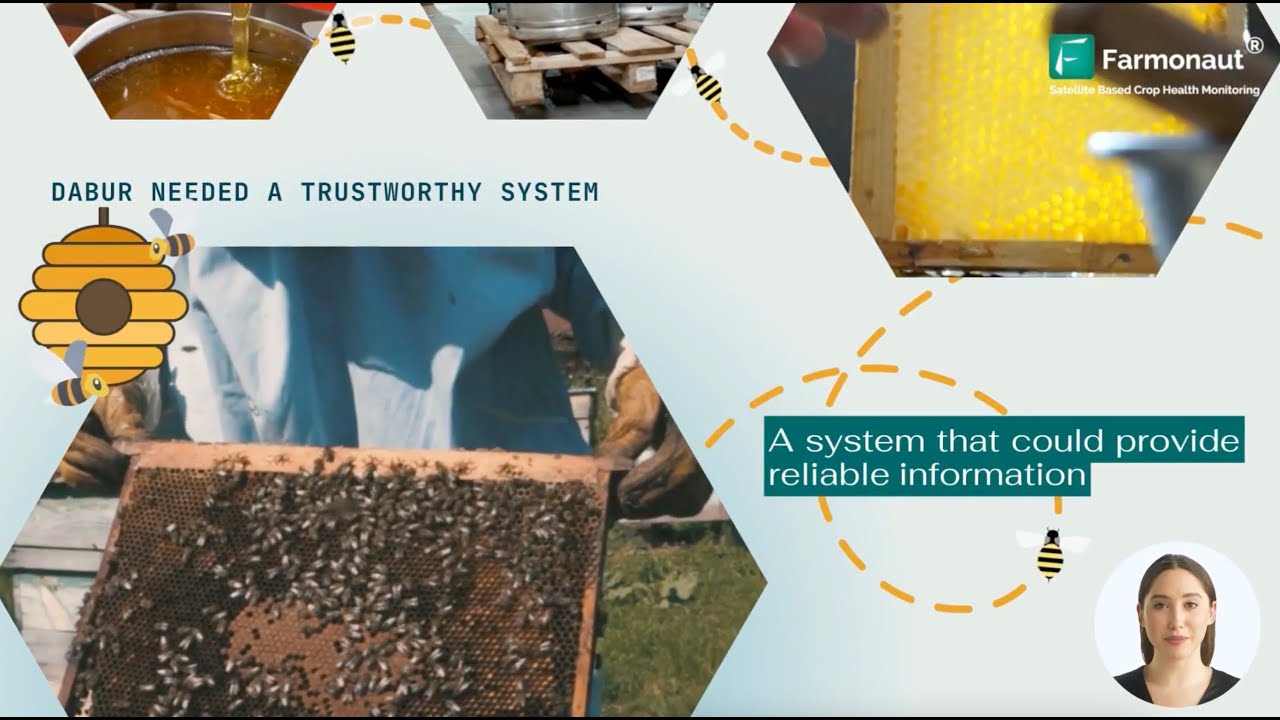
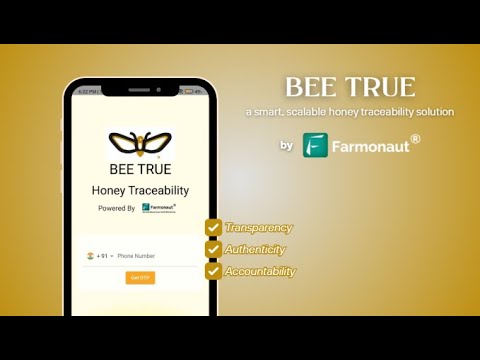
- Honey: verifying floral source and geographic origin, where adulteration with cheaper syrups has been a persistent industry problem.
- Coffee: linking farm-of-origin and processing method claims (washed, natural, honey-processed) to a verifiable record buyers can audit.
- Livestock: tracking animal health records, feed inputs, and movement between facilities for both food-safety and animal-welfare certification purposes.
For a closer look at how these traceability chains are structured across different agricultural sectors, see Farmonaut’s product traceability suite, which covers implementation across crop and livestock supply chains.

IoT and AI Layered on Top of the Ledger
The blockchain ledger itself only stores what it’s given, so the accuracy of a traceability system depends heavily on how data gets onto the chain in the first place. Two additions have become standard:
- Automated sensor logging: temperature and humidity sensors write directly to the ledger at fixed intervals, removing the manual-entry step where errors or falsification would otherwise occur.
- Predictive analytics on top of the ledger: once data is flowing automatically, analytics layers can flag deviations from expected storage conditions or shelf-life risk before spoilage occurs, rather than after a complaint arrives.



Explore Farmonaut’s API for integrating satellite and blockchain data. Developers can consult the developer documentation to build traceability, monitoring, and compliance logic directly into existing software platforms.

Farmonaut’s Traceability, Satellite, and Blockchain Tools
Farmonaut combines satellite monitoring, AI advisory, and blockchain-based record-keeping into a single platform aimed at the agricultural side of the supply chain rather than downstream retail. The components relevant to traceability specifically:
- Satellite-based monitoring: vegetation health, soil conditions, and resource-use data feed into the same record system that blockchain secures, giving an independent, remote-sensed check against what’s logged manually.
- Jeevn AI advisory: crop and weather insight layered on top of the traceability data to support production decisions, not just record-keeping.
- Product traceability: farm-to-retail tracking via Farmonaut’s traceability suite, covering the same six-step model described above.
- Fleet management: logistics tools for the transportation-and-routing step of the chain.
- Carbon footprinting: environmental compliance monitoring that pairs with sustainability-linked traceability claims.
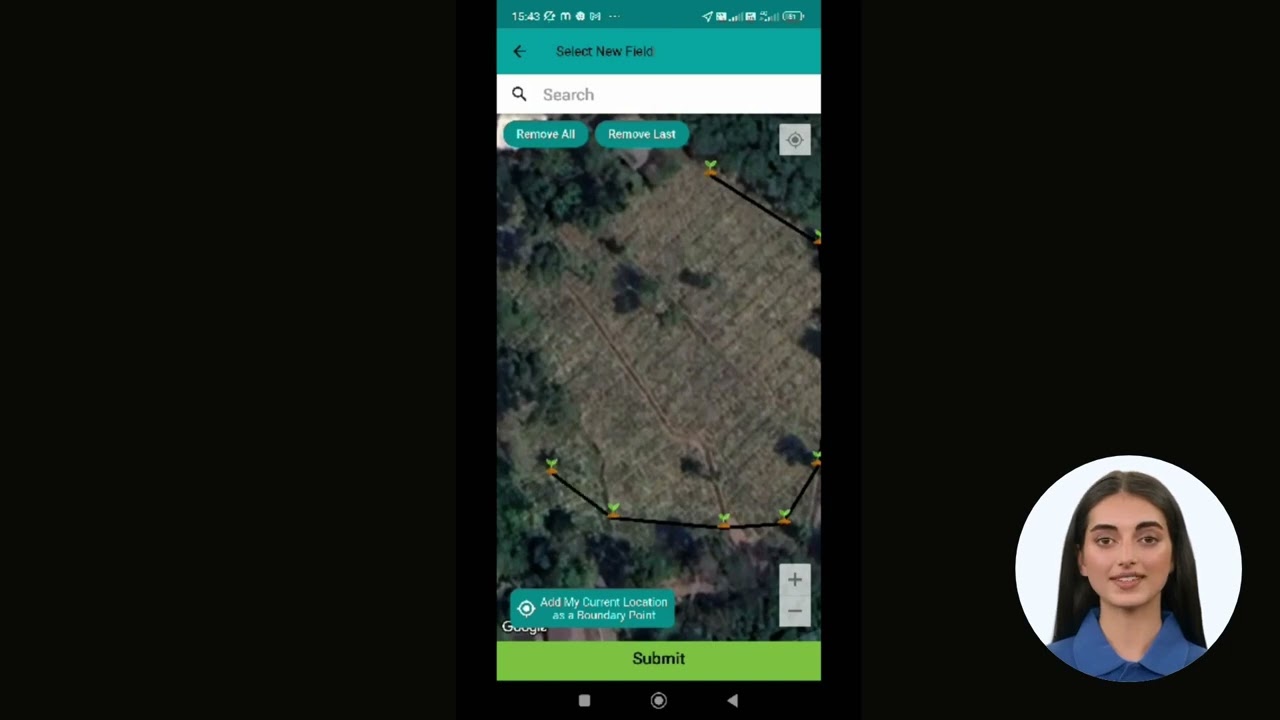
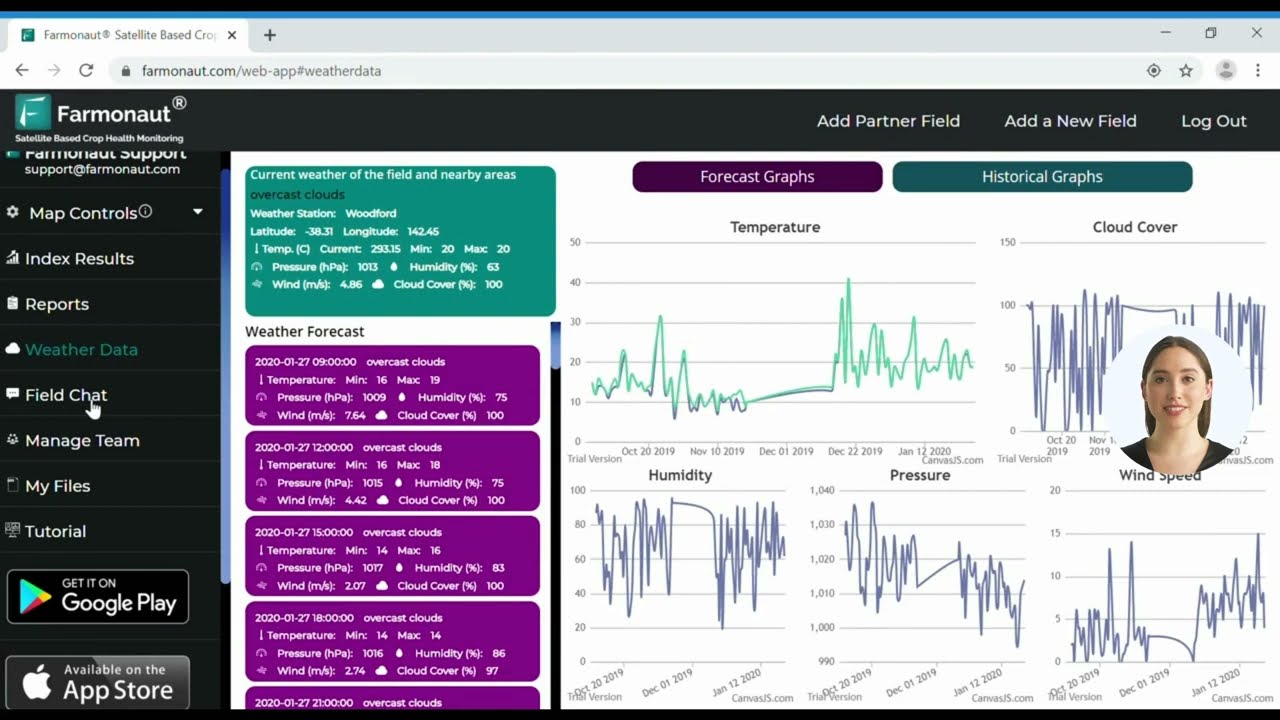
For large-scale operations — cooperatives, exporters, or government agricultural programs — the agro-admin platform extends this into remote plantation and forest management with the same underlying compliance and monitoring infrastructure.
Calculator: Should You Build Blockchain Traceability In-House?
Use the figures already cited above ($80,000 MVP floor, $400,000 full-build floor) to estimate your own build cost based on how many supply chain partners and sensor points your operation actually has, then compare that to what a shared-platform subscription would cost over the same period.
Run your own numbers
Assumptions: base costs of $80,000 (MVP) and $400,000 (full-featured) are the low ends of ScienceSoft’s published ranges. The per-partner ($6,000) and per-sensor ($1,500) add-ons are illustrative assumptions, not published figures. This estimate excludes ongoing staffing, annual license renewals, and legacy ERP integration, which can add substantially more depending on your existing systems. Treat this as a floor, not a quote.
A Durable Checklist for Evaluating Any Blockchain Traceability Vendor
Market sizes and adoption percentages will look different by the time you read this. This checklist is built to still be useful regardless of what those numbers become — apply it to any vendor pitch or internal build proposal:
- Ask which data points are sensor-fed versus manually entered. Manually entered fields are the weak point in any “immutable” system, since immutability only protects data after it’s written, not before.
- Ask for the ledger type. Public, private, or permissioned blockchain each carry different cost and access trade-offs; a vendor should be able to explain which one they use and why.
- Ask for a cost breakdown against the five drivers listed in the consulting-costs table above — nodes, sensors, ledger type, compliance logic, and legacy integration — rather than accepting a single bundled quote.
- Check the consumer-facing interface for ease of use before rollout, given the 2.95-out-of-5.0 ease-of-use score found in consumer research — a technically sound ledger with a clunky scan experience will underperform on adoption regardless of backend quality.
- Verify regulatory alignment directly at the source — USDA’s food safety research page or the FDA’s own FSMA 204 guidance — rather than trusting a vendor’s compliance claim secondhand.
- Re-check market and adoption figures at least annually in a segment forecast to grow near 30% a year; a one-year-old market-size citation is stale in this category.
FAQ
What is blockchain food traceability?
It’s the use of a shared, tamper-evident ledger to record every transaction, batch movement, and quality check across a food supply chain, so any party can verify a product’s origin and handling history without relying solely on one company’s internal records.
How does blockchain in the food supply chain prevent fraud?
Because entries on the ledger are cryptographically linked and distributed across participants, altering or deleting a past record without detection becomes effectively impossible. This doesn’t stop false data from being entered in the first place, which is why sensor-fed data is considered more reliable than manually typed fields.
How to track food supply chains using blockchain, in practice?
Follow the six-step model above: register origin, log processing events, capture environmental data automatically via IoT, record every custody transfer, attach a scannable QR or NFC identifier, and enable any stakeholder to query the same ledger for verification.
What does food industry blockchain consulting cost?
Developer ScienceSoft puts an MVP at about $80,000–$150,000 and a full-featured system with a private network and smart contracts at $400,000–$1,500,000 or more (ScienceSoft). Actual cost depends heavily on the number of supply chain partners and sensor points involved.
Do consumers actually use blockchain traceability when it’s offered?
Awareness runs ahead of use: in a 2024 survey of 322 Shenzhen supermarket shoppers, 47.83% had only heard of food traceability technology, per a peer-reviewed study in Frontiers in Sustainable Food Systems. The main barrier identified was ease of use, not distrust of the technology.
Is blockchain traceability relevant to sustainable agriculture specifically?
Yes, primarily as a way to make certification and input-use records auditable rather than self-reported. It doesn’t measure sustainability directly, but it does make sustainability claims verifiable, which matters for buyers requiring documentation for premium or export contracts.
How does Farmonaut support blockchain traceability?
Farmonaut provides a blockchain-enabled traceability platform integrated with satellite monitoring and AI advisory for agricultural stakeholders. Explore the traceability suite and large-scale farm management tools.
What other solutions does Farmonaut offer for food and agricultural supply chains?
Beyond traceability, Farmonaut offers carbon footprint monitoring, fleet and logistics management, and crop loan and insurance access, all built on the same satellite and data platform.
How can a business or government agency get started?
Start with Farmonaut’s web and mobile apps for monitoring, or use the API for direct integration. Full developer documentation is available here.




Conclusion
Blockchain food traceability is past the proof-of-concept stage: the US-specific market was worth about $0.9 billion in 2024 with 29.6% annual growth forecast, the FDA’s traceability rule takes effect on July 20, 2028, and consumer research shows adoption intention above the midpoint even where ease of use lags. What hasn’t changed, and won’t with the next market report, is the underlying mechanism: a ledger is only as trustworthy as the data written to it, sensor-fed records beat manual entry, and the six-step trace model — origin, processing, environmental logging, custody transfer, scannable ID, verification — is what any credible vendor claim has to actually deliver. Use the checklist and calculator above to evaluate a specific proposal against your own supply chain, and recheck the cited market and regulatory sources directly before acting on any figure that’s more than a year old.

 AdBio
AdBio MISE Maroc
 Drift-Sense
 NWNS
NWNS Hydenmet
 Red August Group
 Farm Inc
 WeMe Global
 Agrotoken
 Blue BearX
 Insignito
 Croptimum
 DnCubed
 Field Capacity
 Indosistim Teknologi
 Liquify Digital
 CU Foods
 BeyondTech Global
